
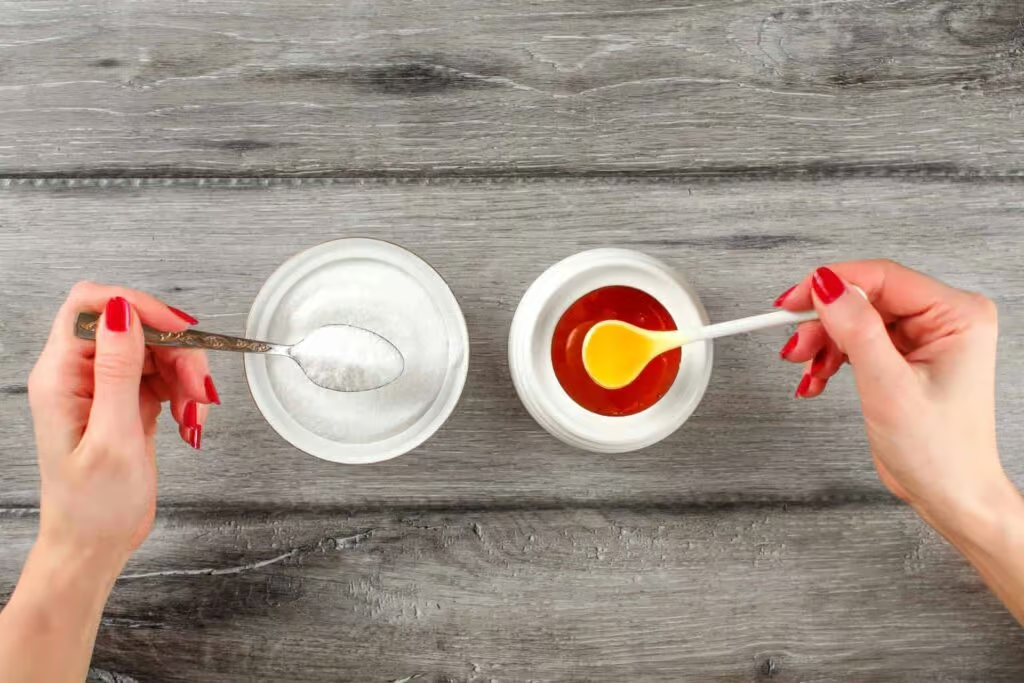
Honey vs Sugar:
What You Are Really Choosing
A comprehensive look at two of the world's most used sweeteners, covering their origins, nutritional profiles, glycaemic index, environmental impact, and what the science actually says. Written by a family with six generations of beekeeping heritage.
In This Report
- Nutrition Comparison: The Numbers Side by Side
- Glycaemic Index: What It Means for Your Body
- How Each Sweetener Is Made
- A Brief History of Honey and Sugar
- Honey, Sugar and the Human Body
- Gut Health and the Prebiotic Effect
- Honey Varieties and Their Differences
- Using Honey Instead of Sugar: A Practical Guide
- Environmental Impact
- The Verdict
- Domande frequenti
Honey and sugar. Two sweeteners that have shaped human civilisation, fuelled wars, driven trade routes, and sat at the centre of almost every culture's relationship with food. Today they sit side by side in most kitchens, often treated as interchangeable. But they are fundamentally different substances: different in origin, different in chemistry, different in their relationship with the human body, and different in their cost to the planet.
This report explores all of it. From the molecular structure of fructose to the legacy of the Trans-Atlantic sugar trade, from the beekeeper's hive in Transylvania to the vast sugarcane plantations of Brazil. We have drawn on published research, regulatory guidance, and over six generations of beekeeping experience to give you the most complete picture possible.
If you want to skip straight to the practical comparison, jump to the nutrition table. If you want to understand the full story, read on.
Nutrition Comparison: The Numbers
Per 100g and per tablespoon, the data that matters
| Nutrient / Metric | 🍯 Raw Honey | Sugar (White) | Winner |
|---|---|---|---|
| Calories (per 100g) | 304 kcal | 387 kcal | Il miele |
| Calories (per tbsp) | 64 kcal | 49 kcal | Zucchero |
| Carbohydrates (per 100g) | 82g | 100g | Il miele |
| Water content | ~17% | 0% | Il miele |
| Glycaemic Index (GI) | 35–58 (varies by variety) | 65 | Il miele |
| Vitamins & minerals | Trace amounts present | None | Il miele |
| Antioxidants | Yes (flavonoids, phenolic acids) | None | Il miele |
| Enzymes | Yes (diastase, invertase, glucose oxidase) | None | Il miele |
| Prebiotic properties | Yes | No | Il miele |
| Sweetness relative to sugar | 1.25× sweeter | Baseline | Honey (use less) |
| Processing level | Minimal (raw) or none | Heavily refined | Il miele |
| Shelf life | Indefinite (sealed) | Indefinite | Equal |
| Cost (per 100g) | Higher | Lower | Zucchero |
Sources: USDA FoodData Central; University of Sydney Glycaemic Index Database. GI values vary by honey variety. See our variety guide below.
Honey is approximately 1.25 times sweeter than table sugar, meaning you typically need less of it to achieve the same level of sweetness, which can offset its slightly higher calorie count per tablespoon.
University of Arizona, Department of Nutritional SciencesGlycaemic Index: What It Means
How quickly each sweetener raises blood sugar, and why it matters
The glycaemic index measures how quickly a food raises blood glucose levels compared to pure glucose (GI 100). Foods with a lower GI cause a slower, more gradual rise in blood sugar. Research suggests this may support more sustained energy and appetite control. Honey's fructose-dominant composition means the glucose component is released more gradually than with sucrose.
It is important to note that GI varies significantly between honey varieties. Miele di acacia, with its very high fructose content, consistently records among the lowest GI values of any honey variety. Heather honey, higher in glucose, sits at the upper end of the range. People managing blood sugar should consult a healthcare professional and choose their honey variety accordingly.
Source: University of Sydney Glycaemic Index Database. This information is educational and does not constitute medical advice.
How Each Sweetener Is Made
Two very different journeys from source to jar
🍯 Raw Honey
Foraging: Worker bees collect nectar from flowers, trees, and plants using their straw-like tongues, storing it in a specialised honey stomach called a crop.
Enzymatic conversion: Invertase and other enzymes from the bee's glands begin breaking down sucrose into glucose and fructose during the journey back to the hive.
Evaporation: Bees fan the nectar inside the honeycomb to reduce its water content from around 70% down to 20% or less, creating the concentrated, stable product we know as honey.
Capping: When ready, bees seal each cell with a thin layer of beeswax, signalling to the beekeeper that the honey is ready to harvest.
Harvesting: Frames are extracted, honey is strained to remove wax and debris. Miele grezzo is bottled without heat treatment, preserving all its natural enzymes and antioxidants.
No additives: Nothing added. Nothing removed. The product is complete as nature intended.
⬜ White Sugar
Harvesting: Sugarcane (or sugar beet) is harvested. Sugarcane is typically cut by machine, sugar beet pulled from the ground after 90–95 days of growth.
Crushing and extraction: The plant material is crushed or shredded to extract the raw juice. Sugar beet is sliced into thin strips and soaked in hot water to draw out the sugar.
Treatment: The extracted juice is treated with lime and sulphur dioxide to remove impurities. It is then filtered and heated repeatedly to concentrate it into a thick syrup.
Crystallisation: The syrup is moved into vacuum pans where it is further concentrated and crystal formation is controlled. The resulting mixture of crystals and molasses is called massecuite.
Centrifuging: The massecuite is spun to separate the crystals from the molasses. The crystals are washed and dried to produce raw sugar, which is itself further refined to produce white sugar.
Refining: Raw sugar is dissolved again, bleached with bone char or activated carbon filters, and recrystallised. The result is pure sucrose, stripped of all trace nutrients, colour, and flavour compounds.
What is sometimes labelled as honey on supermarket shelves is not always what it appears. Honey adulteration (the bulking of genuine honey with corn syrup or rice syrup) has been found at scale in UK and European markets. Always choose traceable, single-origin honey from a supplier who can tell you exactly where their product comes from.
HoneyBee & Co. | Our StoryA Brief History of Both Sweeteners
Thousands of years of human relationship with sweetness
The Earliest Known Honey Harvest
Cave paintings in Spain's Cueva de la Araña depict humans harvesting honey from wild bee colonies, the earliest recorded evidence of human honey use. Honey predates agriculture itself.
Beekeeping in Ancient Egypt
Egyptian records show organised beekeeping along the Nile. Honey was used as food, medicine, and in religious ceremonies. It was placed in tombs, still edible thousands of years later.
Sugarcane Cultivation Begins
Sugarcane cultivation begins in what is now New Guinea and spreads gradually to India over thousands of years. At this stage, sugar is consumed by chewing the raw cane stalk.
Sugar Refining Spreads West
Imperial China sends envoys to India to learn sugar refining techniques. Muslim traders bring the technology to Persia and then to the Mediterranean. Sugar begins its slow journey to becoming a European commodity.
Columbus Brings Sugarcane to the Americas
Christopher Columbus introduces sugarcane to the Caribbean on his second voyage. The crop thrives. Within decades, the sugar industry's demand for labour drives one of history's most devastating humanitarian catastrophes.
Sugar Becomes a Staple
Sugar transforms from a luxury spice reserved for the wealthy to a dietary staple across Europe. British sugar consumption rises dramatically. Honey, previously the primary sweetener, begins its long displacement.
High Fructose Corn Syrup Invented
Richard O. Marshall and Earl R. Kooi develop high fructose corn syrup (HFCS). By the 1980s, Coca-Cola and Pepsi switch from sugar to HFCS, driving its mass adoption across the processed food industry.
The Great Honey Fraud
Investigations find that most honey sold on UK supermarket shelves in December 2020 was found to be bulked with cheap rice and corn syrups, without retailer knowledge. The case highlights the importance of buying from transparent, traceable sources like independent producers.
The Return to Raw
Consumer demand for raw, unprocessed, traceable honey is growing year on year as people move away from refined sugar and supermarket honey blends. Single-origin raw honey from ethical producers is at the forefront of this movement.
The Scale of Global Sugar
Numbers that put the sugar industry in perspective
The global sugar industry is one of the most water-intensive agricultural operations on earth. The World Wildlife Fund estimates that sugarcane farming is responsible for more biodiversity loss than almost any other crop. Brazil's Atlantic Forest, one of the world's most biodiverse ecosystems, has been significantly diminished by the expansion of sugarcane plantations. Water sources are routinely diverted, and processing wastewater has been documented polluting river systems across Latin America.
Beekeeping, even at a commercial scale, requires no deforestation, minimal water, and actively supports the biodiversity of the surrounding environment through pollination. The contrast could not be more stark.
Honey, Sugar and the Human Body
What the research suggests, and what to bear in mind
Research into honey's effects on the human body is active and growing. Several areas have attracted significant scientific attention. It is important to read this section carefully: while there is encouraging research, honey is still a sweetener and should be consumed in moderation. Nothing in this section constitutes medical advice. If you have a health condition, speak to your doctor or a registered dietitian.
Antioxidant Content
Raw honey contains flavonoids and phenolic acids, plant-based compounds that some researchers describe as having antioxidant properties. The concentration varies significantly by floral source. Darker honeys such as Heather tend to have higher concentrations than lighter varieties.
View PubMed Research →Wound Care Research
A 2021 review published in PubMed Central suggests that medical grade honey may have potential as a complementary treatment for locally infected wounds, citing its antibacterial properties including the activity of glucose oxidase. This is distinct from culinary honey and should not be self-administered to wounds.
View PMC 2021 Review →Cough and Sore Throat
Some research suggests that honey may help ease acute coughs, particularly in children. A warm drink with honey and lemon is one of the most documented home remedies in the world. Researchers note that further high-quality clinical studies are needed to confirm the extent of this effect.
NHS Guidance on Coughs →Hay Fever and Pollen
There is a popular belief that consuming local raw honey, which contains local pollen, may help the body build tolerance to pollen allergens over time. Scientific evidence is mixed. Local, unfiltered honey retains more pollen than processed or supermarket honey. Worth discussing with your GP if you suffer from hay fever.
Our Wildflower Honey →Cholesterol Research
A study comparing 30-day consumption of table sugar versus honey in 55 individuals found that honey consumers showed a reduction in LDL cholesterol alongside an increase in HDL cholesterol. The researchers cautioned that honey is still a sugar and should not be consumed in excess.
View Research →Important Safety Note
Honey should never be given to infants under 12 months old due to the risk of infant botulism. Raw honey contains Clostridium botulinum spores that, while harmless to adults, can cause serious illness in infants whose digestive tracts are not yet fully developed. This is a firm guideline from the WHO and NHS.
NHS Botulism Guidance →Gut Health and the Prebiotic Effect
One of the most significant and under-discussed differences between honey and sugar
🍯 Honey as a Prebiotic
Raw honey contains oligosaccharides, complex sugars that are not fully digested in the small intestine and instead pass to the large intestine where they may nourish beneficial gut bacteria. This is what researchers mean when they describe honey as having prebiotic properties. A healthy gut microbiome is associated with immune function, digestion, and general wellbeing, though researchers note this is an active and developing area of science.
⬜ Sugar and the Gut
Refined white sugar offers no prebiotic benefit. It is rapidly broken down and absorbed in the small intestine. High consumption of refined sugar has been associated in some research with disruption to the gut microbiome (sometimes referred to as dysbiosis) and with increased inflammation markers. This is one reason why simply swapping some of your refined sugar intake for raw honey may be of interest to those focused on digestive health.
Note: This is an emerging area of research and individual responses vary. Consult a dietitian for personalised guidance.
Not All Honey Is the Same
Each variety has a distinct nutritional profile, flavour, and glycaemic index
One of the most important things to understand about honey is that it is not a single, uniform substance. Its colour, flavour, sugar composition, GI value, and antioxidant content all vary depending on which flowers the bees visited. This is why choosing the right variety matters, both for taste and for nutritional purpose.
Miele di acacia
Very high fructose content, light colour, mild floral flavour. The lowest GI of any major honey variety, making it of particular interest to those monitoring blood sugar. Stays liquid for longer due to its low glucose levels.
Explore Acacia Honey →Miele di fiori selvatici
A complex blend from multiple floral sources, meaning its antioxidant and mineral profile is particularly varied. Contains local pollen, relevant for those interested in supporting local food systems or managing seasonal allergies.
Explore Wildflower Honey →Miele di Erica
Darker in colour and higher in phenolic antioxidants than lighter varieties. Has a distinctive robust flavour and a naturally thick, thixotropic texture. Traditionally associated with the Scottish and English moorlands.
Explore Heather Honey →Miele di tiglio
Also known as Lime Blossom honey. Light golden colour with a fresh, slightly minty aftertaste. Popular across Central and Eastern Europe, particularly in Romania where HoneyBee & Co.'s beekeeping heritage is rooted.
Explore Linden Honey →Miele di girasole
Bright golden with a warm, clean sweetness. High in glucose, which means it crystallises quickly and naturally. This is a sign of purity, not spoilage. One of the most versatile honey varieties for cooking and baking.
Explore Sunflower Honey →Set morbido Miele
Not a different variety, but a texture. Gently churned or seeded to produce a smooth, spreadable consistency that remains stable at room temperature. Ideal for those who prefer not to deal with runny honey or crystallisation.
Explore Soft Set Honey →Using Honey Instead of Sugar: A Practical Guide
Everything you need to make the switch in the kitchen
Because honey is sweeter than sugar and contains approximately 17% water, substituting it directly in recipes requires a few adjustments. Get these right and the results are excellent. Honey adds moisture, a subtle floral depth, and natural preservative properties that sugar cannot match.
📉 Reduce Liquids
For every cup of honey used, reduce other liquids in the recipe by 3 to 4 tablespoons. This compensates for honey's natural water content and prevents your baked goods from becoming too moist or dense.
🌡️ Lower the Temperature
Honey's fructose content causes baked goods to brown more quickly than sugar. Reduce your oven temperature by around 15°C (25°F) and keep an eye on baking times, especially for cakes and breads.
⚗️ Add Baking Soda
Honey is mildly acidic. Adding a pinch of baking soda (approximately ¼ teaspoon per cup of honey) neutralises this acidity and helps your baked goods rise properly.
🌡️ Do Not Heat Above 40°C Raw
If preserving honey's full enzyme profile matters to you, avoid using raw honey in applications where it will be heated above 40°C (104°F). At higher temperatures the beneficial enzymes begin to break down. For cooking and baking, any honey works well regardless.
Best for: Breads, cakes, muffins, energy bars
Honey adds moisture and a natural golden colour. It also extends shelf life slightly due to its humectant properties, so baked goods stay fresher for longer.
Best for: Marinades, dressings, sauces
Honey dissolves readily in both hot and cold liquids and adds a depth of flavour that refined sugar cannot replicate. A tablespoon in a salad dressing transforms it completely.
Best for: Tea, warm drinks, porridge
The most straightforward substitution. Add honey after the drink is made (not while boiling) to preserve its flavour profile. Miele di acacia is particularly well suited for drinks due to its clean, neutral sweetness.
Less suited for: Hard candy, crystallised frostings
Recipes that rely on sugar's crystallisation behaviour, such as hard-crack candy, traditional buttercream frosting, or certain pastry glazes, are more difficult to adapt with honey. The results tend to be stickier and softer.
Decrystallisation tip: If your honey has crystallised, place the jar in a bowl of warm water (not boiling) and stir gently until the crystals dissolve. Never microwave honey directly, as the uneven heat can damage its enzymes and alter its flavour. Crystallisation is a natural process and a sign of genuine, high-quality raw honey.
HoneyBee & Co. Beekeeping Team | More on CrystallisationHead to Head: Honey vs Sugar
A direct comparison across the dimensions that matter
🍯 Raw Honey
⬜ White Sugar
Environmental Impact
Two industries with dramatically different relationships with the planet
🌿 Honey Production
Beekeeping requires no land clearing, no irrigation, and no chemical processing. A single hive of honeybees pollinates up to 300 million flowers per day, actively supporting the ecosystems around them. The main environmental concerns around honey are around commercial beekeeping's pressure on wild bee populations and the long-distance transport of hives for pollination services.
🏭 Sugar Production
The global sugar industry is one of the leading drivers of deforestation and biodiversity loss. Brazil's Atlantic Forest has seen significant clearance for sugarcane expansion. Sugarcane is one of the world's most water-intensive crops, and processing wastewater has been documented polluting river systems across South America. The WWF identifies sugarcane farming as a major threat to biodiversity.
🐝 The Bee Population Crisis
Over the past three decades, wild and managed bee populations have declined significantly across Europe and North America. Causes include pesticide use, habitat fragmentation, monoculture farming, disease, and climate change. In the UK, 80% of wildflowers depend on bee pollination. Supporting ethical beekeepers who maintain healthy hives and avoid antibiotic overuse is one of the most direct ways consumers can contribute to reversing this trend.
Of Europe's wildflowers depend on bee pollination
Every jar of ethically produced honey supports a hive that is actively pollinating the surrounding ecosystem. Choosing raw honey from independent beekeepers is one of the most direct ways to support biodiversity. Learn which flowers bees love most.
Ready to Make the Switch?
Explore our full range of single-origin raw honeys, ethically sourced from British and European beekeepers with a six-generation family heritage.
Acquista il miele grezzo Our StoryIl Verdict
An honest, evidence-based conclusion
Honey is not a health food. It is a sweetener, one that happens to come with a more interesting nutritional profile, a lower glycaemic index, prebiotic properties, and a dramatically lower environmental footprint than refined white sugar. It is also approximately 25% sweeter, meaning you genuinely use less of it. But moderation applies equally to honey and sugar. Neither should be consumed without thought.
The question is not really "honey or sugar?" in isolation. It is about what kind of product you want to bring into your kitchen and support with your purchasing decisions. Refined white sugar is an industrially processed commodity with a troubling historical and environmental legacy. Raw honey from an ethical, traceable producer is a complex natural product that has sustained human civilisation since before agriculture.
If you are going to use a sweetener (and most people will), the evidence suggests raw honey is the more considered choice. Choose it for what it is, not for what it might do. Choose it from a producer you trust.
Nutritional Profile
Honey contains trace vitamins, minerals, enzymes, and antioxidants that are entirely absent from refined sugar. Advantage: Honey.
Blood Sugar Impact
Honey has a lower and more variable glycaemic index than sugar. The difference is meaningful for some, particularly those choosing lower GI varieties such as Acacia. Advantage: Honey (with caveats).
Environmental Cost
Sugar production drives deforestation and biodiversity loss at scale. Ethical beekeeping supports local ecosystems. Advantage: Honey, by a significant margin.
Kitchen Versatility
Sugar is more predictable in recipes and lower cost. Honey requires adjustments but adds depth of flavour that sugar cannot replicate. Advantage: Depends on the application.
Cost
Sugar is considerably cheaper per gram. High-quality raw honey costs more, though because it is sweeter, you use less of it. Advantage: Sugar on price; Honey on value.
Quality and Traceability
Supermarket sugar is highly consistent. Supermarket honey is subject to significant adulteration risks. Raw honey from an independent producer is where true quality lies. Advantage: Raw honey from a trusted source.
Frequently Asked Questions
The questions we hear most often about honey and sugar
Research References and Sources
- Tashkandi H. (2021). Honey in wound healing: An updated review. PubMed Central. PMC8496555
- Alvarez-Suarez JM, et al. (2017). Honey as a source of dietary antioxidants. PubMed Central. PMC5549483
- Al-Jabri AA. (2005). Honey, milk and antibiotics. African Journal of Biotechnology.
- Bogdanov S, et al. (2008). Honey for nutrition and health: a review. Journal of the American College of Nutrition. PMC3005390
- Samarghandian S, et al. (2017). Honey and health: A review of recent clinical research. PubMed Central. PMC5424551
- World Wildlife Fund. Sugarcane and the environment. worldwildlife.org
- University of Sydney Glycaemic Index Database. glycemicindex.com
- NHS. How does sugar in our diet affect our health? nhs.uk
- The Honey (England) Regulations 2015. legislation.gov.uk
- Conti ME, et al. (2020). Honey as an environmental marker. Frontiers in Sustainable Food Systems.