

Punti di forza
- Honey Can Support Oral Health
- Unlike refined sugars, miele, contains lower levels of glucose and fructose and possesses antimicrobial and anti-inflammatory properties that can help reduce the risk of tooth decay and gum disease.
- Scientific Studies Show Positive Results
- Research demonstrates that honey can significantly reduce levels of Streptococcus mutans, the bacteria responsible for tooth decay, and can inhibit bacterial growth in the mouth.
- Natural Antimicrobial Compounds
- Honey contains apitoxin, which includes melittin, a natural antimicrobial peptide that can destroy harmful oral bacteria by breaking down their cell membranes.
- Moderation Is Key
- Mentre miele, has health benefits, it should be consumed in the right amounts and followed by proper oral hygiene, including regular brushing.
- Potential Gingivitis Prevention
- Regular, controlled honey consumption has been shown to reduce plaque levels and prevent gum inflammation (gingivitis).
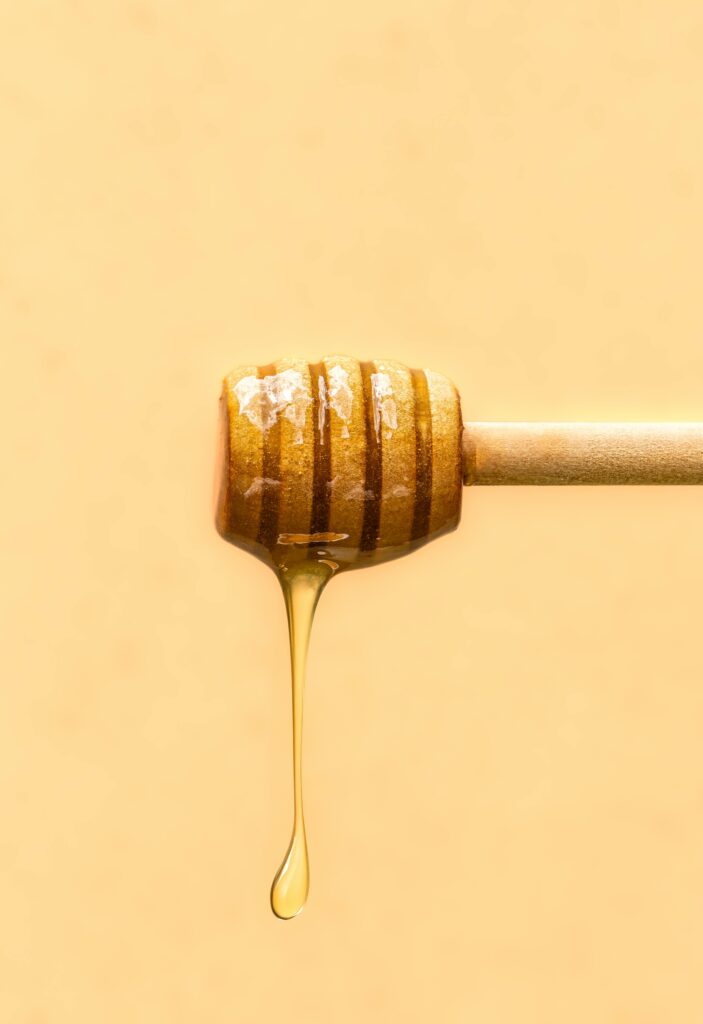
It is commonly known that the consumption of sugary foods results in tooth decay. Bacterium, such as Streptococcus Mutans, ferment the sugars that we eat, resulting in the demineralisation of enamel. However, substantial research has proven that miele, can benefit your oral health and have positive effects! Honey contains a lower percentage of glucose and fructose than other common sugary foods. Furthermore, research has shown that honey has antimicrobial properties and that it contains anti-inflammatory compounds. Therefore, honey can reduce tooth decay and prevent gingivitis (gum inflammation) when consumed in the right amounts.

A scientific study carried out in New Zealand (S. Rupesh et Al, 2014) involved applying 5ml of honey on all the occlusal surfaces of the teeth of children, twice daily after breakfast in the morning and at dinner for 21 days. The children were asked to keep the honey in the mouth for one minute without swallowing any. They were instructed not to eat, drink or rinse for a period of 30 minutes. After being compared to a control group, findings showed that the honey significantly reduced the levels of Streptococcus Mutans in the mouth! This shows that when consumed in the right amounts, honey can reduce the risk of developing tooth decay!
Another study conducted by Atwa et Al, 2014, investigated the effects of chewing miele, and how it impacted oral health. They looked at the bacterial count in the mouth and the levels of dental plaque formed after consuming honey. They compared the effects of honey in the mouth with 10% solutions of sorbitol and 10% sucrose solution. Results showed that the levels of decay causing bacterium were significantly reduced when chewing on honey, compared to chewing on the sorbitol and sucrose solutions. The growth of certain bacteria strains were inhibited by the honey as it had a similar effect to using antibiotics!
Honey comes from flower nectar, collected by bees. The bees produce a deliciously sweet honey containing an Apitoxin. This is also known as honey bee venom and has been found to have anti-microbial properties. A study by Leandro et al, 2015, looked at the biological components of the Apitoxins. Melittin is an antimicrobial peptide that can decease the number of bacteria in the mouth by interacting with the membrane of the bacteria and destroying it.
Numerous studies have shown that honey contains antimicrobial agents, such as melittin, which can destroy bacteria in the mouth and reduce the risk of tooth decay. Honey can help to prevent gingivitis and reduce the levels of plaque in our mouths. When consumed in the right amounts and teeth are looked after appropriately, honey may keep your smile looking as beautiful as ever! But do not forget to brush your teeth.
Maroua Benterkia – Dental Student
Sources: 3 scientific articles:
- Rupesh, S., Winnier, J., Rao, A., Reddy, N., Nayak, U. and Peter, J. (2014). Evaluation of the effects of manuka honey on salivary levels of mutans streptococci in children: A pilot study. Journal of Indian Society of Pedodontics and Preventive Dentistry, 32(3), p.212.
- Atwa, A., AbuShahba, R., Mostafa, M. and Hashem, M. (2014). Effect of honey in preventing gingivitis and dental caries in patients undergoing orthodontic treatment. The Saudi Dental Journal, 26(3), pp.108-114.
- Leandro, L., Mendes, C., Casemiro, L., Vinholis, A., Cunha, W., Almeida, R. and Martins, C. (2015). Antimicrobial activity of apitoxin, melittin and phospholipase A2 of honey bee (Apis mellifera) venom against oral pathogens. Anais da Academia Brasileira de Ciências, 87(1), pp.147-155.
1. Is honey better for your teeth than regular sugar?

Yes. While both contain natural sugars, honey also has antimicrobial and anti-inflammatory compounds that can help reduce harmful bacteria in the mouth, unlike regular sugar which only feeds them.
2. Can eating honey actually prevent tooth decay?

When consumed in moderation and as part of a proper oral hygiene routine, honey may help lower bacterial levels and reduce the risk of tooth decay, as shown in multiple scientific studies.
3. Should I brush my teeth after eating honey?

Yes. Despite its benefits, honey is still sticky and contains natural sugars, so brushing your teeth after consumption helps protect enamel and maintain oral health.