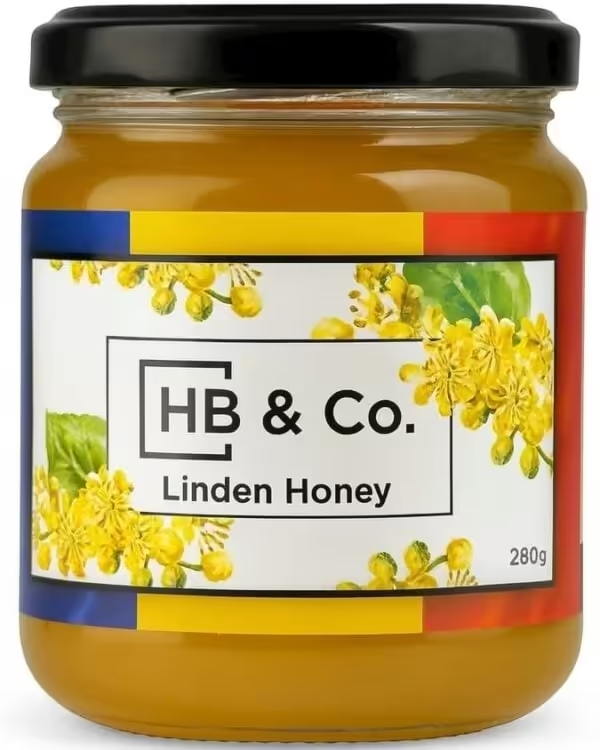
Miele di tiglio
£10.99 - o abbonati e risparmia 20%
Raw, unpasteurised Linden Honey from our family apiaries in
Transylvania. Also known as lime blossom honey delicately herbal,
with notes of mint, citrus, and wild flowers. One of the most
traditionally valued honey varieties in Europe.
Disponibilità: In magazzino
Tasting Notes
Herbal, Minty, and Distinctly Aromatic. One of Europe’s Most Treasured Honeys.
Linden honey, also known as lime blossom honey in the UK and basswood honey in North America is one of the most aromatic and distinctive honey varieties produced in Europe. Its herbal, slightly minty character comes from the blossoms of the linden tree (Tilia), revered across Central and Eastern Europe for centuries as the tree of life and health.
Il sapore
Delicate herbal sweetness with notes of lime blossom, fresh mint, citrus, and a warm woody undertone
Aroma
Intensely floral with a fresh minty edge, linden blossom, and a hint of camphor. One of the most aromatic honeys in our range.
Struttura
Crystallises relatively quickly due to its high glucose content. Forms a fine, smooth crystal structure with a soft set.
Colore
Pale golden to light amber with a slight greenish tint when fresh. A distinctive colour that reflects the linden blossom origin.
Linden, Lime Blossom, or Basswood?
Three Names. One Extraordinary Honey.
Linden honey, lime blossom honey, and basswood honey all refer to honey produced from the nectar of trees in the Tilia genus — a family of around 30 tree species native to the temperate Northern Hemisphere. In the UK the tree is commonly called the lime tree and the honey is often labelled lime blossom honey. In Central and Eastern Europe, where the finest examples are produced, it is called linden honey. In North America it is known as basswood honey. The name varies by region but the honey is the same: aromatic, herbal, and highly distinctive. Our variety comes from Transylvania, where the linden tree has been prized by beekeepers for centuries.
Origin & Provenance
From the Linden Forests of Transylvania. The Same Family Apiaries. Six Generations.
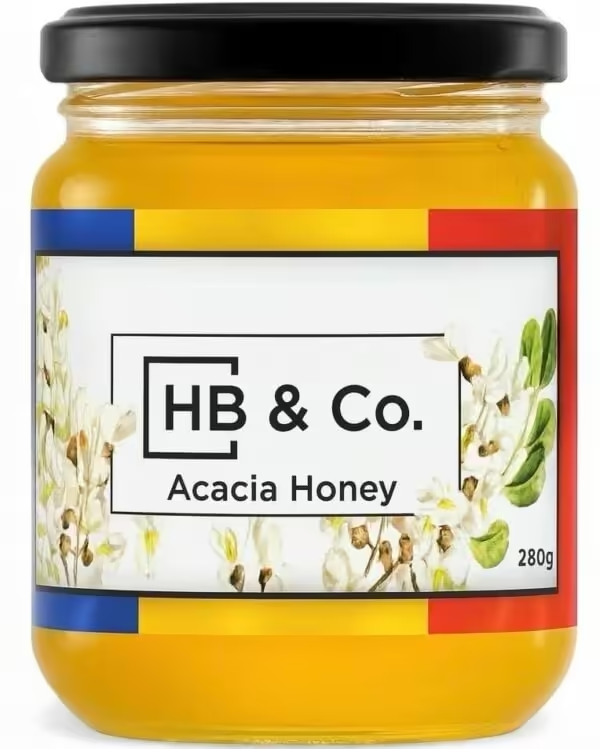
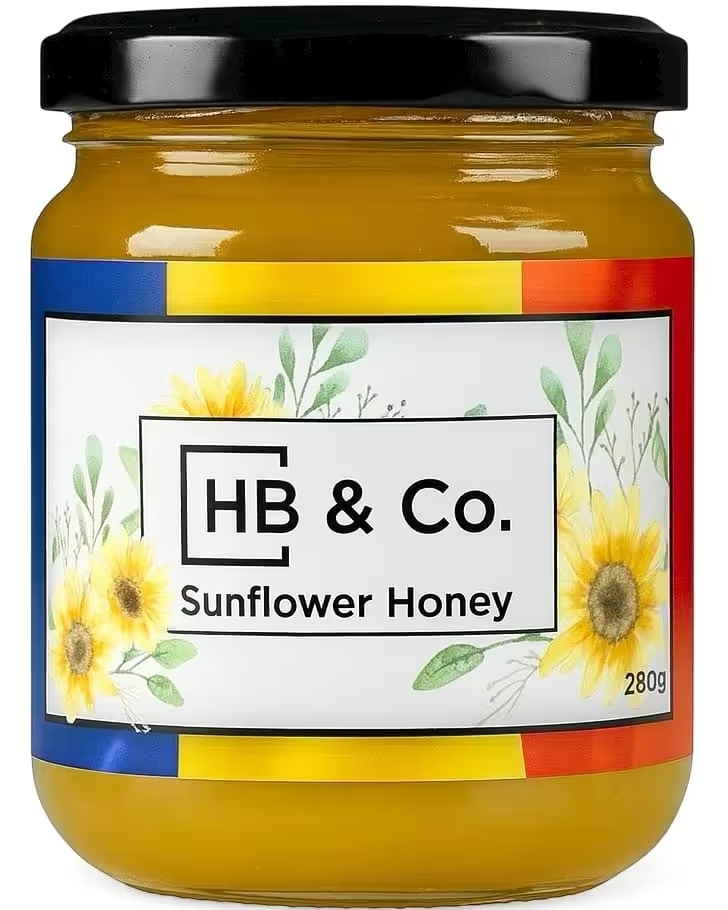
Our Linden Honey is harvested from the same family apiaries in Transylvania, Romania that produce our Acacia and Sunflower honeys. HoneyBee & Co. founder Dragos Nistor grew up watching his father and grandfather tend these hives. This heritage spans over six generations and the same landscapes have been producing linden honey for longer than the family can fully trace.
The linden trees of Transylvania bloom for a brief window each summer — typically two to three weeks in late June and July — filling the air with an intensely sweet, herbal fragrance that draws bees from miles around. Some beekeepers call the linden tree the bee tree precisely because of how powerfully it attracts bee colonies during its short bloom. The nectar it produces is exceptional in both purity and aromatic intensity.
Because the linden bloom window is so short and cannot be guaranteed every year — weather, late frost, or drought can dramatically reduce or eliminate the harvest — genuine linden honey is relatively rare. When our stock is exhausted, we do not source from alternative suppliers. We wait for the next season. Read the full story of our Transylvanian heritage in our article from Transylvanian Apiaries to Three Consecutive Vogue Features.
6+
Generations of family beekeeping heritage in Transylvania
Mono
Monofloral. Bees forage almost exclusively on linden during the brief bloom window.
2–3
Week bloom window per year. A genuinely seasonal harvest.
Crudo
Never heated above hive temperature. Enzymes and aromatics fully intact.
Transylvania, Romania. The source of every jar of our Linden Honey.
What Makes It Special
Why Linden Honey Has Been Prized for Centuries
Linden honey is not a modern discovery. It has been collected and valued in Central and Eastern European folk medicine for over two thousand years. Three qualities explain why it holds such a distinguished position among honey connoisseurs.
Farnesol — A Compound Found Only in Linden
Linden honey contains farnesol, a naturally occurring sesquiterpene alcohol derived from linden blossom nectar. Farnesol is responsible for linden honey’s distinctive aromatic character and is one of the key compounds that distinguishes it from other honey varieties. It is found in linden blossom and contributes to the fresh, herbal quality that makes linden honey one of the most aromatic in our range.
Unfiltered. A Highly Distinctive Monofloral Honey.
Because linden trees bloom so powerfully and briefly, bees often collect almost exclusively linden nectar during the short bloom window. This concentrated foraging means genuine linden honey has an exceptionally high linden pollen proportion — one reason it is widely regarded as one of the most distinctive monofloral honeys produced in Europe. Pollen analysis is the standard method for verifying monofloral honey, and linden honey is reliably identifiable by its pollen profile.
The Best Honey for Tea
The herbal, minty character of linden honey makes it the natural companion for hot drinks. A teaspoon in warm lemon water, herbal tea, or even ginger infusion creates a combination of flavours that has been used as a traditional soothing remedy across Europe for generations. For our recipe and guidance on getting the most from this pairing, read our ginger and honey guide.
Natural Properties
The Natural Properties of Raw Linden Honey
Raw linden honey is never heated above hive temperature, preserving its full natural composition. These properties are present only in raw, unprocessed honey. Pasteurisation and ultra-filtering destroy them.
Rich Vitamin and Mineral Profile
Raw honey contains naturally occurring vitamins, minerals, and trace elements derived from the nectar and pollen of the source plant. These compounds are preserved only through raw, cold extraction without heat treatment. Pasteurisation reduces or eliminates many of these naturally occurring compounds, which is why our linden honey is never heated above hive temperature.
Source: National Library of Medicine ↗Natural Antibacterial and Soothing Properties
Raw linden honey contains glucose oxidase, producing hydrogen peroxide upon contact with moisture — the primary mechanism of honey’s natural antibacterial properties. Linden honey has a long tradition of use for soothing sore throats and mild coughs. The combination of natural antibacterial activity, coating texture, and farnesol content makes it particularly suited to this traditional application.
Source: National Library of Medicine ↗Prebiotic and Digestive Support
Linden honey contains oligosaccharides with prebiotic-like activity that may support the growth of beneficial gut bacteria. It has a long tradition in Eastern European folk medicine as a digestive aid. Research has noted that raw honey oligosaccharides encourage the growth of bifidobacteria and lactobacilli in the gut microbiome.
Source: National Library of Medicine ↗Antioxidants and Nervous System Support
Linden honey has a long tradition in European herbal medicine as a calming, soothing food. Its distinctive aromatic compounds, including farnesol, contribute to its character. Combined with its natural antioxidant compounds, linden honey has a broader flavour and nutritional profile than most honey varieties. The NHS recognises honey as a natural food with a different nutritional profile to refined sugar.
Source: NHS ↗The information above is for educational purposes only and does not constitute medical advice. Raw honey is not recommended for children under 12 months. If you have a medical condition or are pregnant, consult your GP before making dietary changes.
How to Use It
Six Ways to Enjoy Transylvanian Linden Honey
The herbal, minty complexity of linden honey means it works best where its distinctive character can be appreciated. It is not a neutral sweetener — it brings its own flavour to everything it touches.
Tea and Warm Drinks
The definitive use for linden honey. A teaspoon dissolved in warm chamomile, mint, or green tea is one of the most traditional and satisfying uses. Always add it when the drink has cooled below 40°C to preserve the delicate aromatics and natural enzymes. The herbal notes of the honey complement herbal teas perfectly.
Most popular useWarm Lemon Water
Linden honey and lemon is one of the oldest natural soothing combinations in European folk medicine. The citrus notes in the honey complement fresh lemon juice beautifully. Add a teaspoon to warm (not boiling) water with half a lemon. Add a slice of fresh ginger for an even more aromatic result.
Traditional remedyYoghurt and Breakfast
Drizzle over Greek yoghurt, porridge, or granola. The herbal complexity of linden honey transforms a simple breakfast into something genuinely interesting. Works especially well with yoghurt as the acidity of the yoghurt balances the honey’s floral sweetness.
Breakfast essentialHard Aged Cheeses
Linden honey’s herbal, slightly bitter character pairs beautifully with aged hard cheeses. Parmigiano Reggiano, Pecorino, aged Manchego, and mature cheddar all work well. The honey’s floral complexity cuts through the richness of aged cheese in a way that milder honeys cannot.
Cheese board pairingBaking and Desserts
Use in desserts where a herbal, floral note is welcome — honey cake, lavender shortbread, lemon tarts, and baklava all benefit from linden honey’s aromatic character. It also works beautifully as a glaze for roast ham or duck, where its herbal notes complement the meat.
Aromatic in bakingStraight from the Jar
Take a small spoonful and let the honey melt on your tongue. Notice the initial floral sweetness open into herbal depth — mint, lime blossom, wood, and a faint camphor note. The aroma intensifies as it warms on the palate. This is what two thousand years of appreciation looks like.
The purist’s choiceProvenance and Trust
The Same Family. The Same Landscape. Six Generations.
HoneyBee & Co. was founded by Dragos Nistor, whose family has kept bees in Transylvania for over six generations. Our Linden Honey comes from the same family apiaries as our Acacia and Sunflower honeys — hives set among the linden forests and meadows of Transylvania that have been tended by the Nistor family across multiple generations.
We never blend our honeys across sources, seasons, or years. When seasonal stock is limited or exhausted due to poor bloom conditions, we do not substitute from anonymous suppliers. The honey you receive is exactly what the label describes — single-origin, single-season, raw linden honey from a family apiary we know intimately.
This continuity of sourcing is rare in the honey industry, where blending across countries and seasons is standard practice. It is the foundation of everything we do at HoneyBee & Co.
Our Story

Domande frequenti
Everything You Need to Know About Linden Honey
What is linden honey? Is it the same as lime blossom honey?+
What does linden honey taste like?+
What are the health benefits of linden honey?+
Why is linden honey sometimes hard to find?+
My linden honey has crystallised. Is it still good?+
How should I store linden honey?+
Do you offer linden honey on subscription?+
Explore the Range