The World's First Vaccine for Honeybees
In late 2022, the US government approved the world's first vaccine for honeybees. Developed by Dalan Animal Health, it targets American foulbrood, a bacterial disease that has devastated colonies for centuries. This is what it means for bees, beekeepers, and the future of food.
Punti di forza
The world's first vaccine for honeybees, developed by Dalan Animal Health, has been approved by the US government to combat American foulbrood disease.
American foulbrood is a devastating bacterial disease caused by Paenibacillus larvae that kills bee larvae and can destroy entire hives.
The vaccine is administered orally to queen bees via royal jelly and works through transgenerational immune priming, passing immunity to the next generation of larvae.
The vaccine reduces larval death by 30 to 50%, offers a sustainable alternative to antibiotics, and supports honeybee populations vital for pollination and food security.
In This Article
For as long as humans have kept bees, disease has been the constant adversary. American foulbrood in particular has shaped beekeeping practice across centuries, forcing beekeepers to burn hives, destroy equipment, and absorb losses that no insurance policy could fully cover. The standard response to an AFB outbreak has always been fire.
In late 2022, that changed. The United States Department of Agriculture granted a conditional licence to Dalan Animal Health for the world's first approved vaccine for honeybees. It does not cure existing infections. It prevents them. And it does so through one of the most elegant mechanisms in modern veterinary science: the queen bee herself.
This article explains what the vaccine is, how it works, what it means for beekeepers in the UK and Europe, and why it matters far beyond the apiary.
The Threat of American Foulbrood
The most destructive bacterial disease in beekeeping history
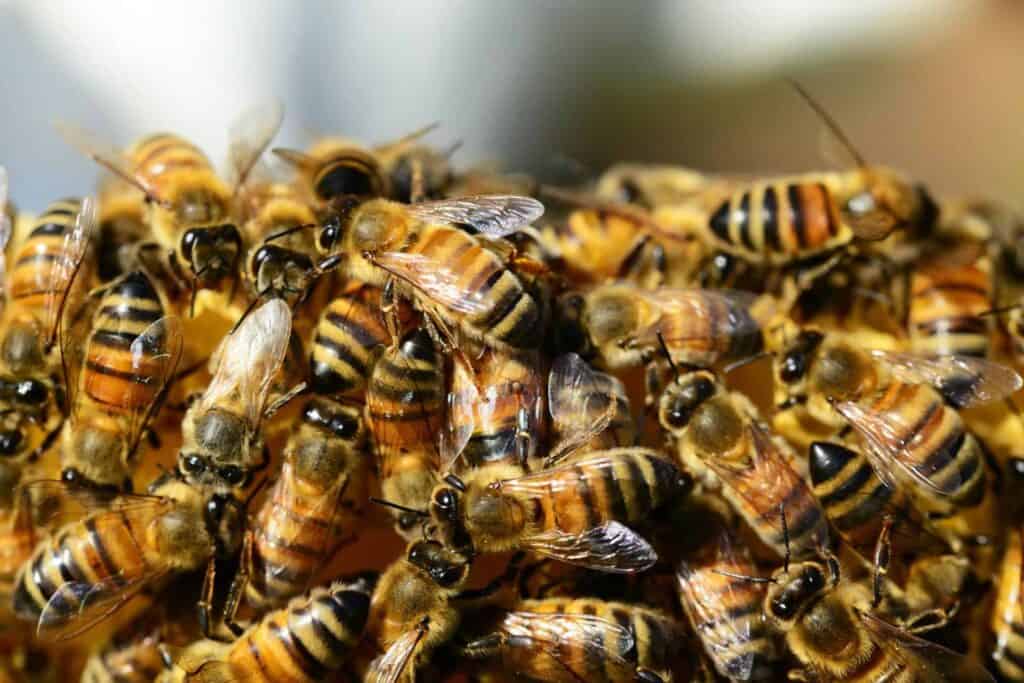
Healthy brood inside a managed hive. AFB targets larvae at their most vulnerable stage.
American foulbrood (AFB) is one of the most devastating bacterial diseases threatening honeybee populations worldwide. Caused by the resilient bacterium Paenibacillus larvae, AFB targets bee larvae within the hive, leading to widespread larval death and, ultimately, the collapse of entire colonies. What makes this disease particularly dangerous is not just its lethality, but its persistence. Spores can remain viable in hives, equipment, and honey for decades, making eradication extraordinarily difficult once an outbreak takes hold.
For decades, beekeepers relied on antibiotics to control AFB, but heavy use carries serious consequences: antibiotic resistance, disruption to the bee microbiome, and the risk of residues contaminating honey. The traditional last resort was more severe still: burning infected hives entirely. This approach, while effective at stopping spread, represented catastrophic financial losses for beekeepers and offered no protection for the surrounding apiaries.
The clinical signs of AFB are unmistakable to an experienced beekeeper. Infected colonies emit a distinctly foul odour, larvae turn brown and collapse into a sticky, rope-like mass, and the cappings over infected cells become sunken and discoloured. Adult bees, while not directly affected, inadvertently spread spores between hives during foraging and through contaminated tools and honey supplies.
Foul Odour
Infected hives emit a distinctive smell, one of the earliest warning signs an experienced beekeeper will notice before visible symptoms become apparent.
Sunken, Discoloured Cappings
The wax cappings over infected cells become darker and may appear greasy or perforated as larvae die beneath them.
Rope Test Positive
Infected larvae form a brown, sticky mass that stretches into a rope-like thread when a matchstick is inserted and slowly withdrawn, the definitive field test.
Colony Collapse
Without intervention, AFB progresses to total colony loss. Surviving bees from infected hives can spread spores to neighbouring apiaries within a season.
Traditional treatment for American foulbrood involved burning infected hives outright. The vaccine changes that calculus entirely, shifting the response from destruction to prevention.
HoneyBee & Co. | Based on Dalan Animal Health announcement, January 2023The USDA Approval: What Happened and When
A timeline of the breakthrough that changed beekeeping science
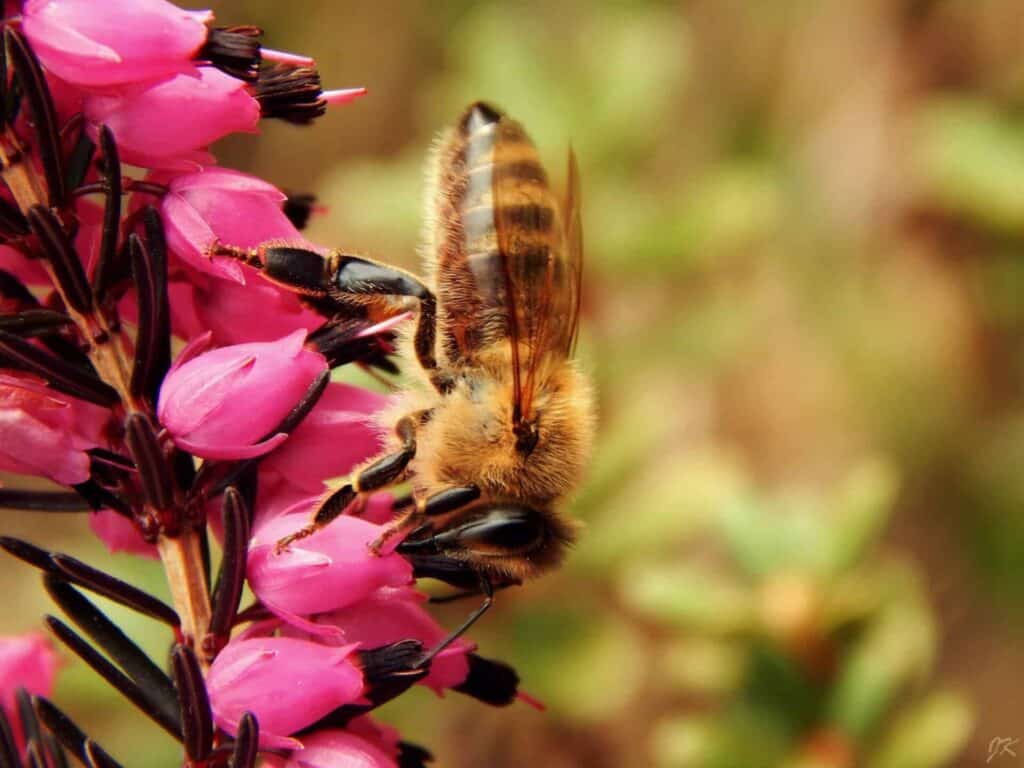
Bees foraging in the wild — the colonies this vaccine is designed to protect.
In late 2022 and early 2023, the United States Department of Agriculture (USDA) granted a conditional licence to Dalan Animal Health for the world's first approved vaccine for honeybees. The licence is conditional, meaning it authorises use under specific terms while further data is gathered, a standard regulatory pathway for novel veterinary biologics with a strong safety and efficacy profile but limited long-term field data.
Dalan Animal Health is a biotech company specialising in insect health, and the development of this vaccine represents years of research into the mechanisms by which insects transmit and build resistance to pathogens. Their approach was not to create a conventional vaccine in the vertebrate sense, but to exploit a biological process already present in bees: the ability of a queen to pass immunity to her offspring through her eggs.
The vaccine is currently available to commercial beekeepers in the United States and select international markets. Plans to extend access to hobbyist beekeepers are underway. Dalan is also actively developing vaccines for other bee diseases, including European foulbrood and deformed wing virus.
Years of Research and Development
Dalan Animal Health conducts laboratory and field trials, studying the mechanism of transgenerational immune priming (TGIP) in honeybees and developing a viable vaccine formulation using killed whole-cell Paenibacillus larvae bacteria.
USDA Conditional Licence Granted
The US Department of Agriculture grants a conditional licence to Dalan Animal Health, making this the world's first approved vaccine for any insect species. The announcement is reported globally and is widely described as a landmark moment in veterinary and apicultural science.
Commercial Rollout Begins
The vaccine becomes available to commercial beekeepers in the United States. Dalan begins working with beekeeping associations and regulatory bodies internationally to explore approval pathways in other markets.
Expanded Development Pipeline and Full Licensure Progress
Dalan Animal Health continues research into vaccines for European foulbrood, deformed wing virus, and other major threats. In November 2025, Dalan announced successful completion of efficacy trials required for full USDA licensure, with full approval expected at the earliest for the 2027 season. The vaccine continues to be sold commercially under the conditional licence while the full licensure application is prepared. Source: Dalan Animal Health press release, November 2025.
What is a Conditional Licence?
A USDA conditional licence allows a veterinary biologic to be produced and distributed commercially when there is a reasonable expectation of product safety, a pure and potent product, and a demonstrated need, while additional efficacy data is still being gathered. It is not a provisional or experimental approval: it is a recognised regulatory route for novel products with strong early evidence. The product must meet all manufacturing and safety standards in full.
How the Vaccine Works
Transgenerational immune priming: using the queen's biology to protect her colony
The queen's eggs are laid in cells like these. The vaccine travels from her ovaries into each egg, giving hatching larvae built-in resistance to American foulbrood.
The vaccine developed by Dalan Animal Health works through a process called transgenerational immune priming (TGIP), a biological mechanism that already exists in many insect species. The principle is straightforward: a mother's immune experience can be passed to her offspring, giving the next generation a head start against pathogens they have never encountered.
What Dalan's team achieved was harnessing this mechanism deliberately and reliably, using a vaccine formulation that could be administered practically within a working beekeeping operation. The result is a chemical-free, non-GMO product with no impact on honey and no antibiotic residue concerns.
Vaccine Mixed into Sugar Patty
The vaccine contains killed whole-cell Paenibacillus larvae bacteria (larvae bacterin). It is incorporated into a sugar patty delivering 10 to 15 grams over approximately one week, placed directly in the hive for worker bees to consume and process.
Worker Bees Feed Royal Jelly to the Queen
Worker bees incorporate the vaccine into the royal jelly they produce and feed exclusively to the queen. This is the same mechanism by which the queen receives all her nutrition, making it a natural delivery route requiring no needles, no handling, and no disruption to the hive.
Vitellogenin Carries Immunity to the Ovaries
As the queen digests the royal jelly, the key ingredient, the heat-killed bacteria, travels to her ovaries. Here, the egg yolk protein vitellogenin binds to the bacterial components and transfers them directly into the queen's developing eggs.
Larvae Hatch with Built-In Resistance
Because the bacterial components are already present in the eggs, the larvae that hatch from them carry a primed immune response to Paenibacillus larvae before they have any exposure to the disease itself. This is transgenerational immune priming in action.
Protection Across the Colony
Because every larva in the colony is born from the queen's eggs, a single treated queen provides protection across the entire next generation of her colony. The immunity is not permanent, and re-vaccination is required as queen cycles turn over, but the protective window is significant.
No Antibiotics Required
The vaccine offers a sustainable alternative to antibiotics, eliminating resistance risk and removing concerns about antibiotic residues appearing in honey or other bee products.
Chemical-Free and Non-GMO
The formulation contains only killed bacteria and natural delivery agents. It has no negative impact on honey, hive health, or the surrounding environment.
Non-Invasive Administration
Delivered via a sugar patty placed in the hive, the vaccine requires no injection, no queen handling, and no specialist equipment. Any commercial beekeeper can administer it.
Platform for Future Vaccines
The same transgenerational immune priming approach is now being applied to European foulbrood and deformed wing virus, potentially creating a full suite of bee disease vaccines.
Why This Matters: Beyond the Hive
Honeybee health is not a niche concern. It underpins global food security.
Ethical beekeeping directly supports the pollinator populations that global food production depends on.
The significance of the world's first honeybee vaccine extends far beyond any single beekeeper's operation. According to the FAO and the landmark Klein et al. (2007) study, around 75% of the world's food crop types depend on animal pollinators to some degree, and these crops account for approximately 35% of global food production by volume. The IPBES places the annual value of pollinator-dependent crop production at between US$235 billion and US$577 billion. Honeybees are among the most economically important of all pollinators, particularly for fruit, nut, and seed crops.
The USDA estimates that American foulbrood alone costs US beekeepers approximately $400 million annually in direct losses. But the downstream cost, in reduced crop yields and the accelerated use of expensive managed pollination services to compensate for declining wild and managed bee populations, is considerably larger.
The vaccine matters because it shifts the response to bee disease from reactive and destructive to proactive and preventive. It represents a new category of solution: veterinary immunology applied to insect health at commercial scale. And critically, by reducing antibiotic dependence in beekeeping, it addresses a secondary concern that affects not just bee health but honey quality and food safety more broadly.
For consumers who care about where their food comes from, the development of a bee vaccine is a signal that the science of protecting pollinators is advancing. For beekeepers, it is a practical tool that may, over time, fundamentally change how American foulbrood is managed worldwide.
Vaccines for Honeybees in Europe
Where European regulation stands and what UK beekeepers need to know
While the United States has led the way with the world's first approved honeybee vaccine, the picture in Europe is more complex. The European Union follows a comprehensive regulatory framework for veterinary medicinal products through the European Medicines Agency (EMA). Any bee vaccine seeking to be marketed across EU member states must undergo rigorous safety, efficacy, and environmental impact evaluation before the European Commission can grant authorisation.
This process is thorough and necessarily lengthy. The EMA's framework was not designed with insect vaccines in mind, and adapting regulatory pathways to cover a biologic delivered via royal jelly to a queen bee represents genuine regulatory innovation. European approval timelines therefore lag behind the US, though the scientific groundwork being laid by Dalan and similar organisations is directly relevant to the European application process.
For UK beekeepers, the regulatory situation post-Brexit adds a further layer of complexity, as the UK Veterinary Medicines Directorate (VMD) now operates independently of the EMA. Any path to UK approval would require a separate application. The British Beekeepers Association (BBKA) has been active in monitoring developments and is engaged with regulatory bodies on the question of bee health biologics.
European Medicines Agency (EMA)
The EMA evaluates veterinary medicinal products including vaccines for insects. European approval requires demonstrating safety, efficacy, and environmental compatibility under EU standards, a process distinct from the USDA conditional licence route.
UK Veterinary Medicines Directorate
Post-Brexit, the VMD governs veterinary product approval in the UK independently of the EMA. UK beekeepers seeking access to honeybee vaccines would require a separate UK approval process through the VMD.
Current Disease Focus
European regulatory interest centres on both American foulbrood and European foulbrood, the latter being more prevalent in UK and continental beekeeping contexts. Research into TGIP-based vaccine formulations is active across multiple European institutions.
International Collaboration
Dalan Animal Health is actively engaged with international markets and regulatory bodies. Harmonising approval processes between the US, EU, and UK would accelerate global access to bee vaccines and support the wider goal of protecting pollinator populations.
Other Threats Facing Bee Populations
The vaccine is a significant advance. But AFB is one threat among many.
The vaccine addresses one threat among many. Habitat loss, pesticides and Varroa all remain active dangers to bee populations.
The approval of the world's first honeybee vaccine is genuinely significant. But it would be a misreading of the science to conclude that bee health has been solved. American foulbrood is one disease among a range of interconnected threats that continue to put pressure on managed and wild bee populations globally. The vaccine addresses one piece of a complex puzzle.
Dalan Animal Health has explicitly acknowledged this, framing the AFB vaccine as the first in what it hopes will become a broader platform of bee health biologics. Research is underway on vaccines targeting European foulbrood and deformed wing virus. But those are in development. The threats below exist now.
Varroa Mite
Varroa destructor is the most widespread and damaging parasite affecting managed honeybee colonies worldwide. It weakens bees, suppresses immune function, and acts as a vector for several viruses including deformed wing virus.
Pesticides and Neonicotinoids
Neonicotinoid pesticides have been strongly associated with impaired bee navigation, reduced foraging efficiency, and colony-level stress. Several neonicotinoids are banned in the EU but remain in use in other markets.
Habitat Loss
The expansion of monoculture agriculture and urban development has dramatically reduced the diversity of flowering plants available to bees. Without varied forage, colonies face nutritional stress that weakens their immune response.
European Foulbrood
A separate bacterial disease from AFB, European foulbrood is caused by Melissococcus plutonius. It is generally less severe than AFB but can cause significant colony losses, particularly in cool, damp conditions common in the UK.
Cambiamento climatico
Shifting weather patterns disrupt the synchrony between flowering plants and bee foraging seasons, create conditions more favourable to certain pathogens, and increase the frequency of extreme weather events that can destroy colonies.
Small Hive Beetle
An invasive pest spreading from Africa, the small hive beetle can devastate colonies and contaminate honey stores. It has reached southern Europe and represents a growing threat to UK beekeeping as temperatures rise.
HoneyBee & Co. and Sustainable Beekeeping
At HoneyBee & Co., our commitment to ethical, traceable honey production is inseparable from our commitment to bee health. Our family has kept bees for six generations in Transylvania, and the wellbeing of the hive has always been the foundation of everything we do. That heritage is reflected in every jar of our Romanian honey.
We source exclusively from beekeepers who share this approach: low-intervention, antibiotic-free, and with genuine transparency about their practices. Every jar we sell supports a beekeeper who is actively investing in the long-term health of their colonies, not extracting from them. You can read more about the producers we work with on our partnerships page.
Developments like the Dalan vaccine matter to us because they represent the kind of scientific progress that makes sustainable beekeeping more viable at scale. We will continue to follow and support advances in bee health research, and to share them with our community.
Our StorySupport Ethical Beekeeping
Every jar of HoneyBee & Co. raw honey comes from a beekeeper who puts hive health first. Traceable, antibiotic-free, and harvested with six generations of expertise.
Acquista il miele grezzo Threats Facing BeesFrequently Asked Questions
The most common questions about the world's first honeybee vaccine
Research References and Sources
- Dalan Animal Health. (January 4, 2023). First-in-Class Honeybee Vaccine Receives Conditional License from the USDA Center for Veterinary Biologics. BusinessWire. businesswire.com
- American Veterinary Medical Association. (January 2023). Honeybee vaccine receives conditional license from USDA. avma.org
- CNN. (January 7, 2023). First-ever vaccine for honeybees has been approved by the USDA. cnn.com
- Dalan Animal Health. (November 4, 2025). Successful Efficacy Trials Announced; Full Licensure Expected 2027 at Earliest. PR Newswire. prnewswire.com
- Klein AM, et al. (2007). Importance of pollinators in changing landscapes for world crops. Proceedings of the Royal Society B, 274(1608), 303-313. PMC1702377
- IPBES. (2016). Pollinators Vital to Our Food Supply Under Threat. Annual crop value dependent on pollinators: US$235B–US$577B. ipbes.net
- FAO. Global Action on Pollination Services for Sustainable Agriculture. 75% of food crop types depend on pollinators. fao.org
- Genersch E. (2010). American Foulbrood in honeybees and its causative agent, Paenibacillus larvae. Journal of Invertebrate Pathology. PMC2810425
- National Bee Unit (UK). American Foulbrood: Identification and Management. nationalbeeunit.com
- Our World in Data. How much of the world's food production is dependent on pollinators? ourworldindata.org