
 English (UK)
  Italiano
  Français
  简体中文
简体中文  한국어
한국어 
Honey has been part of human life for at least 8,000 years. Cave paintings in Valencia show people harvesting it from wild hives. Egyptian priests used it in offerings to the gods. Roman soldiers carried it to dress wounds on the battlefield. And yet most people today know very little about what honey actually is, how it is made, or why no two varieties taste the same. These eight facts change that.
Honey Is the Only Food That Never Spoils
When archaeologists opened sealed vessels inside Tutankhamun's tomb in 1922, they found honey approximately 3,000 years old. It was still edible. This is not legend or approximation. It is one of the most striking demonstrations of honey's natural chemistry in recorded history.
Honey resists spoilage because of three simultaneous properties. It is naturally acidic, with a pH typically between 3.2 and 4.5. It contains very little moisture, usually under 20 percent water content. And it produces small amounts of hydrogen peroxide through the enzyme glucose oxidase. Together, these properties create an environment where bacteria and microorganisms simply cannot survive.
The practical implication for everyday storage is straightforward. Honey in a sealed jar at room temperature will not go off. Crystallisation may occur over time, but that is a natural physical process rather than spoilage. We return to this in Fact 8.
A Single Bee Produces About One Twelfth of a Teaspoon in Its Lifetime
A worker bee lives for approximately six weeks during summer. In that time she will visit somewhere between 50,000 and 100,000 flowers and contribute roughly one twelfth of a teaspoon of honey to the hive. That is less than half a gram. From an entire lifetime of work.
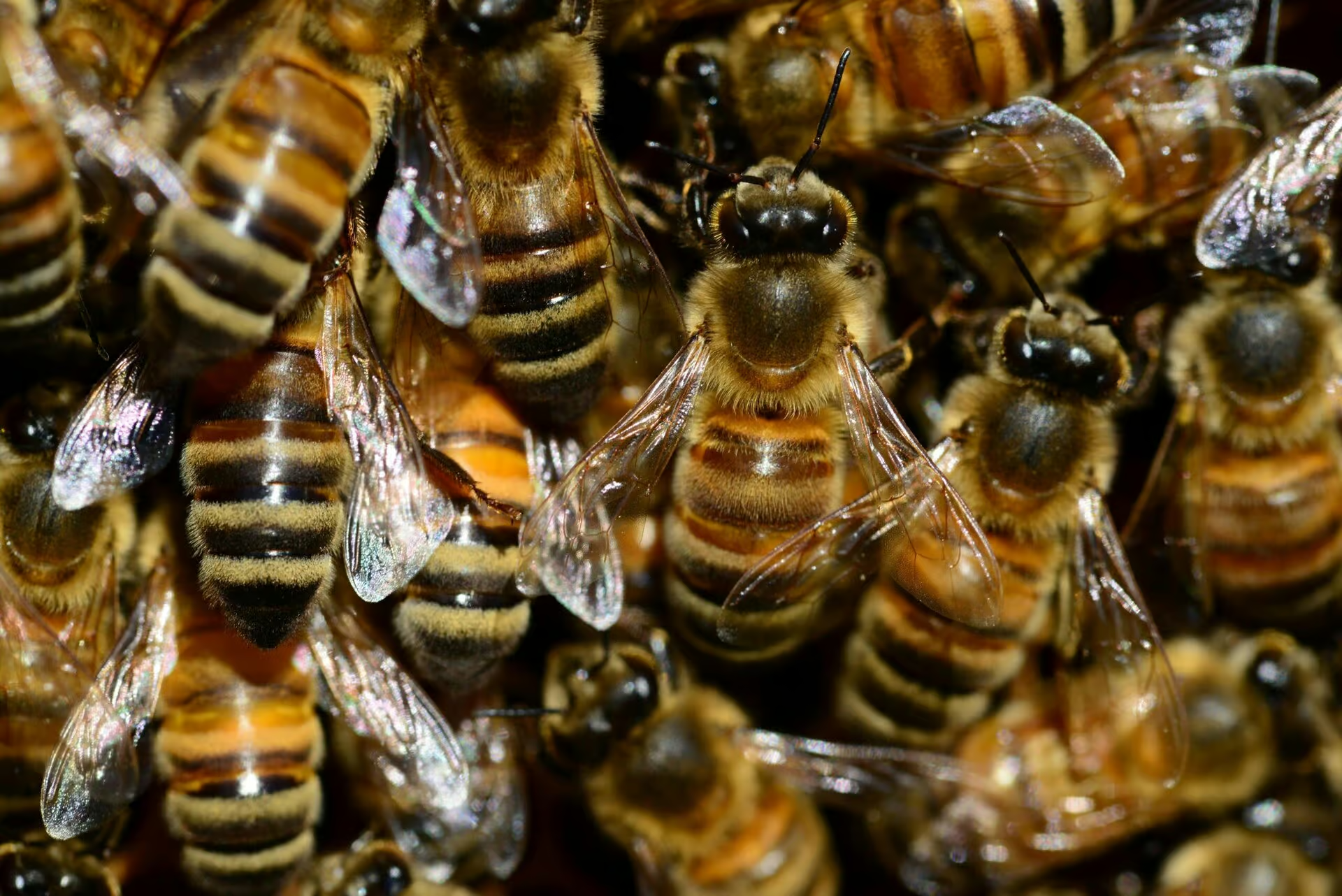
Worker bees inside the hive. Each one will contribute less than half a gram of honey across her entire lifetime.
This context is part of what distinguishes artisanal honey from mass-produced blends. When you buy a raw, single-origin variety, the price reflects not just the beekeeper's labour but the accumulated effort of tens of thousands of bees across an entire season. That arithmetic looks entirely different once you understand it.
Honey Contains Over 180 Identified Compounds
Honey is not simply sugar dissolved in water. Analysis has identified more than 180 distinct substances in raw honey, including enzymes, amino acids, B vitamins, several minerals, and a range of polyphenols and flavonoids that vary depending on which flowers the bees visited.
The enzyme invertase converts sucrose into fructose and glucose during production. Glucose oxidase produces hydrogen peroxide when honey is diluted, contributing to its antimicrobial properties. Diastase breaks down starch. These are not trace elements. They are functional compounds that do measurable things.
The specific composition of any jar of honey is a direct record of where the bees foraged. Our Acacia Honey, harvested from Robinia pseudoacacia trees in Transylvania, has a markedly different polyphenol profile from our Heather Honey from the Yorkshire Moors. Same species of bee. Completely different product.
Honey Has Natural Antimicrobial Properties Used in Medicine for Centuries
Honey was used as a wound dressing in ancient Egypt, Greece, and Rome. This was not folk medicine based on hope. It worked, and modern research has confirmed exactly why.
Raw honey inhibits bacterial growth through several mechanisms simultaneously. Its high sugar concentration draws moisture out of bacterial cells through osmosis. Its low pH suppresses microbial activity. And its glucose oxidase enzyme produces hydrogen peroxide when diluted. Some varieties, notably Manuka, also contain methylglyoxal, a compound with particularly strong additional antimicrobial action.
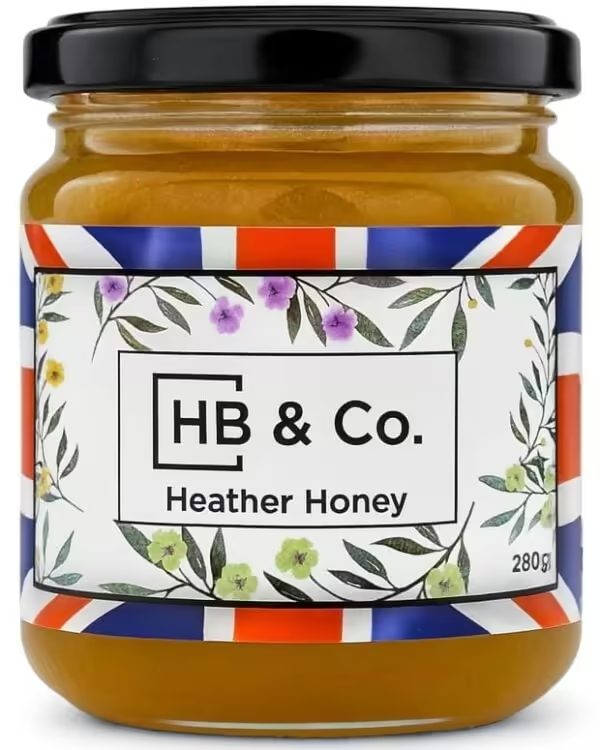
Our Heather Honey from the Yorkshire Moors. Bold, aromatic, and harvested in August when the moorland is in full bloom.
This is one reason the distinction between raw and processed honey matters practically. Heavy heating during commercial processing reduces enzyme activity. A jar of raw honey and a jar of heavily processed supermarket honey may look similar, but they are not chemically equivalent.
Source: Molan PC. The antibacterial activity of honey. Bee World, 1992.
Raw Honey Contains Pinocembrin, a Flavonoid Linked to Brain Health Research
Pinocembrin is a flavonoid found in raw honey and propolis. Research has linked it to neuroprotective effects, including reduced inflammatory responses in brain tissue and potential cognitive benefits. This research is ongoing and focused on pinocembrin as an isolated compound rather than as a dietary intervention. It is important to be clear: eating honey is not a treatment for neurological conditions.
What the research does confirm is that raw honey contains biologically active compounds of genuine scientific interest, and that the flavonoid content of raw honey is measurably greater than that of processed honey.
Pinocembrin is also found in propolis, the resinous substance bees use to seal and sterilise the interior of their hives. This connection between honey's antimicrobial environment and its flavonoid content is not coincidental. The hive produces what the hive needs.
Source: Shi X et al. Pinocembrin protects blood-brain barrier integrity. Brain Research, 2011.
Every Honey Variety Tastes Different Because Every Flower Is Different
The flavour, colour, aroma, and texture of honey are entirely determined by the nectar the bees collected. This is not a subtle variation. The difference between a pale, almost-transparent Acacia honey and a deep, near-treacle Buckwheat honey is as marked as the difference between a Sauvignon Blanc and a Cabernet Sauvignon. Same process. Completely different result.
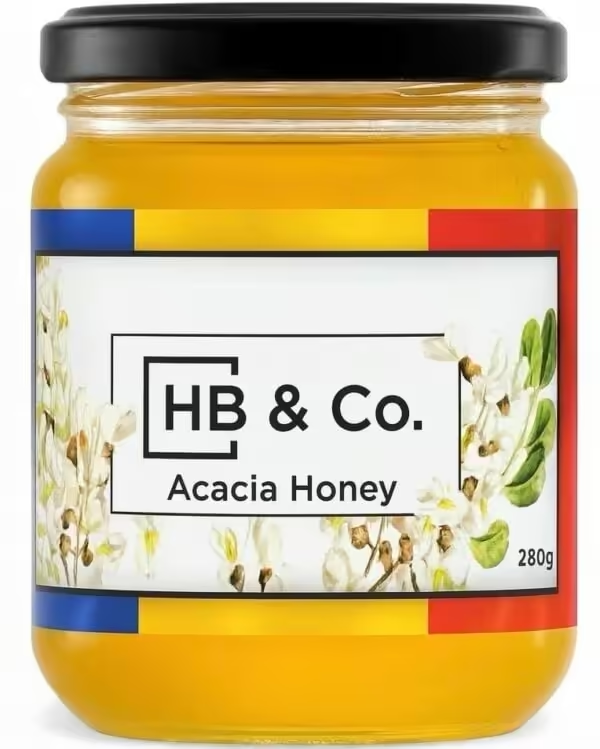
Our Transylvanian Acacia Honey. Pale gold, floral, and slow to crystallise. Harvested in late spring before the summer heat concentrates the nectar.
Acacia honey, produced from Robinia pseudoacacia blossoms, is light, floral, and slow to crystallise because of its high fructose content. Our Transylvanian Acacia is harvested in late spring, before the summer heat concentrates the nectar, which preserves the lighter floral notes that define the variety at its best.
Heather honey is a different animal entirely. It is thixotropic, meaning it sets firm in the jar but becomes liquid again when stirred. It is bold, slightly tannic, and deeply aromatic. Our Yorkshire Moors Heather is harvested in August when the moorland is in full bloom, producing a honey that is genuinely unlike anything available from commercial sources.
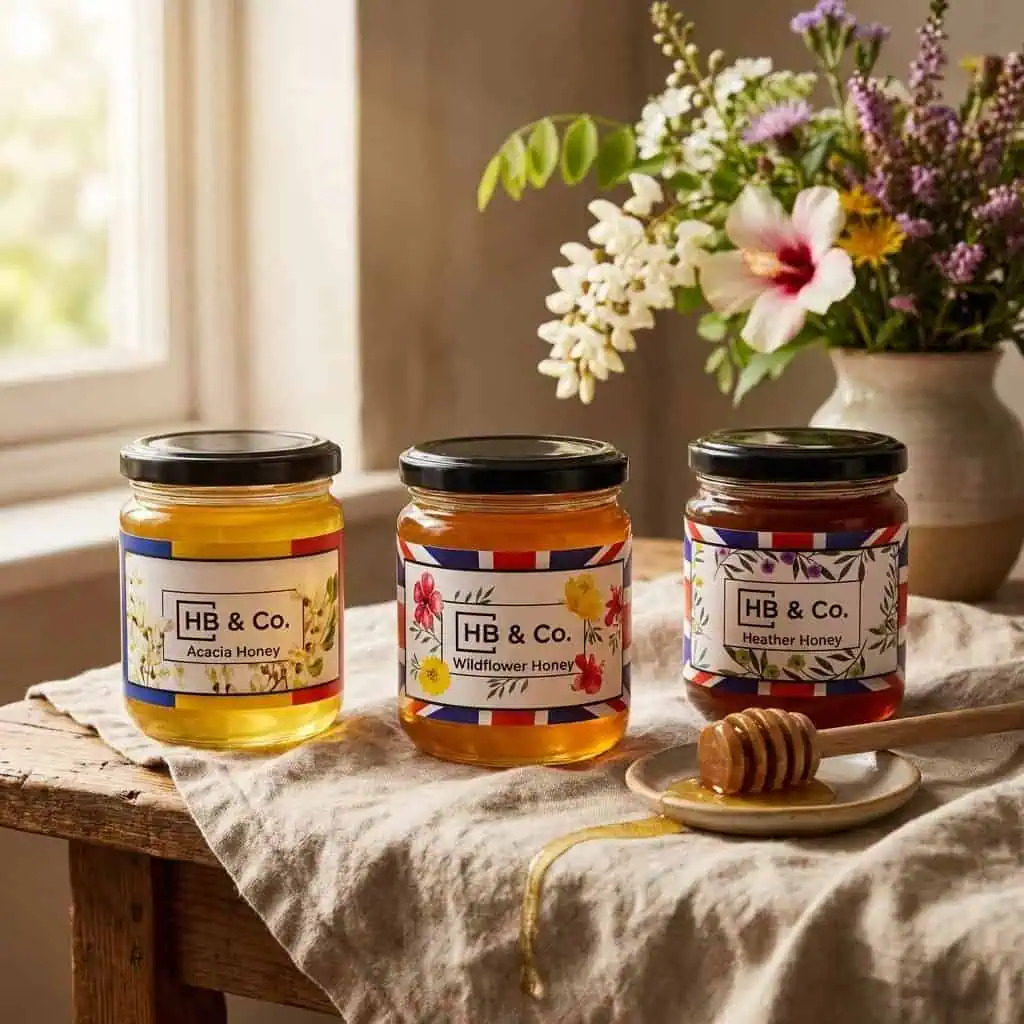
The Discovery Trio
Three single-origin honeys in one set. Acacia, Wildflower, and Heather. The most direct way to understand how much variety exists within a single food.
Shop the TrioBees Have Two Dedicated Awareness Dates Worth Knowing
The first is 10 July: Don't Step on a Bee Day. It exists because bee populations globally have declined significantly over the past four decades. The causes are well-documented: habitat loss, pesticide use particularly neonicotinoids, the Varroa destructor mite, and the fragmentation of wildflower meadows that once provided continuous forage through the season.
The second is September, recognised internationally as National Honey Month. It originated in the United States but is now observed more broadly. September marks the end of the main harvesting season in the Northern Hemisphere, when beekeepers extract the summer's surplus and begin preparing colonies for winter.

Heather moorland in full August bloom. The landscape our bees forage from every summer to produce our Yorkshire Heather Honey.
The decline in bee populations is not a background concern for beekeeping enthusiasts. Approximately one third of global food production depends on pollinator activity. The stakes are agricultural, economic, and ecological simultaneously.
Crystallised Honey Is Not Ruined Honey
This is one of the most widespread misunderstandings about honey. When honey crystallises and turns from a clear liquid to an opaque, granular solid, many people assume it has gone off and discard it. This is a waste of good honey based on a misreading of what is actually happening.
Crystallisation is a natural physical process driven by the ratio of glucose to fructose in the honey. Glucose is less soluble than fructose, so it tends to come out of solution over time and form crystals. Honeys with a higher glucose content, such as Rapeseed and Sunflower, crystallise quickly and firmly. Honeys with higher fructose content, such as Acacia, remain liquid for much longer.
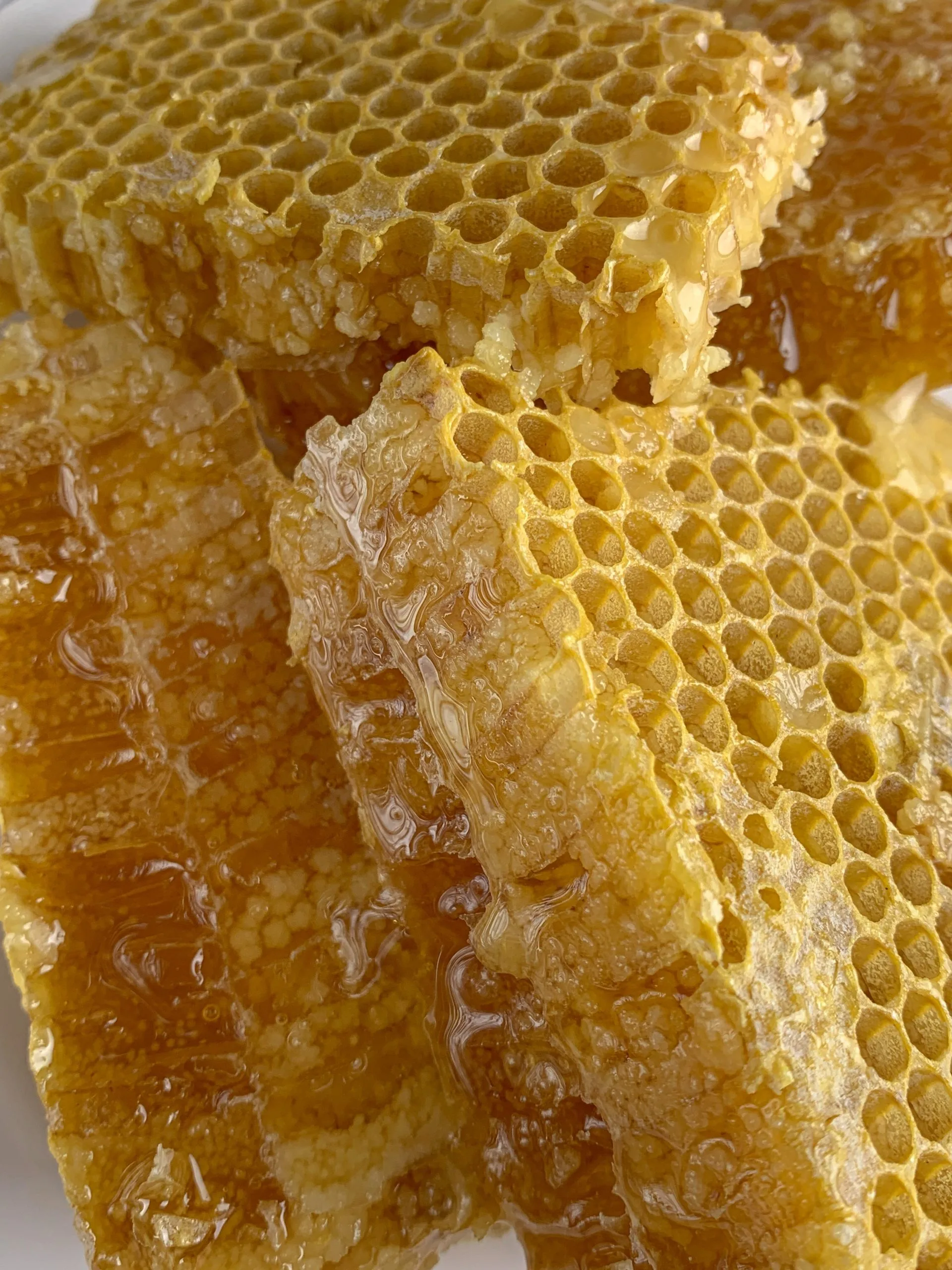
Raw honey straight from the comb. Crystallisation is not spoilage. It is raw honey doing exactly what raw honey does.
To return crystallised honey to a liquid state, place the jar in warm water below 40 degrees Celsius for 20 to 30 minutes. Above 40 degrees, heat begins to degrade the enzymes. The aim is to gently warm it, not cook it.
Our Soft Set Honey takes this further. By controlling the crystallisation process deliberately, we produce a honey with a smooth, spreadable texture that retains all the properties of raw honey while being easy to use every day.
- Honey stored in a sealed jar will not expire. The honey found in Tutankhamun's tomb was approximately 3,000 years old and still edible.
- One bee produces approximately one twelfth of a teaspoon of honey in her entire lifetime.
- Raw honey contains over 180 compounds. Heating during commercial processing degrades or destroys many of them.
- Honey's antimicrobial properties are documented, real, and the basis for medical-grade wound dressings in clinical use today.
- Pinocembrin, a flavonoid found in raw honey, is the subject of ongoing neuroprotection research.
- Every honey variety tastes different because every flower's nectar is different. This is not a subtle difference.
- Bee populations are under serious pressure. What you buy and how you garden both have a direct effect.
- Crystallised honey is not spoiled honey. It is raw honey doing exactly what raw honey does.
Does honey expire or go off?
No. Honey stored in a sealed, airtight jar will not expire. Its naturally low moisture content, high acidity (pH 3.2 to 4.5), and enzyme-produced hydrogen peroxide make it an unsuitable environment for bacteria and microorganisms. Honey found in ancient Egyptian tombs thousands of years old has been confirmed as still edible. The only thing that changes over time is texture: honey may crystallise, but crystallisation is a physical process, not spoilage.
Why has my honey gone solid or grainy?
Crystallisation is completely natural and is a sign of raw, unprocessed honey. It happens because glucose, one of honey's main sugars, is less soluble than fructose and gradually comes out of solution to form crystals. Honeys with higher glucose content, such as Sunflower and Rapeseed, crystallise faster. Acacia honey, with its higher fructose content, stays liquid much longer. To return it to liquid, place the jar in warm water below 40 degrees Celsius for 20 to 30 minutes. Do not use boiling water as heat above 40 degrees begins to degrade the enzymes.
What is honey actually made of?
Honey is made from flower nectar that bees collect, partially digest with enzymes, deposit into honeycomb cells, and then dehydrate by fanning with their wings until moisture content drops below around 20 percent. The resulting substance contains over 180 identified compounds including fructose, glucose, enzymes such as invertase and glucose oxidase, amino acids, vitamins B2 and B6, minerals, organic acids, and a range of polyphenols and flavonoids. The exact composition varies depending on the flowers the bees foraged from, which is why every honey variety tastes and behaves differently.
Is raw honey better than regular supermarket honey?
Raw honey is unheated and unfiltered, meaning it retains the full range of enzymes, polyphenols, and flavonoids present in fresh honey. Most commercial supermarket honey is heated during processing to prevent crystallisation and extend shelf life. This heating degrades or destroys many enzymes and reduces polyphenol content. From a nutritional and flavour standpoint, raw honey is the more complex and complete product. It will crystallise over time, which is not a flaw but a sign of authenticity.
How many flowers does it take to make a jar of honey?
To fill our 280g jar, bees from one hive need to visit roughly 1.2 million flowers and fly a combined distance of approximately 34,000 miles, more than once around the Earth. To produce a full pound of honey (454g), the figure rises to around 2 million flowers and 55,000 miles of combined flight, equivalent to more than twice around the circumference of the Earth. A single worker bee contributes approximately one twelfth of a teaspoon of honey across her entire lifetime.
Which type of honey is healthiest?
All raw, unfiltered honeys retain their natural enzyme and polyphenol content, making them nutritionally superior to heavily processed alternatives. Darker honeys such as Heather and Linden generally have higher antioxidant concentrations due to richer polyphenol profiles. Acacia honey has a lower glycaemic index than most varieties because of its higher fructose content, making it a more measured option for those monitoring blood sugar. In practical terms, the best honey is a raw, traceable, single-origin variety from a beekeeper whose practices you trust.
How should I store honey at home?
Store honey in a sealed glass jar at room temperature, away from direct sunlight and heat sources. Do not refrigerate it as cold temperatures accelerate crystallisation. Do not store it near a hob or in a cupboard above an oven as repeated heat exposure degrades the enzymes over time. A sealed jar in a cool, dark cupboard is ideal. Honey does not need to be consumed by any particular date when stored correctly.
Can honey be used on skin or lips?
Raw honey has documented antimicrobial properties and has been used topically for thousands of years. Its low pH, low moisture content, and hydrogen peroxide production create conditions that inhibit bacterial growth. Medical-grade honey dressings such as Medihoney are used in clinical wound care for chronic infections. For everyday use, raw honey applied to dry or cracked lips acts as a natural humectant, drawing moisture to the skin. For any clinical wound care need, consult a medical professional rather than relying on food-grade honey.