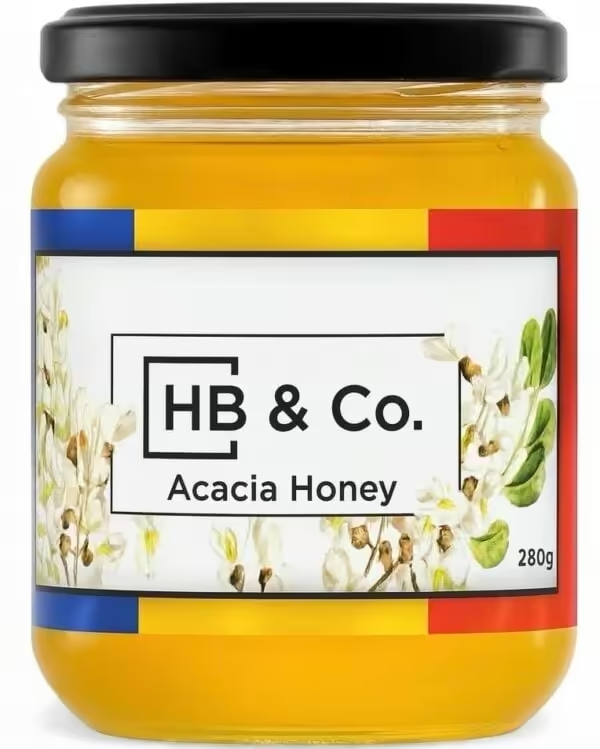
Acacia Honey
£10.99 — or subscribe and save 20%
Raw, unpasteurised Acacia Honey from our family apiaries in Transylvania.
Naturally liquid, delicately floral, with a smooth sweetness and subtle
vanilla note. The mildest and most versatile honey in our range.
Availability: In stock
Tasting Notes
The Purest, Mildest Honey You Will Ever Taste
Raw Acacia honey is the world's most popular honey variety for good reason. Its exceptionally delicate flavour, pale golden colour, and smooth liquid texture make it the perfect everyday honey. Mild enough for children, refined enough for the most discerning palate.
Flavour
Delicate, clean, and lightly floral with a subtle vanilla sweetness and almost no bitterness
Aroma
Light, fresh acacia blossom with a faint sweetness and clean floral finish
Texture
Naturally liquid and smooth. Slow to crystallise due to high fructose content
Colour
Pale gold, almost water-clear. One of the lightest honeys produced anywhere in the world
Why does acacia honey stay liquid?
High Fructose Content. Naturally Slow to Crystallise.
Acacia honey has an unusually high fructose-to-glucose ratio compared to most other honey varieties. Glucose crystallises readily; fructose does not. This means raw acacia honey can remain liquid for months or even years without any heating or processing. If your acacia honey has crystallised, it is still perfectly good. Place the closed jar in warm water (no hotter than 40°C) for 15 to 20 minutes to restore it to its natural liquid state.
Origin & Provenance
From Our Family Apiaries in Transylvania
Our Acacia Honey is harvested from our own family apiaries in Transylvania, Romania. This is not a vague claim of European origin. These are hives our family has managed for over six generations, set among the acacia forests that make this region one of the world’s most celebrated sources of monofloral acacia honey.
The Transylvanian landscape is characterised by clean air, unpolluted soils, and vast expanses of forest and meadowland far from industrial agriculture. The acacia trees (Robinia pseudoacacia) that bloom here each spring produce nectar of exceptional purity and concentration. The result is honey with a clarity and delicacy that mass-produced acacia honey cannot replicate.
We cold-extract and bottle the honey without heating, filtering, or blending. What you receive in the jar is exactly what the bees produced, with every enzyme, antioxidant, and flavour compound intact. Read the full story of our Transylvanian heritage in HoneyBee & Co.: From Transylvanian Apiaries to Three Consecutive Vogue Features.
6+
Generations of family beekeeping heritage
280g
Glass jar. Eco-conscious packaging.
Raw
Never heated above hive temperature. Never pasteurised.
15–19%
Optimal moisture content for flavour and stability
Transylvania, Romania. The source of every jar of our Acacia Honey.
Why Acacia Honey
The World’s Most Versatile Honey Variety
Acacia honey outsells every other variety in Europe for good reason. Its mild flavour works with almost anything, its liquid texture makes it easy to use, and its natural purity makes it the first choice for health-conscious consumers.
Stays Liquid Longer
Thanks to its high fructose content, raw acacia honey stays liquid for months without any heating. No microwave, no warm water bath. Just pour and enjoy. The most convenient raw honey for everyday kitchen use.
Low Glycaemic Index
Acacia honey has one of the lowest glycaemic indexes of any honey variety, due to its high fructose and low glucose content. It is widely regarded as the most suitable honey for those monitoring blood sugar levels, though it remains a sugar and should be consumed in moderation.
Least Allergenic Variety
Acacia flowers produce relatively low amounts of pollen compared to most other flowering plants. This makes acacia honey one of the least allergenic honey varieties, suitable for the widest range of people including those who find darker, more complex honeys difficult to tolerate.
Natural Properties
The Natural Properties of Raw Acacia Honey
Raw acacia honey retains its full natural composition because it is never heated above hive temperature. The properties below are present only in raw, unprocessed honey. Pasteurisation destroys them.
Natural Antioxidants
Raw acacia honey contains flavonoids and polyphenols that act as natural antioxidants. While lighter than darker honeys in antioxidant concentration, raw acacia honey retains significantly more than pasteurised alternatives, which lose these compounds through heat treatment. For a deeper look, read our guide to acacia honey benefits and uses.
Source: National Library of Medicine ↗Antibacterial Activity
Like all raw honey, acacia honey contains hydrogen peroxide-producing enzymes (glucose oxidase) that give it natural antibacterial properties. These enzymes are present only in raw honey and are destroyed by pasteurisation and high-temperature processing.
Source: National Library of Medicine ↗Natural Energy
Acacia honey provides natural energy through fructose and glucose. Its high fructose content means it is absorbed more slowly than glucose-dominant honeys, providing a more sustained energy release. The NHS recognises honey as a natural food with a different nutritional profile to refined sugar.
Source: NHS ↗Soothing Properties
Acacia honey is traditionally used to soothe sore throats and mild coughs. Its smooth, coating texture and natural antibacterial compounds make it particularly effective when dissolved in warm (not boiling) water or tea. A tablespoon in warm water is one of the oldest natural remedies for throat irritation.
Source: NHS ↗The information above is for educational purposes only and does not constitute medical advice. Raw honey is not recommended for children under 12 months. If you have a medical condition or are pregnant, consult your GP before making dietary changes.
How to Use It
Six Ways to Enjoy Transylvanian Acacia Honey
Acacia honey’s mild, clean flavour makes it the most versatile honey in our range. It enhances rather than dominates. It sweetens without overpowering. It works in almost everything.
Tea and Hot Drinks
The first choice honey for sweetening tea. Its delicate flavour does not compete with herbal blends, green teas, or Earl Grey. Add it when your drink has cooled slightly to preserve the natural enzymes. A teaspoon is enough.
Most popular usePorridge and Breakfast
Drizzle over porridge, yoghurt, granola, or fresh fruit. Its liquid consistency makes it easy to pour in precise amounts. It dissolves instantly and coats evenly without the stickiness of darker honeys.
Everyday favouriteToast and Bread
Spread directly on warm toast, crumpets, or crusty bread. The gentle sweetness and smooth texture make it one of the most satisfying simple breakfasts. Works particularly well with butter as a spread combination.
Classic pairingSoft Cheeses
Acacia honey pairs beautifully with soft cheeses including ricotta, brie, camembert, and fresh goat’s cheese. Its mild sweetness complements without competing. Drizzle over the cheese just before serving.
Cheese board essentialBaking and Cooking
A clean substitute for refined sugar in baking. Its neutral flavour does not alter the taste of the final product, making it ideal for recipes where you want natural sweetness without honey flavour coming through.
Sugar substituteStraight from the Jar
Take a small spoonful and let the honey coat your tongue. Notice the clean, light sweetness with a faint floral note. There is no bitterness, no astringency, no sharpness. This is what pure, raw acacia honey tastes like.
The purist’s choiceProvenance and Trust
Six Generations of Beekeeping in One Jar
HoneyBee & Co. was founded by Dragos Nistor, whose family has kept bees in Transylvania for over six generations. Our Acacia Honey does not come from an anonymous supply chain. It comes from hives our family has managed for decades, in landscapes we know intimately.
We never blend our honeys with cheaper varieties or add any sweeteners. Our moisture content sits between 15 and 19%, which keeps flavour and texture stable without any artificial intervention. When you buy a jar of our Acacia Honey, you are buying exactly what is on the label.
We work with the same beekeeping partners season after season. We do not switch sources to hit a price point. Continuity of supply means continuity of quality.
Our Story

Frequently Asked Questions
Everything You Need to Know About Acacia Honey
What is acacia honey and where does it come from?+
Why does acacia honey stay liquid when other honeys crystallise?+
Is acacia honey good for diabetics?+
What makes your acacia honey different from supermarket acacia honey?+
Is acacia honey safe for children?+
How should I store acacia honey?+
Do you offer acacia honey on subscription?+
Explore the Range