
 English (UK)
  Italiano
  Français
  简体中文
简体中文  한국어
한국어 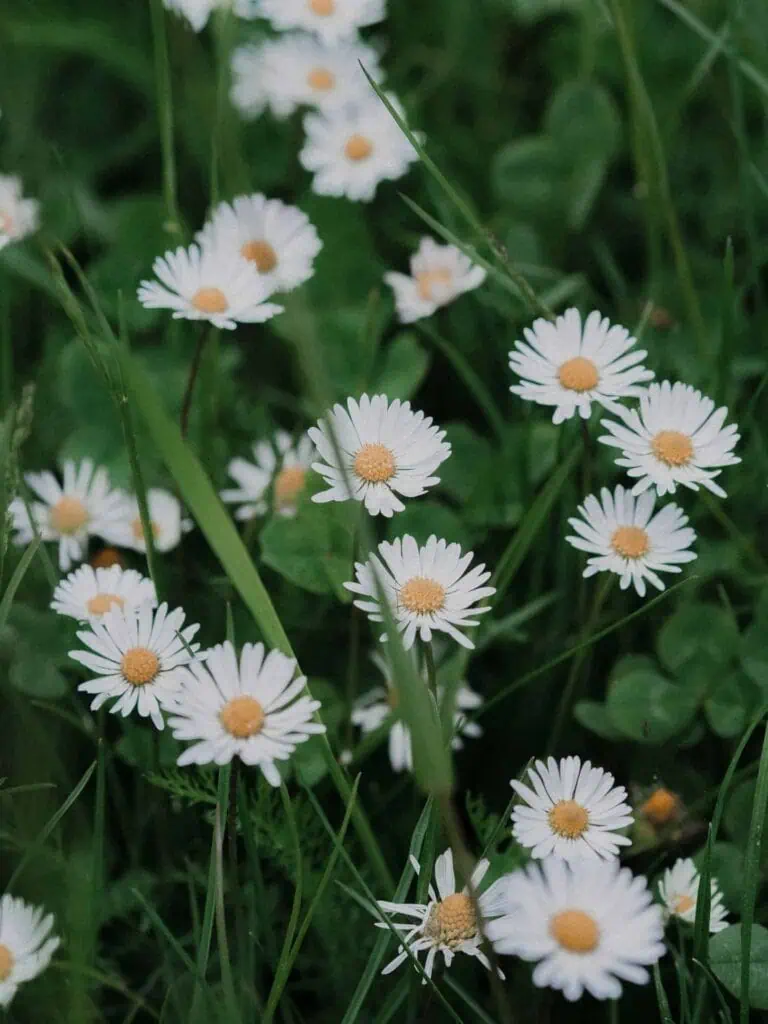
Daisy Flowers: The Complete Guide to Growing Them and the Bees They Feed
In This Guide
Key Takeaways
- A "daisy" is not one flower but dozens or hundreds of tiny flowers packed into a single head, a marvel of botanical engineering called a composite, or capitulum.
- Daisies belong to the Asteraceae, one of the largest plant families on Earth. Lawn daisies, oxeye daisies, Shastas, asters and even sunflowers are all daisies.
- That flat, open shape makes daisies superb forage for bees, an easy landing pad over a dense buffet of nectar and pollen.
- Letting daisies bloom in your lawn (the No Mow May idea) is one of the simplest things you can do for pollinators.
- The daisy family even fills our honey jars: meadow daisies feed our Wildflower Honey, and the sunflower gives us Sunflower Honey.
The Friendliest Flower in Britain
Ask a child to draw a flower and they will almost always draw a daisy: a yellow eye ringed by white petals. It is the most recognisable bloom in the world, scattered across lawns, meadows and roadsides from spring to autumn, and yet it hides one of botany's best secrets, which we will get to shortly. Far from being "rare and exotic", as is sometimes claimed, the daisy is gloriously common, and that is exactly what makes it so valuable to bees. This guide covers what a daisy actually is, the many plants that share the name, why pollinators adore them, how to grow them, and the surprising ways the daisy family ends up in a jar of honey. To set the scene, see how flowers and bees depend on one another in our guide to flowers and bees.
What Is a Daisy, Really?
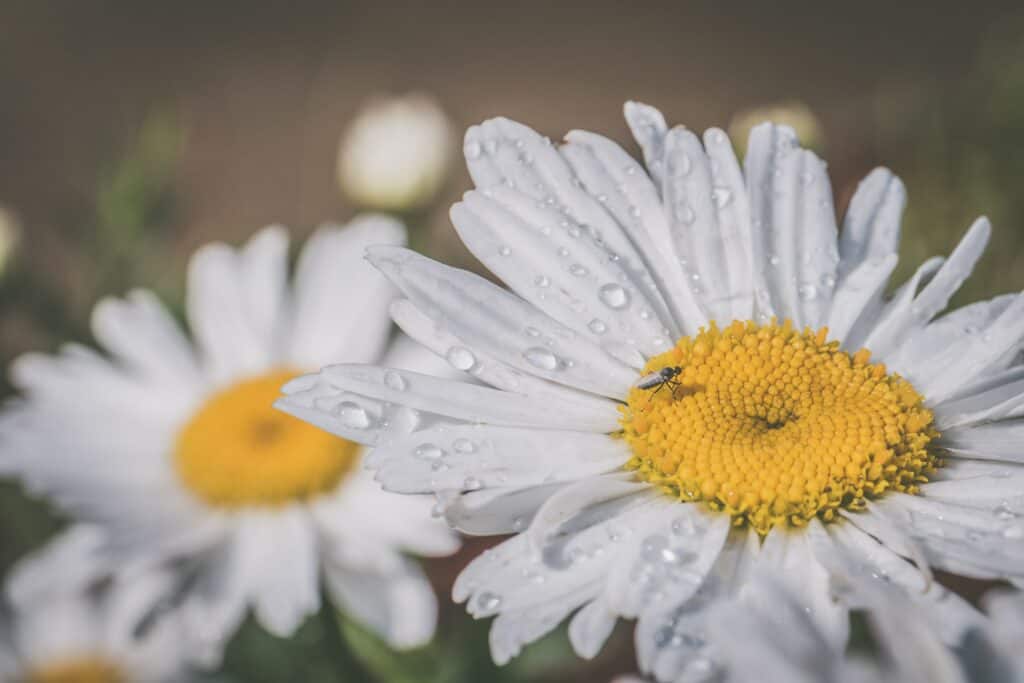
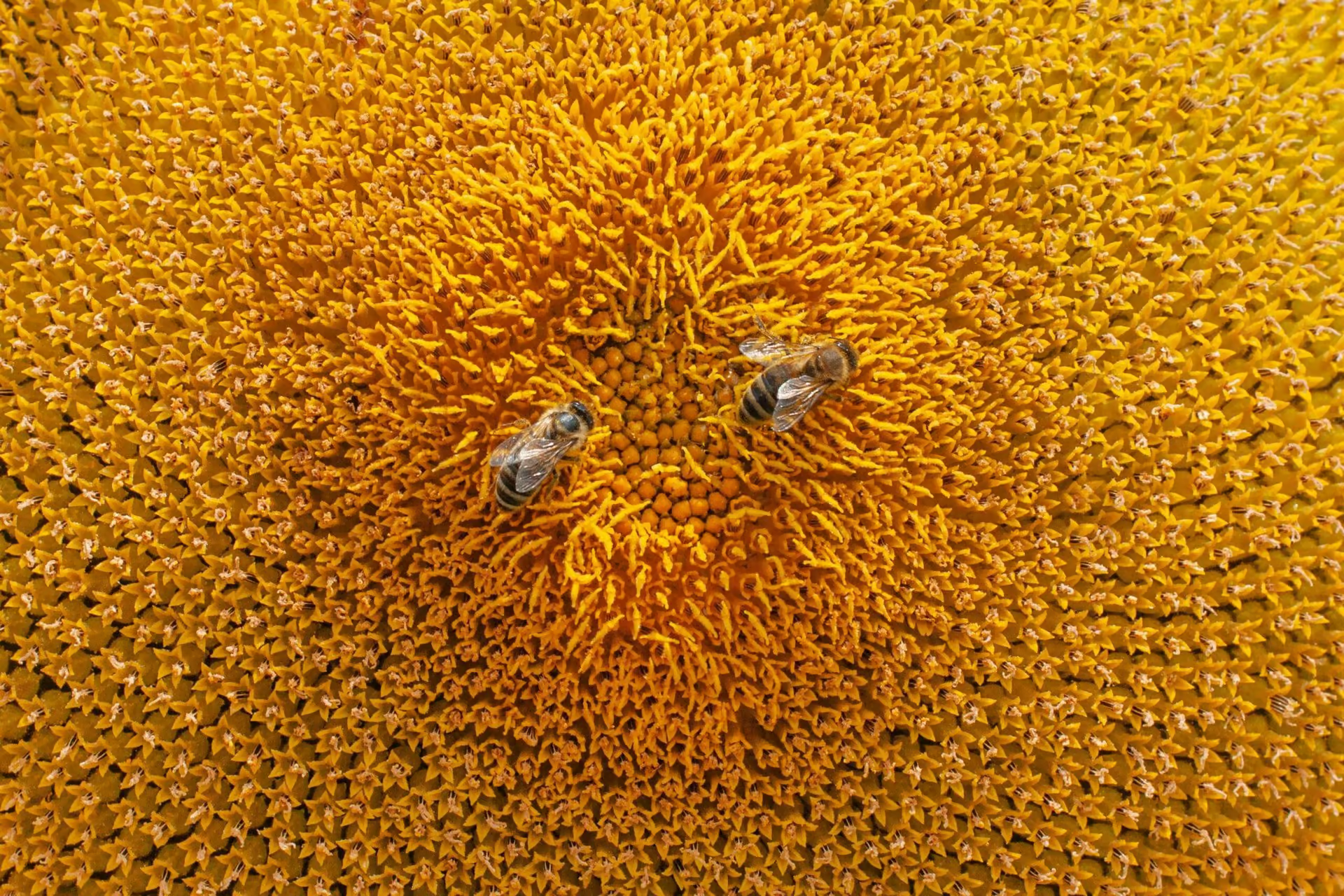
Here is the secret. What looks like a single daisy flower is actually a tightly packed community of many separate flowers. Botanists call the structure a capitulum, and the daisy family it defines, the Asteraceae (older name Compositae, the "composites"), is named for it. Each white "petal" around the edge is itself a complete flower, a ray floret, and the golden centre is a dense mosaic of dozens to hundreds of tiny disc florets, each one a working flower with its own nectar and pollen. A single oxeye daisy can hold several hundred florets.
This design is a masterpiece of efficiency. By bundling hundreds of small flowers into one showy, flat target, the daisy advertises itself like a single large bloom while offering a pollinator an entire meal in one stop, what botanists nicely call "assembly-line" pollination. The family is vast, with somewhere between 25,000 and 32,000 species, second in size only to the orchids, and it reaches every continent except Antarctica. The name itself is pure poetry: "daisy" comes from the Old English dæges eage, the "day's eye", because the common daisy opens its rays at dawn and folds them at dusk.
Meet the Daisies
Because the family is so large, "daisy" covers a wonderful range of plants. A few you will meet most often:
- Common or lawn daisy (Bellis perennis). The little white-and-gold daisy of British lawns, perennial, tough, and in flower almost all year in mild spots. The archetype that gives the family its English name.
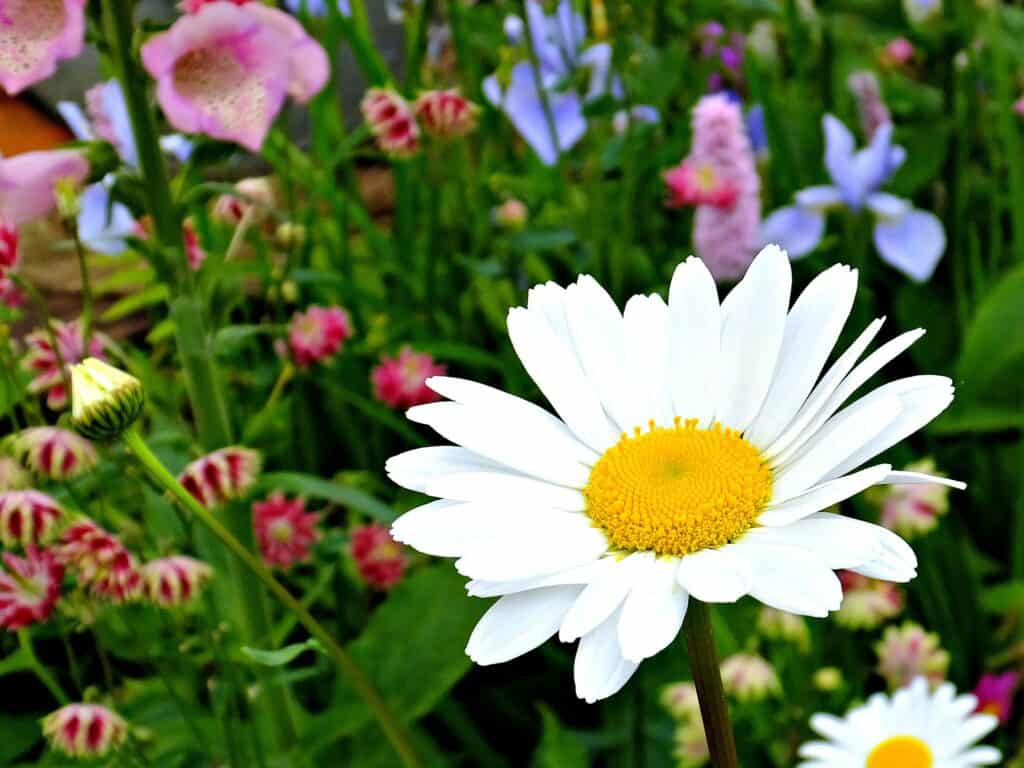
- Oxeye or moon daisy (Leucanthemum vulgare). The tall, classic meadow daisy, a native wildflower and a magnet for pollinators. This is the one in the photographs here, and an RHS Plants for Pollinators favourite.
- Shasta daisy (Leucanthemum × superbum). The big, bold border daisy bred by Luther Burbank in the 1890s, beloved for cutting.
- Asters and Michaelmas daisies. Autumn-flowering daisies that feed bees and butterflies late in the season when forage is scarce.
- Coneflowers (Echinacea) and black-eyed Susans (Rudbeckia). Prairie daisies with raised centres, superb for late-summer pollinators.
- The sunflower (Helianthus). Yes, a daisy too, just an enormous one, and the source of our Sunflower Honey.
- Plus the wider family: marguerites, African daisies (Osteospermum), gerbera, feverfew, chamomile, calendula and the chrysanthemum, alongside dandelions, lettuce and artichokes.
One quick word of caution that applies right across the family: single, open-centred forms are far better for bees than densely bred "double" varieties, which often bury or eliminate the florets a bee needs. The wild oxeye daisy and a single Shasta are pollinator gold; a frilly double gerbera, beautiful as it is, offers very little. We rate dozens of garden flowers on exactly this basis in the flowers bees like. If you enjoy these deep dives, we have guides to other garden flowers too, from lilies and tulips to orchids.
Why Bees Love Daisies
Daisies are about as bee-friendly as a flower gets, and the reason is that composite structure. A bee landing on a daisy finds a broad, flat platform to stand on and, beneath her, a dense field of open florets she can work one after another without flying off, that "assembly-line" feeding again. Compare that with a deep, tubular flower a short-tongued bee cannot reach, and you see why the daisy is the great democratic flower of the insect world: the western honeybee, bumblebees such as the red-tailed bumblebee and common carder bee, solitary bees, hoverflies and butterflies can all use it.
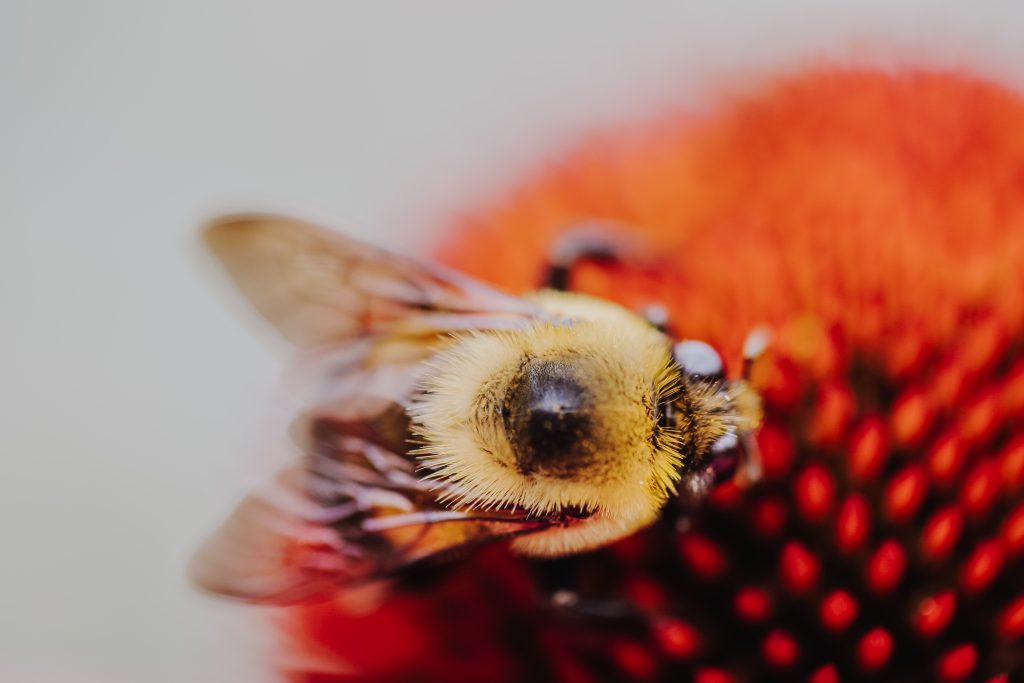
Bees are drawn in by colour and light. They see blues, purples and ultraviolet best and are effectively red-blind, and many daisies carry ultraviolet "nectar guides", invisible to us, that point straight to the centre. The white-and-yellow daisy practically glows to a bee. And because daisies tend to flower for a long season, with lawn daisies blooming in nearly every month of a mild British year, they are a dependable food source when others come and go. To see how a bee turns all that daisy nectar into honey, read how bees make honey, and meet the foragers themselves, from the buff-tailed bumblebee and the tawny mining bee to the autumn-flying ivy bee, in our complete guide to bees, and see which live near you on the UK Bee Map.
The daisy is the great democratic flower: simple enough for any bee to use, generous enough to feed them all.
HoneyBee & Co.The Daisy Lawn and No Mow May
For decades a daisy in the lawn was something to be poisoned out. That thinking is changing fast, and for good reason. Campaigns such as No Mow May, run by the conservation charity Plantlife, encourage us to put the mower away in spring and let lawn daisies, clover, dandelions and selfheal flower. The result is a free, low-effort pollinator buffet right outside the back door, exactly the kind of forage that helps bees through the hungry early weeks of the year.
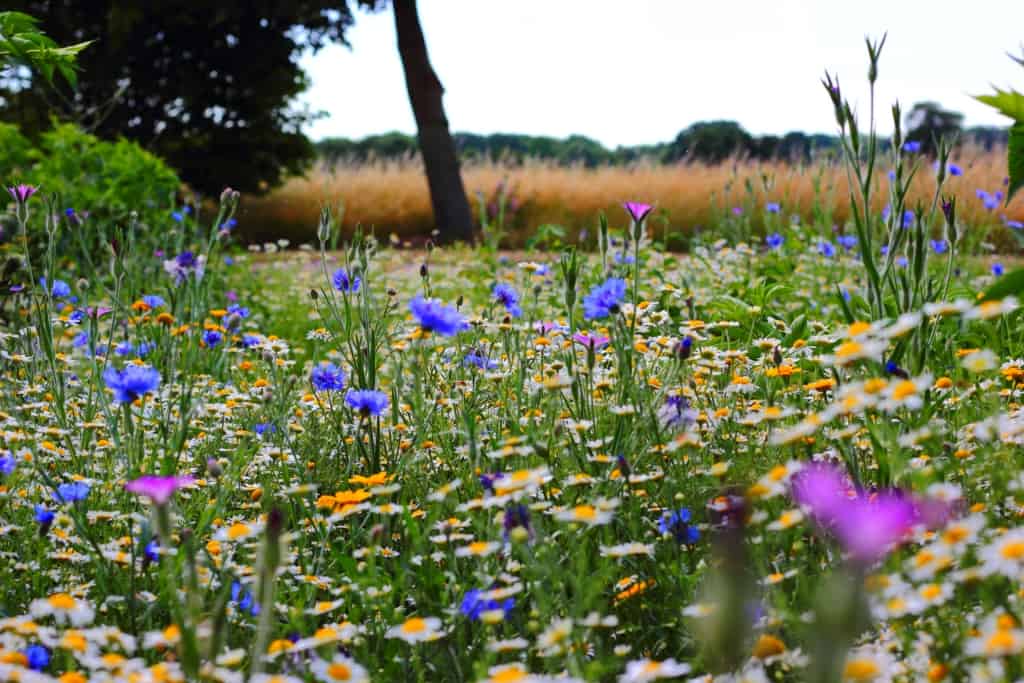
You do not have to abandon the whole garden to do it. Even leaving a patch unmown, mowing less often, or cutting on a higher blade setting lets daisies flower while keeping things tidy. A lawn dotted with daisies is not a neglected lawn; it is a working one. If you want to go further, our guides to attracting bees to your garden and why bee populations are declining explain how small changes add up, and our Plate Without Bees tool shows what is at stake if we lose them.
How to Grow Daisies
One of the daisy's charms is how easy it is to please. Most want the same simple things: an open, sunny position and free-draining soil. Beyond that, the approach varies a little by type.
- Lawn daisies (Bellis) need no help at all, they will arrive on their own. To encourage them, simply mow less and avoid lawn weedkillers.
- Oxeye daisies are perfect for a wildflower patch or meadow. Sow seed in autumn or spring on poorer soil (rich ground favours grasses over flowers), and let them self-seed.
- Shasta daisies suit borders. Plant in spring, water until established, deadhead through summer to keep flowers coming, and divide clumps every two or three years in spring or autumn to keep them vigorous.
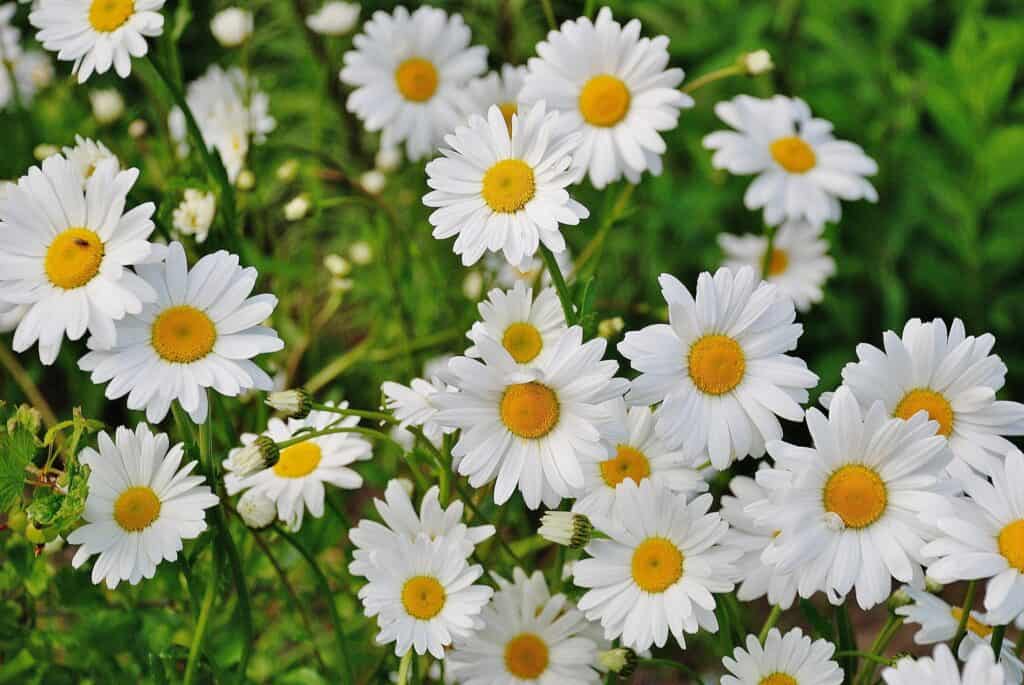
Care, in short: water new plants through their first season, then most daisies are drought-tolerant. Deadhead border types for a longer display, but leave some seed heads in autumn for finches and to let plants self-sow. Divide congested clumps to rejuvenate them. Avoid over-feeding, lean soil gives sturdier plants and, in wild settings, better flowering. And choose single-flowered forms if bees are part of your plan.
A Daisy-Family Bee Calendar
Because the daisy family is so large and varied, you can use its members alone to keep bees fed for most of the year. Here is a simple planting plan built entirely from daisies and their close kin.
| Season | Daisy-family plants | What they offer bees |
|---|---|---|
| Early spring | Lawn daisy (Bellis), coltsfoot, dandelion | Some of the earliest accessible pollen for emerging queens |
| Late spring | Oxeye daisy, daisy fleabane | Open meadow forage as the season builds |
| Summer | Shasta daisy, marguerite, calendula, feverfew | A long, reliable run of nectar and pollen |
| Late summer | Sunflower, echinacea, rudbeckia, cosmos | Big, pollen-rich heads at peak foraging time |
| Autumn | Asters and Michaelmas daisies | Vital late forage when little else is in flower |
Plant in generous clumps rather than singles so bees can spot and work them efficiently, and aim to have something from the family in flower in every month you can. Pair them with non-daisy bee favourites, lavender, borage and heather, for a garden that hums from late winter to the first frosts. Our guide to growing heather covers one of the best companions of all.
Folklore, Symbolism and Language
Few flowers carry as much cultural weight as the daisy. Because it opens with the sun, it became a symbol of innocence, purity and new beginnings, and its "day's eye" habit charmed poets from Chaucer, who declared the daisy "the eye of the day", onward. In Norse tradition the daisy was sacred to Freya, goddess of love and fertility, which is partly why it came to signal motherhood and childbirth.
It runs through everyday life too. Generations of children have threaded daisy chains and plucked petals to the rhyme of "he loves me, he loves me not", a game the French call effeuiller la marguerite, after their name for the oxeye daisy, which also gives us the girl's name Margaret and its pet form, Daisy. The common daisy is the national flower of the Netherlands, the traditional April birth flower, and the bloom associated with the fifth wedding anniversary. Not bad for a flower most people walk straight past.
Are Daisies Edible?
The common daisy (Bellis perennis) is one of the better-known edible flowers. Its young leaves have a mild, slightly tangy taste and the petals make a pretty, peppery garnish, scattered over salads or used to decorate cakes, much as the original version of this page suggested. As with any wild plant, eat only daisies you can identify with certainty, that have not been sprayed, and that you have washed well, and as always, introduce any new food in moderation.
The daisy family has a long folk history too: Bellis perennis was once nicknamed "bruisewort", and several relatives became kitchen and garden staples, the chamomile brewed into a soothing cup of tea, calendula petals colouring butter and rice, and the family also giving us lettuce, artichokes and chicory. We are beekeepers rather than herbalists, so we will leave specific health claims to the experts, but it is a reminder of how useful this humble family has always been.
From Meadow to Jar
For us, daisies are not just a pretty subject, they are part of the supply chain. A summer meadow studded with oxeye daisies is exactly the kind of diverse, low-chemical forage that makes for good honey, and that floral mix flows straight into our Wildflower Honey. And remember that the sunflower is simply a giant daisy: our Sunflower Honey is, in a real sense, a daisy-family honey.
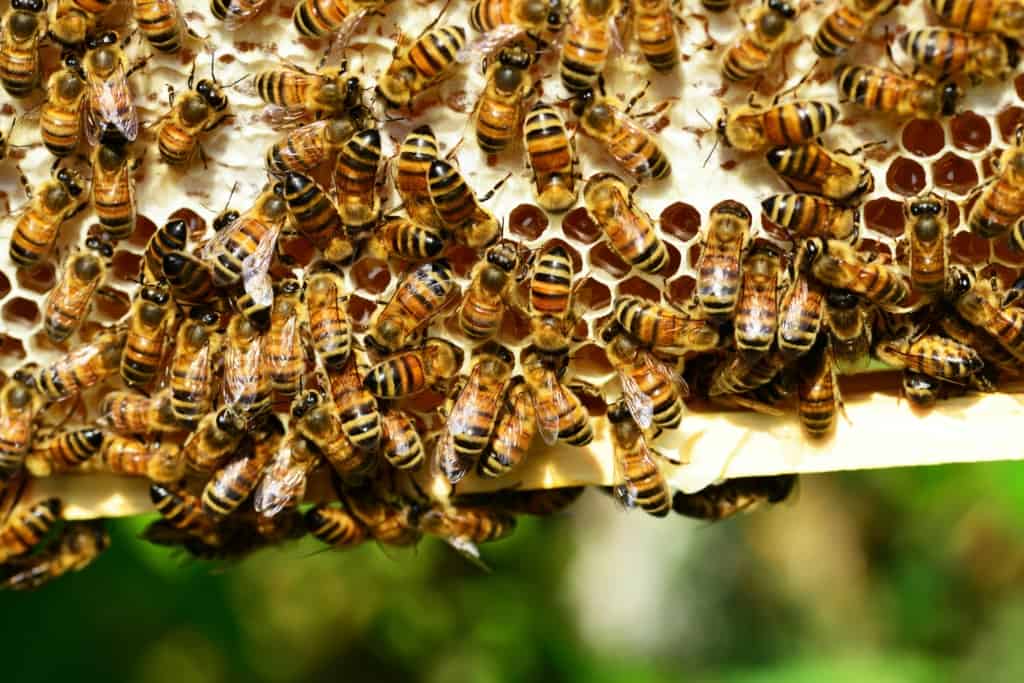
It is the same principle that runs through everything we do. Healthy, flower-rich land, full of daisies and clover and all the rest, makes for healthy bees and honey worth keeping. That is why we work with beekeepers who protect that habitat, and why our honey is raw, unfiltered and traceable to the hive. You can read more in raw honey versus regular honey, or simply browse the range.
Taste the meadow: honey from the daisy family and beyond
Raw, single-origin honey made by bees foraging flower-rich, low-chemical land. Start with our meadow-led Wildflower or the daisy family's own Sunflower Honey. 280g jars, free UK delivery on 3 or more.
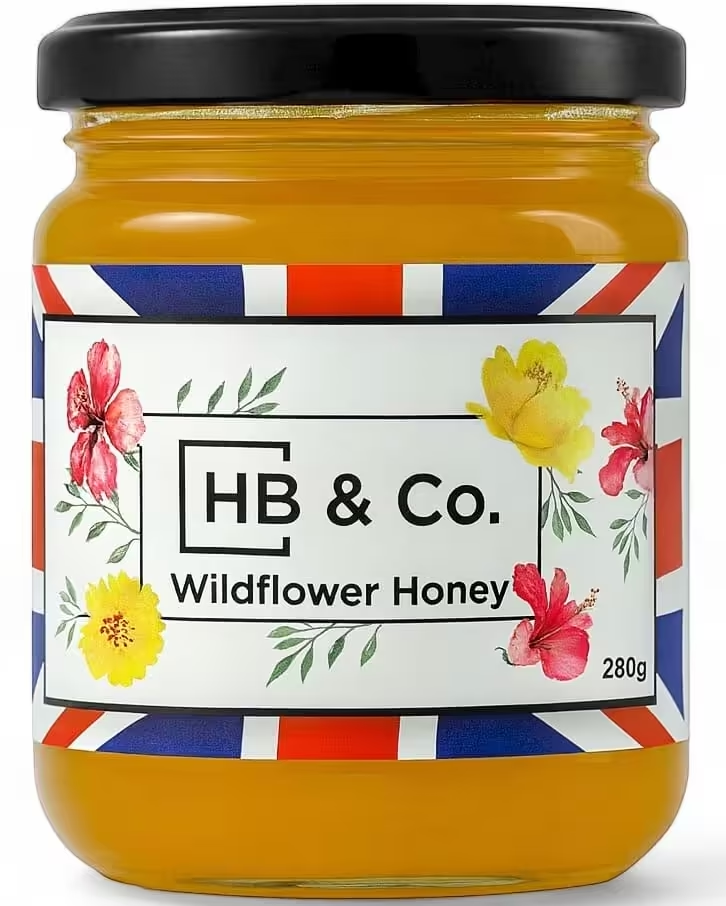
Wildflower Honey
Carries the nectar of meadow flowers, oxeye daisies among them.
Shop now ›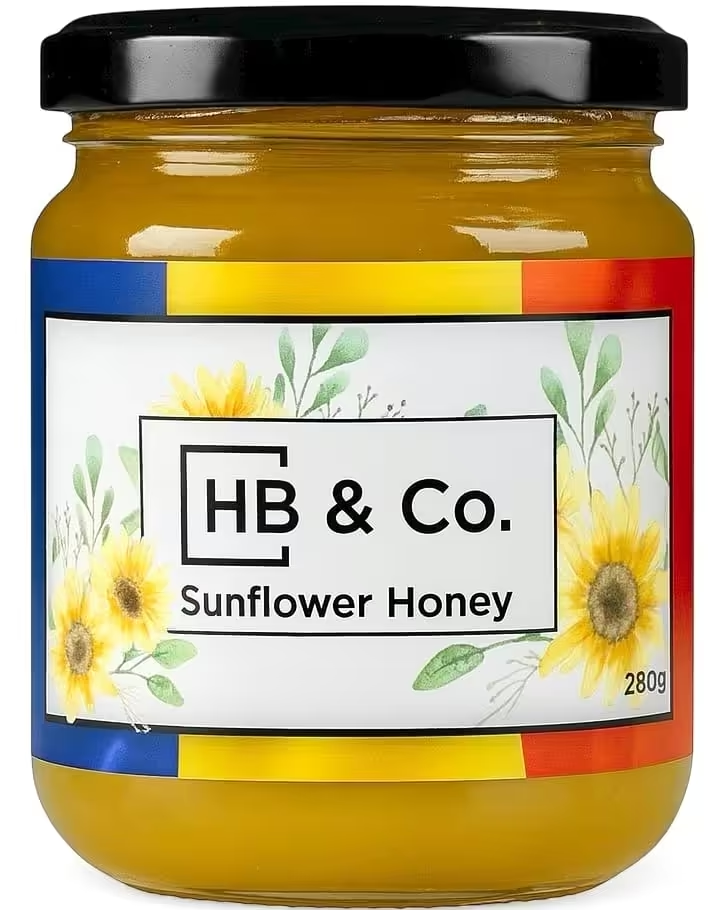
Sunflower Honey
From the sunflower, the daisy family's giant. Bright, warm and golden.
Shop now ›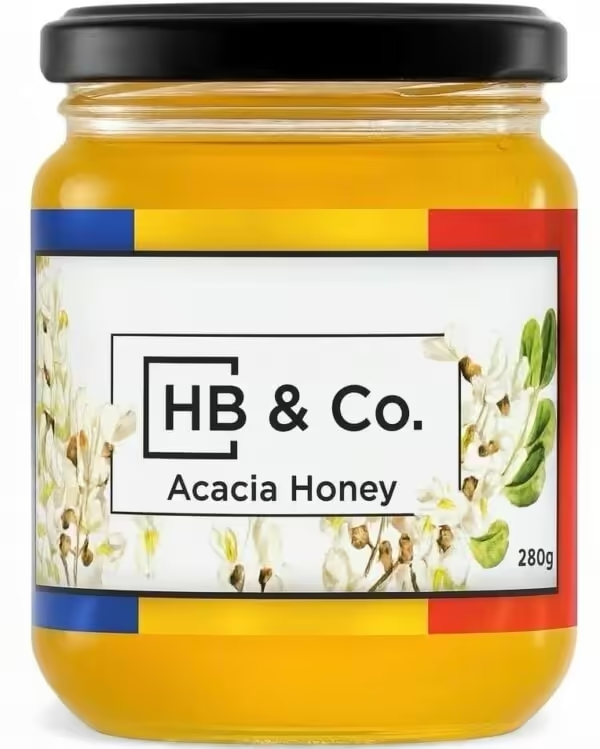
Acacia Honey
Delicate, light and floral. Slow to crystallise.
Shop now ›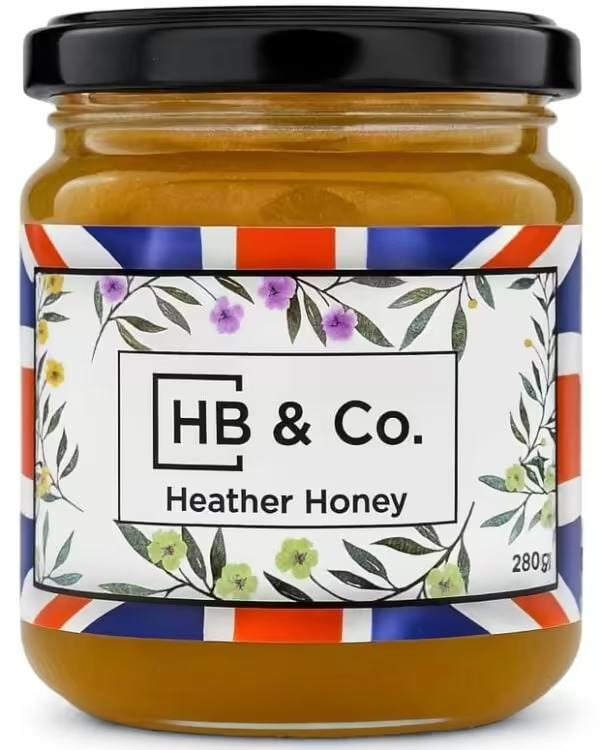
Heather Honey
Dark, aromatic and thick-set, from British moorland.
Shop now ›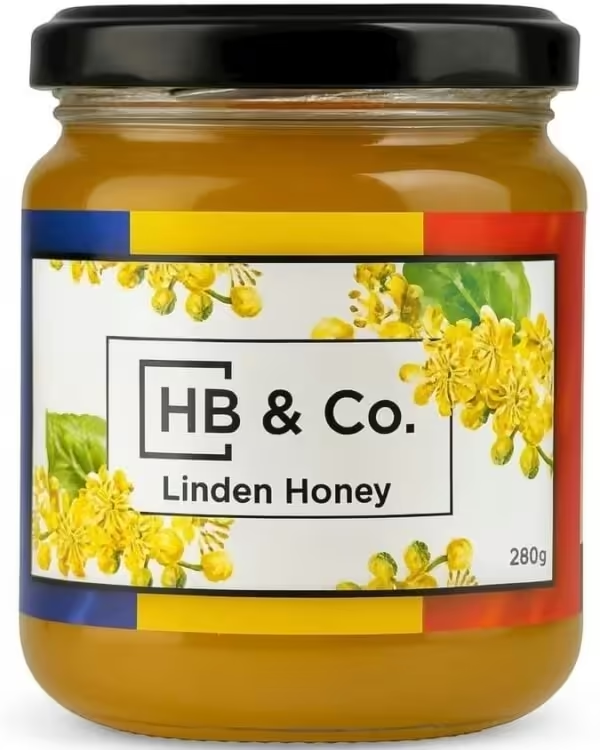
Linden Honey
Light gold with a fresh, lime-blossom finish.
Shop now ›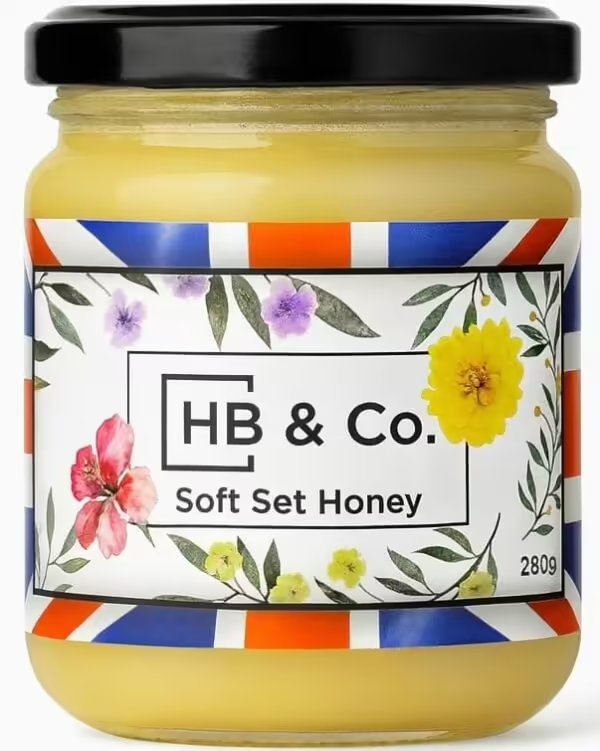
Soft Set Honey
Smooth, spreadable and gently set.
Shop now ›Discovery Trio
Three of our most-loved honeys in one box. Save 5%, £33.22.
Explore the trio › All BritishBritish Honey Bundle
Wildflower, Soft Set and Heather, three British honeys in one box. £33.22.
Shop the bundle › Subscribe & saveHoney Subscription
Your favourite honey on repeat, 20% off and free delivery, pause any time.
Start a subscription ›Five Myths About Daisies
Myth 1: "A daisy is a single flower."
It is the opposite. Each daisy head is a composite of dozens or hundreds of tiny flowers, the white rays and the golden disc florets, all working together. You are looking at a whole bouquet disguised as one bloom.
Myth 2: "Daisies are rare and exotic."
Daisies are among the most common and widespread flowers on Earth, found on every continent but Antarctica. That abundance is a feature, not a flaw, it is what makes them such reliable food for bees.
Myth 3: "Daisies in the lawn are weeds to get rid of."
Lawn daisies are free, low-effort forage for pollinators. Letting them flower, the No Mow May idea, helps bees with no cost and no work. A "weed" here is just a flower in a place we were taught to dislike.
Myth 4: "Daisies come in blue and red."
True daisies are mostly white, yellow, pink or purple. The "blue daisies" people picture are usually asters or felicia, and red "daisies" are typically gerbera or osteospermum cultivars. Bees, incidentally, cannot see red at all.
Myth 5: "All daisies are equally good for bees."
Single, open daisies are excellent; heavily bred double forms can be nearly useless, with their florets crowded out by extra petals. If bees matter to you, choose singles. See the flowers bees like for more.
Frequently Asked Questions
Is a daisy one flower or many?
Are daisies good for bees?
Should I let daisies grow in my lawn?
What is the difference between a lawn daisy, an oxeye daisy and a Shasta daisy?
When do daisies flower?
Are daisies edible?
Is there such a thing as daisy honey?
Are daisies a weed?

Dragos Nistor
Dragos Nistor is the founder of HoneyBee & Co., a family honey brand built on six generations of beekeeping heritage rooted in Transylvanian apiculture. He brings raw, unfiltered, traceable honey from hive to jar.
He writes about honey, bees, and the flowers, from the humblest lawn daisy upward, that pollinators and good food both depend on. Read more about our story.
Sources and Further Reading
- Encyclopaedia Britannica. Asteraceae (the aster, daisy or composite family). britannica.com
- Royal Botanic Gardens, Kew. Plants of the World Online: Bellis perennis. powo.science.kew.org
- Royal Horticultural Society. Leucanthemum and Plants for Pollinators. rhs.org.uk
- Plantlife. No Mow May and Every Flower Counts. plantlife.org.uk
- The Wildlife Trusts. Oxeye daisy. wildlifetrusts.org
- Woodland Trust. Daisy (Bellis perennis). woodlandtrust.org.uk
- Annals of Botany. Pollination ecology of the Asteraceae. academic.oup.com
- Encyclopaedia Britannica. Bellis perennis (common daisy). britannica.com