

 English (UK)
  Italiano
  Français
  简体中文
简体中文  한국어
한국어 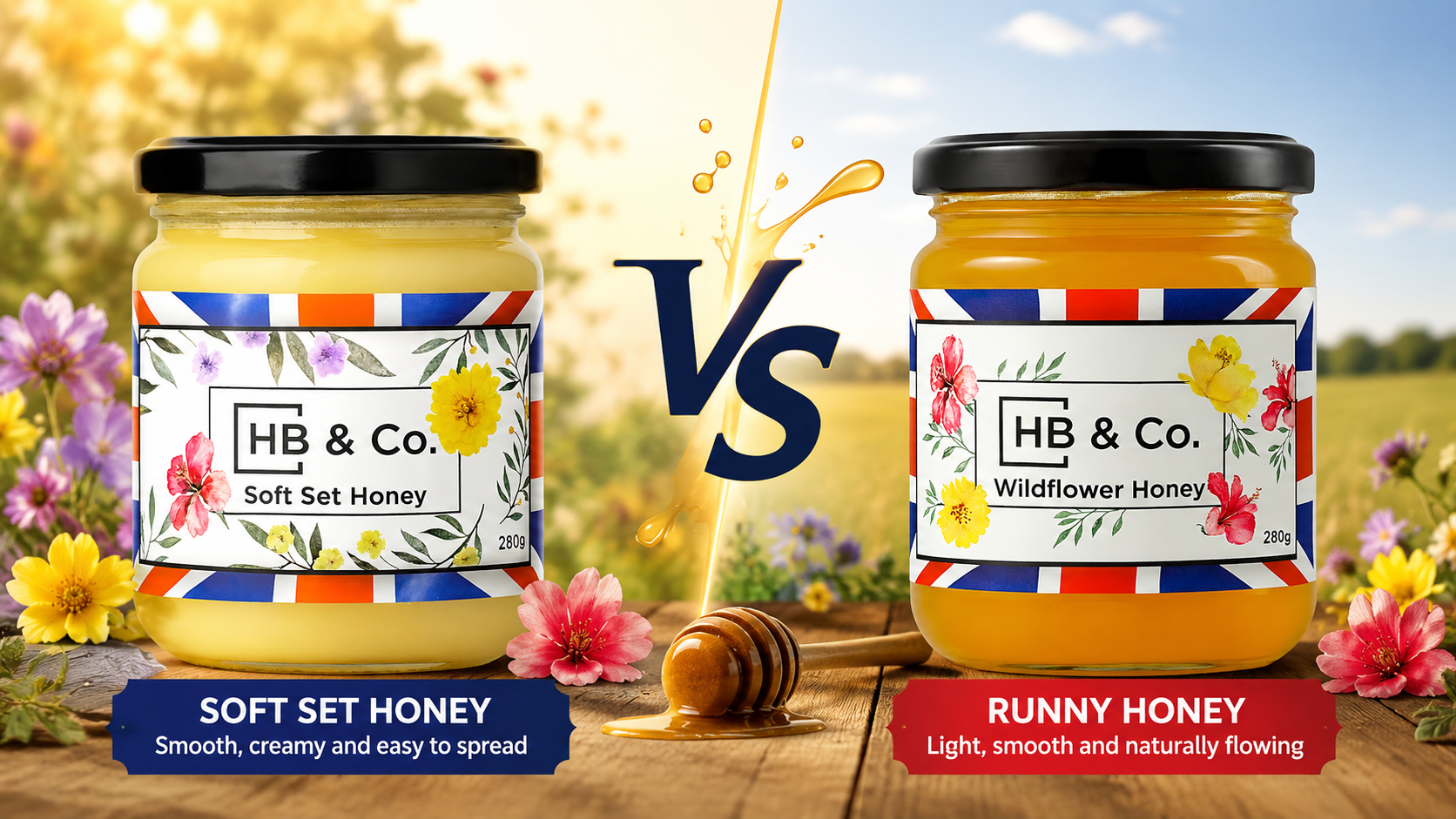
Runny vs set honey is one of the questions we are asked most, usually by someone worried that a once-pourable jar has turned thick and grainy. The reassuring answer: runny and set honey are the same honey in two different states, and setting is a completely natural process. This guide explains what causes honey to set, why it is a good sign rather than a fault, and which texture to reach for on toast, in tea, or for baking.
Key takeaways
- Runny and set honey are the same honey in different states. Setting is natural crystallisation, not spoiling.
- Glucose is the sugar that turns solid. Honeys high in glucose set quickly, while fructose-rich honeys like acacia are slow to crystallise.
- Crystallising is often a sign that a honey is raw and unprocessed, because the tiny natural particles in raw honey help the crystals form.
- Runny honey suits drizzling, tea, coffee and baking. Set honey suits spreading on toast without dripping.
- You can gently warm set honey back to runny, but never boil it or microwave it on full power.
The short answer: same honey, different state
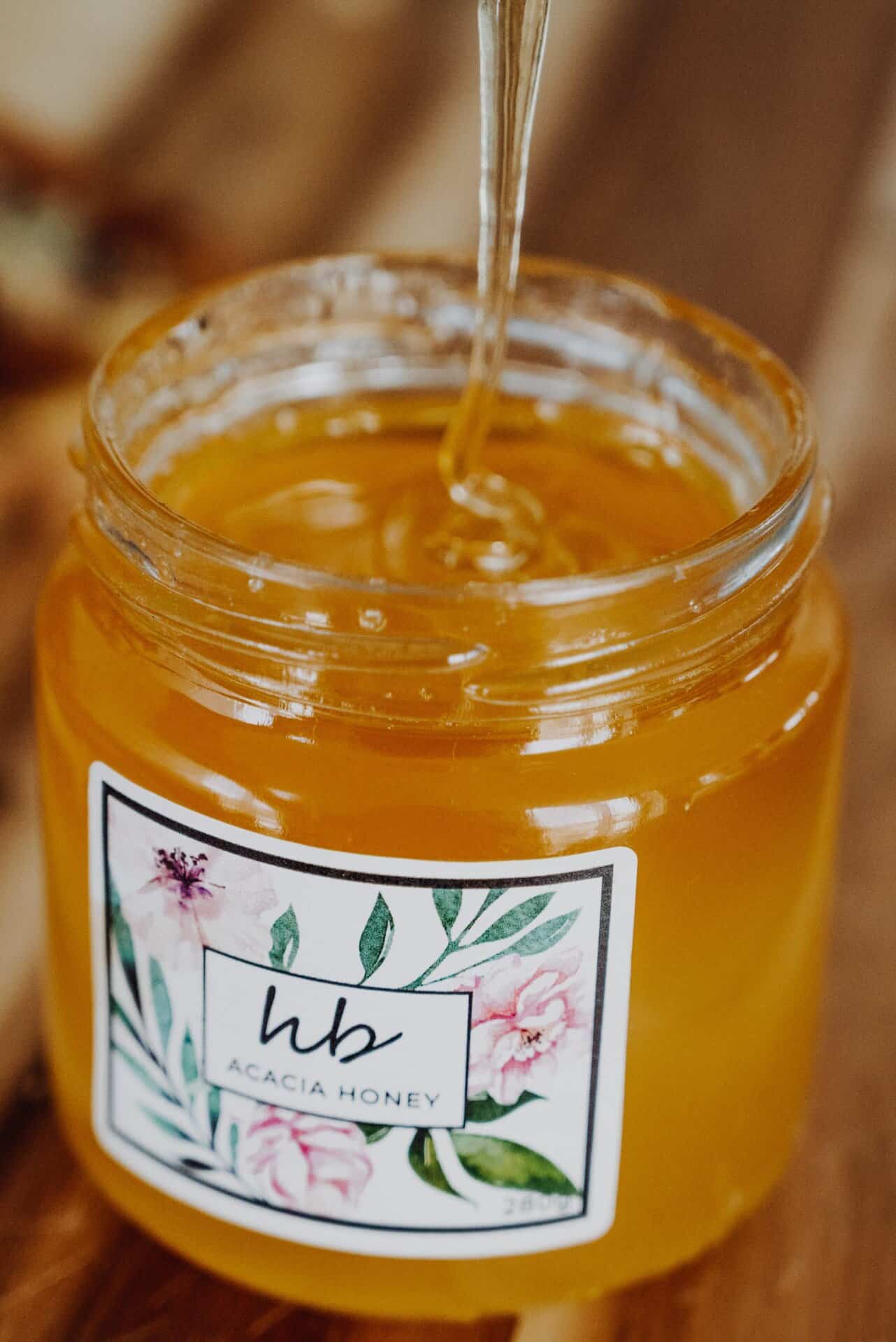
Every honey leaves the hive runny. Over time, some honeys stay that way while others gradually turn thick, cloudy and spreadable. That change is called crystallisation, or setting, and it is simply the honey's natural sugars settling into a more stable, semi-solid form. Nothing has been added and nothing has gone wrong; the honey has just changed texture.
What makes honey set?
Honey is what scientists call a supersaturated solution: it holds far more sugar than its small amount of water can keep dissolved. The two main sugars behave very differently. Fructose stays dissolved and keeps honey runny, while glucose is less soluble and slowly comes out of solution to form tiny crystals. The more glucose a honey contains, the faster it sets.
This is why different honeys set at such different speeds. Honeys that are high in glucose, such as oilseed rape, clover and dandelion, can turn solid within weeks. Honeys that are high in fructose, like acacia, are slow to crystallise and stay runny for months. Sunflower honey sits towards the faster end, because it is naturally higher in glucose, while most wildflower honey falls somewhere in the middle and sets gradually.
There is a second reason raw honey sets, and it is a reassuring one. Crystals need something to grow on, and raw, unfiltered honey is full of tiny natural particles, pollen, traces of beeswax and air bubbles, that give the glucose a foothold. Heavily processed supermarket honey is heat-treated and fine-filtered, which strips out those particles, so it can stay artificially runny for a long time. In other words, a honey that sets is often telling you it is the real, raw thing.
Temperature plays its part too. Crystallisation moves fastest in a cool spot, roughly 10 to 15 degrees, which is why a jar in a chilly larder may set sooner than one in a warm kitchen. Keeping honey at normal room temperature slows the process down, and chilling it in the fridge tends to speed it up, so where you store a jar quietly nudges it one way or the other.
Has my honey gone off?
No. This is the worry behind almost every runny versus set question, and the answer is firmly no. Crystallisation does not mean honey is old in a bad way, fake, or spoiled. Honey is famously long-lasting, and setting changes only its texture and colour, never its safety. If anything, it is a mark of authenticity.
Set honey has not gone off. Crystallising is one of the surest signs that a honey is raw, pure and entirely natural.
Which of our honeys are runny, set, or in between
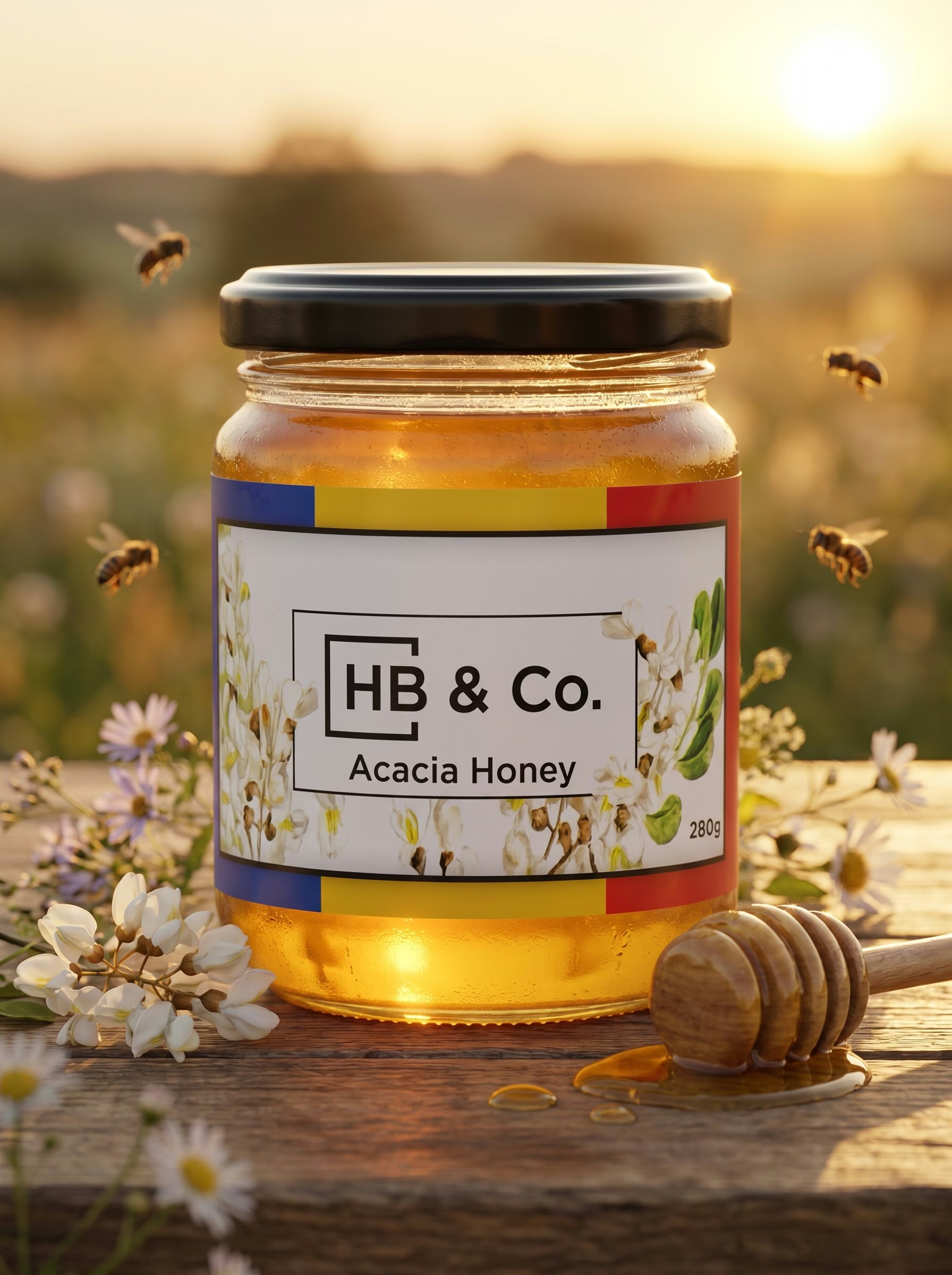
Across our range you will find every state, which is part of the pleasure of raw honey. Acacia is the slowest of all to crystallise, so it stays clear and pourable for months, and our Linden and Wildflower honeys are enjoyed runny as well, with wildflower gradually setting over time. Sunflower, being naturally higher in glucose, is the quickest of our liquid honeys to begin setting.
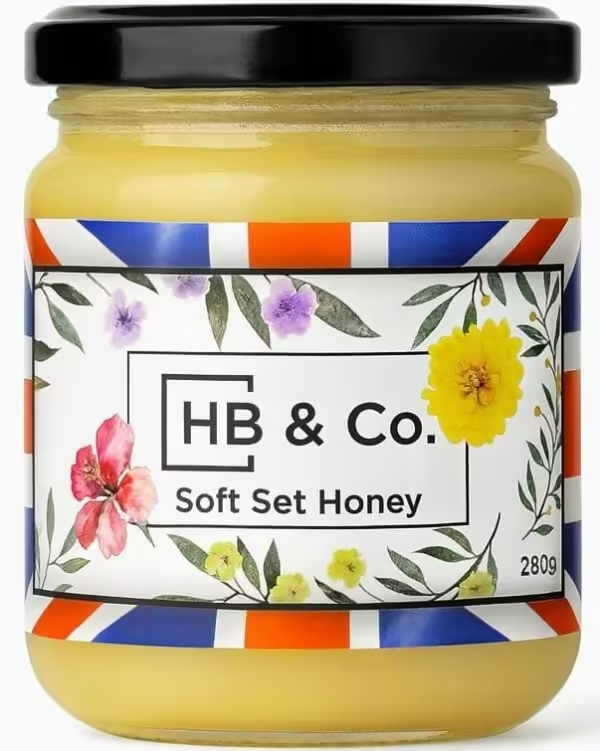
At the other end sits our Soft Set honey, which is gently creamed to a smooth, spreadable set on purpose rather than by accident. And Heather sits in a category all of its own, which we explain next. Whichever you choose, the honey inside is raw and single-origin; only the texture changes.
Runny vs set: which to use when
Neither texture is better; they simply suit different jobs. Reach for runny honey when you want it to pour, dissolve or blend. Reach for set honey when you want it to stay put. The table below makes it easy.
| Runny honey | Set honey | |
|---|---|---|
| Texture | Smooth and pourable, drips from the spoon | Thick and spreadable, holds its shape |
| What it is | Honey in its freshly extracted liquid state | The same honey after its glucose has crystallised |
| Best for | Drizzling, stirring into tea and coffee, dressings, baking | Spreading on toast and crumpets, no-drip topping |
| In our range | Acacia, Linden, Wildflower | Soft Set |
| Over time | Slowly begins to set, with acacia the slowest of all | Stays stable and spreadable |
The special case: heather honey
One of our honeys breaks the runny-or-set rule entirely. Heather honey is naturally thick and jelly-like, but not because it has crystallised. It is thixotropic, a rare natural gel that turns runny when stirred or pressed and sets firm again when left to stand. That comes from a natural protein in heather nectar, and it is why heather has its own distinctive, almost wobbly texture and its premium place in our range.
How to turn set honey runny again
If you prefer your honey pourable, set honey is easy to loosen, as long as you are gentle. Harsh heat is the one thing to avoid.
- Stand the jar in warm water. Fill a bowl or pan with warm, not boiling, water and sit the jar in it with the lid loosened.
- Keep the heat gentle. Aim for hand-warm water, below about 40C, to protect the honey's delicate raw character. Top up with more warm water as it cools.
- Stir and be patient. Stir now and then. A fully set jar can take a couple of hours, so repeat the warm-water bath rather than rushing it.
- Never boil or microwave on full power. Fierce, direct heat damages the flavour and the natural enzymes, and overheated honey can darken and taste caramelised.
How to store honey
Honey is wonderfully low-maintenance. Keep it in a sealed jar at normal room temperature, away from direct heat and out of the fridge, and it will keep for a very long time. If you want to slow crystallisation down, a warm cupboard is kinder than a cold one; if you would rather a jar set into a spread, a cooler spot encourages it along. The one habit worth keeping is using a clean, dry spoon every time, since stray moisture is the only thing that can affect honey over the long term.
Can you turn runny honey into set honey?
You can, although it takes more than the warm-water trick in reverse. Producers create smooth set honey through a process called creaming, where a little finely crystallised honey is stirred into a liquid batch to seed an even, fine-grained set. At home you can imitate this by stirring a spoonful of set honey into a runny jar and leaving it somewhere cool to take. For a reliably silky result without the effort, our Soft Set honey is made for exactly that.
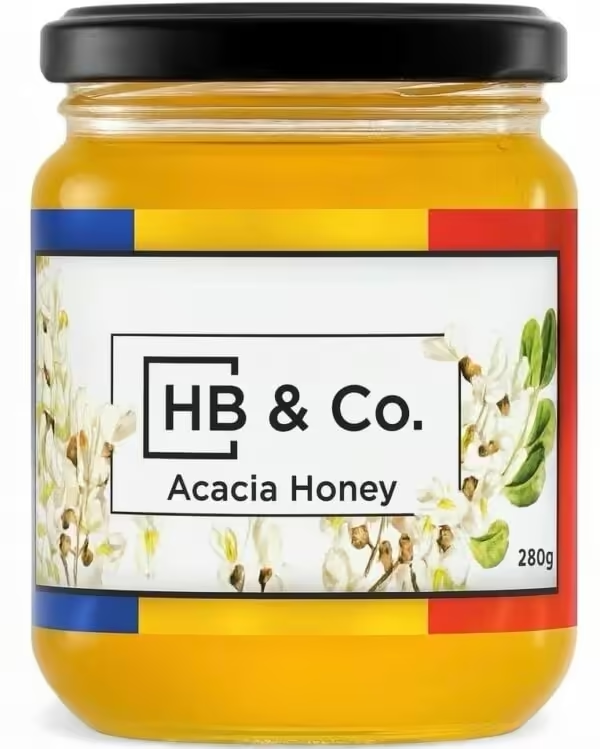
If you love a honey that pours, acacia is the one. Naturally high in fructose, it is the slowest in our range to crystallise, staying clear and runny for months.
Shop Raw Acacia Honey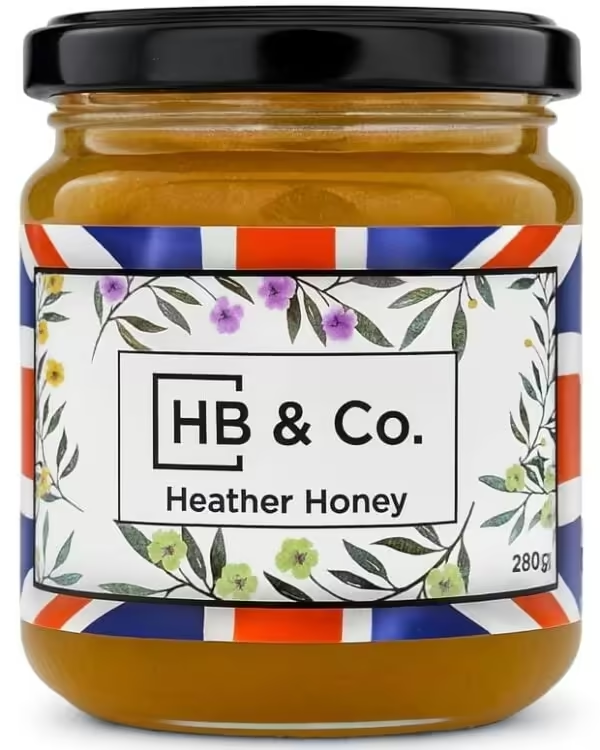
Frequently asked questions
What is the difference between runny and set honey?
They are the same honey in different states. Runny honey is in its liquid form, while set honey has crystallised into a thicker, spreadable texture. The change is natural and affects only texture and colour, not quality or safety.
Is set honey gone off or bad?
No. Crystallisation is a natural process and does not mean honey has spoiled, aged badly or been faked. Set honey is perfectly good to eat, and setting is often a sign that a honey is raw and unprocessed.
Why does honey go solid?
Honey holds more sugar than its water can keep dissolved. Over time the glucose comes out of solution and forms crystals, turning the honey from runny to set. Honeys with more glucose set faster, helped along by the natural pollen and particles in raw honey.
Which honeys stay runny the longest?
Fructose-rich honeys are the slowest to set. Acacia is the classic example and the slowest in our range to crystallise, staying clear and pourable for months. If you want a honey that pours, look for one high in fructose.
Is runny or set honey better for baking?
Runny honey is easier to weigh, pour and mix, so it is the more convenient choice for most baking. Set honey works just as well once gently warmed back to a pourable state.
How do I make set honey runny again?
Stand the jar in a bowl of warm, not boiling, water with the lid loosened, keep the water below about 40C, and stir now and then until the crystals melt. Never boil it or microwave it on full power, as fierce heat spoils the flavour and the natural enzymes.
Is set honey better quality than runny honey?
Neither is better. Both are natural states of the same honey, and the difference comes down to each flower's sugar balance rather than quality. What matters is that the honey is raw and pure, whichever texture it happens to be.
Why is heather honey so thick?
Heather honey is thixotropic, a natural gel caused by a protein in heather nectar. It turns runny when stirred and sets firm again when left to stand. This is different from crystallisation and gives heather honey its distinctive jelly-like texture.
Does set honey taste different from runny honey?
The flavour is essentially the same, since it is the same honey. Many people find set and creamed honey tastes a touch milder and creamier on the tongue, simply because the fine crystals change how it feels, not what it is made of.
Why does some shop-bought honey never set?
Heavily processed honey is usually heat-treated and fine-filtered, which removes the tiny natural particles that crystals need to form. With nothing to grow on, it can stay runny on the shelf for a very long time. Raw honey that sets is simply behaving as minimally processed honey should.