

 English (UK)
  Italiano
  Français
  简体中文
简体中文  한국어
한국어 
The best honey for baking depends on what you are making: a mild honey disappears into a delicate sponge, while a bold one carries a gingerbread. This guide matches honey to bake, variety by variety, then shows you exactly how to swap honey for sugar without ending up with a dense, burnt or overpoweringly sweet result.
Key takeaways
- For delicate bakes such as sponges and shortbread, use a mild honey like acacia so it sweetens without taking over.
- For everyday cakes, muffins and tea loaves, wildflower gives a classic, balanced honey flavour.
- For gingerbread and spiced bakes, a bold honey like heather stands up to strong flavours.
- To swap honey for sugar: use about three-quarters as much honey, hold back a little liquid, add a pinch of bicarbonate of soda, and lower the oven by about 15C.
- Honey keeps bakes moist and golden, but it browns faster, so keep an eye on the oven.
The best honey for baking, variety by variety
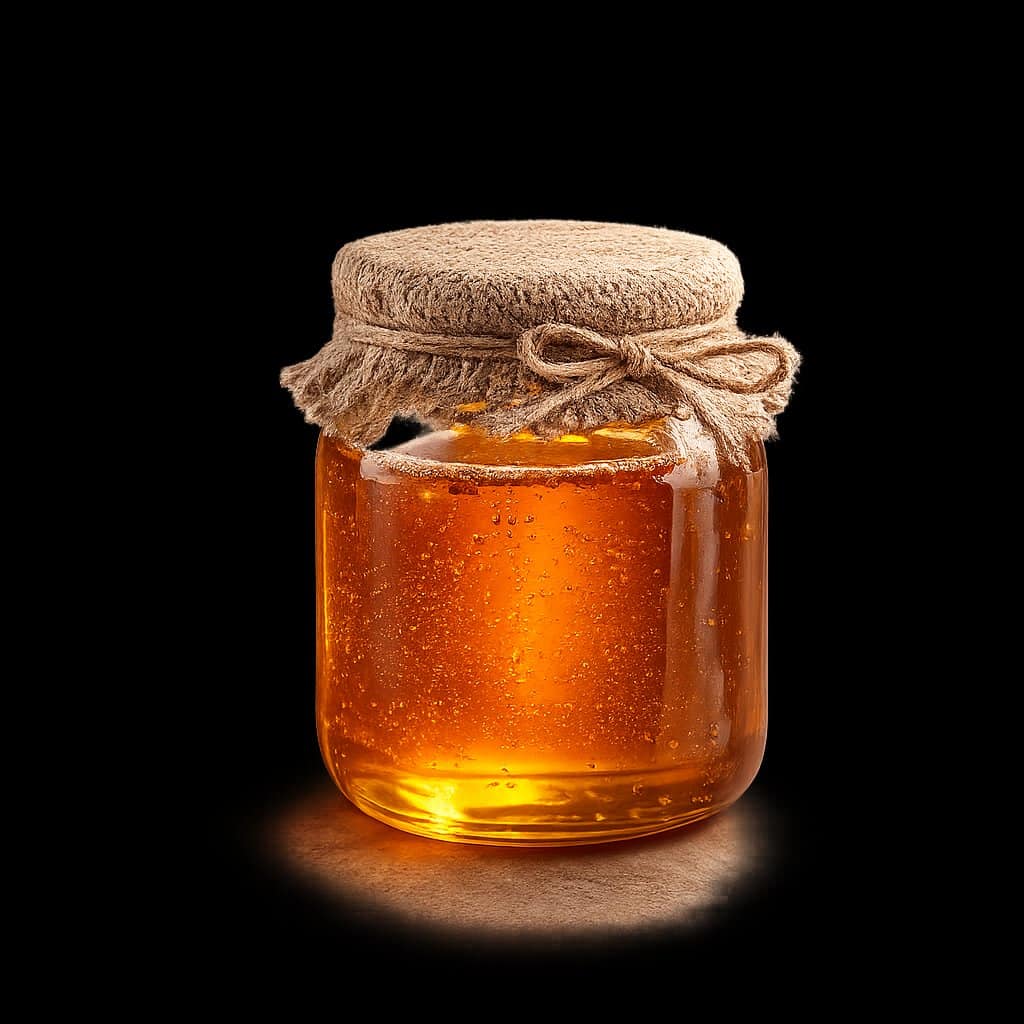
There is no single best honey for every bake. The trick is to match the strength of the honey to the strength of everything around it. A pale, delicate honey is wasted in a heavily spiced cake, while a strong, dark honey will bully a fragile sponge. Use the table below as a starting point.
| Your bake | Best honey | Why it works |
|---|---|---|
| Delicate sponges, shortbread, madeleines | Acacia | Pale and mild, it sweetens without colouring or overpowering |
| Everyday cakes, muffins, tea loaves | Wildflower | A classic, balanced honey flavour that suits almost anything |
| Gingerbread, parkin, spiced cakes | Heather | Bold and aromatic, it holds its own against strong spice |
| Flapjacks, granola, oat bakes | Sunflower or Wildflower | Robust flavour and great value when you bake by the spoonful |
| Drizzles, glazes, baklava | Acacia | Clean sweetness and stays runny, so it pours easily |
If you would rather not choose, our Bakers' Kitchen honey selection brings the key baking varieties together in one set, so you can reach for the right jar whatever you are making.
Why bakers love honey
Honey is not just a like-for-like swap for sugar. It changes a bake for the better in three ways. It adds moisture and holds onto it, so cakes and cookies stay soft for days. It browns faster than sugar, giving a deep golden crust. And it carries flavour of its own, from the gentle vanilla note of acacia to the rich, almost smoky depth of heather.
Honey does more than sweeten a bake. It deepens the flavour, golds the crust, and keeps the crumb soft long after a sugar version would have dried out.
How to swap honey for sugar
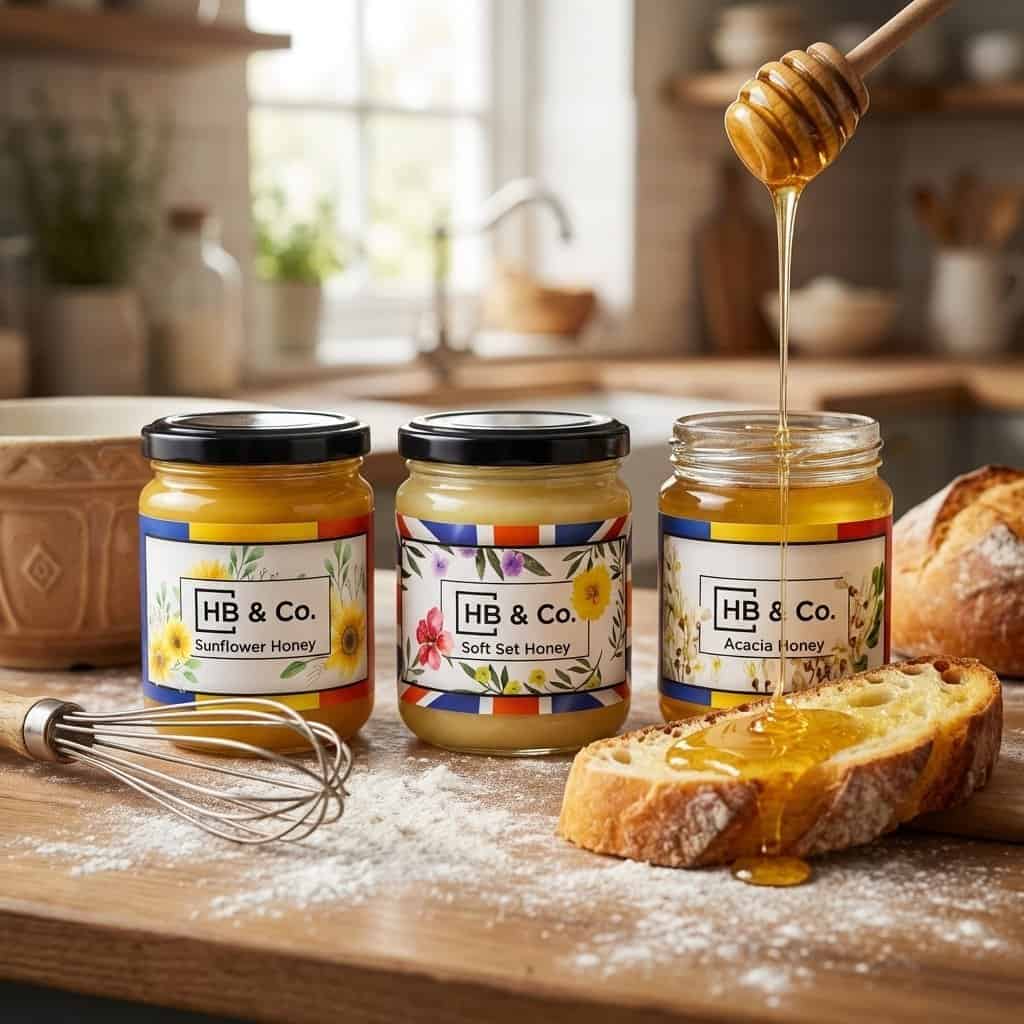
You can replace some or all of the sugar in most cakes, muffins, loaves and soft cookies with honey, as long as you make a few small adjustments. Follow these five rules and the bake will behave.
- Use less honey than sugar. Honey is sweeter, so swap each 100g of sugar for about 75g of honey. In cups, that is roughly half to three-quarters of a cup of honey per cup of sugar.
- Hold back some liquid. Honey is about one-fifth water. Reduce the other liquids by roughly a tablespoon for every 100g of honey, or about a quarter of a cup per cup of honey.
- Add a pinch of bicarbonate of soda. Honey is slightly acidic. About a quarter teaspoon for every 300g of honey helps the bake rise, if the recipe does not already include it.
- Lower the oven by about 15C, or one gas mark. Honey browns and caramelises faster than sugar, so drop the temperature and start checking early.
- Weigh, do not scoop. Honey is sticky and hard to measure by volume. Weigh it on a digital scale, or lightly oil the spoon so it slides off cleanly.
Common mistakes, and how to avoid them
Most honey baking disasters come down to one of a handful of slips. A strong honey in a delicate bake will overpower it, so match the honey to what you are making. Forgetting to lower the oven leaves the outside dark before the middle is done. Skipping the liquid adjustment gives a dense, damp crumb. And if you were hoping for a crisp, snappy biscuit, remember that honey keeps things soft and chewy, which is wonderful in an oatmeal cookie but frustrating if you wanted crunch.
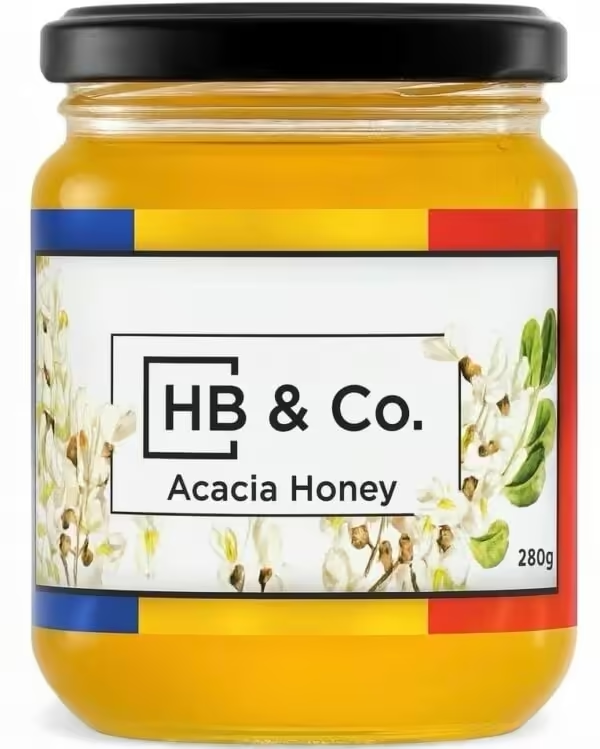
The baker's all-rounder: mild enough for delicate sponges, pale so it never discolours a crumb, and slow to crystallise so it stays easy to weigh and pour.
Shop Raw Acacia Honey
Frequently asked questions
What is the best honey for baking?
It depends on the bake. Use a mild honey like acacia for delicate sponges and shortbread, a balanced wildflower for everyday cakes and muffins, and a bold honey like heather for gingerbread and spiced bakes. Match the strength of the honey to the strength of the recipe.
Can I use honey instead of sugar in baking?
Yes, in most cakes, muffins, loaves and soft cookies. Use about three-quarters as much honey as sugar, reduce the other liquids a little, add a pinch of bicarbonate of soda, and lower the oven by around 15C. Where sugar provides structure, as in meringues or crisp biscuits, swap only part of it.
How much honey replaces a cup of sugar?
Use roughly half to three-quarters of a cup of honey for each cup of sugar, because honey is sweeter. By weight, that is about 75g of honey for every 100g of sugar. Then reduce the other liquids by about a quarter of a cup per cup of honey.
Does baking with honey make cakes moister?
Yes. Honey is hygroscopic, which means it draws in and holds moisture, so honey bakes stay soft and fresh noticeably longer than sugar ones. This is why honey is so good in loaves, oat cookies and tray bakes.
Why does my honey cake brown or burn so fast?
Honey browns and caramelises faster than sugar. The fix is simply to lower the oven by about 15C, or one gas mark, and to start checking a little earlier than the recipe says. A loose covering of foil near the end also helps if the top is colouring too quickly.
Is runny or set honey better for baking?
Runny honey is easier to weigh and mix in, which is why our slow-to-crystallise acacia is such a useful baking honey. Set or crystallised honey works just as well once gently warmed back to a pour; our guide to crystallised honey explains how.
Does baking change raw honey?
Gentle oven heat softens some of raw honey's delicate aromatics and natural enzymes, so if you want those qualities at their fullest, use honey as a finishing drizzle rather than baking it. For the bake itself, honey's flavour, sweetness and moisture all come through beautifully.
Which honey is best for flapjacks?
A fuller-flavoured honey such as sunflower or wildflower works best in flapjacks and oat bakes, where you want the honey to be tasted. For a tried-and-tested method, see our raw honey flapjacks recipes.