

 English (UK)
  Italiano
  Français
  简体中文
简体中文  한국어
한국어 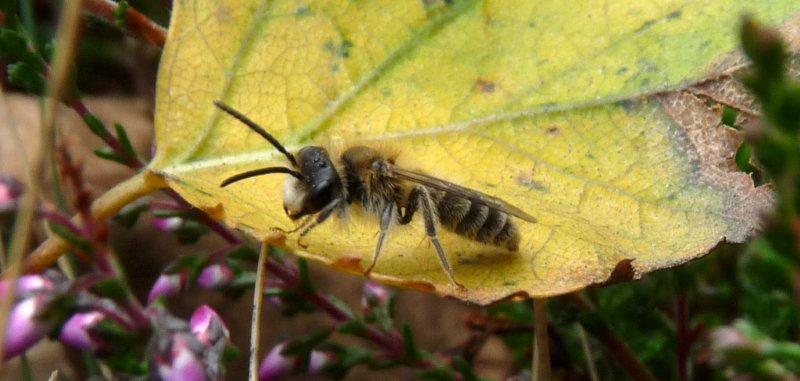 Andrena fuscipes, the heather mining bee. Conny Leijdekker-Winthorst (Waarneming.nl), CC BY 3.0, via Wikimedia Commons.
UK Bee Species
Heather Mining Bee (Andrena fuscipes)
Andrena fuscipes (Kirby, 1802) · family Andrenidae
The heather mining bee lives its whole life by the heather. A late-summer bee of heaths and moors, it flies only when the ling is in bloom and gathers its pollen from almost nothing else. Where heather is abundant it can be common, but its fortunes are bound tightly to that one habitat. See where it sits among Britain's bees on the UK Native Bee Species Map, or among the world's bees in the World Bee Atlas.
Quick Facts
| Kingdom | Animalia |
| Phylum | Arthropoda |
| Class | Insecta |
| Order | Hymenoptera |
| Family | Andrenidae |
| Genus | Andrena |
| Species | Andrena fuscipes |
A bee that lives by the ling
The heather mining bee is one of our most tightly specialised solitary bees. It is univoltine, flying in a single late-summer generation from July to September that peaks in August as the ling comes into bloom, and it gathers pollen almost exclusively from heathers, above all Common Heather or ling (Calluna vulgaris).[1] Males and females alike are rarely seen at anything other than heather, and the species is entirely confined to heathland and moorland.[2] Its whole calendar is set by a single plant.
The heather mining bee waits for August. Its flight is timed to the flowering of the ling, and where heather carpets a heath or moor in late summer this bee can suddenly be one of the most abundant insects on the wing.[2]
How to identify the heather mining bee
Females have a golden-ginger to light-brown pile on the thorax and a dark brown abdomen crossed by clear pale bands, with buff side-tufts and a shiny galea.[2] The combination of a late-summer flight, a strict heathland setting and constant attendance at heather flowers is usually enough to place it.[3] The most similar species is the rare Andrena simillima, from which the heather mining bee differs in its smaller size, buff rather than white side-tufts, duller thoracic hair and a paler hind-leg pollen brush.[2]
Where it lives and why it matters
The heather mining bee is found throughout Great Britain on heather-dominated heaths, with records reaching north to Sutherland, and it nests singly or in dispersed groups in bare, sandy ground among the heather.[1][5] Because Britain holds so much of north-west Europe's remaining heathland, our populations may form a significant share of the species' world total, which gives this unassuming bee real conservation importance.[1] As a heather specialist it is also an effective pollinator of ling, part of what keeps these purple late-summer landscapes alive.
Its conservation status reads very differently depending where you stand. In Britain it is not regarded as nationally scarce or threatened, yet it is a priority species in Northern Ireland, known there from a single coastal site and assessed as Vulnerable, and it is listed as severely endangered on the German Red List. A bee can be locally common and internationally fragile at the same time, especially one tied to a habitat in long-term decline.[1][4]
Caring for the heather mining bee
Everything this bee needs comes from healthy heathland: large stands of flowering ling for forage and bare, well-drained sandy ground for nesting. Lowland heath is one of Britain's most reduced habitats, so conserving and restoring it, and resisting the loss of heaths to development, scrub and afforestation, is the single most important thing for the heather mining bee and the many other specialists that share its ground.
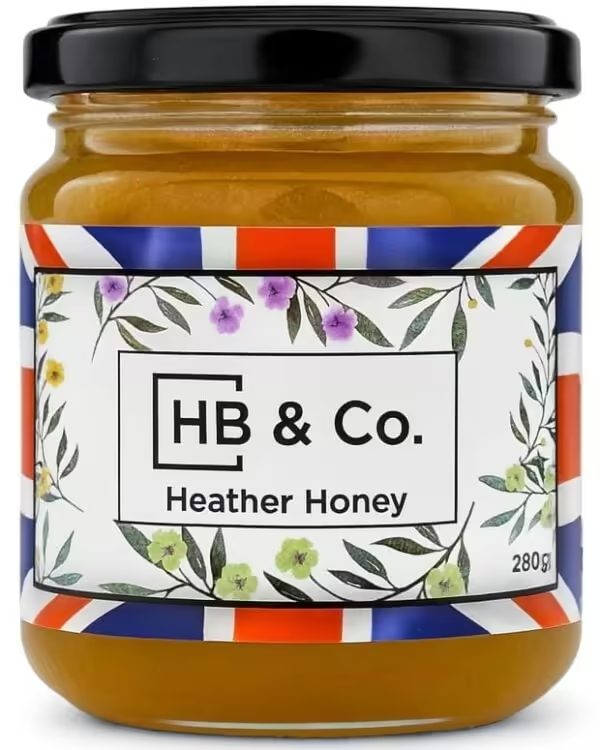
Raw British Heather Honey
The honeybee's take on the same late-summer ling this mining bee depends on: rich, amber and aromatic, from a single annual heather harvest. Our British honey supplier holds SALSA Certification. 280g. £12.99.
Shop Heather Honey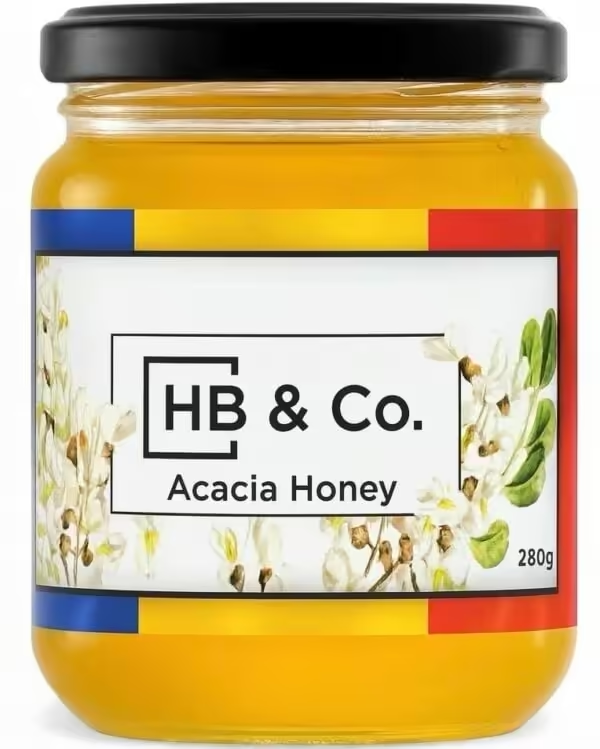
Raw Acacia Honey
Our flagship raw Acacia honey: pale, delicate and slow to crystallise. Six generations of family beekeeping heritage in every 280g jar. £10.99.
Shop Acacia Honey
Subscribe & Save 20%
Choose any single honey and save 20% on every delivery, with free UK delivery on every subscription order.
Start a SubscriptionFrequently asked questions
How do I identify a heather mining bee?
What does the heather mining bee feed on?
When is it active?
Where does it live and nest?
Is the heather mining bee endangered?
What is the black-horned nomad bee?
Does the heather mining bee make heather honey?
Does it sting?
Related species
Yellow-legged Mining Bee
Andrena flavipesRead more → Mining beeTawny Mining Bee
Andrena fulvaRead more → Mining beeAshy Mining Bee
Andrena cinerariaRead more →Sources & references
- BWARS (Bees, Wasps & Ants Recording Society). Species account: Andrena fuscipes (Kirby, 1802), heather specialism, univoltine flight, nesting, distribution, the cuckoo Nomada rufipes and European status. bwars.com.
- Falk, S. Field Guide to the Bees of Great Britain and Ireland, Bloomsbury, notes for Andrena fuscipes (identification, separation from A. simillima, flight, heathland confinement). Steven Falk Flickr collection.
- Buzz About Bees. Heather mining bee (Andrena fuscipes): habitat, ling forage, nesting and the indicator value of Nomada rufipes. buzzaboutbees.net.
- Northern Ireland Priority Species account (Habitas / National Museums NI). Andrena fuscipes: single Co. Down locality, Vulnerable on the Irish bee red list, heathland-loss threat.
- GBIF Secretariat / NBN Atlas. Andrena fuscipes (Kirby, 1802): taxonomy and UK distribution to Sutherland. gbif.org; nbnatlas.org.

Dragos Nistor
Founder, HoneyBee & Co. · Guest Lecturer, University of Greenwich
HoneyBee & Co. draws on six generations of family beekeeping heritage, with honey from the Nistor family apiaries and from carefully chosen British producers. Our British honey supplier holds SALSA Certification, and we offer a 15% NHS Discount. Every jar is raw, unfiltered and traceable to the hive.