

 English (UK)
  Italiano
  Français
  简体中文
简体中文  한국어
한국어 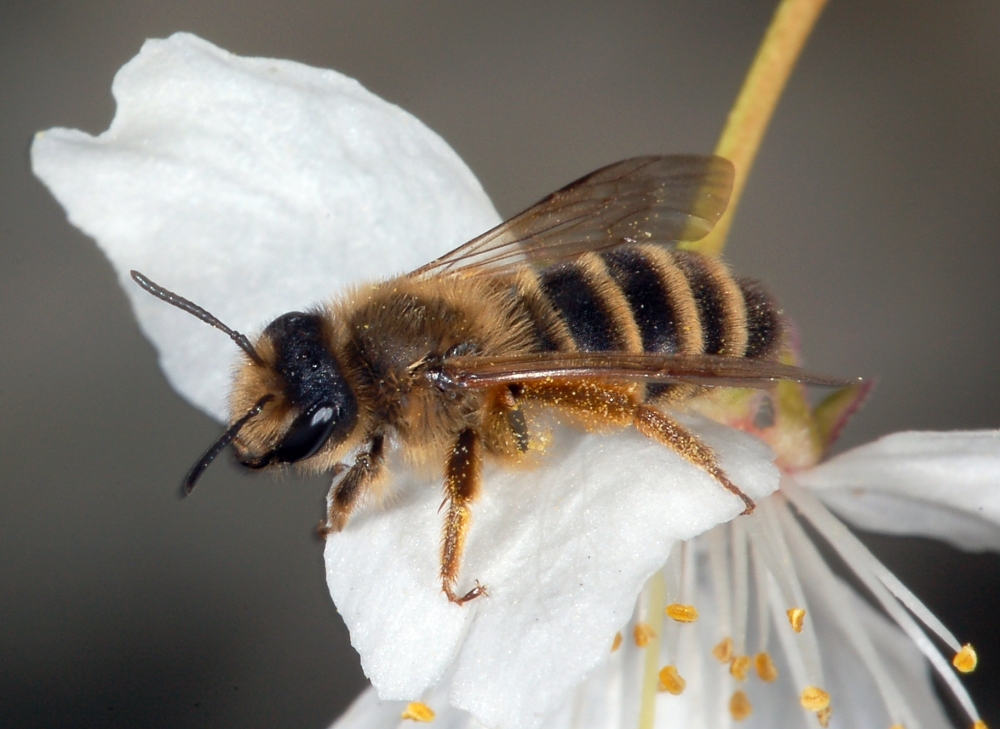 Andrena flavipes, the yellow-legged mining bee. Fritz Geller-Grimm, CC BY-SA 3.0, via Wikimedia Commons.
UK Bee Species
Yellow-legged Mining Bee (Andrena flavipes)
Andrena flavipes Panzer, 1799 · family Andrenidae
The yellow-legged mining bee is one of the most successful solitary bees in southern Britain, a neat, banded mining bee that nests in huge aggregations on sunny banks and lawns. It is also a keystone for other insects: it is the host of the painted nomad bee and a mainstay for the dotted bee-fly. Unusually for a British mining bee, it raises two generations a year. See where it fits among Britain's bees on the UK Native Bee Species Map, or among the world's bees in the World Bee Atlas.
Quick Facts
| Kingdom | Animalia |
| Phylum | Arthropoda |
| Class | Insecta |
| Order | Hymenoptera |
| Family | Andrenidae |
| Genus | Andrena |
| Species | Andrena flavipes |
A mining bee with two seasons
Mining bees of the genus Andrena are solitary, ground-nesting bees: each female digs her own burrow, lines a series of cells, and stocks each with pollen and nectar for a single larva.[4] The yellow-legged mining bee is a medium-sized, strongly banded member of the group. Females have neat pale hair bands across the abdomen and characteristically pale, yellowish hairs on the hind legs that give the bee its name, with buff facial hair edged in black.[2] Males are slimmer, with sparser hair and without the dense pollen-carrying brushes of the female.[3]
Most British mining bees fly for only a few weeks each year. The yellow-legged mining bee is bivoltine, raising two full generations: a spring brood from around March to May and a second from June into September.[1]
Where it lives, and its growing range
The yellow-legged mining bee is widespread and locally common across southern England and the south coast of Wales, with records reaching the Channel Islands and the Isles of Scilly.[1] It favours open, sunny places on clay-based or sandy soils, from gardens, parks and allotments to churchyards, field margins, road verges, old quarries and waste ground.[3] Over the past few decades it has spread markedly northwards and become more abundant in its core range, part of a wider shift in warmth-loving insects.[2] Its nesting aggregations can be enormous, with thousands of burrows packed into a single sunny bank.
A bee that feeds a community
As a generalist forager the yellow-legged mining bee visits a huge range of flowers, from dandelions and daisies to fruit blossom, making it a valuable early pollinator of orchards and gardens.[4] Its large, dense colonies also support a small community of dependent insects. It is the sole host of the painted nomad bee, a wasp-like cuckoo bee, and one of the main hosts of the dotted bee-fly, whose larvae develop in mining bee nests.[2]
Not every association is firmly proven. The black oil beetle, whose triungulin larvae hitch a ride on solitary bees, is thought to depend heavily on yellow-legged mining bee colonies in some coastal areas of Essex and Kent, but this link is suspected rather than confirmed. The bee's own status, by contrast, is secure: it is not considered scarce or threatened, and needs no special conservation measures.[1][5]
Why it matters
The yellow-legged mining bee shows how a single common bee can anchor a wider web of life. It is an effective early pollinator, a host to a cuckoo bee and a bee-fly, and a possible mainstay for a rare beetle. Its spread north is a clear, trackable sign of climate change at work in our insect fauna. Leaving sunny, bare or sparsely vegetated banks undisturbed, and growing early flowers such as dandelions, willows and fruit blossom, gives this bee and everything that depends on it a place to thrive.
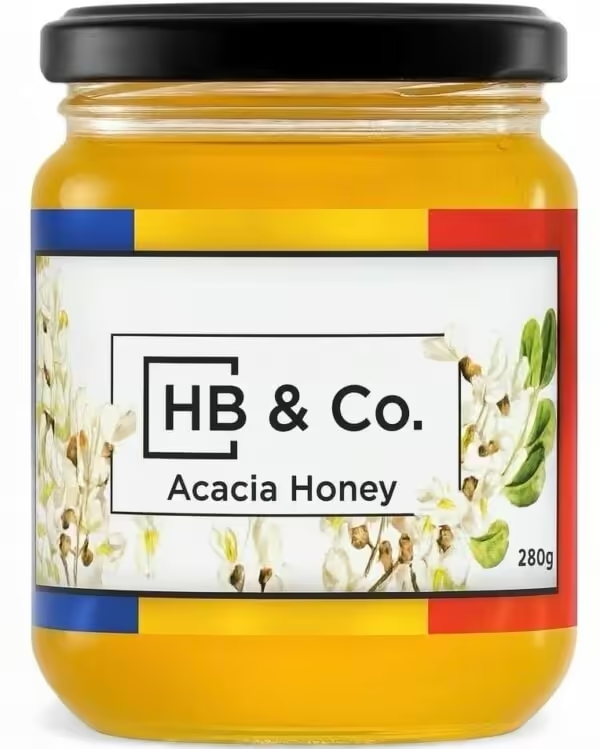
Raw Acacia Honey
Our flagship raw Acacia honey: pale, delicate and slow to crystallise. Six generations of family beekeeping heritage in every 280g jar. £10.99.
Shop Acacia Honey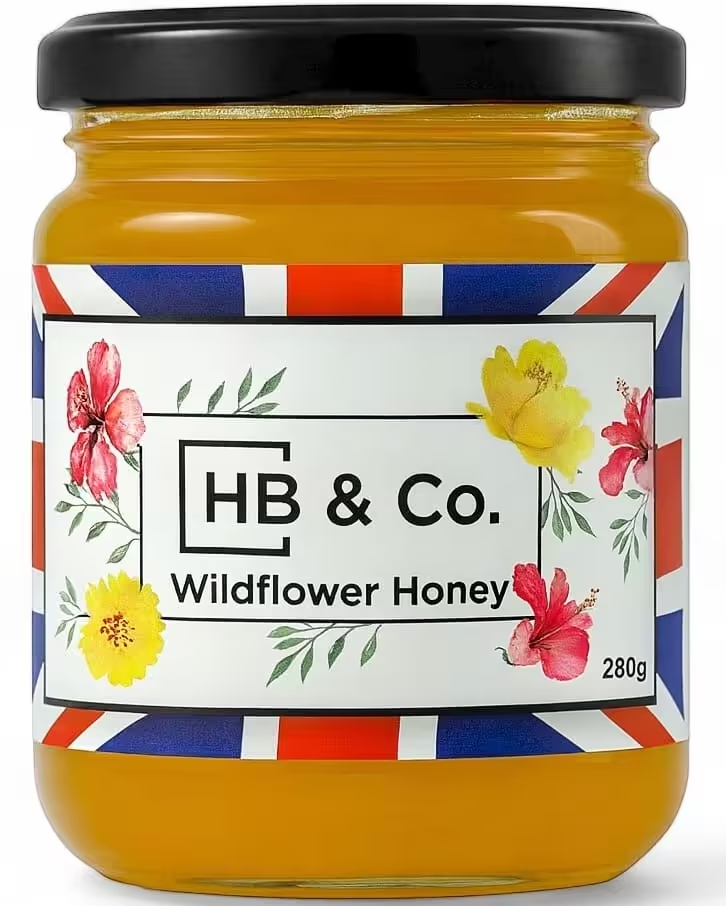
British Wildflower Honey
Raw honey from Midlands meadows and hedgerows, the open flowery ground that mining bees forage. Our British honey supplier holds SALSA Certification. 280g. £10.99.
Shop Wildflower Honey
Subscribe & Save 20%
Choose any single honey and save 20% on every delivery, with free UK delivery on every subscription order.
Start a SubscriptionFrequently asked questions
How do I identify a yellow-legged mining bee?
What is a mining bee?
Why does it have two generations a year?
Is the yellow-legged mining bee spreading?
What is the painted nomad bee, and how is it linked?
Do yellow-legged mining bees sting?
Are mining bee nests bad for my lawn?
Does the yellow-legged mining bee make honey?
Related species
Painted Nomad Bee
Nomada fucataRead more → Mining beeTawny Mining Bee
Andrena fulvaRead more → Mining beeAshy Mining Bee
Andrena cinerariaRead more →Sources & references
- BWARS (Bees, Wasps & Ants Recording Society). Species account: Andrena flavipes Panzer, 1799, distribution, bivoltine flight period and status. bwars.com.
- Falk, S. Field Guide to the Bees of Great Britain and Ireland, Bloomsbury, with notes for Andrena flavipes (banding, facial hair, northward spread, associated Nomada fucata and bee-fly). Steven Falk Flickr collection.
- BWARS information sheet for Andrena flavipes, the yellow-legged mining bee: habitats, male and female characters, two flight periods.
- Andrena genus biology, after Stephen, Bohart & Torchio (1969) and Falk (2015): solitary ground-nesting, cell provisioning and generalist foraging.
- GBIF Secretariat and field accounts (NatureSpot, WildBristol) for Andrena flavipes: associated species including the dotted bee-fly and the suspected oil-beetle link.

Dragos Nistor
Founder, HoneyBee & Co. · Guest Lecturer, University of Greenwich
HoneyBee & Co. draws on six generations of family beekeeping heritage, with honey from the Nistor family apiaries and from carefully chosen British producers. Our British honey supplier holds SALSA Certification, and we offer a 15% NHS Discount. Every jar is raw, unfiltered and traceable to the hive.