
 English (UK)
  Italiano
  Français
  简体中文
简体中文  한국어
한국어 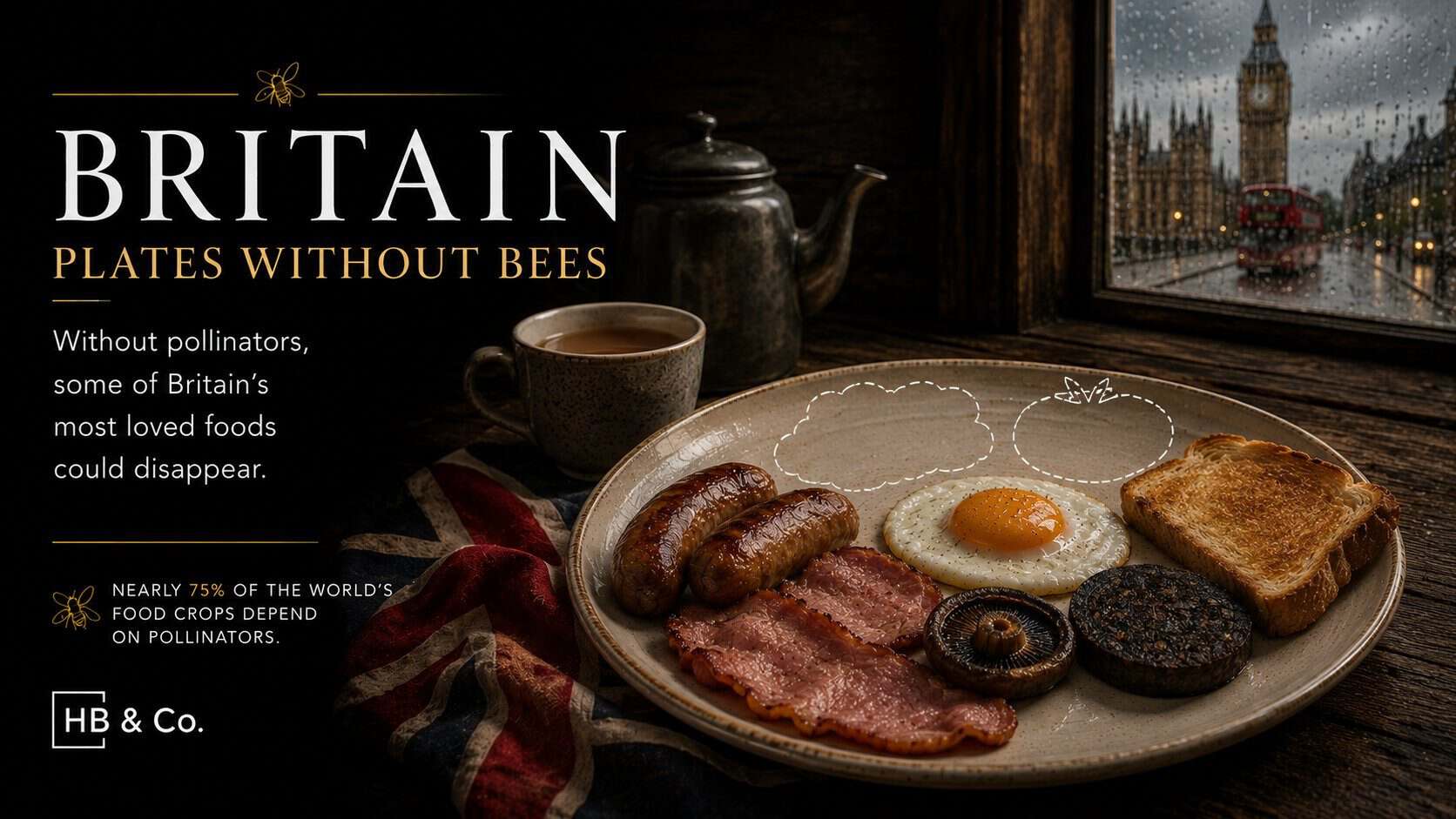
Britain's Plate Without Bees
Six iconic British meals. Three native bee species. What vanishes from the table when the pollinators disappear.
 United Kingdom
 Italy
Italy
 France
 Spain
Spain
 Germany
 Greece
 Portugal
 Romania
 Turkey
 United States
 Mexico
 Brazil
 Argentina
 Peru
Peru
 Colombia
 China
China
 Japan
Japan
 South Korea
 Thailand
 Vietnam
 Indonesia
 Philippines
 India
India
 Pakistan
 Morocco
 Egypt
Egypt
 Lebanon
 Saudi Arabia
 Ethiopia
 Nigeria
- 87 of the world's leading food crops depend on animal pollination to some degree (Klein et al., 2007)
- Without bees, up to 75% of a traditional British Summer BBQ would disappear from the table
- India's Thali, Brazil's spread, and a British Summer BBQ each lose 75% of their dishes
- This is not a future scenario. Global bee populations are declining now, across every continent
- Buying raw honey from ethical beekeepers directly supports the colonies that pollinate our food
Why British Bees Are Essential to British Food
A bee visiting a flower is not incidental to food production. It is the mechanism. When a bee collects pollen from a tomato plant, it transfers genetic material between flowers that the plant cannot transfer alone. Without that transfer, no fruit forms. The same is true for strawberries, avocados, courgettes, almonds, raspberries, cucumbers, blueberries, and hundreds more crops that appear on plates in every country on earth.
The relationship is not uniform. Some crops are entirely dependent on pollinators, some benefit significantly, and some not at all. The dependency scale used in this tool comes from a landmark 2007 study in the Proceedings of the Royal Society B, which remains the most comprehensive global assessment of this relationship. It rated 87 of the world's leading food crops across five categories: none, little, modest, great, and essential. Every rating in this tool uses that verified data.
The Science Behind the Numbers
The five dependency categories used in the tool map to real, measurable yield reductions. An essential classification means yield drops by 90% or more without pollinators. Great means a 40 to 90% reduction. Modest means 10 to 40%. These are derived from field exclusion experiments where pollinators were physically prevented from accessing crops and the resulting harvest was measured and compared.
This is why the numbers vary between cuisines in the tool. The Middle East mezze reaches 88% loss because the cuisine relies heavily on sesame (tahini), chickpeas (hummus and falafel), pomegranate, and honey. Brazil reaches 75% because its traditional ingredients include acai, passion fruit, mango, guarana, and black beans. British dishes vary from 38% to 75% depending on the season and the meal.
From Yorkshire Moors to the English Midlands: Why Our Honey Matters
HoneyBee and Co. was founded by Dragos Nistor, a sixth-generation beekeeper from Transylvania whose family has maintained hives in the Carpathian Mountains since the 1800s. The honey in every jar is raw, cold-extracted, and drawn from single-origin apiaries where bees forage on uncontaminated wildflower landscapes. These bees are not only producing honey. They are pollinating the surrounding ecosystem.
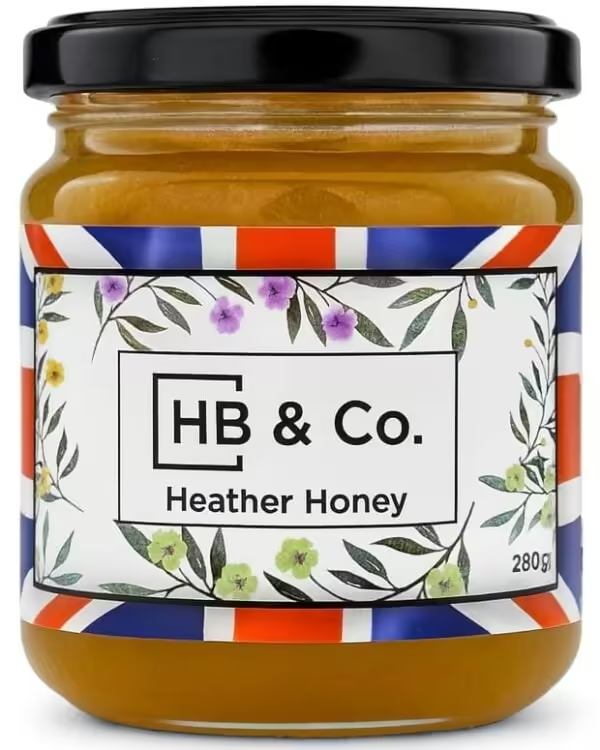
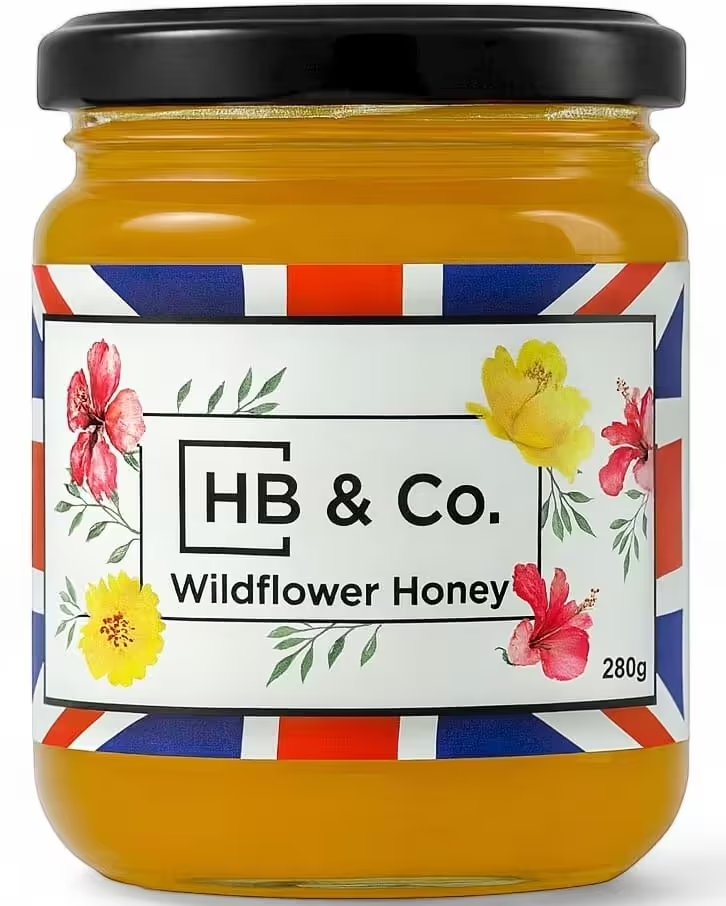
Our Heather Honey comes from the Yorkshire Moors, where colonies forage across one of Britain's most biodiverse heathland landscapes during a single brief harvest in August. Our Acacia Honey is drawn from Transylvanian forests during early June. Our Wildflower and Soft Set honeys come from the British Midlands. In every case, the bees doing the work are the same bees that pollinate the farms, hedgerows, and wild plants that feed everything else.
Buying raw honey from ethical beekeepers is one of the most direct ways a consumer can support bee populations. You can explore the full range of raw honey subscriptions and save 20% on every delivery, or read more about bee populations in our World Bee Atlas, which documents native species across 70 countries.
What You Can Do
Plant pollinator-friendly flowers in any outdoor space, eliminate pesticide use from your garden, and choose honey and food products from suppliers who practice ethical, traceable beekeeping. To understand which bee species depend on which plants in your country, visit the World Bee Atlas on this site. To read more about why bee populations are declining, see our article on why bee populations are declining.
British Honey. Shop HoneyBee & Co.
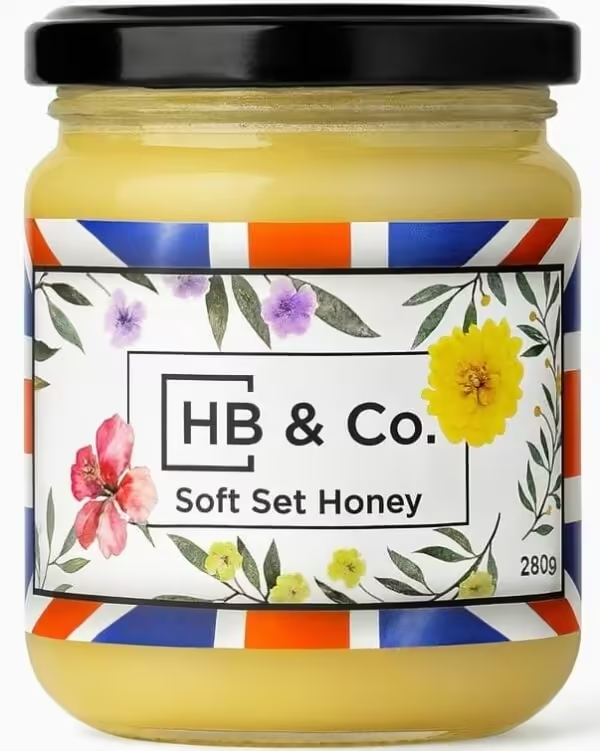
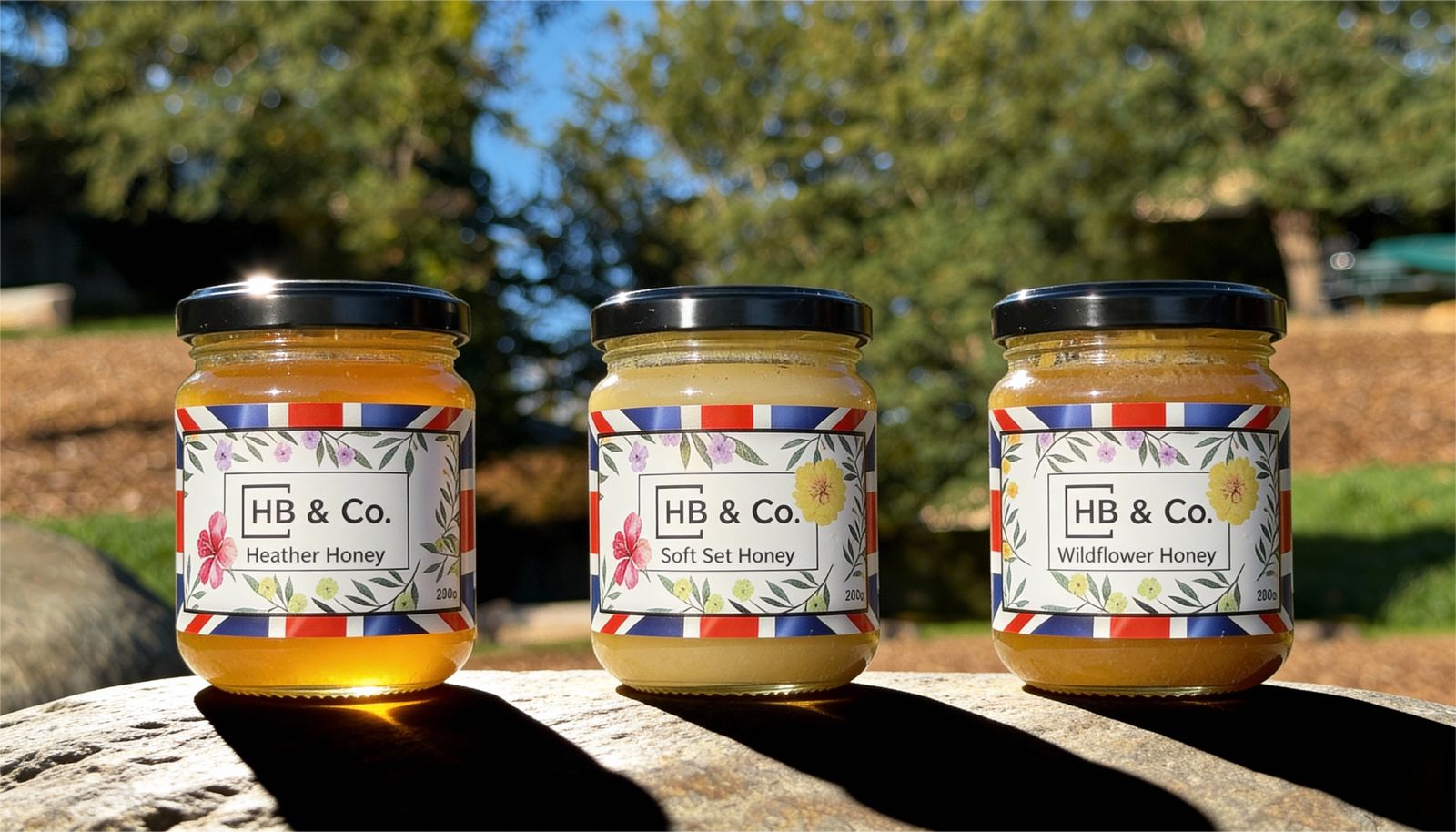
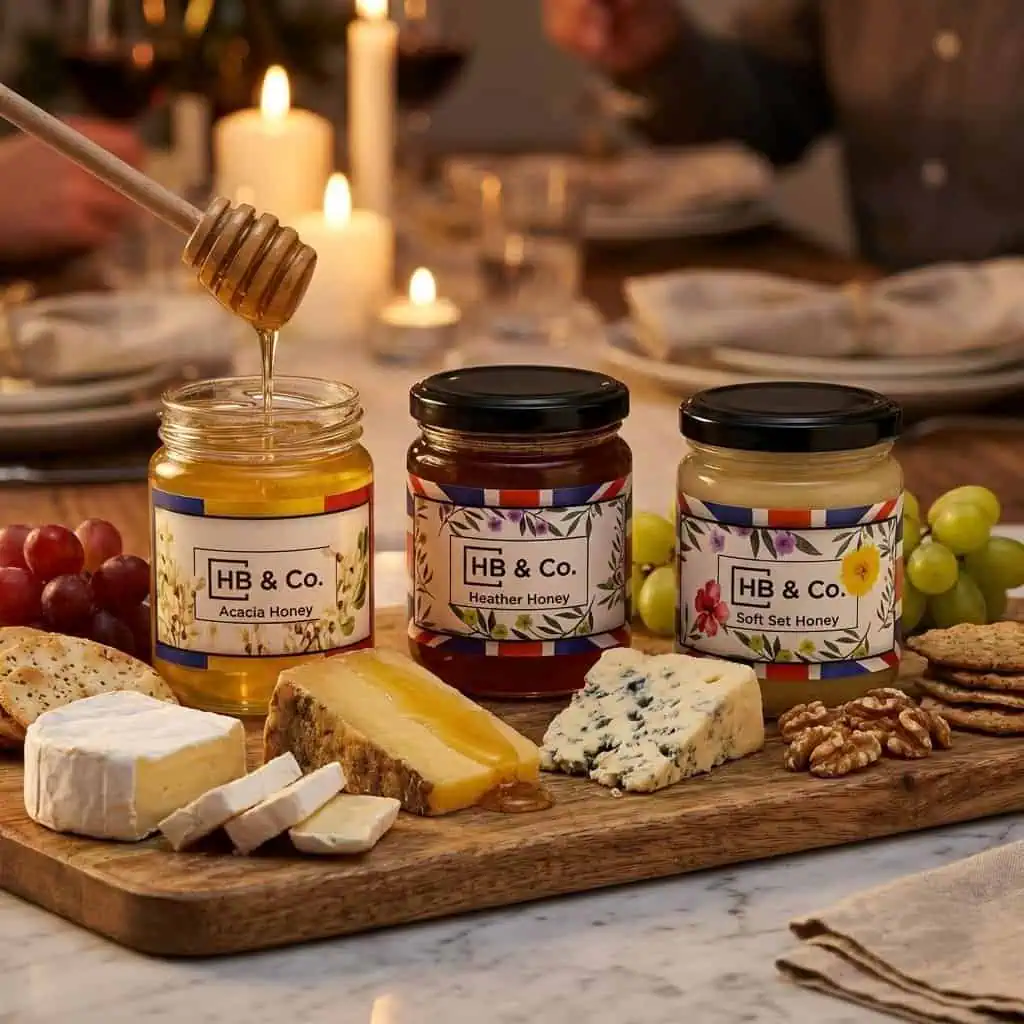
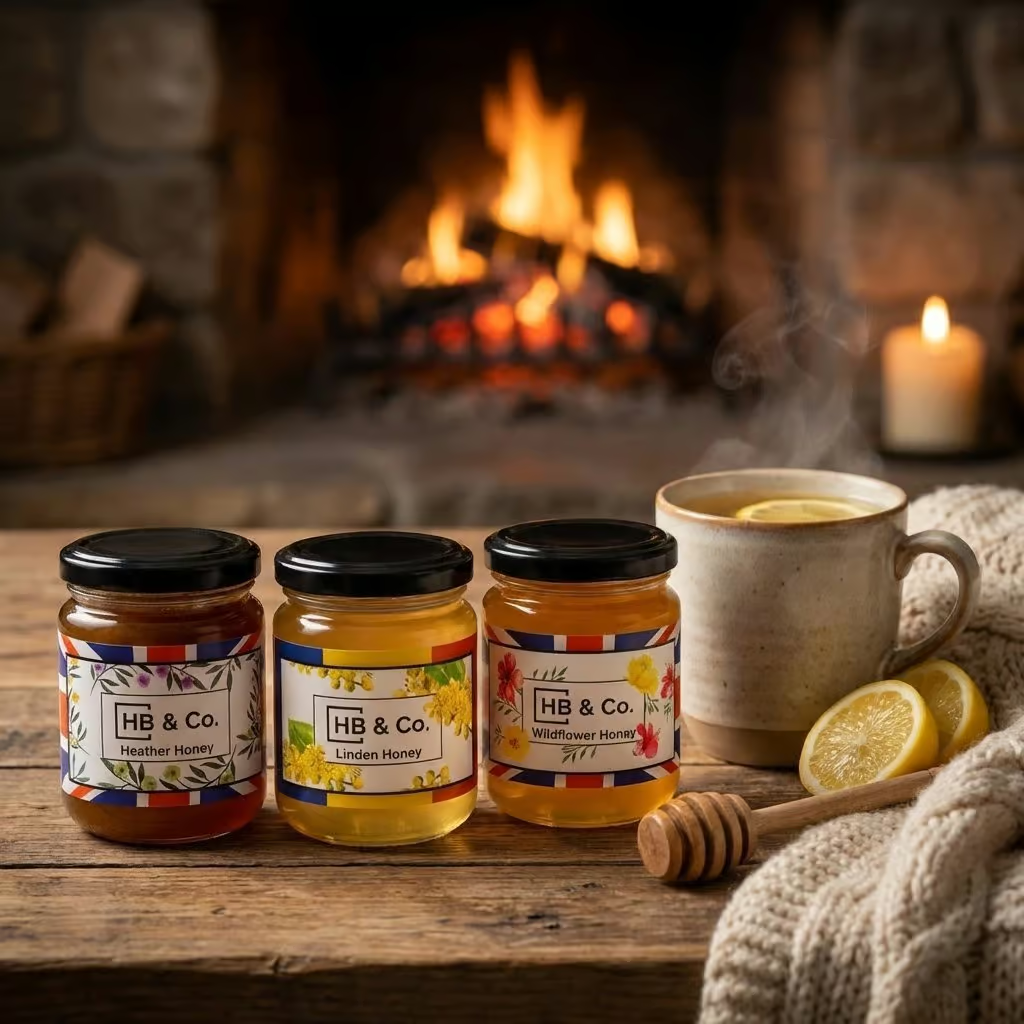
Three British raw honeys, each from a named British apiary. Heather from the Yorkshire Moors. Wildflower and Soft Set from the English Midlands. Free UK delivery on three or more jars.
Frequently Asked Questions
Which foods disappear without bees?
Any crop that depends on animal pollination for fruit or seed set. This includes strawberries, tomatoes, avocados, almonds, blueberries, cucumbers, courgettes, apples, and hundreds more. According to Klein et al. (2007), 87 of the world's leading food crops depend on pollinators to some degree. Staple grains such as wheat, rice, and corn are wind-pollinated and are not directly affected.
What percentage of food requires bee pollination?
Around 35% of global food production by volume requires animal pollination, rising to 75% of all food crop species. The crops most dependent on bees include many fruits, vegetables, nuts, seeds, and spices, making them essential to the nutritional quality and diversity of the human diet.
Why are bees disappearing?
Bee populations are declining due to habitat loss, pesticide exposure (particularly neonicotinoids), parasites such as the Varroa mite, climate change shifting flowering seasons, and disease. In the UK, three species of bumblebee have already gone extinct, and around 35% of wild bee species are in decline. The World Bee Atlas on this site documents population data across 70 countries.
What happens to food prices if bees decline?
A 2009 study in Ecological Economics estimated the annual global economic value of pollination services at around £130 billion. If pollinator populations collapsed, the foods most affected would become significantly rarer and more expensive. The crops most at risk are not staples but nutritionally valuable foods: fruits, vegetables, and nuts.
Is raw honey better for bees than farmed honey?
Buying raw honey from ethical, sustainable beekeepers directly supports healthy bee colonies. HoneyBee and Co. sources exclusively from small-scale apiaries with traditional practices. All honey is raw, unpasteurised, and cold-extracted. Our British supplier holds SALSA Certification, and our Transylvanian apiary has practiced sustainable beekeeping across six generations.
How can I help protect bees?
Plant pollinator-friendly flowers, avoid pesticide use, and buy raw honey from traceable ethical sources. In the UK, the Bumblebee Conservation Trust, Friends of the Earth, and the RSPB all run programmes to protect native bee species. You can also explore the World Bee Atlas on honeybeeandco.uk to learn which species are native to your country.
What is pollinator dependency and how is it measured?
Pollinator dependency measures how much a crop's yield or quality decreases when animal pollinators are excluded. The standard scale, established by Klein et al. (2007), uses five categories: none (0%), little (5%), modest (25%), great (65%), and essential (95%). The interactive tool on this page uses these verified categories for all food items displayed.
Does the Middle East really depend on bees for its food?
Yes, significantly. The mezze spread shown in this tool contains tahini (sesame, 90% dependent), hummus (chickpeas, 65% dependent), pomegranate salad, and honey baklava. Seven of eight items in a classic mezze depend on pollinators, making it one of the most pollinator-dependent food traditions in the world at 88% of the spread gone without bees.