

 English (UK)
  Italiano
  Français
  简体中文
简体中文  한국어
한국어 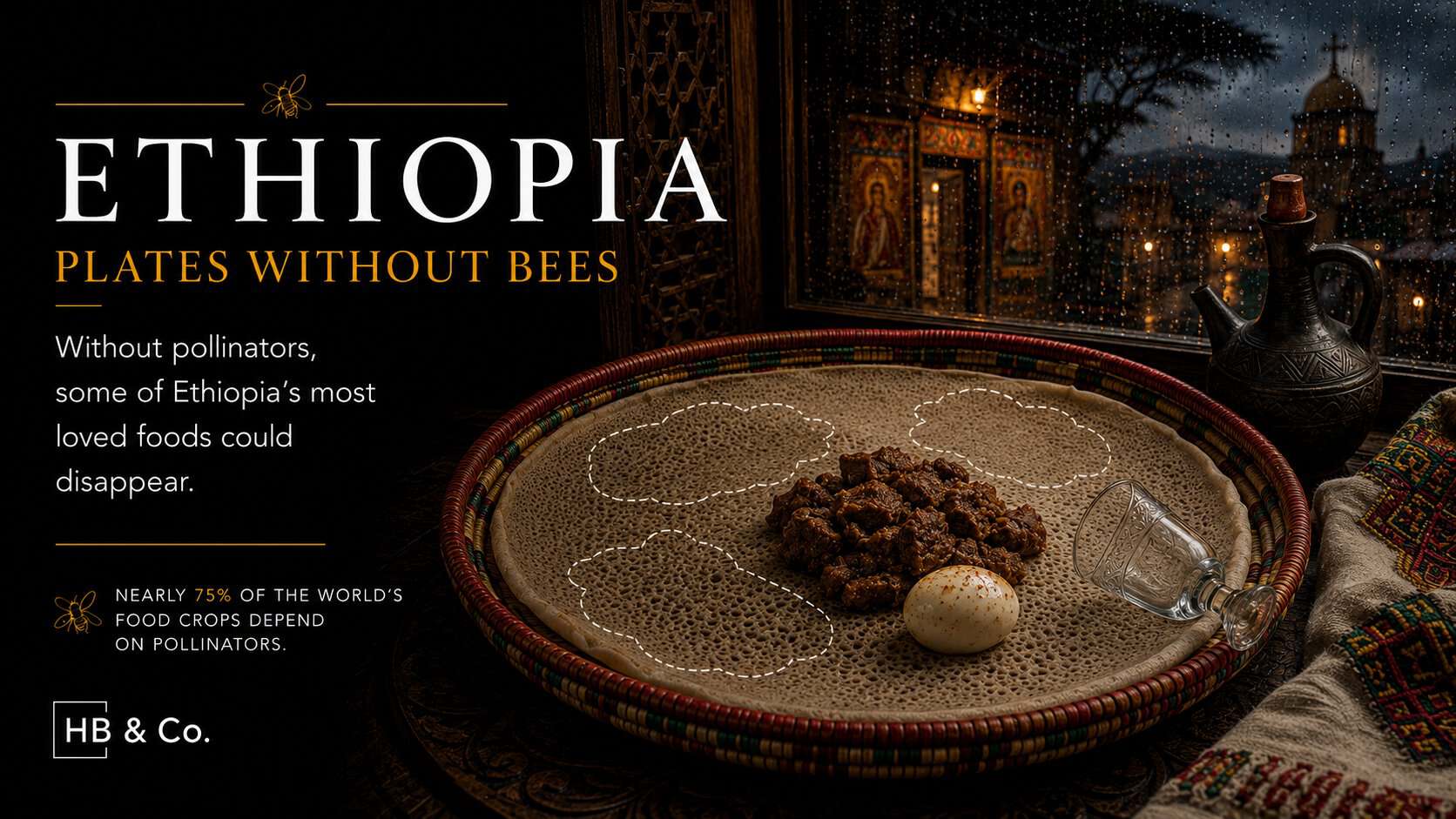
Ethiopia's Plate Without Bees
Six iconic Ethiopian dishes. Over 650 native bee species. What vanishes from the plate when the pollinators disappear.
 United Kingdom
 Italy
Italy
 France
 Spain
Spain
 Germany
 Greece
 Portugal
 Romania
 Turkey
 United States
 Mexico
 Brazil
 Argentina
 Peru
Peru
 Colombia
 China
China
 Japan
Japan
 South Korea
 Thailand
 Vietnam
 Indonesia
 Philippines
 India
India
 Pakistan
 Morocco
 Egypt
Egypt
 Lebanon
 Saudi Arabia
 Ethiopia
 Nigeria
- 87 of the world's leading food crops depend on animal pollination to some degree (Klein et al., 2007)
- Without bees, Ethiopian Doro Wat loses its tomatoes and onion base - the spiced sauce foundation of the dish is pollinator-dependent
- Ethiopia is the origin country of coffee - Coffea arabica was first discovered in the Kaffa region
- Ethiopia is the world's fifth-largest honey producer and Africa's largest, with a beekeeping tradition over 3,000 years old
- Tej, the Ethiopian honey wine central to ceremony and hospitality, would disappear entirely without bee-produced honey
Why Ethiopian Cuisine Depends on Bees
Ethiopian food is built on injera, the sourdough flatbread made from teff (wind-pollinated, unaffected), and the stews and salads piled on top. Those stews are where the pollinator dependency lives. Doro Wat, Ethiopia's most celebrated dish, depends on tomatoes (65%), onion (65%), and berbere-seasoned sauce to transform plain chicken into the national dish. Shiro depends on chickpeas (65%) and onion (65%). Gomen uses tomatoes (65%) and onion (65%). Almost every Ethiopian stew loses its tomato-onion base without pollinators. And Tej, the fermented honey wine that is Ethiopia's national drink and a staple of traditional ceremony, depends entirely on honey. Without bees, Tej cannot be made.
Ethiopian traditional beekeeping is the oldest and most extensive in Africa. Traditional log hives, made from hollowed tree trunks and sealed with clay, are hung in trees across the highlands in a system unchanged for 3,000 years. Ethiopia produces between 45,000 and 55,000 tonnes of honey annually from an estimated 7-10 million hives - Africa's largest honey crop. Ethiopia is also the origin country of coffee. Coffea arabica was discovered growing wild in the Kaffa region. Ethiopian wild forest coffee systems depend on native bee populations maintaining viable foraging ranges within forest ecosystems.
The Science Behind Ethiopian Crop Pollination
Key Ethiopian pollinator dependencies: tomatoes (65%), onions (65%), chickpeas (65%), cucumbers (95%), coffee (25% modest), strawberries (95%), and lemon (65%). Our Acacia Honey comes from European Apis mellifera in Transylvania. Read more on the About page, try our honey subscription and save 20%, or explore the World Bee Atlas. For bee decline, read our article on why bee populations are declining.
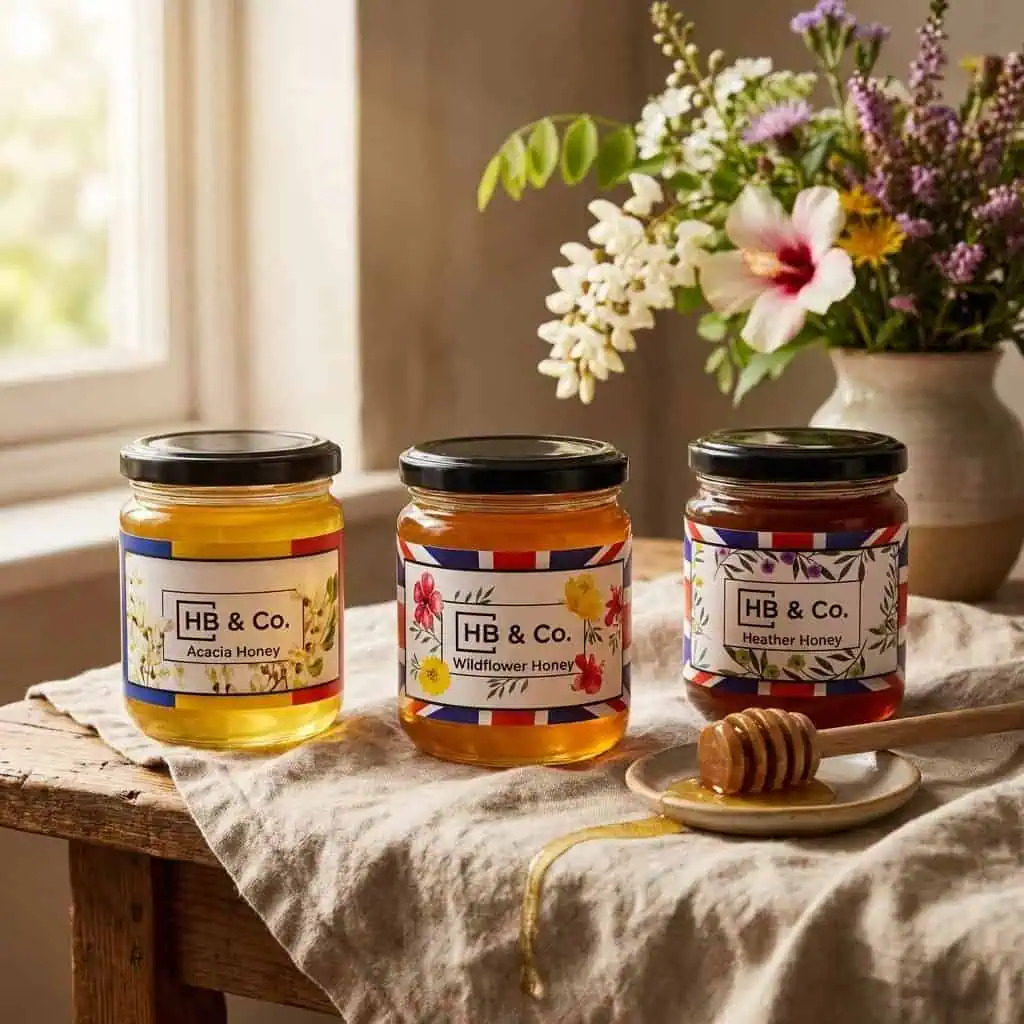
Raw Honey. Shop HoneyBee & Co.
Single-origin raw honey from Transylvanian family apiaries and a SALSA-certified British supplier. Six varieties, all cold-extracted and fully traceable. Free UK delivery on three or more jars.





Frequently Asked Questions
Which Ethiopian foods disappear without bees?
Tomatoes, onions, chickpeas, cucumbers, strawberries, mangoes, and honey are all significantly pollinator-dependent. Teff (for injera), lentils, and meat are largely unaffected. Tej, the Ethiopian honey wine, would disappear entirely.
How many bee species live in Ethiopia?
Ethiopia has over 650 native bee species. The flagship managed species is Apis mellifera jemenitica, kept in traditional log hives for over 3,000 years. Ethiopia is Africa's largest honey producer and the world's fifth-largest. Approximately 65% are at risk.
Is Ethiopia the origin of coffee?
Yes. Coffea arabica was first discovered growing wild in the highland forests of Ethiopia's Kaffa region. Ethiopian wild forest coffee systems depend on native bee populations. Coffee carries 25% modest pollinator dependency under Klein et al. (2007).
What is Tej?
Tej is Ethiopia's fermented honey wine, made by fermenting honey with water and gesho (buckthorn) leaves. It is Ethiopia's most culturally significant drink, served at ceremonies and weddings in traditional flask-shaped berele vessels. Without bees, Tej cannot be made.
Is Ethiopia Africa's largest honey producer?
Yes. Ethiopia produces 45,000-55,000 tonnes of honey annually from 7-10 million traditional log hives unchanged for 3,000 years. It is Africa's largest and the world's fifth-largest honey producer.
What percentage of Ethiopian food requires pollinators?
Ethiopian cuisine's cooking base - tomatoes (65%), onions (65%), and chickpeas (65%) - is all significantly pollinator-dependent under Klein et al. (2007). Teff, lentils, and meat are largely unaffected. Ethiopian honey culture is entirely pollinator-dependent.