
 English (UK)
  Italiano
  Français
  简体中文
简体中文  한국어
한국어 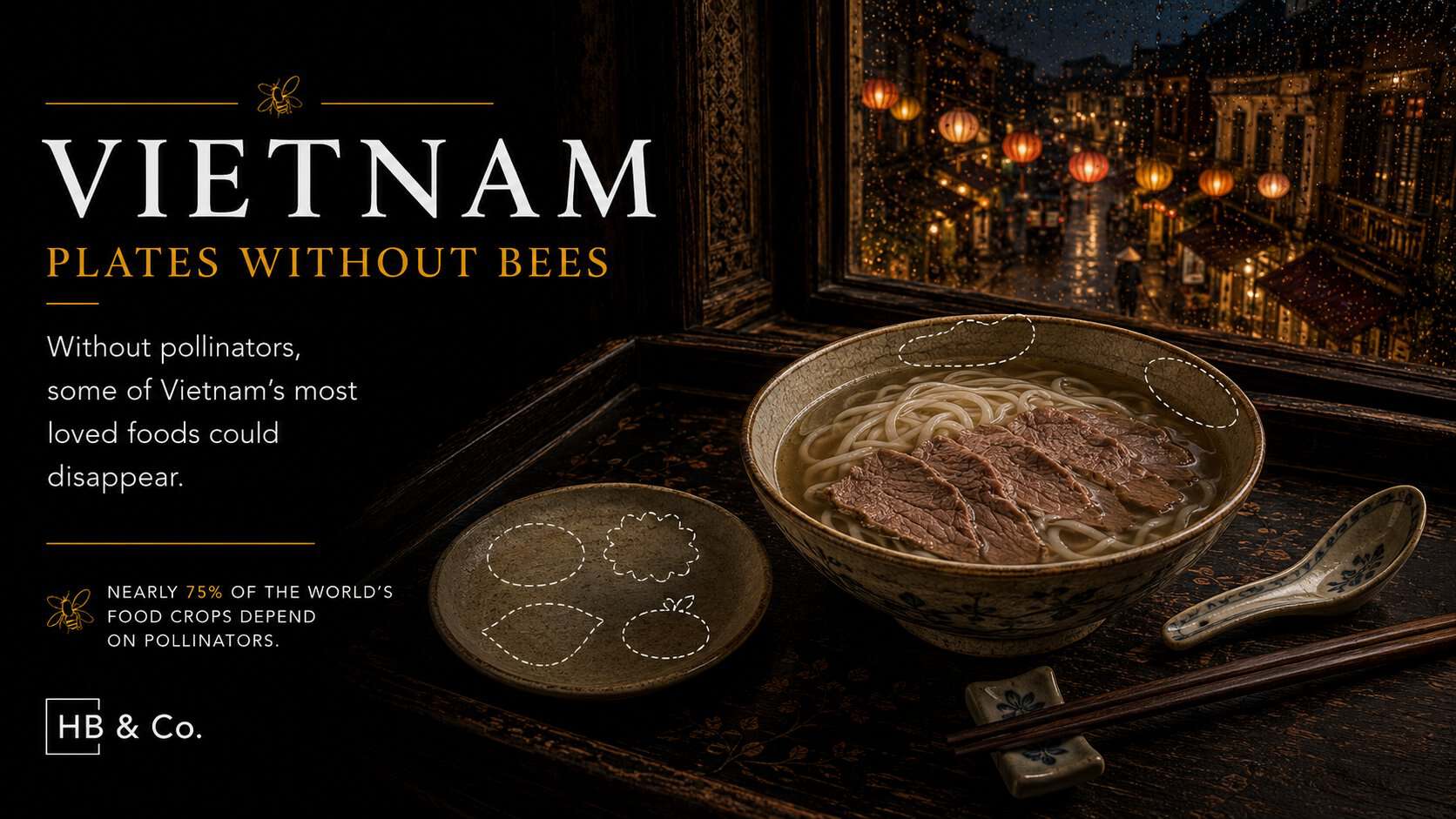
Vietnam's Plate Without Bees
Six iconic Vietnamese dishes. Over 350 native bee species. What vanishes from the plate when the pollinators disappear.
 United Kingdom
 Italy
Italy
 France
 Spain
Spain
 Germany
 Greece
 Portugal
 Romania
 Turkey
 United States
 Mexico
 Brazil
 Argentina
 Peru
Peru
 Colombia
 China
China
 Japan
Japan
 South Korea
 Thailand
 Vietnam
 Indonesia
 Philippines
 India
India
 Pakistan
 Morocco
 Egypt
Egypt
 Lebanon
 Saudi Arabia
 Ethiopia
 Nigeria
- 87 of the world's leading food crops depend on animal pollination to some degree (Klein et al., 2007)
- Without bees, a Vietnamese Banh Mi loses its coriander, cucumber, carrot, and avocado - four of its five fresh fillings are pollinator-dependent
- Vietnam has over 350 native bee species; Apis dorsata pollinates wild tropical crops across the Mekong Delta
- Coriander, an essential herb in pho, banh mi, and fresh spring rolls, carries a 65% pollinator dependency rating
- Vietnam is the world's second-largest coffee producer; coffee carries a 25% modest pollinator dependency
Why Vietnamese Cuisine Depends on Bees
Vietnamese food is built on freshness. The herb plates that accompany pho - coriander (65%), spring onion (65%), bean sprouts (65%) - are the flavour delivery system of the cuisine. The lemon squeezed into pho broth is 65% dependent. The cucumber, avocado, and carrot in a Banh Mi are 95%, 95%, and 25% dependent respectively. Banh Mi without its fresh filling is not a Banh Mi. Vietnamese cuisine's commitment to fresh, uncooked herbs makes it among the most pollinator-dependent food cultures in the world per dish. Vietnam is also the world's second-largest coffee producer; coffee carries a 25% modest pollinator dependency, and a 20% yield reduction represents enormous commercial impact at Vietnam's scale.
Vietnamese forest honey, harvested from Apis dorsata colonies in the U Minh Cajuput forests of the Mekong Delta, is one of Southeast Asia's most distinctive wild honey products. Harvested by traditional honey hunters using smoke and rope ladders for thousands of years, it represents a cultural practice and an ecosystem dependency that no managed hive can replicate. Vietnam's fruit export economy - mango, lychee, dragon fruit, longan - is heavily dependent on native bee populations maintaining viable ranges across Mekong Delta orchards.
The Science Behind Vietnamese Crop Pollination
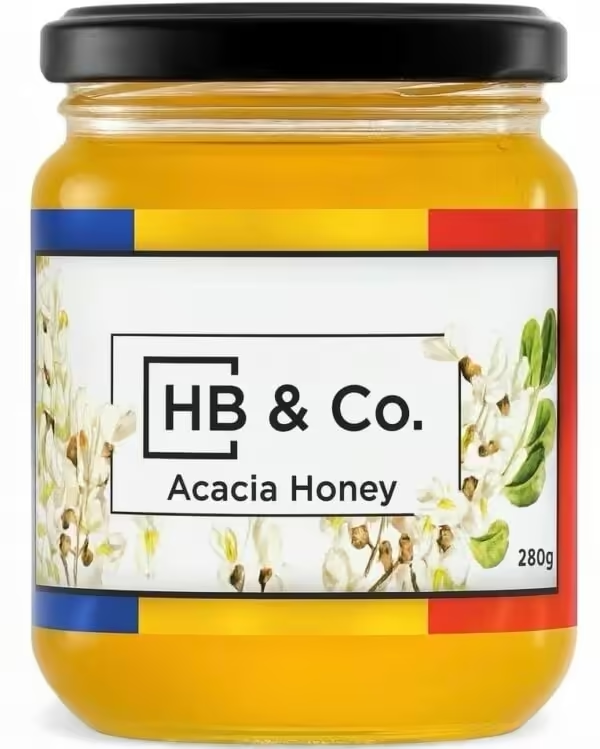
Key Vietnamese pollinator dependencies: cucumbers (95%), avocado (95%), coriander (65%), spring onion (65%), lemon (65%), carrots (25%), mango (25%), lychee (95%), and coffee (25% modest). Our Acacia Honey comes from European managed colonies in Transylvania. Read more on the About page, try our honey subscription and save 20%, or explore the World Bee Atlas. For bee decline, read our article on why bee populations are declining.
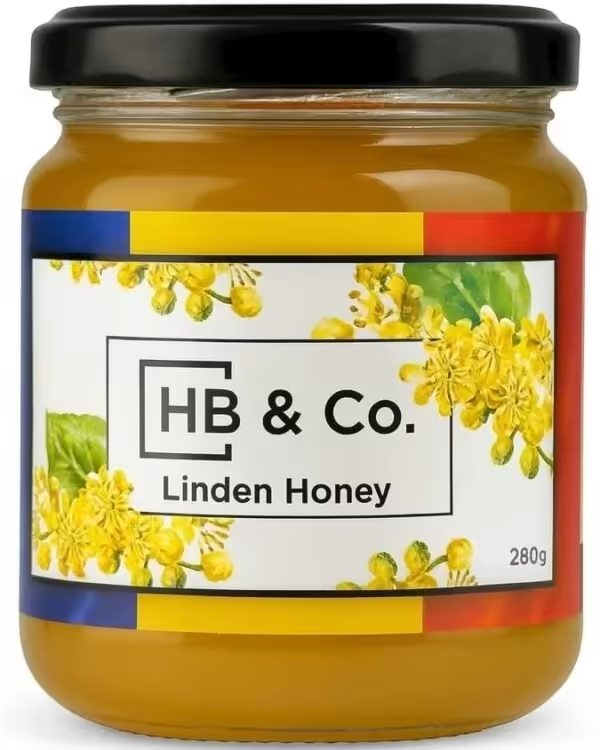
Raw Honey. Shop HoneyBee & Co.
Single-origin raw honey from Transylvanian family apiaries and a SALSA-certified British supplier. Six varieties, all cold-extracted and fully traceable. Free UK delivery on three or more jars.
Frequently Asked Questions
Which Vietnamese foods disappear without bees?
Coriander, spring onion, cucumber, avocado, lemon, carrot, tomatoes, mango, and lychee are all significantly pollinator-dependent. Rice noodles, pork, beef broth, and fish sauce are largely unaffected.
How many bee species live in Vietnam?
Vietnam has over 350 native bee species including Apis dorsata, Apis cerana, Apis florea, and multiple Trigona stingless bee species. Approximately 60% are at risk.
Is Vietnam's coffee production dependent on bees?
Yes, at 25% modest dependency. Vietnam is the world's second-largest coffee producer at around 1.8 million tonnes annually. Bee cross-pollination significantly increases Robusta yields. At Vietnam's scale, a 25% yield reduction represents enormous commercial impact.
What is Vietnamese forest honey?
Forest honey harvested from wild Apis dorsata colonies in the U Minh Cajuput forests of the Mekong Delta. It has been harvested by traditional honey hunters for thousands of years. It is one of Southeast Asia's most distinctive wild honey products.
What percentage of Vietnamese food requires pollinators?
Vietnamese cuisine's fresh ingredient layer - coriander (65%), spring onion (65%), cucumber (95%), avocado (95%), and lemon (65%) - is all significantly pollinator-dependent under Klein et al. (2007). Rice, noodles, pork, and fish sauce are unaffected.
How can I help protect bees in Vietnam?
Support organisations protecting tropical forest habitats in the Mekong Delta and Vietnamese highlands. Choose food products from supply chains committed to pollinator health. Explore the World Bee Atlas to learn which species are native to Vietnam.