
 English (UK)
  Italiano
  Français
  简体中文
简体中文  한국어
한국어 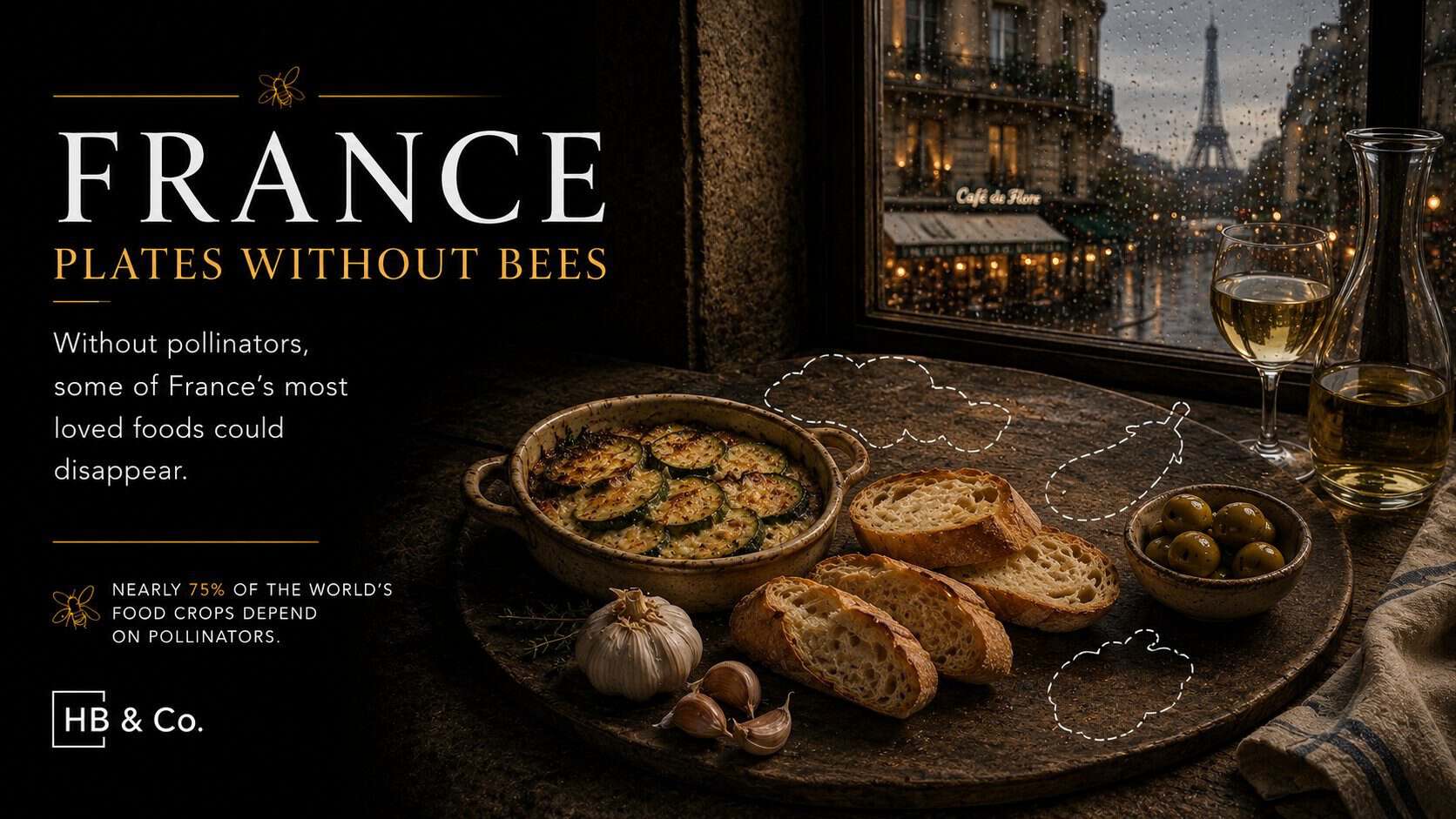
France's Plate Without Bees
Six iconic French meals. Over 1,000 native bee species. What vanishes from the table when the pollinators disappear.
 United Kingdom
 Italy
Italy
 France
 Spain
Spain
 Germany
 Greece
 Portugal
 Romania
 Turkey
 United States
 Mexico
 Brazil
 Argentina
 Peru
Peru
 Colombia
 China
China
 Japan
Japan
 South Korea
 Thailand
 Vietnam
 Indonesia
 Philippines
 India
India
 Pakistan
 Morocco
 Egypt
Egypt
 Lebanon
 Saudi Arabia
 Ethiopia
 Nigeria
- 87 of the world's leading food crops depend on animal pollination to some degree (Klein et al., 2007)
- Without bees, up to 88% of a French summer picnic would vanish from the table
- France's lavender fields, sunflower crops, and market garden produce all depend heavily on native pollinators
- France has more than 1,000 native bee species, of which an estimated 74% are at risk according to European Red List assessments
- Buying raw honey from ethical beekeepers directly supports the colonies that pollinate France's food landscape
Why French Cuisine Depends on Bees
French cuisine is built on seasonal produce, fresh herbs, and the diversity of the land. Tomatoes from Provence, courgettes from the Languedoc, stone fruits from the Rhone Valley, strawberries from the Perigord, apples from Normandy - the defining ingredients of French cooking are almost uniformly pollinator-dependent. Remove bees from France and what remains on the table is bread, wine, cheese, and salt. Everything else is at risk.
France's agricultural landscape reflects this dependency at scale. The country is one of Europe's largest producers of tomatoes, courgettes, sweet peppers, and stone fruits, all of which require animal pollination to produce viable yields. Courgettes carry the highest dependency rating - 95% under the Klein et al. (2007) classification - because they require buzz-pollination, the same technique that bumblebees perform at approximately 400 Hz by gripping the flower's anther and vibrating their flight muscles. Without this, no courgette sets fruit regardless of how many honeybees are present.
French lavender fields, which produce some of the most celebrated honey in Europe, depend entirely on bee foragers for the cross-pollination that maintains seed production and genetic diversity across the crop. The relationship between French lavender and French bees is one of the oldest agricultural partnerships in European history, dating to Cistercian monasteries in Provence that kept bees specifically for lavender honey production as early as the 12th century.
The Science Behind French Crop Pollination
The dependency scale used in this tool was established by Klein et al. (2007) from field exclusion experiments - studies in which pollinators were physically prevented from accessing crops while identical control plots received normal pollinator access. The resulting yield differences produced the five dependency categories: none (0%), little (5%), modest (25%), great (65%), and essential (95%). Every figure shown in the France tool comes from this peer-reviewed dataset.
For French agriculture, the commercially significant dependencies include tomatoes (65%), courgettes (95%), sweet peppers (65%), aubergines (65%), strawberries (95%), cherries (65%), apples (65%), and raspberries (95%). French sunflower production - which supplies both cooking oil and sunflower honey - carries a 25% modest dependency. France's annual sunflower harvest spans more than 700,000 hectares, making pollinator health a direct input to the country's food oil supply.
Acacia Forests, Alsatian Bees, and the Transylvanian Connection
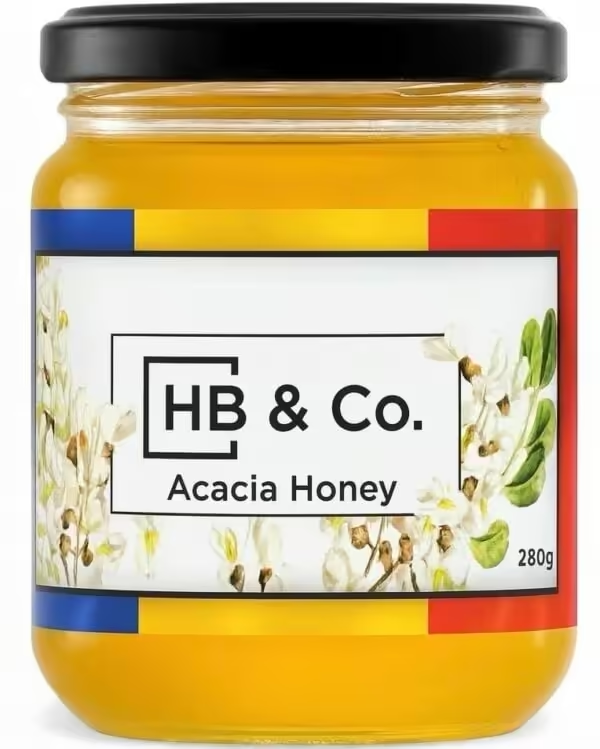
The Robinia pseudoacacia tree - the Black Locust - produces acacia honey wherever it grows across temperate Europe. In France, it is found extensively in Alsace, Burgundy, and the Rhone corridor, where French beekeepers have harvested from it for generations. Acacia honey is among the most popular varietal honeys in French cuisine, prized for its pale colour, neutral flavour, and ability to remain liquid for extended periods without crystallising.
Our Acacia Honey is drawn from the same Robinia pseudoacacia forests in the Carpathian Mountains of Transylvania, where Dragos Nistor's family has kept hives for six generations. The flower, the bee species (Apis mellifera), and the harvest window are the same. The geography is different. The honey is drawn from the same botanical source that French beekeepers depend on each June. You can read more on the About page, or explore our raw honey subscription and save 20% on every delivery.
What You Can Do
Plant lavender, thyme, rosemary, borage, and phacelia in any available outdoor space. These are among the highest-value forage plants for wild bees in France's temperate climate. Eliminate pesticide use from gardens entirely. Choose honey and food products from suppliers who practise ethical, traceable beekeeping with transparent origin. Explore the World Bee Atlas to see which bee species are native to France, or read our article on why bee populations are declining.
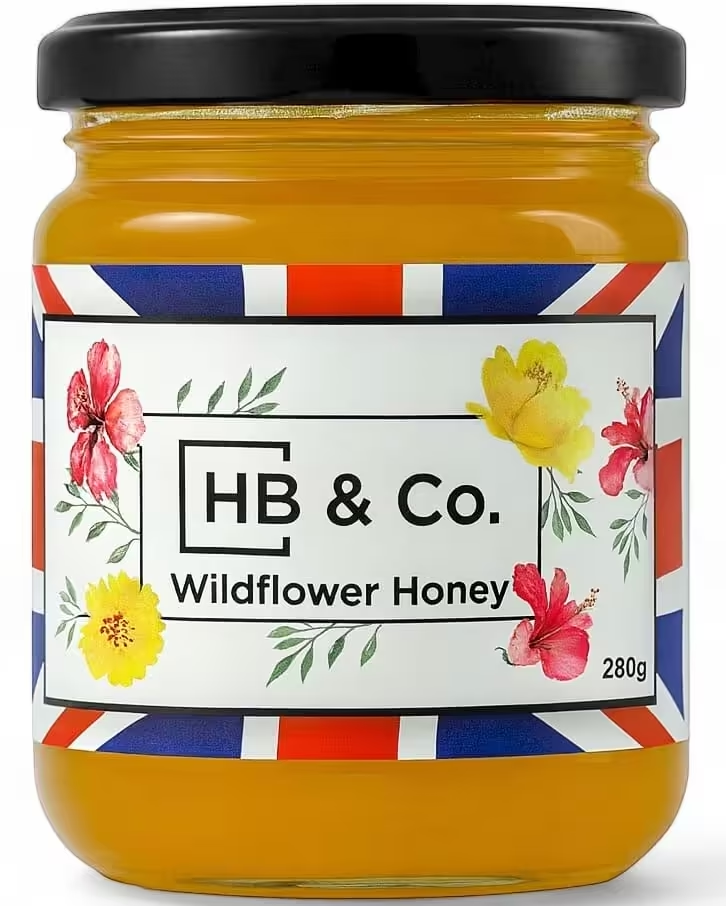
Raw Honey. Shop HoneyBee & Co.
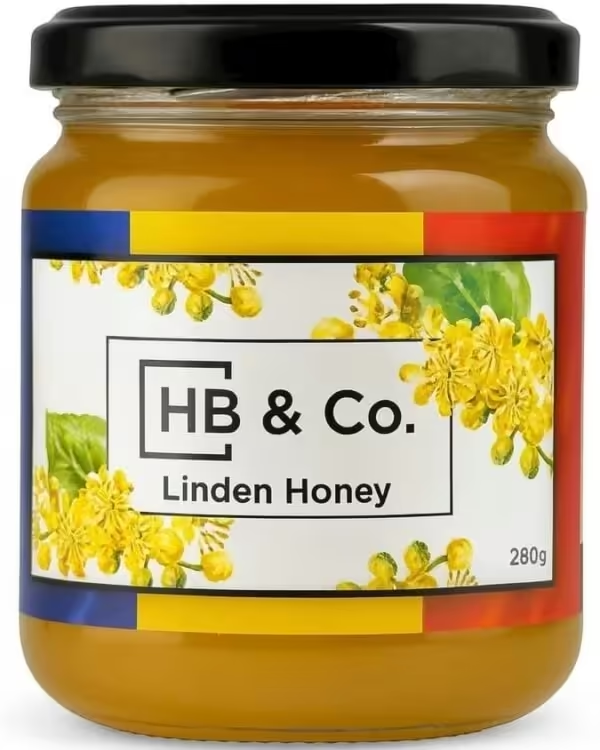
Single-origin raw honey from Transylvanian family apiaries and a SALSA-certified British supplier. The same Robinia acacia forests that supply French beekeepers each June supply our Transylvanian hives. Free UK delivery on three or more jars.
Frequently Asked Questions
Which French foods disappear without bees?
The most affected French foods are tomatoes, courgettes, aubergines, sweet peppers, strawberries, raspberries, cherries, apricots, peaches, apples, and almonds. These crops range from 65% to 95% pollinator-dependent under the Klein et al. (2007) classification. Baguettes, wine, cheese, olives, and garlic are largely unaffected.
How many bee species live in France?
France is home to more than 1,000 native bee species, making it one of the most bee-diverse countries in Western Europe. Approximately 74% of French bee species are estimated to be at risk according to European Red List assessments (Nieto et al., 2014).
Why is French lavender important to bees?
Lavender is one of the highest-value forage plants for wild and managed bees in southern France. The Provence lavender fields attract an exceptionally wide range of bee species and support specialist pollinators including the lavender bee Eucera nigrescens. French lavender honey is produced almost entirely by managed Apis mellifera colonies foraging on these fields.
Does French sunflower production depend on bees?
Yes, at 25% modest dependency under Klein et al. (2007). France cultivates over 700,000 hectares of sunflowers annually. Managed honeybee colonies are commonly deployed in French sunflower fields during the summer flowering period to maximise pollination rates and seed set.
What is buzz-pollination and why does it matter for French vegetables?
Buzz-pollination is performed by bumblebees at approximately 400 Hz. Courgettes, aubergines, tomatoes, and sweet peppers all require it. Honeybees cannot perform sonication, making wild bumblebee populations irreplaceable in French vegetable production even where managed honeybee hives are present.
What percentage of French food requires pollinators?
Using the Klein et al. (2007) dataset, France's most important fresh produce - tomatoes, courgettes, strawberries, stone fruits, and apples - is between 65% and 95% pollinator-dependent. By crop species count, approximately 75% of globally important food crop species require animal pollination.
How can I help protect bees in France?
Plant lavender, thyme, rosemary, borage, and phacelia in any available outdoor space. Eliminate pesticide use from gardens. Support beekeepers who practise ethical, traceable beekeeping. Explore the World Bee Atlas on honeybeeandco.uk to learn which species are native to France.