
 English (UK)
  Italiano
  Français
  简体中文
简体中文  한국어
한국어 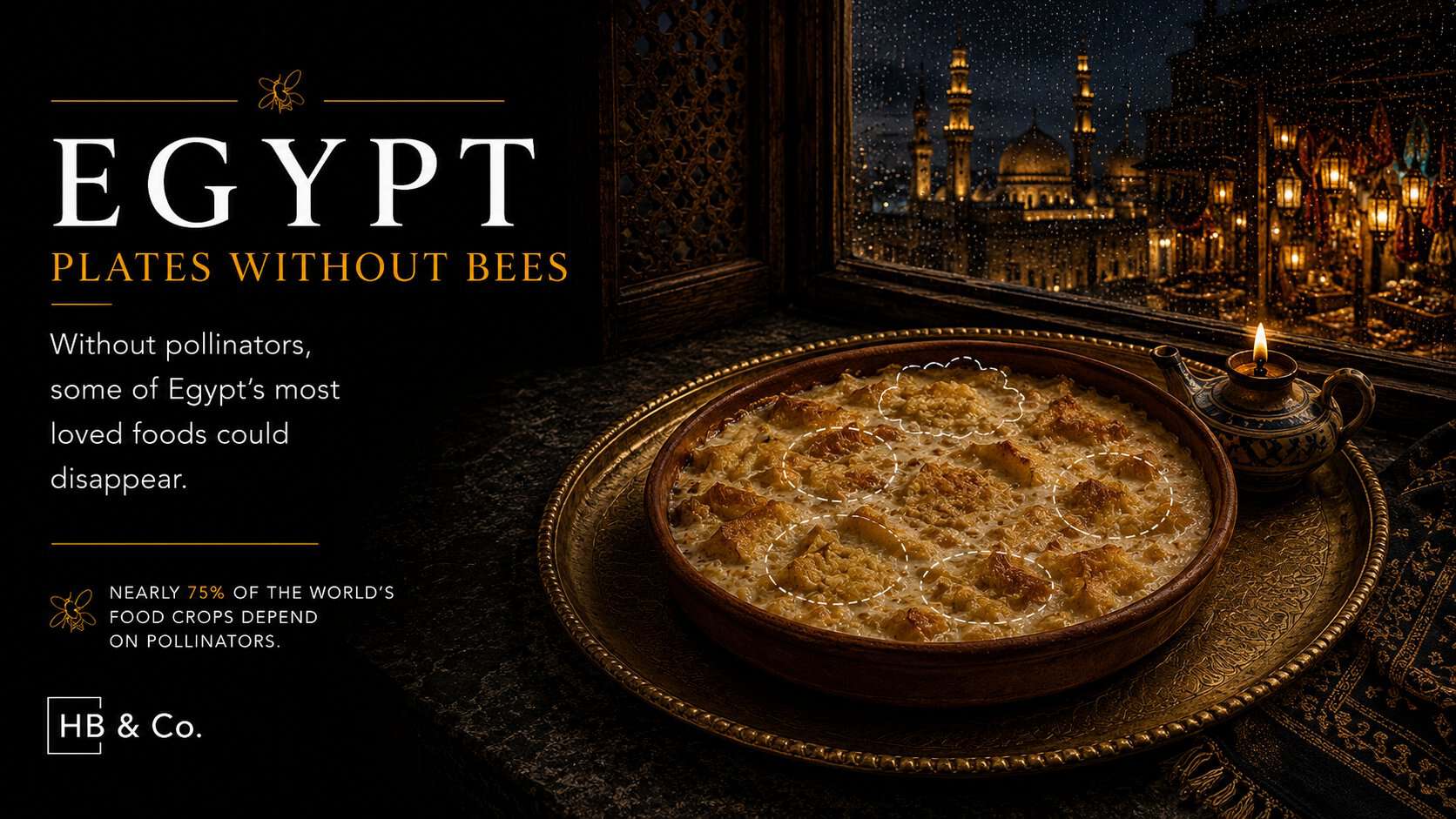
Egypt's Plate Without Bees
Six iconic Egyptian dishes. Over 650 native bee species. What vanishes from the plate when the pollinators disappear.
 United Kingdom
 Italy
Italy
 France
 Spain
Spain
 Germany
 Greece
 Portugal
 Romania
 Turkey
 United States
 Mexico
 Brazil
 Argentina
 Peru
Peru
 Colombia
 China
China
 Japan
Japan
 South Korea
 Thailand
 Vietnam
 Indonesia
 Philippines
 India
India
 Pakistan
 Morocco
 Egypt
Egypt
 Lebanon
 Saudi Arabia
 Ethiopia
 Nigeria
- 87 of the world's leading food crops depend on animal pollination to some degree (Klein et al., 2007)
- Without bees, Egyptian Om Ali dessert loses its almonds, honey, and raspberry accompaniments
- Egypt has the oldest documented beekeeping tradition in the world - pharaonic honey preserved in sealed tombs has remained edible for over 3,000 years
- The Egyptian honeybee Apis mellifera lamarckii has been managed in horizontal clay cylinder hives for over 4,000 years
- Egyptian Ful Medames depends on tomatoes, onion, lemon, and coriander accompaniments - all pollinator-dependent
Why Egyptian Cuisine Depends on Bees
Egyptian food is the cuisine of the Nile Delta - tomatoes, onions, lemon, coriander, and legumes. Ful Medames, Egypt's national dish of fava beans eaten at breakfast and lunch, is accompanied by tomatoes (65%), onion (65%), lemon (65%), and coriander (65%) - four pollinator-dependent accompaniments. Koshari, Egypt's most eaten street food, is topped with tomato sauce (65%) and fried onion (65%). Molokhia uses tomatoes (65%), onion (65%), and coriander (65%) as its flavour base. Egyptian cooking's essential flavours are built on bee pollination. Om Ali, Egypt's national dessert, contains almonds (65%) and honey (95%) as defining components - both pollinator-dependent. Without bees, Om Ali becomes bread and cream. The almond crunch and honey sweetness disappear.
Egypt has the oldest documented beekeeping tradition in the world. Pharaonic tomb paintings at Abu Gharab dating to 2400 BCE show beekeepers managing horizontal clay cylinder hives - the same technique still used by traditional Egyptian beekeepers in the Nile Delta today. Honey found in Tutankhamun's tomb over 3,000 years later remains edible - a testament to honey's unique antimicrobial properties. The pharaonic honeybee Apis mellifera lamarckii, native to the Nile Valley, has been managed in this landscape for over 4,000 years.
The Science Behind Egyptian Crop Pollination
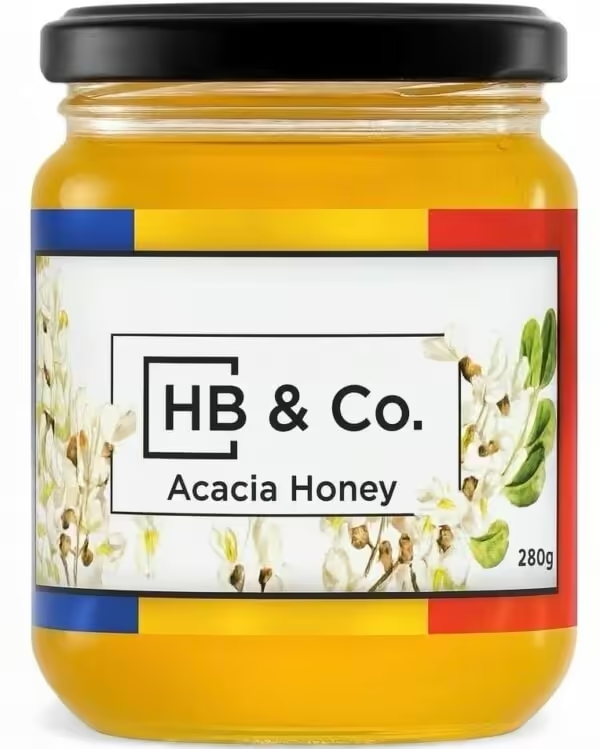
Key Egyptian pollinator dependencies: tomatoes (65%), onions (65%), cucumbers (95%), lemon (65%), coriander (65%), pomegranate (65%), almonds (65%), and honey (95%). Our Acacia Honey comes from Transylvanian Carpathian forests. Read more on the About page, try our honey subscription and save 20%, or explore the World Bee Atlas. For bee decline, read our article on why bee populations are declining.
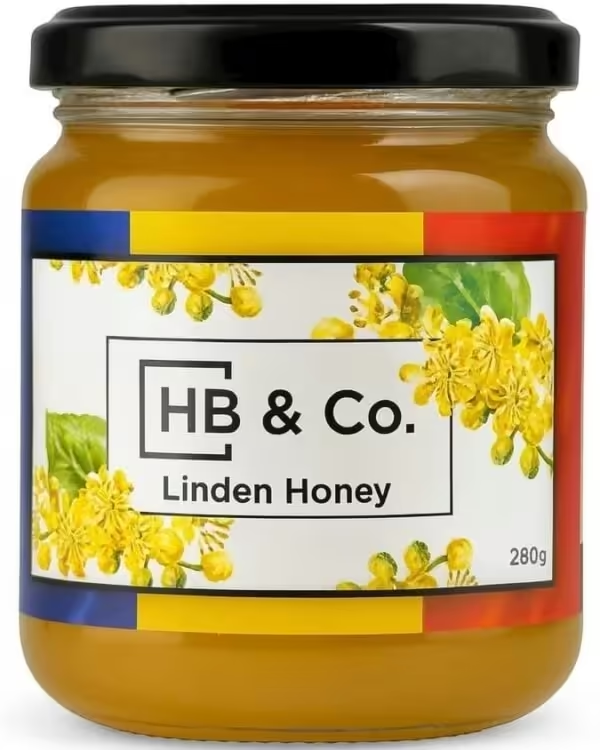
Raw Honey. Shop HoneyBee & Co.
Single-origin raw honey from Transylvanian family apiaries and a SALSA-certified British supplier. Six varieties, all cold-extracted and fully traceable. Free UK delivery on three or more jars.
Frequently Asked Questions
Which Egyptian foods disappear without bees?
Tomatoes, onions, cucumbers, lemon, coriander, pomegranate, almonds, and honey are all significantly pollinator-dependent. Rice, lentils, fava beans, and wheat are largely unaffected.
How many bee species live in Egypt?
Egypt has over 650 native bee species including Apis mellifera lamarckii, the Egyptian honeybee managed in the Nile Valley for over 4,000 years. Approximately 62% are at risk.
Does Egypt have the world's oldest beekeeping tradition?
Yes. Pharaonic tomb paintings at Abu Gharab dating to 2400 BCE show beekeepers managing horizontal clay cylinder hives. Honey in Tutankhamun's tomb over 3,000 years old remains edible today. The clay cylinder hive technique is still used by traditional Egyptian beekeepers in the Nile Delta.
What is the Egyptian honeybee?
Apis mellifera lamarckii is native to the Nile Valley and North Africa, managed in Egypt for over 4,000 years. It is adapted to hot, arid conditions and produces distinctively flavoured honey from Nile Delta flora.
What is Om Ali and why does it depend on bees?
Om Ali is Egypt's national dessert, a hot bread pudding. Its almonds (65%) and honey (95%) are both pollinator-dependent. Without bees, Om Ali loses its defining almond crunch and honey sweetness, leaving only bread and cream.
What percentage of Egyptian food requires pollinators?
Egyptian cuisine's defining accompaniments - tomatoes (65%), onions (65%), lemon (65%), and coriander (65%) - are all significantly pollinator-dependent under Klein et al. (2007). Legumes, rice, and wheat are unaffected.