
 English (UK)
  Italiano
  Français
  简体中文
简体中文  한국어
한국어 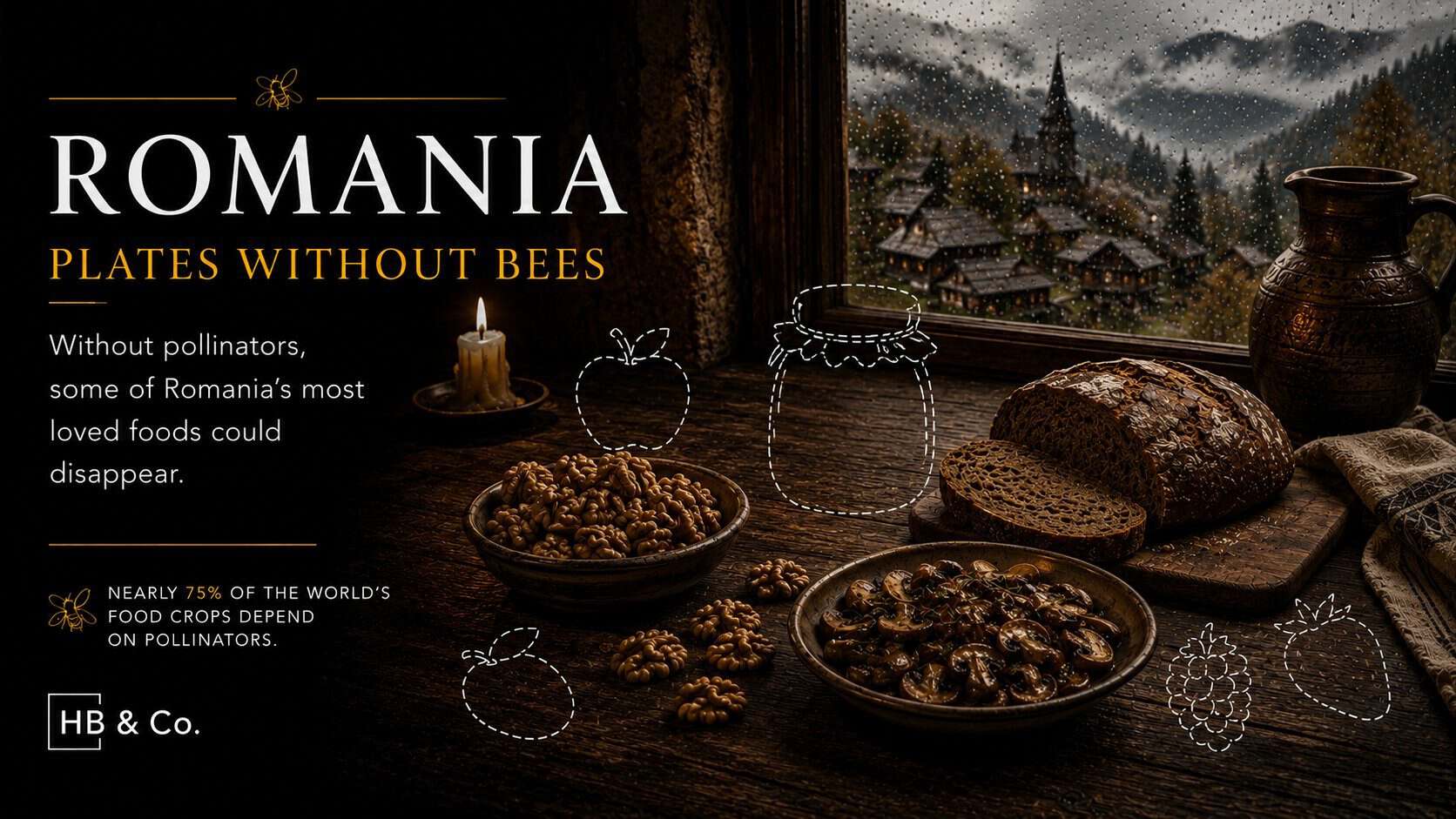
Romania's Plate Without Bees
Six iconic Romanian meals. Over 850 native bee species. What vanishes from the table when the pollinators disappear.
 United Kingdom
 Italy
Italy
 France
 Spain
Spain
 Germany
 Greece
 Portugal
 Romania
 Turkey
 United States
 Mexico
 Brazil
 Argentina
 Peru
Peru
 Colombia
 China
China
 Japan
Japan
 South Korea
 Thailand
 Vietnam
 Indonesia
 Philippines
 India
India
 Pakistan
 Morocco
 Egypt
Egypt
 Lebanon
 Saudi Arabia
 Ethiopia
 Nigeria
- 87 of the world's leading food crops depend on animal pollination to some degree (Klein et al., 2007)
- Without bees, up to 83% of a Romanian zacusca spread would vanish from the table
- Romania's Carpathian meadows are among the last botanically rich, unimproved grasslands in Europe - directly sustaining the bee populations that pollinate Romanian crops
- Romania has more than 850 native bee species; the Nistor family has kept hives in these landscapes for six generations
- Buying raw honey from ethical Transylvanian beekeepers directly supports the colonies that pollinate Romania's food landscape
Why Romanian Cuisine Depends on Bees
Romanian food is rooted in the land. Tomatoes for sarmale and tochitura. Cucumbers and peppers preserved through winter. Aubergines and peppers for zacusca, the vegetable spread that every Romanian household makes in autumn. Strawberries, cherries, and raspberries from the kitchen garden. The defining ingredients of Romanian cooking are almost uniformly dependent on animal pollination. Without bees, the table is left with bread, corn, pork, dairy, and mushrooms. Everything else is reduced or gone.
Zacusca illustrates the dependency with particular clarity. This traditional Romanian vegetable spread, made every autumn and preserved in jars for winter, requires aubergines (65% dependent), sweet peppers (65% dependent), tomatoes (65% dependent), and onions (65% dependent). Four of its six primary ingredients depend directly on pollinators. Without bees, zacusca becomes a jar of oil and mushrooms.
Romanian agriculture reflects this dependency at national scale. Romania is one of Europe's largest producers of tomatoes, sunflowers, and vegetables. The country's agricultural heartland in Muntenia, Oltenia, and the Danube Plain produces millions of tonnes of pollinator-dependent crops annually. In Transylvania, where the Carpathian landscape has been less intensively farmed than most of Western Europe, wild bee populations remain comparatively strong - a direct consequence of the wildflower meadows that industrial agriculture has eliminated elsewhere.
The Science Behind Romanian Crop Pollination
The dependency ratings used in this tool derive from Klein et al. (2007), the most comprehensive peer-reviewed assessment of crop-pollinator relationships ever conducted. Field exclusion experiments physically removed pollinators from crop plots and compared yields against pollinator-accessible controls. The resulting five categories - none (0%), little (5%), modest (25%), great (65%), and essential (95%) - are applied without modification to every food item in the Romania tool.
For Romanian cuisine, the highest-dependency ingredients are cucumbers and pickles (95%), strawberries (95%), and raw honey (95%). Tomatoes, peppers, onions, aubergines, cherries, radishes, and peas all carry 65% dependency ratings. The sunflower seeds used widely in Romanian cooking carry a 25% modest dependency. Together, these ingredients span every major category of Romanian daily food.
Six Generations of Beekeeping in the Carpathians
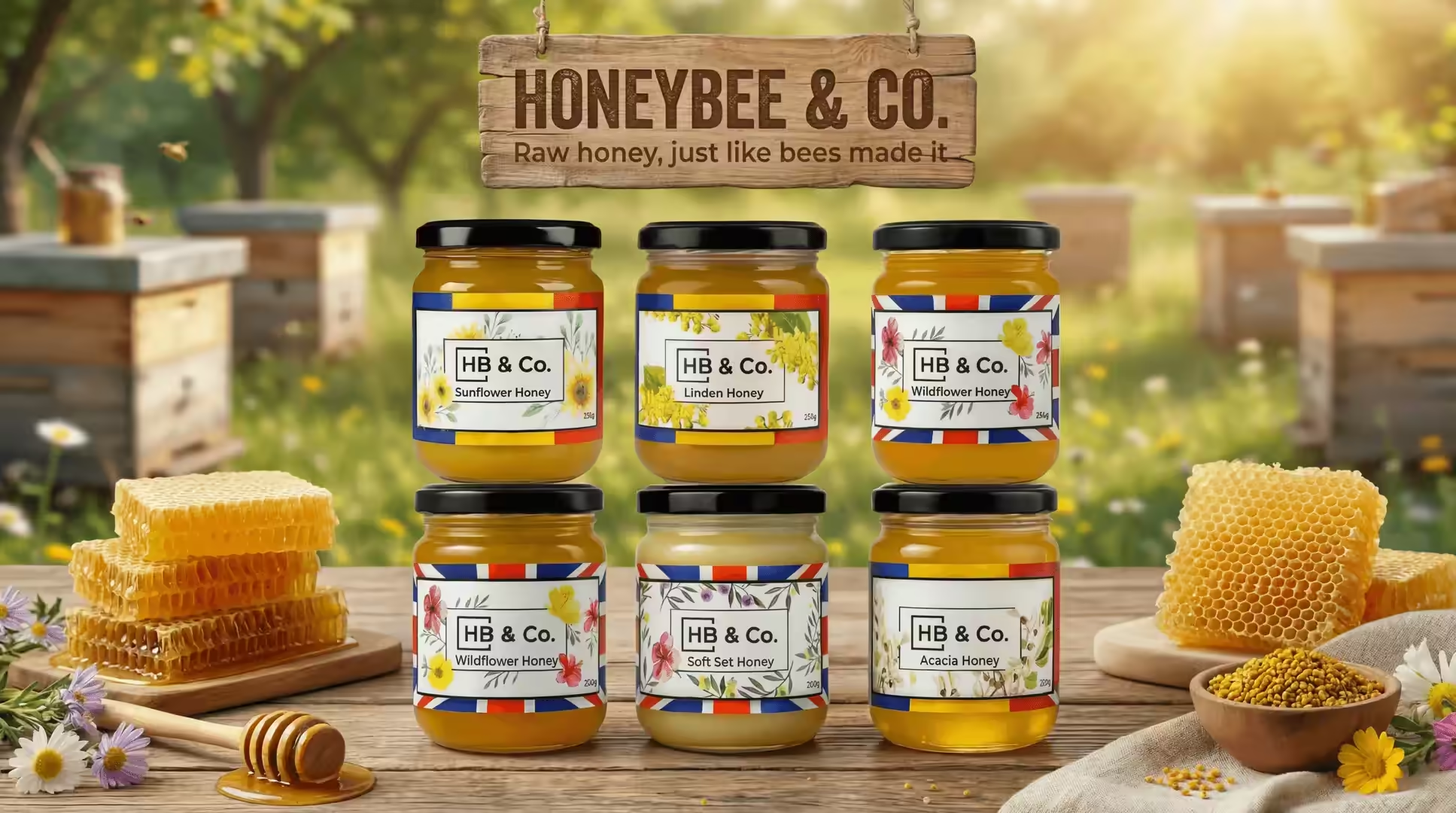
HoneyBee and Co. was founded by Dragos Nistor, whose family has kept hives in the Carpathian Mountains of Transylvania since the 1800s. The landscapes that appear in the background of every jar - unimproved wildflower meadows, acacia forest margins, linden groves above 800 metres - are the same landscapes that sustain the bee populations documented in the Romania tool. This is not a marketing claim. It is the direct consequence of six generations of beekeeping in a place where the relationship between bees and food has never been abstract.
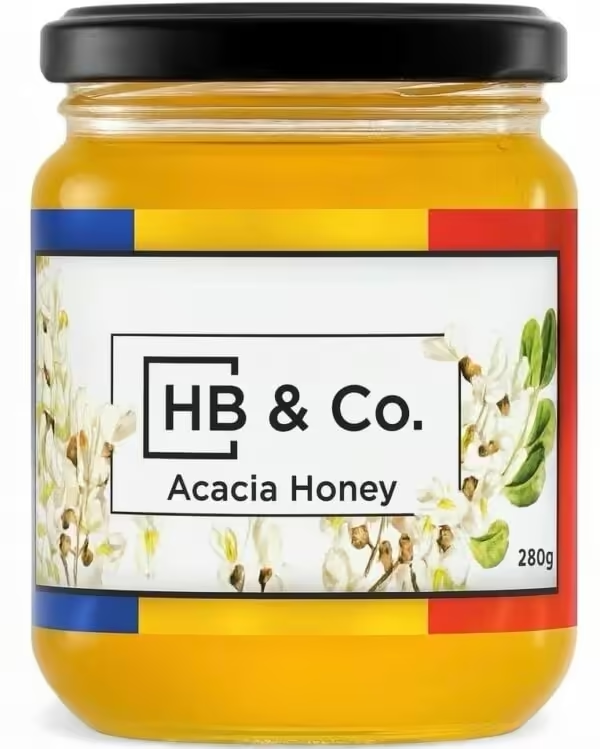
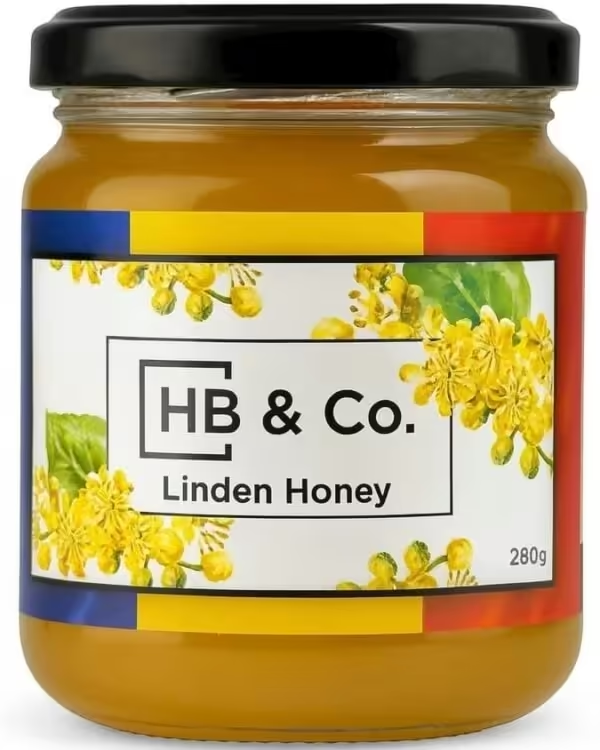
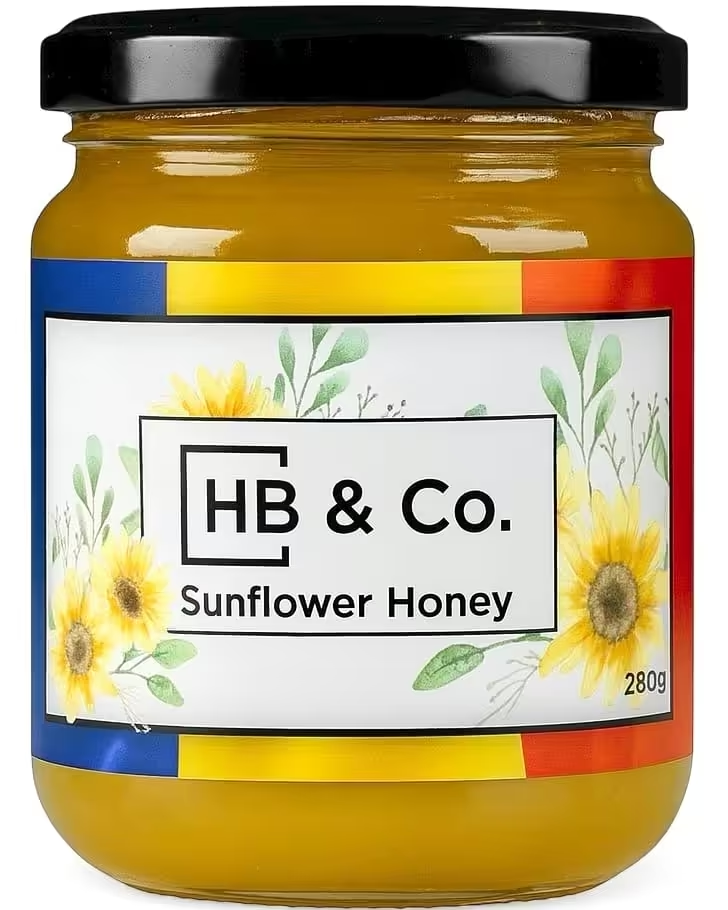
Our Acacia Honey is drawn from Transylvanian Robinia pseudoacacia forests each June. Our Linden Honey comes from the same Carpathian linden groves that have supplied Romanian beekeepers for centuries. Our Sunflower Honey is drawn from Transylvanian sunflower fields. Every variety is raw, cold-extracted, and traceable to a named landscape. You can read more about the family history on the About page, or explore our raw honey subscription and save 20% on every delivery.
What You Can Do
Plant wildflowers and eliminate pesticide use from any outdoor space. Support beekeepers who practise traceable, ethical beekeeping with full transparency about origin and method. Explore the World Bee Atlas to discover which bee species are native to Romania and the Carpathian region. To read more about why bee populations are declining globally, see our article on why bee populations are declining.
Transylvanian Raw Honey. Shop HoneyBee & Co.
Raw honey drawn from the same Carpathian landscapes shown in this tool. Six generations of Nistor family beekeeping in Transylvania. Cold-extracted, single-origin, fully traceable. Free UK delivery on three or more jars.
Frequently Asked Questions
Which Romanian foods disappear without bees?
The most affected Romanian foods are tomatoes, cucumbers and pickles, sweet peppers, aubergines, strawberries, cherries, raspberries, onions, and peas. These are the core ingredients of sarmale, zacusca, tochitura, and Romanian summer cooking. Bread, polenta, mushrooms, pork, and dairy are largely unaffected, as wheat, corn, and mushrooms do not depend on animal pollination.
How many bee species live in Romania?
Romania is home to more than 850 native bee species. Its range of ecosystems - Carpathian mountain meadows, Danube delta wetlands, Transylvanian plateau grasslands, and Pontic steppe - supports exceptional bee diversity. A key native subspecies is Apis mellifera carnica, the Carniolan honeybee, which evolved in the Carpathian region and is now one of the most widely kept honeybee subspecies in the world. Approximately 70% of Romanian bee species are at risk.
Why are Transylvania's meadows important for bees?
Transylvania's Carpathian meadows are among the last large areas of botanically rich, unimproved grassland remaining in Europe. They have never been treated with the herbicides and fertilisers that converted most Western European meadows to monoculture grass in the 20th century. This floral diversity - dozens of wildflower species per square metre - directly sustains the specialist bee populations that cannot survive in simplified agricultural landscapes. The Nistor family's Transylvanian apiaries are located in these landscapes and have been for six generations.
What is zacusca and how does it depend on bees?
Zacusca is a traditional Romanian vegetable spread made every autumn and preserved in jars for winter. The standard recipe contains aubergines (65% pollinator-dependent), sweet peppers (65%), tomatoes (65%), and onions (65%). Four of its six primary ingredients depend directly on animal pollination. Without bees, zacusca cannot be made as a complete dish. It is one of the most pollinator-dependent staple preparations in Romanian food culture.
What is the Carniolan honeybee?
Apis mellifera carnica is a honeybee subspecies native to the Carpathian mountain region, including Transylvania and the broader Balkans. It is known for its exceptional gentleness, strong disease resistance, rapid spring build-up, and efficient foraging in cooler temperatures. These traits have made it one of the most widely exported honeybee subspecies in the world. It is closely related to the bees kept by the Nistor family in Transylvania for six generations.
What percentage of Romanian food requires pollinators?
Romania's most important fresh produce - tomatoes, cucumbers, peppers, aubergines, strawberries, and cherries - is between 65% and 95% pollinator-dependent under Klein et al. (2007). Romania's major agricultural exports include sunflowers (25% modest dependency) and vegetables (65-95% dependent). By food crop species count, approximately 75% of globally important crops require animal pollination, and Romanian cuisine's reliance on fresh seasonal vegetables places it firmly in the high-dependency category.
How can I help protect bees in Romania?
Support beekeepers who practise traditional, ethical beekeeping in the Carpathian region. Plant wildflowers and eliminate pesticide use from any outdoor space. Explore the World Bee Atlas on honeybeeandco.uk to learn which species are native to Romania and what habitats they depend on. Buying raw honey from traceable Transylvanian sources directly supports the hive populations that pollinate Romania's food landscape.