 English (UK)
  Italiano
  Français
  简体中文
简体中文  한국어
한국어 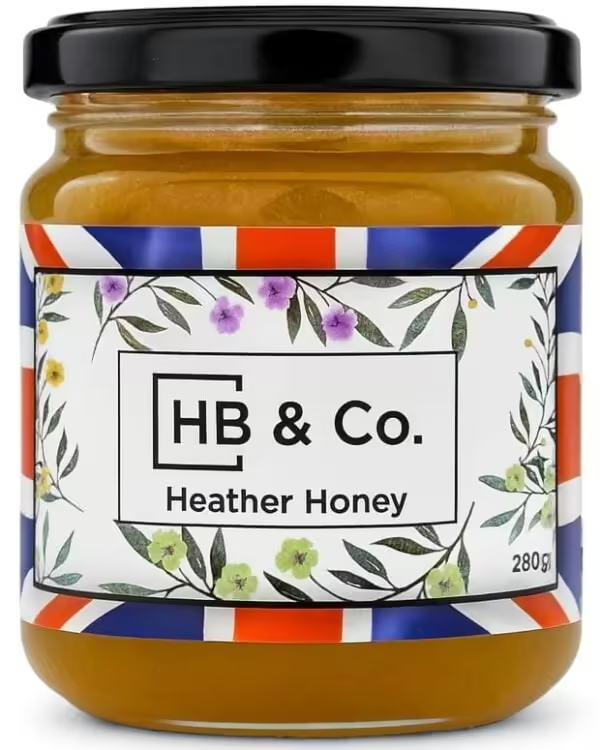
Raw · Yorkshire Moorlands · Premium Tier
British Heather Honey
Raw, unpasteurised Heather Honey from the Yorkshire Moorlands. Harvested once a year during the brief late-summer bloom of ling heather (Calluna vulgaris). Rich, earthy, deeply floral, with a thixotropic texture found in no other British honey.
Tasting Notes
A Honey Unlike Any Other in Britain
Heather honey is the most complex and characterful honey produced in the British Isles. No two jars taste identical. Flavour shifts with the season, the altitude, and the exact date of harvest. What never changes is its unmistakable depth.
Flavour
Rich, earthy, and intensely floral with warm smoky undertones and a lingering bitter finish
Aroma
Wild heather, warm wood, resin, and a faint hint of toffee
Sweetness
Less sweet than most honeys. Bold, savoury-edged, refined
Finish
Long and complex. Cocoa, resin, and a clean floral echo
What is thixotropic?
The Jelly Texture Is a Mark of Authenticity
Heather honey is one of only a handful of honeys in the world with a thixotropic structure. It behaves like a soft gel in the jar, then becomes fluid when stirred or warmed. This property is caused by proteins in the nectar of ling heather (Calluna vulgaris) and cannot be replicated or faked. If your heather honey pours freely like water, it has been over-processed. Ours does not. For deeper detail, read our complete guide to heather plants.

The Species Behind the Jar
What Makes This Real Heather Honey
Heather honey is not a marketing label. It is a specific monofloral honey produced from the nectar of one plant: ling heather (Calluna vulgaris). Understanding this species explains why real British heather honey behaves, tastes, and costs differently from anything else on the shelf.
The plant
Ling heather is the dominant heather species of the British and Irish uplands, covering the North York Moors, the Scottish Highlands, Dartmoor, and the Peak District. It thrives on acidic peat soils between 200 and 450 metres above sea level, where poor ground and harsh weather stress the plant and concentrate its nectar. The flowers appear in dense purple carpets from late July to early September.
The thixotropic signature
Only honey produced from Calluna vulgaris nectar shows true thixotropic behaviour. This is caused by a protein fraction unique to ling nectar. Bell heather (Erica cinerea), a close relative, does not produce the same effect. Any "heather honey" that pours like syrup is either blended, over-filtered, or mislabelled.
Why it matters for what you buy
The short bloom window and the difficulty of extracting thixotropic honey from the comb mean real heather honey is always limited in supply. When you see heather honey sold cheaply at scale, it is almost always a blend. Ours is genuine single-origin Calluna vulgaris, harvested from the Yorkshire Moorlands and never blended.
Curious how heather compares to wildflower on flavour? Read our wildflower vs heather taste guide →
Origin & Terroir
The Yorkshire Moorlands. Where Britain's Finest Heather Grows.
Our Heather Honey comes from a single landscape: the North York Moors, one of the largest expanses of upland heather moorland in the United Kingdom, covering more than 550 square miles of open, windswept terrain. The heather that blankets these moors in late summer is ling heather, the species responsible for the world's most prized heather honey.
The moors sit between 200 and 450 metres above sea level. Acidic peat soils, high rainfall, and short summers create conditions that stress the heather plants and concentrate their nectar. This intensity translates directly into the flavour of the honey: bolder, richer, and more complex than heather honey produced at lower altitudes.
The bloom lasts only four to six weeks each year, typically from late July through to early September. Our beekeeper times the harvest precisely, waiting until the combs are capped and the moisture content is right. This is not factory production. It is a craft that depends entirely on reading the land. Read more about our British honey range and the Yorkshire story.
554
sq miles of moorland
4–6
week bloom window
1×
harvest per year
SALSA
British supplier certified
Buy More, Save More
Stock Up Before Supply Runs Out
Heather honey sells out every year. A single harvest window means limited stock until the next bloom. Save 5% and get free UK delivery on every multi-jar bundle.
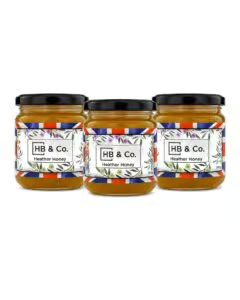 One-time · Saves 5%3x Heather Stock-UpDark, complex, thixotropic. Perfect for winter entertaining, cheese boards, and Christmas stocks. Secure yours before it runs out.£37.02 £38.97Shop →
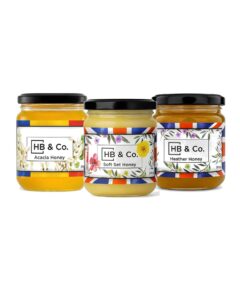 One-time · Saves 5%Discovery TrioBold Heather, mild Acacia, and golden Wildflower. Our three most popular honeys together. The classic introduction to raw honey at its best.£33.22 £34.97Shop →
Looking for something different? Browse all 20 honey gift sets →
Rarity & Value
Why Heather Honey Commands a Premium
Heather honey is the most expensive honey produced in Britain. This is not marketing. It is a direct consequence of how it is made, where it comes from, and what it takes to bring it to your table.
One Harvest Window Per Year
Ling heather blooms for just four to six weeks in late summer. Miss the window and there is no second attempt until the following year. Every jar we sell is the result of a single seasonal harvest. If the weather is poor, the yield is low. There are no shortcuts and no substitutes.
Extraction Is Uniquely Difficult
The thixotropic structure that makes heather honey special also makes it one of the hardest honeys to extract. Standard centrifugal spinning does not work. The honey grips the comb. It must be pressed or carefully agitated before it can be released. This is slower and more labour-intensive than any other British honey variety.
Limited and Genuinely Small-Batch
Our Yorkshire Moorlands Heather Honey is produced by an independent beekeeper in small batches each season. Yield varies year to year depending on bloom timing, rainfall, and colony health. When it sells out, it is gone until the next harvest. We do not blend, dilute, or substitute.
Natural Properties
The Natural Properties of Raw Heather Honey
Raw heather honey retains its full natural composition because it is never heated above hive temperature. The properties below are present only in raw, unprocessed honey. Pasteurisation destroys them.
Enzymes and Antioxidants
Raw heather honey contains naturally occurring enzymes including glucose oxidase and diastase, preserved intact through cold extraction. Darker honey varieties including heather have been shown in published research to have higher antioxidant activity than lighter varieties. Source: NCBI ↗
Natural Antimicrobial Activity
The enzyme glucose oxidase in raw honey produces hydrogen peroxide on contact with moisture. Heather honey is also a source of bee defensin-1, an antimicrobial peptide. Research has noted heather honey demonstrating antibacterial activity comparable to other premium varieties. Source: NCBI ↗
Natural Energy Source
Honey provides natural energy through fructose and glucose. Unlike refined sugar, raw honey also contains trace minerals and B vitamins. The NHS recognises honey as a natural food with a different nutritional profile to refined sugar. Source: NHS ↗
Prebiotic Properties
Raw honey contains oligosaccharides that may benefit the gut microbiome. Published research has found raw honey demonstrating prebiotic-like activity, encouraging the growth of beneficial bifidobacteria and lactobacilli. Source: NCBI ↗
Heather vs Manuka
The Comparison Worth Knowing
Manuka honey is globally famous for its antimicrobial strength. Less widely known is that British heather honey shares similar mechanisms through hydrogen peroxide activity and bee defensin-1. Published research has noted heather honey demonstrating Total Activity scores comparable to mid-grade Manuka. The fundamental difference is marketing reach, not quality. Heather honey must be raw to retain these properties. Heat destroys them entirely. Source: NCBI ↗
The information above is for educational purposes only and does not constitute medical advice. Raw honey is not recommended for children under 12 months. If you have a medical condition or are pregnant, consult your GP before making dietary changes.
How to Use It
Six Ways to Enjoy Yorkshire Heather Honey
The bold, complex character of heather honey means it works best where it can be tasted properly. It is not a background sweetener. It is a flavour in its own right.
Strong British Cheeses
Heather honey is a classic cheese board companion. Its earthy bitterness cuts through the richness of aged cheddar, Stilton, and hard Lancashire. Drizzle directly over the cheese or serve alongside in a small ramekin.
Best with: cheddar, Stilton, LancashirePorridge and Oats
A spoonful stirred into hot porridge is the most traditional British use of heather honey. The warmth loosens its thixotropic texture and releases the full aroma. Heather, wood, and floral notes all amplified by heat.
Most popular everyday useTea and Hot Drinks
Dissolve a small amount in lightly cooled tea. Add it when the drink is around 40°C or below to preserve the enzymes. Heather honey has enough character to stand alongside strong black teas, Earl Grey, or herbal blends.
Tip: wait for the brew to coolGlazing Roast Meats
The bold, slightly bitter character makes it an exceptional glaze for roast lamb, duck, or venison. Mix with grain mustard and a little thyme for a moorland-inspired baste. The sugars caramelise beautifully at roasting temperatures.
Pairs with: game, lamb, duckBaking and Desserts
Use in place of golden syrup in flapjacks, parkin, and shortbread. Its depth of flavour transforms simple bakes. Works particularly well in recipes with oats, ginger, or dark chocolate.
Ideal: parkin, flapjack, gingerbreadStraight from the Jar
Take a small spoonful, let it rest on your tongue, and allow it to melt slowly. Notice the initial sweetness give way to floral depth, then wood and resin, then the long, slightly bitter finish. This is what heather moorland tastes like.
The purist's choiceTexture Guide
How to Handle Your Heather Honey
Heather honey behaves differently to every other honey on the shelf. Understanding its texture means you will always get the best out of it.
Check the temperature of your jar
If stored in a cool kitchen or near a window in winter, the honey will be firmer. Moving it somewhere warmer will soften it over a few hours without any intervention.
Stir gently with a spoon
Heather honey is thixotropic. Stirring breaks down its gel structure and it becomes noticeably more fluid within seconds. No heat required. Spoon straight from jar to toast, porridge, or tea.
Warm water bath if needed
Place the closed jar in a bowl of warm water, no hotter than 40°C. Leave for 15 to 20 minutes, stirring gently once or twice. The honey will loosen to a runnier consistency.
It will firm up again. That is fine.
Once cooled, heather honey returns to its gel-like state. This is permanent natural behaviour, not a problem. Repeat the warm water bath whenever you want a runnier pour.
Never microwave. Uneven heat destroys enzymes and can cause hot spots that burn the honey.
Never use boiling water. Any temperature above 40°C begins to damage the active compounds.
Never refrigerate. Cold makes honey firmer and can trigger unwanted crystallisation.
The science behind it
Why Only Heather Honey Does This
The thixotropic behaviour of heather honey is caused by proteins called colloids, specifically the protein fraction unique to the nectar of Calluna vulgaris (ling heather). These proteins form a weak gel network within the honey that breaks down under mechanical stress and reforms when left to rest.
No other common British honey has this property. It is what makes heather honey impossible to extract using standard centrifugal spinning methods, and why genuine heather honey always has some resistance in the jar.
A useful test for authenticity: Dip a spoon into the jar and lift it slowly. Genuine thixotropic heather honey will stretch slightly and hold its shape before falling, rather than dripping freely.
Founder & Provenance
Curated by a Six-Generation Beekeeper

Dragos Nistor, Founder
Six-Generation Beekeeper · Guest Lecturer, University of Greenwich · LinkedIn Top Voice 2024
"Heather honey is not from my family's apiaries. My family has kept bees in Transylvania for six generations, which taught me what to look for in any honey, anywhere in the world. When I wanted to bring a British heather into the range, I sought out a Yorkshire beekeeper who meets our standards: genuine thixotropic texture, single-origin harvest, and no blending. Ever. I would not put our name on anything else."
Featured in Vogue's Summer Hot List across three consecutive editions in summer 2024. Our British honey supplier holds SALSA certification. NHS 15% Discount available for all NHS staff. GS1-barcoded for full traceability on every jar.
Provenance and Trust
Fully Traceable from Moorland to Your Door
Every jar of HoneyBee & Co. Heather Honey is sourced from a single beekeeper in the Yorkshire Moorlands region. We know the landscape, the seasonal timing, and the extraction process. There is no anonymised supply chain between the hive and your jar.
Our British honey supplier holds SALSA certification, the food safety standard designed specifically for small UK food producers, overseen by the Institute of Food Science and Technology and recognised across the British food industry as the benchmark for small-batch supplier quality.
We work with the same beekeeping partner season after season. We do not switch sources to hit a price point. Continuity of supply means continuity of quality. Read more in our British Honey story.
Verified Reviews
Trusted by Our Customers
Be the first to review this product.
Leave a Review
Your experience helps other customers and means a lot to us.
Frequently Asked Questions
Everything You Need to Know About Heather Honey
What makes heather honey different from other British honeys?+
Heather honey is the only common British honey with a thixotropic texture. It behaves like a soft gel in the jar and becomes fluid when stirred. This is caused by proteins unique to ling heather (Calluna vulgaris) nectar. Darker in colour, more complex in taste, and rarer in supply, heather is widely regarded as the most premium honey produced in the British Isles.
Why is my heather honey so thick? Is it normal?+
Completely normal, and it is what you want. To loosen it, stir gently with a spoon and it will become more fluid. Alternatively, place the jar in a bowl of warm water no hotter than 40°C for 15 to 20 minutes. If your heather honey pours freely without any resistance, it may have been over-processed or diluted.
Is your heather honey genuinely raw and unpasteurised?+
Yes. Our Yorkshire Moorlands Heather Honey is cold-extracted and never heated above natural hive temperature. It is not pasteurised, not ultra-filtered, and not blended. Our British supplier holds SALSA certification, which independently verifies these practices. Every jar retains its natural enzymes, pollen, antioxidants, and active proteins intact.
Is this real heather honey or a blend?+
Real, monofloral, and single-origin. Harvested exclusively during the late-summer ling heather bloom on the Yorkshire Moorlands. We never blend it with cheaper multifloral honeys. A simple authenticity test: dip a spoon into the jar and lift slowly. Genuine thixotropic heather honey stretches and holds its shape. A blend pours like syrup.
How does heather honey compare to Manuka honey?+
Both heather and Manuka honey have antimicrobial properties. Manuka's comes from methylglyoxal. Heather's comes from hydrogen peroxide activity and bee defensin-1. Research has noted heather honey demonstrating Total Activity scores comparable to mid-grade Manuka. Heather honey must be raw to retain these properties. Heat destroys them.
When is heather honey harvested and why is it sometimes out of stock?+
Ling heather blooms for approximately four to six weeks each year, typically late July through early September on the Yorkshire Moors. Yield varies with weather and colony health. When our stock is exhausted, we do not substitute from other sources. We wait for the next harvest.
How long will a 280g jar of heather honey last me?+
Because heather is bold in flavour, most households use it more sparingly than milder honeys. A 280g jar typically lasts two to three months with regular use. For heavier users, our 3-jar stock-up is better value and hedges against seasonal stock gaps.
Is this the same honey as in your bundles and subscription?+
Yes. Identical honey, identical jar, identical harvest. A single jar is £12.99. A 3-jar stock-up bundle saves 5%. An ongoing subscription saves 20% on every delivery, with priority access during years of limited yield.
What is the best way to store heather honey?+
Store at room temperature, away from direct sunlight and heat sources. Do not refrigerate. Keep the lid firmly closed. Heather honey has a naturally higher moisture level than most varieties, so lid hygiene matters more here than with drier honeys like acacia.
Can I cook or bake with heather honey?+
Yes. It excels in parkin, flapjacks, oatcakes, gingerbread, and as a glaze for roast lamb, duck, or venison. Note that cooking destroys the enzymes and antimicrobial properties. If using heather honey for its health properties, consume it raw, stirred into warm tea, drizzled over yoghurt, or eaten straight from the jar.