

 English (UK)
  Italiano
  Français
  简体中文
简体中文  한국어
한국어 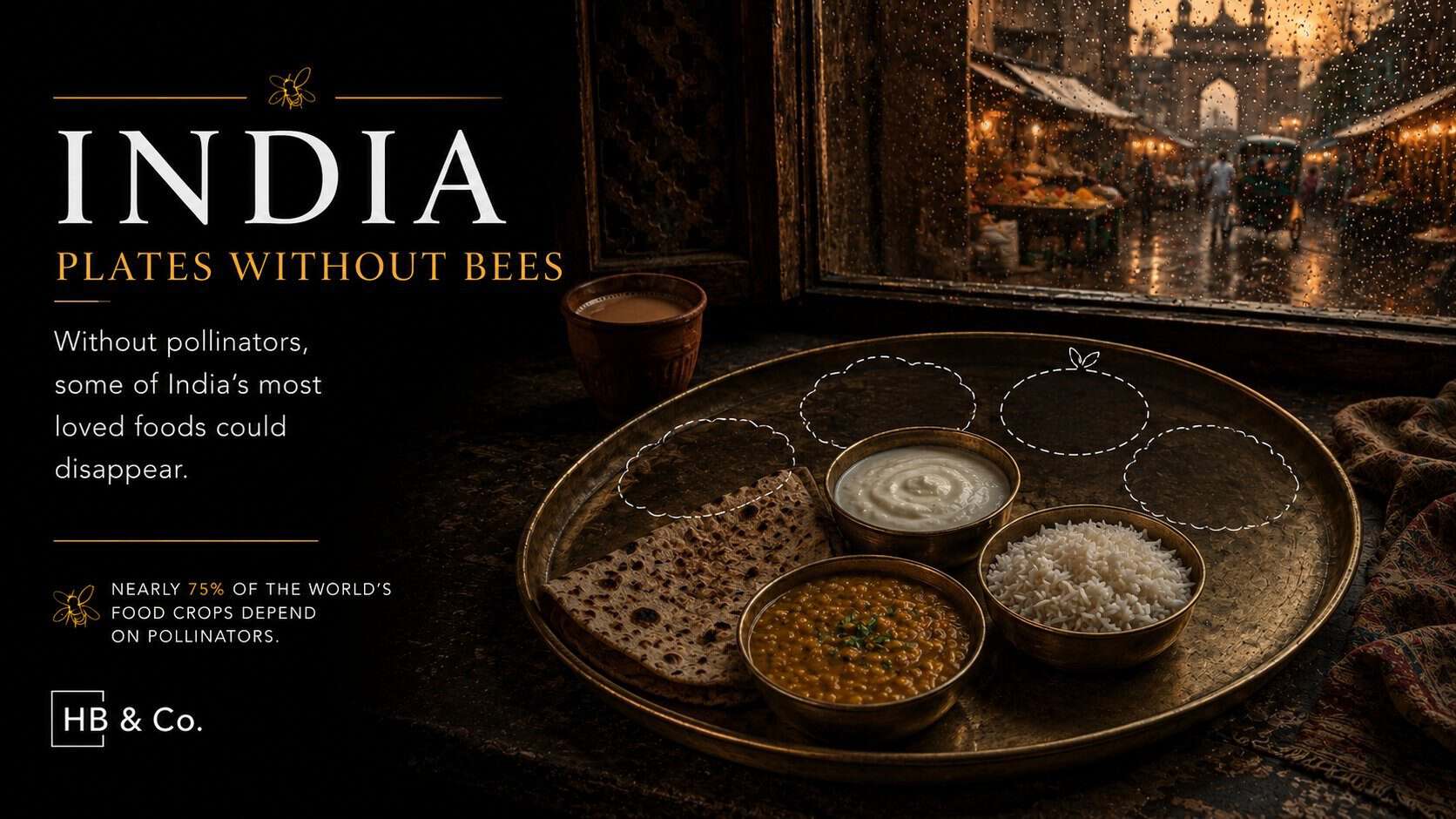
India's Plate Without Bees
Six iconic Indian dishes. Over 700 native bee species. What vanishes from the plate when the pollinators disappear.
 United Kingdom
 Italy
Italy
 France
 Spain
Spain
 Germany
 Greece
 Portugal
 Romania
 Turkey
 United States
 Mexico
 Brazil
 Argentina
 Peru
Peru
 Colombia
 China
China
 Japan
Japan
 South Korea
 Thailand
 Vietnam
 Indonesia
 Philippines
 India
India
 Pakistan
 Morocco
 Egypt
Egypt
 Lebanon
 Saudi Arabia
 Ethiopia
 Nigeria
- 87 of the world's leading food crops depend on animal pollination to some degree (Klein et al., 2007)
- Without bees, up to 83% of a Pav Bhaji would vanish from the plate
- India's most iconic street dishes and curries rely heavily on tomatoes, onions, peppers, coriander, and mango - all significantly pollinator-dependent
- India is home to more than 700 native bee species including four native Apis honeybee species found nowhere else on earth
- Buying raw honey from ethical beekeepers directly supports the colonies that pollinate India's food landscape
Why Indian Cuisine Depends on Bees
Indian food is one of the most complex and diverse culinary traditions on earth, spanning 28 states and thousands of regional variations. But beneath that diversity, a common dependency runs through almost every iconic dish. Tomatoes for curries and sambars. Onions for every base. Coriander for every chutney and garnish. Mango for lassi and chutney. Coconut for southern chutneys and curries. Lemon and lime across every region. These ingredients are not incidental to Indian cooking. They are its foundation. And almost all of them depend significantly on animal pollination.
Pav Bhaji, the iconic Mumbai street dish, illustrates this with particular clarity. Its bhaji - the spiced vegetable mash - contains tomatoes (65% dependent), red peppers (65%), onions (65%), peas (65%), coriander (65%), and lemon (65%). Five of six primary ingredients depend directly on pollinators. Without bees, Pav Bhaji becomes a spiced potato paste served on bread.
The same pattern runs through Palak Paneer, where the tomato and onion base disappears. Through Chicken Biryani, where the tomato, onion, mango chutney, and cucumber raita are all gone. Through Masala Dosa, where the coconut chutney and tomato sambar vanish. Indian cuisine does not happen without Indian bees.
The Science Behind Indian Crop Pollination
The Klein et al. (2007) dependency ratings used in this tool were derived from field exclusion experiments conducted across multiple countries and crop types. For Indian agriculture, the most commercially significant dependencies include tomatoes (65%), onions (65%), cucumbers (95%), mangoes (25% modest but critical at scale), coconuts (25%), lemon and lime (65%), coriander (65%), and chillies (25%). Together these crops form the flavour architecture of Indian cooking at every level from street food to celebration dishes.
India is among the world's largest producers of mangoes, onions, tomatoes, and cucumbers. Its annual mango harvest alone exceeds 20 million tonnes. These crops feed not only India's 1.4 billion people but a significant proportion of global export markets. A sustained decline in Indian bee populations would not remain an ecological issue for long before becoming a food security one.
Four Native Apis Species and the Global Honey Connection
India is the only country on earth where four distinct Apis honeybee species occur naturally. Apis dorsata, the giant honeybee, builds single-comb nests up to a metre wide on exposed cliff faces and tree branches, producing honey harvested by indigenous communities using techniques unchanged for thousands of years. Apis florea, the dwarf honeybee, nests in shrubs and is one of the most important pollinators of smallholder crops in South and Southeast Asia. Apis cerana, the Asian honeybee, is managed commercially across the subcontinent and is increasingly recognised as a more efficient pollinator of native Indian crops than the imported European Apis mellifera.
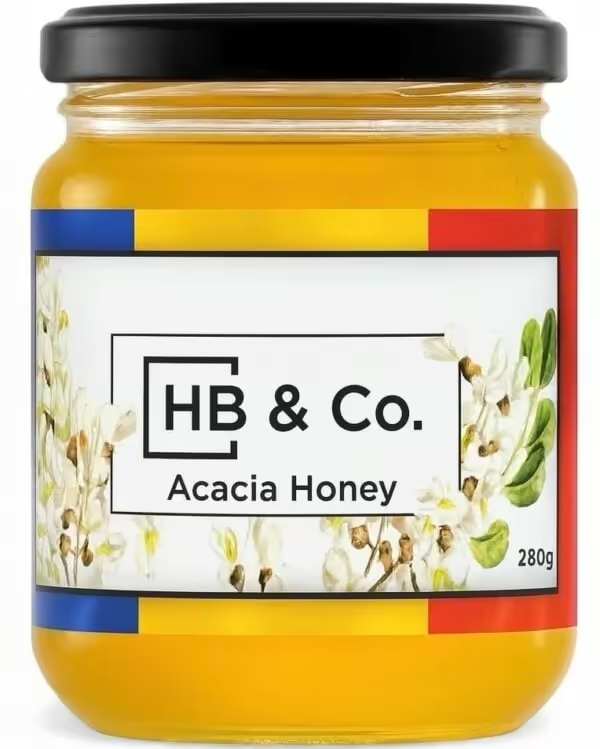
Our Acacia Honey comes from European Apis mellifera colonies foraging in Transylvanian Robinia pseudoacacia forests - a different species and a different continent from India's native bees, but part of the same global story of how bee diversity underpins food security. Explore the full range on our About page, or start a raw honey subscription and save 20% on every delivery.
What You Can Do
Plant flowering herbs and avoid pesticide use in any outdoor space. Support beekeepers who practise ethical, traceable beekeeping. Explore the World Bee Atlas to discover which bee species are native to India and what habitats they depend on. To understand more about why bee populations are declining globally, read our article on why bee populations are declining.
Raw Honey. Shop HoneyBee & Co.
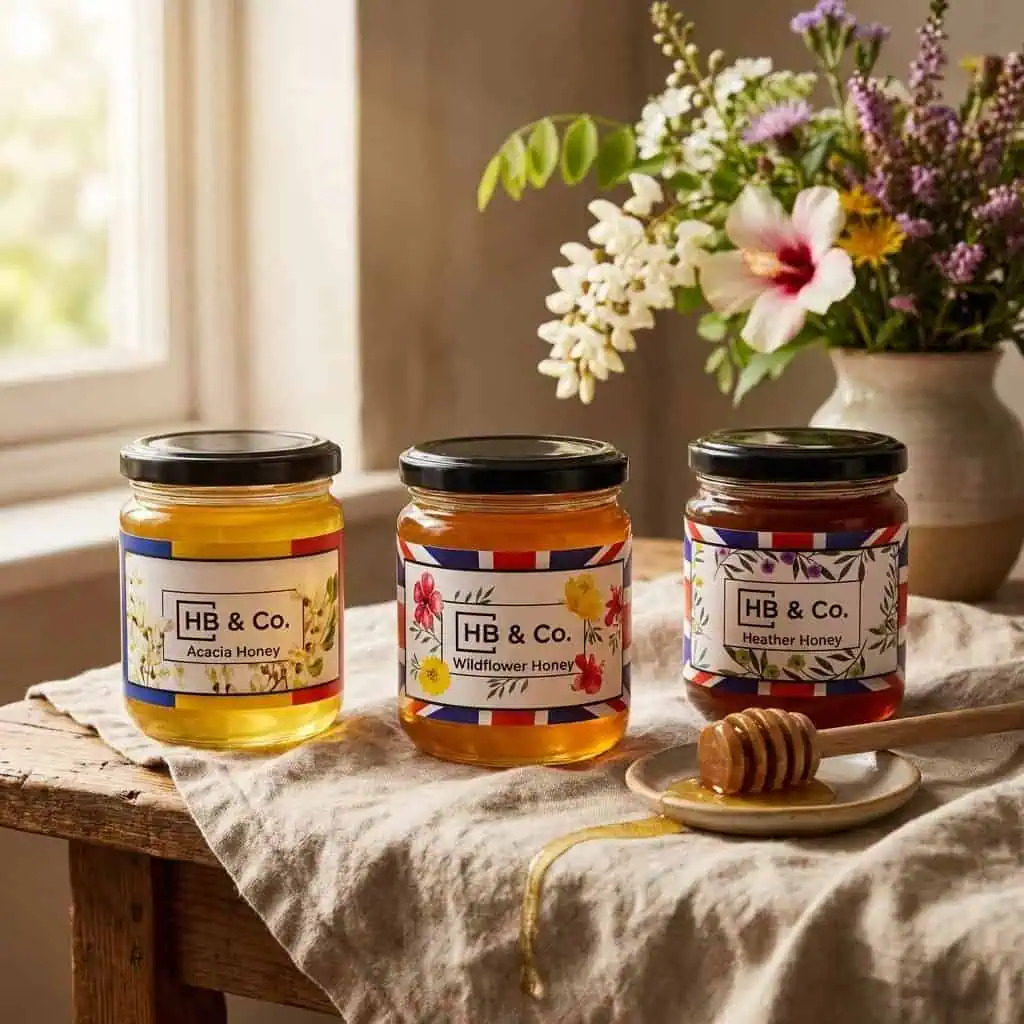
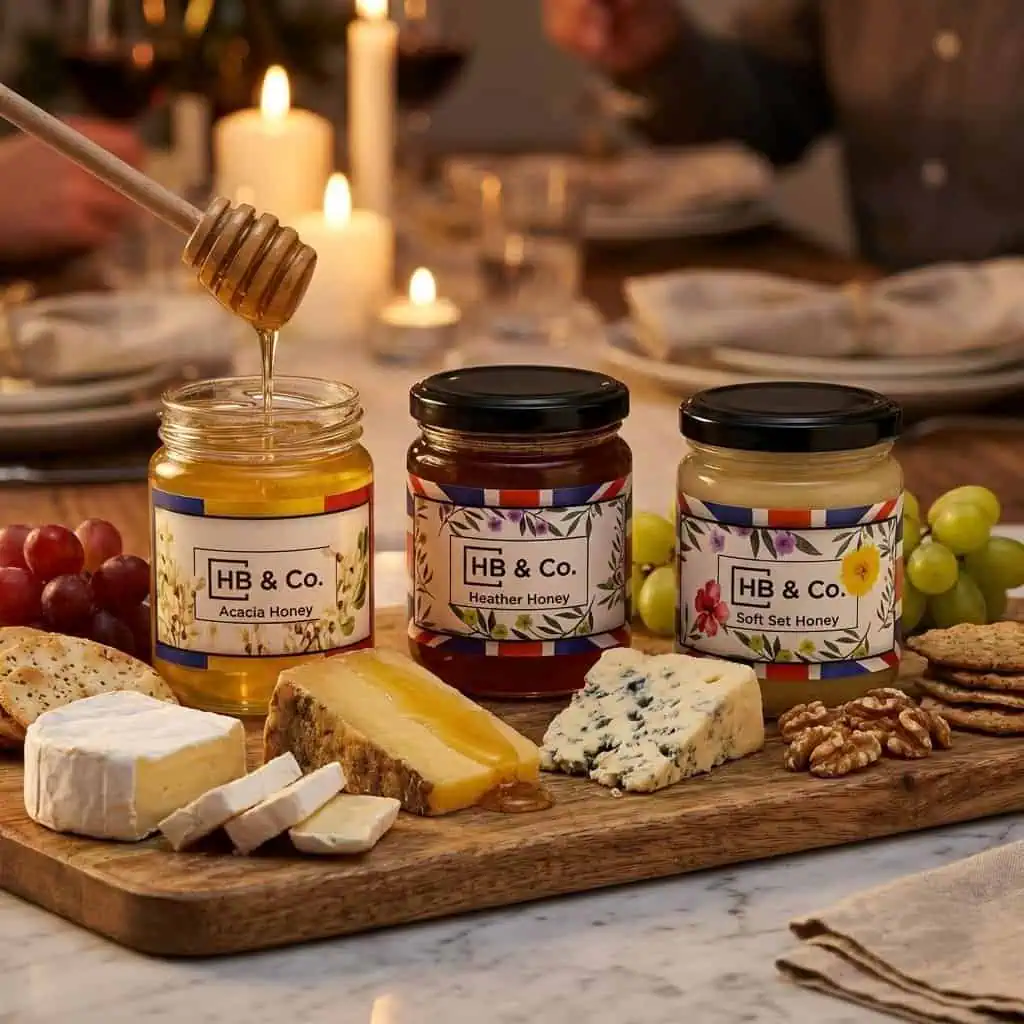
Single-origin raw honey from Transylvanian family apiaries and a SALSA-certified British supplier. Six varieties, all cold-extracted and fully traceable. Free UK delivery on three or more jars.

Frequently Asked Questions
Which Indian foods disappear without bees?
Tomatoes, onions, cucumbers, mangoes, coconut, lemon, coriander, red peppers, peas, and avocado are all significantly pollinator-dependent. These ingredients form the base of most Indian curries, chutneys, sambars, and street dishes. Rice, wheat, dal lentils, and dairy are largely unaffected, as grains and legumes used for dal are either wind-pollinated or self-pollinating.
How many bee species live in India?
India is home to more than 700 described native bee species, including four of the world's eight Apis honeybee species: Apis cerana (Asian honeybee), Apis dorsata (giant honeybee), Apis florea (dwarf honeybee), and Apis andreniformis. No other country on earth has four native Apis species. Approximately 72% of Indian bee species are estimated to be at risk.
What is the giant honeybee Apis dorsata?
Apis dorsata is the world's largest honeybee species, with workers reaching up to 20mm in length. It builds single, exposed comb nests up to one metre wide on cliff faces, tall trees, and buildings. It cannot be domesticated and does not use enclosed hives. Its honey has been harvested by indigenous communities across South and Southeast Asia for thousands of years using traditional rope and basket techniques. It is one of the most important pollinators of wild and forest crops in India.
Does India's mango crop depend on bees?
Yes, to a modest degree. Klein et al. (2007) rates mango at 25% pollinator dependency - meaning yields drop by 10 to 40% without animal pollinators. India produces over 20 million tonnes of mangoes annually, making it the world's largest producer by a significant margin. A 25% reduction in mango yields from pollinator decline would represent one of the largest single-crop losses in global agriculture.
Why is coriander so dependent on bees?
Coriander (Coriandrum sativum) is grown both for its fresh leaves, used extensively as a garnish and in chutneys across Indian cooking, and for its seeds, used as a dried spice. Seed production requires cross-pollination by insects, primarily bees. Klein et al. (2007) rates coriander at 65% pollinator dependency. Without bees, coriander seed production fails significantly, affecting both the spice supply and the ability to grow future crops.
What percentage of Indian food requires pollinators?
India's core fresh ingredients - tomatoes, onions, cucumbers, mangoes, coconut, and coriander - range from 25% to 95% pollinator-dependent under Klein et al. (2007). Rice, wheat, and lentils are largely wind-pollinated or self-pollinating and unaffected. By food crop species count, approximately 75% of globally important food crops require animal pollination, and Indian cuisine's reliance on fresh produce, spices, and condiments places most iconic dishes firmly in the high-dependency category.
How can I help protect bees in India?
Support beekeepers who practise ethical, sustainable beekeeping with transparency about origin. Advocate for reduced pesticide use in agricultural supply chains. Explore the World Bee Atlas on honeybeeandco.uk to learn which species are native to India and what habitats they depend on. Buying raw honey from traceable sources globally helps sustain the commercial viability of ethical beekeeping everywhere.