
 English (UK)
  Italiano
  Français
  简体中文
简体中文  한국어
한국어 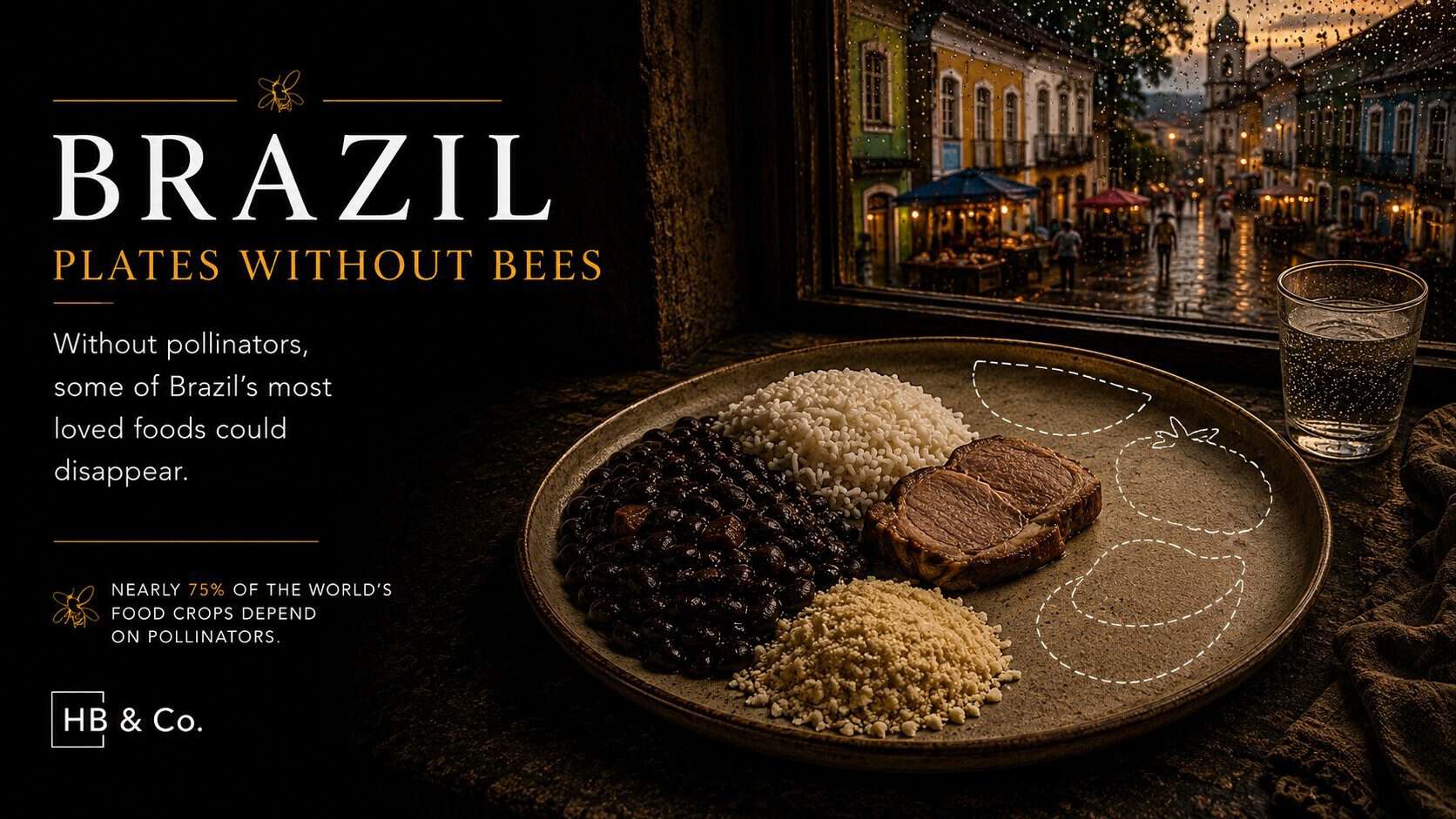
Brazil's Plate Without Bees
Six iconic Brazilian dishes. Over 3,000 native bee species. What vanishes from the plate when the pollinators disappear.
 United Kingdom
 Italy
Italy
 France
 Spain
Spain
 Germany
 Greece
 Portugal
 Romania
 Turkey
 United States
 Mexico
 Brazil
 Argentina
 Peru
Peru
 Colombia
 China
China
 Japan
Japan
 South Korea
 Thailand
 Vietnam
 Indonesia
 Philippines
 India
India
 Pakistan
 Morocco
 Egypt
Egypt
 Lebanon
 Saudi Arabia
 Ethiopia
 Nigeria
- 87 of the world's leading food crops depend on animal pollination to some degree (Klein et al., 2007)
- Without bees, an Acai Bowl loses all five of its fruit toppings - acai, passion fruit, strawberries, mango, and honey are all pollinator-dependent
- Brazil has more than 3,000 native bee species including over 400 species of stingless bee, the most of any country on earth
- The Amazon basin is the most bee-diverse region in the world and remains critically under-surveyed
- Buying raw honey from ethical beekeepers globally supports the commercial viability of sustainable beekeeping
Why Brazilian Cuisine Depends on Bees
Brazilian food is shaped by extraordinary tropical abundance. Acai from the Amazon. Passion fruit from the Atlantic Forest. Mango, papaya, and pineapple from across the country. Tomatoes and onions as the base of almost every cooked dish. Coriander as the defining garnish from north to south. This abundance is not independent of pollinators. It is the direct product of them. Brazil's most celebrated ingredients are among the most pollinator-dependent foods on earth.
Acai, the fruit that defines modern Brazilian food culture globally, depends almost entirely on stingless bees for pollination. The Eulaema and Trigona species that forage on acai palm flowers in the Amazon are native to the forest ecosystem and cannot be replaced by managed honeybee colonies. Studies of acai pollination in Para state have shown that fruit set drops by over 90% when native bee foragers are excluded. Without the Amazon's stingless bees, there is no acai at scale.
Passion fruit carries a 95% pollinator dependency rating under Klein et al. (2007). It is pollinated primarily by large carpenter bees and bumblebees capable of opening the flower's spring-loaded mechanism. Moqueca, Brazil's defining fish stew, loses its tomatoes and peppers without pollinators. Feijoada loses its orange garnish and coriander. Coxinha loses its avocado dipping sauce and tomato salsa. The foundation of Brazilian cooking is built on bee pollination.
The Science Behind Brazilian Crop Pollination
Brazil's stingless bees - the Meliponini - are among the most ecologically significant pollinators on earth. Unlike honeybees, they cannot sting and their colonies are managed by indigenous communities across the Amazon using traditional techniques that pre-date European contact by thousands of years. They pollinate a wide range of native tropical fruits that managed Apis mellifera colonies cannot reach, including acai, cupuacu, and guarana. The loss of native stingless bee populations in the Amazon would be irreversible on any human timescale.
For Brazil's agricultural exports, the dependency picture is equally significant. Brazil is the world's largest producer of oranges, one of the largest producers of mangoes, and a major global supplier of passion fruit, papaya, and coconut. All of these carry meaningful pollinator dependency ratings. A country whose export economy is built on tropical fruit is a country whose economy depends directly on bee health.
Stingless Bees, Amazon Honey, and the Global Connection
Brazil's stingless bee tradition has no equivalent anywhere in Europe. The Trigona and Melipona species that produce Brazilian mel de abelha sem ferrao - stingless bee honey - are entirely separate from the Apis mellifera honeybees that produce our Transylvanian honey. But the principle is identical: a sustainable relationship between beekeeper, bee, and landscape, practised over generations, producing honey that carries the direct flavour of the place it comes from.
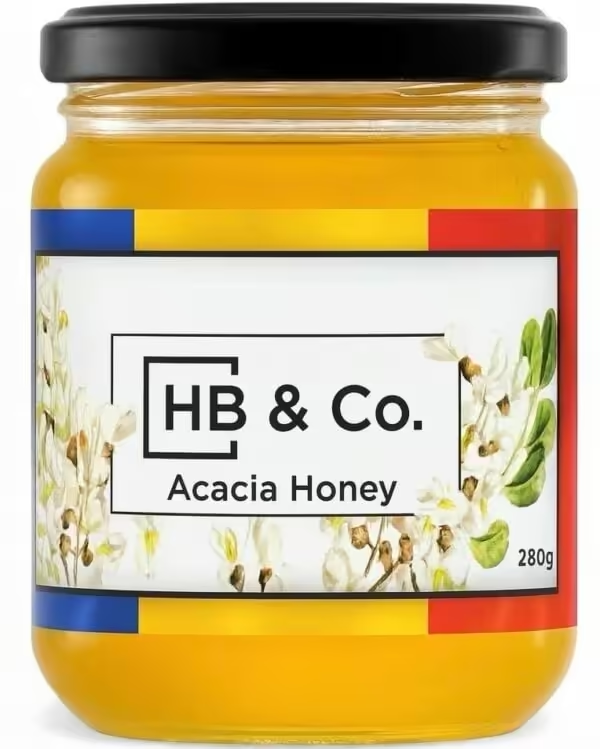
Our Acacia Honey is drawn from Robinia pseudoacacia forests in the Carpathian Mountains of Transylvania. The beekeeper is Dragos Nistor, sixth generation. The method is cold extraction, no heat treatment, no blending. The honey carries the forest. Read more about the family's history on the About page, or explore our raw honey subscription and save 20% on every delivery.
What You Can Do
Support organisations working to protect native stingless bee populations in the Amazon and Atlantic Forest. Choose food products that come from supply chains committed to pollinator health. Eliminate pesticide use from any outdoor space. Explore the World Bee Atlas to discover which bee species are native to Brazil and what habitats they depend on. To read more about global bee decline, see our article on why bee populations are declining.
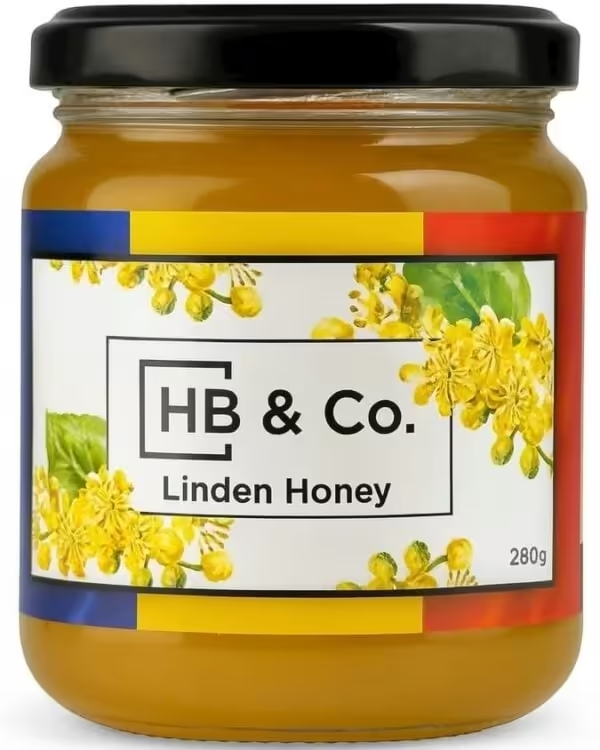
Raw Honey. Shop HoneyBee & Co.
Single-origin raw honey from Transylvanian family apiaries and a SALSA-certified British supplier. Six varieties, all cold-extracted and fully traceable. Free UK delivery on three or more jars.
Frequently Asked Questions
Which Brazilian foods disappear without bees?
Acai, passion fruit, mango, papaya, strawberries, tomatoes, onions, peppers, avocado, coconut, and coriander are all significantly pollinator-dependent. Rice, cassava, beans, pork, and fish are largely unaffected. The most striking loss is in Brazil's tropical fruit landscape - acai depends almost entirely on native Amazonian stingless bees, which cannot be replaced by managed honeybee colonies.
How many bee species live in Brazil?
Brazil has more than 3,000 described native bee species - the highest bee diversity of any country on earth. This includes over 400 species of stingless bee (Meliponini), more than any other country. The Amazon basin is the global centre of bee diversity but remains critically under-surveyed, meaning the true total is likely significantly higher. Approximately 78% of Brazilian bee species are at risk.
What are stingless bees and why do they matter?
Stingless bees (Meliponini) are a tribe of over 500 species found primarily in tropical regions. Unlike honeybees they cannot sting, live in colonies of a few hundred to tens of thousands, and produce small quantities of honey with higher water content than Apis honey. In Brazil, over 400 stingless bee species pollinate native tropical fruits including acai, cupuacu, and guarana that Apis mellifera colonies cannot effectively pollinate. Indigenous communities across the Amazon have managed stingless bee colonies for thousands of years.
Why is acai so dependent on bees?
Acai palms (Euterpe oleracea) produce small flowers that require cross-pollination by insects for fruit set. In the Amazon, this pollination is performed almost entirely by native stingless bees, particularly Trigona and related species that are adapted to the forest ecosystem. Studies in Para state have shown fruit set drops by over 90% when native bee foragers are excluded. Managed Apis mellifera colonies are not effective substitutes because they do not forage in the same way on acai flowers in the natural forest environment.
Does Brazil's orange production depend on bees?
Yes, to a modest degree. Klein et al. (2007) rates citrus including oranges at 25% pollinator dependency. Brazil is the world's largest orange producer, harvesting around 16 million tonnes annually. A 25% yield reduction from pollinator decline would represent one of the largest single-commodity losses in global agriculture. Managed honeybee colonies are widely deployed in Brazilian citrus orchards during flowering to improve fruit set.
What percentage of Brazilian food requires pollinators?
Brazil's defining fresh produce - acai, passion fruit, mango, papaya, tomatoes, onions, and peppers - ranges from 25% to 95% pollinator-dependent under Klein et al. (2007). Rice, cassava, beans, and meat are largely unaffected. Brazilian cuisine's heavy reliance on tropical fruits and fresh vegetables places its most iconic dishes among the most pollinator-dependent food cultures in the world.
How can I help protect bees in Brazil?
Support organisations working to protect native stingless bee populations and the Amazon and Atlantic Forest ecosystems they depend on. Choose food products from supply chains committed to pollinator health. Explore the World Bee Atlas on honeybeeandco.uk to learn which species are native to Brazil. Buying raw honey from ethical, transparent beekeepers globally helps sustain the commercial viability of sustainable beekeeping worldwide.