
 English (UK)
  Italiano
  Français
  简体中文
简体中文  한국어
한국어 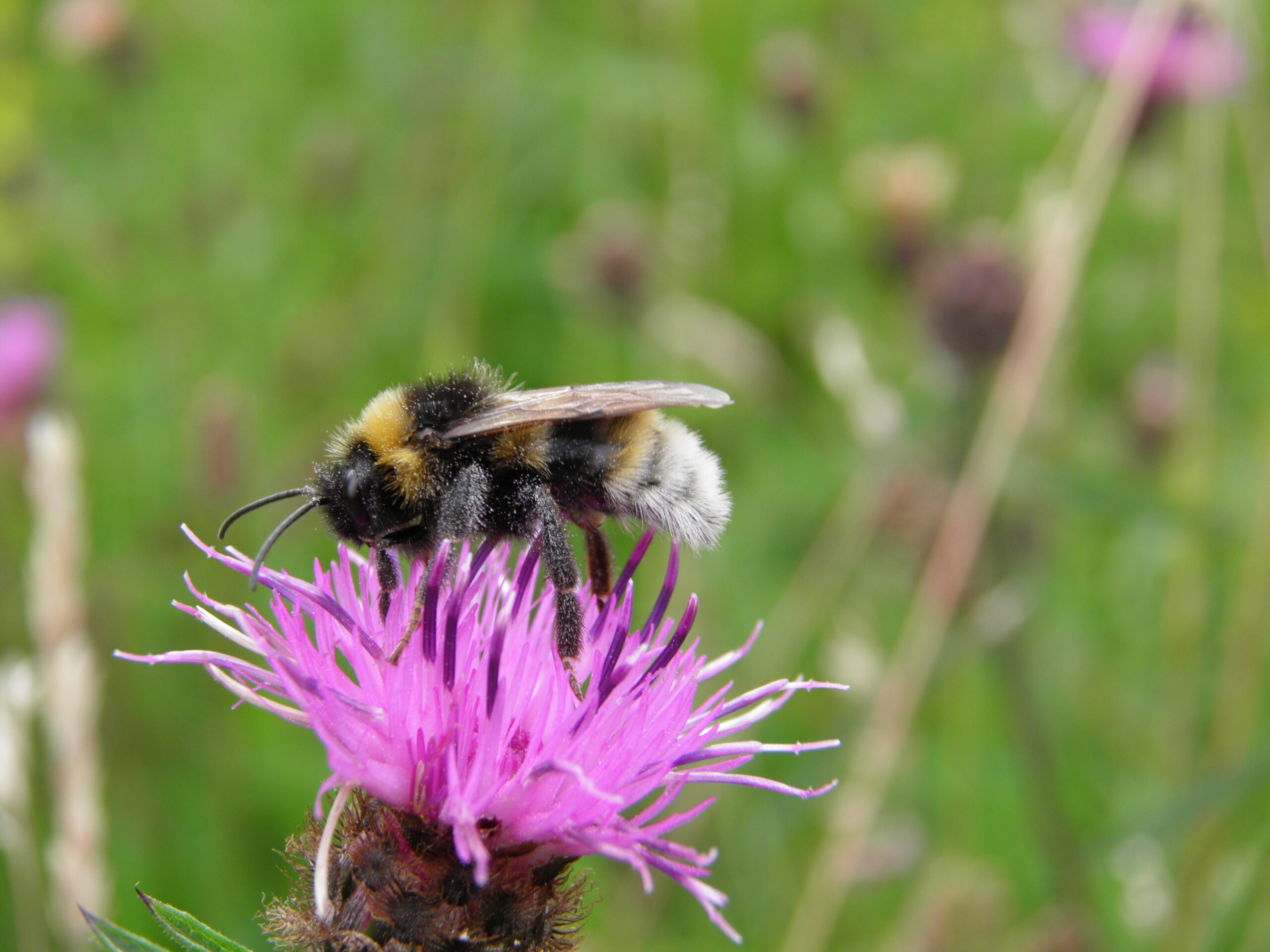 Bombus vestalis, a male southern cuckoo bee. kitenet, CC BY-SA 2.0, via Wikimedia Commons.
UK Bee Species
Southern Cuckoo Bee (Bombus vestalis)
Bombus vestalis (Geoffroy, 1785) · subgenus Psithyrus
The southern cuckoo bee, also called the vestal cuckoo bumblebee, is the commonest cuckoo bumblebee of southern Britain. It is the dedicated parasite of the buff-tailed bumblebee, one of our most abundant bees, which is part of why it does so well. The female sneaks into a buff-tailed nest, takes over from the queen, and lets the host workers raise her brood. Trace its range, and its northward spread, on the UK Native Bee Species Map, or set it among the world's bumblebees in the World Bee Atlas.
Quick Facts
| Kingdom | Animalia |
| Phylum | Arthropoda |
| Class | Insecta |
| Order | Hymenoptera |
| Family | Apidae |
| Genus | Bombus |
| Subgenus | Psithyrus |
| Species | Bombus vestalis |
The buff-tailed bumblebee's shadow
The southern cuckoo bee belongs to the subgenus Psithyrus, the cuckoo bumblebees, which build no nests and rear no workers of their own.[1] Each British cuckoo bumblebee is matched to a particular host, and the southern cuckoo bee is the special parasite of the buff-tailed bumblebee (Bombus terrestris).[1] Because its host is one of the most common and successful bumblebees in Britain, the southern cuckoo bee is itself the commonest cuckoo bumblebee across the south.[2]
Long a bee of southern Britain, the southern cuckoo bee is now expanding northwards, has only recently reached Scotland, and was first found in Ireland in 2014, tracking the spread of its buff-tailed bumblebee host in a warming climate.[3][5]
How to identify the southern cuckoo bee
This is a large cuckoo bee, with females among the biggest of all British cuckoo bumblebees at 20 to 24 mm.[2] The body pile is deep, neat and velvety black, with a buff or chestnut collar that contains scattered black hairs, and a white tail carrying a bright sulphur-yellow patch on each side at the front.[3] Like every cuckoo bee it has darkened wings, hairy hind legs with no shiny pollen basket, and sparser hair that lets the black body shine through.[3] The yellow side-patches fade with age, and the collar can pale to straw.
Telling it from the gypsy cuckoo bee
The southern cuckoo bee is most easily confused with the gypsy cuckoo bee (Bombus bohemicus). The southern cuckoo averages larger and neater, with a collar that contains some black hairs and broad, intense yellow tail-patches; the gypsy cuckoo is smaller and fluffier, with a paler, broader collar lacking black hairs and smaller side-patches.[3] The two also differ in their hosts: the southern cuckoo bee uses the buff-tailed bumblebee, the gypsy cuckoo uses the white-tailed bumblebee complex.[1]
Lifecycle and behaviour
Mated females emerge from hibernation in spring, often from mid-March, and can be seen feeding on sallow catkins, white dead-nettle, dandelions and ground-ivy, or flying low over the ground in search of host nests.[2] When a female finds a young buff-tailed nest with a few workers, she slips inside and lies low until she has taken on the colony scent, then dominates or kills the host queen and takes over the egg-laying.[1] From then on the host workers do all the foraging and brood care, raising only male and female southern cuckoo bees.[1][4] In late summer the males are among the commonest bumblebees on thistles, brambles, knapweeds and garden flowers such as lavender.[2]
Separating the southern and gypsy cuckoo bees in the field is not always reliable. Faded or worn individuals overlap, and definitive identification often needs microscopic checks, such as the relative lengths of the antennal segments or the degree of pitting under the female's tail. Many casual sight records of one species may include the other.[3]
Why it matters
The southern cuckoo bee is a good news story among Britain's cuckoo bees. Because its host is thriving and spreading, it is one of the few socially parasitic bumblebees that is doing well, and its northward march is a visible sign of climate-driven change in the bumblebee community. A healthy population of cuckoo bees is a marker of healthy host colonies, and of the gardens, grasslands and hedgerows full of flowers that both depend on.
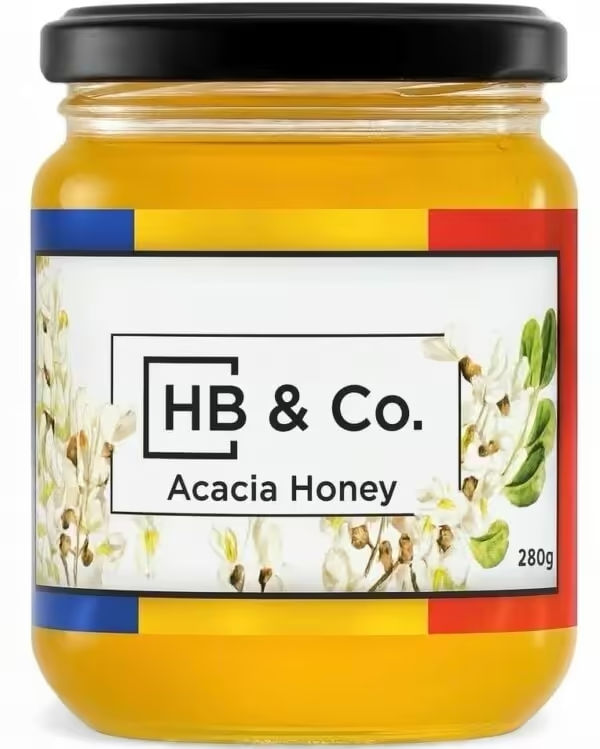
Raw Acacia Honey
Our flagship raw Acacia honey: pale, delicate and slow to crystallise. Six generations of family beekeeping heritage in every 280g jar. £10.99.
Shop Acacia Honey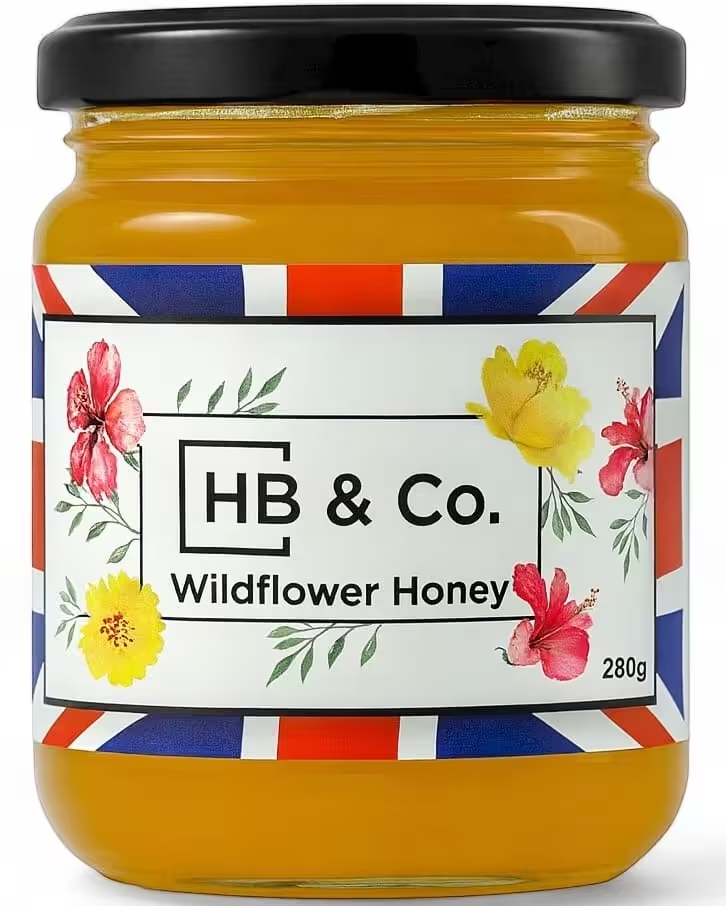
British Wildflower Honey
Raw honey from Midlands meadows, the kind of flower-rich landscape where buff-tailed bumblebees and their cuckoos thrive. Our British honey supplier holds SALSA Certification. 280g. £10.99.
Shop Wildflower Honey
Subscribe & Save 20%
Choose any single honey and save 20% on every delivery, with free UK delivery on every subscription order.
Start a SubscriptionFrequently asked questions
How do I identify a southern cuckoo bee?
What is a cuckoo bumblebee?
What does the southern cuckoo bee parasitise?
Is the southern cuckoo bee rare?
When is the southern cuckoo bee active?
How is it different from the gypsy cuckoo bee?
Does the southern cuckoo bee sting?
Does the southern cuckoo bee make honey?
Related species
Buff-tailed Bumblebee
Bombus terrestrisRead more → Lookalike cuckooGypsy Cuckoo Bee
Bombus bohemicusRead more → Cuckoo beeBarbut's Cuckoo Bee
Bombus barbutellusRead more →Sources & references
- BWARS (Bees, Wasps & Ants Recording Society). Species account: Bombus vestalis, host (Bombus terrestris), nest takeover and distribution. bwars.com.
- Falk, S. Field Guide to the Bees of Great Britain and Ireland, Bloomsbury, with notes for Bombus vestalis (size, pile, phenology, male flowers). Steven Falk Flickr collection.
- Bumblebee Conservation Trust. Southern cuckoo bumblebee (Bombus vestalis): identification, separation from B. bohemicus, range expansion and first Irish record. bumblebeeconservation.org.
- Benton, T. (2006). Bumblebees. New Naturalist series, Collins (cuckoo bumblebee biology and host relationships).
- GBIF Secretariat. Bombus vestalis (Geoffroy, 1785): taxonomy and European distribution. gbif.org.
Dragos Nistor
Founder, HoneyBee & Co. · Guest Lecturer, University of Greenwich
HoneyBee & Co. draws on six generations of family beekeeping heritage, with honey from the Nistor family apiaries and from carefully chosen British producers. Our British honey supplier holds SALSA Certification, and we offer a 15% NHS Discount. Every jar is raw, unfiltered and traceable to the hive.