

 English (UK)
  Italiano
  Français
  简体中文
简体中文  한국어
한국어 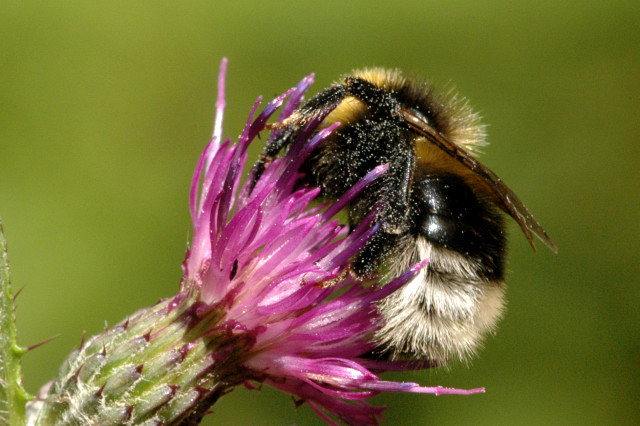 Bombus barbutellus, Barbut's cuckoo bee. James Lindsey at Ecology of Commanster, CC BY-SA 2.5, via Wikimedia Commons.
UK Bee Species
Barbut's Cuckoo Bee (Bombus barbutellus)
Bombus barbutellus (Kirby, 1802) · subgenus Psithyrus
Barbut's cuckoo bee is a cuckoo bumblebee that targets the long-faced garden bumblebees. The female makes no nest of her own; she invades the colony of a garden bumblebee or its larger cousin, takes the place of the queen, and leaves the host workers to raise her young. It mimics its host closely, which makes it one of the trickier cuckoo bees to name in the field. Compare its range with its hosts on the UK Native Bee Species Map, or set it among the world's bumblebees in the World Bee Atlas.
Quick Facts
| Kingdom | Animalia |
| Phylum | Arthropoda |
| Class | Insecta |
| Order | Hymenoptera |
| Family | Apidae |
| Genus | Bombus |
| Subgenus | Psithyrus |
| Species | Bombus barbutellus |
A cuckoo in the garden bumblebee's nest
Barbut's cuckoo bee belongs to the subgenus Psithyrus, the cuckoo bumblebees, a group of bees that survive entirely by parasitising the colonies of true bumblebees.[1][5] Like every cuckoo bumblebee it has no worker caste, no pollen baskets on its hind legs, and only sparse body hair that lets the dark, shiny body surface show through.[2] The female never gathers pollen and never builds a nest. She visits flowers only to feed herself.
In spring the mated, overwintered female hunts out a small nest of her host, slips inside, and over time dominates or kills the host queen. She then lays her own eggs, and the host's workers carry on foraging and feeding, raising a brood of male and female cuckoo bees that is not their own.[1]
Barbut's cuckoo bee resembles its host, the garden bumblebee, so closely that the clearest difference is the shape of the face: almost circular in the cuckoo, but long and elongated in the garden bumblebee.[1]
How to identify Barbut's cuckoo bee
This is a medium to large cuckoo bee. Females are around 16 to 18 mm long, males a little smaller.[3] Both sexes carry two yellow bands on the thorax, a broad collar and a fringe across the rear, a yellow band at the front of the abdomen that can vary in strength, and a clean whitish tail with no yellow hairs at its base.[4] The body hair is short and sparse, the wings are darkened, and the hind legs are hairy rather than carrying a smooth pollen basket, all classic cuckoo-bee features.[4] On males the facial hairs are black.
Telling it from the other cuckoo bees
The two most similar British cuckoos, the southern cuckoo bee and the gypsy cuckoo bee, usually show yellow patches at the front of the tail, which Barbut's cuckoo bee lacks; its tail is clean white.[4] Barbut's is also fluffier than the southern cuckoo bee and a little smaller than both the southern and red-tailed cuckoo bees, though dark or worn individuals can still be very hard to separate without close examination.[2]
Its hosts and where it lives
The confirmed primary hosts of Barbut's cuckoo bee are the garden bumblebee (Bombus hortorum) and the large garden bumblebee (Bombus ruderatus).[1] It occurs in the same wide range of flower-rich habitats as those bees, from gardens, parks and roadside verges to woodland edges and brownfield land, anywhere with a good supply of deep, long-tubed flowers such as clovers.[4] Across Britain it is widely distributed but never common, thinning out towards the north and reaching into west Wales.[1]
Overwintered females are on the wing from late April, searching out host nests, with males and the next generation of females flying from July into September.[1] Adults feed at dandelions, clovers, thistles, knapweeds, scabious and brambles.[2]
The full host list is debated. BWARS and Falk treat the garden and large garden bumblebees as the confirmed hosts, while some continental studies suggest Barbut's cuckoo bee may also exploit other species such as the tree and early bumblebees, with a longer list of possible hosts proposed.[1][3] Confirmed British nest records point firmly to the garden bumblebees, so the wider list is best treated as unproven.
Why it matters
A cuckoo bumblebee is a sign of a working ecosystem, not a threat to it. Barbut's cuckoo bee can only persist where garden and large garden bumblebees are nesting in good numbers, so its presence signals healthy populations of those long-tongued pollinators and the deep flowers they need. Growing plenty of clover, vetches, foxgloves and other long-tubed flowers, and leaving rough grassy corners for bumblebees to nest in, supports the hosts and the cuckoo alike.
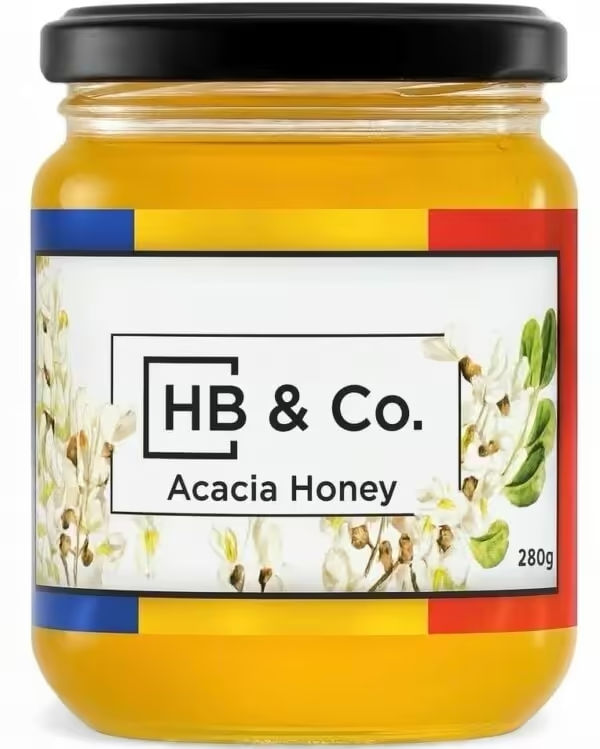
Raw Acacia Honey
Our flagship raw Acacia honey: pale, delicate and slow to crystallise. Six generations of family beekeeping heritage in every 280g jar. £10.99.
Shop Acacia Honey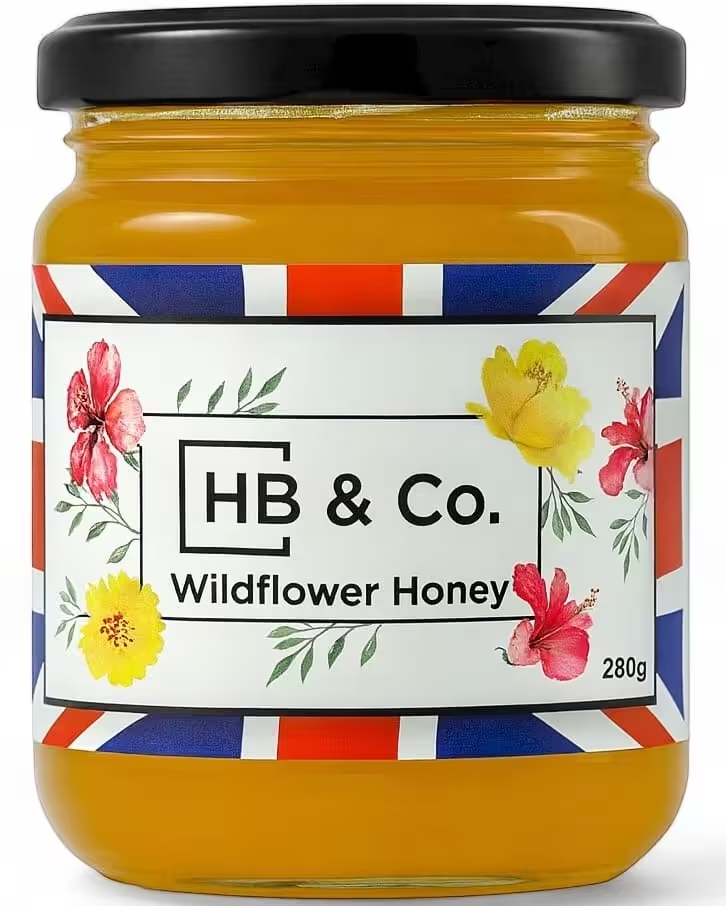
British Wildflower Honey
Raw honey from Midlands meadows, the clover-rich landscape that garden bumblebees and their cuckoos forage. Our British honey supplier holds SALSA Certification. 280g. £10.99.
Shop Wildflower Honey
Subscribe & Save 20%
Choose any single honey and save 20% on every delivery, with free UK delivery on every subscription order.
Start a SubscriptionFrequently asked questions
How do I identify Barbut's cuckoo bee?
What is a cuckoo bumblebee?
What does Barbut's cuckoo bee parasitise?
Is Barbut's cuckoo bee rare?
When is Barbut's cuckoo bee active?
How do I tell it from the southern or gypsy cuckoo bee?
Does Barbut's cuckoo bee sting?
Does Barbut's cuckoo bee make honey?
Related species
Garden Bumblebee
Bombus hortorumRead more → Host speciesLarge Garden Bumblebee
Bombus ruderatusRead more → Cuckoo beeForest Cuckoo Bee
Bombus sylvestrisRead more →Sources & references
- BWARS (Bees, Wasps & Ants Recording Society). Species account: Bombus barbutellus (Kirby, 1802), including hosts, distribution and biology. bwars.com.
- Falk, S. Field Guide to the Bees of Great Britain and Ireland, Bloomsbury, with identification notes for Bombus barbutellus (collar, tail, separation from other cuckoos). Steven Falk Flickr collection.
- Buzz About Bees. Bombus barbutellus, Barbut's cuckoo bee: size, hosts and foraging, summarising Benton and Falk.
- Bumblebee Conservation Trust. Barbut's cuckoo bumblebee (Bombus barbutellus): identification, hosts and separation from similar cuckoos. bumblebeeconservation.org.
- Williams, P.H., Natural History Museum. Bombus (Psithyrus) taxonomy and host associations for Bombus barbutellus. nhm.ac.uk.
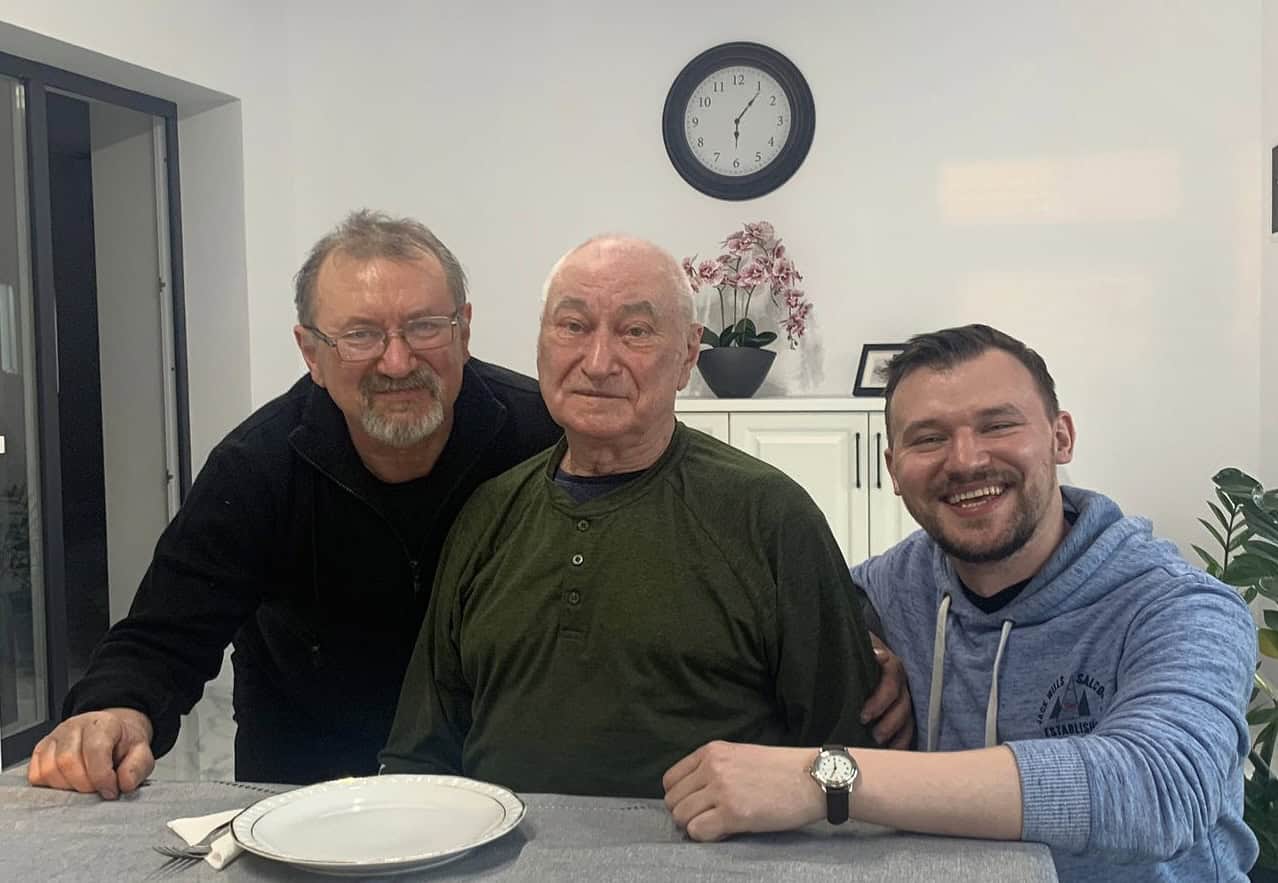
Dragos Nistor
Founder, HoneyBee & Co. · Guest Lecturer, University of Greenwich
HoneyBee & Co. draws on six generations of family beekeeping heritage, with honey from the Nistor family apiaries and from carefully chosen British producers. Our British honey supplier holds SALSA Certification, and we offer a 15% NHS Discount. Every jar is raw, unfiltered and traceable to the hive.