
 English (UK)
  Italiano
  Français
  简体中文
简体中文  한국어
한국어 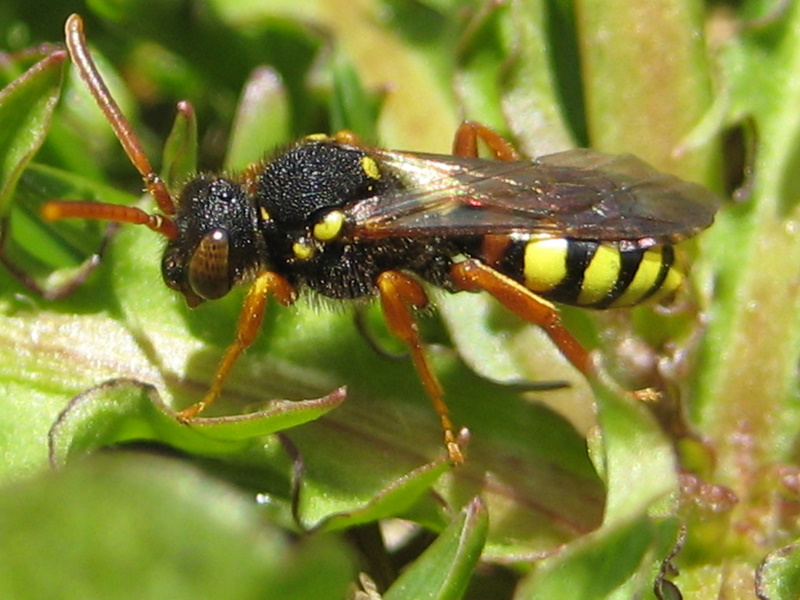 Nomada fucata, the painted nomad bee. Floor Arts at Waarneming.nl, CC BY 3.0, via Wikimedia Commons.
UK Bee Species
Painted Nomad Bee (Nomada fucata)
Nomada fucata Panzer, 1798 · family Apidae
The painted nomad bee looks more like a small wasp than a bee: slim, hairless and banded in yellow and brown. It is a cleptoparasite, a cuckoo bee that lays its eggs in the burrows of the yellow-legged mining bee and leaves its grub to eat the host's stored food. Once a rare bee of the far south, it has surged northwards in recent decades, following its host. Track its spread on the UK Native Bee Species Map, or set it among the world's bees in the World Bee Atlas.
Quick Facts
| Kingdom | Animalia |
| Phylum | Arthropoda |
| Class | Insecta |
| Order | Hymenoptera |
| Family | Apidae |
| Subfamily | Nomadinae |
| Genus | Nomada |
| Species | Nomada fucata |
A bee that looks like a wasp
Nomad bees are the largest group of cuckoo bees in Britain, and almost all of them are cleptoparasites of mining bees in the genus Andrena.[4] They are slim and nearly hairless, banded in yellow, red and black, and are very often mistaken for small wasps. The painted nomad bee is a medium-sized member of the group, with an abdomen of alternating yellow and dark-brown bands, a reddish first segment, yellow shoulders and, in the female, entirely orange antennae.[1][3] Males carry a small dark patch partway along the antennae.
Like all cuckoo bees, the painted nomad bee gathers no pollen and builds no nest. The female feeds only on nectar and spends her time flying low over the nesting banks of her host, searching for burrows.[3]
Once a scarce species confined to the far south of England, the painted nomad bee has spread dramatically northwards in recent decades, reaching as far as County Durham. It has moved in lockstep with its host, the yellow-legged mining bee, which has expanded its own range at the same time.[1]
A cuckoo of the yellow-legged mining bee
The painted nomad bee is a specialist cleptoparasite of the yellow-legged mining bee (Andrena flavipes).[2] The female lays a single egg inside a host nest cell that has been stocked with pollen and nectar. When her larva hatches it first destroys the host's egg or young grub, then settles down to eat the food store the mining bee had gathered for its own offspring.[3] The grown larva spins a cocoon in the cell and pupates, and a new adult emerges to repeat the cycle, with the second generation's pupae overwintering in the soil.[3]
Because its whole life is tied to its host, the painted nomad bee matches the host's timing exactly. Both are bivoltine, producing two generations a year: a spring flight from around March to June and a second, shorter-haired summer generation in July and August.[1]
Where and when you will see it
The painted nomad bee turns up in a wide variety of open, sunny habitats, including coastal grassland and soft-rock cliffs, old quarries and sandpits, calcareous grassland, brownfield land, roadside verges, and even banks and lawns in towns and villages.[2][5] The common thread is the presence of its host: almost anywhere the yellow-legged mining bee nests in numbers, the painted nomad bee can appear.[2] Adults take nectar from open, short flowers, particularly daisies and members of the pea family.[3]
The naming of British nomad bees is an area of active revision, with a fully revised national account published only recently. Several Nomada species are very similar, and males in particular can be hard to separate, so some older identifications and host records are being re-examined. The painted nomad bee's link to the yellow-legged mining bee, however, is well established.[4]
Why it matters
The painted nomad bee is a textbook example of how a parasite tracks its host. Its rapid spread north is a visible sign of the yellow-legged mining bee's own expansion, and watching one is often the quickest way to find a thriving colony of the host. Far from harming the wider bee community, a stable cuckoo bee is part of a healthy one. Leaving sunny banks and bare patches of ground undisturbed supports the mining bee, and with it the painted nomad bee that shadows it.
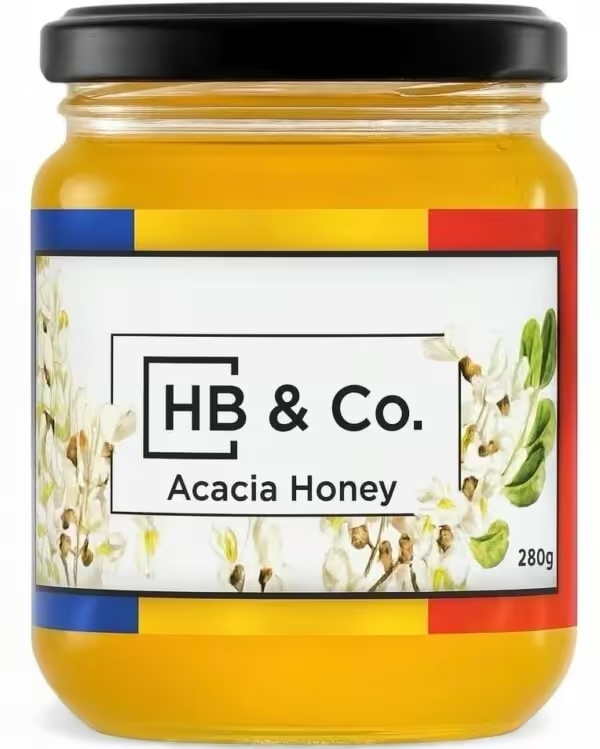
Raw Acacia Honey
Our flagship raw Acacia honey: pale, delicate and slow to crystallise. Six generations of family beekeeping heritage in every 280g jar. £10.99.
Shop Acacia Honey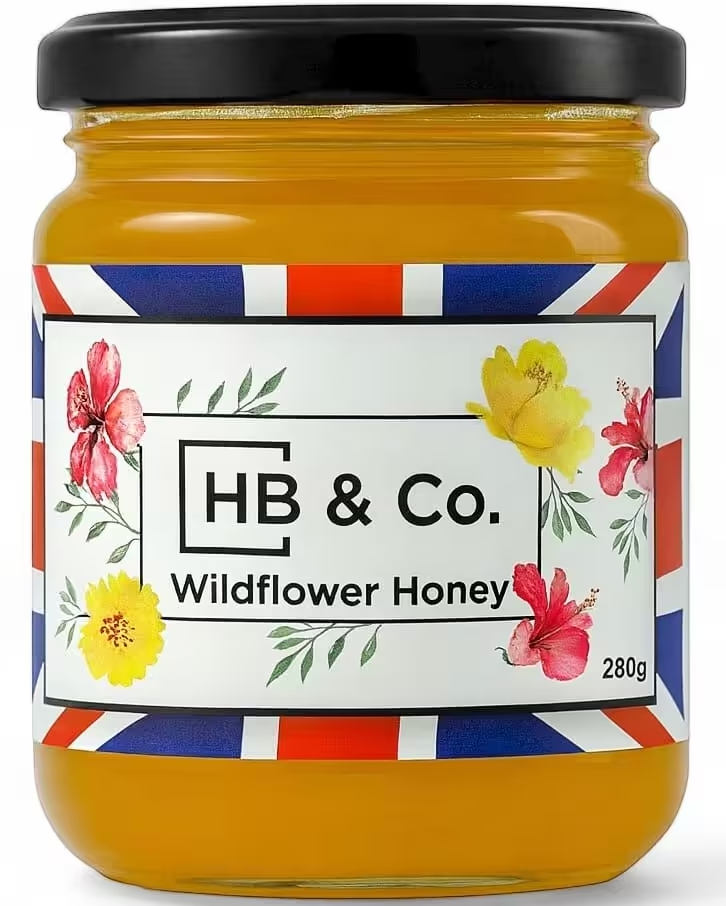
British Wildflower Honey
Raw honey from sunny, flower-rich Midlands meadows, the kind of open ground where mining bees and their nomad cuckoos thrive. Our British honey supplier holds SALSA Certification. 280g. £10.99.
Shop Wildflower Honey
Subscribe & Save 20%
Choose any single honey and save 20% on every delivery, with free UK delivery on every subscription order.
Start a SubscriptionFrequently asked questions
How do I identify a painted nomad bee?
Is the painted nomad bee a wasp?
What does the painted nomad bee parasitise?
Is the painted nomad bee rare?
When is the painted nomad bee active?
Does the painted nomad bee sting?
Why do nomad bees look like wasps?
Does the painted nomad bee make honey?
Related species
Common Mourning Bee
Melecta albifronsRead more → Mining beeTawny Mining Bee
Andrena fulvaRead more → Mining beeAshy Mining Bee
Andrena cinerariaRead more →Sources & references
- Falk, S. Field Guide to the Bees of Great Britain and Ireland, Bloomsbury, with identification notes for Nomada fucata (markings, northward spread, bivoltine flight). Steven Falk Flickr collection.
- NatureSpot and BWARS field accounts for Nomada fucata, the painted nomad bee: habitats and association with Andrena flavipes.
- BWARS (Bees, Wasps & Ants Recording Society). Species account: Nomada fucata Panzer, 1798, host biology and parasitic lifecycle. bwars.com.
- Falk, S. (2024). A revised account of the British nomad bees (Apidae: Nomada). BWARS (taxonomy and host associations under active revision).
- GBIF Secretariat. Nomada fucata Panzer, 1798: distribution and taxonomy (subfamily Nomadinae). gbif.org.

Dragos Nistor
Founder, HoneyBee & Co. · Guest Lecturer, University of Greenwich
HoneyBee & Co. draws on six generations of family beekeeping heritage, with honey from the Nistor family apiaries and from carefully chosen British producers. Our British honey supplier holds SALSA Certification, and we offer a 15% NHS Discount. Every jar is raw, unfiltered and traceable to the hive.