
 English (UK)
  Italiano
  Français
  简体中文
简体中文  한국어
한국어 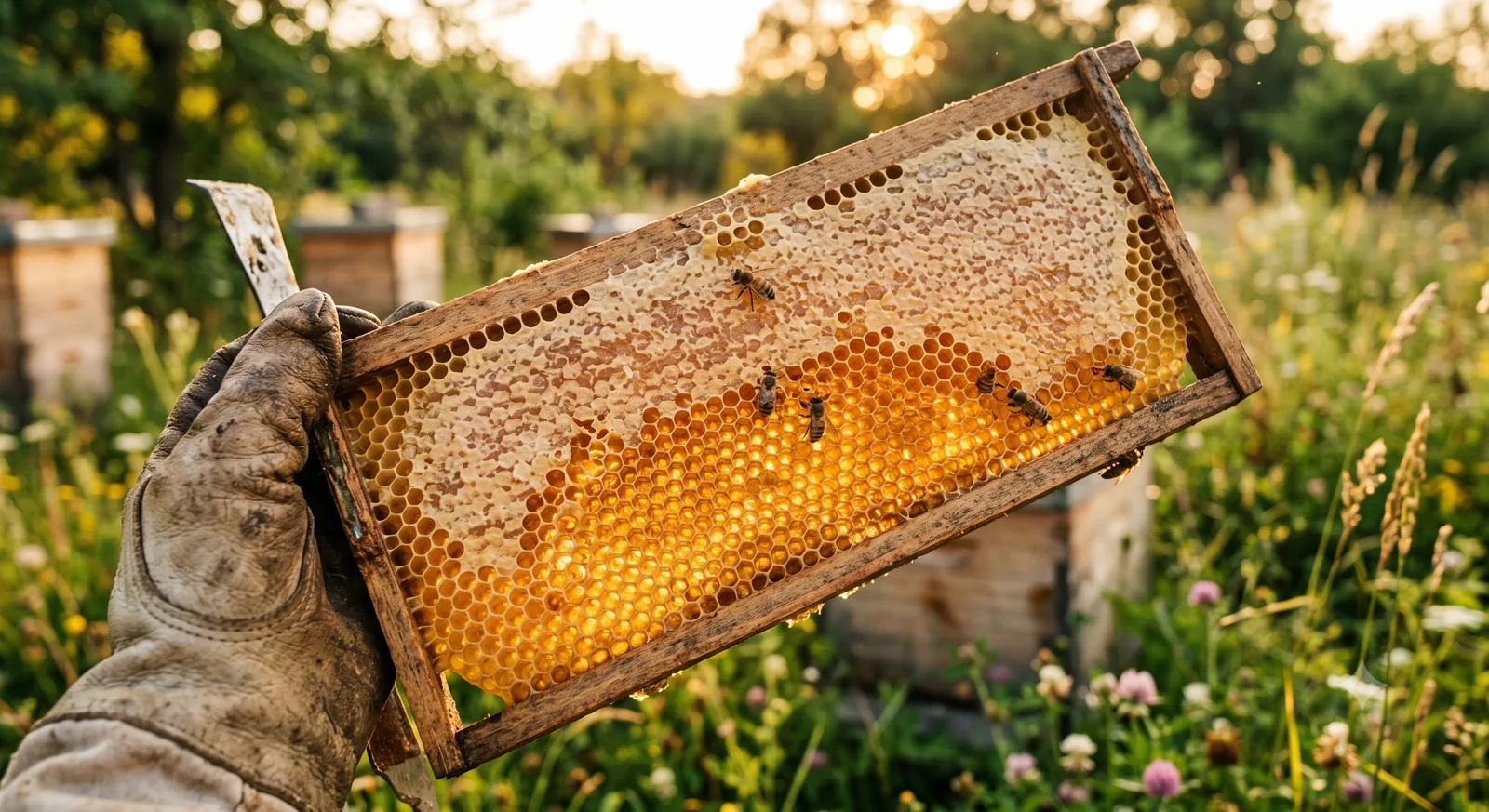
Raw Honey Guides
Comb Honey Explained: What Honeycomb Is, and How to Eat It
Before honey ever reached a jar, it came in the comb. It is the oldest way to eat honey, and once you understand what it actually is, the appeal is obvious.
Comb honey is raw honey still sealed inside the beeswax cells the bees built to hold it. Nothing is spun out, strained, or heated. You eat the honey and the wax together, straight from the frame. It is honey in its most complete, untouched form.
Most honey you buy has been lifted out of the comb, usually by spinning the frames in an extractor, then strained and bottled. Comb honey skips all of that. The beekeeper simply cuts a piece of the sealed comb and that is the product: wax, honey, and the cappings the bees laid down to close each cell. It is about as close to the hive as food gets.
That directness is the whole draw. There is no processing step where anything can be added, diluted, or heated away. With comb, what you see is unarguably what the bees made. For anyone who cares about buying genuinely raw honey rather than the processed kind, the comb is the ultimate proof of authenticity.
How bees actually build the comb
The comb is not a container the bees find. They make it, from their own bodies. Worker bees consume honey and, through wax glands on the underside of the abdomen, secrete tiny flakes of beeswax. They chew these flakes soft and press them into shape, cell by cell, until a sheet of that familiar hexagonal pattern hangs from the frame.
The hexagon is not decoration. It is the most efficient shape in nature for the job: it stores the most honey using the least wax, with no wasted gaps between cells. Building it is expensive work. It takes bees roughly eight units of honey to make one unit of wax, which is part of why comb honey has always been treated as something special rather than everyday.
Why the cells are hexagons
The same amount of wax, three different cell shapes. Only one wastes nothing.
When a comb is full and the honey is ripe, the bees seal each cell with a thin wax capping. That capping is the signal the honey is finished: low enough in moisture to store indefinitely without fermenting. A frame of sealed, capped comb is the bees telling you the honey is ready.
Is honeycomb safe to eat? Yes, wax and all
Comb honey is completely edible, including the wax. Beeswax is food-safe and passes through you harmlessly. Some people chew a piece like natural gum and swallow the lot; others chew out the honey and set the small wad of wax aside once the sweetness is gone. Both are perfectly normal. There is no right way.
One important exception applies to comb exactly as it does to any honey: it should never be given to infants under twelve months, because of the rare risk of infant botulism. That is a firm rule for all raw honey, comb included. We cover the wider safety picture in our guide to honey side effects and who should take care.
On nutrition, keep expectations honest: the honey in the comb carries the same goodness as any raw honey, while the wax itself is largely inert. Comb is a wonderful thing to eat for its flavour, texture and purity, not a supplement.
How to eat comb honey
The simplest way is also the best: cut a small piece and eat it as it is. But comb rewards a little imagination, and the texture is what makes it special. Here is where it genuinely shines.
A quick tip: thinner slices are easier to eat, because there is less wax per bite. On anything warm, the wax softens and all but disappears into the food. On something cold, like a cracker, keep the slice thin and you will barely notice it.
Where can you buy comb honey?
Comb honey has always been a small, seasonal, direct-from-the-beekeeper product. You will find it at farmers' markets, from local beekeepers, and in specialist food shops, usually in spring and summer when the frames are full. It is rarer than jarred honey precisely because giving up a whole frame of comb costs the beekeeper far more than simply extracting the honey from it.
Do we sell comb honey?
Not yet, and we would rather tell you that plainly than list a product we cannot stand behind. Our family has kept bees for six generations, and comb honey is something we care about doing properly rather than rushing to market. It is firmly on our horizon, and if a HoneyBee & Co. comb ever reaches you, it will meet the same standard as everything else we sell.
In the meantime, if what draws you to comb is the promise of honey that is genuinely raw, unheated and untouched, our jarred range gives you exactly that experience today.
Everything that makes comb special, honey that has never been heated above hive temperature, never blended, and traceable to the beekeeper who harvested it, is already true of every jar we make at HoneyBee & Co. The only thing missing is the wax. Our Soft Set honey, gently guided through natural crystallisation, even echoes some of the comb's soft, spreadable texture, while our raw Acacia gives you the pure, liquid sweetness the comb holds inside its cells.
If crystallisation in a raw jar is new to you, it is a feature, not a fault: our guide to why raw honey sets explains the chemistry.
Comb, or the closest thing to it
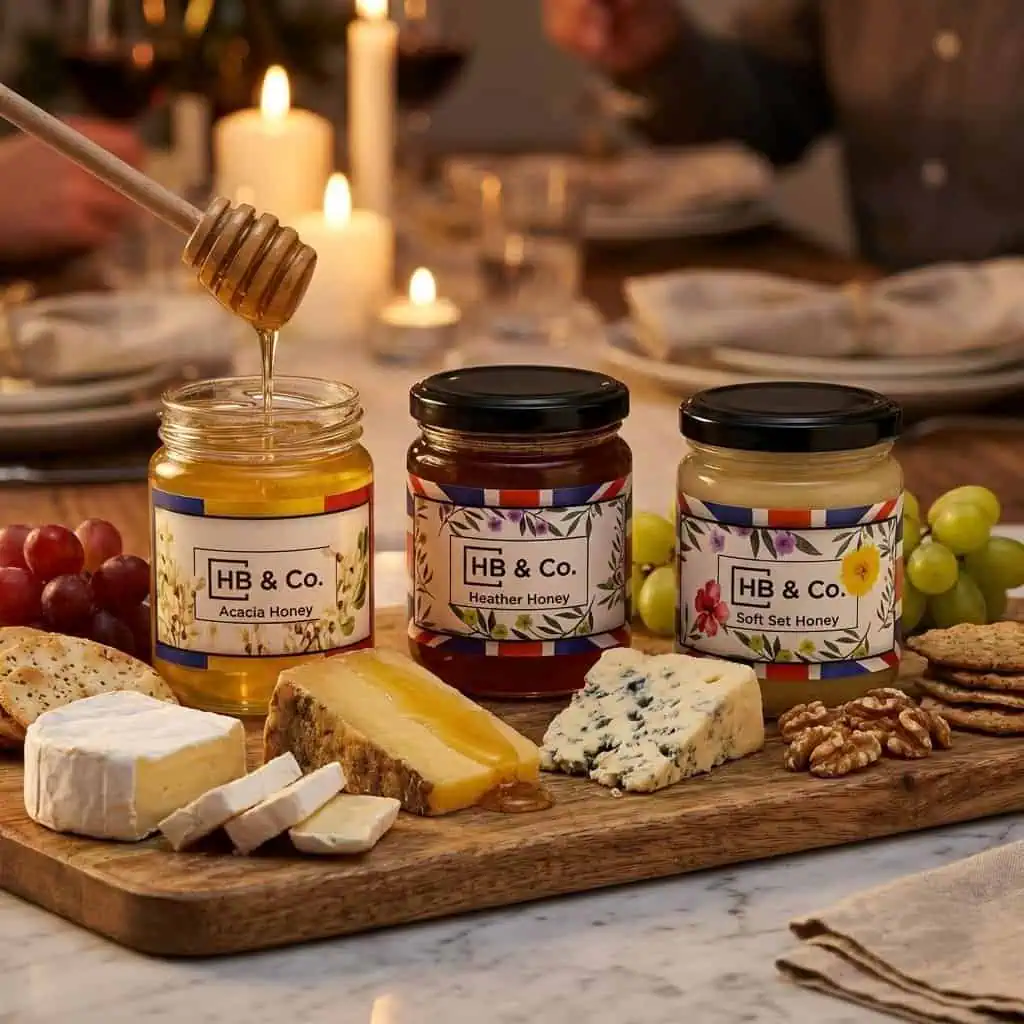
A cheese board is where comb honey traditionally steals the show, and it is also where our raw jarred honey does the same job with none of the seasonal wait. A spoonful of raw Heather or Acacia beside a strong cheese gives you that same sweet-against-savoury contrast.
Our Cheese Board honey selection was built for exactly this, and every honey in it is raw, single-origin and ready now.
The short version
- Comb honey is raw honey still in the beeswax cells the bees built, cut straight from the frame.
- The whole thing is edible, wax included. Chew and swallow, or chew out the honey; both are fine.
- Never give honey of any kind, comb included, to babies under twelve months.
- Best on warm toast, on a cheese board, in hot tea, or straight from the frame.
- We do not sell comb yet, but our raw jarred range gives you the same unheated, untouched honey today.
The closest raw experience, available now
Never heated, never blended, traceable to the beekeeper. The comb without the wait.
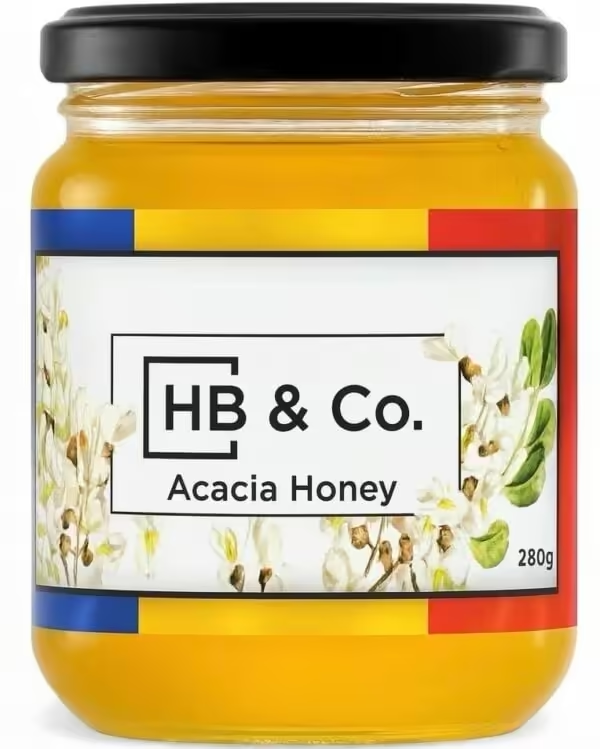 AcaciaPale, liquid, delicate. The pure sweetness comb holds inside.£10.99or £8.79/mo
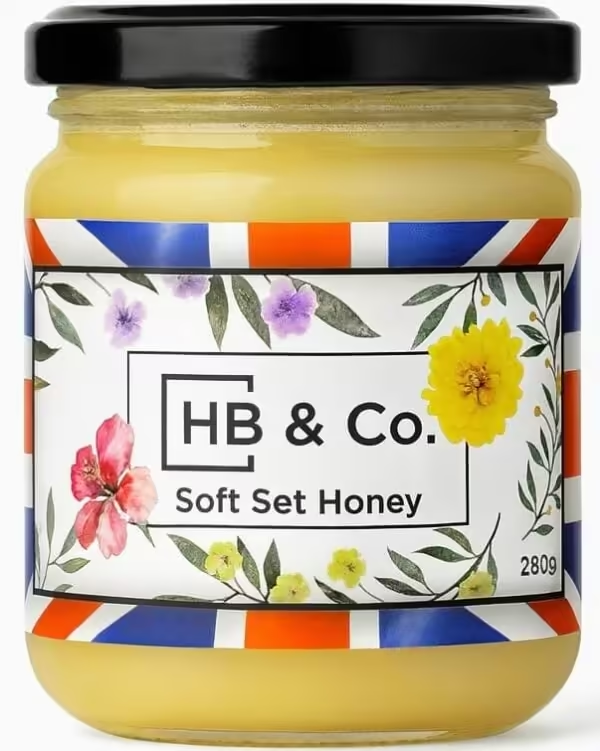 Soft SetCreamy and spreadable. The comb's soft texture, in a jar.£10.99or £8.79/mo
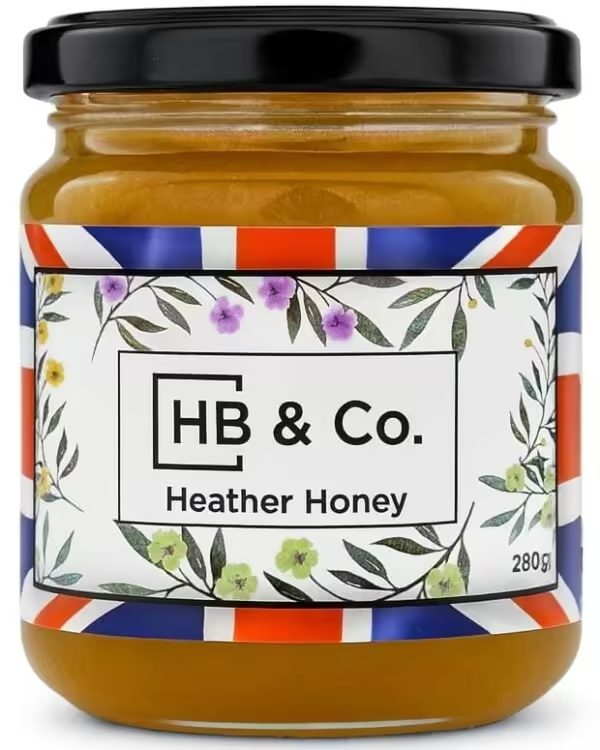 HeatherBold, jelly-textured, one August harvest. A cheese board star.£12.99or £10.39/mo
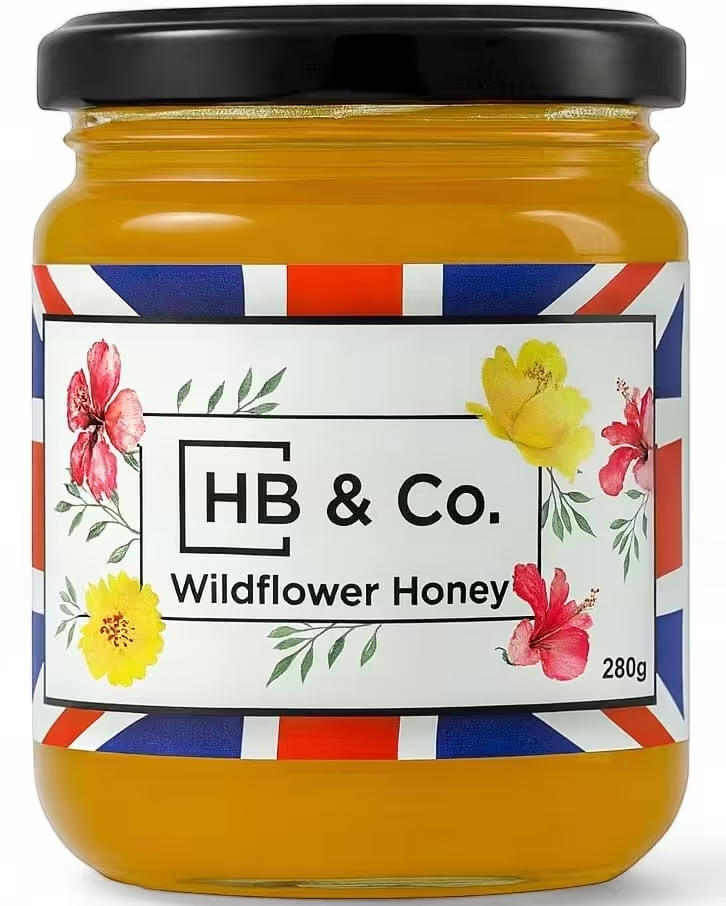 WildflowerMulti-floral, golden, never the same twice.£10.99or £8.79/mo
Common questions about comb honey
Can you eat the wax in comb honey?
Is comb honey better than jarred honey?
Why is comb honey more expensive and harder to find?
How do you store comb honey?
Can babies eat comb honey?
Does HoneyBee & Co. sell comb honey?