
 English (UK)
  Italiano
  Français
  简体中文
简体中文  한국어
한국어 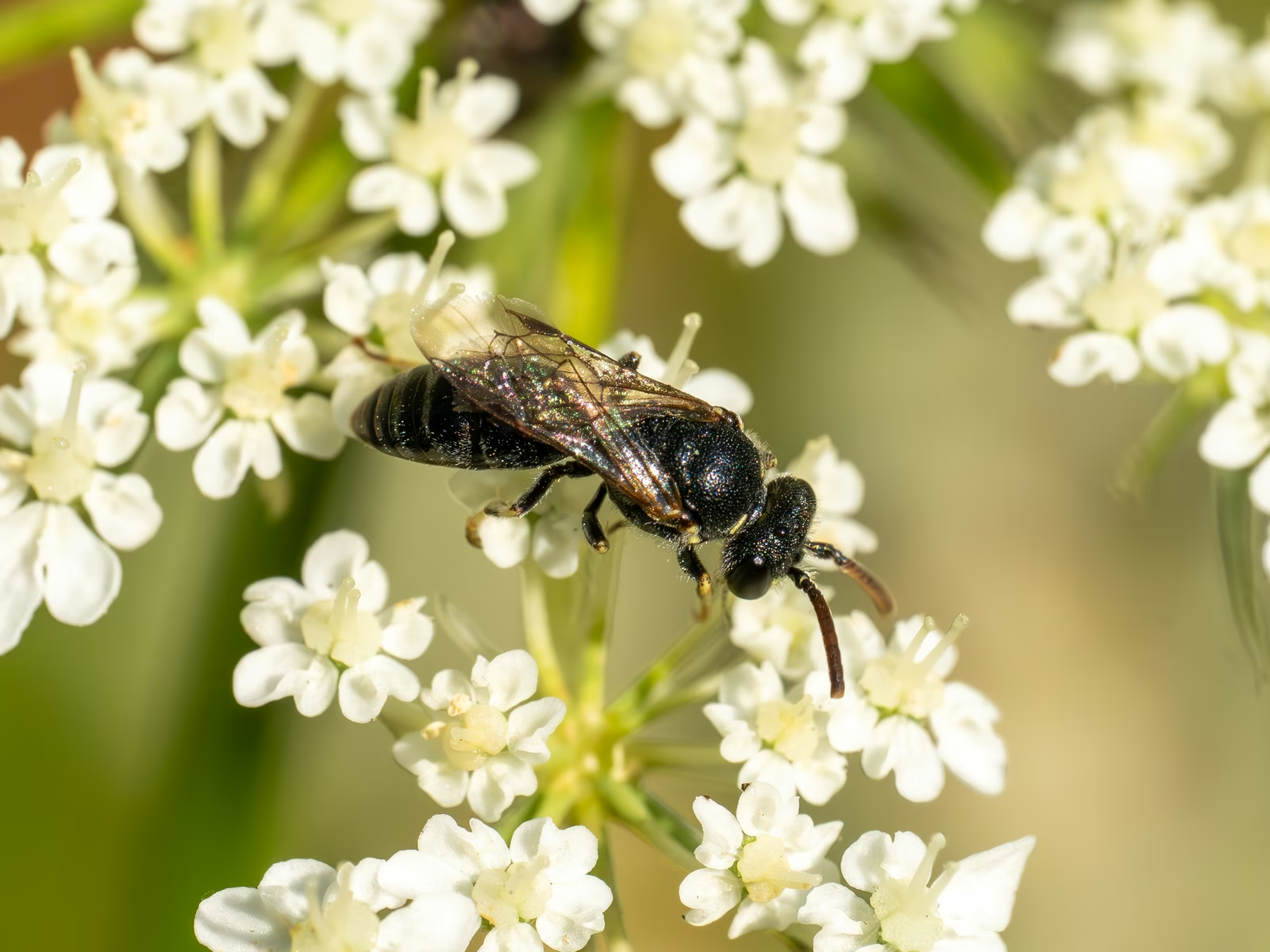
UK Bee Species
Common Yellow-face Bee (Hylaeus communis)
Hylaeus communis Nylander, 1852 · subfamily Hylaeinae · family Colletidae
The common yellow-face bee hardly looks like a bee at all. It is tiny, slim, shiny black and almost hairless, more like a little wasp than the furry bumblebee most people picture, and it wears a small pale yellow mask across its face. Stranger still, it carries no pollen on its body: it swallows it. This is one of our commonest garden bees, and one of the most quietly remarkable. See where it sits among Britain's bees on the UK Native Bee Species Map, or among the world's bees in the World Bee Atlas.
Quick Facts
| Kingdom | Animalia |
| Phylum | Arthropoda |
| Class | Insecta |
| Order | Hymenoptera |
| Family | Colletidae |
| Subfamily | Hylaeinae |
| Genus | Hylaeus |
| Species | Hylaeus communis |
A bee that looks like a wasp
The common yellow-face bee is small, only about 5 to 7 mm long, with a slender, shiny black body that carries almost no hair.[2] Across the face it has a neat pale yellow mask, more extensive in the males, and there are small yellow marks on the legs.[2] With no furry coat and no obvious pollen baskets, it looks far more like a tiny black wasp than a bee, which is exactly why so many people never realise they are looking at one of the commonest bees in their garden.[3]
The bee that swallows its pollen
Here is what makes this group so unusual. Almost all bees carry pollen externally, packed onto brushes of hair on the legs or belly. Yellow-face bees have no such brushes at all.[3] Instead the female swallows both pollen and nectar, carrying them internally in her crop, or honey stomach, and regurgitates the mixture into her nest cells when she gets home.[3] The lack of pollen brushes is the very reason these bees are so smooth and wasp-like. Like all members of the family Colletidae, they then line the cells with a thin, cellophane-like secretion.[3][5]
No pollen brushes, no furry coat. The yellow-face bee swallows its pollen and carries it home inside its body, then brings it back up into the nest.[3]
Nesting in stems and old beetle holes
The common yellow-face bee is an opportunist that does not dig its own nest. Instead the female uses ready-made cavities of the right size: old beetle borings in dead wood, hollow and pithy plant stems such as bramble, and crevices in the mortar of walls.[1] Inside, she builds a row of cellophane-lined cells, stocks each with the regurgitated pollen-and-nectar mix and lays an egg.[1][3] Such nests are watched by their own specialist enemies, including the long-tailed wasp Gasteruption jaculator and the sapygid wasp Sapyga quinquepunctata, both of which have been reared from this bee's cells.[1]
An everyday garden bee
This is one of the commonest yellow-face bees in southern Britain, frequent in gardens, parks, hedgerows and brownfield, though it becomes rare north of Yorkshire.[1][2][4][6] It is a generalist, visiting a wide range of flowers for nectar and pollen, and is often seen on open, accessible blooms such as those of brambles and umbellifers.[1] Adults fly from late May to September, peaking around July.[2] Because it is small, dark and quick, it is easy to overlook, but on a sunny summer day a careful look at garden flowers will often turn one up.
On the wing from late May to September and peaking in July, the common yellow-face bee is a true high-summer garden bee.[2]
Of the woods, and common
The genus name Hylaeus means "of the woods", a nod to these bees' habit of nesting in woody stems and old beetle holes, while communis is simply Latin for "common".[7] The species was described by the Finnish naturalist William Nylander in 1852. Despite the wasp-like look, it is a true bee, one of the yellow-face or masked bees of the family Colletidae.[7]
A bee that swallows its pollen
Most bees carry pollen on brushes of hair, on the legs or under the body. The yellow-face bees do something quite different: lacking any such brush, the female swallows pollen and nectar and carries them home inside her crop, then regurgitates the liquid mixture into the nest.[8] Each cell is sealed inside a thin, waterproof, cellophane-like lining, the hallmark of the plasterer bees, which keeps the watery store safe from damp and mould.[8] Carrying pollen internally is also why these bees are almost hairless, and so easily mistaken for small black wasps.[8]
How to tell it apart
This is a tiny bee, around five to seven millimetres long, black and shining with neat pale-yellow marks on the face, more extensive in the males.[9] It is probably the commonest of Britain's dozen or so yellow-face bees and a frequent visitor to gardens, though sure separation from its near relatives, such as the reed yellow-face bee, rests on fine details of the facial markings and the first abdominal segment.[9]
Why the common yellow-face bee matters
The yellow-face bees are a reminder of how varied bees really are, and of how much pollination is done by small, unshowy species we rarely notice.[3] Being a cavity-nester, this bee depends on exactly the things a tidy garden tends to remove: dead wood, hollow and pithy stems, and undisturbed crevices, alongside a long succession of flowers.[1] Leaving some dead stems standing, letting bramble and other pithy stems remain, putting up a simple bee hotel and keeping flowers through the summer are all easy ways to help this little masked bee and the many other cavity-nesters that share its habits.
Small garden bees keep our flowers pollinated; honeybees turn the same blooms into raw honey. Explore the range in the HoneyBee & Co. shop.
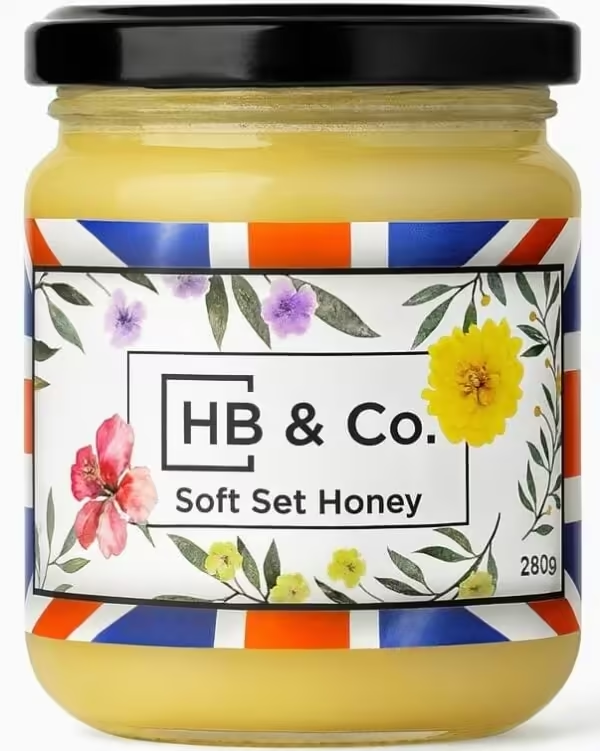
Raw Soft Set Honey
Our smooth, spreadable everyday honey, naturally set to a soft, creamy texture and perfect on toast. Raw and unfiltered from British Midlands flowers. Our British honey supplier holds SALSA Certification. 280g. £10.99.
Shop Soft Set Honey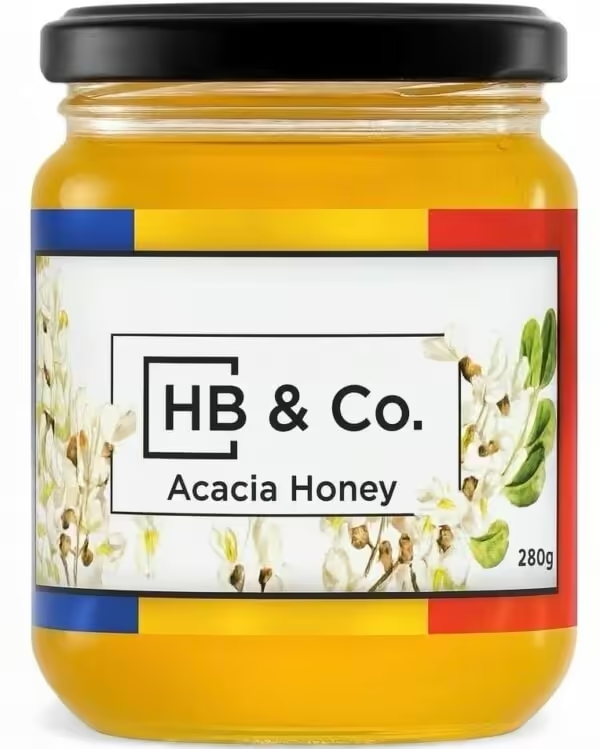
Raw Acacia Honey
Our flagship raw Acacia honey: pale, delicate and slow to crystallise. Drawn from the Nistor family's Transylvanian apiaries. 280g. £10.99.
Shop Acacia
Subscribe & Save 20%
Choose any single honey and save 20% on every delivery, with free UK delivery on every subscription order.
Start a SubscriptionFrequently asked questions
What is the common yellow-face bee?
Is it a bee or a wasp?
How does it carry pollen if it has no pollen brushes?
Where do yellow-face bees nest?
When are common yellow-face bees active?
Do yellow-face bees sting?
Why is it called a masked bee?
Does the common yellow-face bee make honey?
Related species
Ivy Bee
Colletes hederaeRead more → Cavity nesterRed Mason Bee
Osmia bicornisRead more → Cavity nesterPatchwork Leafcutter Bee
Megachile centuncularisRead more →Sources & references
- BWARS (Bees, Wasps & Ants Recording Society). Species account: Hylaeus communis (opportunistic cavity-nester in dead wood, bramble stems and mortar, polylectic, one of the commonest British Hylaeus, nest parasites Gasteruption jaculator and Sapyga quinquepunctata). bwars.com.
- Falk, S. Field Guide to the Bees of Great Britain and Ireland, Bloomsbury, and the Steven Falk Flickr collection: Hylaeus communis (small near-hairless wasp-like form, yellow facial mask, flight late May to September, gardens, separation from H. pectoralis).
- USDA Forest Service, Pollinator of the Month: yellow-faced bees (Hylaeus) lack the pollen brushes of other bees and instead carry pollen and nectar internally in the crop, regurgitating the mix into cellophane-lined nest cells. fs.usda.gov.
- NBN Atlas. Hylaeus communis Nylander, 1852: authority and British distribution records. nbnatlas.org.
- Else, G.R. & Edwards, M. (2018). Handbook of the Bees of the British Isles. Ray Society (taxonomy and the Hylaeinae within the Colletidae).
- Nieto, A. et al. (2014). European Red List of Bees. IUCN / Publications Office of the European Union (conservation status context).
- Nylander, W. (1852), original description. Etymology: Greek Hylaeus, "of the woods" (for the woody nesting habit); Latin communis, "common" (NBN Atlas).
- USDA Forest Service, "Yellow-faced bee", and the biology of Hylaeus: pollen carried internally in the crop and regurgitated into cellophane-lined cells, with no external pollen brush.
- BWARS species account and Falk, S. (2015): identification by the facial markings and first tergite, status as the commonest British Hylaeus, nesting and distribution. bwars.com.

Dragos Nistor
Founder, HoneyBee & Co. · Guest Lecturer, University of Greenwich
HoneyBee & Co. draws on six generations of family beekeeping heritage, with honey from the Nistor family apiaries and from carefully chosen British producers. Our British honey supplier holds SALSA Certification, and we offer a 15% NHS Discount. Every jar is raw, unfiltered and traceable to the hive.