Raw · Transylvanian · Single Origin
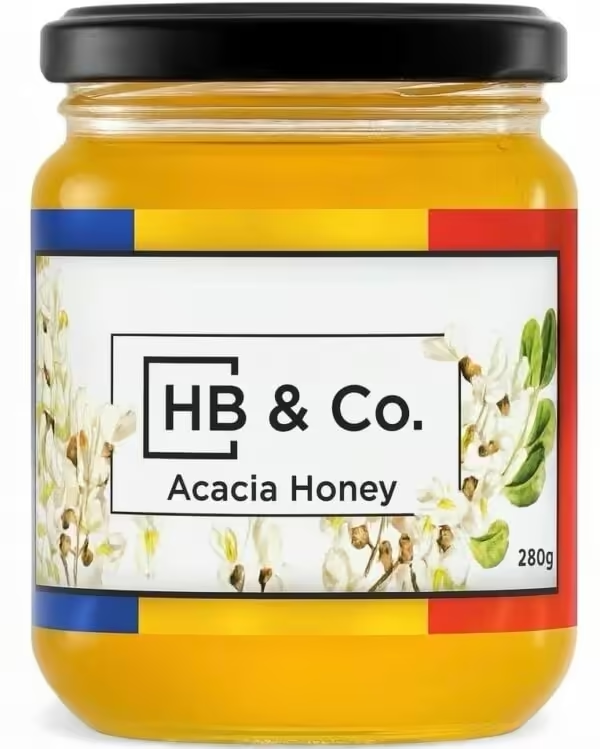
Acacia Honey
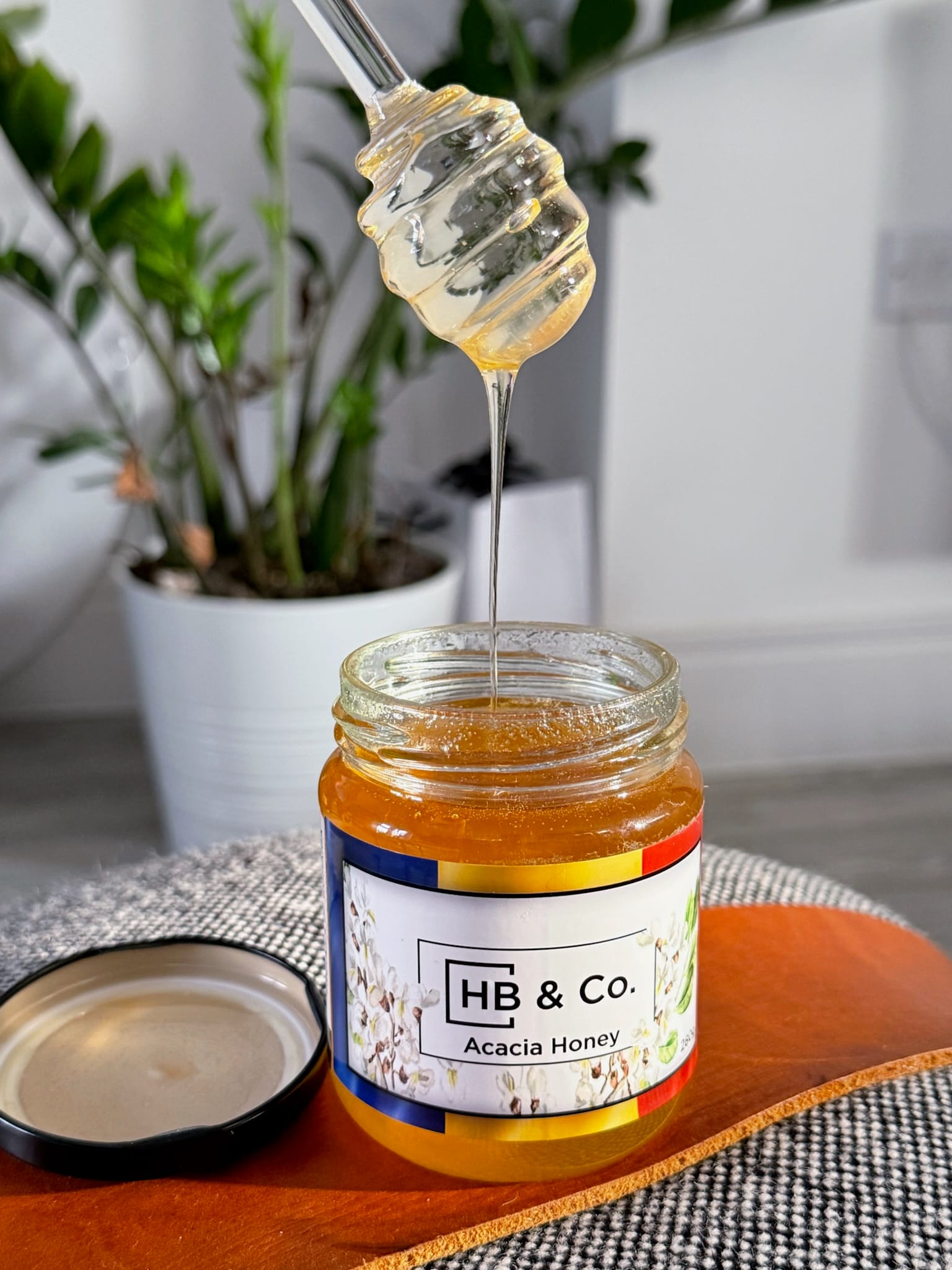
Raw, unpasteurised Acacia Honey from our family apiaries in Transylvania. Naturally liquid, delicately floral, with a smooth sweetness and subtle vanilla note. The mildest and most versatile honey in our range.
Tasting Notes
The Purest, Mildest Honey You Will Ever Taste
Raw acacia honey is the world's most popular monofloral honey for good reason. Its exceptionally delicate flavour, pale golden colour, and smooth liquid texture make it the perfect everyday honey. Mild enough for children, refined enough for the most discerning palate.
Flavour
Delicate, clean, and lightly floral with a subtle vanilla sweetness and almost no bitterness
Aroma
Light, fresh acacia blossom with a faint sweetness and clean floral finish
Texture
Naturally liquid and smooth. The slowest to crystallise of any honey in our range, thanks to its high fructose content
Colour
Pale gold, almost water-clear. One of the lightest honeys produced anywhere in the world
Why does acacia honey stay liquid?
High Fructose Content. Naturally Slow to Crystallise.
Acacia honey has an unusually high fructose-to-glucose ratio compared to most other honey varieties. Glucose crystallises readily; fructose does not. This means raw acacia honey can remain liquid for 12 months or more without any heating or processing. If your acacia honey has crystallised, it is still perfectly good. Place the closed jar in warm water (no hotter than 40°C) for 15 to 20 minutes to restore it to its natural liquid state. Learn more about why raw honey crystallises.
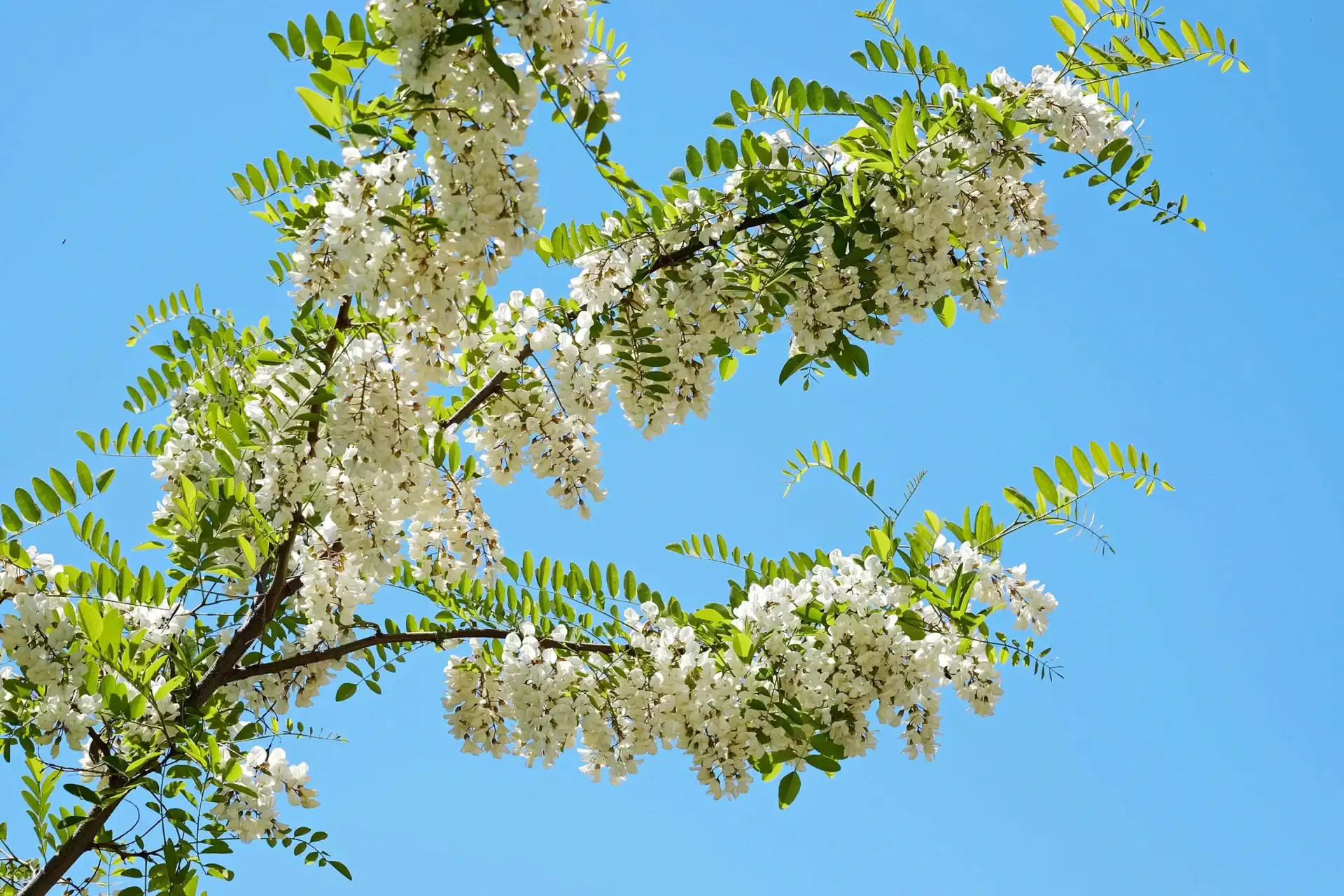
The Species Behind the Jar
What Makes This Real Acacia Honey
Despite its name, acacia honey does not come from a true acacia tree. It is produced from the nectar of Robinia pseudoacacia, widely known as the false acacia or black locust. This matters more than it sounds, and it is where many cheap supermarket "acacia blossom" products get caught out.
The tree
Native to the Appalachian region of North America, Robinia pseudoacacia was introduced to Europe in the 17th century and is now most cultivated across Romania, Hungary, and Bulgaria — which produce the bulk of the world's real acacia honey. Its fragrant white blossoms appear for just two to three weeks in late May and early June.
The name
True acacias (genus Vachellia and Senegalia) are mostly sub-tropical Australian and African plants that do not produce the honey known as "acacia" in Europe. The confusion is linguistic, not botanical. In France it is miel d'acacia. In Italy, miele di robinia. In the United States, black locust honey. All describe the same thing: honey from Robinia pseudoacacia.
Why it matters for what you buy
Because Robinia blooms for such a short window, genuine monofloral acacia honey is rarer than most labels suggest. Many supermarket jars labelled "acacia blossom" are blends with only a fraction of true Robinia nectar, padded out with cheaper multifloral honeys. Our acacia is harvested exclusively during the Robinia bloom from our family's Transylvanian forests. Monofloral. Single-origin. Never blended.
Learn more in our in-depth article: The Acacia Tree — Everything You Need to Know About Robinia Pseudoacacia →
Origin & Provenance
A Brief June Harvest. One Transylvanian Landscape.
Our Acacia Honey is harvested from a single short window each year, usually the final week of May into the first two weeks of June, when the Robinia trees around our family apiaries in Transylvania, Romania come into bloom. When the flowers finish, the acacia harvest is complete for another year.
The Transylvanian countryside is characterised by clean air, unpolluted soils, and vast unmanaged forest far from industrial agriculture. The Robinia pseudoacacia trees bloom here in dense stands that produce nectar of exceptional purity and concentration. The result is honey with a clarity and delicacy that blended, commodity acacia honey cannot replicate.
We cold-extract and bottle the honey without heating, filtering, or blending. Every enzyme, antioxidant, and flavour compound the bees produced reaches the jar intact. For the full context of our heritage, read HoneyBee & Co.: From Transylvanian Apiaries to Three Consecutive Vogue Features or visit our About page.
June
Single annual 2–3 week harvest window
280g
Glass jar. Eco-conscious packaging.
Raw
Never heated above hive temperature. Never pasteurised.
15–19%
Optimal moisture content for flavour and stability
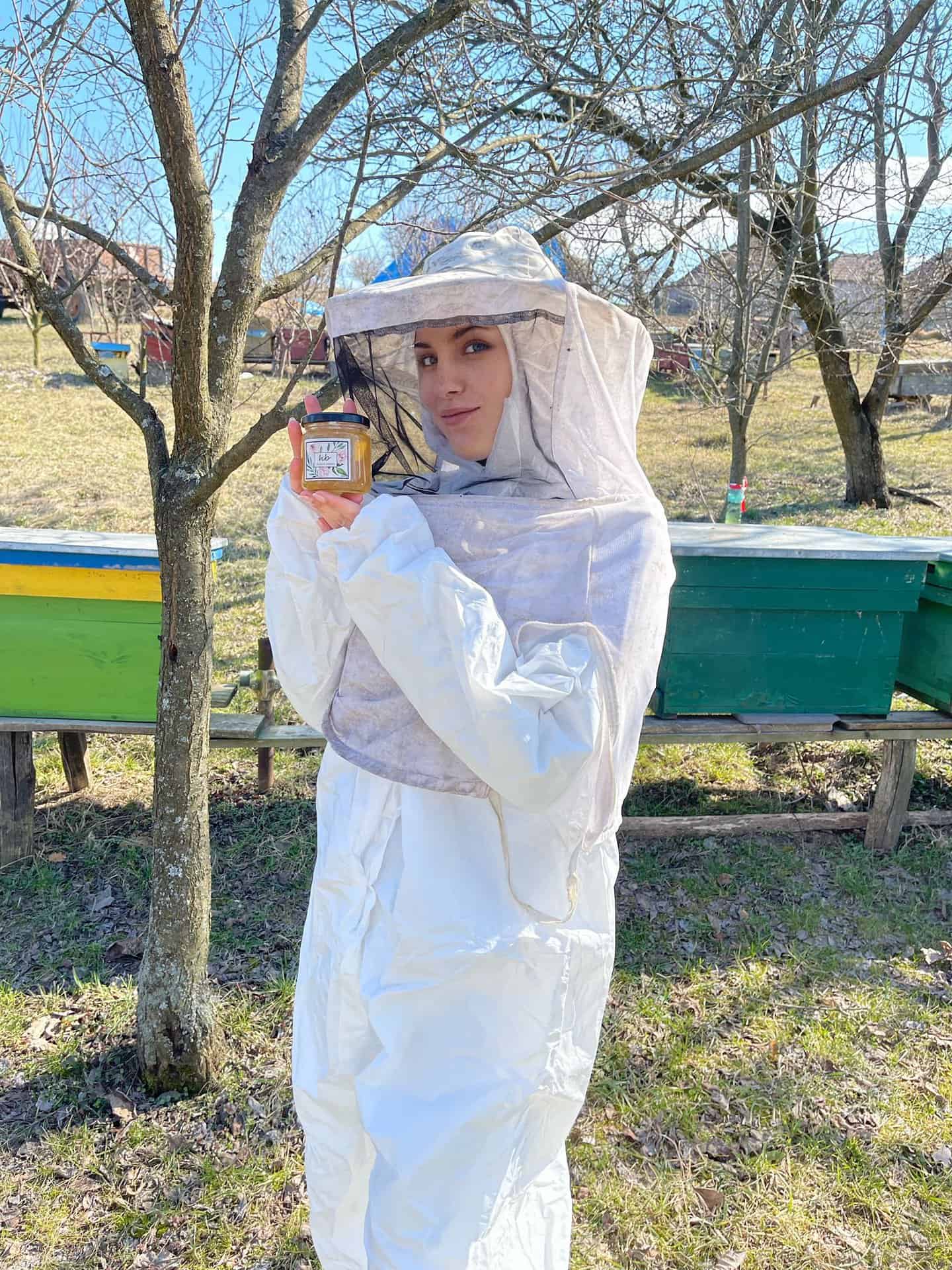
Velena at our family farm in Transylvania. Where every jar of our Acacia Honey begins.
Buy More, Save More
Stock Up or Discover the Range
Save 5% and get free UK delivery on every multi-jar bundle.
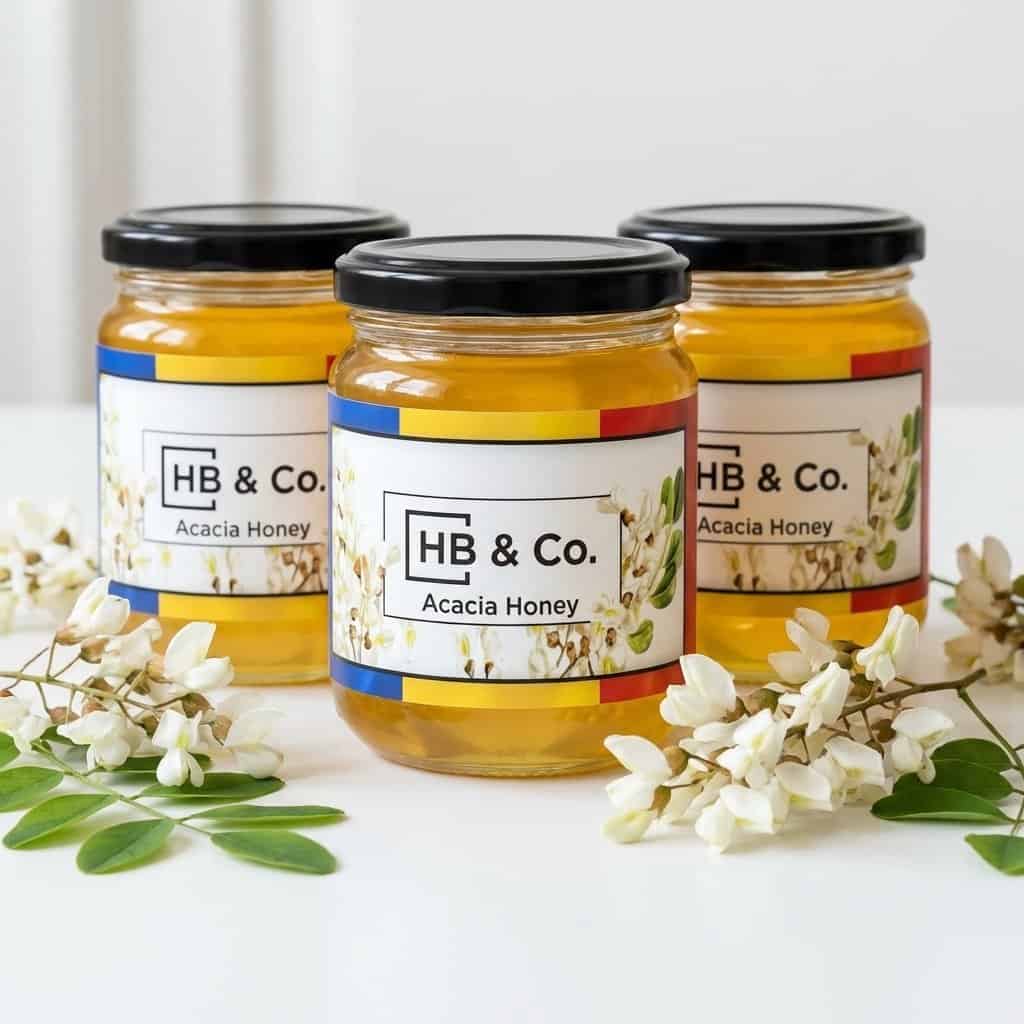
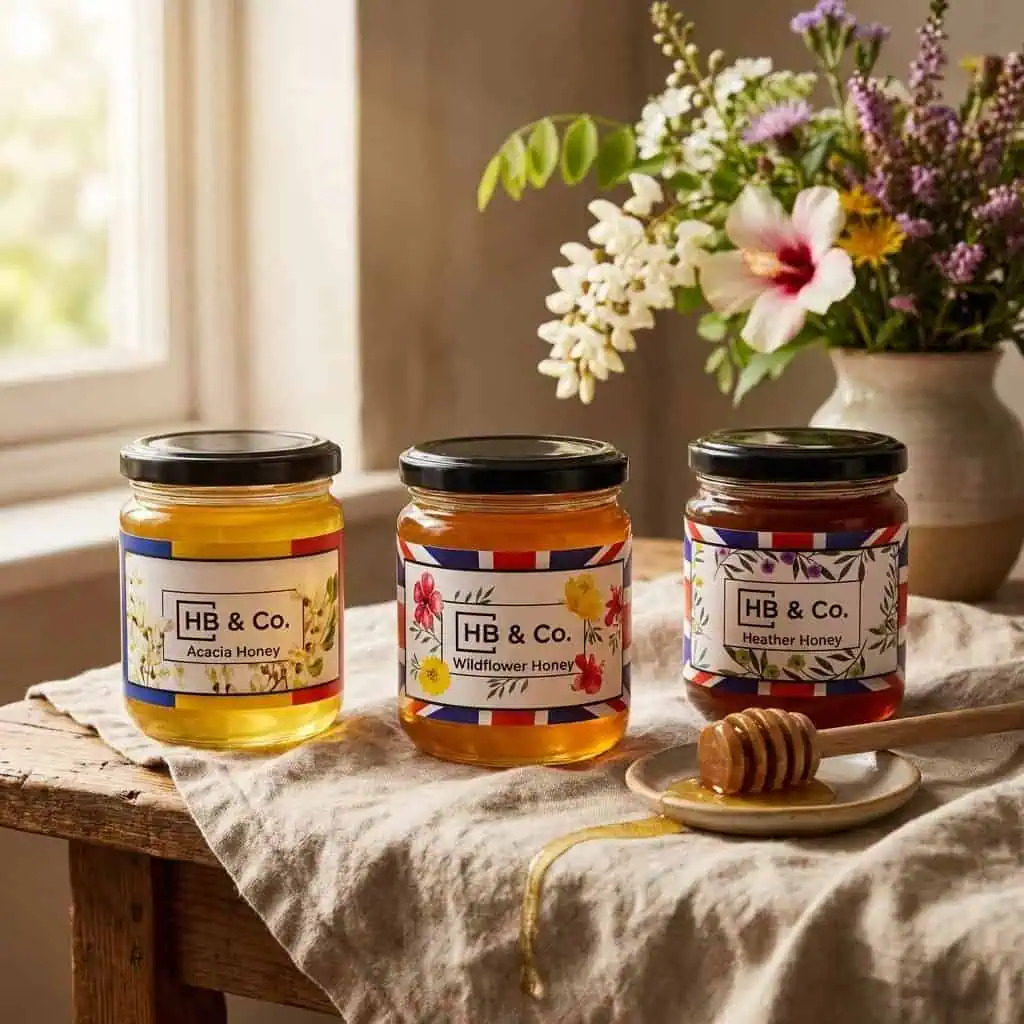
Looking for something different? Browse all 20 honey gift sets →
Why Acacia Honey
The World's Most Versatile Honey Variety
Acacia honey outsells every other variety in Europe for good reason. Its mild flavour works with almost anything, its liquid texture makes it easy to use, and its natural purity makes it the first choice for tea, breakfast, and everyday enjoyment. See how it compares to the other types of raw honey in our range.
Stays Liquid Longer
Thanks to its high fructose content, raw acacia honey stays liquid for months without any heating. No microwave, no warm water bath. Just pour and enjoy. The most convenient raw honey for everyday kitchen use.
Low Glycaemic Index
Acacia honey has a glycaemic index of roughly 32 — one of the lowest of any honey variety, due to its high fructose and low glucose content. It is widely regarded as the most suitable honey for those monitoring blood glucose, although it remains a sugar and should still be consumed mindfully.
Least Allergenic Variety
Acacia flowers produce relatively low amounts of pollen compared to most other flowering plants. This makes acacia honey one of the least allergenic honey varieties, suitable for the widest range of people including those with mild seasonal sensitivities.
Natural Properties
The Natural Properties of Raw Acacia Honey
Raw acacia honey retains its full natural composition because it is never heated above hive temperature. The properties below are present only in raw, unprocessed honey. Pasteurisation destroys them. For a fuller look, see our guide to the benefits and uses of acacia honey or read about the myths and misconceptions about raw honey.
Natural Antioxidants
Raw acacia honey contains flavonoids and polyphenols that act as natural antioxidants. Though lighter in concentration than darker honeys such as heather, raw acacia retains significantly more antioxidants than pasteurised acacia, which has been heat-treated in a way that destroys many heat-sensitive compounds.
Antibacterial Activity
Like all raw honey, acacia honey contains hydrogen peroxide-producing enzymes (glucose oxidase) that give it natural antibacterial properties. These enzymes are present only in raw honey and are destroyed by pasteurisation. Raw acacia honey is traditionally used to soothe mild sore throats.
Low Pollen Count
Acacia honey contains roughly one-fifth the pollen load of most multifloral honeys. This makes it one of the easiest honey varieties to tolerate for those with mild sensitivities, while still delivering the full raw-honey enzyme and antibacterial profile.
Soothing Properties
Acacia honey is traditionally used to soothe sore throats and mild coughs. Its smooth, coating texture and natural antibacterial compounds make it particularly effective when dissolved in warm (not boiling) water with lemon.
The information above is for educational purposes only and does not constitute medical advice. Raw honey is not recommended for children under 12 months. If you have a medical condition or are pregnant, consult your GP before adding raw honey to your diet.
How to Use It
Six Ways to Enjoy Transylvanian Acacia Honey
Acacia honey's mild, clean flavour makes it the most versatile honey in our range. It enhances rather than dominates. It sweetens without overpowering. It works in almost everything.
Tea and Hot Drinks
The first choice honey for sweetening tea. Its delicate flavour does not compete with herbal blends, green teas, or Earl Grey. Add it when your drink has cooled slightly to preserve the natural enzymes.
Best with: Earl Grey, green tea, chamomilePorridge and Breakfast
Drizzle over porridge, yoghurt, granola, or fresh fruit. Its liquid consistency makes it easy to pour in precise amounts. It dissolves instantly and coats evenly without the stickiness of darker honeys.
Best with: oats, yoghurt, berriesToast and Bread
Spread directly on warm toast, crumpets, or crusty bread. The gentle sweetness and smooth texture make it one of the most satisfying simple breakfasts. Works particularly well with butter as a spread base.
Best with: sourdough, crumpets, butterSoft Cheeses
Acacia honey pairs beautifully with soft cheeses including ricotta, brie, camembert, and fresh goat's cheese. Its mild sweetness complements without competing. Drizzle over the cheese just before serving.
Best with: ricotta, brie, goat's cheeseBaking and Cooking
A clean substitute for refined sugar in baking. Its neutral flavour does not alter the taste of the final product, making it ideal for recipes where you want natural sweetness without honey flavour competing. See our guide on using honey as a sweetener.
Best with: sponges, dressings, glazesStraight from the Jar
Take a small spoonful and let the honey coat your tongue. Notice the clean, light sweetness with a faint floral note. There is no bitterness, no astringency, no sharpness. This is what pure, raw acacia honey is supposed to taste like.
Best as: a daily ritualFounder & Provenance
Founded by a Six-Generation Beekeeper

Dragos Nistor, Founder
Six-Generation Beekeeper · Guest Lecturer, University of Greenwich · LinkedIn Top Voice 2024
"I founded HoneyBee & Co. with one rule: sell only honey I would be proud to put on my own family's table. Our Acacia Honey comes from the same Transylvanian apiaries my father and grandfather tended. The same forests. The descendants of the same bees. Six generations of knowing exactly what pure acacia honey should taste like, and refusing to sell anything else."
Featured in Vogue's Summer Hot List across three consecutive editions in summer 2024. SALSA-certified British supply chain. NHS 15% Discount available. GS1-barcoded for full traceability on every jar.
Frequently Asked Questions
Everything You Need to Know About Our Acacia Honey
What is acacia honey and what tree does it come from?+
Acacia honey is a monofloral honey produced by bees foraging on the blossoms of the Robinia pseudoacacia tree, commonly called false acacia or black locust. Despite the name, it is not a true acacia. Most of the world's genuine acacia honey is produced in Romania, Hungary, and Bulgaria. Ours comes from our own family apiaries in Transylvania. Read the full botanical context in our article about the acacia tree.
Is this real acacia honey or a blend?+
Real, monofloral, and single-origin. Our acacia is harvested exclusively during the two- to three-week Robinia bloom in late May and early June from our family's Transylvanian apiaries. We never blend it with cheaper multifloral honeys to stretch supply. Many supermarket "acacia blossom" products are blends; ours is not.
When is your acacia honey harvested?+
Each year, in a short window during late May and early June, when the Robinia trees in our Transylvanian forests come into flower. The bloom lasts just two to three weeks. When the flowers finish, the harvest is complete for another year.
How long will a 280g jar last me?+
Most households finish a 280g jar in four to six weeks of regular everyday use (a spoon in tea or on breakfast each morning). If you use it primarily for tea or occasional cooking, a jar can easily last two to three months. For heavier daily use, our 3-jar stock-up or a monthly subscription is usually better value.
Will my acacia honey crystallise?+
Acacia is the slowest-crystallising honey variety in our range and can stay liquid for 12 months or more, thanks to its high fructose-to-glucose ratio. If it does eventually crystallise, that is a sign of authenticity, not spoilage. Place the closed jar in warm water no hotter than 40°C for 15 to 20 minutes to restore it to a liquid state.
What's the difference between this and cheaper acacia honey?+
Ours is raw, cold-extracted, never heated above hive temperature, never blended, and sourced from a single family apiary we have worked with for six generations. Most supermarket acacia honey is pasteurised, ultra-filtered, and often a blend of multiple countries with only a fraction of real Robinia nectar. The processing destroys the natural enzymes and antioxidants that make raw acacia honey nutritionally distinct.
Is this the same honey as in your bundles and subscription?+
Yes. Identical honey, identical jar. The only differences are the price and the commitment. A single jar is £10.99. A 3-jar stock-up bundle saves 5%. An ongoing subscription saves 20% on every delivery. Choose whichever suits how much acacia you actually get through.
Is acacia honey good for diabetics?+
Acacia honey has a glycaemic index of roughly 32, which is one of the lowest of any honey variety. Some people with diabetes choose it as a more moderate alternative to refined sugar. However, honey remains a sugar and will affect blood glucose. If you are managing diabetes, consult your GP or dietitian before making dietary changes. We make no medical claims about this product.
Is acacia honey safe for children?+
Raw honey, including acacia, should never be given to children under 12 months due to the rare risk of infant botulism. For children over one year, acacia is the most child-friendly honey in our range because of its mild flavour and absence of bitterness. Many parents use it as a natural alternative to refined sugar at breakfast.
How should I store my jar of acacia honey?+
Room temperature, cool and dry, away from direct sunlight. Keep the lid firmly closed. Do not refrigerate — cold accelerates crystallisation unnecessarily. Raw honey has an almost indefinite shelf life when stored correctly.