

 English (UK)
  Italiano
  Français
  简体中文
简体中文  한국어
한국어 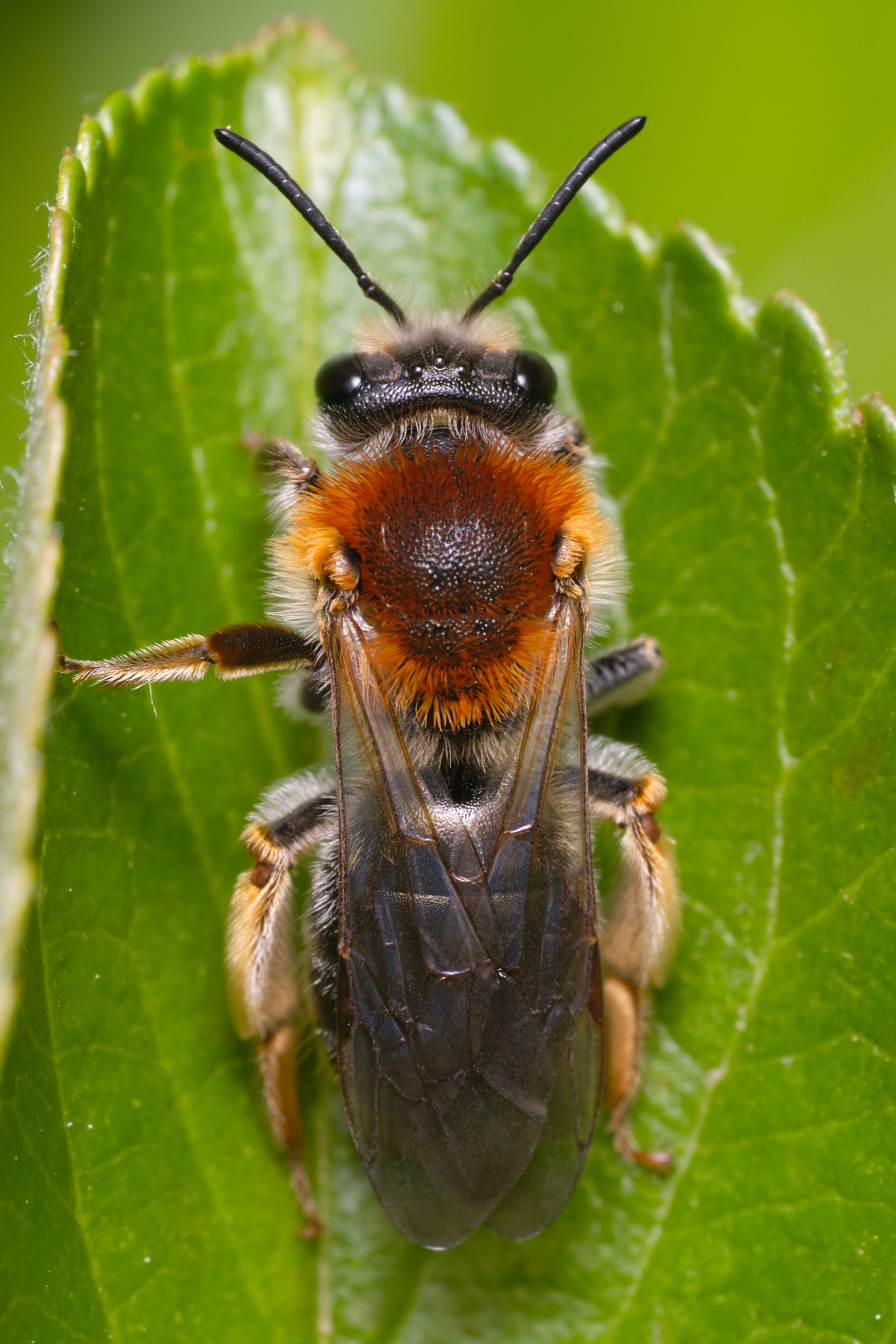 Andrena haemorrhoa, the orange-tailed mining bee. Lukas Large, CC BY-SA 2.0, via Wikimedia Commons.
UK Bee Species
Orange-tailed Mining Bee (Andrena haemorrhoa)
Andrena haemorrhoa (Fabricius, 1781) · subgenus Taeniandrena
The orange-tailed mining bee is one of the most distinctive and widespread spring mining bees in Britain. A neat, foxy-thoraxed bee with a bright orange tip to its tail, it is an early pollinator of hawthorn, fruit blossom and garden flowers, and a familiar sight nesting in lawns and sunny banks from March onwards. See where it sits among Britain's bees on the UK Native Bee Species Map, or among the world's bees in the World Bee Atlas.
Quick Facts
| Kingdom | Animalia |
| Phylum | Arthropoda |
| Class | Insecta |
| Order | Hymenoptera |
| Family | Andrenidae |
| Genus | Andrena |
| Subgenus | Taeniandrena |
| Species | Andrena haemorrhoa |
A foxy thorax and an orange tail
Mining bees of the genus Andrena are solitary, ground-nesting bees: each female digs her own burrow and stocks a series of cells with pollen and nectar.[1] The orange-tailed mining bee is a medium-sized, distinctive member of the group, with a forewing of 7 to 10 mm.[3] Fresh females are unmistakable, with a neat pile of short, rich-red hairs on top of the thorax, a dull slaty-black abdomen that is almost bare except for a tuft of bright orange hairs at the very tip, and yellow hind legs.[2] Males have a rich brown thorax, buff-brown hairs at the tail tip, orange hind legs and a buff face with no black hairs.[2]
The bright orange hairs at the very end of the abdomen give this bee both its English name and its quickest field mark. On a fresh female the foxy-red thorax and orange tail together make it one of the easier spring mining bees to recognise.[2]
Where it lives and what it visits
The orange-tailed mining bee is widespread and locally common across the UK, and across most of Europe it can be one of the most abundant bees where it occurs, absent only from the most extreme habitats.[3][5] Females nest in light soils, favouring south-facing banks, short swards and the margins of paths and tracks, with nesting often in loose, dispersed groups.[3] It is widely polylectic, visiting a broad range of spring flowers but with a particular liking for the rose family, including hawthorn, and it may be an important pollinator of orchard crops such as apple.[3]
Lifecycle
This is a spring bee, on the wing from around March into June, with males typically emerging a little earlier than females and sometimes gathering around flowering gorse and other shrubs.[3] After mating, each female excavates her own nest, provisions the cells with pollen and nectar, and seals them; the next generation develops underground through the year and emerges the following spring.[1] Like all mining bees it is solitary, with no queen, no workers and no shared nest to defend, which makes it gentle and all but incapable of stinging through skin.
Accounts vary on how sociable its nesting is. Some describe the orange-tailed mining bee nesting singly or in small groups, while others record loose, dispersed aggregations in suitable banks and lawns. In practice it sits between the two: solitary in that every female works her own burrow, but often clustered where the ground is right.[2][4]
Why it matters
As an abundant, early-emerging generalist, the orange-tailed mining bee is a workhorse pollinator of spring blossom, including hawthorn and fruit trees. Its dense, mixed activity also feeds a small web of dependent insects, from its cuckoo bee to the predators of both. Leaving sunny banks and lawn edges a little wild, and growing early flowers such as willows, dandelions and blossoming shrubs, supports this bee and the spring pollination it provides.
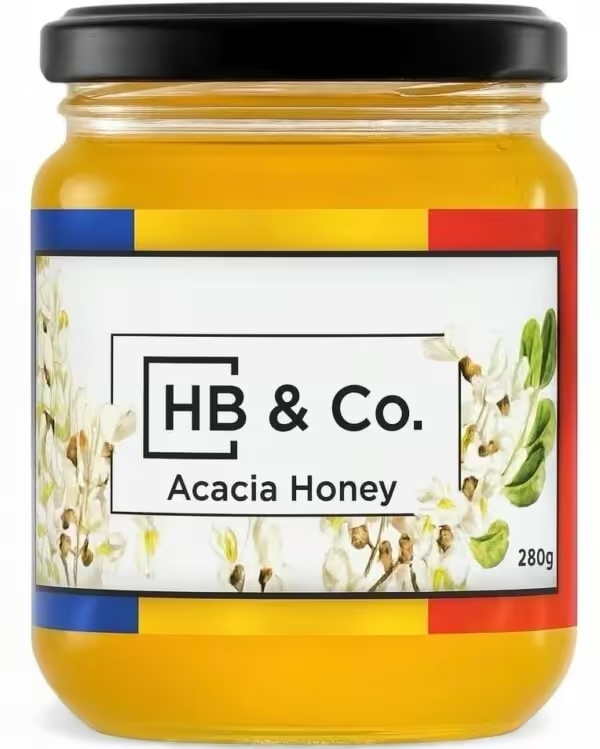
Raw Acacia Honey
Our flagship raw Acacia honey: pale, delicate and slow to crystallise. Six generations of family beekeeping heritage in every 280g jar. £10.99.
Shop Acacia Honey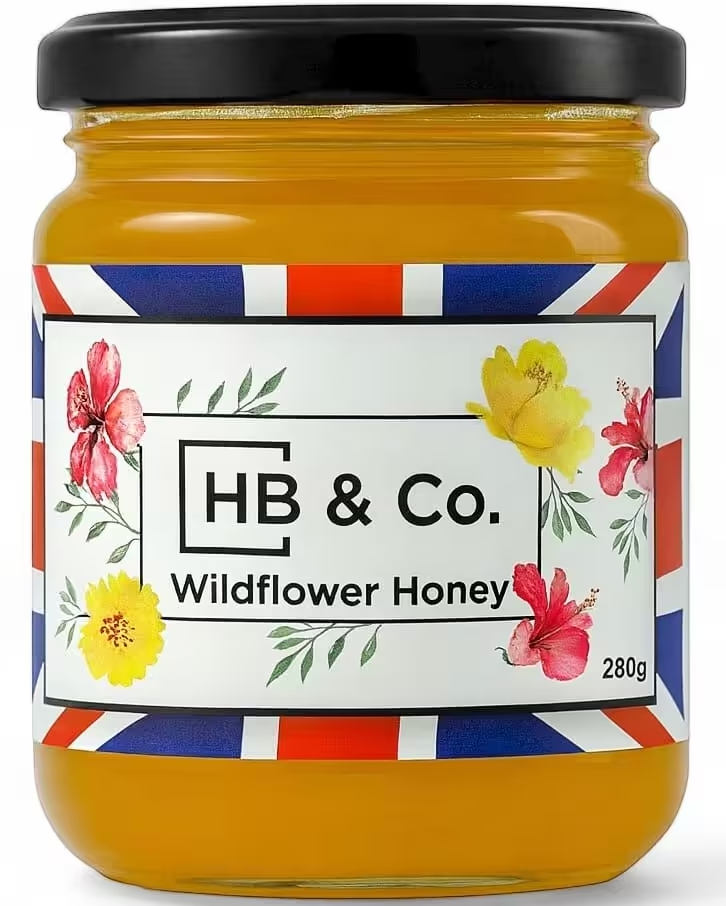
British Wildflower Honey
Raw honey from Midlands hedgerows and meadows, the hawthorn and blossom an orange-tailed mining bee works in spring. Our British honey supplier holds SALSA Certification. 280g. £10.99.
Shop Wildflower Honey
Subscribe & Save 20%
Choose any single honey and save 20% on every delivery, with free UK delivery on every subscription order.
Start a SubscriptionFrequently asked questions
How do I identify an orange-tailed mining bee?
What is a mining bee?
When is the orange-tailed mining bee active?
Where does it nest?
What flowers does it visit?
What is the fork-jawed nomad bee?
Do orange-tailed mining bees sting?
Does the orange-tailed mining bee make honey?
Related species
Yellow-legged Mining Bee
Andrena flavipesRead more → Mining beeTawny Mining Bee
Andrena fulvaRead more → Mining beeAshy Mining Bee
Andrena cinerariaRead more →Sources & references
- BWARS (Bees, Wasps & Ants Recording Society). Species account: Andrena haemorrhoa (Fabricius, 1781), nesting and biology. bwars.com.
- Falk, S. Field Guide to the Bees of Great Britain and Ireland, Bloomsbury, notes for Andrena haemorrhoa (female and male characters, rugose propodeum, nesting, host). Steven Falk Flickr collection.
- Crowley, L.M. et al. (2023). The genome sequence of the Orange-tailed Mining Bee, Andrena haemorrhoa (Fabricius, 1781). Wellcome Open Research 8:392 (size, polylecty, Rosaceae and apple, nesting, distribution).
- Buzz About Bees. Orange-tailed mining bee (Andrena haemorrhoa): nesting habit and the cuckoo Nomada ruficornis. buzzaboutbees.net.
- NBN Atlas / GBIF Secretariat. Andrena haemorrhoa (Fabricius, 1781): taxonomy and UK distribution. nbnatlas.org; gbif.org.

Dragos Nistor
Founder, HoneyBee & Co. · Guest Lecturer, University of Greenwich
HoneyBee & Co. draws on six generations of family beekeeping heritage, with honey from the Nistor family apiaries and from carefully chosen British producers. Our British honey supplier holds SALSA Certification, and we offer a 15% NHS Discount. Every jar is raw, unfiltered and traceable to the hive.