 English (UK)
  Italiano
  Français
  简体中文
简体中文  한국어
한국어 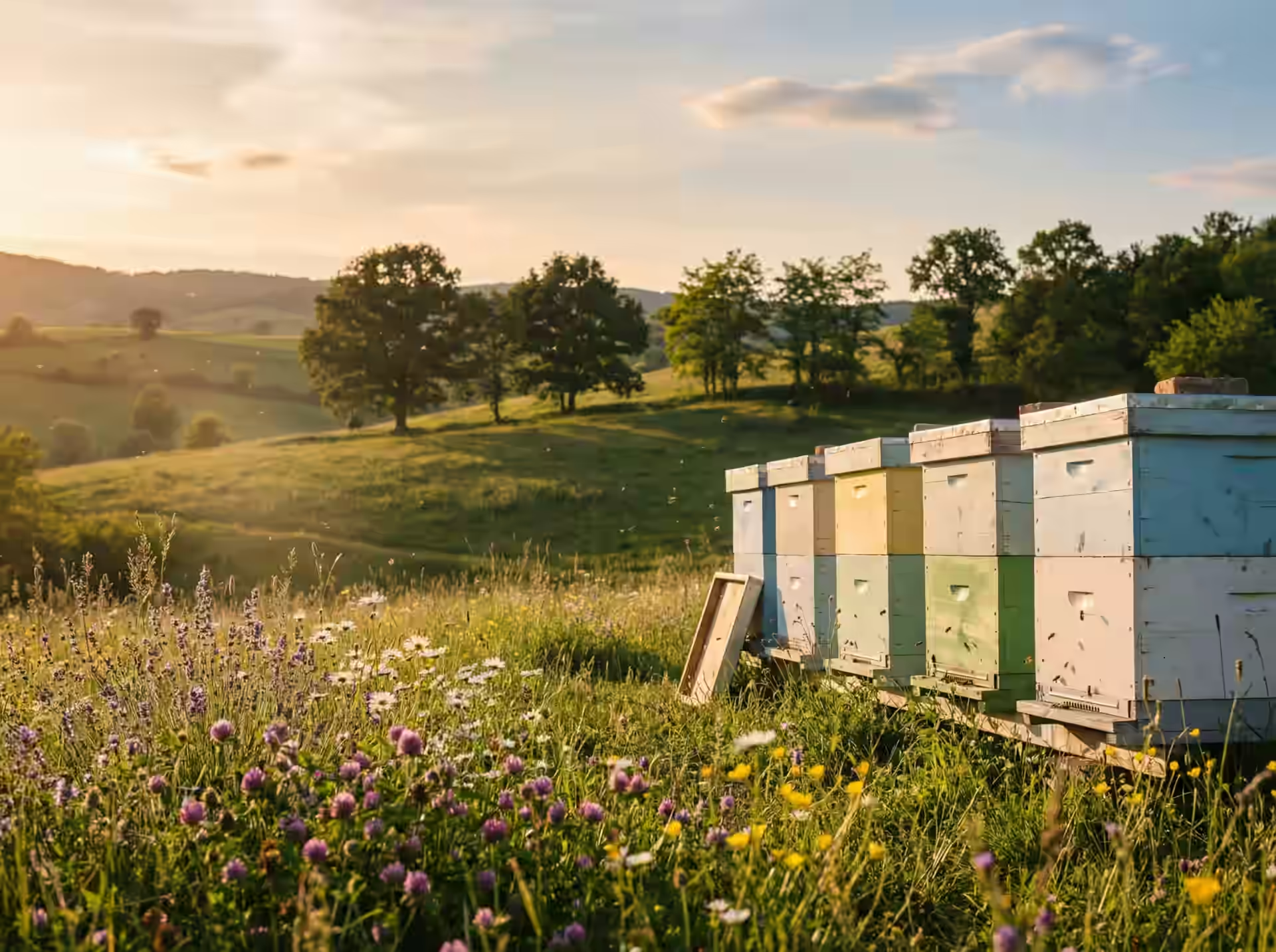
Honey, Honestly
Wild Honey vs Farmed Honey: What the Labels Really Mean
Search this question and you will mostly find wild honey sellers explaining why wild honey is better. We keep bees in managed hives, so here is the other side, argued fairly and without the health claims.
We should declare our interest up front: our honey is farmed honey. It comes from managed hives, some worked by our own family in Transylvania, some from a British bee farm we buy from. So you are entitled to read what follows with a raised eyebrow, and we would rather earn your trust by being straight than by pretending to be neutral.
What follows examines the common claims one at a time. Some are wrong. One is largely right, and we will say so plainly, including where it applies to parts of our own industry.
Rated by 55 customers on Google
Two words, two very different things
Wild honey
Honey taken from colonies living without a beekeeper: in hollow trees, rock cavities or roof spaces. It is harvested by hand, usually by cutting comb out of the nest. Genuine wild harvesting still happens at scale in parts of Asia, Africa and South America. In Britain it is essentially not a commercial supply chain at all.
Farmed honey
Honey from colonies a beekeeper manages in hives, which is nearly all honey sold anywhere. It covers a vast range, from a family with thirty hives beside a meadow to industrial operations moving thousands of colonies between crops. Lumping those together is where most of the confusion starts.
That last point matters more than any other in this debate. "Farmed" is not one thing. The gap between a small apiary sited on wildflower meadow and a migratory operation trucking hives across a continent is far wider than the gap between the small apiary and a feral colony in a tree. Judging honey by whether a human owns the box is the wrong test.
Five claims, examined
Honey's composition comes from the nectar the bees collected and how the honey was handled afterwards. It does not come from whether a beekeeper owned the cavity. A managed colony foraging a wildflower meadow and a feral colony in a tree beside that same meadow produce substantially the same honey.
What genuinely changes the composition is processing: heating and ultra-filtration strip pollen and degrade enzymes. That is a raw-versus-processed distinction, not a wild-versus-farmed one. A raw honey from a managed hive keeps far more of its character than a pasteurised "wild" honey does. Our guide to raw versus regular honey covers the difference that actually matters.
Almost never. Wild honey bee colonies do exist in Britain, in tree cavities and old buildings, but they are relatively scarce and there is no commercial harvesting of them. Cutting honey out of feral nests is not a British food supply chain, and destroying wild colonies to take their stores would be difficult to defend anyway.
So when a British product leans on the word "wild", it is usually describing the forage rather than the colony: bees working uncultivated flowers, which is a fair and useful thing to say. It just is not the same as wild-harvested honey. Read the small print and see which one is actually being claimed.
The premise is sound but the reason is misattributed. Varied, uncultivated forage does produce more complex and more variable honey, and honey from a single crop is more uniform. That is real.
But that is about where the hive stands, not about who owns it. A managed hive on a flower-rich meadow gives you exactly that variability, which is why our Wildflower honey differs from harvest to harvest rather than tasting identical every year. If variability is what you want, look at the forage described on the label, not the word "wild". Our guide to the different types of raw honey is a good place to start.
This one favours managed beekeeping, so treat it sceptically coming from us, but it is straightforwardly checkable. A beekeeper harvests when the bees have capped the comb, which signals the honey has ripened to a low enough moisture content to store without fermenting. Wild-harvested comb is often cut before that point, and honey above roughly twenty percent moisture can ferment.
Managed harvesting also means clean extraction rather than crushed comb full of wax, brood and debris, plus colony health monitoring and, in the UK, the option of independent food-safety auditing. Our British honey supplier holds SALSA Certification, which is exactly this kind of independent check.
Beekeepers do feed sugar syrup, and there is nothing sinister about it in itself: it is how a colony is kept alive through winter or after a poor season, once the honey has been taken off. Done properly, feeding happens outside the honey flow and does not end up in the jar you buy.
Where the criticism bites is at the industrial end, where feeding during a flow can pad yields. That is a real practice and a real problem. It is also, incidentally, honey adulteration, and it is one of the reasons traceability to a named apiary matters so much more than the word "wild" on a label.
Traceable, raw, and honest about where it comes from
Named origin on every jar. Never heated above hive temperature, never blended.
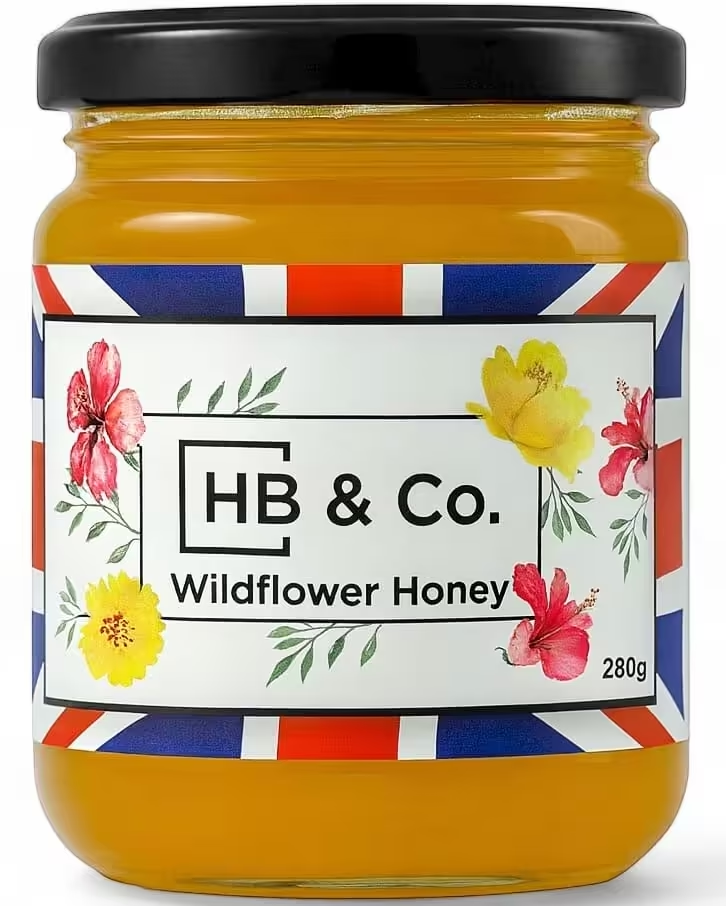 WildflowerMixed meadow forage, so it differs from harvest to harvest.£10.99or £8.79/mo
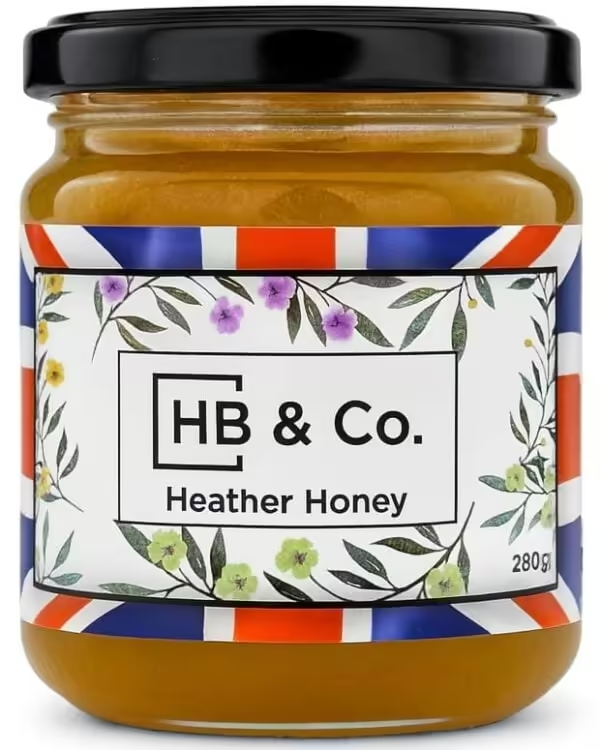 HeatherYorkshire moorland, one annual harvest. Wild forage, managed hives.£12.99or £10.39/mo
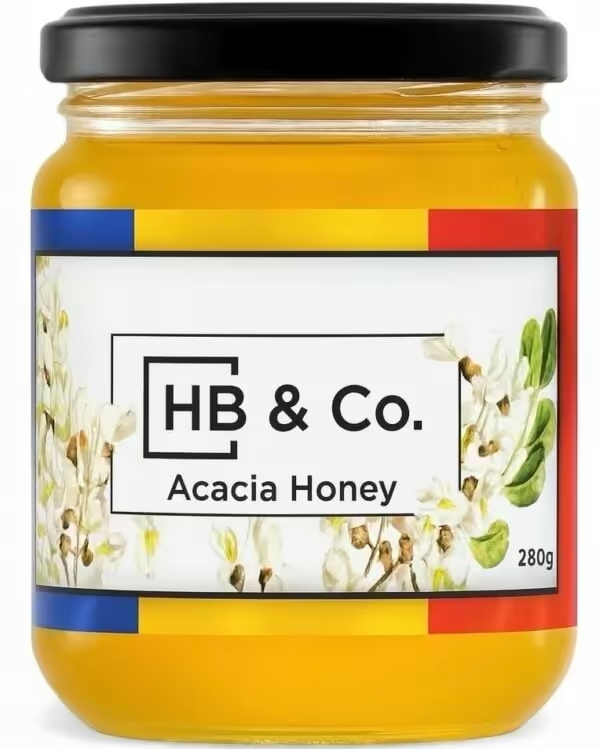 AcaciaTransylvanian acacia woodland. Pale, delicate, slow to crystallise.£10.99or £8.79/mo
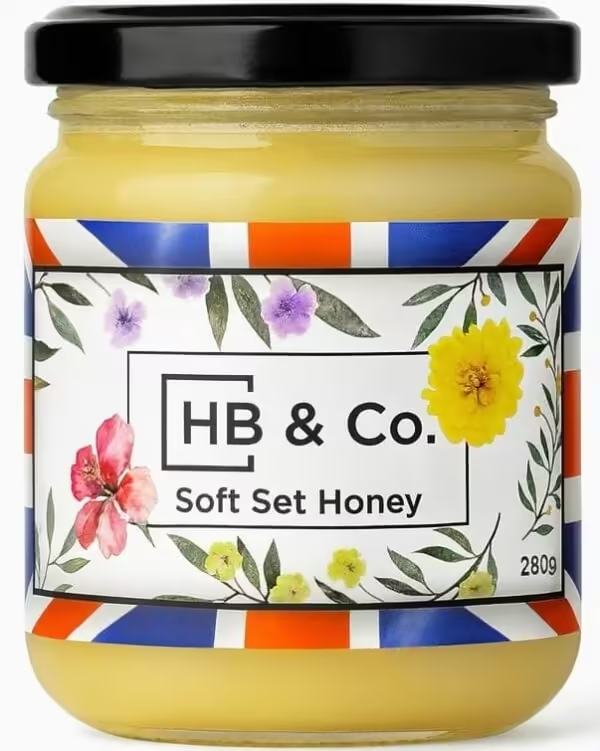 Soft SetMidlands pasture. Unpasteurised and minimally strained.£10.99or £8.79/mo
What the critics get right
It would be easy to stop there, having answered the claims in a way that mostly suits us. But the case against commercial beekeeping contains real substance, and pretending otherwise would be exactly the kind of marketing this article is arguing against.
Fair criticisms of industrial beekeeping
- Monoculture placement. Colonies parked on a single flowering crop get an unvaried diet, which is poorer for bee nutrition than mixed forage. It also produces flatter, more uniform honey.
- Migratory pollination stress. Moving thousands of hives long distances between crops is demanding on colonies and helps spread disease between them.
- Yield-first management. Pushing colonies for maximum output, including feeding during a flow, is real and it is the practice that most deserves the criticism aimed loosely at all "farmed" honey.
- Scale hides origin. Bulk blending across many producers and countries is what makes so much supermarket honey untraceable, and untraceable honey is where adulteration lives.
None of that is an argument for wild honey. It is an argument for knowing which beekeeper produced your jar, which is a question industrial honey cannot answer and a small apiary can.
How we actually work
Our hives sit on mixed forage rather than a single crop: acacia woodland, sunflower fields bordered by wild margins, and lime blossom in Transylvania, and flower-rich meadows and moorland for our British honeys. Colonies stay put through their season rather than being trucked between crops.
Feeding happens after the harvest is taken off, never during a flow, so what goes in the jar is what the bees made from nectar. Every jar names its origin, and our British honey supplier holds SALSA Certification. You can read the whole story on our about page, and more about the British side on our British honey page.
What actually determines the honey in your jar
If "wild versus farmed" is the wrong question, here is the right one, in the order that matters.
Was it heated or ultra-filtered?
This changes the honey more than anything else on this list. Pasteurised, ultra-filtered honey has lost its pollen and much of its enzyme activity. Raw honey has not.
Can you trace it to a named origin?
A country, a region, ideally an apiary. If a label cannot tell you where the honey came from, nothing else it claims can be checked.
What were the bees foraging?
Mixed wild forage gives complexity and variation between harvests. A single crop gives uniformity. Neither is wrong, but they are different products.
Was it harvested ripe?
Capped, properly ripened honey keeps. Under-ripe, high-moisture honey ferments. This is where careful managed harvesting genuinely wins.
Is there independent oversight?
A recognised food-safety standard is not marketing language. It means somebody other than the seller has checked the process.
The short version
- Wild honey comes from unmanaged colonies. In Britain it is essentially not sold; "wild" on a British label usually describes the forage, not the colony.
- Nutrition and character come from the nectar and the processing, not from whether a beekeeper owns the hive.
- Raw versus heated is the distinction that actually changes what is in the jar.
- The criticisms of industrial beekeeping are fair: monoculture, migratory stress, yield-first management and untraceable blending are real problems.
- The answer to those problems is a named, traceable beekeeper, not the word "wild".
- Honey is a food, not a medicine. Be wary of any seller, wild or farmed, who tells you otherwise.
Know exactly whose bees made it
Six honeys, each from a named landscape, each raw and cold-extracted. Free UK delivery on orders of three jars or more.
Browse the shopCommon questions
Is wild honey better than farmed honey?
Can you buy real wild honey in the UK?
Are farmed bees fed sugar?
Does wild honey taste different?
Is your honey wild or farmed?
Which is safer to eat?