

 English (UK)
  Italiano
  Français
  简体中文
简体中文  한국어
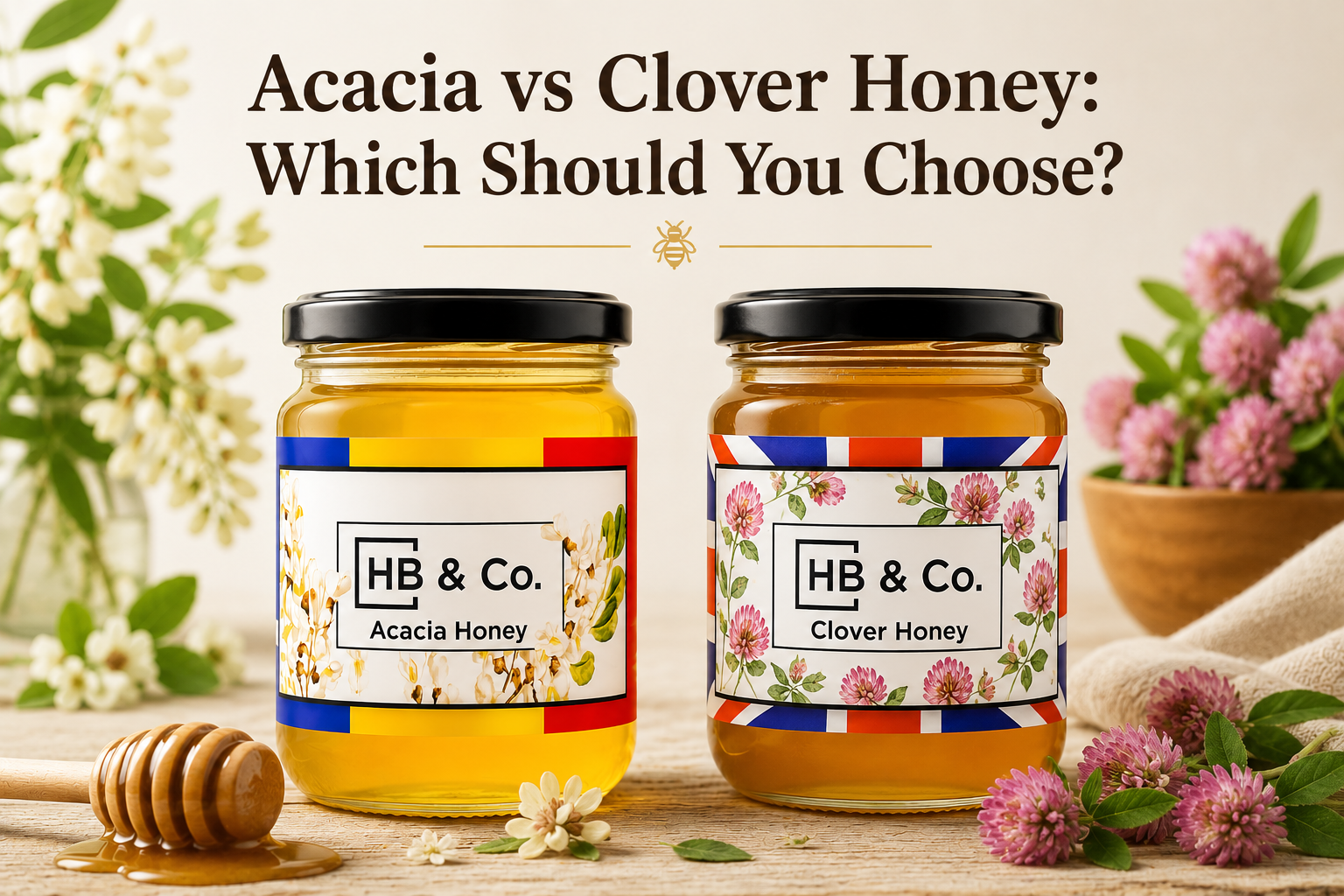
한국어 Clover is the honey most of us grew up with: the mild, all-purpose jar on every supermarket shelf. Acacia is that same light, easy character taken up a level, rarer, more delicate, single-origin, and slower to crystallise. If you like clover, acacia is the natural step up.
Key takeaways
- Clover is the world's most common honey; acacia is a rarer, more refined single-origin.
- Both are mild and light, but acacia is more delicate, with a subtle vanilla note.
- Acacia is slow to crystallise thanks to its high fructose; clover tends to set faster.
- Much supermarket clover honey is blended from several origins; our acacia is monofloral and traceable.
- If you use clover as your everyday honey, acacia does the same job with more character.
The short answer, side by side
These are the two honeys people most often reach for when they want something mild. The table shows where the everyday standard and the refined single-origin part company.
| Feature | Acacia (ours) | Clover (typical) |
|---|---|---|
| Source | Robinia pseudoacacia, black locust blossom | White clover |
| Colour | Water-pale to light gold | Light amber to creamy |
| Flavour | Delicate, clean, subtle vanilla | Mild, sweet, lightly floral |
| Texture | Smooth and pourable | Often sets to a softer, cloudier honey |
| Crystallisation | Slow to crystallise | Crystallises relatively quickly |
| Typical sourcing | Single-origin, monofloral, traceable | Frequently blended from multiple origins |
| Best for | Tea, coffee, drizzling, delicate bakes | General everyday sweetening |
| Price (280g) | £10.99 | Varies, usually lower |
Clover honey: the everyday standard
Clover honey is the honey most people picture when they think of honey. Made from white clover, it is light, mild, and pleasantly sweet, which makes it endlessly versatile for tea, toast, baking, and general sweetening. It is the most widely produced honey in the world, and for good reason: it is dependable and it goes with almost anything.
The trade-off is character and traceability. Because clover grows almost everywhere and is produced at huge scale, much of the clover honey on supermarket shelves is blended from several countries and heavily processed for a consistent, shelf-stable product. That is fine for an everyday squeeze, but it is not the same as a honey you can trace to one flower and one place.

Acacia honey: the refined single-origin
Acacia honey lives in the same mild, light territory as clover, but with more finesse. It comes from the blossom of the black locust tree, and it is one of the palest honeys produced anywhere, almost water-clear, with a clean, delicately floral taste and a subtle vanilla note. Where clover is the reliable everyday jar, acacia is the version you notice.
Its high fructose content makes it slow to crystallise, so it stays smooth and pours cleanly into a hot drink. And ours is single-origin and monofloral: harvested during one bloom, from one family's Transylvanian apiaries, never blended. That traceability is exactly what most commodity clover honey cannot offer.
If acacia is your first step beyond supermarket honey, it is also a gateway to the rest of a single-origin range.
Acacia Honey, 280g £10.99
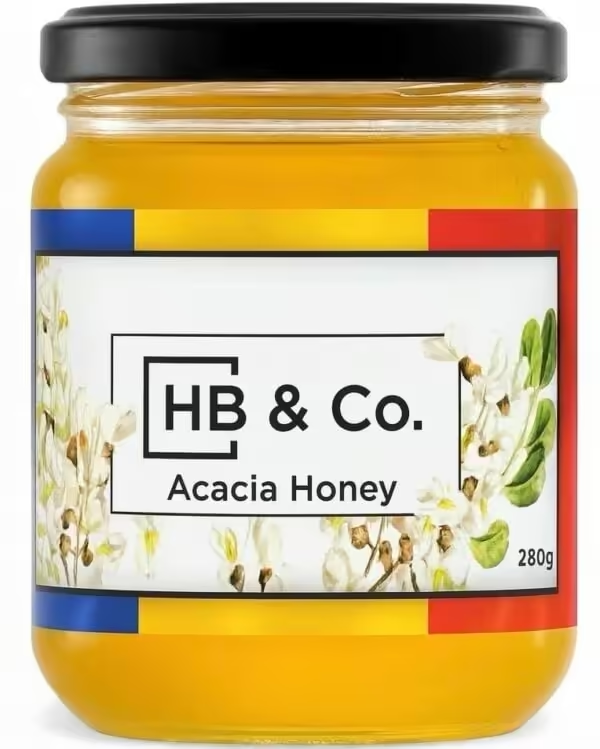
That is the difference. A jar of single-origin acacia is the concentrated nectar of one blossom, from one place, in one harvest. A typical clover honey is often a blend built for consistency across many origins. Same shelf, very different thing in the jar.
Taste, texture and honesty, compared
On flavour, the two are close cousins. Both are mild and easy, so if clover is your comfort honey, acacia will feel familiar rather than strange. The difference is refinement: acacia is cleaner and more delicate, with that faint vanilla note, while clover is a touch rounder and more generic.

On texture and crystallisation, acacia has the edge for anyone who likes a smooth, pourable honey: its fructose keeps it liquid longer, while clover tends to set more quickly. Neither is a fault. Crystallisation is a sign of real, raw honey, and a warm-water bath below 40C loosens any honey that has firmed up. Never microwave raw honey.
On honesty, this is where single-origin earns its place. A honey labelled simply "honey" or "blend of EU and non-EU honeys" tells you very little about what is in the jar. A single-origin acacia tells you the flower, the region, and the producer. If you want to know what to look for, our guide to buying honey and our piece on raw versus regular honey break it down.
Clover is the honey you know. Acacia is the honey you remember.
Which honey should you choose?
Stick with clover if you want
A cheap, cheerful, all-purpose honey for heavy everyday use, where you are not too worried about origin and simply want sweetness on tap. There is nothing wrong with that.
Step up to acacia if you want
The same mild, versatile character with more finesse, a smoother pour, and full traceability to a single flower and a single family. It is the honey to reach for when you want your everyday jar to actually taste of something, and to know exactly where it came from.
Curious beyond acacia? The Discovery Trio pairs it with our golden wildflower and bold heather, and a subscription keeps your favourite in the cupboard for less.
Trade up from the supermarket jar
Taste single-origin acacia
Acacia Honey
Pale, delicate, slow to crystallise. Single-origin and traceable.
£10.99
Shop Acacia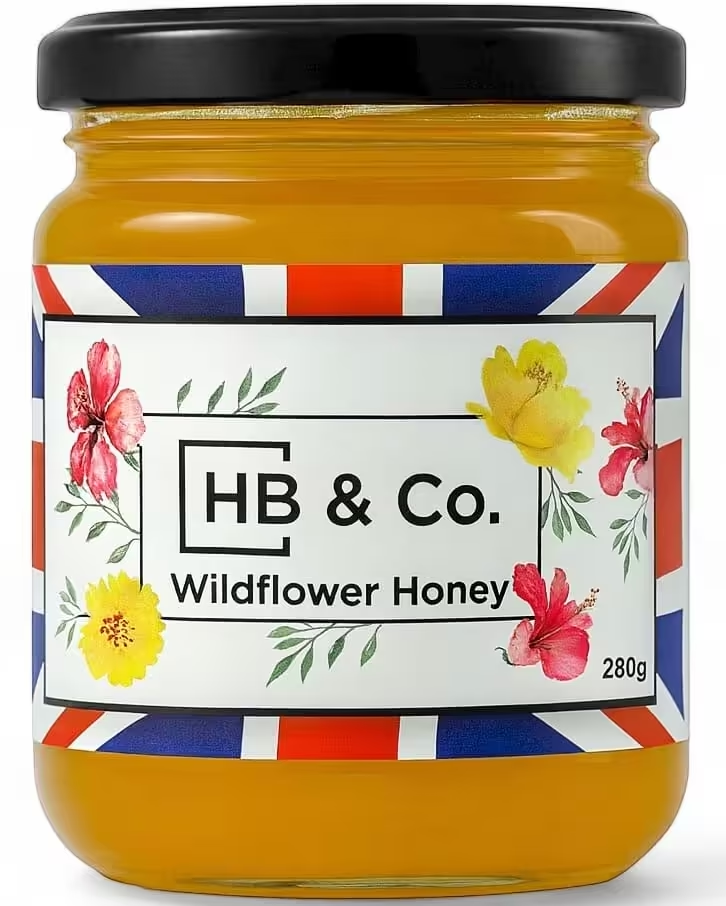
Wildflower Honey
Golden, seasonal, all-purpose. A natural next step.
£10.99
Shop WildflowerFrequently asked questions
Is acacia honey better than clover honey?
They occupy the same mild, light territory, but acacia is more refined and, in our case, single-origin and traceable. Clover is the dependable everyday standard; acacia is the step up in delicacy and provenance. Better depends on whether character and traceability matter to you.
Do acacia and clover honey taste similar?
Yes, both are mild and gently sweet, so if you like clover you will find acacia familiar. Acacia is cleaner and more delicate, with a subtle vanilla note, while clover is a little rounder and more generic.
Which crystallises faster?
Clover crystallises relatively quickly, while acacia is slow to crystallise thanks to its high fructose content. If either firms up, that is a sign of real, raw honey, and a warm-water bath below 40C returns it to a smooth state.
Is clover honey usually blended?
A lot of it is. Because clover is produced at huge global scale, much of the clover honey on supermarket shelves is blended from several origins and processed for consistency. A single-origin honey, by contrast, is traceable to one flower and one place.
Why is single-origin acacia more expensive?
Genuine monofloral acacia is harvested from one short bloom rather than blended for volume, and it is kept raw and traceable rather than mass-processed. Less of it, and more care in producing it, is the honest reason for the price.
Can I swap clover for acacia in recipes?
Yes, directly. They behave similarly in cooking and baking, so you can use acacia anywhere you would use clover. With any raw honey, avoid boiling or microwaving so you keep its flavour and character intact.
Is acacia good in tea and coffee?
Very. Its clean, mild sweetness dissolves without changing the drink, which makes it ideal for delicate teas and for coffee. Add it once the drink has cooled below boiling to protect the raw enzymes.