
 English (UK)
  Italiano
  Français
  简体中文
简体中文  한국어
한국어 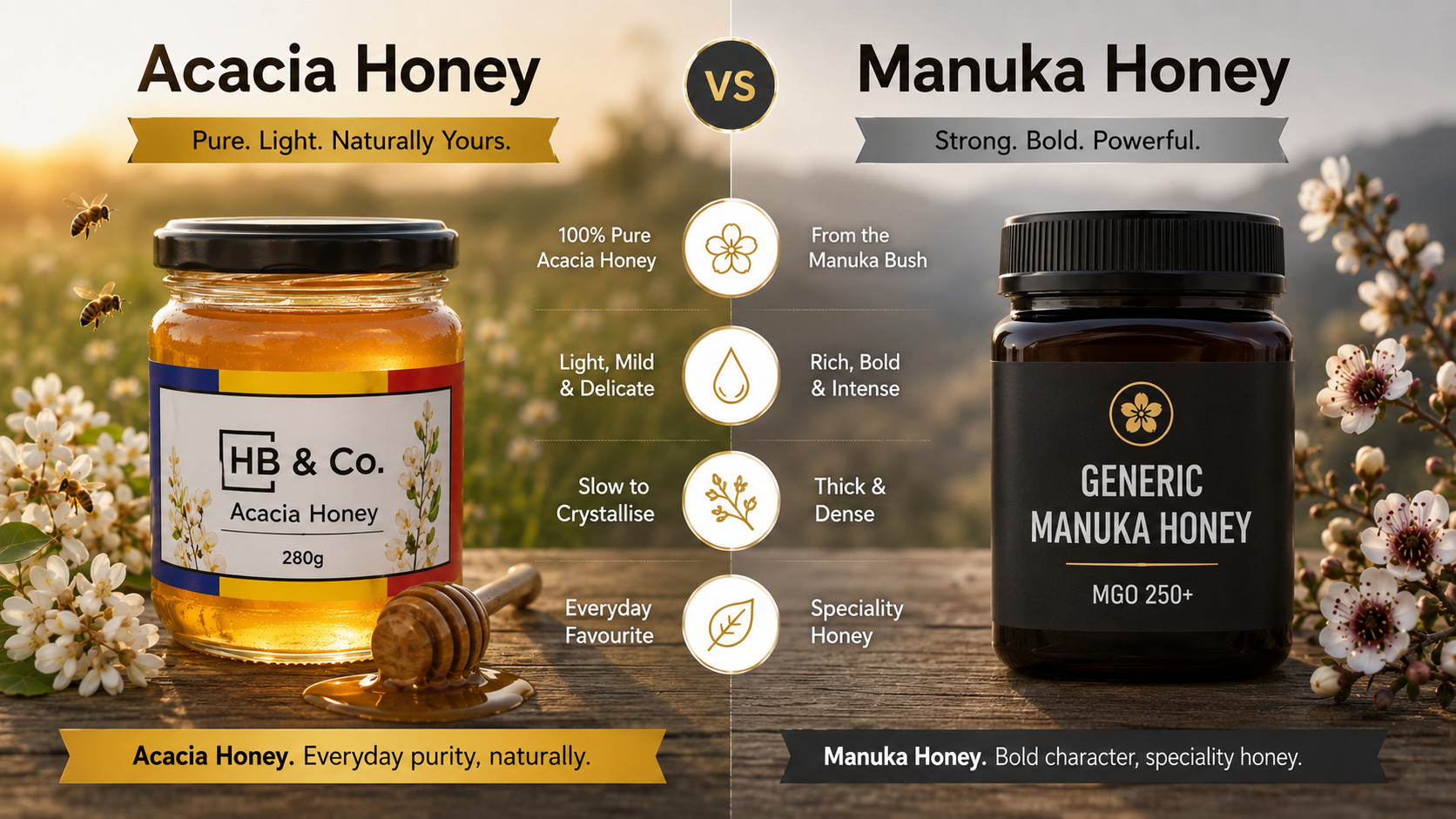
Acacia vs Manuka honey is one of the most common questions in the honey aisle, and the honest answer is that they were never really competing for the same job. One is the lightest, most delicate honey on the shelf. The other is dark, bold and bought for reasons that have little to do with taste. This guide compares them on origin, flavour, texture, price and use, so you can choose the right jar with confidence.
Key takeaways
- Acacia and Manuka sit at opposite ends of the honey scale: one is delicate and clean, the other dark and assertive.
- Acacia honey comes from the black locust tree, is pale and mild, and is slow to crystallise, making it ideal for tea, coffee, baking and everyday drizzling.
- Manuka honey comes from New Zealand's manuka bush and is bought mainly for its marketed MGO and UMF rating, at a premium price.
- For flavour, versatility and value in a normal kitchen, acacia is the easier honey to love and to use.
- Choose Manuka only if you specifically want its strong taste or the particular reputation it is sold on.
Acacia vs Manuka honey at a glance
If you only have a moment, the table below sums up the difference. Acacia is the honey you reach for when you want clean sweetness that does not take over a dish. Manuka is a speciality honey bought for its strong flavour and its marketed properties, which is why it carries a much higher price.
| Acacia honey | Manuka honey | |
|---|---|---|
| Floral source | Black locust tree, Robinia pseudoacacia, often called false acacia | Manuka bush, Leptospermum scoparium |
| Main origin | Transylvania; from our family's apiaries | New Zealand, and parts of Australia |
| Colour | Very pale, almost clear, light gold | Dark, amber to deep brown |
| Flavour | Delicate, clean and mild, with a soft floral, vanilla note | Bold, earthy and herbal, with a slight bitterness |
| Texture | Runny and pourable, slow to crystallise | Thick and dense, often creamy |
| Best for | Tea, coffee, baking, drizzling, everyday sweetening | Eating by the spoonful for its strong taste and reputation |
| Sold mainly on | Flavour, purity and versatility | Its MGO content and UMF rating |
| Typical price | Accessible; our 280g jar is £10.99 | Premium, often several times the price |
Where each honey comes from
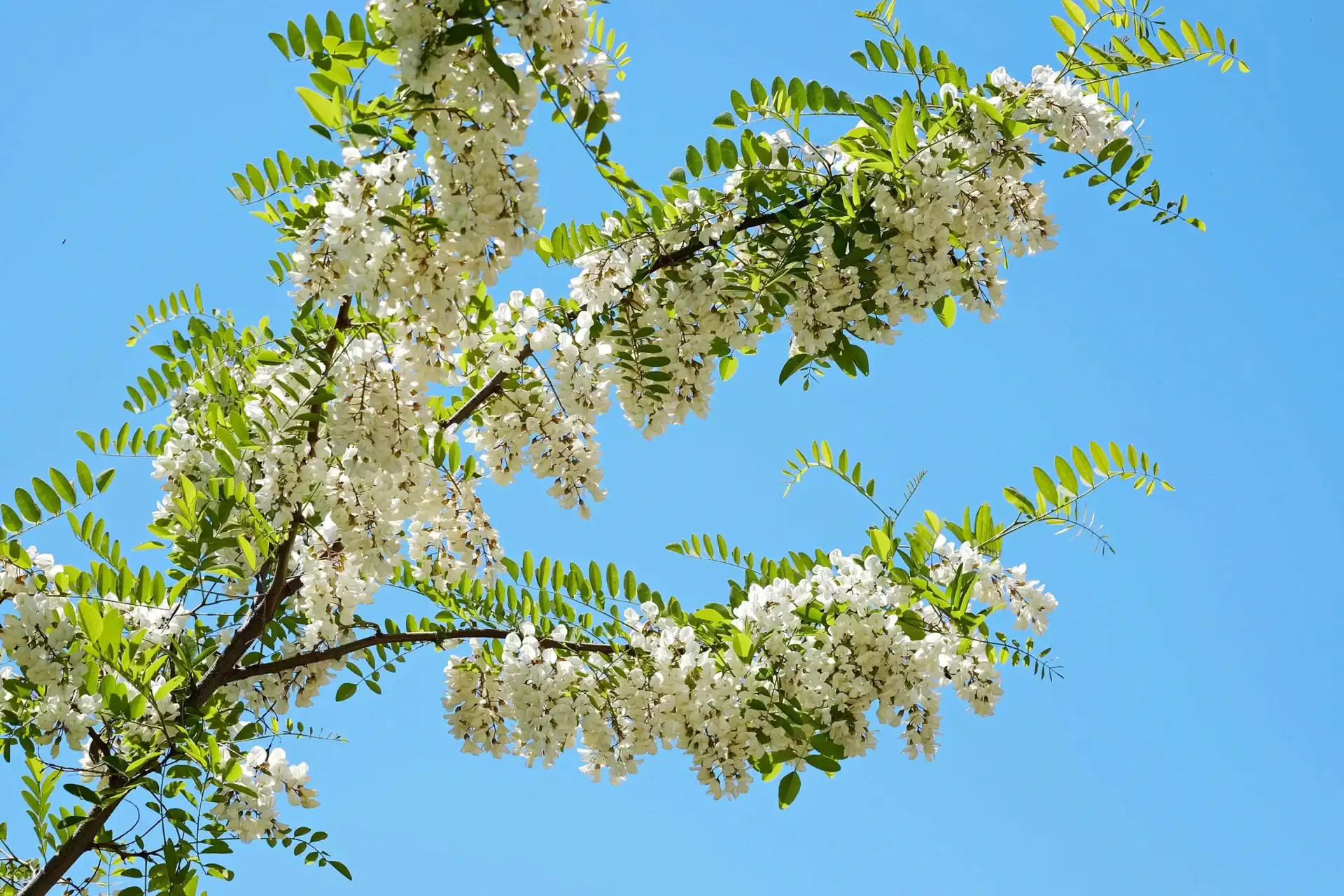
The biggest misunderstanding about acacia honey is the name. It does not come from an acacia tree at all. It comes from the blossom of the black locust, Robinia pseudoacacia, a tall tree often called false acacia that flowers for only a short window in late spring. Our acacia comes from the black-locust forests of Transylvania, where our family has kept bees for six generations, which is why every jar is single origin rather than a blend.
Manuka honey is a different story entirely. It is made by bees foraging on the manuka bush, Leptospermum scoparium, which grows almost exclusively in New Zealand and parts of Australia. That narrow geography, a short flowering season and a testing and certification process are the main reasons Manuka is scarce and expensive.
Taste, colour and texture compared
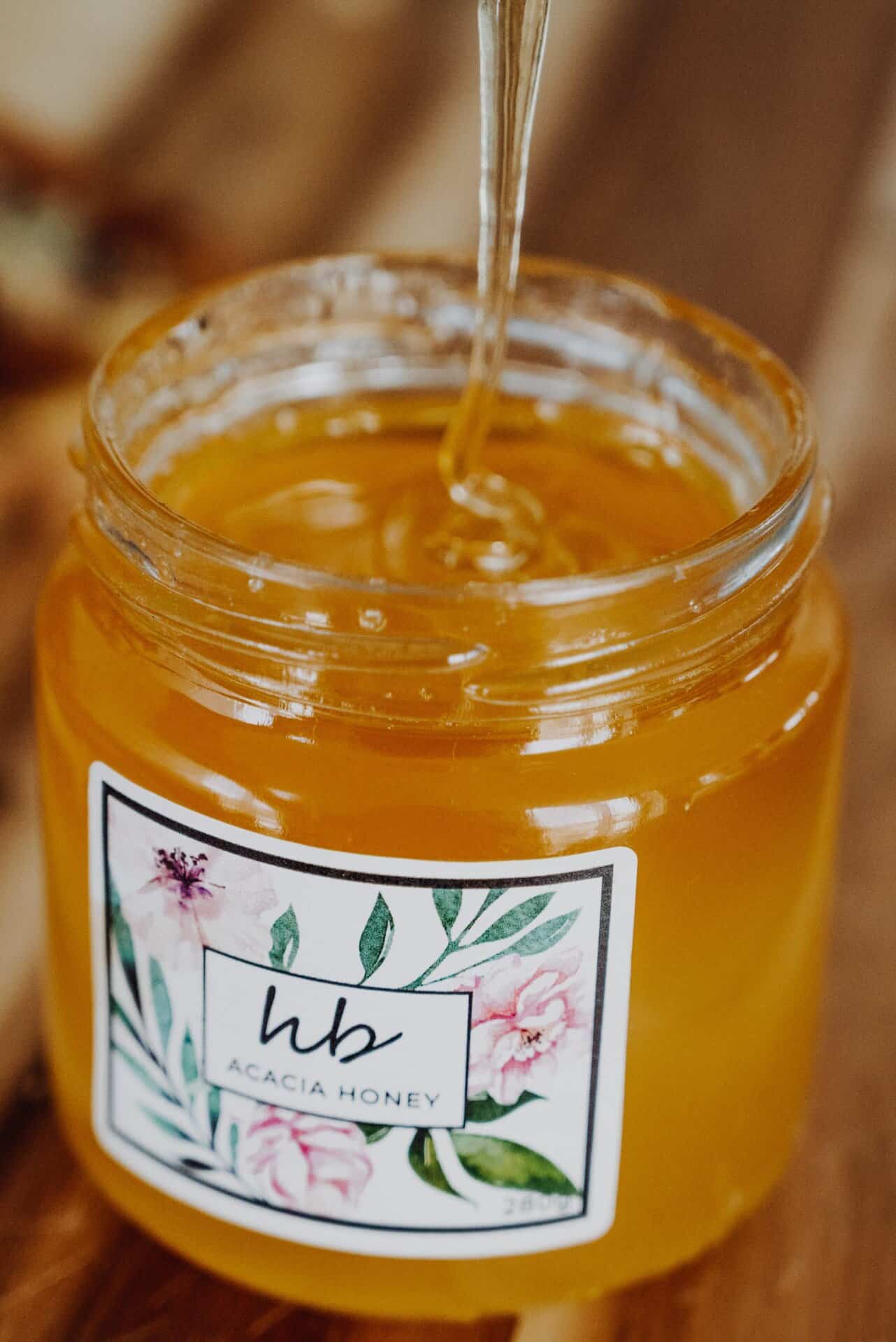
Pour the two side by side and the contrast is immediate. Acacia is so pale it is almost transparent, with a gentle, clean sweetness and a faint floral, vanilla character. There is no bitterness and nothing competing, which is exactly why it works so well stirred into a drink or folded into a delicate bake.
Manuka could not be more different. It is dark, dense and assertive, with an earthy, herbal flavour and a slight bitterness that many people find takes some getting used to. It is a honey that announces itself rather than blending in.
If you want sweetness that lifts a dish without taking it over, acacia is the honey to reach for. Manuka is chosen for an entirely different reason.
Price and value
There is no getting around it: Manuka is one of the most expensive honeys in the world, and a quality jar can cost several times the price of an everyday honey. That premium pays for its rarity, its testing and the MGO or UMF grade printed on the label, not necessarily for a better flavour at the breakfast table.
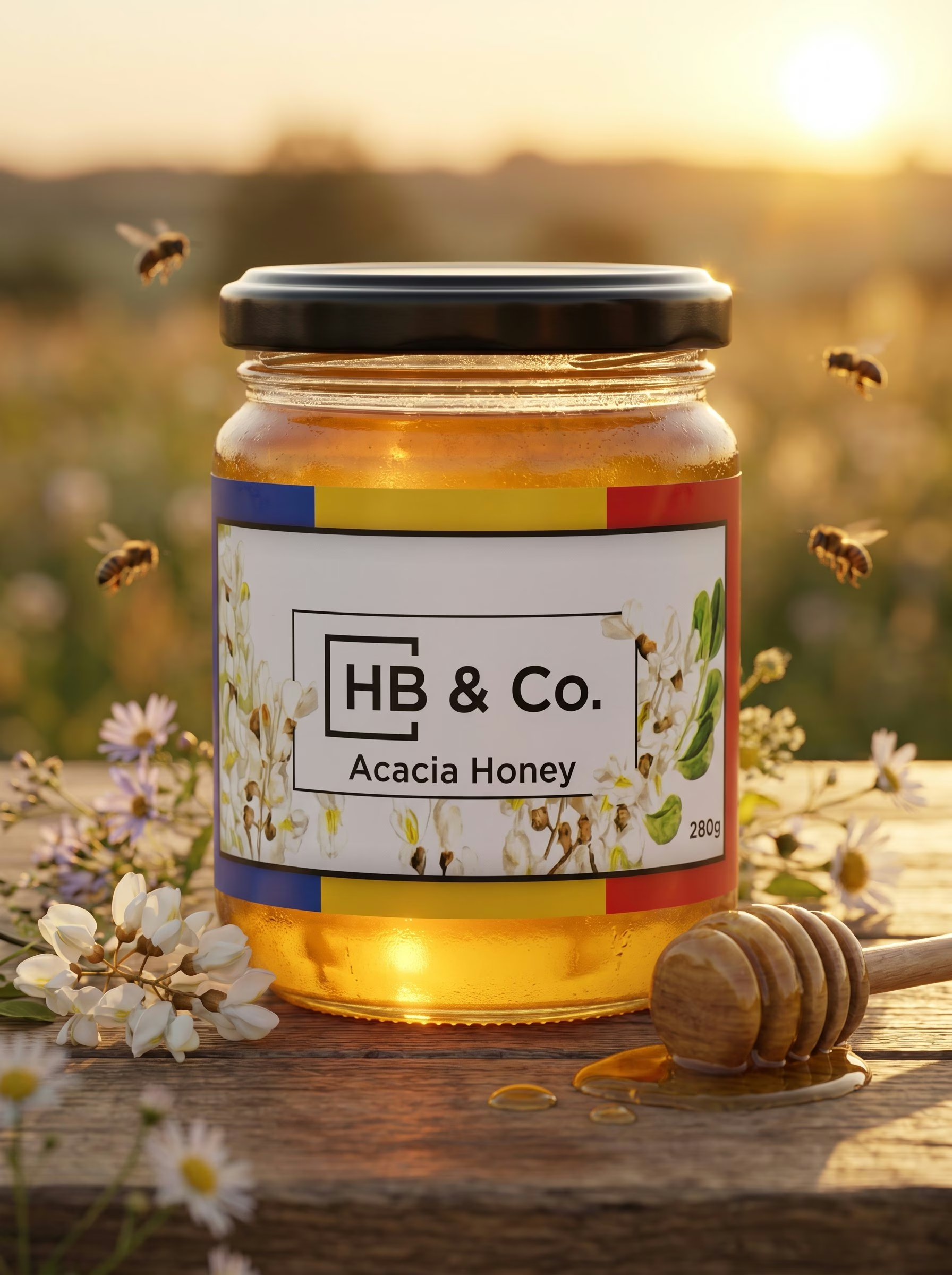
Acacia gives you a great deal more honey for your money. Our raw acacia is £10.99 for a 280g jar, single origin and unblended. For a fuller look at how artisan honey is priced against the supermarket shelf, see our guide to the real price of honey.
Which honey should you choose?
For most kitchens, acacia is the more useful jar. Its mild flavour means it sweetens tea and coffee without changing them, dissolves cleanly, bakes beautifully and drizzles over yoghurt, granola or cheese without overpowering anything. If you want one honey that does almost everything, this is it. Our guide to acacia honey uses covers it in more detail, and a honey subscription keeps a jar topped up if it becomes your daily honey.
Choose Manuka if you specifically want a strong, distinctive honey to eat on its own, or if you are buying it for the marketed properties it is known for. Just know that you are paying a premium for those reasons, not for everyday versatility.
If it is a bold, characterful honey you are after but you would rather support British beekeeping, our raw heather honey is worth a look. It has a rich, almost smoky depth and the distinctive jelly-like set that heather is famous for, a very different but equally characterful alternative.
A clear word on health claims
It is worth being straight about this, because so much honey marketing is not. All raw honey, including our acacia, naturally contains trace enzymes, antioxidants and aromatic compounds. Manuka is set apart by its methylglyoxal, or MGO, content, which is the basis for the antibacterial reputation it is researched and marketed for, and the reason it carries a UMF rating. You can read more about that in our overview of Manuka's composition.
We make no medical claims for our honey. We sell it for its flavour, its purity and the craft behind it. If the specific antibacterial reputation of Manuka is what you are after, that is the one thing acacia honey is simply not chosen for, and we would rather tell you that plainly than sell you the wrong jar.

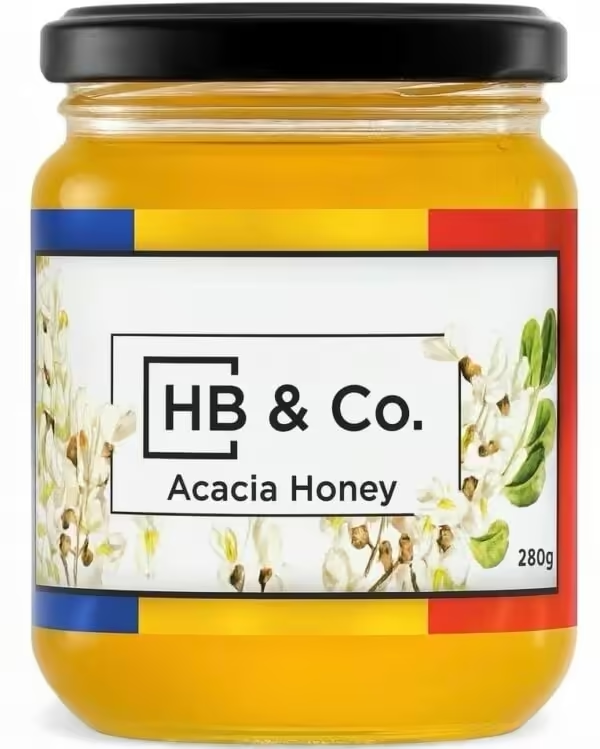
Our flagship single-origin acacia: pale, delicate and slow to crystallise. Six generations of family beekeeping heritage in every jar.
Shop Raw Acacia HoneyFrequently asked questions
Is acacia honey better than Manuka honey?
Neither is simply better; they suit different needs. For everyday flavour, versatility and value, acacia is the easier honey to use and enjoy. Manuka is a speciality honey bought mainly for its strong taste and its marketed MGO rating, at a much higher price.
What is the difference between acacia and Manuka honey?
They differ in almost every way. Acacia is pale, mild, runny and affordable, from the black locust tree in Europe. Manuka is dark, strong, thick and expensive, from the manuka bush in New Zealand, and is sold on its MGO and UMF rating rather than its flavour.
Why is Manuka honey so expensive?
Manuka grows almost only in New Zealand and parts of Australia, flowers briefly, and is produced in limited quantity. On top of that, genuine Manuka is laboratory tested and certified for its MGO content, and that scarcity, testing and strong demand all push the price well above most honeys.
Does acacia honey have the same benefits as Manuka?
All raw honey, acacia included, naturally contains trace enzymes and antioxidants. Manuka is specifically researched and marketed for the antibacterial activity linked to its MGO content, which other honeys do not share in the same way. We make no medical claims for our honey and sell it for its flavour and purity.
Can I use acacia honey instead of Manuka?
For cooking, baking and sweetening, yes, and acacia is usually the better choice because it will not overpower a dish. If you specifically bought Manuka for its marketed properties, acacia is not a substitute for that particular reason.
Which honey is best for tea and coffee?
Acacia. Its mild, clean sweetness dissolves easily and sweetens a drink without changing its character, whereas Manuka's bold, earthy flavour tends to fight a good cup of tea or coffee.
Is acacia honey really from acacia trees?
Not quite. Acacia honey is gathered from the blossom of the black locust, Robinia pseudoacacia, which is commonly known as false acacia. It is a genuine single-origin honey; the name simply refers to that tree.
Does acacia honey crystallise?
Eventually, like all raw honey, but very slowly. Its high fructose content keeps it clear and runny for a long time. If any honey does set, you can gently loosen it; our guide to crystallised honey explains how.