
 English (UK)
  Italiano
  Français
  简体中文
简体中文  한국어
한국어 
In This Guide
- Why Honey Belongs on the Grill
- The Science of Honey on Fire
- The Golden Rule of Timing
- Glaze, Marinade or Brine
- Which Honey for Which Food
- The Science of a Better Grill
- Five Mistakes to Avoid
- Our Honey BBQ Glaze
- Tips From Our Team
- Fun Facts & Curiosities
- Why Our Honey Is Different
- Shop the BBQ Honeys
- FAQ
Key Takeaways
- A honey glaze gives grilled food that glossy, caramelised, lacquered finish, and helps it stay moist.
- Honey burns easily. The golden rule: brush glazes on only in the final 5 to 15 minutes, or cook over indirect heat.
- Always loosen honey with a liquid such as citrus, vinegar or soy. Neat honey on direct heat scorches fast.
- Used in a marinade, honey behaves even better, and research suggests marinating can reduce the char compounds high-heat grilling creates.
- Bold, robust honeys win on the grill. Our BBQ & Grill Selection is chosen for exactly this.
- Every jar is raw, single-origin and traceable to the hive, from a six-generation family of beekeepers.
Why Honey Belongs on the Grill
There is something almost primal about honey meeting fire. Long before refined sugar existed, before brown sugar and bottled barbecue sauce, there was a wild comb robbed from a hollow tree and a haunch of meat over open flame, the oldest sweetener on earth and the oldest way of cooking it, together. Watch honey hit a hot grill and the surface tightens, deepens, turns from gold to mahogany, and the air fills with the smell of caramel and smoke. It is one of cooking's great transformations, and it rewards those who understand it.
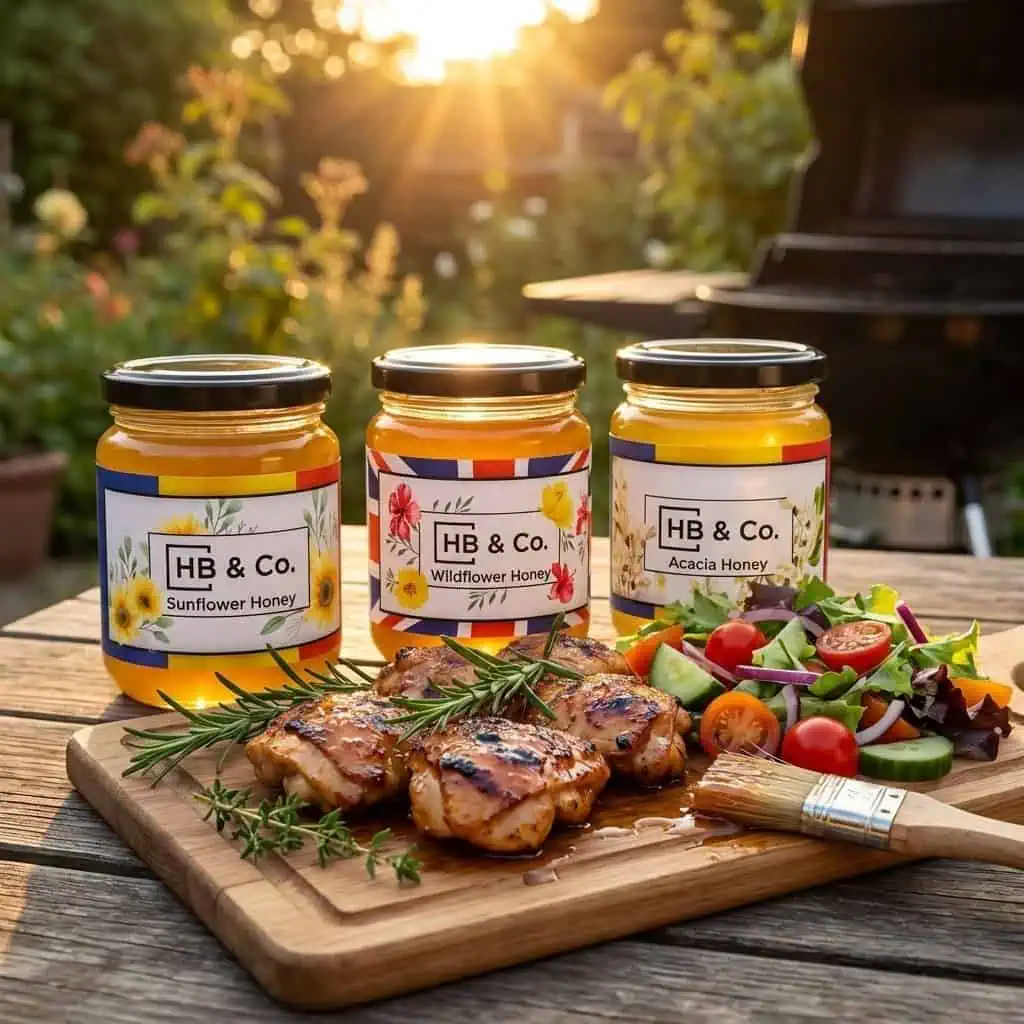
Ask any pitmaster what gives ribs and wings that glossy, almost-lacquered crust and the answer is sugar, and honey is the finest kind for the job. As it heats, honey drives the Maillard reaction, the browning chemistry behind every great sear, so meat develops colour and savoury complexity rather than mere sweetness. It clings where a thin sauce would run, and it draws and holds moisture so a honey-finished chop is juicier as well as handsomer.
The catch is the thing most home cooks get wrong, and it is worth saying plainly before we go a step further: honey caramelises at a lower temperature than ordinary sugar, so it can pass from golden to bitter and black in a matter of moments. Master the timing and honey is the best tool on your grill. Ignore it and you get charred disappointment. The rest of this guide makes sure you land on the right side of that line, every single time.
The Science of Honey on Fire
To grill well with honey, it helps to know what is actually happening on the bars of your grill. Two reactions are doing the heavy lifting.
Caramelisation is the browning of the sugars themselves. Honey is roughly four-fifths sugar, mostly fructose and glucose, and fructose caramelises at a notably lower temperature than the sucrose in table sugar. That is precisely why honey browns so beautifully, and why it scorches so readily. The Maillard reaction, named after the French chemist Louis-Camille Maillard who described it in 1912, is the second: a cascade of reactions between those sugars and the amino acids in meat that creates hundreds of new aroma and flavour compounds, the deep, roasted, savoury notes we crave from a good grill.
Infographic: The Honey Heat Window
HoneyBee & Co. kitchen guide. Honey scorches at a lower temperature than table sugar, so timing is everything.
Honey begins to caramelise at around 160°C (320°F) and starts to blacken and turn acrid above roughly 175°C (350°F). Most barbecuing happens hotter than that, which is the whole problem in a single sentence. Understand the window, work inside it, and the science is on your side.
Infographic: Honey Strength Scale
The bolder the honey, the better it stands up to smoke and spice. Save delicate acacia for drizzling over fish or fruit off the heat.
The Golden Rule of Timing
If you remember one thing from this guide, make it this: keep honey away from fierce direct heat until the very end. It is the principle behind every good honey-glazed rib, and a technique you will find echoed everywhere from the New York Times cooking desk to BBC Good Food: brush sweet glazes on late.
- Glaze late. Let your meat build its crust first, then brush the honey glaze on for the last 5 to 15 minutes only, turning and basting so it sets without burning.
- Use two zones. Build a hot side and a cooler side. Start food on the cooler, indirect side, and move it over the flame only for a brief, watchful finish.
- Dilute, always. Loosen honey with a splash of citrus juice, vinegar, soy or water before it meets heat. Neat honey scorches almost instantly.
- Watch it like a hawk. Once honey starts to darken it turns in seconds, so do not wander off during the glazing stage.
Honey is a finishing move, not a starting one. Glaze late, keep your eyes on it, and pull the food before the sugars darken.
Glaze, Marinade or Brine
There are three ways to put honey to work at a cookout, and the best cooks use all three. The infographic below is the quick version; the detail follows.
Infographic: Three Ways to Grill with Honey
Marinade
Honey suspended in liquid clings to the meat and tolerates heat far better. It acts as glue, holds in moisture and drives browning.
Best for: depth & tendernessGlaze
A late, brushed-on finish for that glossy, lacquered crust. Apply only in the final 5 to 15 minutes, and watch it like a hawk.
Best for: shine & caramelBrine
A spoon of honey in a brine seasons from the inside out and supports an even, golden exterior. The quiet secret of juicy grilled chicken.
Best for: juicy & evenOne jar, three techniques. Most pitmasters use all three across a single cook.
The marinade: honey's safest, smartest job
Here honey shines with the least risk. Because it is suspended in liquid and clings to the surface of the meat, it tolerates heat far better than a neat drizzle ever could. It also works as a natural glue, binding herbs, spice and acid into a coating that stays put, and it helps the meat hold moisture as it cooks. Keep honey marinades to around 30 minutes for poultry, and longer, even overnight, for tougher cuts.
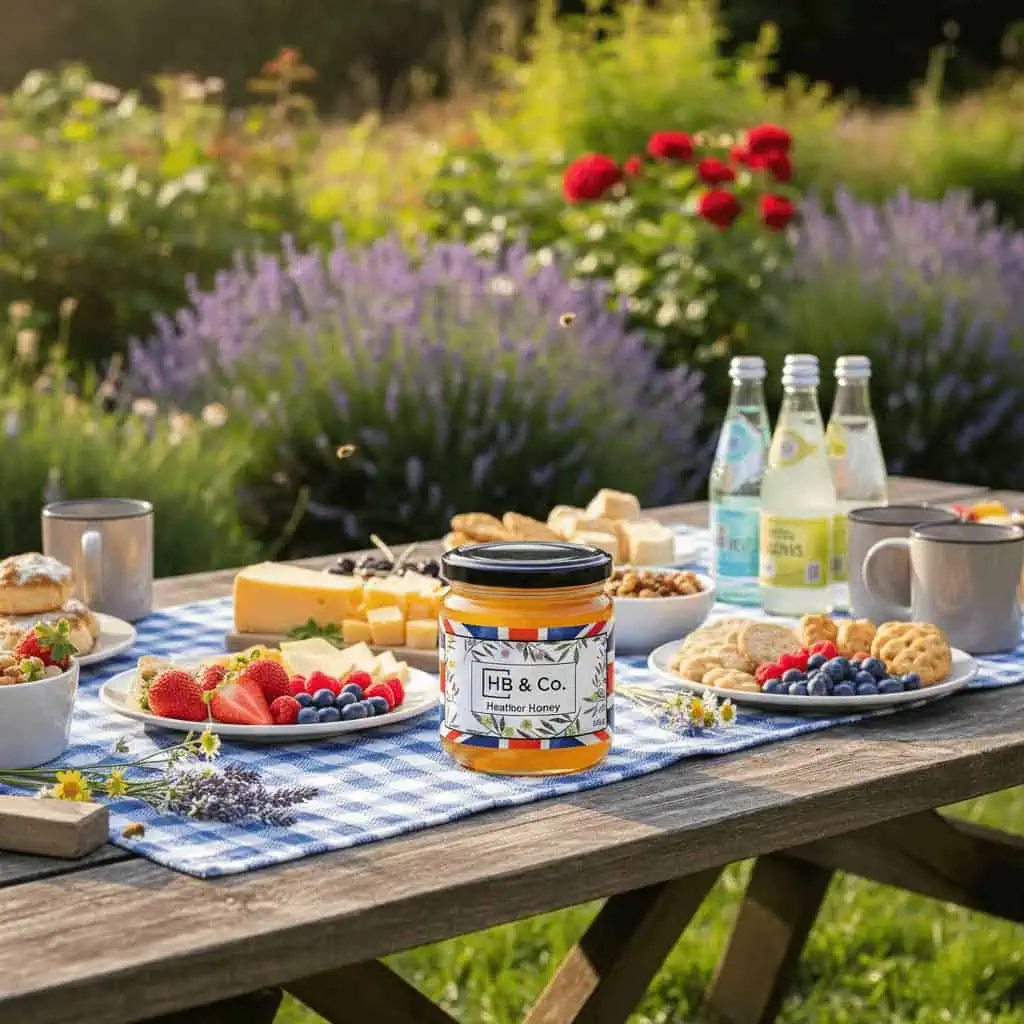
The glaze: the glossy finish
Whisk honey with an acid and a little heat, think citrus juice, cider vinegar, soy, mustard or chilli, until it is just thin enough to brush. A good starting balance is roughly four parts sweetness to one part heat, so the kick is present but never dominant. Brush it on in the final minutes and let it caramelise into a lacquered crust.
The brine: the quiet secret
A spoon of honey in a brine seasons from the inside and supports a beautifully even, golden exterior. It is the trick behind juicy, evenly coloured grilled chicken, and almost nobody thinks to do it.
Which Honey for Which Food
Light, delicate honeys are wasted on the barbecue, their subtlety lost under smoke and char. Bold, full-flavoured honeys hold their own. Here is how our range maps onto the grill, food by food.
| Honey | On the grill | Made for |
|---|---|---|
| Heather | Dark, malty, robust. The classic BBQ honey. | Ribs, brisket, lamb, beef, dark glazes |
| Wildflower | The all-rounder. Balanced and reliable for any glaze. | Chicken, sausages, halloumi, vegetables |
| Linden | Aromatic and herbal, superb with citrus marinades. | Chicken thighs, pork, salmon, prawns |
| Sunflower | Bright and golden, a friendly all-purpose glaze base. | Wings, corn, peppers, courgette |
| Soft Set | Thick and spreadable, loosen well before brushing. | Quick glazes for chops and skewers |
| Acacia | Mild and floral. Best kept for delicate finishes off the heat. | Drizzling grilled fish, fresh cheese, fruit |
The headline pairings
Ribs and brisket want the deepest honey you have: heather, every time, in a glaze brushed on for the final stretch. Chicken is happiest with wildflower or a citrus-and-linden marinade. Pork loves the herbal lift of linden against its richness. Salmon and prawns take a delicate hand, a thin linden or wildflower glaze, on and off fast. Halloumi, corn and vegetables are transformed by a brush of wildflower or sunflower in their last moments on the bars. And for a delicate grilled fig or a wedge of charred peach alongside the meat, reach for acacia, drizzled cold once the plate is down.
Made for the grillThe BBQ & Grill Honey Selection
Three barbecue-ready honeys chosen for glazes, marinades and that sticky, lacquered finish, from bold, malty heather to a bright, dependable all-rounder. The simplest way to grill like you mean it.
- Three 280g jars
- Raw and single-origin
- Glaze, marinade or brine
- Traceable to the hive
The Science of a Better Grill
Here is a genuinely interesting reason to reach for a marinade rather than a last-second drizzle, and it is one most barbecue guides never mention. When meat, poultry or fish is cooked at very high heat or charred, it can form compounds called heterocyclic amines (HCAs) and polycyclic aromatic hydrocarbons (PAHs), which food scientists and cancer-research bodies have studied closely.
The American Institute for Cancer Research notes that marinating meat, poultry or fish for at least 30 minutes, using a mix with an acid such as vinegar, lemon juice or wine, can reduce the formation of these compounds, and that marinating has a bigger effect than simply lowering the cooking temperature.
Where does honey come in? In a marinade, honey is the binder that holds that protective mix of acid, oil, herbs and spices against the meat. And there is research on honey specifically: a peer-reviewed study found that beef marinated in honey before grilling formed markedly fewer HCAs than beef marinated in plain sugar, an effect the researchers linked to the natural antioxidants in honey. Acacia honey was among those tested.
In that study, honey marinades reduced total heterocyclic amines in grilled beef by up to roughly 85 to 95 percent compared with a table-sugar control, with the size of the effect tracking each honey's antioxidant activity.
A sensible word of caution, and an honest one from a honey seller. This is about how you grill, the marinating, the acid, the avoiding of char, not a health claim about eating honey. HoneyBee & Co. makes no medicinal claims about its products; honey is a food, not a medicine, and it is still a sugar. But if you were looking for one more reason to marinate rather than drown your meat in glaze at the last second, the science is quietly on the marinade's side.
Five Mistakes to Avoid
- Brushing honey on too early. The single most common error. On direct heat it will char before the food is cooked through. Glaze late, always.
- Using honey neat. Straight from the jar onto a hot grill, honey burns almost on contact. Loosen it with acid or liquid first.
- Cooking over one roaring zone. Without a cooler, indirect side to retreat to, you have nowhere to go when the glaze catches. Build two zones.
- Wandering off. Honey goes from perfect to bitter in seconds. The glazing stage is not the moment for another drink at the far end of the garden.
- Wasting your best honey on the flame. Delicate acacia loses its character under heat and smoke. Save it for a cold drizzle over the finished plate.
Our Honey BBQ Glaze
The 4-1-1 Honey BBQ Glaze
You will need
- 4 tbsp heather honey
- 1 tbsp cider vinegar (or lemon juice)
- 1 tbsp soy sauce
- 1 tsp smoked paprika
- A pinch of chilli flakes, to taste
- 1 small clove garlic, crushed
Method
- Warm everything gently in a small pan, stirring, until just loose and glossy. Do not boil.
- Cook your meat over indirect heat until it is nearly done and has a good crust.
- Move it over the flame and brush the glaze on in the final 5 to 10 minutes, turning and re-brushing for a lacquered finish.
- Pull it before the glaze darkens. Rest for 5 minutes, then serve.
The same glaze is the backbone of our honey and soy chicken wings, built around exactly these principles. Double the soy and add a thumb of grated ginger for a stickier, more savoury version.
Tips From Our Team
Small things that make a big difference
- Warm the jar, not the grill. Stand a jar of thicker honey, like soft set, in a mug of warm water for a few minutes. It pours and brushes far more evenly than honey straight from a cold cupboard.
- Keep a "glaze cup" and a "baste brush" apart from raw meat. Decant what you need so you never dip a used brush back into the jar. Better hygiene, better honey.
- Add a squeeze of acid at the end. A final spritz of lemon over a honey-glazed piece lifts the whole thing and stops it tasting one-note sweet.
- Save the dark honeys for dark meats. Heather on beef and lamb, lighter wildflower on chicken and veg. Strength to strength is the whole game.
- Glaze vegetables too. A brush of wildflower honey on charred corn, aubergine or halloumi in the last minute is the most underrated thing on the grill.
Fun Facts & Curiosities
A few things to share over the grill, the kind of details that remind you honey is one of the small wonders of the natural world.
Honey never spoils
Archaeologists have found pots of honey in ancient Egyptian tombs, thousands of years old and still edible. Stored properly, your jar will comfortably outlast the barbecue season.
A lifetime's work for a spoonful
A single worker bee makes only about a twelfth of a teaspoon of honey in her entire life. The glaze on your ribs is the work of a great many bees.
Millions of flowers per jar
To fill a single jar, a colony's foragers visit the equivalent of millions of flowers, pollinating the landscape as they go. Every jar is a small map of a place and a season.
The browning is a Nobel-worthy reaction
The Maillard reaction, the chemistry behind your seared crust, was first described in 1912 and underpins the flavour of almost everything we roast, toast, grill and bake.
No two harvests taste the same
Because raw honey reflects the exact flowers in bloom, our acacia from one spring is never identical to the next. It is the opposite of a uniform, blended supermarket jar.
Sweeter than sugar, so use less
Honey is sweeter than table sugar spoon for spoon, which is why a little goes a long way in a glaze, and why it browns so much faster.
Why Our Honey Is Different

Most honey on a supermarket shelf is blended from many countries, filtered hard and heated until it is bright, clear and characterless, the same in January as in June. Ours is the opposite, and the difference matters most precisely where flavour has to fight through smoke and spice.
HoneyBee & Co. is built on six generations of beekeeping. Our acacia, linden and sunflower come from our own family's hives in the Carpathian region of Transylvania, set among forests and wildflower meadows; our British honeys come from a supplier whose honey holds SALSA Certification. Every jar is raw, single-origin and traceable to the hive, never blended into anonymity. That is why a spoon of our heather tastes of dark moorland and a spoon of our acacia of spring blossom, and why both carry through a glaze instead of vanishing into it. It is honey worth the work of grilling well, and it earned a place in Vogue's Summer Hot List across three editions in summer 2024.
You can read the whole story about our family and our hives, or learn how bees make honey in the first place.
Honey built for the barbecue
Raw, single-origin honey with the backbone to handle smoke and spice. Free UK delivery on three or more jars and on every subscription order.
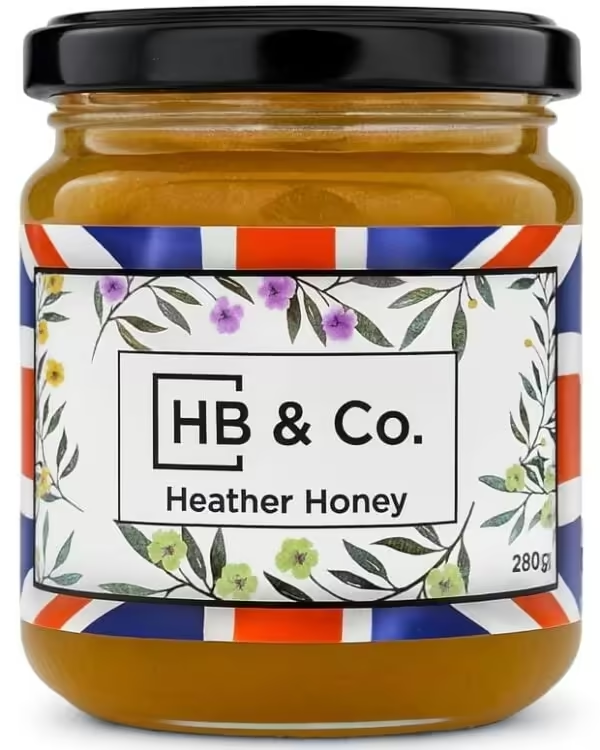
Heather Honey
Dark and malty, the classic for ribs, brisket and bold glazes.
Shop now ›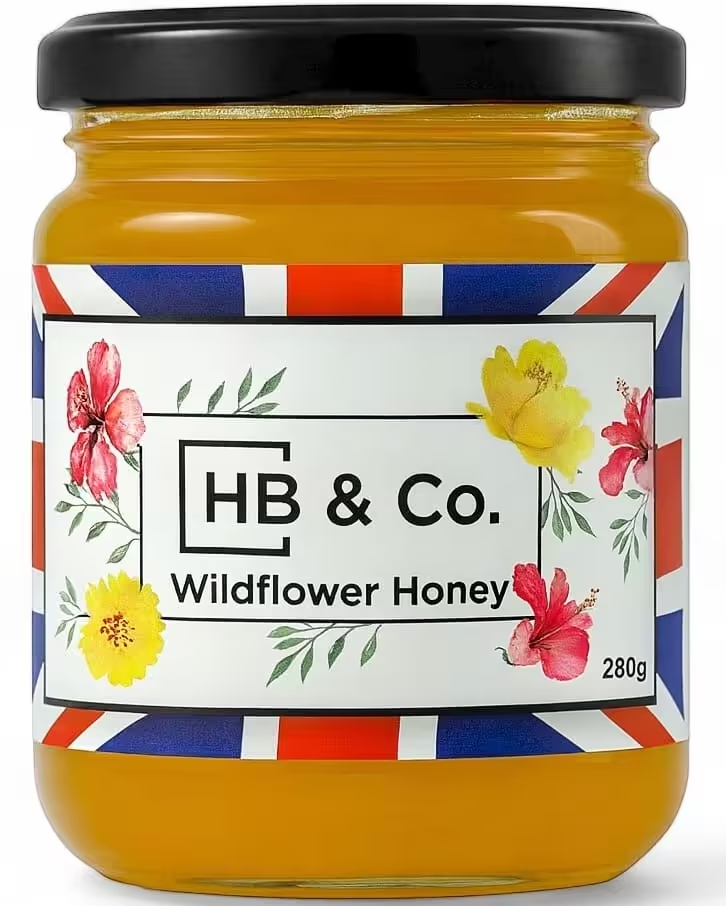
Wildflower Honey
The dependable all-rounder for chicken, sausages and veg.
Shop now ›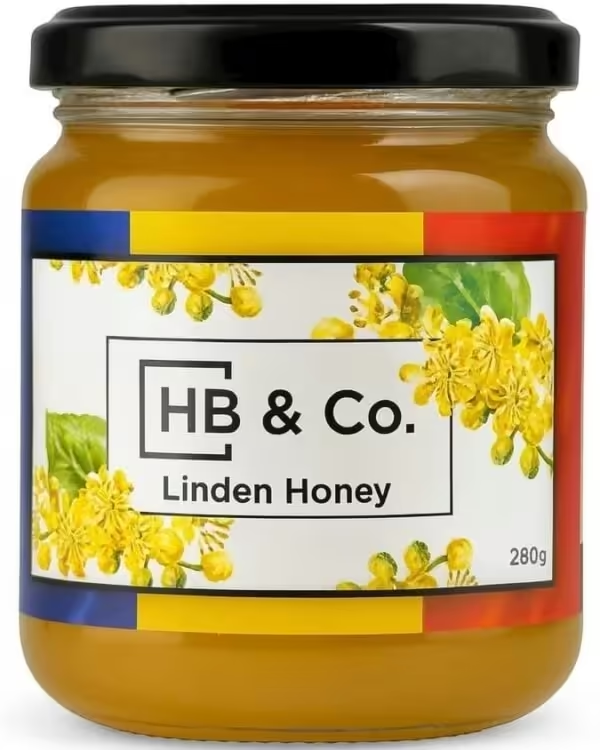
Linden Honey
Aromatic and herbal, made for citrus marinades.
Shop now ›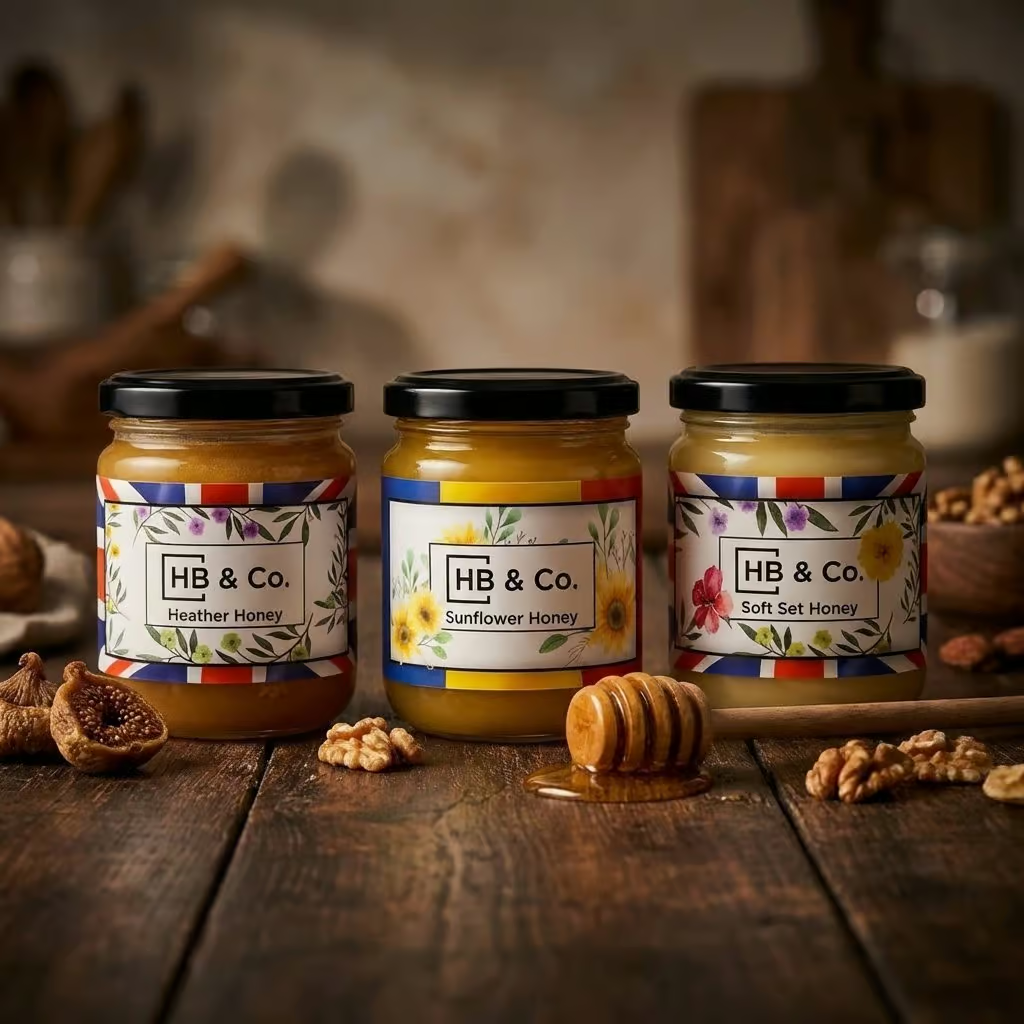
Bold & Rich Trio
Our three deepest, most characterful honeys, built for smoke and spice.
Shop now ›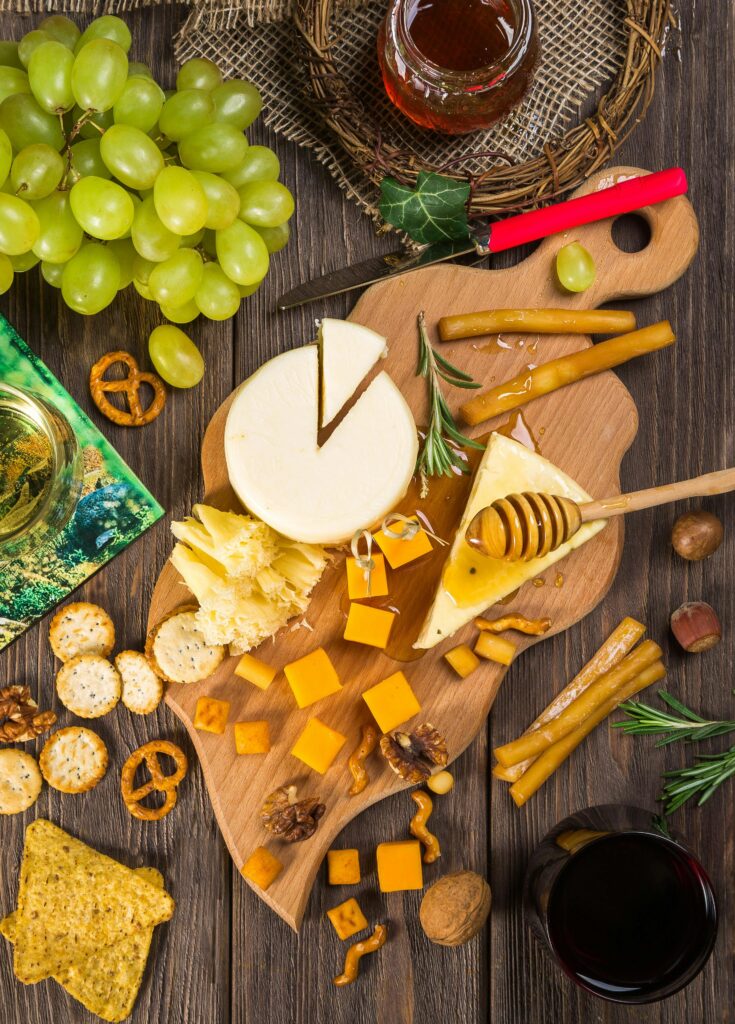
Entertainer's Selection
Honeys for grazing boards and summer entertaining, made for a crowd.
Shop now ›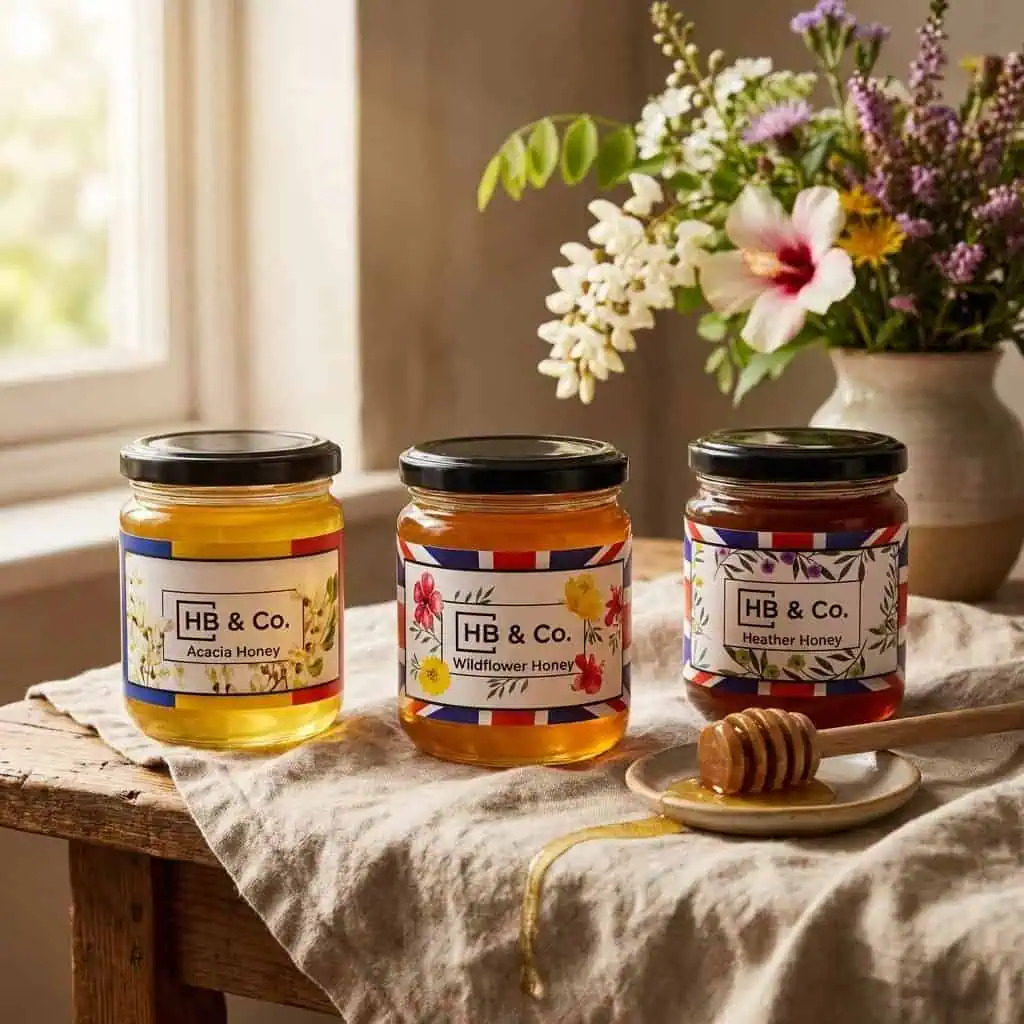
Discovery Trio
Acacia, wildflower and heather, three honeys to find your favourite.
Shop now ›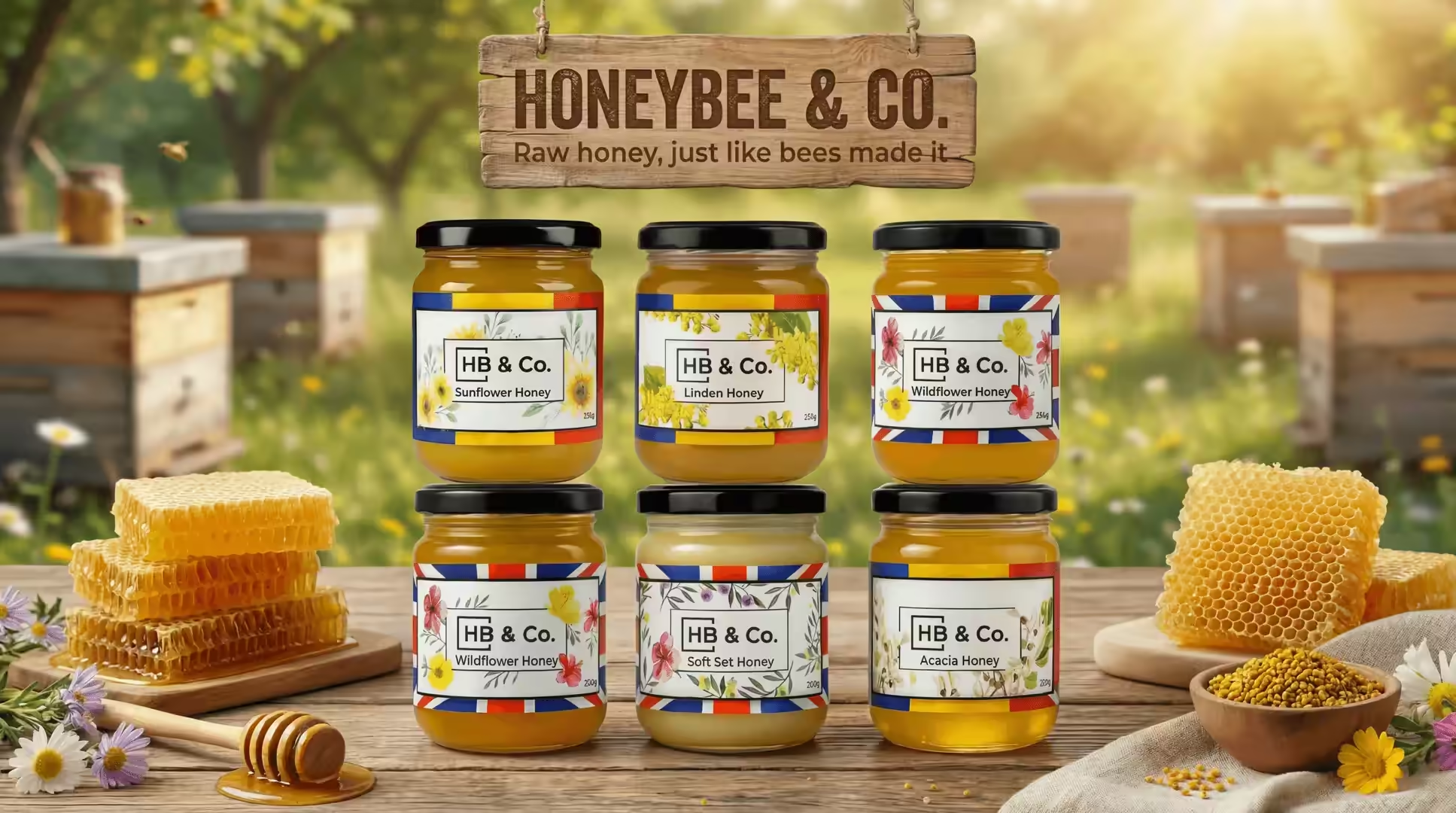
Frequently Asked Questions
What is the best honey for a BBQ glaze?
What is the best honey for ribs?
What honey is best for chicken on the grill?
What is the best honey for grilled salmon or prawns?
Why does my honey glaze keep burning?
When should I add honey when grilling?
Should I dilute honey for a glaze?
Is honey better than brown sugar for BBQ?
Is honey good in a marinade?
Can I use honey in a smoker?
Does honey go off, so can I keep last summer's jar?
Which honey should I avoid on the grill?

Dragos Nistor
Dragos Nistor is the founder of HoneyBee & Co., a family honey brand built on six generations of beekeeping heritage in Transylvania. He grills most weekends the sun allows, and is a firm believer that a good jar of honey earns its place at the dinner table and the grill alike.
Sources & Further Reading
- American Institute for Cancer Research. Practicing safe grilling can reduce cancer risk (marinating and HCAs/PAHs). aicr.org
- Peer-reviewed study on the inhibitory effects of honey marinades on heterocyclic amine formation in grilled beef, Antioxidants / NCBI (2020).
- Salmon CP et al. Effects of marinating on heterocyclic amine formation in grilled chicken. PubMed (1997).
- NHS & Food Standards Agency. Safe cooking temperatures; honey not suitable for infants under 12 months.
- Maillard, L-C. (1912), the browning reaction; general food-science background on caramelisation of fructose versus sucrose.
- Harvard Health Publishing. Healthier grilling guidance (marinate, avoid char, shorten grill time).
For general information only; not medical advice. HoneyBee & Co. makes no medicinal claims about its products. The grilling science cited above concerns cooking method, not the health effects of eating honey.