 English (UK)
  Italiano
  Français
  简体中文
简体中文  한국어
한국어 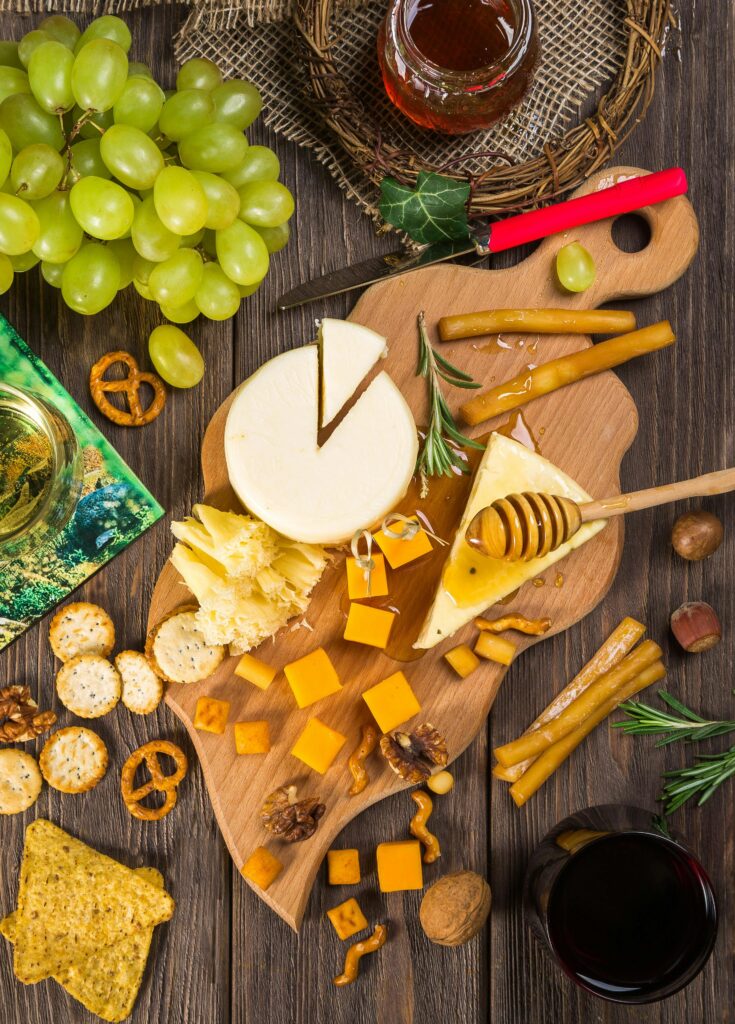
In This Guide
Key Takeaways
- A pot of raw honey is the easiest way to lift a grazing board from good to memorable.
- Match honey to strength: acacia for soft and creamy cheeses, heather for blues and hard cheeses.
- Honey also cuts the salt and fat of cured meats, so it belongs next to the charcuterie as well as the cheese.
- Serve honey in a small pot with its own spoon or drizzler, alongside fruit, nuts and crackers.
- Our Entertainer's Selection is built for exactly this kind of board.
Why Honey Makes the Board
Every great cheese board is a balancing act: salty against sweet, rich against fresh, soft against crisp. Honey is the single ingredient that bridges them all. A thread of it over a wedge of blue cheese tempers the salt; a drizzle on warm brie turns it into something you will remember; a dab alongside a slice of cured ham cuts the fat and makes the meat taste sweeter still.
The secret, as with so much in food, is matching strength to strength. A delicate cheese wants a delicate honey; a powerful one can take a bold, dark honey without being overwhelmed. Get the pairing right and a humble board becomes the thing everyone gathers around.
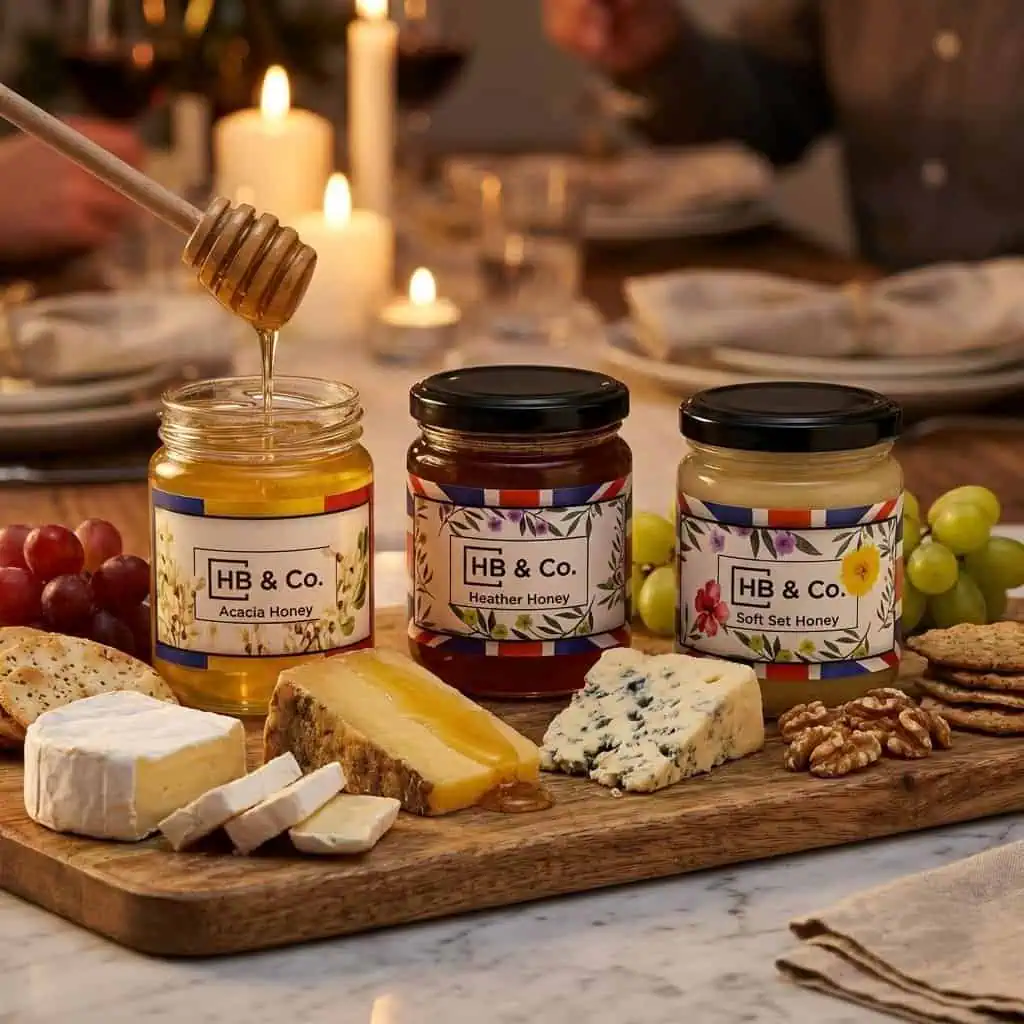
Hosting is really about generosity, and few things feel more generous than a board that has clearly been thought about. Honey is the detail that signals care: it costs little effort, yet it transforms how everything else tastes. It is also a talking point. Set out two or three different honeys and your guests will start comparing notes, dipping a corner of cheese here, a sliver of pear there, which is exactly the kind of unhurried grazing a good board is meant to encourage.
A board without honey is a plate of cheese. A board with the right honey is an occasion.
The Science of Sweet and Salty
Why does a sweet honey work so well against a salty, pungent cheese? The answer is in how we taste.
There is a reason a drizzle of honey settles a salty blue cheese or a slice of cured ham. In sensory science, sweetness is the most dominant of the basic tastes. Studies of taste mixtures find that sweetness is "the strongest suppressor of other tastes"
, tempering saltiness, sourness and bitterness rather than merely sitting beside them. So when honey meets the salt of Stilton or the tang of a goat's cheese, it does not just add sweetness, it rounds the whole mouthful, which is exactly why a board with honey tastes more balanced than one without.
It is the same logic behind salted caramel or honey-glazed ham: a little sweetness makes salt taste rounder and richer, not less. On a board, that means even your boldest blue becomes more approachable with the right honey beside it.
Which Honey for Which Cheese
Use this as your pairing map. The rule of thumb never changes: the stronger the cheese, the bolder the honey.
| Cheese | Best honey | Why it works |
|---|---|---|
| Brie & Camembert (soft) | Acacia | Gentle and floral, it flatters the cream without masking it. |
| Goat's cheese (fresh) | Linden | Aromatic and herbal, a classic partner for tangy chevre. |
| Mature cheddar (hard) | Soft Set or Wildflower | Enough body to stand up to a sharp, crumbly cheese. |
| Stilton & blues | Heather | Dark and malty, the textbook match for salty, punchy blue. |
| Manchego & aged hard cheese | Heather or Sunflower | Bold honeys hold their own against intensely savoury cheese. |
If you would rather not assemble the honey line-up yourself, the Entertainer's Selection spans a whole board, while the Cheese Board Selection is matched to soft, blue and hard cheeses.
For entertainingThe Entertainer's Selection
Three honeys chosen to span a whole grazing board, one mild, one medium and one bold, so every cheese and every cured meat has its match.
- Three 280g jars
- Mild, medium and bold
- Cheese and charcuterie ready
- Free UK delivery
Soft and Fresh Cheeses
Soft, bloomy cheeses such as brie, camembert and a young goat's cheese are where a gentle honey shines. Their flavours are delicate, so a bold, dark honey would steamroll them. Reach instead for acacia: pale, clear and barely there, it sweetens the cream and lets the cheese stay the star. Because acacia is slow to crystallise, it stays perfectly pourable for that clean drizzle.
The same gentle approach suits the very freshest cheeses. A spoon of acacia transforms a bowl of ricotta into a quick dessert, and a thread over creamy burrata or fresh mozzarella, with a grind of black pepper, is a starter in its own right. The rule holds throughout: the milder and creamier the cheese, the lighter the honey it wants.
For a centrepiece, warm a whole baby brie or camembert in its box for a few minutes until just molten, then spoon honey over the top and scatter a few toasted nuts. It disappears faster than anything else on the table. Fresh goat's cheese is the one exception to the mild rule: its bright, lemony tang loves the aromatic, faintly herbal note of linden honey.
Hard and Aged Cheeses
Hard, aged cheeses such as mature cheddar, manchego, gruyere and aged gouda have more going on, a savouriness and sometimes a crystalline crunch, so they can take a honey with a bit more body. Wildflower and soft set are the all-rounders here, balanced enough to match the cheese without fighting it. For an intensely savoury manchego or a long-aged gouda, you can push bolder still, towards sunflower or even a little heather.
Parmesan and aged comte deserve a special mention. Their savoury, almost nutty depth and those tiny crunchy crystals are wonderful with a darker honey: break the cheese into craggy shards, drizzle, and serve as a course on its own. A wedge of pecorino with honey and a few walnuts is a classic Italian pairing for good reason.
A classic move: pair a sharp cheddar with honey and a slice of crisp apple or pear. The sweetness of the fruit and honey throws the salt and tang of the cheese into relief, and the textures, crisp, creamy, sticky, make every bite interesting.
Blue Cheese
Blue cheese and honey is the pairing that converts sceptics. Stilton, gorgonzola, roquefort and their cousins are salty, sharp and powerful, and they need a honey with the depth to answer them. Heather honey is the textbook choice: dark, malty and robust, it meets the salt head on and turns a challenging cheese into something moreish. Where a delicate honey would simply vanish, heather holds its ground.
One pot of honey is good. Three, from delicate to dark, turns a cheese board into a tasting.
If blue cheese is your weakness, the Bold & Rich Trio gathers our three deepest honeys in one box, made for exactly this. A drizzle of heather over a wedge of Stilton, with a few walnuts and a slick of port, is about as good as a board gets.
Honey with Charcuterie
Honey is not only for the cheese. Cured meats are salty and rich, and a little sweetness brings them into balance. Try a thread of wildflower honey over prosciutto or bresaola, or a dab of acacia with a peppery salami. Honey is also the natural partner for the supporting cast on a grazing board, figs, dates, walnuts, almonds and a sharp cheddar, drawing the whole spread together.
The reason a sweet honey works against salty, fatty cured meat is not only the sweetness. It is the acidity too.
Honey is not purely sweet; it is gently acidic too, with an average pH of around 3.9, owed mainly to gluconic acid that forms naturally as the honey matures. That quiet tartness is the other half of why honey works on a board. The sweetness rounds the salt, while the acidity cuts through fat and richness, much as a squeeze of lemon lifts an oily dish. On a wedge of triple-cream brie or a slice of fatty salami, a thread of honey does both jobs in a single mouthful, sweetening and freshening at once.
In practice, keep it light. Cured meats are already intense, so a thread of honey is plenty: enough to round the salt and cut the fat, not so much that the plate turns into dessert. Wildflower over prosciutto, acacia with a peppery salami, a dab of linden alongside a coarse country pate, each one is a small revelation.
How to Build the Board
A few simple moves take a board from a pile of cheese to a proper spread:
- Offer two or three honeys, from mild to bold, each in its own small pot with a separate spoon or drizzler so flavours do not muddle.
- Build around contrast: soft and hard cheeses, a cured meat or two, something crunchy such as nuts or crackers, and something fresh like grapes, figs or apple.
- Let cheese come to room temperature for half an hour before serving so it is at its most flavourful, then drizzle honey just before guests dig in.
- Warm the brie briefly and spoon honey over the top for a centrepiece that disappears fast.
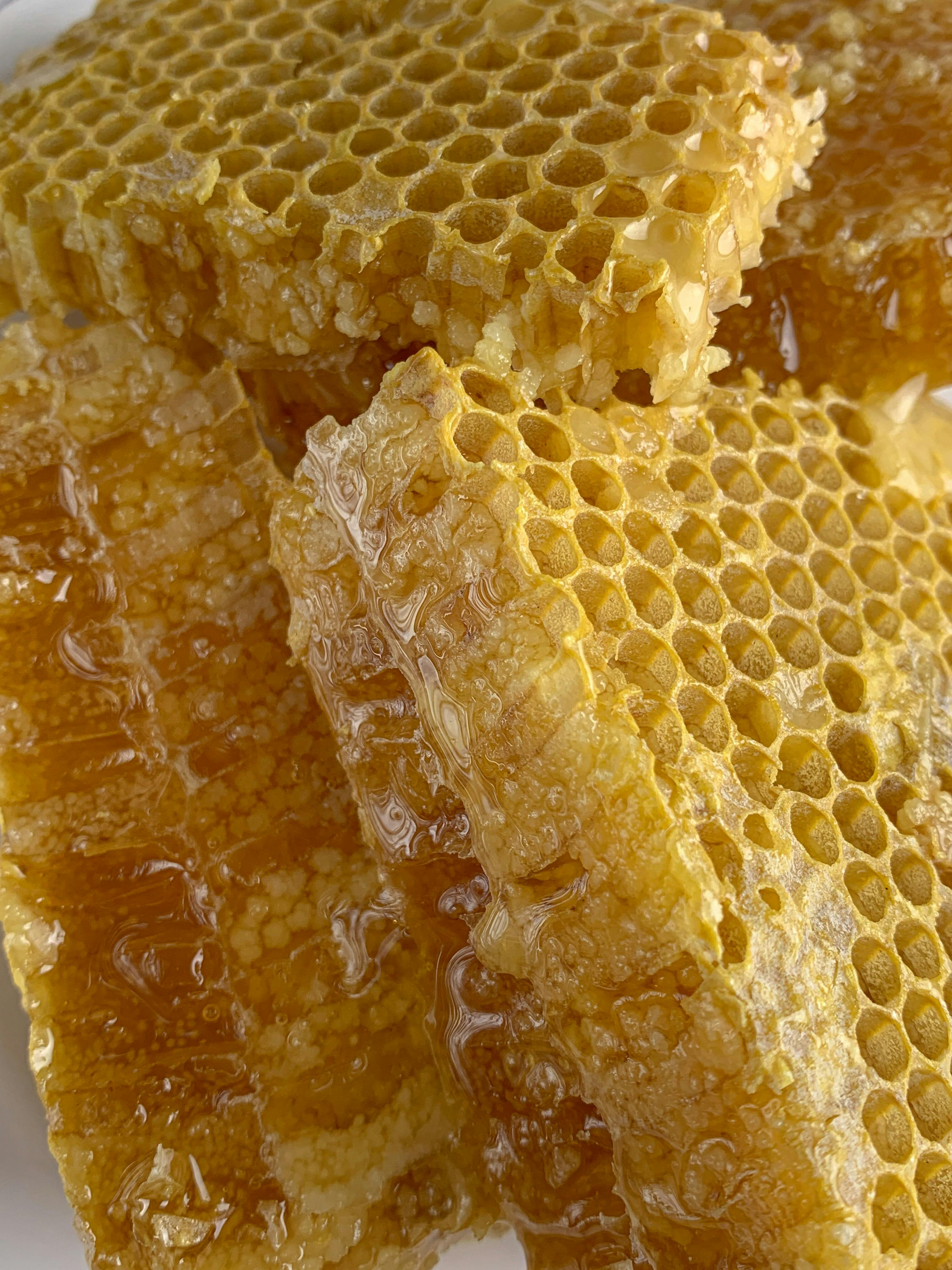
- Add a wedge of honeycomb if you can find one. It is a showpiece, and guests love cutting into it.
Plating matters more than people think. Spread the cheeses out so each has room, tuck the meats into loose folds rather than flat slices, and dot the little honey pots around the board so no one has to reach far. Fill the gaps with grapes, figs, dried apricots and clusters of nuts. The aim is abundance: a board should look like there is plenty, because that is what makes guests relax and graze.
If you would rather the honey line-up was chosen for you, the Entertainer's Selection and the Cheese Board Selection both do the matching for you.
Five Board Mistakes to Avoid
- Putting one bold honey on everything. A dark heather is wonderful on blue cheese but drowns a delicate brie. Offer a range.
- Sharing one spoon between pots. Flavours muddle fast. Give each honey its own spoon or drizzler.
- Serving cheese fridge-cold. Cold mutes flavour and aroma. Let it warm up for half an hour first.
- Over-drizzling. Honey is a finishing touch, not a sauce. A thread is enough; guests can add more.
- Forgetting the supporting cast. Figs, walnuts, grapes and good crackers are what turn honey and cheese into a proper grazing board.
Crystallised honey is not a fault, by the way, it is a natural stage. Stand the jar in warm water for a few minutes and it loosens. More on that in the science behind the solid state of raw honey.
Tips From Our Kitchen
- Decant into little pots: small ramekins or honey pots with wooden drizzlers look the part and stop the board getting sticky.
- Label them: a tiny card by each pot, acacia, wildflower, heather, turns your board into a guided tasting.
- Think about colour: pale acacia, golden wildflower and dark heather look beautiful lined up, and the colour hints at the strength.
- Pair drinks too: a honey on the board echoes beautifully with a glass of port, a sweet sherry or a crisp cider.
Fun Facts & Curiosities
- Honey and cheese is ancient. The pairing goes back to antiquity; Roman writers recorded honey served with cheese as a delicacy long before the modern grazing board.
- Colour hints at strength. As a rough guide, paler honeys such as acacia are milder, while darker ones such as heather are bolder, handy when you are matching to cheese.
- Honeycomb is edible, wax and all. A wedge on the board is both a showpiece and a treat; the wax is harmless and chews like a mild gum.
For more, dip into our 8 facts about honey and our collection of honey and bee trivia.
Why Our Honey Is Different
Any good honey lifts a board. It lifts it most when the honey is raw, single-origin and full of character, which is exactly what we set out to make. Every HoneyBee & Co. jar is raw and unblended, from our family's Transylvanian apiaries, tended across six generations of beekeeping by Fanel and Grigore Nistor, or from our British honey supplier, who holds SALSA Certification. It is the same honey that was featured in Vogue's Summer Hot List across three editions in summer 2024.
That range is what lets a single brand cover a whole board, the gentle acacia for the brie, the aromatic linden for the goat's cheese, the bold heather for the blue. Read more about the family and the hives on our about page.
Honey built for the board
Raw, single-origin honey to pair across cheese and charcuterie. Free UK delivery on three or more jars and on every subscription order.
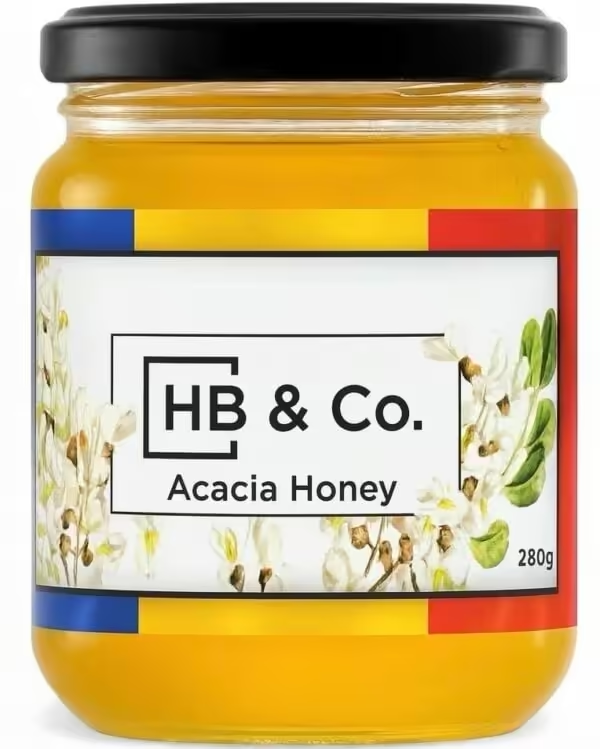
Acacia Honey
Gentle and floral, the one for soft, creamy cheeses.
Shop now ›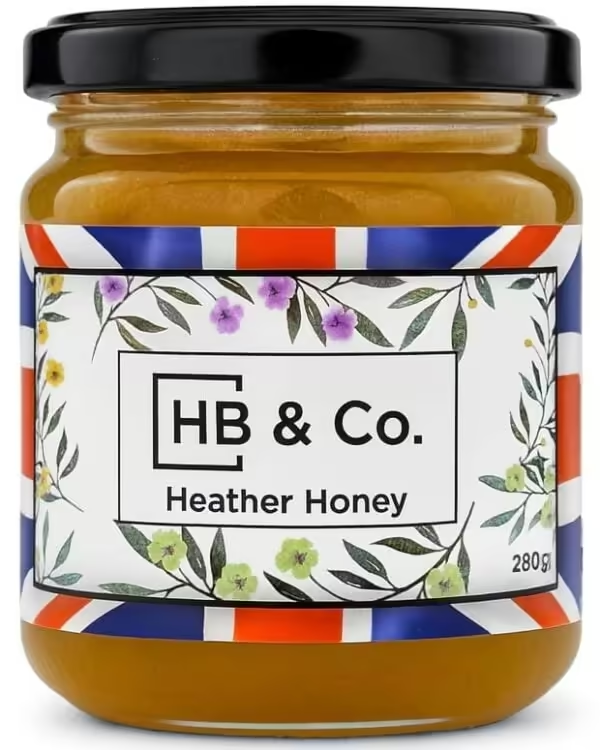
Heather Honey
Dark and malty, the classic match for blue cheese.
Shop now ›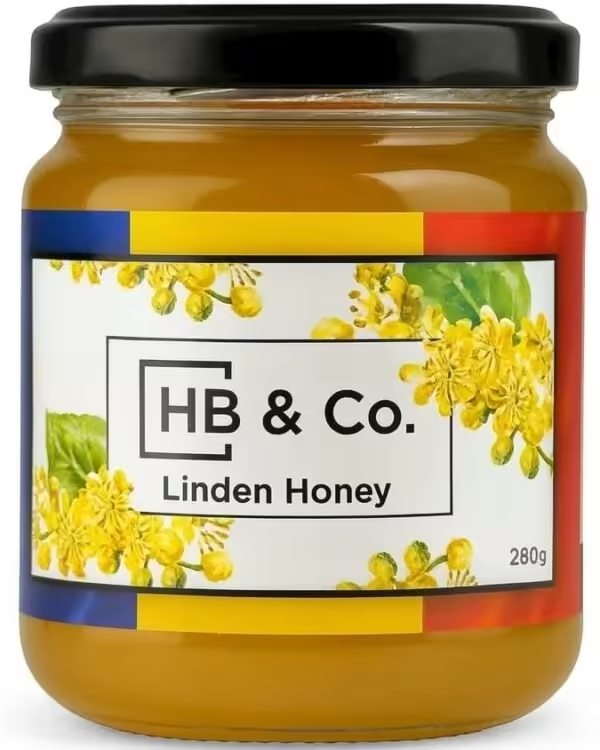
Linden Honey
Aromatic and herbal, a natural with fresh goat's cheese.
Shop now ›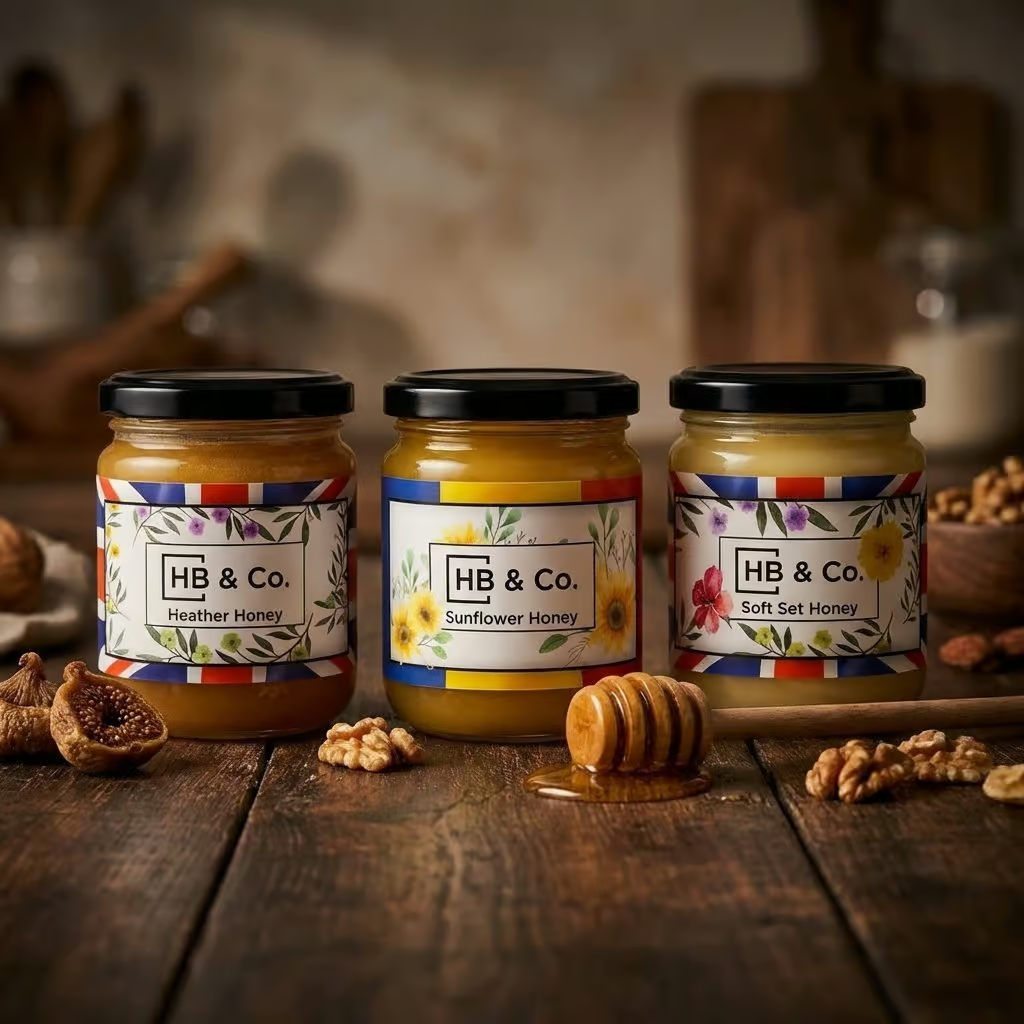
Bold & Rich Trio
Our three deepest honeys, the natural match for Stilton and strong blues. £33.22.
Shop now ›Cheese Board Selection
Acacia, heather and soft set, matched to soft, blue and hard cheeses.
Shop now ›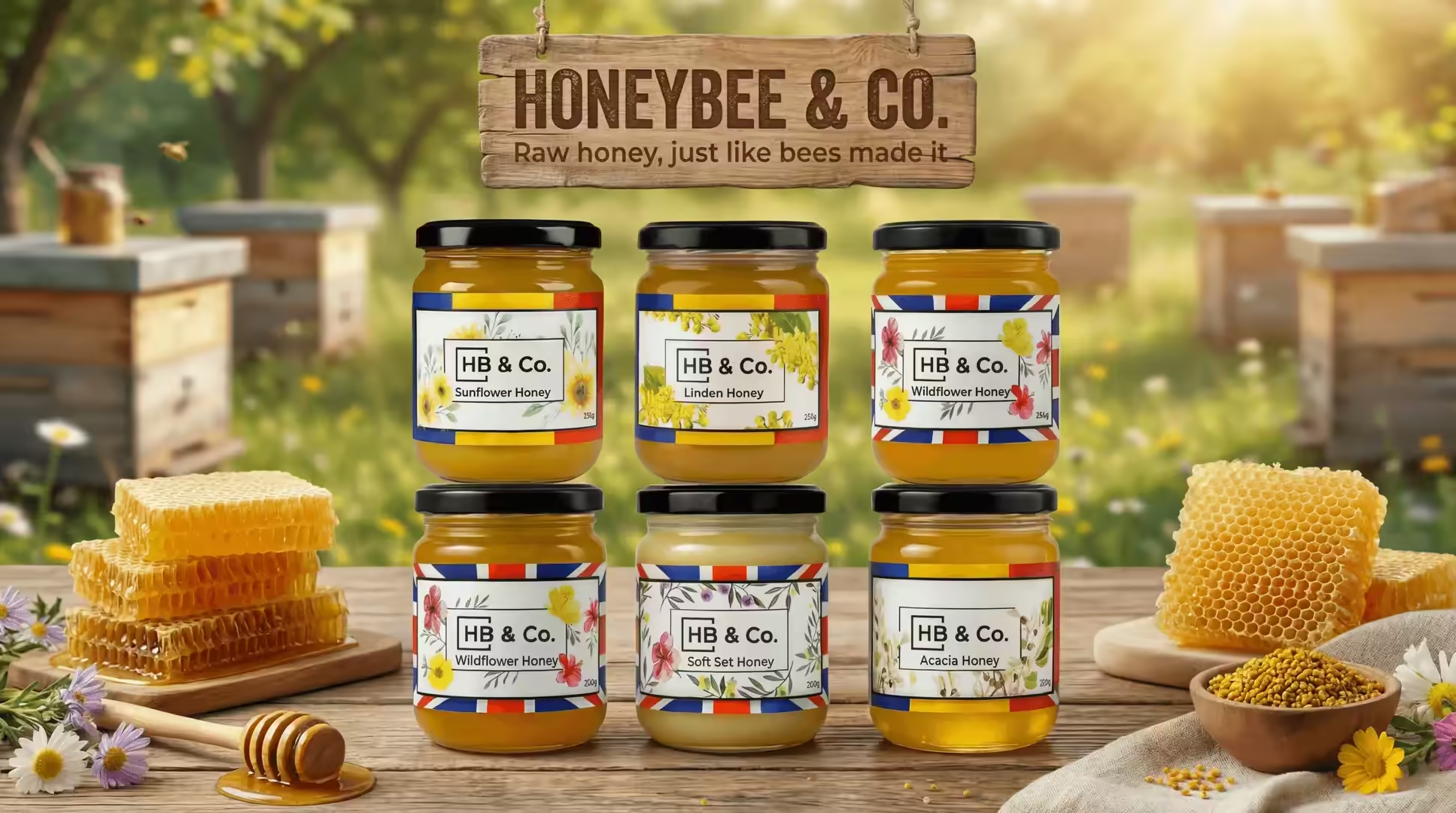
Honey Subscription
Always have a pot ready for guests. 20% off, free delivery.
Shop now ›Frequently Asked Questions
What is the best honey for a cheese board?
What honey goes with blue cheese?
What honey goes with brie?
What honey goes with goat's cheese?
What honey goes with hard cheese like cheddar?
Can you put honey on charcuterie?
How many honeys should I put on a grazing board?
Should honey be served warm or cold on a board?
How do I serve honey on a board?
What else goes on a honey grazing board?
Is your honey raw and single-origin?
What is the best honey bundle for entertaining?

Dragos Nistor
Dragos Nistor is the founder of HoneyBee & Co., a family honey brand built on six generations of beekeeping heritage. He maintains that no cheese board is finished until there is a pot of honey on it.