
 English (UK)
  Italiano
  Français
  简体中文
简体中文 
Honey Before Bed for Sleep: What the Evidence Really Says
In This Guide
Key Takeaways
- The popular claims that honey before bed "fixes" your sleep through liver glycogen or a melatonin boost are theories, not proven facts.
- The human research is small and preliminary. One feasibility trial hinted honey may help poor sleepers, but its own authors say larger studies are needed.
- The single best-evidenced sleep benefit is indirect: honey soothes a night-time cough, which helps you (or a child over one) sleep through it.
- Honey is a sugar. A teaspoon as part of a calming bedtime ritual is fine for most people; it is not a sleeping pill, and it should fit within sensible sugar limits.
- Never give honey to a baby under 12 months. If you want a jar for your evening cup, our heather and acacia are lovely choices.
The Short, Honest Answer
"Honey before bed for better sleep" is one of the internet's favourite wellness tips, and you will find dozens of confident pages, many of them written by honey sellers, explaining exactly how it "recharges your liver" and "triggers melatonin" overnight. We sell honey too, so let us be straight with you: the evidence that honey directly improves sleep in healthy adults is weak and preliminary. The mechanisms are plausible-sounding hypotheses, not settled science.
That does not mean a warm honey drink at night is pointless. A soothing bedtime ritual genuinely helps many people wind down, and honey has one well-evidenced trick up its sleeve that does affect sleep. This guide separates the proven from the merely repeated, answers every question people ask about honey and sleep, and quotes the sources so you can judge for yourself.
In one line
Honey is not a proven sleep aid, but a warm honey drink can be a calming ritual, and it genuinely helps with a night-time cough. Enjoy it for that, keep the spoon modest, and never give honey to a baby under one.
Where the Idea Comes From
The "honey before bed" trend largely traces back to the work of pharmacist Mike McInnes and his book The Honey Diet, which popularised two ideas. Both are worth understanding, and both are theories rather than established medicine.

Theory 1: The liver glycogen idea
Your brain runs almost entirely on glucose, even while you sleep. Overnight, the liver releases stored glycogen to keep blood sugar steady. The theory goes that if those stores run low, the body releases stress hormones such as cortisol and adrenaline to free up energy, and that this can wake you in the early hours. A spoonful of honey before bed, the argument runs, tops up liver glycogen and heads off those 3am wake-ups.
The underlying biology is real: brain energy metabolism and glycogen genuinely fluctuate across the sleep-wake cycle. The leap that is not proven is that eating honey specifically, in a teaspoon, measurably improves sleep in healthy people. That step remains a hypothesis.
Theory 2: The tryptophan and melatonin idea
Honey contains tiny amounts of tryptophan, an amino acid the body can convert into serotonin and then melatonin, the hormone that signals sleep. The natural sugars in honey cause a small insulin response that can help tryptophan reach the brain. It is a tidy story, but the amounts involved are very small, and there is no good evidence that the honey on your spoon raises melatonin enough to change your sleep.
It is worth remembering Harvard Health's general point about honey: its beneficial compounds are present in amounts "so small that they may not affect health".
Source: Harvard Health PublishingWhat the Research Actually Shows
Here is the honest state of the evidence, source by source.
The most-cited "honey beats melatonin for sleep" claim comes from a small, preliminary, open-label feasibility study. Its investigators reported honey appeared safe and helped sleep quality, while stating plainly that a larger, more rigorous trial is still needed.
Source: ClinicalTrials.gov, NCT04207281 (Honey to Improve Sleep Quality)That is the strongest "honey helps you sleep" study going, and it is a feasibility study of around twenty people, not a definitive trial. It is genuinely promising, and genuinely not proof. Clinical reviewers reach the same balanced conclusion.
An independent clinical overview notes the evidence for honey easing early-morning waking is limited, with mixed results: some people report better sleep continuity, while others see no change or even disruption from blood-sugar swings.
Source: Clinical considerations review, GlobalRPH (2025)Where the evidence becomes genuinely strong is not "sleep" in general, but a specific, common cause of broken sleep: coughing.
The One Real Sleep Benefit
If honey reliably helps anyone sleep, it is the person kept awake by a cough. This is the area where the research is solid, and where the NHS actively recommends honey.
A double-blind, randomised, placebo-controlled trial found honey given before bed reduced night-time cough and improved sleep for children and their parents, more than placebo.
Source: Cohen HA et al., Pediatrics (2012)An earlier randomised trial found buckwheat honey eased nocturnal cough at least as well as dextromethorphan, a common cough-medicine ingredient.
Source: Paul IM et al., Archives of Pediatrics & Adolescent Medicine (2007)The NHS advises that adults and children over one can try a warm honey-and-lemon drink for a cough, describing it as "likely to be just as useful and safer" as over-the-counter cough medicines.
Source: NHS informSo if a tickly cough is what is waking you, a warm honey drink before bed has real, repeatable support behind it. That is the honest headline: honey for sleep is mostly about soothing a cough, not about glycogen or melatonin magic. The honey you choose for that drink is where a good, raw, single-origin jar earns its place.
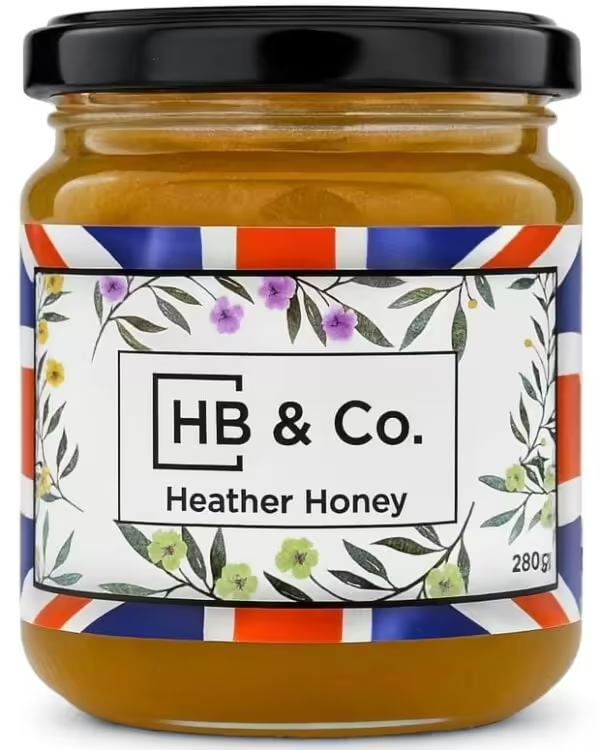
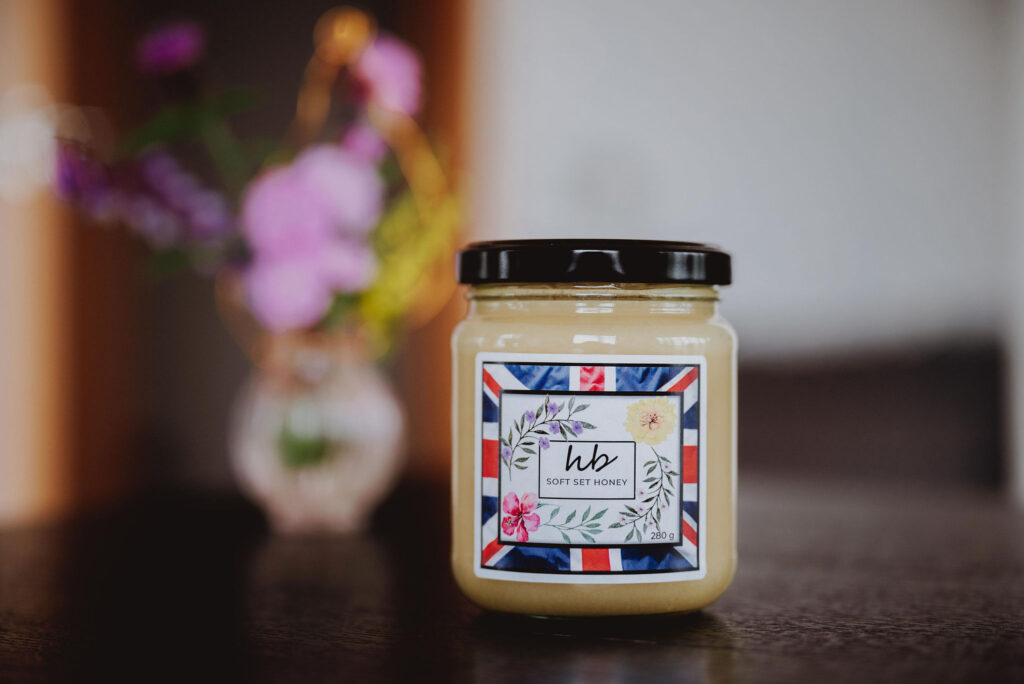
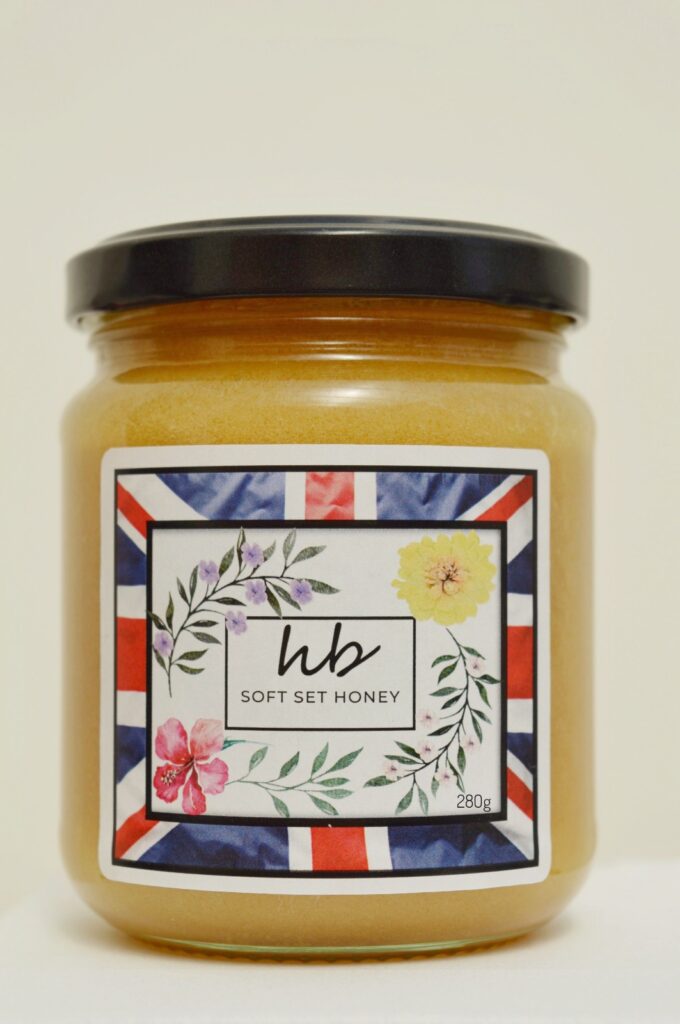
Raw Heather Honey, 280g
Dark, thick and soothing, heather is a wonderful honey to keep by the kettle for a warm evening drink or a hot honey and lemon.
How to Make a Calming Honey Bedtime Drink
Even setting the science aside, a warm drink and a quiet wind-down routine genuinely help many people relax before bed. If you would like honey to be part of yours, here are two classics:
- Hot honey and lemon. Juice of half a lemon and a teaspoon or two of honey in a mug of hot, not boiling, water. The best-evidenced option, especially if a cough is bothering you.
- Warm milk with honey. A spoon of honey stirred into warm milk is a centuries-old bedtime ritual. The comfort is real even if the science is thin; treat it as a soothing habit, not a medicine.
Keep the water warm rather than boiling to protect the delicate aromatics of a good honey, and keep the honey to a teaspoon or so. For more on honey in the cup, see our guide to honey in tea, and our wider look at honey vs sugar.
Honey and Sleep: Every Question Answered
The most-searched questions about honey before bed, answered honestly and with sources. Evidence is rated Well supported Weak / preliminary Not supported.
Is it good to eat honey before bed?
Weak / preliminaryFor most adults it is harmless and can be a pleasant part of a wind-down routine, but it is not a proven sleep aid. The main caution is simple: honey is sugar, so keep it to a teaspoon, and mind your teeth. It should never be given to a baby under one year.
Sources: NHS free-sugars guidance; ClinicalTrials.gov NCT04207281.
Does honey actually help you sleep?
Weak / preliminaryPossibly a little, for some people, but it is not established. The only strong evidence is indirect: honey eases a night-time cough, which improves sleep during a cold. The direct claims rest on small, preliminary studies.
Sources: Cohen 2012 (Pediatrics); ClinicalTrials.gov NCT04207281.
How is honey supposed to help you sleep?
Weak / preliminaryTwo theories: that honey tops up liver glycogen and prevents blood-sugar dips that wake you, and that its trace tryptophan supports melatonin. Both are plausible but unproven in healthy people, and the active amounts are tiny.
Sources: McInnes, The Honey Diet; Harvard Health Publishing.
What does the actual research say about honey and sleep?
Weak / preliminaryThe leading study is a small, open-label feasibility trial of around twenty poor sleepers, which hinted honey may help and was safe, but whose authors stress a larger trial is needed. There is no large, definitive trial showing honey improves sleep in healthy adults.
Source: ClinicalTrials.gov, NCT04207281.
How much honey should I eat before bed?
Weak / preliminaryThe bedtime-honey advocates suggest about one teaspoon (roughly 5 to 7g). There is no proven dose, and more is not better. The NHS advises adults keep free sugars, which include honey, to around 30g a day in total.
Source: NHS, free-sugars guidance.
When should I eat honey before bed?
Weak / preliminaryThe usual suggestion is 20 to 30 minutes before sleep, often in a warm drink. This timing is conventional rather than clinically established, so treat it as a comfortable ritual rather than a precise prescription.
What is the best honey for sleep?
Not supportedNo honey is proven to be "best for sleep", and any brand claiming a specific sleep honey is ahead of the evidence. Choose one you enjoy in a warm drink. A bold heather or a mild acacia both work beautifully.
Does honey and warm milk help you sleep?
Weak / preliminaryIt is a centuries-old comfort, and a small study in hospitalised patients reported better sleep with a milk-and-honey mixture. The likely driver is relaxation and routine rather than a specific honey effect. Lovely as a ritual; not a guaranteed remedy.
Does honey before bed help with insomnia?
Not supportedHoney is not a treatment for clinical insomnia. If you regularly struggle to fall or stay asleep, the evidence-based steps are good sleep hygiene and, where needed, medical advice. Speak to your GP rather than relying on honey.
Does honey raise blood sugar or keep you awake at night?
Weak / preliminaryHoney is a sugar, so it does raise blood glucose, though it has a slightly gentler effect than table sugar. For some people a sugary snack before bed can disturb sleep rather than help it. If you have diabetes, count honey as you would any added sugar.
Source: Harvard Health Publishing; GlobalRPH clinical review.
Does honey before bed reduce cortisol?
Not supportedThis is part of the blood-sugar theory rather than a demonstrated fact. There is no good human evidence that a teaspoon of honey meaningfully lowers night-time cortisol.
Is raw honey better than processed honey for sleep?
Not supportedThere is no proven sleep advantage to raw honey. What raw, unfiltered honey genuinely offers is more aroma, pollen and character, because it is not heat-treated. Choose raw for flavour and provenance, not for sleep.
Does honey before bed help you lose weight?
Not supportedNo. This claim comes from the same "Honey Diet" theory, but honey is a calorie-dense sugar. Swapping it in before bed will not cause weight loss, and eating it in addition to your normal diet adds calories.
Source: Harvard Health Publishing.
Is it OK to eat honey every night?
Weak / preliminaryFor most adults, a teaspoon of honey most nights is fine as part of a balanced diet, as long as it fits within sensible sugar limits and you look after your teeth. It is a treat, not a supplement to take indefinitely for health reasons.
Source: NHS, free-sugars guidance.
Does honey before bed give you energy or make you hyper?
Weak / preliminaryA teaspoon provides a small amount of sugar and energy, but not enough to wire most people. The "sugar makes you hyper" idea is itself largely a myth in adults. Keep portions modest and it should not disrupt sleep.
Can children have honey before bed?
Well supportedChildren over one year can have honey, and the NHS specifically suggests a spoonful, ideally in a warm drink, about half an hour before bed to ease a night-time cough and help them sleep. Follow NHS guidance on amounts for young children.
Source: NHS Healthier Together; Cohen 2012 (Pediatrics).
Can babies have honey before bed?
Not supportedNo. Honey must never be given to a baby under 12 months because of the risk of infant botulism. This is a firm NHS rule, with no exceptions for bedtime or for soothing a cough.
Source: NHS.
Does honey help a night-time cough so you can sleep?
Well supportedYes. This is honey's best-evidenced sleep-related use. Randomised trials and the NHS support a warm honey drink to ease a cough in adults and children over one, which in turn improves sleep during a cold.
Sources: Cohen 2012 (Pediatrics); Paul 2007; NHS inform.
What is the Honey Diet or honey hibernation idea?
Not supportedIt is the popular theory, from pharmacist Mike McInnes, that a spoon of honey before bed fuels the liver, improves sleep and aids fat metabolism overnight. It is an interesting hypothesis that captured the public imagination, but it is not backed by robust clinical trials.
Choose a honey worth keeping by the kettle
We will not promise you a better night's sleep. We will promise raw, single-origin honey, traceable to the hive, that makes a warm evening drink genuinely lovely. Free UK delivery on three or more jars and on every subscription order.
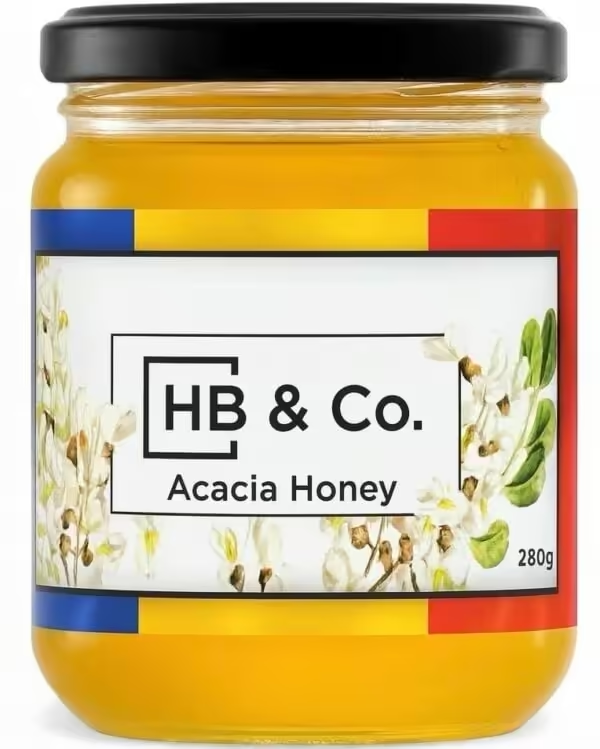
Acacia Honey
Pale, mild and floral, the gentlest honey to stir into a warm drink.
Shop now ›Heather Honey
Dark, bold and soothing, made for a strong evening brew.
Shop now ›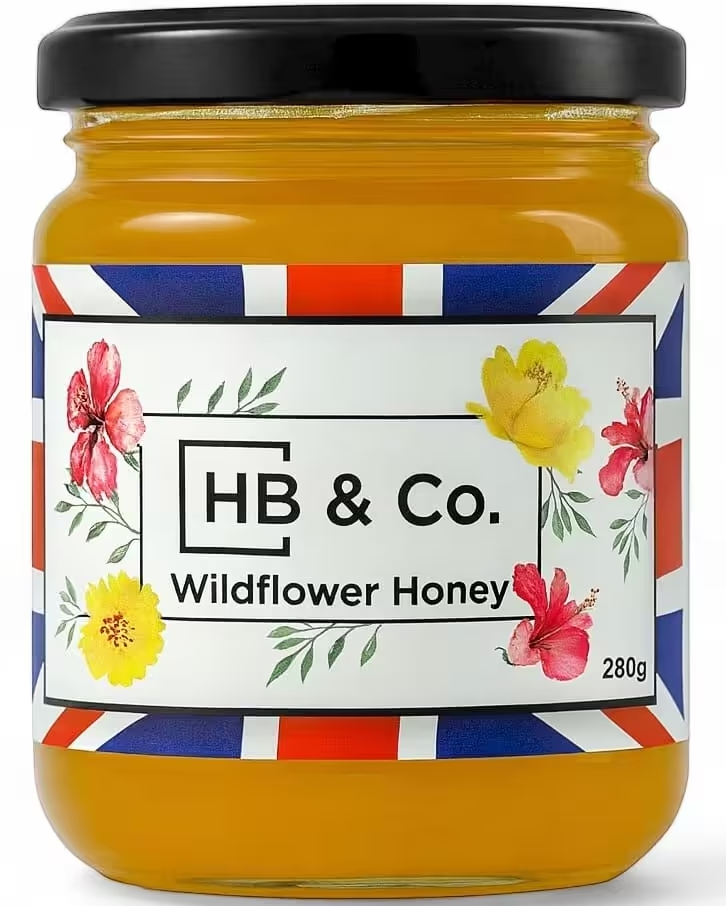
Wildflower Honey
Bright and floral, a British all-rounder for any time of day.
Shop now ›Tea Lovers' Selection
A curated set of our most tea-friendly honeys, ideal for an evening cup.
Shop the selection › Subscribe & saveHoney Subscription
Never run out for your nightly drink. 20% off, free delivery, pause any time. From £8.79 a month.
Start a subscription › BestsellerDiscovery Trio
Acacia, Wildflower and Heather, three honeys to suit any mood and any cup. £33.22.
Explore the trio › For someone specialHoney Gift Sets
Ready-to-give boxes of single-origin honey for the tea lover in your life.
See the gift sets ›
Safety: Who Should Be Careful
The single firm rule: never give honey to a baby under 12 months old. Their digestive systems cannot handle spores honey can contain, which can cause infant botulism. No bedtime exception exists.
Source: NHS- Diabetes and blood sugar: honey raises blood glucose much like other sugars. A sugary snack at bedtime may disturb sleep for some people. Count honey as added sugar and follow your clinician's advice.
- Pregnancy: honey is safe to eat in pregnancy. The under-one rule is about a baby's gut after birth, not the mother, despite what some pages claim.
- Teeth: honey is sticky and sugary. If you have it last thing at night, brush afterwards, or have it earlier in the evening.
- Persistent sleep problems: honey is not a treatment for insomnia. If poor sleep is ongoing, speak to a pharmacist or GP.
A note from us, in plain English
This article reports general information and what health bodies and researchers have published. It is not medical advice, and HoneyBee & Co. makes no medicinal or sleep claims about its products. Honey is a food, not a medicine.
Always follow current NHS guidance, never give honey to a child under one, and speak to a qualified professional about your own sleep or health.
Quick FAQ
Does honey before bed really help you sleep?
How much honey should I have before bed?
What is the best honey for sleep?
Does warm milk and honey help you sleep?
Can babies have honey before bed?
Does honey before bed cause weight gain or weight loss?
Is it safe to eat honey every night?
Does honey help a cough at night?

Dragos Nistor
Dragos Nistor is the founder of HoneyBee & Co., a family honey brand built on six generations of beekeeping heritage. As a honey seller, he would rather lose a sale than repeat a sleep myth, which is why this guide quotes the NHS, Harvard and the clinical trials directly and tells you honestly where the evidence runs thin.
Sources and Further Reading
- ClinicalTrials.gov. Honey to Improve Sleep Quality (NCT04207281); related feasibility study NCT03567395. clinicaltrials.gov
- Cohen HA, Rozen J, Kristal H, et al. Effect of honey on nocturnal cough and sleep quality. Pediatrics, 2012;130:465-471.
- Paul IM, Beiler J, McMonagle A, et al. Effect of honey on nocturnal cough and sleep quality. Archives of Pediatrics & Adolescent Medicine, 2007.
- Abuelgasim H, Albury C, Lee J. Effectiveness of honey for upper respiratory tract infections. BMJ Evidence-Based Medicine, 2021.
- NHS inform (NHS Scotland). Cough self-care, including honey and lemon. nhsinform.scot
- NHS. Colds, coughs and ear infections in children; the under-one honey rule. nhs.uk
- NHS. Free sugars guidance (about 30g a day for adults). nhs.uk
- Harvard Health Publishing. Honey for health; and Are certain types of sugars healthier than others? health.harvard.edu
- GlobalRPH. Raw honey and early morning awakening: clinical considerations (2025).
- McInnes M. The Honey Diet. Popular source of the bedtime-honey-for-sleep theory (not a clinical trial).
For general information only; not medical advice. HoneyBee & Co. makes no medicinal or sleep claims about its products. Quoted text is the wording of the cited organisations; please consult the original sources, and a qualified professional, regarding your own health and sleep.