
 English (UK)
  Italiano
  Français
  简体中文
简体中文  한국어
한국어 
Honey for Athletes: What the Science Says and What the Law Allows
Honey is carbohydrate. That much is simple. What almost every article on this subject gets wrong is what you are permitted to say about it, and why that matters more than you would think.
Start with the numbers, not the marketing
Composition of honey, per standard reference data
Figures describe honey as a food, drawn from standard composition data. They are not a claim about any product.
Search "honey pre workout" and you will find hundreds of pages telling you what honey will do for your training. Almost none of them are allowed to say it. That is not a technicality. In Great Britain, what a food business may claim about a food is set out in law, and the gap between what those pages assert and what the register permits is enormous.
We sell honey. We also sponsor an elite netball club. Both of those facts give us an obvious commercial interest in telling you that honey is a wonder fuel. This article does the opposite. It sets out the composition, reports what the science actually established, and then shows you precisely where the legal line sits, including the part where our own product cannot get anywhere near it.
If you want the short version: honey is a perfectly good whole-food source of carbohydrate, it tastes considerably better than most things marketed at athletes, and anyone promising you more than that is either guessing or breaking the rules.
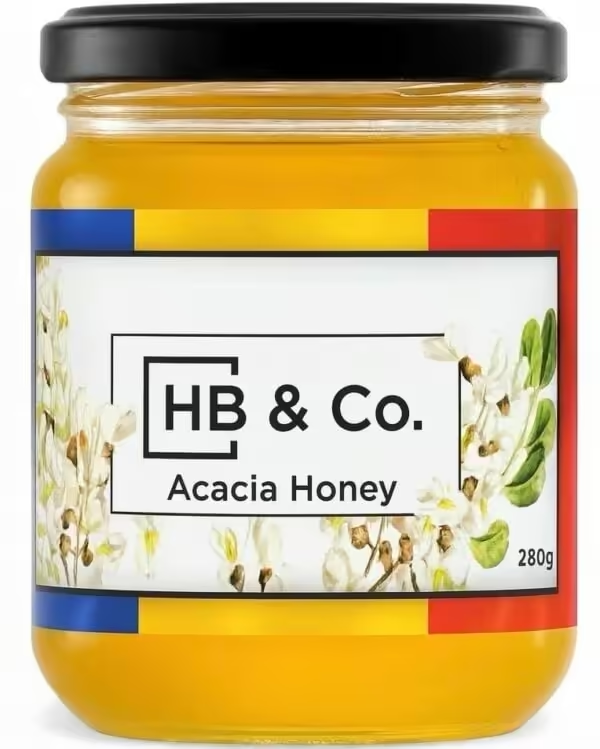
Raw Acacia Honey, 280g
Our palest and mildest honey, slow to crystallise, with a clean finish that does not overpower porridge or yoghurt. Raw, unpasteurised, never heated above 40C, and traceable to named hives. Our best seller, and the one we would put on your breakfast.
Free UK delivery on orders of three jars or more. Sold on flavour and provenance, not on performance.
What honey is made of
Honey is roughly four fifths carbohydrate and one fifth water, with trace amounts of everything else. The carbohydrate is almost entirely two simple sugars, fructose and glucose, in a ratio that sits near one to one and shifts depending on the floral source. Acacia honey runs higher in fructose, which is why it stays runny far longer than most. Heather and soft set honeys run differently again.
That composition is worth understanding for a practical reason rather than a promotional one. Glucose and fructose are absorbed by different transport routes in the gut, which is why sports nutrition products so often combine the two rather than relying on glucose alone. Honey arrives with that mixture already in place, which is a fact about honey, not an advantage we are claiming for our jars.
The rest of honey is small. There are trace minerals, trace enzymes, small quantities of organic acids and polyphenols that vary enormously by floral source and by season. Raw honey retains more of these than heat-treated honey does, which is why we never take ours above 40C. But trace means trace. Nobody is meeting a nutrient requirement from a spoonful of honey, and any page telling you otherwise is selling something.
If you want the full comparison against table sugar, syrups and the rest, we have written that up separately in honey versus sugar, and the difference between raw and supermarket honey is covered in raw honey versus regular honey.
What the research actually established
There is one relevant piece of settled science here, and it is narrower than the internet suggests.
In 2013 the European Food Safety Authority assessed a submission on glycaemic carbohydrates and muscle recovery. Its panel concluded that a cause and effect relationship is established between the consumption of glycaemic carbohydrates, particularly in the first hours following strenuous exercise, and the recovery of normal muscle function through the replenishment of skeletal muscle glycogen stores. That opinion led to an authorised claim, brought into Great Britain law after EU exit.
That opinion became an authorised claim under Commission Regulation (EU) 2015/7, and it is listed on the Great Britain register as authorised. The claim reads, in full: "Carbohydrates contribute to the recovery of normal muscle function (contraction) after highly intensive and/or long-lasting physical exercise leading to muscle fatigue and the depletion of glycogen stores in skeletal muscle."
Read that carefully. The subject of the claim is carbohydrates, which the conditions define as those metabolised by humans, excluding polyols. It is not honey. It is not any brand of honey. It is a nutrient, and honey belongs to it in the same way that rice, bananas and jelly babies do.
Two further claims cover the period during exercise, and both apply to carbohydrate-electrolyte solutions rather than to foods. One concerns the maintenance of endurance performance during prolonged endurance exercise, the other the absorption of water during physical exercise. Their conditions are compositional and precise: the solution must supply 80 to 350 kcal per litre from carbohydrate, at least 75% of that energy must come from carbohydrates producing a high glycaemic response, sodium must sit between 20 and 50 mmol per litre, and osmolality between 200 and 330 mOsm per kg of water.
That specification is worth reading twice if you have met the "honey and salt pre workout" idea online. It describes a formulated drink measured to a standard. Honey stirred into water with a pinch of salt is not automatically that drink, and nobody can tell you it is without measuring what they have made.
What this means in plain terms
There is authorised science on carbohydrates and recovery after hard exercise. There is authorised science on carbohydrate solutions during long, hard exercise. There is no authorised claim at all for carbohydrate taken before exercise, which is precisely the thing the phrase "honey pre workout" is asking about.
The fuelling window, and where the law sits on it
The diagram below maps the three points at which athletes typically think about carbohydrate against what a food business in Great Britain is permitted to say at each one. We have not seen anyone else lay it out this way, largely because the honest version is unflattering to almost everyone selling in this space.
Why we cannot make the one claim that exists
Here is the part most brands would leave out.
The recovery claim carries conditions of use, and they are specific. Consumers must be told that the beneficial effect is obtained with carbohydrates, from all sources, at a total intake of four grams per kilogram of body weight, in doses, within the first four hours and no later than six hours after the exercise in question. The claim may only be used for foods intended for adults who have actually performed that exercise.
Note the phrase "from all sources". The threshold is a total carbohydrate intake across everything a person eats, which is precisely why no single food sensibly owns this claim. But the honest test is what it would take from honey alone, so here it is.
So do the arithmetic honestly.
The arithmetic, for a 70kg athlete
Which is absurd, and we are not going to pretend otherwise. Meeting the condition of use for that claim through honey alone would mean eating more than an entire jar in a single sitting. That is not a serving. It is not something any sensible person would do, and it is not something we would ever suggest.
This is why you will find no health claim anywhere on this page. Not because the science is weak, but because our product cannot honestly satisfy the conditions attached to the only claim that applies.
Compare that with the pages currently ranking for these searches. Fitness blogs, supplement sellers, and a great deal of content built around the phrase "honey and salt pre workout", all asserting effects for which no authorised claim exists at any dose. We would rather rank second with the accurate version.
How athletes actually use honey
Strip out the claims and something more useful remains: honey is a whole food that people who train hard genuinely enjoy eating, and it fits into ordinary meals without ceremony.
| Occasion | How it tends to be used | Honey that suits it |
|---|---|---|
| Breakfast before a session | Stirred through porridge or yoghurt, on seeded toast | Acacia, for its mild, clean flavour |
| Between training blocks | On oatcakes, in a flapjack, with nut butter | Soft Set, because it spreads without running |
| In the evening | In herbal tea, over Greek yoghurt | Linden, for its distinctive floral note |
| Cooking | Glazes and marinades, dressings | Wildflower, which carries stronger flavours |
Two practical notes that are worth more than most of the advice on this topic. First, do not heat raw honey above 40C and never microwave it, because you lose the enzymes and aromatics you paid for. Second, if you are trying honey in porridge before a session, we wrote up an oats and honey approach in our oats and raw acacia honey piece, which is a good deal more useful than a list of promises.
A note on taste, which is the honest selling point
The difference between our honey and a supermarket squeeze bottle is not performance. It is provenance and flavour. Ours is raw and unpasteurised, traceable to named hives, and it comes from six generations of beekeeping in one family. Our British honey supplier holds SALSA Certification. Our honeys were featured in Vogue's Summer Hot List across three consecutive editions in summer 2024.
None of that will make you faster. All of it makes breakfast better, and if you are eating something most days, that is not a small thing.
Our partnership with London Pulse
We are the Official Honey Partner of London Pulse, London's Netball Super League club. This section describes the partnership. It is not, and should not be read as, a statement about what honey does for athletic performance.
Pulse were founded in 2016 and joined the Netball Super League in 2019. They play their home fixtures at the Copper Box Arena in the Queen Elizabeth Olympic Park in Stratford. In 2025 they won their first Netball Super League title, beating Loughborough Lightning 53-45 in the Grand Final at The O2, in the league's first professional season, and went into 2026 as defending champions. The club is led by Sam Bird, a former England international who joined as head coach in 2019 and became chief executive in 2020.
What drew us to Pulse was not the netball alone. The club runs free sessions for primary school children across all 32 London boroughs and operates a development pathway for athletes aged 14 to 21. That community work is the reason the partnership has lasted.

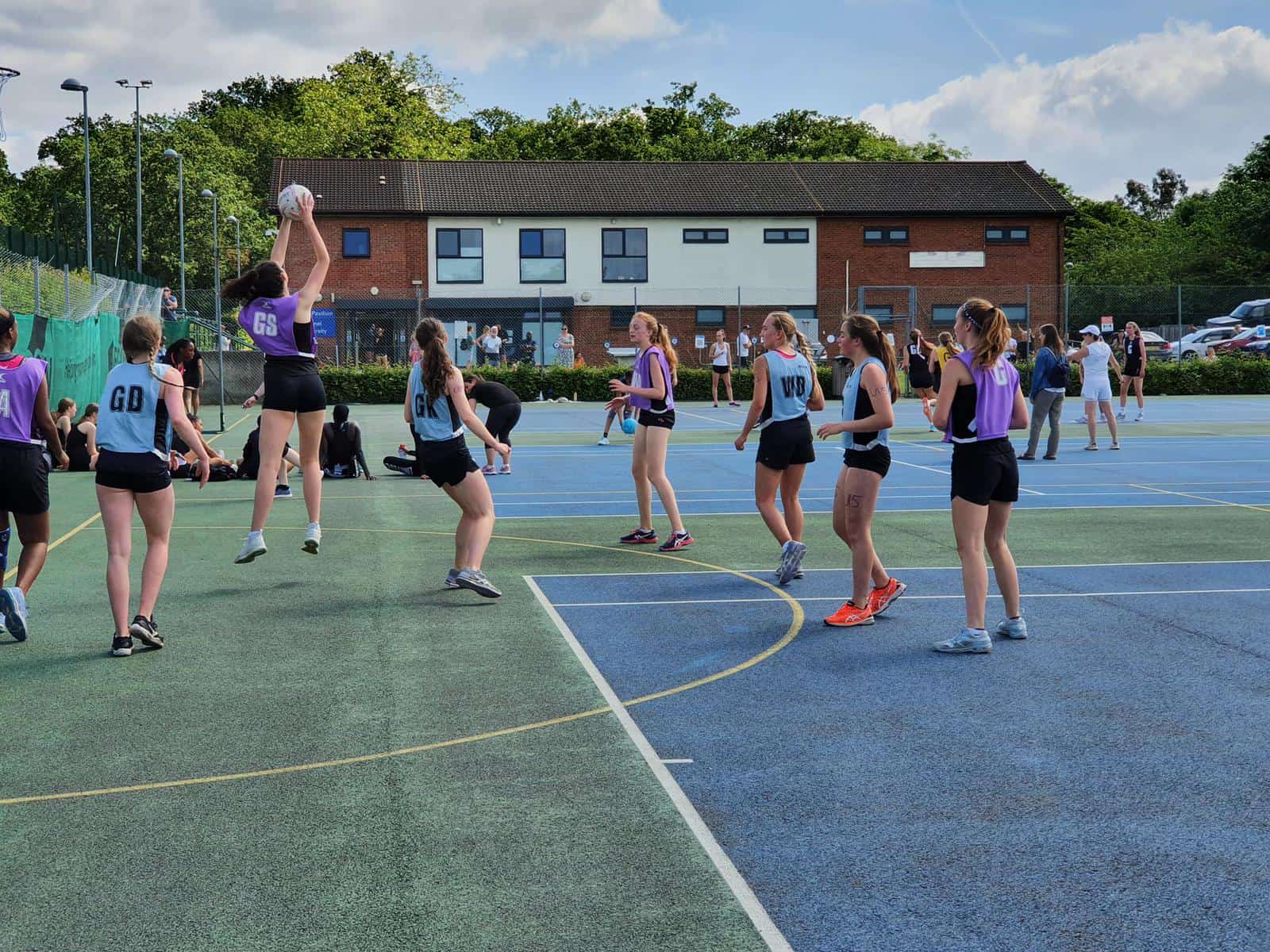

Photographs taken at London Pulse Pathway Hub League Fixtures sponsored by Visions in Education.
"Good nutrition is such an important part of ensuring our athletes remain healthy and top of their game. Our squad love the honey and we are delighted to partner with Honey Bee & Co."
Sam BirdCEO and Head Coach, London Pulse Netball
The honeys we would put on your breakfast
Raw, unpasteurised, traceable to the hive. Chosen here for flavour, which is the only thing we will claim for them.
Acacia Honey
Our mildest and palest honey, slow to crystallise, with a clean finish that does not overpower porridge or yoghurt. Our best seller.
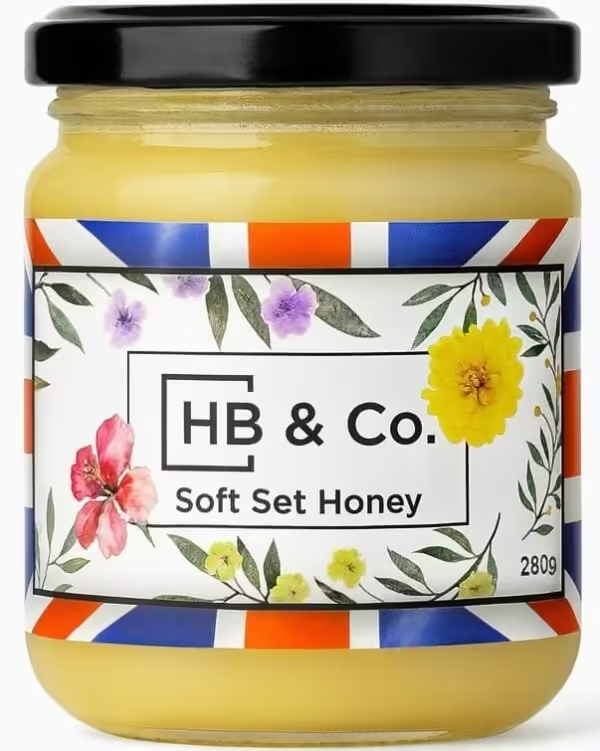
British Soft Set Honey
Thick and spreadable rather than runny, so it stays where you put it. Unpasteurised, minimally strained, with no heat applied.
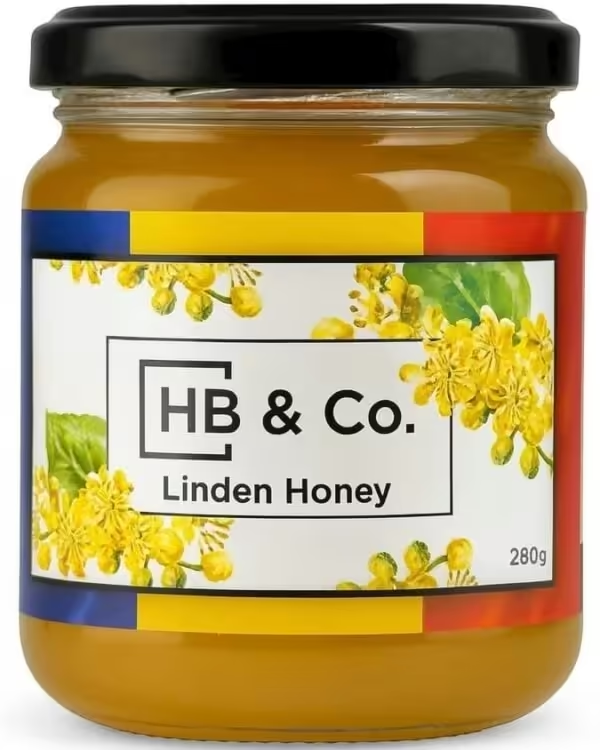
Linden Honey
Distinctive and faintly floral, from the lime tree blossom. The one most people reach for in the evening, in tea or over yoghurt.
Eating it most days? A honey subscription saves 20%, at £8.79 a month. Free UK delivery on orders of three jars or more.
Questions people actually ask
Is honey good as a pre workout?
Honey is a source of carbohydrate, and carbohydrate is what most pre workout foods are built around. Beyond that, we cannot tell you it will do anything for your session, because no authorised claim exists in Great Britain for carbohydrate consumed before exercise. Anyone telling you otherwise is going further than the evidence has been assessed to support.
What we can say is that a spoonful of honey on toast is a normal, pleasant thing to eat before training, and it is easier on most people than a gel.
How much carbohydrate is in a spoonful of honey?
Honey is roughly 82% carbohydrate by weight. A level teaspoon weighs around 7g and therefore contains around 5.8g of carbohydrate. A tablespoon weighs around 21g and contains around 17g. A 280g jar contains roughly 230g of carbohydrate in total.
Can honey replace an energy gel?
They are different products doing different jobs. Energy gels are formulated to a specification, packaged for use mid-effort, and designed to be taken without water in some cases. Honey is a food in a glass jar.
Plenty of people do carry honey instead, usually decanted into a small flask or sachet. Whether that works for you is a practical question about your stomach, your sport and your kit, not a question we can answer with a claim.
Is raw honey better than regular honey for someone who trains?
Nutritionally the carbohydrate content is broadly similar, because sugar is sugar. Raw honey retains more of the enzymes, aromatics and trace compounds that heat treatment removes, which is a difference in the product rather than a difference in performance.
We have set out the full comparison in raw honey versus regular honey.
Which of your honeys do the London Pulse squad have?
The club receives our range rather than a single variety, and preferences differ from player to player, as they would in any group. Sam Bird has said the squad enjoy it, which is as far as we would take that.
Why does this article not tell me honey will improve my performance?
Because we are not permitted to, and because it would not be true in the form most people mean it. In Great Britain, only health claims authorised on the national register may be used, and the rules apply to implied claims as much as explicit ones.
The one authorised claim that touches this area concerns glycaemic carbohydrates and the recovery of normal muscle function after strenuous exercise, and its conditions of use require an intake our product cannot sensibly deliver. We would rather explain that than dress it up.
Sources
- European Food Safety Authority, scientific opinion on glycaemic carbohydrates and recovery of normal muscle function after strenuous exercise, EFSA Journal 2013;11(10):3409.
- Authorised claim for carbohydrates and recovery of normal muscle function, Commission Regulation (EU) 2015/7 of 06/01/2015, opinion Q-2013-00234.
- Authorised claims for carbohydrate-electrolyte solutions, Commission Regulation (EU) 432/2012 of 16/05/2012, EFSA Journal 2011;9(6):2211.
- Department of Health and Social Care, Great Britain nutrition and health claims register, last updated 19 May 2026.
- Committee of Advertising Practice, AdviceOnline guidance on food health claims, and Section 15 of the CAP Code.
- Netball Super League and London Pulse published club information, 2025 and 2026 seasons.