
 English (UK)
  Italiano
  Français
  简体中文
简体中文  한국어
한국어 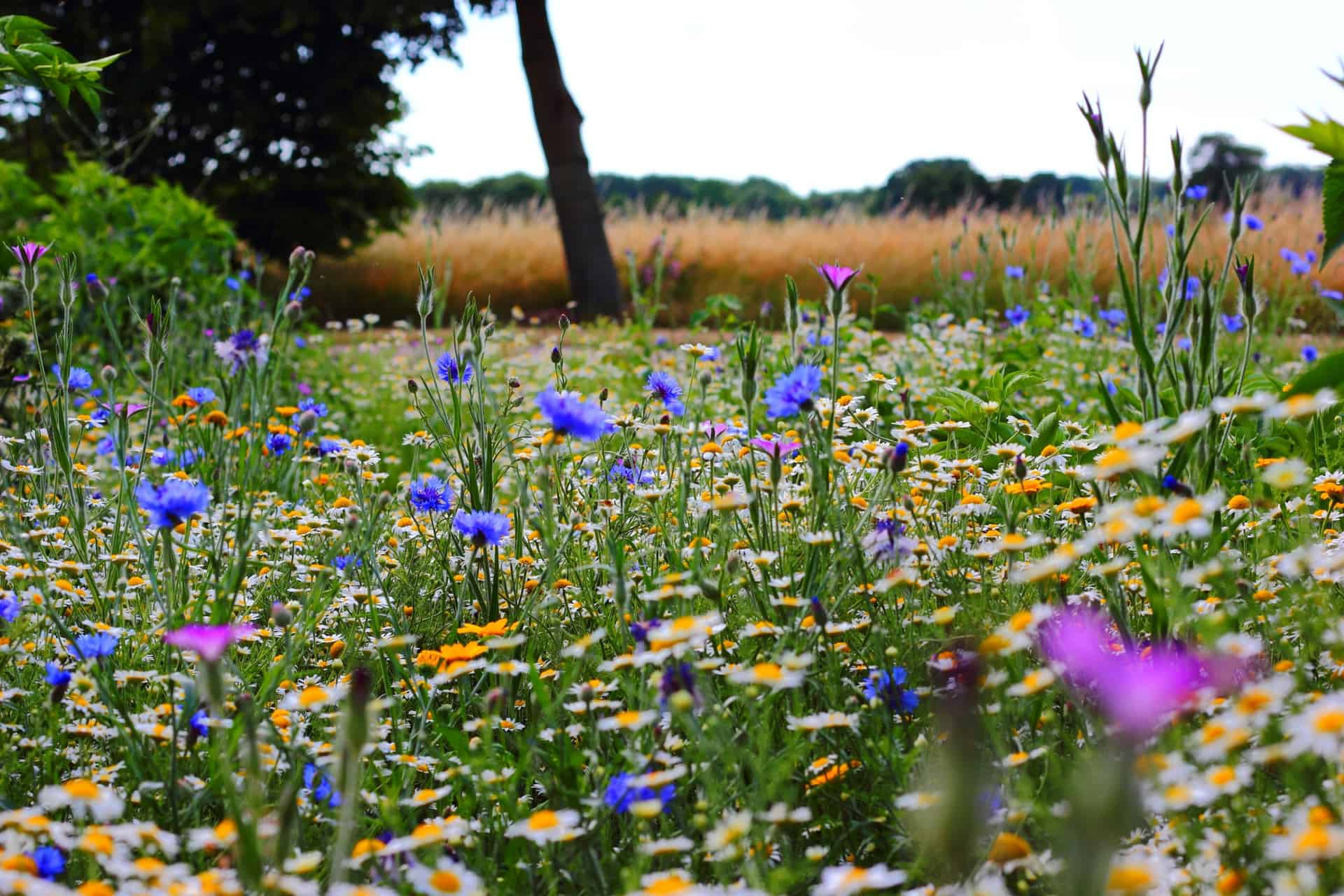
The short answer: possibly, for some people, and the mechanism is plausible. British wildflower honey contains trace amounts of local pollen. The theory is that small, regular doses of that pollen may help some people gradually build tolerance to the allergens that trigger hayfever. The evidence is limited but not nothing. This article covers what we know, what we do not, and why raw wildflower honey is the variety most often discussed in this context.
Hayfever affects roughly one in five people in the UK. Most rely on antihistamines, nasal sprays, and eye drops. Honey is not a replacement for any of those. But as a daily food ritual during pollen season, raw local wildflower honey has a reasonable argument behind it. At HoneyBee & Co., we source our wildflower honey raw from the British Midlands, pollen intact from hive to jar.
What Is Hayfever and Why Does Honey Get Mentioned?
Hayfever, or allergic rhinitis, is an allergic reaction to airborne pollen. When pollen from grasses, trees, or flowers reaches the nose, eyes, or throat of a sensitised person, the immune system treats it as a threat. It releases histamine, which causes the familiar symptoms: sneezing, itchy eyes, runny nose, and a blocked or sore throat.
In the UK, grass pollen is the most common trigger (affecting around 90% of hayfever sufferers), followed by tree pollen in early spring and weed and flower pollen through summer. The season typically runs from late March through September, peaking in June and July.
Honey enters the conversation because of the principle behind allergy immunotherapy: controlled, repeated exposure to an allergen in small doses can, over time, reduce the immune response to it. Allergy injections and sublingual drops used by doctors work on exactly this principle. The question is whether the tiny amounts of pollen naturally present in raw wildflower honey can do something similar.
Single-varietal honeys like Acacia are made from one flower source and contain minimal pollen variety. Wildflower honey draws from dozens of different wildflowers across a named landscape, meaning its pollen profile is broader and more likely to include local species relevant to a given person's triggers. Our British Wildflower honey comes from the Midlands, so the pollen it carries reflects the specific wildflower species growing in that region.
Does Local Honey Help with Hayfever? What the Research Says
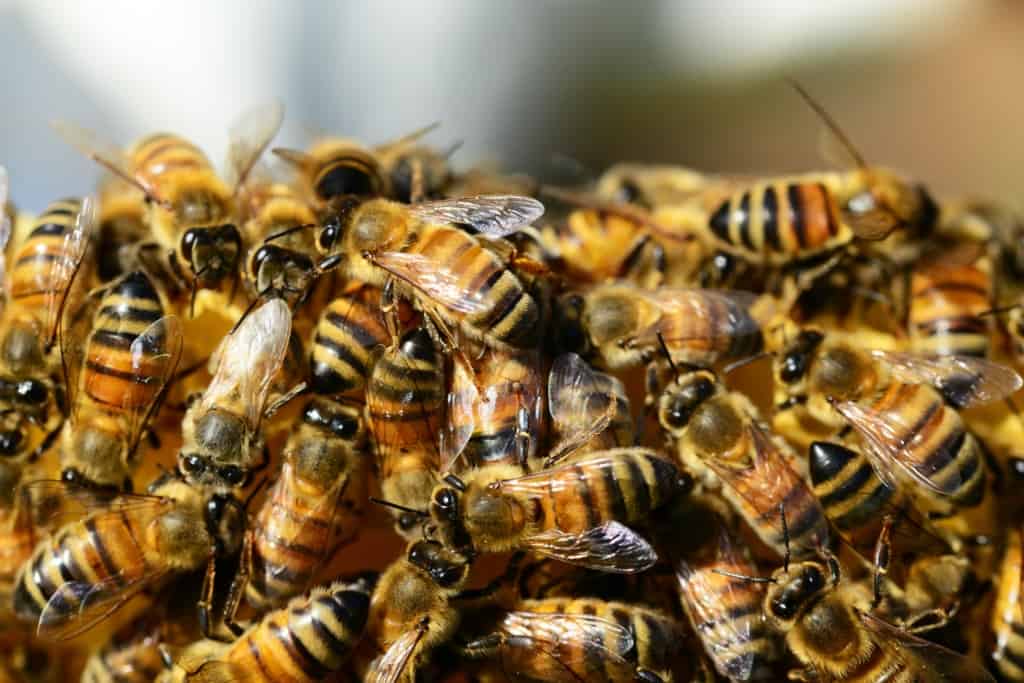
The honest summary: the evidence is mixed, the studies are small, and the claims made by some online sources go well beyond what the data supports. But it is not entirely without foundation either.
Arguments in Favour
- Raw honey contains trace pollen from local wildflowers
- The immunotherapy principle (gradual desensitisation) is medically established
- Some small studies show modest symptom improvement with honey consumption
- Survey evidence from hayfever sufferers reports subjective benefit
- No known harm from moderate daily honey consumption
Limitations and Caveats
- Honey pollen concentration is far lower than clinical allergy doses
- Pollen in honey is mostly from insect-pollinated flowers, not wind-pollinated grasses (which trigger most UK hayfever)
- No large randomised controlled trials in humans confirm the effect
- Pasteurised honey contains little to no active pollen
- Effects, if any, take weeks to months of consistent use
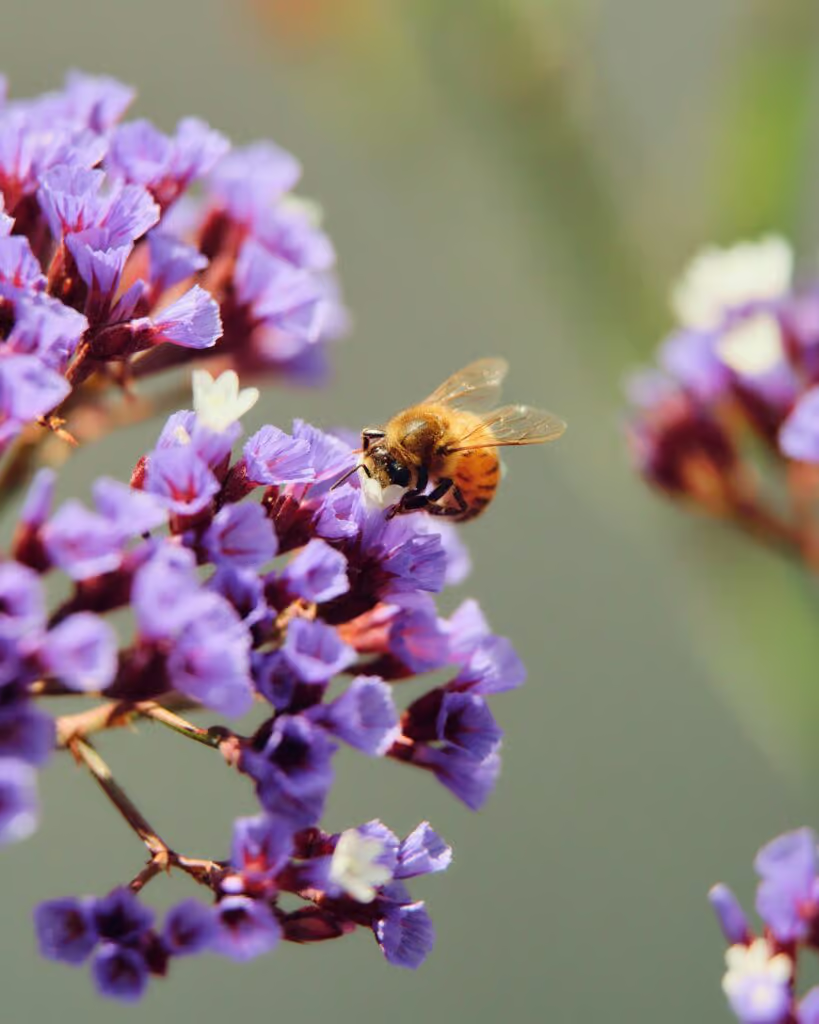
The critical limitation worth understanding: most UK hayfever is triggered by grass pollen, which is wind-pollinated. Bees do not visit grass flowers, so grass pollen does not end up in honey in significant amounts. If your hayfever is primarily triggered by tree or wildflower pollen rather than grass, the case for wildflower honey is somewhat stronger. If grass is your main trigger, the pollen-desensitisation theory applies less directly.
"Raw wildflower honey is not a treatment for hayfever. It is a pleasant, low-risk daily habit during pollen season that some people find really helpful. The distinction matters."
Why Raw Honey Matters (and Pasteurised Does Not Apply Here)
If the potential benefit of honey for hayfever depends on pollen content, then only raw, unpasteurised honey is relevant. Pasteurisation heats honey to temperatures that destroy pollen, enzymes, and most other biologically active compounds. The golden, uniformly clear honey from most supermarket shelves has been through this process.
All HoneyBee & Co. honey is cold-extracted and never heated above hive temperature. The pollen, propolis, and natural enzymes remain intact in every jar. This is not just a marketing claim: you can see the difference. Raw wildflower honey has a natural cloudiness in places, crystallises over time, and has a more complex aroma than its pasteurised equivalent.
When it comes to hayfever, this matters. A 2013 study published in the International Archives of Allergy and Immunology found that patients who consumed birch pollen honey before birch season reported better symptom control than those taking regular honey or antihistamines alone. The honey used in that study was specifically pre-treated with birch pollen. This is a different proposition to eating ordinary wildflower honey, but it illustrates the principle that pollen content and provenance matter.
What Raw Wildflower Honey Actually Contains
Beyond pollen, raw wildflower honey contains a range of compounds that are relevant during pollen season regardless of any desensitisation effect.
Quercetin
A natural flavonoid found in wildflower honey, quercetin has been studied for its anti-inflammatory and antihistamine-like properties. Some research suggests it may help inhibit histamine release from certain cells, though the doses studied are typically higher than what a teaspoon of honey provides.
Antioxidant compounds
Raw honey contains polyphenols, including caffeic acid and flavonoids, that may help reduce oxidative stress associated with allergic inflammation. Darker honeys typically have higher antioxidant concentrations, but raw wildflower honey retains more than any pasteurised alternative.
Soothing properties
Independently of any pollen or immune effect, honey coats and soothes sore, irritated throats. Many hayfever sufferers find a teaspoon of honey, or a cup of tea with honey, provides noticeable relief from throat symptoms during high pollen days. This is a direct, physical effect that requires no theory about desensitisation.
How to Use Wildflower Honey During Hayfever Season
If you want to try wildflower honey as part of your hayfever management, the approach most commonly discussed is consistent daily consumption, started ideally before the pollen season begins rather than during a peak. The logic is the same as other desensitisation approaches: gradual, early exposure rather than reactive use.
- Start early. Begin 4 to 6 weeks before your typical pollen season. In the UK, tree pollen starts in late February to March. Grass pollen peaks June to July. Start in April for grass season, February for tree.
- Be consistent. One to two teaspoons daily, every day. Sporadic use is unlikely to have any cumulative effect if the desensitisation mechanism is what you are relying on.
- Use it raw and local. The honey must be raw and unpasteurised. Supermarket honey, however labelled, is usually not. Ours is. Local or regional provenance increases the likelihood the pollen matches your local triggers.
- Keep it simple. On toast, stirred into warm (not boiling) water with lemon, or straight from a spoon. Adding it to very hot drinks destroys some of its beneficial compounds.
- Keep your antihistamines. Honey is not a replacement for prescribed or over-the-counter hayfever medication. Use both. Tell your GP what you are doing if you have severe hayfever.
Wildflower Honey vs Other Honeys for Hayfever
Not all honeys are equal for this purpose. The variety matters.
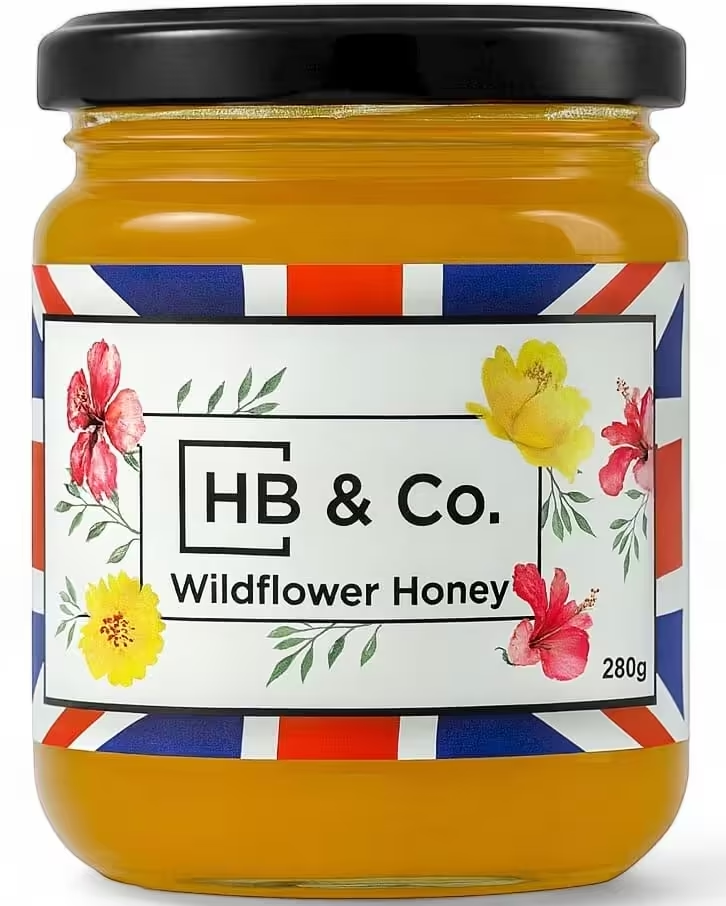
British Wildflower Honey
Broadest pollen profile from dozens of UK wildflowers. Local origin from the Midlands. Raw and unpasteurised. The strongest case for hayfever use.
Shop Wildflower →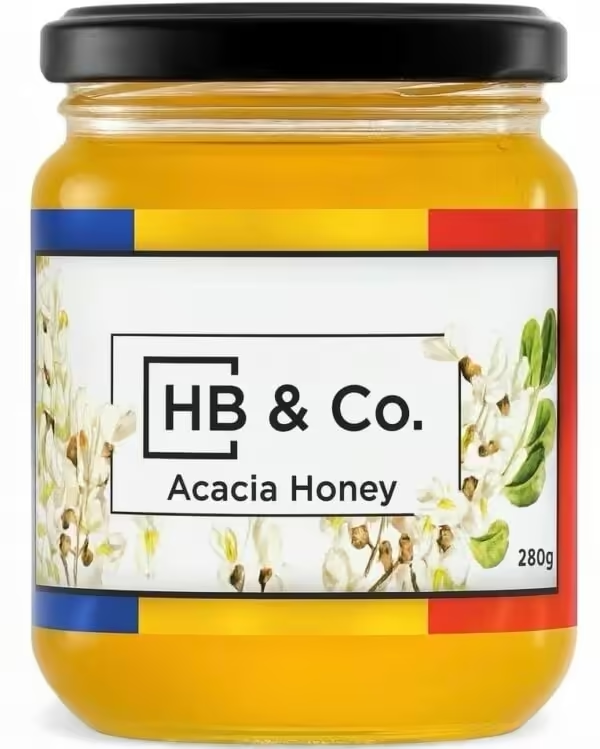
Raw Acacia Honey
Single-varietal from Robinia pseudoacacia in Transylvania. Lower pollen variety than wildflower. Still raw and antioxidant-rich. Useful for throat soothing during pollen season.
Shop Acacia →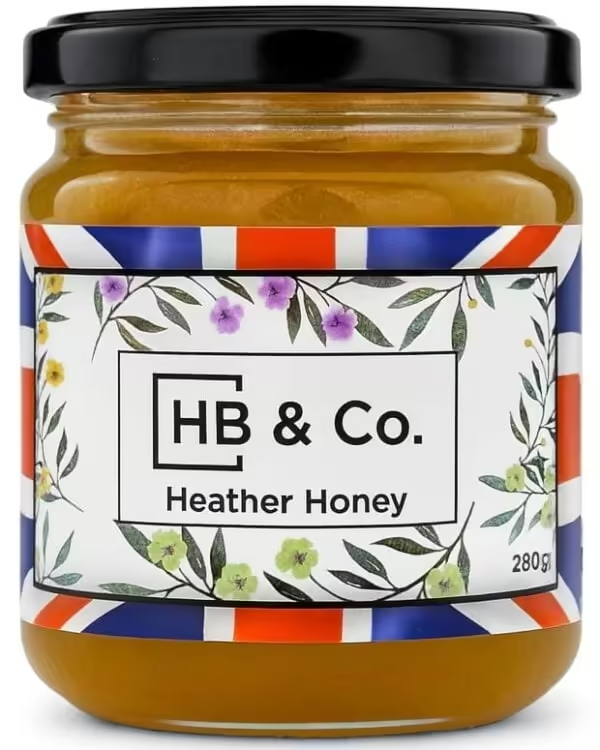
Raw Heather Honey
British-origin from the Yorkshire Moors. Raw, unpasteurised, high antioxidant content. Single-varietal so less diverse pollen, but contains British-origin compounds.
Shop Heather →How the Varieties Compare
Here is how wildflower sits alongside the rest of our range in terms of flavour, texture, and typical use. All are raw. The difference for hayfever purposes is primarily pollen variety and origin.
| Honey | Flavour & Texture | Origin | Hayfever Relevance |
|---|---|---|---|
| Wildflower | Complex, variable; floral with hints of fruit or herbs; usually runny | British Midlands | Broadest pollen profile; strongest local pollen argument |
| Heather | Strong, malty, slightly smoky; jelly-like thixotropic texture | Yorkshire Moors | British-origin, high antioxidants; single-varietal pollen |
| Acacia | Very light, delicate, mild vanilla sweetness; slow to crystallise | Transylvania, Romania | Raw, antioxidant-rich; good for throat soothing; not local |
| Linden | Herbal, slightly minty, aromatic; crystallises at medium pace | Transylvania, Romania | Raw, anti-inflammatory compounds; not local UK pollen |
| Soft Set | Creamy, spreadable, mild; controlled crystallisation process | British Midlands | British Wildflower base; same pollen origin as our Wildflower |
Honey and Hayfever: Managing Expectations
It is worth being direct about what honey can and cannot do.
Antihistamines, intranasal corticosteroid sprays, and allergen immunotherapy are treatments with strong clinical evidence. Fexofenadine, loratadine, cetirizine, and similar antihistamines are effective, affordable, and widely available. Nasal sprays like beclometasone and fluticasone reduce inflammation in the nasal passages significantly. None of this is replaced by honey.
What honey can do: it may offer a modest, cumulative effect for some people if taken consistently and started early. It will soothe an irritated throat directly and immediately. It is pleasant. It is safe for most people. And it is the kind of daily food habit that, if it helps even a little, has no meaningful downside beyond the natural sugars involved.
The people most likely to notice a difference are those with mild to moderate hayfever triggered by insect-pollinated flowers (not grass) who start early in the season, take it consistently, and choose a truly raw, local wildflower honey.
Honey should not be given to children under 12 months of age due to infant botulism risk. People with bee or pollen allergies should consult their GP before consuming raw honey. Honey contains natural sugars; those with diabetes should factor it into their dietary management. None of the information in this article constitutes medical advice. Always consult your GP or pharmacist about hayfever treatment.
About Our British Wildflower Honey
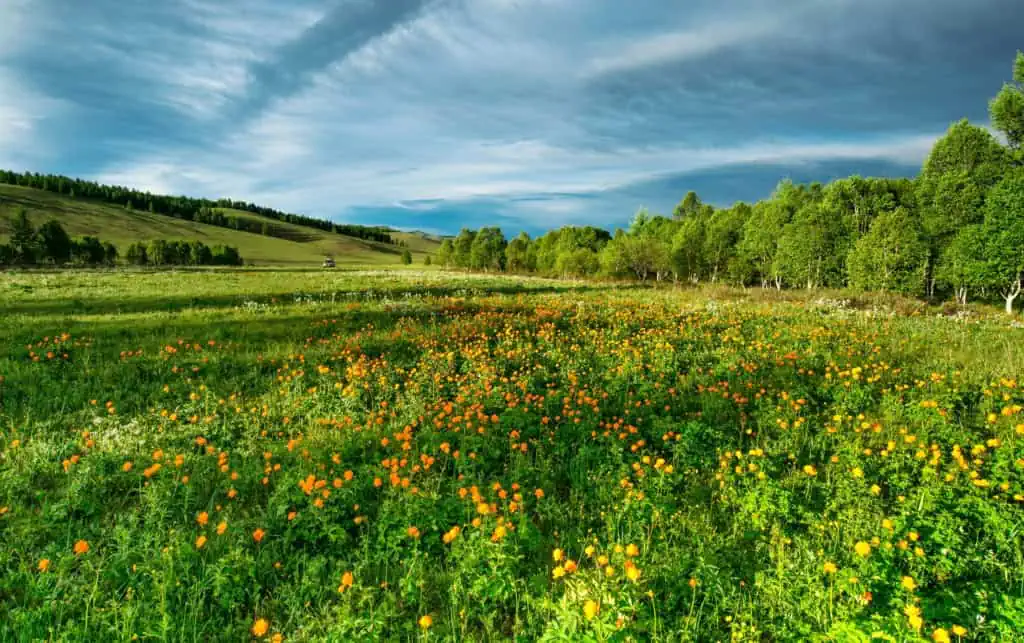
Our British Wildflower Honey is sourced from the British Midlands, harvested by a SALSA-certified independent beekeeper we have worked with for years. The bees forage across pesticide-free meadows and hedgerows, visiting clover, borage, bramble, hawthorn, dandelion, poppy, and cornflower among many others. The result is a honey with a notably broad pollen profile that reflects the real diversity of the Midlands landscape in a given season.
It is cold-extracted, never filtered beyond the removal of wax, never heated, and bottled in glass. The pollen is intact. Every jar is different, because every season is different. That seasonal variation is not a flaw; it is exactly what makes this honey relevant to the hayfever conversation.
You can also subscribe and save 20%, which ensures you have a consistent supply through the whole pollen season without needing to remember to reorder.
What Is Wildflower Honey?
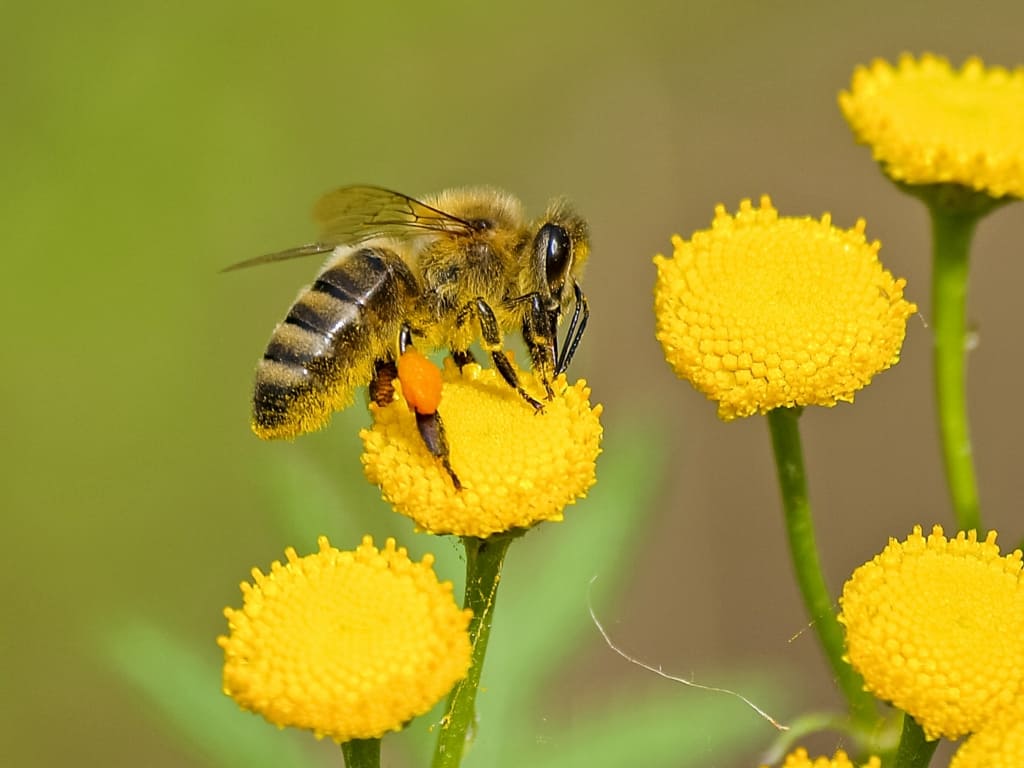
Wildflower honey, also called multifloral honey, is made when honey bees collect nectar from a diverse mix of wildflowers and hedgerow plants rather than focusing on a single bloom. This means the flavour, colour and aroma can shift from year to year, and even season to season, depending on which flowers were in bloom when the bees were foraging. For an in-depth look at honey types, flavours and how each variety is made, our complete guide to honey types covers the full range.
Unlike Acacia honey or Heather honey, which draw predominantly from one flower source, wildflower honey captures whatever the landscape offered during that particular harvest. At HoneyBee & Co., our wildflower honey comes from the British Midlands, where typical forage includes clover, bramble, dandelion and hawthorn, along with everything else flowering along woodland edges and country lanes.
The result is usually a runny honey ranging from golden to rich amber. It may naturally crystallise over time, which is a perfectly normal sign of raw, unprocessed honey. No two jars are quite the same, and that variability is exactly what makes it relevant to the hayfever discussion: the pollen it carries reflects the actual local wildflower landscape, not a standardised blend from a processing facility.
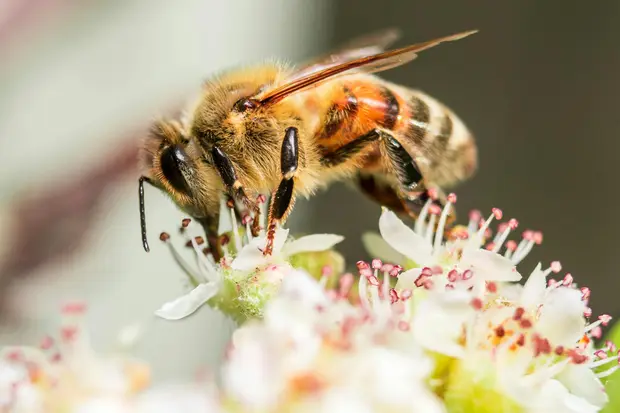
How Is Wildflower Honey Produced?
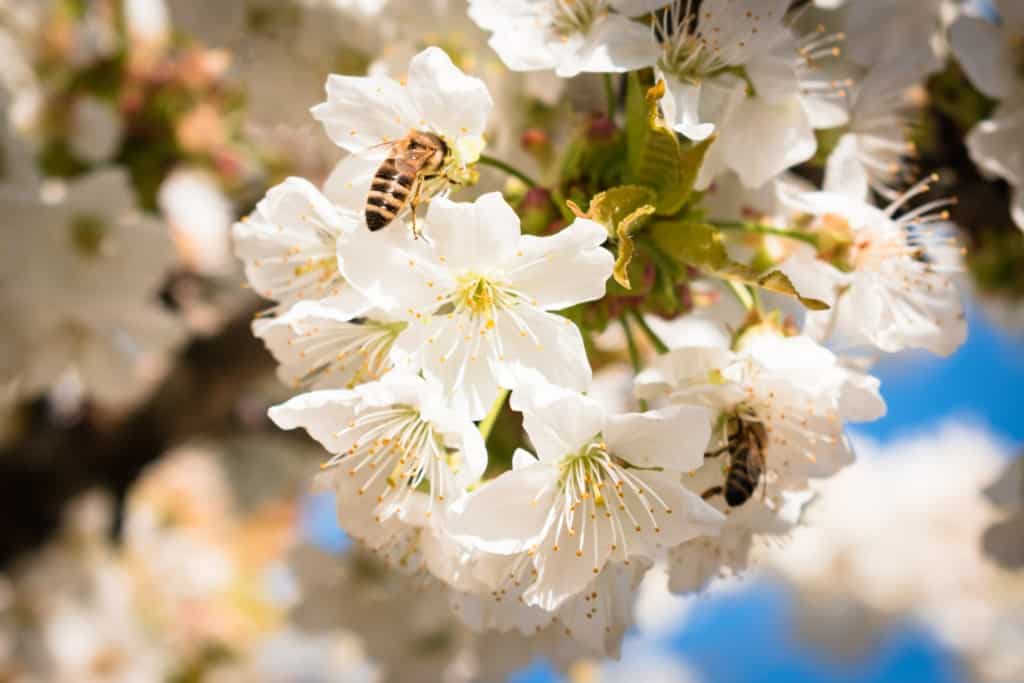
The journey begins with the seasonal foraging cycle. From April through to late summer, bees travel up to five miles from their hives, collecting nectar from whatever wildflowers are in bloom. In spring, that might mean hawthorn blossom and apple trees. By July and August, the bees are visiting clover, thistle, bramble and countless other hedgerow flowers. Our partner beekeepers place hives near pesticide-free meadows, woodland edges and hedgerows to maximise this wildflower diversity.
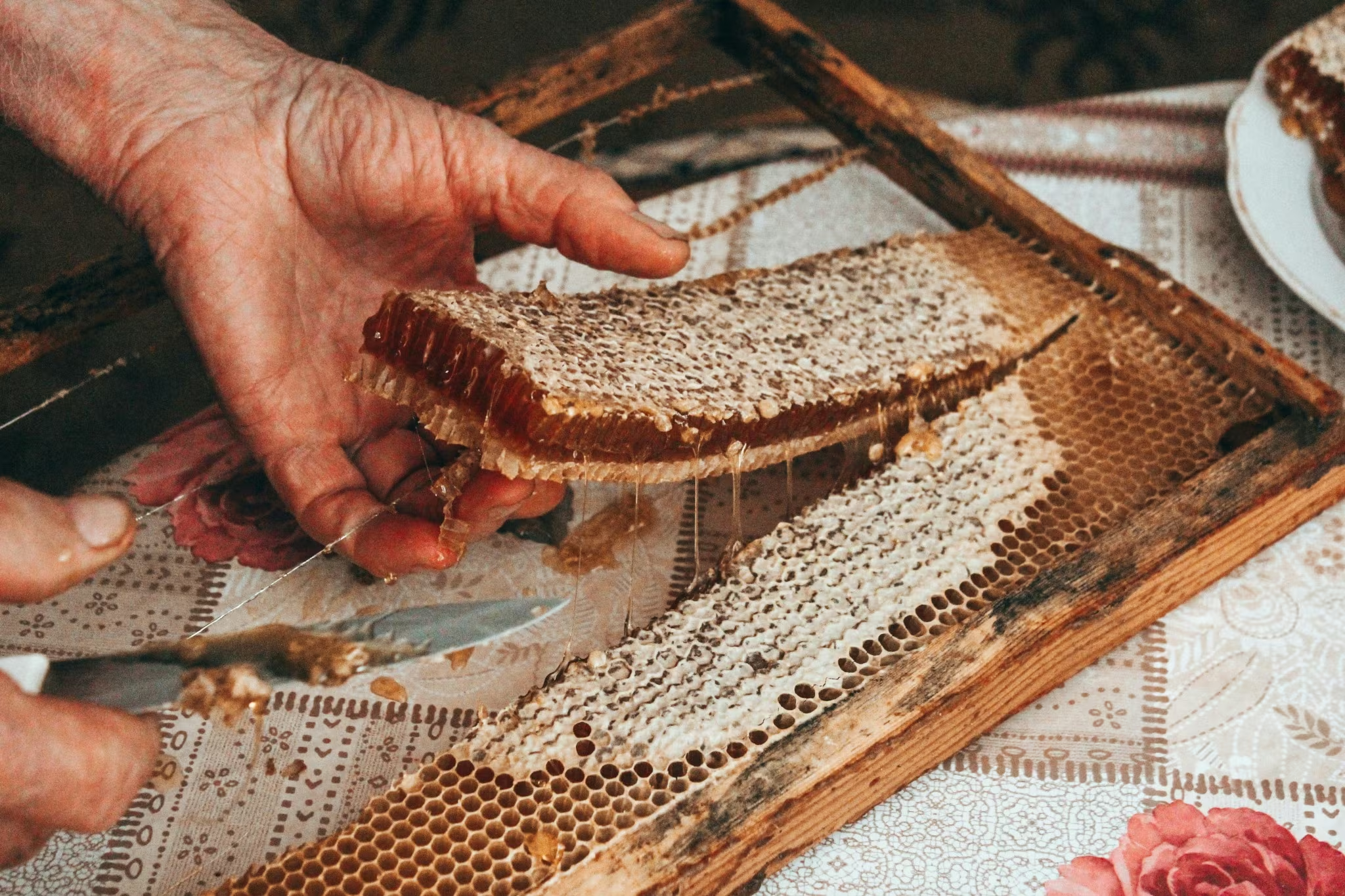
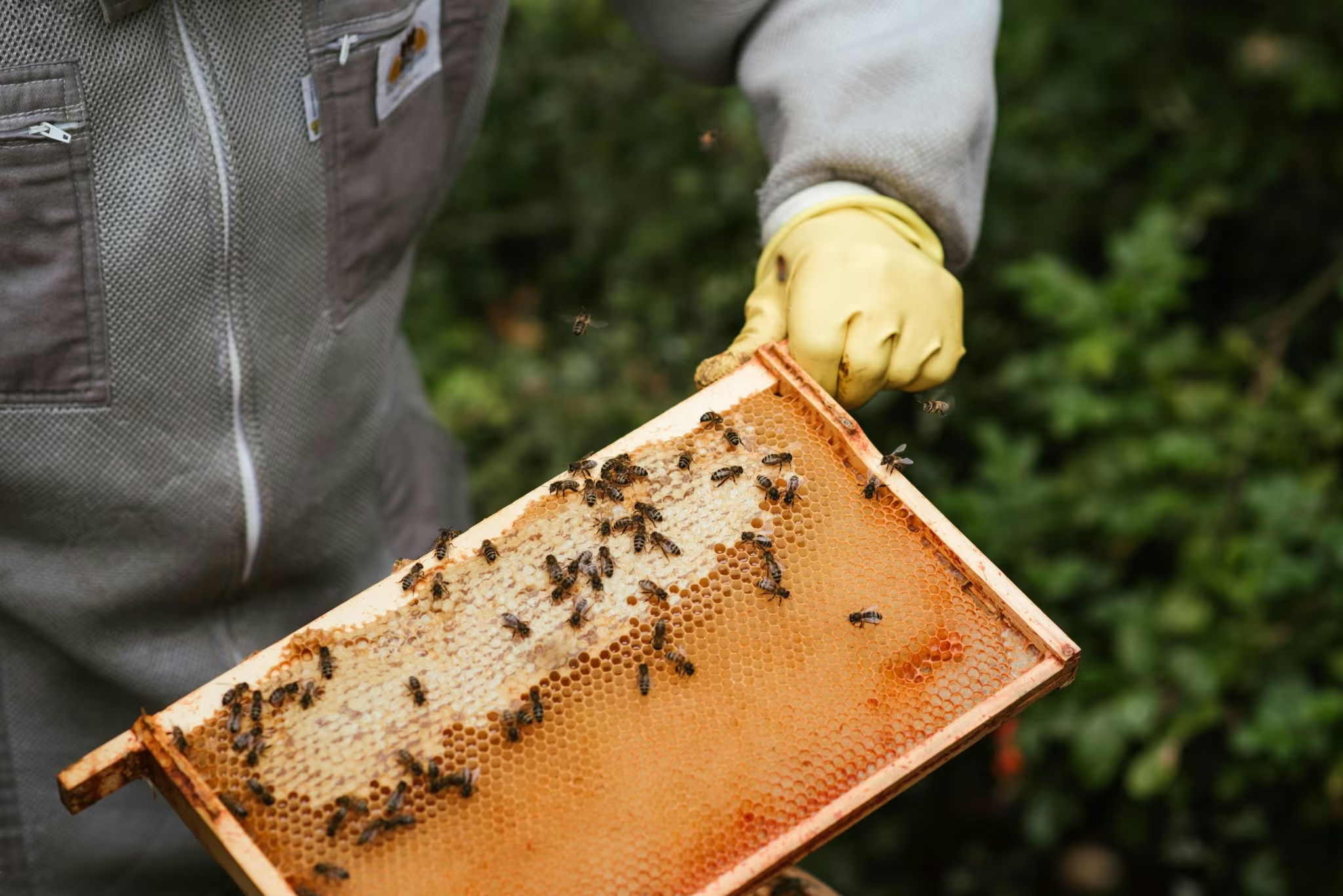
When harvest time arrives, beekeepers remove the supers (the boxes where bees store surplus honey), uncap the wax-sealed frames, and spin them in a centrifugal extractor. The honey is then strained only to remove wax particles, not pollen or propolis. This is the step that most commercial producers skip in the name of clarity and shelf life. Keeping the pollen in is not an accident; it is a deliberate choice. For a full explanation of the process, read our guide on how bees make honey.
HoneyBee & Co. wildflower honey is never heated above hive temperature. We bottle in small batches, and each jar carries the country of origin. Our British Wildflower comes from the Midlands; our SALSA-certified supplier follows welfare-first beekeeping practices that prioritise colony health over maximum yield.
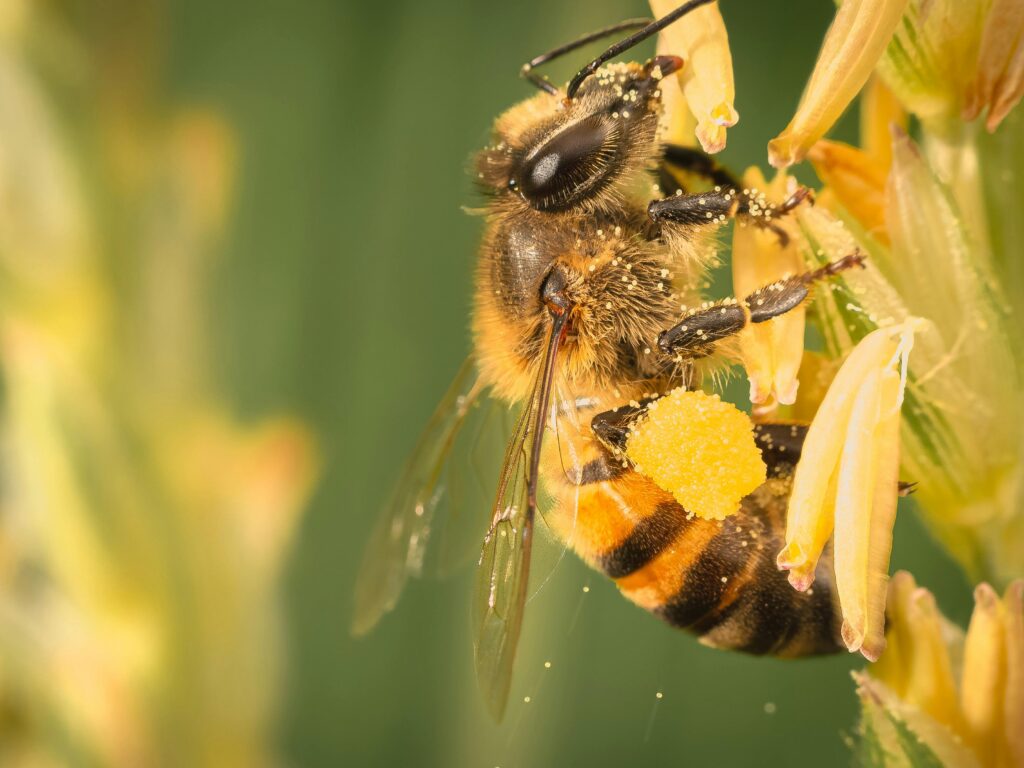
Taste, Aroma and Colour of British Wildflower Honey
Opening a jar of wildflower honey is like catching a scent of the countryside on a summer afternoon. The fragrance rises immediately, floral and sweet, with hints of the landscape where the bees foraged.
Our UK wildflower honey typically offers light floral notes with hints of orchard fruit and a mild herbal finish. It is approachable and versatile, working well in everything from morning porridge to evening cheese boards. Colour varies too. Spring-dominant nectar tends to produce a lighter gold, while late-summer harvests, heavy with clover, thistle and wild herbs, yield a deeper amber. A May harvest jar might look noticeably different from an August jar, even from the same region.
| Season & Region | Flavour Notes | Colour | Typical Uses |
|---|---|---|---|
| UK Spring | Light floral, orchard fruit, mild | Light golden | Drizzling, tea, breakfast |
| UK Summer | Richer, herbal, hints of clover and thistle | Amber to deep amber | Cooking, baking, cheese pairing |
Natural crystallisation may make your honey appear lighter and more opaque over time. This is not spoilage. It is a completely normal characteristic of raw honey and actually indicates authenticity. Supermarket honey is typically heated specifically to prevent this, which is how you can tell the difference. We cover the full science behind why raw honey sets in our guide to raw honey crystallisation. You can explore the full range, including our wildflower and every other variety, on our honey shop.
Raw British Honey for Pollen Season
All raw, cold-extracted, and never pasteurised. Pollen intact from hive to jar.
-
British Wildflower Honey — £10.99 Midlands, England. Broadest pollen profile. SALSA-certified supplier. Cold-extracted. Never pasteurised.Shop →
-
Wildflower Subscription — £8.79/mo Save 20%. Free delivery on every order. Cancel anytime. Consistent supply through the whole pollen season.Subscribe →
-
Raw Acacia Honey — £10.99 Transylvania, Romania. Raw, mild, high antioxidant. Good for throat soothing during pollen season.Shop →
Wildflower, Soft Set, and Heather. All three British-origin raw honeys in one box. 3 x 280g jars. Free UK delivery.
Honey for Hayfever: Common Questions
Is honey good for hayfever?
Possibly, for some people. The most plausible mechanism is that trace pollen in raw local honey may help some people gradually build tolerance to local allergens, in a similar way to how allergy immunotherapy works. The evidence is limited but not entirely absent. It works best as a consistent daily habit started weeks before pollen season, not as an acute remedy taken during a bad hayfever day. It will not work for everyone, and it is not a replacement for antihistamines or prescribed treatments.
What is the best honey for hayfever?
Raw, unpasteurised, local wildflower honey is the type most often discussed in this context. Wildflower honey has a broader pollen profile than single-varietal honeys, drawing from dozens of wildflower species. Local origin matters: honey from the UK, or from your specific region, is more likely to contain pollen relevant to your local allergens than imported honey. Pasteurised supermarket honey contains little to no active pollen and is not relevant to this discussion.
How should I take honey for hayfever?
One to two teaspoons daily, ideally starting 4 to 6 weeks before your pollen season begins. Consistency matters more than quantity. Take it straight, stirred into warm water with lemon, or on toast. Avoid adding it to boiling water, which degrades some of its active compounds. Keep taking your antihistamines and other prescribed treatments alongside it.
Does raw honey help hayfever more than supermarket honey?
Yes, significantly, if the pollen content is the active element. Pasteurisation destroys pollen. Most supermarket honey, even if labelled as natural or pure, has been heated to extend shelf life and produce a uniform, clear product. Raw honey that has not been heated retains the pollen naturally present in the comb. At HoneyBee & Co., all our honey is cold-extracted and never heated above hive temperature.
Can local honey reduce hayfever symptoms?
Some people report it does. The clinical evidence from controlled trials is limited, and most UK hayfever is triggered by grass pollen, which bees do not collect, so the pollen-desensitisation mechanism has a structural limitation for most sufferers. For those whose hayfever is primarily triggered by tree or wildflower pollen, the case is more plausible. Anecdotal reports of benefit are common; confirmed clinical proof is not.
When should I start taking honey before hayfever season?
Four to six weeks before your typical season begins is the most commonly cited window. In the UK, tree pollen season starts from late February or March, grass pollen from late May through July, and weed or flower pollen through August and September. If grass pollen is your main trigger, starting in April gives you around six weeks before peak grass season. If tree pollen affects you, starting in January or February makes sense.
Can honey replace antihistamines for hayfever?
No. Antihistamines work differently and have strong clinical evidence behind them. They are effective, fast-acting, and widely available. Honey is a pleasant, low-risk daily food habit that some people find helpful alongside conventional treatment. The two are not in competition. If your hayfever is severe, speak to your GP about a more comprehensive treatment plan including nasal steroids or allergen immunotherapy.
Is wildflower honey better than Manuka honey for hayfever?
For the hayfever question specifically, local raw wildflower honey has a stronger argument than Manuka. Manuka honey is produced in New Zealand from a single plant (Leptospermum scoparium) and is typically valued for its antibacterial properties, not its pollen diversity. For hayfever purposes, the relevant qualities are local origin and broad pollen profile, both of which favour a raw UK wildflower honey over an imported single-varietal.