
 English (UK)
  Italiano
  Français
  简体中文
简体中文  한국어
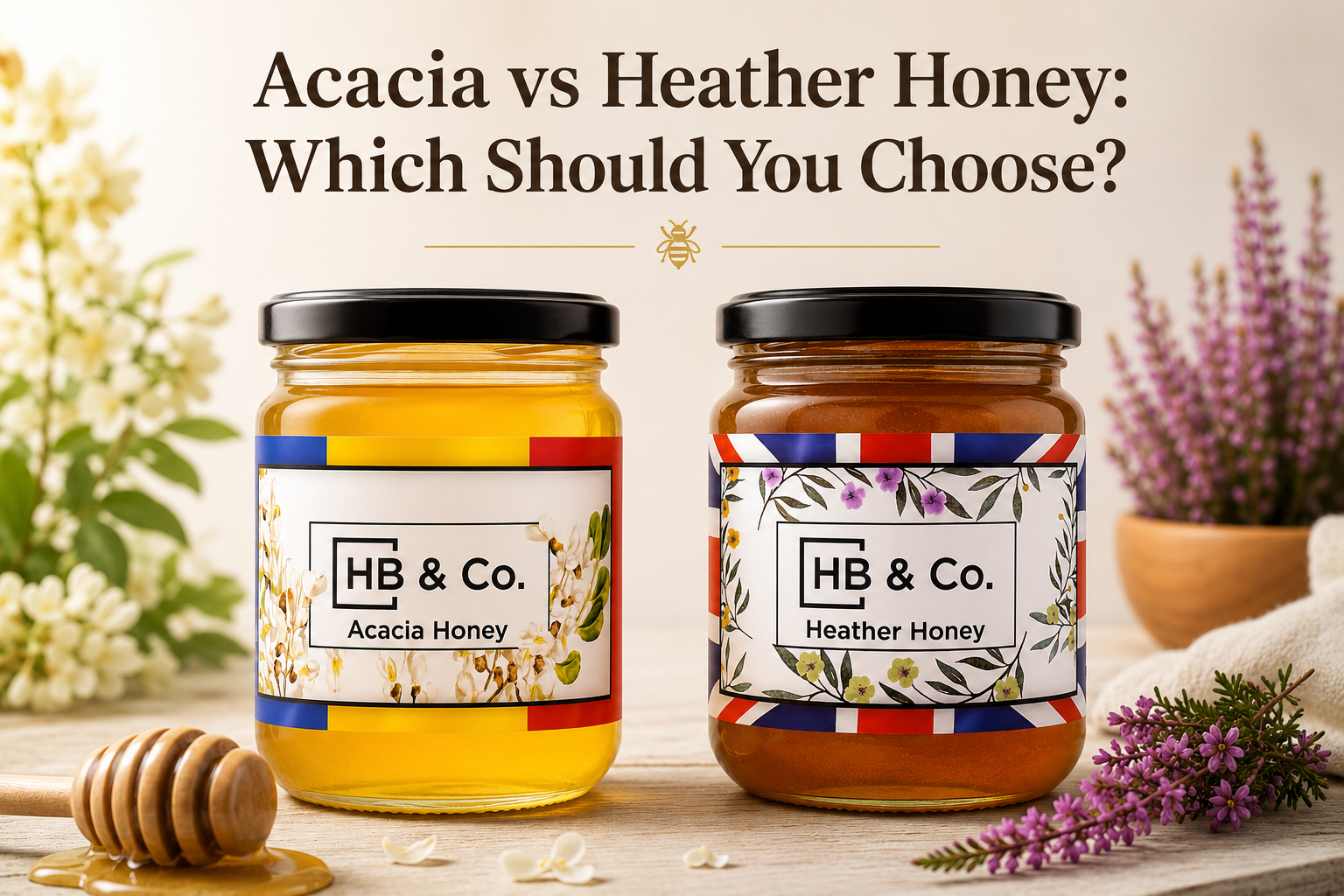
한국어 The short version: acacia is the pale, mild, slow-to-crystallise honey you reach for every day, and heather is the dark, intense, jelly-textured honey you save for the moments that matter. They sit at opposite ends of the flavour scale, which is exactly why so many kitchens keep both.
Key takeaways
- Acacia is very pale and mild; heather is dark amber and boldly aromatic.
- Acacia is slow to crystallise and stays smooth; heather sets to a thick, jelly-like gel.
- Heather is gathered from a single short annual bloom, which is why it costs more.
- Choose acacia for tea, drizzling, and delicate bakes; choose heather for cheese, game, and gifting.
- Both are raw and unpasteurised, so neither should ever be heated hard or microwaved.
The short answer, side by side
If you only skim one thing, skim this. The table below is the fastest way to see where these two honeys separate, and most of the differences trace back to a single fact: the flower.
| Feature | Acacia | Heather |
|---|---|---|
| Colour | Water-pale to light gold | Deep amber, reddish tones |
| Flavour | Delicate, clean, gently floral | Intense, malty, faintly smoky and bittersweet |
| Sweetness | Very sweet, sugar-clean | Sweet with a savoury, lingering finish |
| Texture | Smooth and pourable | Thick, jelly-like, needs a stir |
| Crystallisation | Slow to crystallise | Sets firm; naturally gelled |
| Harvest | Late spring blossom | One short late-summer bloom a year |
| Best for | Tea, drizzling, light baking | Cheese, game, spooning, gifting |
| Price (280g) | £10.99 | £12.99 |
Acacia honey: the delicate everyday drizzle
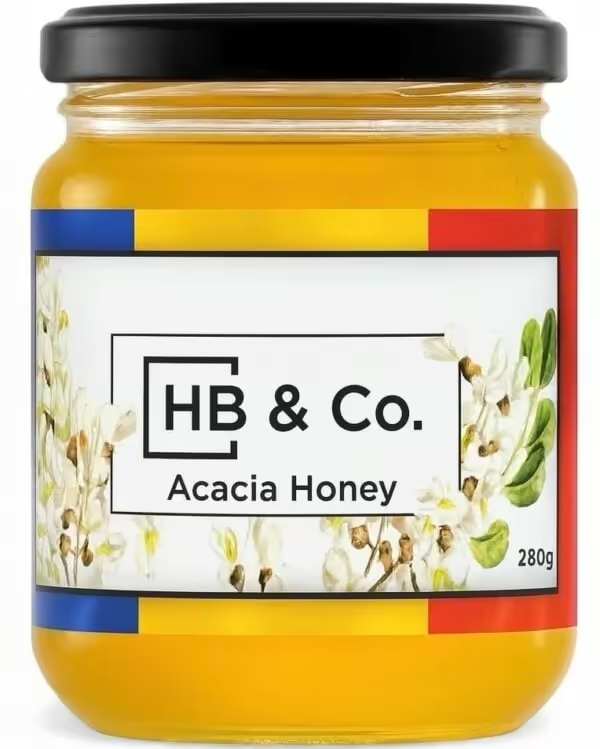
Acacia honey comes from the blossom of the black locust tree, and it is about as light as honey gets. In the jar it can look almost like liquid glass, pale gold with barely any colour at all. The flavour follows the look: clean, mild, and gently floral, with none of the heaviness some people expect from honey.
Because it is high in fructose, acacia is slow to crystallise and stays smooth and pourable for a long time, which is part of why it is such an easy everyday jar. It dissolves cleanly into a hot drink and drizzles without clumping, so it never fights the thing you put it on.
Reach for acacia when you want sweetness without a strong honey character taking over: stirred into tea, spooned over yoghurt or porridge, or brushed onto a light bake. It is our lead single-origin for a reason.
Acacia Honey, 280g £10.99
Heather honey: the bold, jelly-set rarity
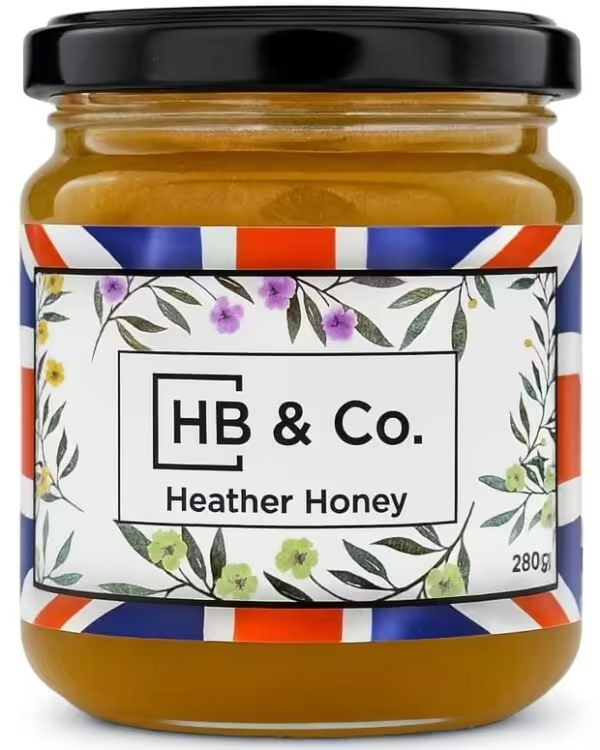
Heather honey is the other end of the spectrum entirely. Gathered from ling heather on late-summer moorland, it is dark, aromatic, and unmistakable: malty and slightly smoky, sweet at first with a savoury, almost bittersweet finish that stays with you. It is the honey people either fall for instantly or need a moment to understand.
Its texture is just as distinctive. Heather honey is thixotropic, which is a scientific way of saying it sets to a thick jelly in the jar and only loosens when you stir it. That gel is natural and expected, not a fault, and it is one of the ways you can tell a true heather honey.
Heather stands up to strong company: a mature cheese, a game terrine, dark bread, or simply spooned straight from the jar. It is a British single-origin, and our supplier holds SALSA Certification. If you are building a grazing or cheese board, this is the jar to bring.
Heather Honey, 280g £12.99
Ling heather blooms for only a few weeks each year, so British heather honey is gathered in a single annual harvest and then pressed, not spun, because its jelly-like set will not leave the comb in an ordinary extractor. That scarcity and extra work is the honest reason it costs more than acacia.
Taste, texture and crystallisation, compared
Almost every difference between these two honeys comes from one place: the bloom the bees worked. A honey is essentially the concentrated nectar of a single kind of flower, so a delicate spring blossom and a rugged moorland heath produce two very different jars.
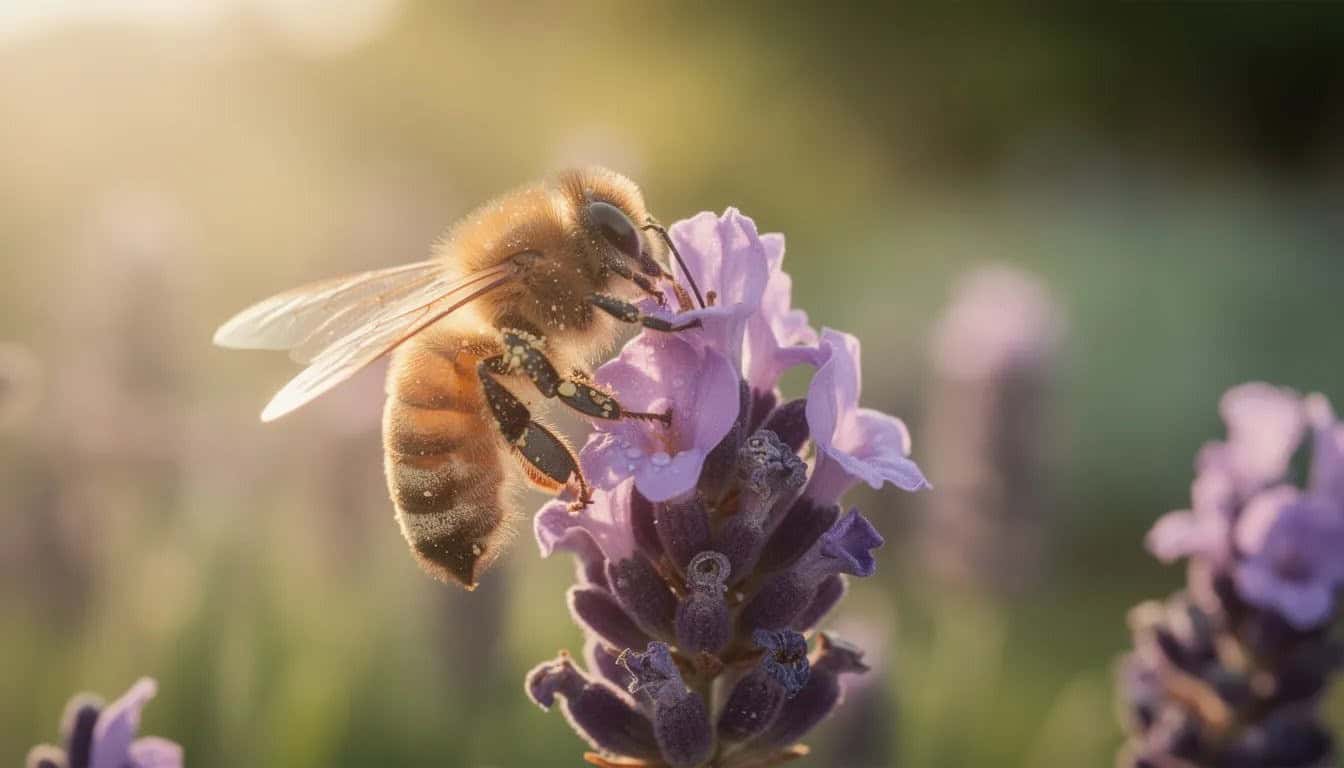
On flavour, acacia is the quiet one. It adds sweetness and a soft floral note without changing the character of whatever it touches. Heather is the loud one: it brings its own strong, malty, faintly smoky personality to the plate, so it either leads a dish or partners something bold enough to meet it.
On texture, acacia pours and heather holds. Acacia stays smooth and liquid for a long time; heather arrives as a firm, gelled set that you stir loose. Neither is better, they are simply built for different jobs. If the whole runny-versus-set question interests you, our guide to runny versus set honey goes deeper.
On crystallisation, acacia's high fructose keeps it slow to crystallise, while heather's natural gel means it is set from the start. If any raw honey does firm up over time, that is a sign of authenticity, not spoilage, and a warm-water bath below 40C brings it back. Never microwave raw honey and never heat it hard, or you lose the very things that make it worth buying. Our guide to raw versus regular honey explains why.
Acacia whispers, heather roars. One is the honey you reach for every morning; the other is the jar you bring out when it matters.
Which honey should you choose?
You do not really have to. They solve different problems, and most people who cook and entertain end up keeping one of each. Still, if you want a single starting point:
Choose acacia if you want
An easy, all-purpose jar for tea and coffee, drizzling over breakfast, sweetening without overpowering, and lighter baking where you do not want a strong honey flavour to dominate. It is also the gentlest introduction for anyone who thinks they do not like honey.
Choose heather if you want
A statement honey for a cheese or charcuterie board, a partner for game and strong flavours, a spoonable treat in its own right, and a genuinely special gift. Its rarity and depth make it feel like an occasion.
If you cook with honey regularly, a subscription is the cheapest way to keep your favourite in the cupboard, and you can mix varieties across deliveries.
Raw, unpasteurised, and made the slow way
Both honeys are raw and unpasteurised, left as close to the comb as possible so their aroma, flavour, and natural character stay intact. That is a deliberate choice, and it comes from six generations of beekeeping behind the brand.
Our British heather is a true single-origin and our supplier holds SALSA Certification, an independent UK food-safety standard. Our acacia carries the family's European beekeeping tradition. In both cases the aim is the same: honey you can trace, from a specific flower and a specific place, rather than an anonymous blend.
That traceability is the whole point of buying single-origin in the first place, and it is worth knowing what processing actually changes before you compare a supermarket squeezy bottle to a jar like these.

Try them both
Taste the difference for yourself
Acacia Honey
Pale, mild, slow to crystallise. The everyday drizzle.
£10.99
Shop AcaciaHeather Honey
Dark, bold, jelly-set. A single annual harvest.
£12.99
Shop HeatherFrequently asked questions
Is acacia or heather honey better?
Neither is better, they are built for different jobs. Acacia is the mild, versatile everyday honey; heather is the bold, rare one for cheese, game, and gifting. Most people who use both keep one of each.
Which is sweeter, acacia or heather?
Acacia tastes cleaner and more straightforwardly sweet because its flavour is so delicate. Heather is also sweet but has a savoury, lingering, faintly bittersweet finish, so it reads as more complex than simply sweet.
Why is heather honey more expensive than acacia?
Ling heather flowers for only a few weeks a year, so heather honey is gathered in a single annual harvest. Its jelly-like set also means it has to be pressed rather than spun in an ordinary extractor. Less of it, and more work to collect it, is the honest reason for the higher price.
Is heather honey meant to be thick and jelly-like?
Yes. Heather honey is naturally thixotropic, which means it sets to a gel in the jar and loosens when stirred. That texture is a hallmark of genuine heather honey, not a fault.
Does acacia honey go solid?
Acacia is slow to crystallise thanks to its high fructose content, so it stays smooth and pourable longer than most honeys. If any raw honey does firm up over time, that is a natural sign of authenticity. A warm-water bath below 40C softens it again.
Can I bake with either, or use them in tea?
Both work. Acacia is ideal for tea, coffee, and lighter bakes because it sweetens without taking over. Heather's strong character suits robust bakes and pairings. With any raw honey, avoid boiling or microwaving so you keep its flavour and aroma intact.
Are both raw and unpasteurised?
Yes. Both are raw and unpasteurised, kept as close to the comb as possible. Our British heather is a single-origin whose supplier holds SALSA Certification, and our acacia comes from the family's European beekeeping tradition.
How should I store them?
Keep both in a cool, dark cupboard with the lid closed. There is no need to refrigerate honey, and refrigeration actually speeds up crystallisation. Stored well, honey keeps for a very long time.