

 English (UK)
  Italiano
  Français
  简体中文
简体中文  한국어
한국어 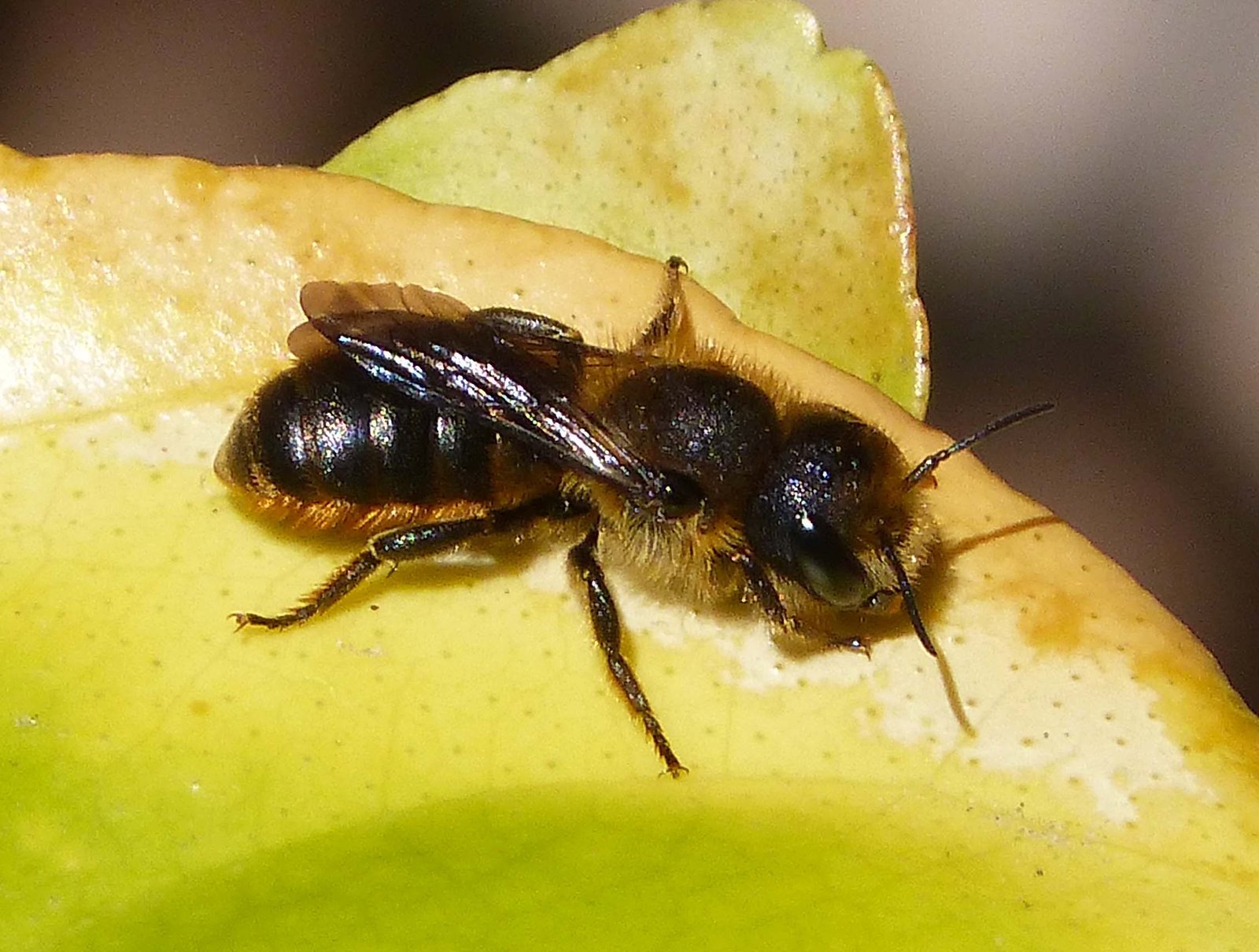 © HoneyBee & Co. · Bee Education Hub
Mason Bee · Megachilidae
Orange-vented Mason Bee (Osmia leaiana)
Family Megachilidae · Genus Osmia · Subgenus Osmia
Spot this bee
Look for a blazing orange belly-brush on a small, dark, metallic-blue bee. If it is visiting knapweed or thistles in mid-summer, it is almost certainly Osmia leaiana. No other British mason bee combines that orange underside with a summer flight season.
Taxonomic classification
| Kingdom | Animalia |
| Phylum | Arthropoda |
| Class | Insecta |
| Order | Hymenoptera |
| Family | Megachilidae |
| Genus | Osmia Panzer, 1806 |
| Species | O. leaiana (Kirby, 1802) |
The Pesto Bee: Why Osmia leaiana Chews Its Nest from Leaves
Most mason bees seal their nest cells with mud or mortar. Osmia leaiana does something different. She chews fresh leaves into a wet, green paste, packs it against the cell walls, and seals each brood chamber with the same material.[1] The result looks, and faintly smells, like pesto. Among British solitary bees, this is one of the most distinctive nesting strategies you will encounter.
Each cell is stocked with a pellet of pollen mixed with nectar, on which a single egg is laid. The female works from the back of the tube forward, building five to eight cells per cavity before sealing the entrance with the same chewed-leaf cement. She prefers tubes of about 6-8mm in diameter, which is a standard size for many commercial bee hotels.
An Orange Belly on a Blue-black Bee: Field Identification
Osmia leaiana is a compact, dark mason bee, about 9-11mm long, with a subtle metallic-blue sheen when fresh. The character that separates it from every similar species is the vivid orange scopa (the pollen-collecting brush on the underside of the abdomen).[2] Females carry pollen in this brush, and on a good day it blazes bright against the dark body like a signal flag.
Males are slimmer, with paler facial hair and longer antennae. They do not carry pollen and lack the orange scopa, which makes them harder to identify in the field without magnification.
Could you confuse it with the Blue Mason Bee?
Yes, at a glance. The Blue Mason Bee (Osmia caerulescens) is a similar size and shares the metallic tint, but its scopa is dark (sooty-brown to black), not orange. If the underside glows orange, it is leaiana. If it is dark, it is likely caerulescens.
| Feature | Orange-vented (O. leaiana) | Blue (O. caerulescens) |
|---|---|---|
| Scopa (belly brush) | Vivid orange | Dark brown to black |
| Main flight | June to August | April to July |
| Nesting material | Chewed leaves ("pesto") | Chewed leaves, often with mud |
| Preferred flowers | Knapweed, thistles | Wider range, inc. Lamiaceae |
| UK status | Local but stable | Widespread |
Where to Find Osmia leaiana in Britain
In the UK, the Orange-vented Mason Bee is local but not rare. It is concentrated across southern and central England, with scattered records into Wales and southern Scotland. You are most likely to encounter it on chalk downland, brownfield sites, woodland edges, and mature gardens where knapweed, greater knapweed, and thistles grow freely.[3]
The UK Bee Species Map shows the strongest recording density in the South East, Thames Gateway, and parts of the West Midlands. It is absent from most of northern England and Scotland, though recording effort is lower in those regions and genuine absences are hard to confirm.
Flowers and Foraging
Osmia leaiana is strongly associated with Compositae (the daisy family), and within that family she shows a marked preference for knapweed (Centaurea) and thistles (Cirsium, Carduus). She also visits hawkweeds, cat's-ear, and ox-eye daisy, especially in gardens.[4]
This preference matters if you want to attract her. A patch of common knapweed (Centaurea nigra) or greater knapweed (Centaurea scabiosa) near a bee hotel is the single best thing a gardener can do. Both flower in July and August, perfectly matching her flight season.
Bee Hotels and Garden Nesting
Osmia leaiana is one of the easiest solitary bees to attract to a bee hotel. She accepts commercially available tubes of 6-8mm diameter and will nest in drilled wood blocks, hollow bamboo, and cardboard tubes. Position the hotel facing south or south-east, at least a metre off the ground, and ideally within sight of flowering knapweed.
You will know she has moved in when you see the distinctive green chewed-leaf plugs sealing the tube entrances. These dry to a dark olive-brown over a few weeks. The larvae overwinter in their cocoons and emerge the following summer, maintaining a single generation per year.
She prefers fresh tubes each year. If your hotel has last year's green-sealed tubes still intact, the bees have emerged and the tubes are spent. Replace or clean them before June to attract a new generation. Check our flowers bees love guide for companion planting ideas.
Life Cycle and Behaviour
Osmia leaiana is univoltine, producing one generation per year. Adults emerge in June, mate, and the females spend six to eight weeks provisioning nest cells before dying. The larvae feed on their pollen stores, spin cocoons, and enter diapause through autumn and winter. Pupation occurs in spring, and adults emerge the following June.[5]
Females are not aggressive and rarely sting even when handled. Males patrol sunny patches near nesting sites, hovering and chasing rivals in a behaviour that is entertaining to watch but entirely harmless.
Conservation and Status
Osmia leaiana is not considered threatened at a national level. It is classified as a Local species in the UK, meaning it is present but patchily distributed. Threats include the loss of flower-rich grassland (its foraging habitat) and the tidying-up of deadwood and old walls (its nesting habitat).
Globally, the species is present across much of the Western Palearctic, from southern Scandinavia to North Africa and eastward to the Caucasus. Explore its wider range in the World Bee Atlas. To understand the broader picture of how pollinator decline affects food production, see Your Plate Without Bees.
Support Pollinator-Friendly Beekeeping
British Wildflower Honey
Golden, complex, and seasonally unique. Our wildflower honey comes from SALSA-certified British beekeepers whose hives sit in the same flower-rich landscapes that support Osmia leaiana. Our British honey supplier holds SALSA Certification.
Acacia Honey
Pale, vanilla-sweet, slow to crystallise. From our family apiaries in Transylvania.
Shop Acacia
Heather Honey
Dark, smoky-floral, jelly-textured. Single annual harvest from the Yorkshire moors.
Shop HeatherFree UK delivery on 3+ jars · Browse the full range · HoneyBee & Co. Home
Frequently Asked Questions
What does the Orange-vented Mason Bee look like?
Where does the Orange-vented Mason Bee live in the UK?
What flowers does Osmia leaiana visit?
Does the Orange-vented Mason Bee sting?
How can I attract Osmia leaiana to my garden?
What is the green plug in my bee hotel?
How do I tell it apart from the Blue Mason Bee?
Is the Orange-vented Mason Bee endangered?
Related Species
References
- Falk, S. J. (2015). Field Guide to the Bees of Great Britain and Ireland. British Wildlife Publishing, pp. 256-257.
- Amiet, F. et al. (2004). Apidae 4: Anthidium, Chelostoma, Coelioxys, Dioxys, Heriades, Lithurgus, Megachile, Osmia, Stelis. Fauna Helvetica 9.
- Else, G. R. & Edwards, M. (2018). Handbook of the Bees of the British Isles. Ray Society.
- BWARS species account: Osmia leaiana (Kirby, 1802). bwars.com
- Westrich, P. (2019). Die Wildbienen Deutschlands. Eugen Ulmer Verlag.
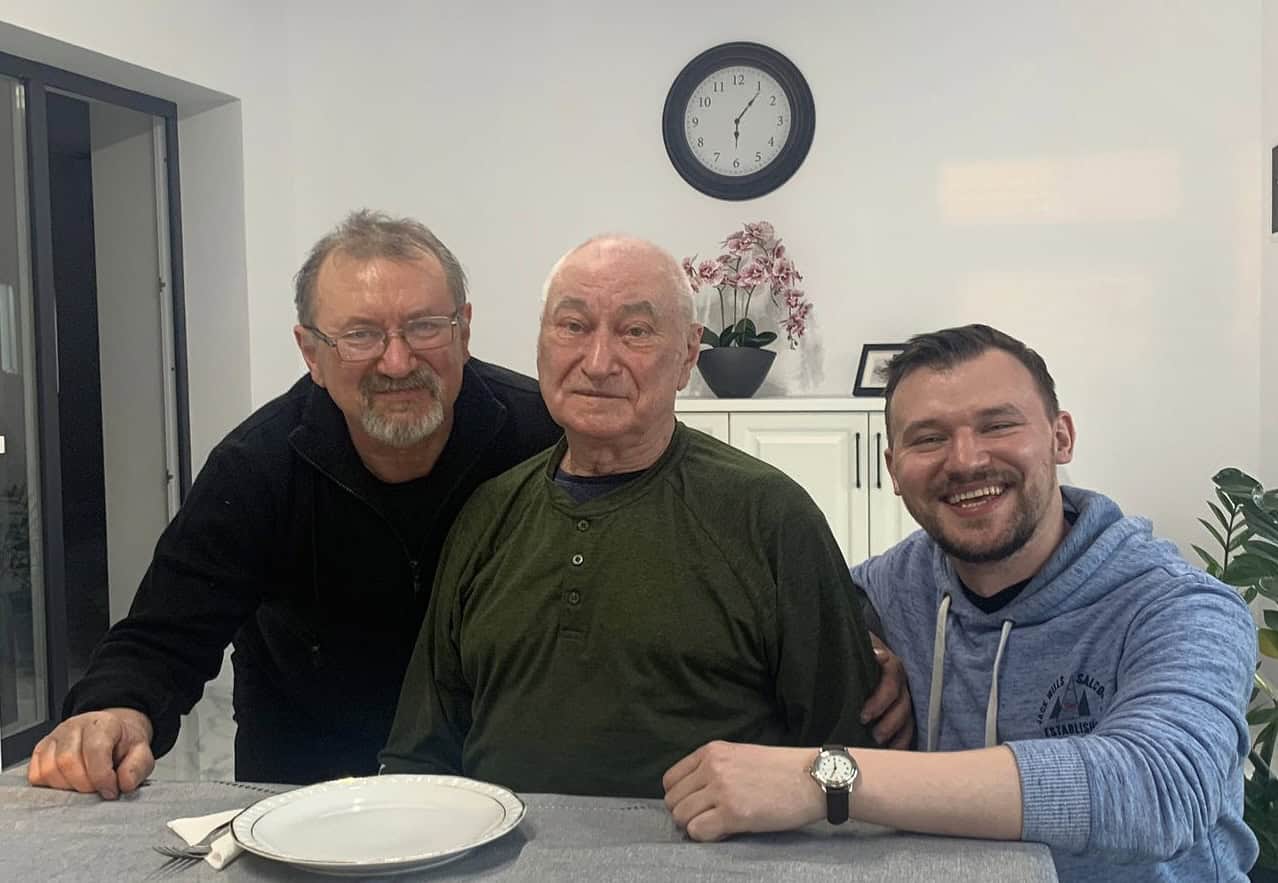
Dragos Nistor
Founder, HoneyBee & Co.
Six generations of beekeeping heritage from Transylvania. Guest Lecturer at the University of Greenwich and LinkedIn Top Voice. Part of the HoneyBee & Co. Bee Education Hub.