

 English (UK)
 Italiano
 Français
 简体中文
 한국어

Recipe and food safety
Fermented Honey Garlic: The Fridge Method, and Why We Skip the Counter-Top Version
Honey garlic is peeled garlic cloves sitting in honey until the cloves soften and the honey turns savoury. The popular version is left at room temperature for weeks. We do not make it that way, because garlic in honey is a recognised botulism risk and nobody has published safety data for the counter-top ferment. Below is the version we do make: acid added on day one, kept in the fridge from the first minute, checked with a pH strip the next day, and used within a month.
The short answer. Garlic is a low-acid vegetable from the soil, honey can carry Clostridium botulinum spores, and a sealed jar is low in oxygen. Those three facts together are the problem. Adding acid at the start, chilling below 5°C throughout and confirming the liquid reads below pH 4.6 reduces the risk. It does not remove it, so treat this as a small-batch condiment, never as a pantry staple, and never feed it to a baby under 12 months.
Why garlic in honey is a botulism question
Most people assume honey is too sweet for anything to grow in it. On its own, that is broadly true: honey is low in water, which is why it keeps so well (we explain the numbers in our guide to honey moisture content). The trouble starts when you push wet cloves into it.
The Oregon State University Extension Service puts garlic in its highest-risk group of honey additions: fresh, high-moisture and low in acid, with a pH above 4.6. Its 2026 guide, Infusing honey safely, says ingredients in that group “create the greatest risk in infused honeys and should only be used in hot infusions.” A cold garlic ferment is the opposite of a hot infusion.
The UK position points the same way. The Food Standards Agency’s botulism guidance warns that bottling “herbs or garlic in oil can be risky as it is difficult to achieve the level of control needed to destroy or prevent growth of C. botulinum spores at home”, and that its spores “are not killed by cooking”. Honey is not oil, but the logic carries across: a sealed, low-oxygen jar with a soil-grown vegetable inside.
| Factor | What happens in the jar | What the fridge method changes |
|---|---|---|
| Oxygen | Cloves sit below the honey, in a sealed jar, with little air. | Nothing. This one stays, which is why the other two matter. |
| Acidity | Garlic sits well above pH 4.6. Honey’s pH varies jar to jar. | Cider vinegar is added before the honey, and the liquid is tested the next day. |
| Water | Honey is dry, garlic is wet. Where they meet is where conditions are most comfortable for bacteria. | Cold slows growth. The FSA says chilling below 5°C will “stop or significantly slow” it. |
| Time | The counter-top method runs for a month or more at room temperature. | Ours lives in the fridge and is used within four weeks. |
“Garlic fermented in honey is one of those foods where we don’t have data to support the safety of this process.” Oregon State University food safety specialist, answering a home cook on Ask Extension
That answer is the most honest sentence we found while researching this piece, and it is why we will not publish the counter-top recipe. The same specialist explains that safe ferments depend on acidity rising quickly, ideally within a day, and that “the pH of honey is very inconsistent”. In a separate reply, another Ask Extension expert adds the line every recipe card online leaves out: “I am not aware of any published research-based recipe for home use for making fermented garlic in honey at this time.” (Ask Extension)
So our method is not a certified-safe recipe either. It is the most cautious version we can build from what the guidance says, and we would rather tell you that than dress it up.
The fridge method, step by step
We use Linden honey for this, for a practical reason: it is runny, pale and gentle, so it flows between the cloves without stirring and lets the garlic flavour lead. A thick or set honey leaves air pockets around the cloves and is harder to test. If you want the background on the honey itself, our page on lime and Linden honey explains why the two names describe the same tree.
Ingredients (one 370ml jar)
- 250g Linden honey (most of one 280g jar)
- 1 large head of garlic, about 60g of peeled cloves (10 to 12 cloves)
- 2 tbsp (30ml) apple cider vinegar, at least 5% acidity, or the same amount of bottled lemon juice
- pH test strips that read in the 2.8 to 4.6 range, or a calibrated food pH meter
| Stage | Time |
|---|---|
| Prep and peel | 15 minutes |
| Acid soak before the honey goes in | 10 minutes |
| First pH check | The next day |
| Flavour ready to use | From day 3 |
| Use within | 4 weeks, from the fridge |
- Clean the jar. Wash a 370ml jar and lid in hot soapy water, rinse, and let them air-dry completely. Water left in the jar is water added to the honey.
- Prepare the garlic. Peel the cloves, cut away the hard root end and any bruised patches, then press each clove lightly with the flat of a knife so it cracks but stays whole. Cracked cloves take the acid in faster.
- Acid first. Put the cloves in the jar, pour the vinegar over them and swirl so every clove is coated. Leave for 10 minutes. This is the step that matters most: the acid reaches the garlic before the honey seals it in.
- Add the honey. Pour the Linden honey over until the cloves are covered by at least 1cm. Stir with a clean spoon to mix in the vinegar, then close the lid.
- Straight into the fridge. Not after a few hours on the side, not after the first bubble. The jar goes in the coldest part of the fridge at once and lives there.
- Test the next day. Stir, then check the pH of the liquid as described below. Write the date and the reading on the lid.
- Turn and wait. Turn the jar upside down every couple of days so the top cloves stay coated. From day 3 the cloves mellow and the honey tastes savoury. Use the whole jar within four weeks.
Expect the honey to thin a little as it draws juice from the garlic, and expect the fridge to thicken it again. Some Linden honey will start to crystallise in the cold; that is a texture change, not spoilage, and our guide to why raw honey sets explains what is going on.
Checking pH without a lab
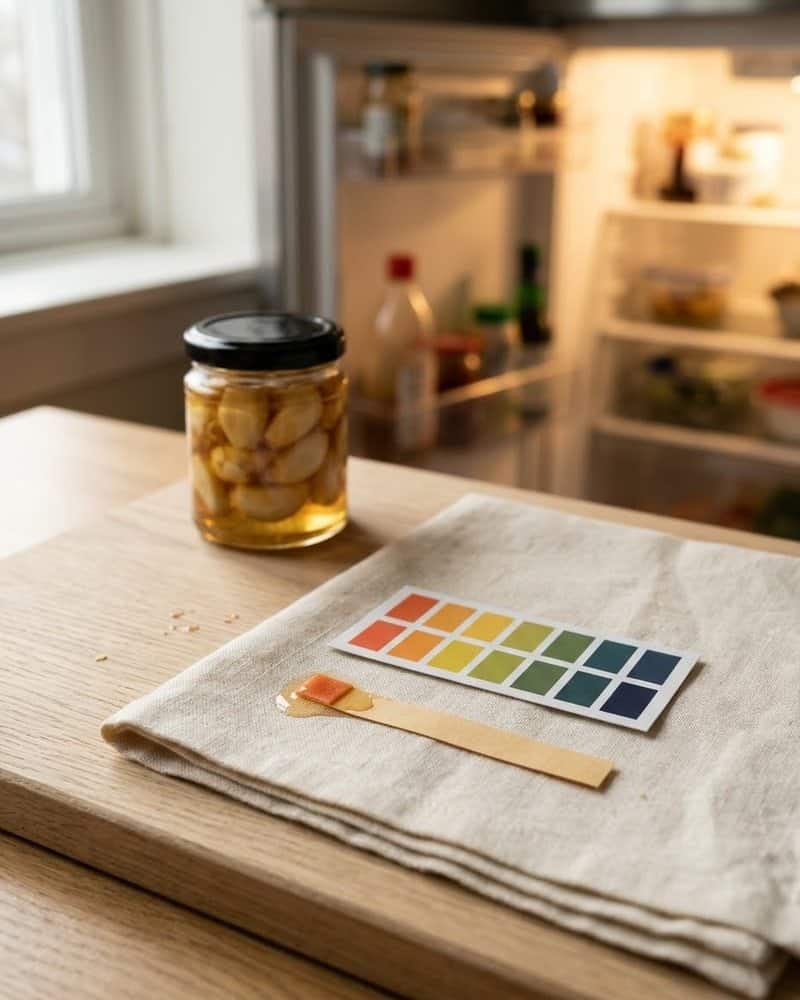
Dip a clean spoon into the liquid between the cloves, not the thick honey on top, and let a few drops fall onto the strip. Read it against the chart in daylight. You are looking for a reading clearly below 4.6, the line below which, as the Oregon State specialist notes, botulinum “cannot grow”.
Our own rule is stricter: we want 4.0 or lower before we keep a jar, to leave a margin for strips that read a little generously. That threshold is our house practice, not a published standard.
If you make this more than a few times a year, a food pH meter is worth the money. Strips are fine for one jar; a meter is better for a habit.
When to throw the jar away
Bin the whole jar, garlic and honey, without tasting it, if any of these happen:
- The next-day reading is 4.6 or higher. Do not add more vinegar and carry on: an Ask Extension expert points out that extra acid “would lower the pH however if the toxin is already formed in the honey, it would not destroy it.”
- The lid domes or the jar hisses hard when opened after a spell in the fridge.
- You see mould, fuzz or slime on any clove.
- It smells sour, cheesy or rotten rather than sweet and garlicky.
- The jar was left out of the fridge overnight.
- It has passed four weeks.
Do not rely on smell alone. The point of the checks above is that you cannot taste your way to safety with botulism. The FSA’s own advice for home preserving is blunt: if you are unsure whether food was stored correctly, do not eat it.
Know the symptoms, too. The NHS lists blurred or double vision, drooping eyelids and difficulty swallowing or speaking among the signs of botulism, and says to call 999 if you think you or your child may have them.
A note on babies, and on the word “fermented”
Never give honey garlic, or any honey, to a baby under 12 months. The NHS is clear that honey “can contain the bacteria that causes botulism”, and that applies to the honey in this jar whatever you do to it. Our page on honey side effects covers who else should take care.
And a confession about the name. With the acid added and the jar kept cold, very little fermenting happens. You may see a few small bubbles in the first week; you will not see the vigorous fizz the counter-top recipes promise. That fizz is the yeast working in warm, wet honey, and that is precisely the stage nobody has safety data for. We call ours fermented honey garlic because that is what people search for. Honestly, it is closer to a cold honey cure.
Cooking with it
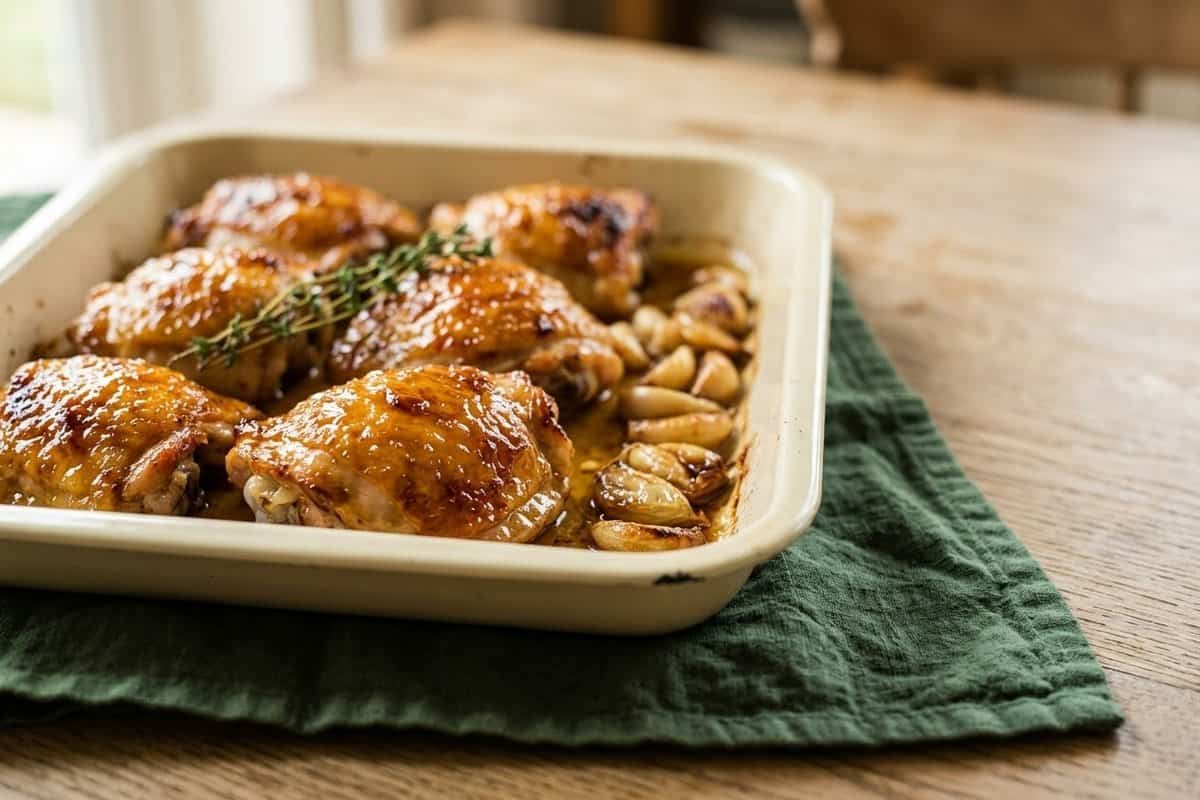
This is where it earns its fridge space. After a week the cloves are soft enough to squash with a fork and taste like a sweeter, rounder roast garlic, and the honey is a ready-made savoury glaze. Most of our uses involve heat, which suits us: cooking adds a margin, though it never rescues a jar that failed its pH check.
On the grill, the honey scorches fast, so keep it to the final minutes; our best honey for BBQ guide explains why. If you like heat, the method behind our hot honey pairs well, though keep the two jars separate and follow each one’s own rules.
The jar we reach for
Our Transylvanian Linden honey is pale, runny and softly floral, which means it slips between garlic cloves and lets them lead. It comes from the same Romanian forests our family has kept bees beside for six generations. Every jar is 280g, and there is free UK delivery on 3 or more jars on any order type.
Comparing jars first? Linden vs Acacia sets them side by side, or browse the full shop.
Questions we get asked
Can I leave fermented honey garlic out of the fridge?
We would not. Room temperature is how the popular recipe works, and it is the version without published safety data. Our method assumes the jar is chilled from the first minute to the last spoonful.
Is the honey on its own still fine to use after the garlic comes out?
No. Once garlic has been in it, treat the honey as part of the same perishable condiment: keep it chilled and use it within the same four weeks. Plain honey keeps very well and remains safe to eat well beyond its best-before date; garlic honey does not.
Can I use lemon juice instead of vinegar?
Yes, but use bottled lemon juice, which has a more consistent acidity than fresh lemons. Fresh fruit varies, and consistency is the point. Test the pH the next day either way.
Why are my garlic cloves turning blue or green?
Garlic sometimes turns blue-green in acid. It is a harmless colour reaction between natural compounds in garlic and the acid, and it does not on its own mean the jar has spoiled. Run your usual checks.
Does raw honey make it more risky than supermarket honey?
Any honey can carry spores, raw or heat-treated; heating honey for bottling is not designed to destroy them. The risk comes from the garlic, the sealed jar and the warmth, which is why our method targets those. Our guide to raw honey vs regular honey covers what processing does change.