
Raw · Transylvanian · Single Origin
Miel de tilleul
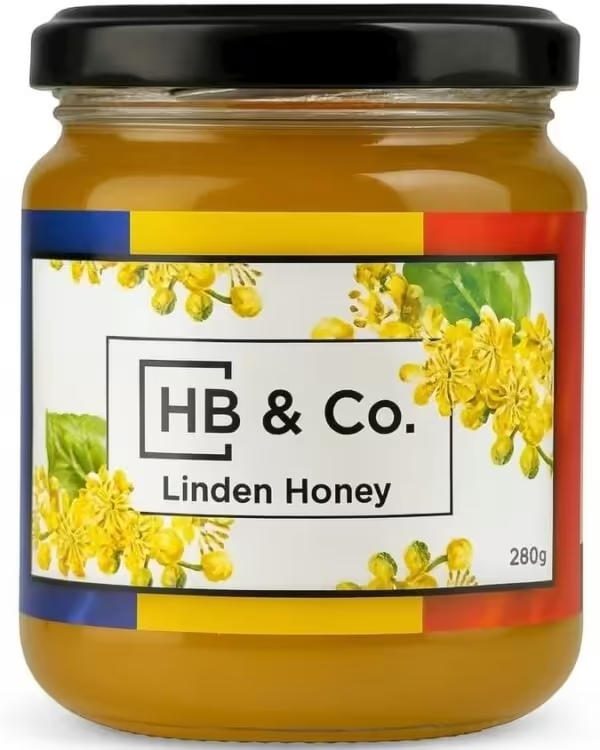
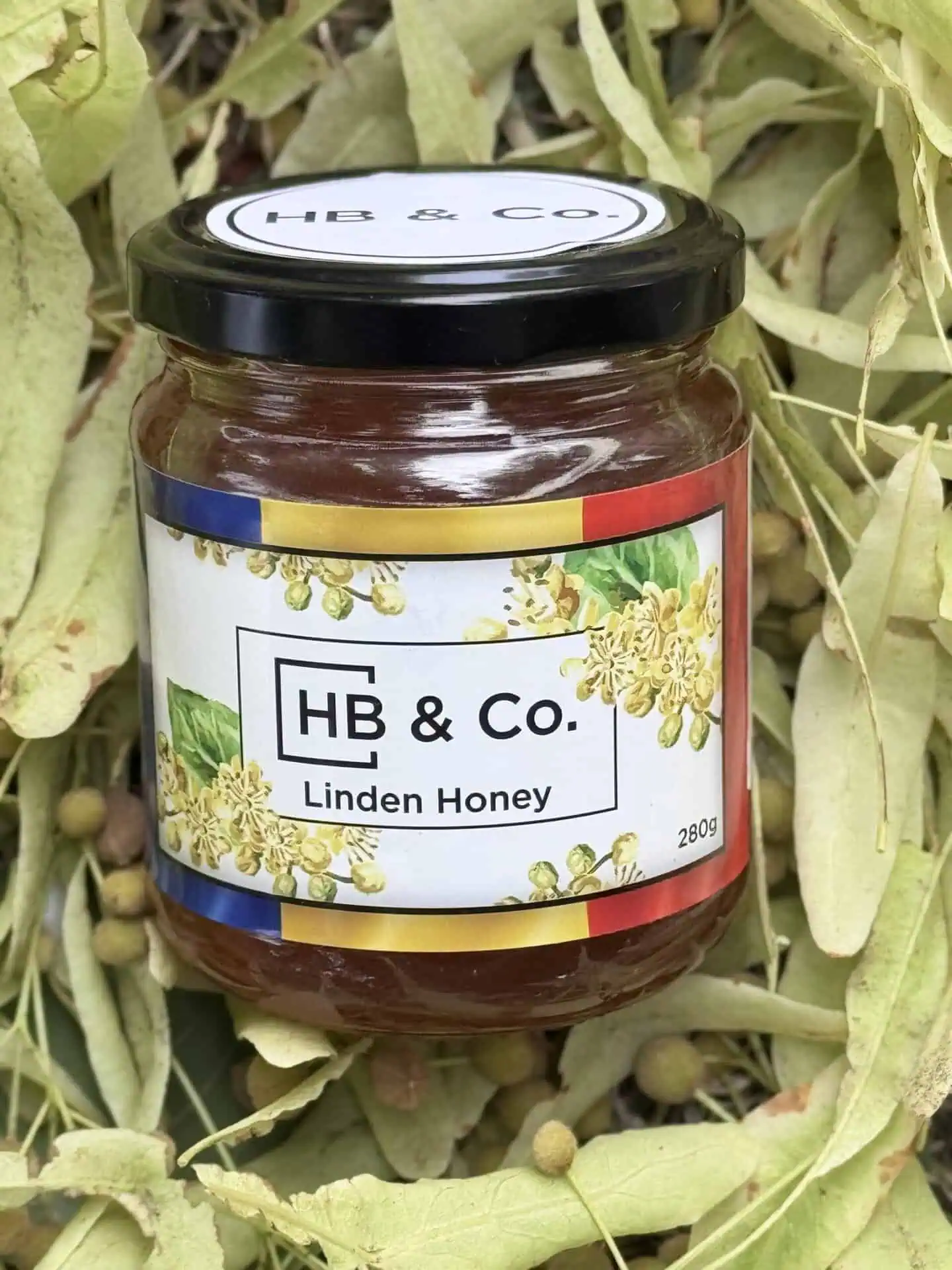
Raw, unpasteurised Linden Honey from our family apiaries in Transylvania. Aromatic and herbal with a cooling, almost minty finish. One of the most distinctive honeys you can taste in the UK, harvested across a two to three week bloom each summer.
Notes de dégustation
A Honey That Tastes Unlike Any Other
Linden honey carries an aromatic, herbal character you will not find in acacia, wildflower, or even heather. The first impression is bright and floral. The finish is cooling, almost minty, with a gentle bitter tail that lingers like good tea.
Saveur
Bright, floral, and lightly spicy with a gentle bitter tail. Cooling on the tongue with a long blossom finish.
Arôme
Blossom-forward with minty and citrus-herbal notes. A faint resinous edge in honeydew years.
Texture
Medium viscosity. Crystallises moderately fast into larger crystals, a sign of purity.
Couleur
Light amber to pale yellow. Darkens slightly when forest honeydew is present.
Why Does Linden Taste Different?
Terpenes and Volatile Oils from the Lime Tree
The cooling, almost menthol-like quality of linden honey comes from terpenes and volatile aromatic compounds in the nectar of the lime tree (Tilia). These ride directly from blossom into jar when the honey is cold-extracted and never heated. Pasteurisation destroys them. This is why mass-produced linden honey tastes flat, and ours does not.
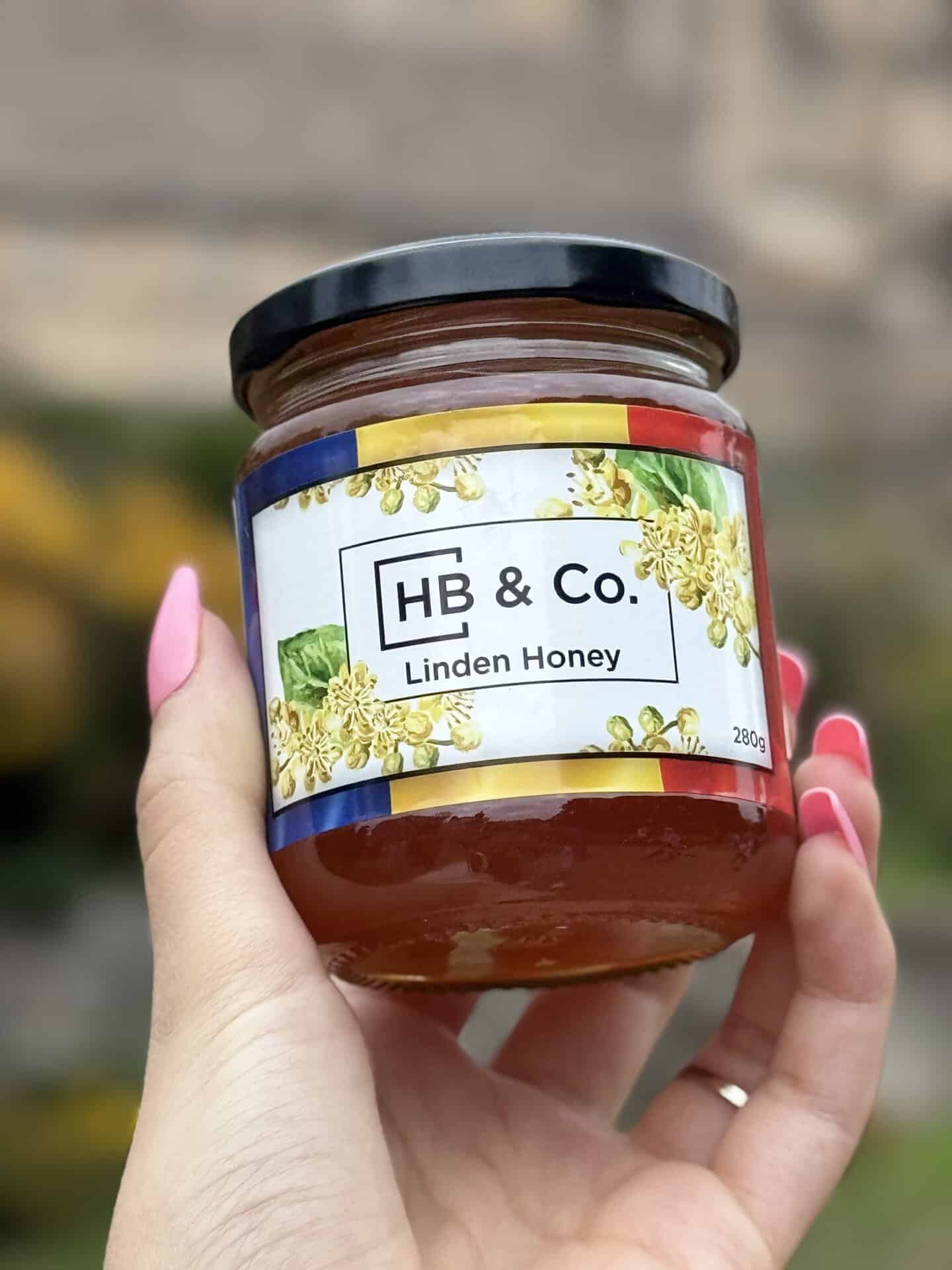
A teaspoon of raw linden honey in evening tea. The classic ritual.
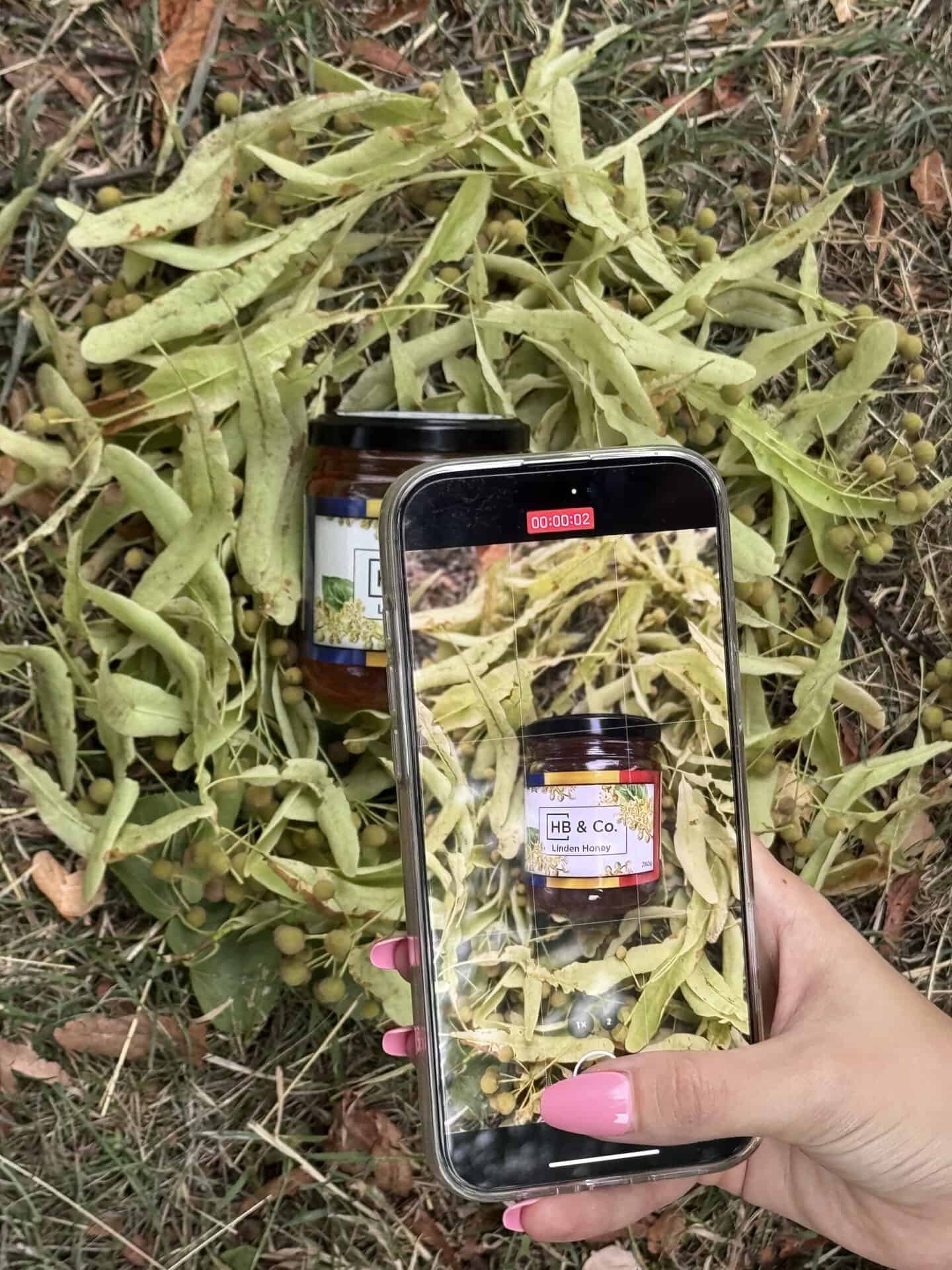
Tilia in bloom. The window for this honey is two to three weeks each summer.
The Species Behind the Jar
Linden, Lime Blossom, or Basswood: One Tree, Three Names
Linden honey, lime blossom honey, and basswood honey all refer to the same product: honey from the nectar of trees in the Tilia genus. The name varies by region. The honey does not.
UK & Ireland: lime blossom honey
In Britain, Tilia trees are commonly called lime trees. Despite the name, they are not related to the lime fruit. The honey is sometimes labelled lime blossom honey or lime tree honey.
Central & Eastern Europe: linden honey
In Romania, Germany, Poland, Hungary, and across the Balkans, this is one of the most prized varieties. Some of the finest linden honey in the world comes from the lime forests of Transylvania.
North America: basswood honey
American basswood (Tilia americana) produces the same style of aromatic, herbal honey familiar to European linden drinkers.
Origine et terroir
Lime Forests of Transylvania
Our family apiaries sit at the foot of the Carpathian mountains, near broadleaf forests where wild Tilia grows alongside oak and beech. The bloom is short. The window is unforgiving. The honey it produces is unlike anything blended at industrial scale.
2-3
Week bloom window each year
6
Generations of family beekeeping
15-19%
Moisture range, lab verified
0
Heat treatment or blending
Stock Up & Save
Buy More, Pay Less
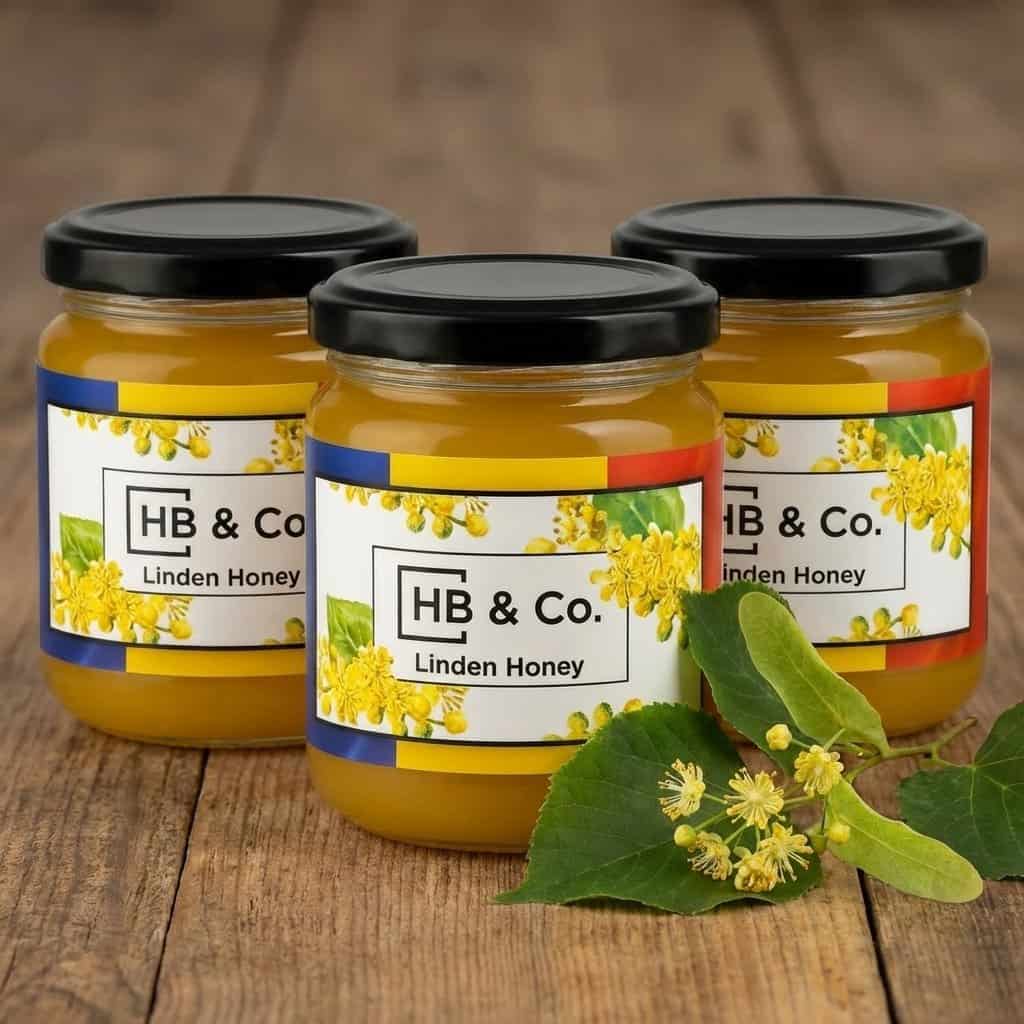
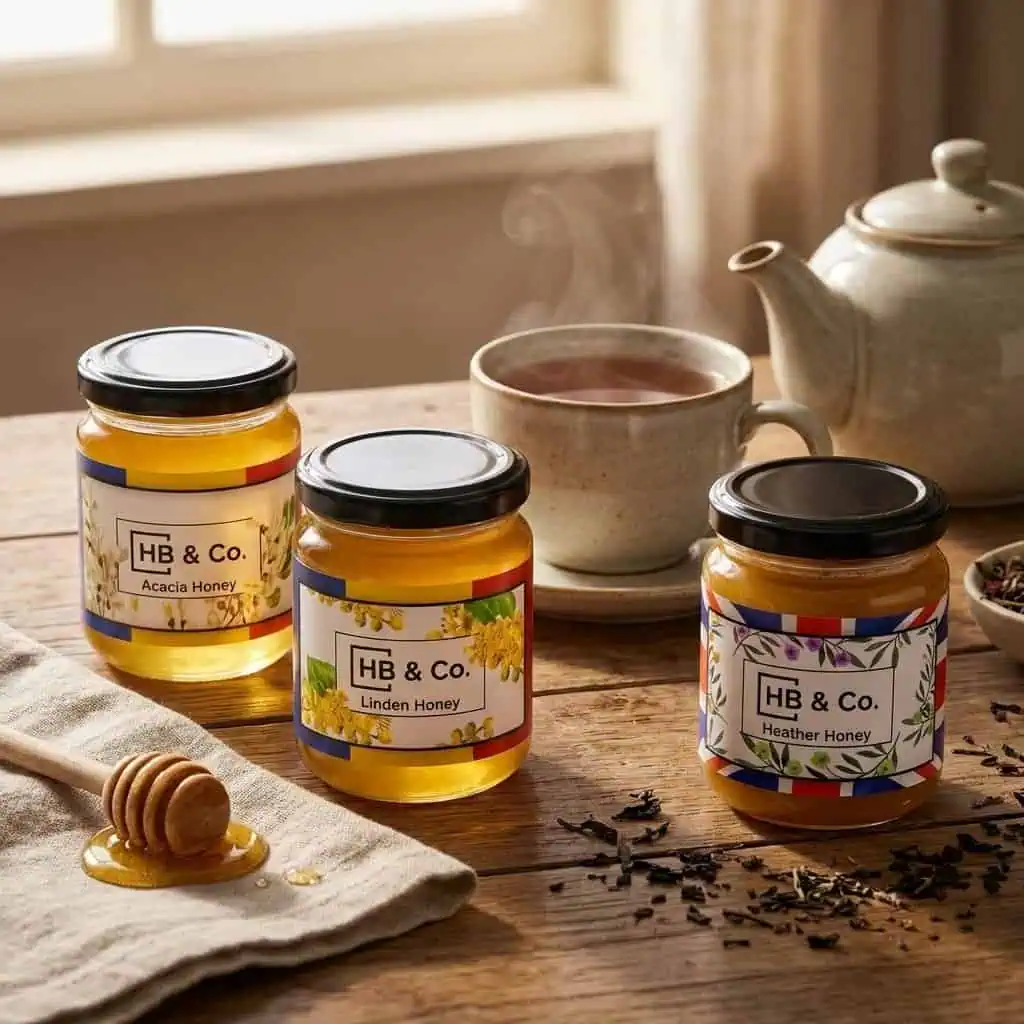
Two ways to commit. The 3-jar bundle saves on the case and unlocks free delivery. The Tea Lover’s Selection pairs Linden with Acacia and a third variety for the full afternoon-tea range.

From Our Founder
Six Generations of the Same Forest
Linden is what my grandmother served with bread for breakfast, what my mother stirred into evening tea. Every jar we sell comes from the same lime forests my family has worked for six generations. This is not honey we source. It is honey we make.
Dragos Nistor, Founder. Featured in Vogue’s Summer Hot List across three consecutive editions in summer 2024. Guest Lecturer, University of Greenwich. LinkedIn Top Voice 2024.
En savoir plus our heritage, our honey journal, or our NHS 15% Discount and London Pulse Netball partnership.
How to Use Linden Honey
Six Ways to Taste It at Its Best
Tea & Hot Drinks
Stir into chamomile, peppermint, or black tea. The minty terpenes amplify herbal teas without overpowering them.
Evening Milk
A teaspoon in warm milk before bed. Generations of households across Eastern Europe have used linden honey for the wind-down hour.
Blue Cheese
Drizzle over Stilton, Roquefort, or Gorgonzola. The herbal tail cuts through sharp cheese where milder honeys collapse.
Spiced Baking
Excellent in honey cake, ginger biscuits, and spiced loaves where its character holds up to other strong flavours.
Yoghurt & Granola
Adds floral complexity to plain Greek yoghurt. Pairs especially well with toasted oats and walnuts.
Straight from the Spoon
The most honest test for any raw honey. Linden rewards a slow tasting more than most.
Provenance & Trust
Independently Verified, Properly Documented
Every batch is independently lab tested for moisture, HMF, diastase, and pollen profile. Recognition matters because our customers should not have to take a beekeeper at their word.
Questions fréquemment posées
Linden Honey, Answered
Is linden honey the same as lime blossom honey?+
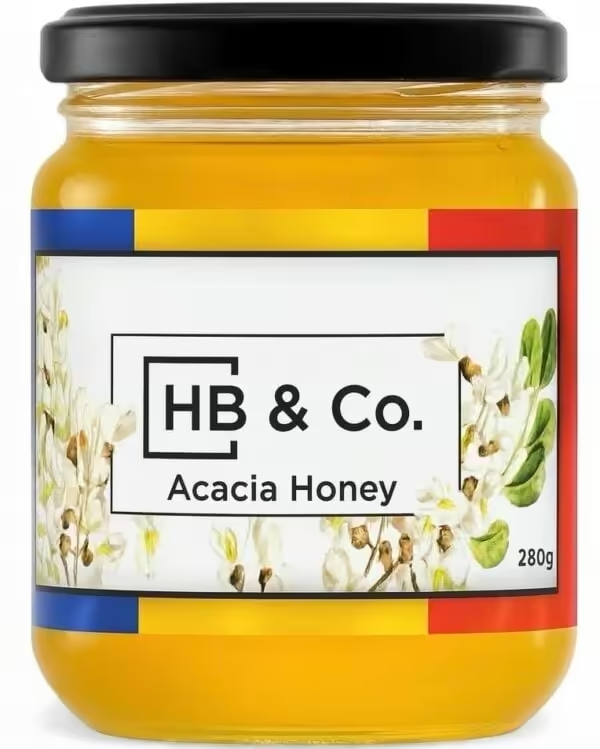
How does linden compare to your acacia honey?+
Why is linden honey hard to find in the UK?+
What does raw and cold-extracted actually mean?+
Will linden honey crystallise?+
Is this the same honey as in your bundles and subscription?+
How long does a 280g jar last?+
When will my order arrive?+
Is your linden honey suitable for children?+
Related
Other Honeys From Our Collection
Ready to Taste It
Linden Honey, From Our Family Apiaries
Six generations. One forest. A honey you will not find blended on a supermarket shelf.
Add to Basket · £10.99