

 English (UK)
  Italiano
  Français
  简体中文
简体中文  한국어
한국어 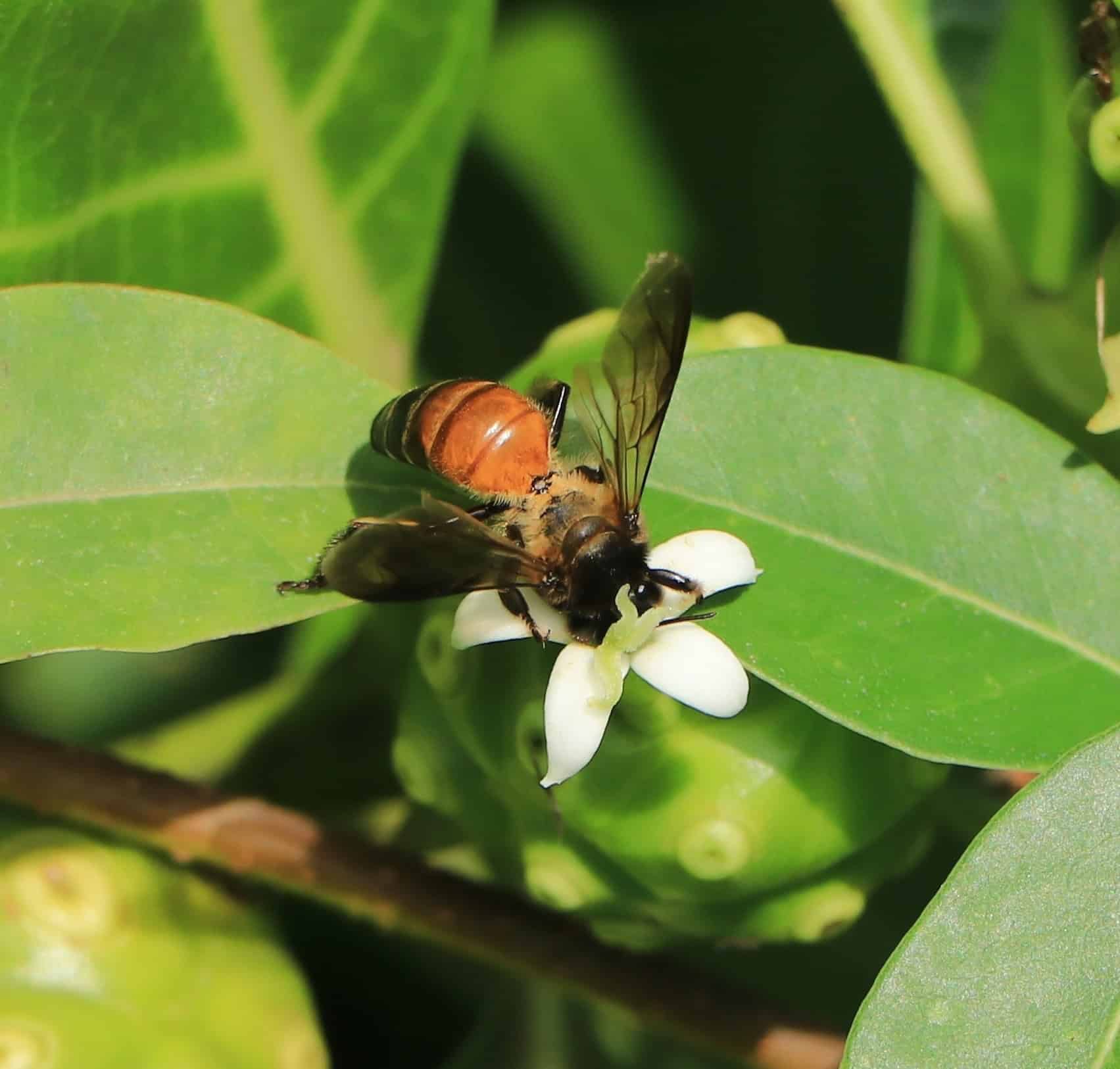
Giant Honeybee
Apis dorsata
Fabricius, 1793 • Apidae • Megapis
Apis dorsata Fabricius, 1793, the giant honeybee, is the largest honeybee species in the world and one of the most extraordinary insects in Asia. Workers measure 17 to 20 mm, nearly twice the length of a western honeybee worker, and colonies of up to 100,000 individuals construct a single massive open comb suspended from tree branches, cliff overhangs, and building structures, covered entirely by a living curtain of bees. Described by Ruttner (1988) as the "most ferocious stinging insect on earth," it cannot be domesticated, has never been kept in a managed hive, and yet has sustained one of the oldest honey-harvesting traditions in human history. It produces mad honey, migrates seasonally across hundreds of kilometres, and aggregates in colonies of up to 200 nests on a single tree. Explore the full Apis genus in the World Bee Atlas.
Quick Facts
Taxonomy and Classification
Johann Christian Fabricius described Apis dorsata in 1793 in Entomologia Systematica, page 328, the same volume in which he described Apis cerana. The species is placed in the subgenus Megapis Ashmead, 1904, which contains the largest members of the genus Apis. The subgenus is defined by large body size (15 mm or more), open single-comb nesting, and a forewing length of 12 to 15 mm.[1]
| Kingdom | Animalia |
| Phylum | Arthropoda |
| Class | Insecta |
| Order | Hymenoptera |
| Family | Apidae |
| Subfamily | Apinae |
| Tribe | Apini Latreille, 1802 |
| Genus | Apis Linnaeus, 1758 |
| Subgenus | Megapis Ashmead, 1904 |
| Species | Apis dorsata Fabricius, 1793 |
How many species are in the subgenus Megapis?
This is genuinely contested. The traditional treatment recognises A. dorsata as the sole species of Megapis, with A. laboriosa (Himalayan cliff bee), A. binghami (Sulawesi), and A. breviligula (Philippines) as subspecies. However, multiple molecular and morphological studies since 2005 argue that at least A. laboriosa is a distinct species based on genetic, morphological, and ecological evidence. A 2024 preprint taxonomic revision by Lo et al. on bioRxiv confirmed A. laboriosa as a separate species and found evidence supporting the elevation of the Sulawesi and Philippine forms as well.[2] Most current sources cite two to four species in Megapis depending on the authority consulted. This article uses A. dorsata sensu stricto.
Physical Description
Apis dorsata workers are 17 to 20 mm in body length with a forewing length of 12 to 15 mm, making them approximately twice the linear size of Apis mellifera workers and the largest honeybee in the world. The body colouration is broadly similar to the western honeybee: a golden-amber and black banded abdomen, black thorax and head, and a hairy thorax. Workers are golden-yellow to orange-brown on the anterior abdominal tergites and black posteriorly, with pale hair banding visible between segments.
The species shows considerable morphometric variation across its range, with Indian (nominate A. d. dorsata) and Southeast Asian populations differing measurably in body dimensions. The sting apparatus of A. dorsata is proportionally large and the venom quantity per sting is substantially greater than in A. mellifera or A. cerana, which contributes to the species' well-documented defensive potency. Unlike in the honeybee, the sting of A. dorsata can penetrate thick clothing.
Nest Architecture: The Open Comb
The defining characteristic of Apis dorsata, and the feature that most sharply distinguishes it from every other domesticated or managed honeybee, is its nest architecture. While all other managed Apis species build multiple parallel combs inside enclosed cavities, A. dorsata constructs a single, massive, vertical comb hanging freely from a horizontal support in the open air. The comb measures up to 150 cm in width and 70 cm in height, with the upper portion dedicated to honey storage and the lower sections used for brood rearing.[3]
The comb itself is never visible during normal colony activity. It is permanently covered by a dense, multi-layered curtain of 60 to 80% of the colony's workers, who hang from the branch in chains with their heads pointing upward and abdomens downward. This living curtain serves as insulation, structural reinforcement, and the primary line of defence against predators. The outer layer of the curtain is effectively the guard bee population, and any disturbance to the surface triggers an extraordinarily rapid and coordinated defensive response.
Nest site selection and aggregations
Colonies nest at heights of 6 to 25 metres above ground, strongly preferring tall, exposed trees with large horizontal branches. The same trees are used year after year by returning colonies, a phenomenon called traditional nesting site fidelity confirmed by DNA genotyping. In some locations, aggregations of extraordinary density form: over 120 colonies have been recorded on a single Koompassia excelsa rainforest tree in Borneo, each colony with its comb a few centimetres from the next.[4] These aggregations are not related colonies; they are independently founded nests whose occupants compete aggressively for positions on the favoured tree. Water towers, bridges, and high-rise buildings in South and Southeast Asian cities are increasingly used as nest supports.
Behaviour, Migration, and Defence
Seasonal migration
Apis dorsata is a migratory species. Colonies migrate at least twice per year in response to seasonal changes in flowering, rainfall, and forage availability. In northern Thailand, colonies alternate between highland nesting sites during the cooler months and lowland sites during the monsoon season. Individual migrations can cover hundreds of kilometres, and DNA studies have confirmed that the same swarms return to their natal nesting sites across multiple seasons.[5] During migration, colonies form temporary bivouac nests at intermediate sites, building small temporary combs before resuming travel. Worker lifespan is extended during migration: workers in migrating swarms may live for two months or more, compared to the typical six-week summer lifespan of a A. mellifera worker.
Defensive behaviour
Apis dorsata is described in scientific literature as the most defensively aggressive of all honeybee species, earning the description "the most ferocious stinging insect on earth" from Ruttner (1988).[6] The open-nesting strategy, which exposes the colony to predators from all directions, has driven the evolution of an extraordinarily sophisticated and intense defence system. Defence responses include: shimmering (coordinated wave-like movement of bees across the curtain surface, used against small approaching insects such as wasps); mass stinging attacks against larger threats; and the ability to coordinate hundreds of guard bees within seconds.
Colony defence in A. dorsata operates on a gradient calibrated to the nature of the threat. Falling leaves and downward-moving objects trigger minimal response because the colony has evolved to distinguish gravity-driven movement from approaching predators. Upward or lateral approaching objects trigger escalating guard responses. Human approach, smoke, and direct contact trigger mass attacks. Traditional honey hunters work by night, when fewer forager bees are flying, and use smoke from fires of green leaves at the base of the nesting tree to suppress defensive responses.
Polyandry
Apis dorsata queens mate with the highest number of males of any social insect: the nominate subspecies A. d. dorsata has been recorded mating with up to 102 drones, the highest confirmed polyandry index among all social insects.[7] This extreme polyandry is thought to increase the genetic diversity within colonies, which may contribute to the colony's robustness against pathogens and its ability to cope with varied foraging environments during migration.
Honey Hunting and Mad Honey
Apis dorsata cannot be domesticated. Every attempt to establish colonies in Langstroth hives or other managed boxes has failed: the species has not evolved to nest in enclosed cavities and will not adapt to them. The entire human relationship with A. dorsata is therefore one of honey hunting from wild colonies rather than beekeeping. Honey hunting from A. dorsata colonies is documented across South and Southeast Asia, from India and Sri Lanka to Malaysia, Borneo, and the Philippines, and has been practiced continuously for thousands of years.
The Gurung honey hunters of Nepal
The most celebrated honey-hunting tradition associated with A. dorsata belongs to the Gurung people of Nepal's Himalayan foothills, who harvest honey from the Himalayan cliff bee (A. d. laboriosa or Apis laboriosa, depending on taxonomy). Hunters scale rope ladders to cliff faces 25 metres or more above the valley floor, using bamboo poles to dislodge comb sections while fire smoke rises from below. The honey they collect is not conventional honey: because A. laboriosa forages on Himalayan rhododendron species rich in grayanotoxins, the resulting honey has psychoactive and toxic properties.
What is mad honey?
Mad honey (called phaos by the Gurung people, deli bal in Turkish) is honey produced from the nectar of Rhododendron luteum, R. ponticum, and related species, which contain grayanotoxins (diterpenoid neurotoxins) that bind to voltage-gated sodium channels. Consumed in small quantities, mad honey produces dizziness, a burning sensation in the throat, and mild hallucinogenic effects traditionally associated with medicinal use. In larger quantities, grayanotoxin poisoning causes cardiac arrhythmia, hypotension, and loss of consciousness. The first historical record of mad honey poisoning dates to 401 BC, when soldiers in Xenophon's Anabasis were incapacitated after consuming honey near the Black Sea coast of modern Turkey. Mad honey is legal in Nepal and sold openly in Kathmandu; its import status varies by country due to grayanotoxin content.
Standard A. dorsata honey
Outside the Himalayan rhododendron zone, A. dorsata produces conventional honey with no psychoactive properties. Large wild colonies yield up to 36 kg of honey per season, making them valuable targets for traditional honey hunters across the lowlands of India, Malaysia, Indonesia, and the Philippines. The honey is darker and more intensely flavoured than commercially produced A. mellifera honey from the same regions, reflecting the diversity of wild forest forage. It is not available in UK or European retail markets.
Apis dorsata and HoneyBee & Co.
All HoneyBee & Co. honey is produced by managed Apis mellifera colonies. Apis dorsata cannot be kept in hives and produces no commercially available honey in the UK or Europe. The giant honeybee belongs in this species programme not because it connects directly to our products, but because it anchors the story of what honey is and where it comes from.
A. dorsata is the reason honey hunting exists. It is the bee that Nepalese cliff hunters risk their lives to reach. It is the bee that produces mad honey. It is the largest, the wildest, the most aggressive, and in many ways the most magnificent honeybee in the world. Understanding it changes how you think about honey: not as a commodity, but as a wild product with deep roots in ecology and human culture.
Our own honey comes from the quieter end of the spectrum: managed A. mellifera colonies in Transylvania and the British Midlands, producing acacia, linden, wildflower, heather, sunflower, and soft set. If you want to understand the difference between wild honey and managed honey, start with A. dorsata and work your way to our acacia. For a broader look at what bee populations mean for food systems, visit Your Plate Without Bees. To see how A. dorsata fits into the global distribution of all Apis species, explore the World Bee Atlas.

Source Conflicts and Open Questions
Is Apis dorsata laboriosa the world's largest bee?
Some sources describe A. d. laboriosa as the world's largest bee, with workers reportedly reaching 3 cm. However, Megachile pluto (Wallace's Giant Bee) of Indonesia has a recorded female body length of up to 38–39 mm, making it longer than A. d. laboriosa workers by a substantial margin. The confusion arises partly from different measurement conventions (body length vs wingspan vs overall impression of size) and partly from dramatic descriptions in popular accounts of Nepali honey hunting. The IUCN and most entomological authorities classify Megachile pluto as the world's largest bee by body length, with A. dorsata being the world's largest honeybee and the largest member of the genus Apis.
Are A. dorsata populations declining?
No comprehensive global population assessment of A. dorsata has been conducted and the species has not been assessed by the IUCN. Regional data are inconsistent. Populations in the Philippines are described as dramatically reduced by deforestation and hunting pressure. In contrast, urban populations in South Asia (nesting on buildings) appear stable or growing. The 2025-2 IUCN Red List update added nearly 100 threatened European wild bee species but did not cover A. dorsata. Researchers studying honey hunting traditions in Nepal have documented declining cliff populations correlated with increased commercial honey hunting and climate-driven changes in rhododendron flowering phenology.
Frequently Asked Questions
What is the giant honeybee?
Apis dorsata is the largest honeybee species in the world, native to South and Southeast Asia. Workers reach 17 to 20 mm in body length, nearly twice the size of a western honeybee worker. Unlike all other managed honeybee species, it builds a single massive open comb in the open air rather than inside a cavity, and it cannot be domesticated. Its colonies are known for extreme defensive aggression and seasonal migrations of hundreds of kilometres.
Can Apis dorsata be kept in a hive?
No. Every attempt to establish A. dorsata colonies in conventional beehives has failed. The species has not evolved to nest in enclosed cavities and will abscond from any hive structure. All honey obtained from A. dorsata is therefore harvested from wild colonies through honey hunting, not beekeeping. This makes it fundamentally different from Apis mellifera and Apis cerana, both of which can be managed in standard hive equipment.
What is mad honey and which bee produces it?
Mad honey is honey produced from rhododendron nectar containing grayanotoxins, harvested primarily from Apis dorsata laboriosa (the Himalayan cliff bee) in Nepal, and from Apis mellifera colonies in the Black Sea region of Turkey. Grayanotoxins interact with voltage-gated sodium channels and cause dizziness, tingling, mild hallucinations, and in larger doses cardiac arrhythmia. The Gurung people of Nepal have harvested it for medicinal and ritual use for centuries. It is legal in Nepal but its import is regulated in many countries due to its toxin content.
How big is an Apis dorsata nest?
A mature A. dorsata colony builds a single open comb up to 150 cm wide and 70 cm tall, permanently covered by a living curtain of 60 to 80% of the colony's workers. The total colony may contain up to 100,000 bees. Nests are built under horizontal branches, cliff overhangs, or building ledges, typically at 6 to 25 metres above ground, and returned to by the same colonies year after year.
Why is Apis dorsata so aggressive?
The open-nesting strategy leaves the colony fully exposed to predators from all directions with no cavity walls for protection. The colony's only defence is its workers. Natural selection has therefore strongly favoured extreme defensive aggression: a colony that responds insufficiently to threats loses its nest, brood, and honey stores. The result is a species that can coordinate mass stinging attacks within seconds of disturbance, has a sting that penetrates thick clothing, and has been documented killing large mammals including humans who approach nests without adequate protection.
Does Apis dorsata migrate?
Yes. A. dorsata is one of the few migratory bee species. Colonies migrate seasonally in response to changes in forage availability and rainfall, travelling hundreds of kilometres between highland and lowland nesting sites. DNA studies have confirmed that the same swarms return to their natal nesting sites across multiple seasons. During migration, worker lifespan is extended considerably beyond the normal six to eight weeks of a summer forager.
How much honey does Apis dorsata produce?
Large wild colonies can yield up to 36 kg of honey per season, making them attractive targets for honey hunters. The honey is darker and more intensely flavoured than most commercial honeybee honey, reflecting a diverse wild forage base. In the Himalayan rhododendron zone, the honey contains grayanotoxins and is the source of the mad honey tradition. Outside that zone, the honey has no psychoactive properties.
Is Apis dorsata found in the UK?
No. Apis dorsata is confined to South and Southeast Asia. It is not found in Europe and there is no possibility of establishing feral populations in the British climate. The only wild Apis species in the UK is Apis mellifera. See our UK Native Bee Species Map for a full picture of Britain's bee fauna.
Sources and References
- USDA Exotic Bee ID. Apis (Megapis): subgenus account, morphology and taxonomy. idtools.org
- Lo, N., et al. (2024). Taxonomic Revision and Identification Keys for the Giant Honey Bees. bioRxiv. biorxiv.org
- University of Florida IFAS Extension. Giant Honey Bee Apis dorsata Fabricius. Publication EENY646. ask.ifas.ufl.edu [Nest dimensions and colony biology]
- Oldroyd, B. P., et al. (2000). Colony aggregation in giant honeybees. Cited in: Kastberger, G., et al. (2015). Intraspecific Aggression in Giant Honey Bees (Apis dorsata). PMC. pmc.ncbi.nlm.nih.gov
- Ahmad, F., et al. (2012). Swarming and Migration of Apis dorsata and Apis laboriosa Honey Bees in India, Nepal and Bhutan. Journal of Apicultural Science. researchgate.net
- Ruttner, F. (1988). Apis dorsata Fabricius 1793:328. In: Biogeography and Taxonomy of Honeybees. Springer, Berlin. doi.org/10.1007/978-3-642-72649-1_8
- Oldroyd, B. P. and Wongsiri, S. (2006). Asian Honey Bees: Biology, Conservation, and Human Interactions. Harvard University Press. [Polyandry data]
- Kastberger, G., et al. (2010). "Up" or "down" that makes the difference. How giant honeybees see the world. PLoS ONE. doi.org/10.1371/journal.pone.0185325 [Defensive behaviour biomechanics]
- The Holy Habibee. Apis dorsata: the "Giant" Honey Bee. December 2025. theholyhabibee.com [Colony and honey yield data summary]