

 English (UK)
  Italiano
  Français
  简体中文
简体中文  한국어
한국어 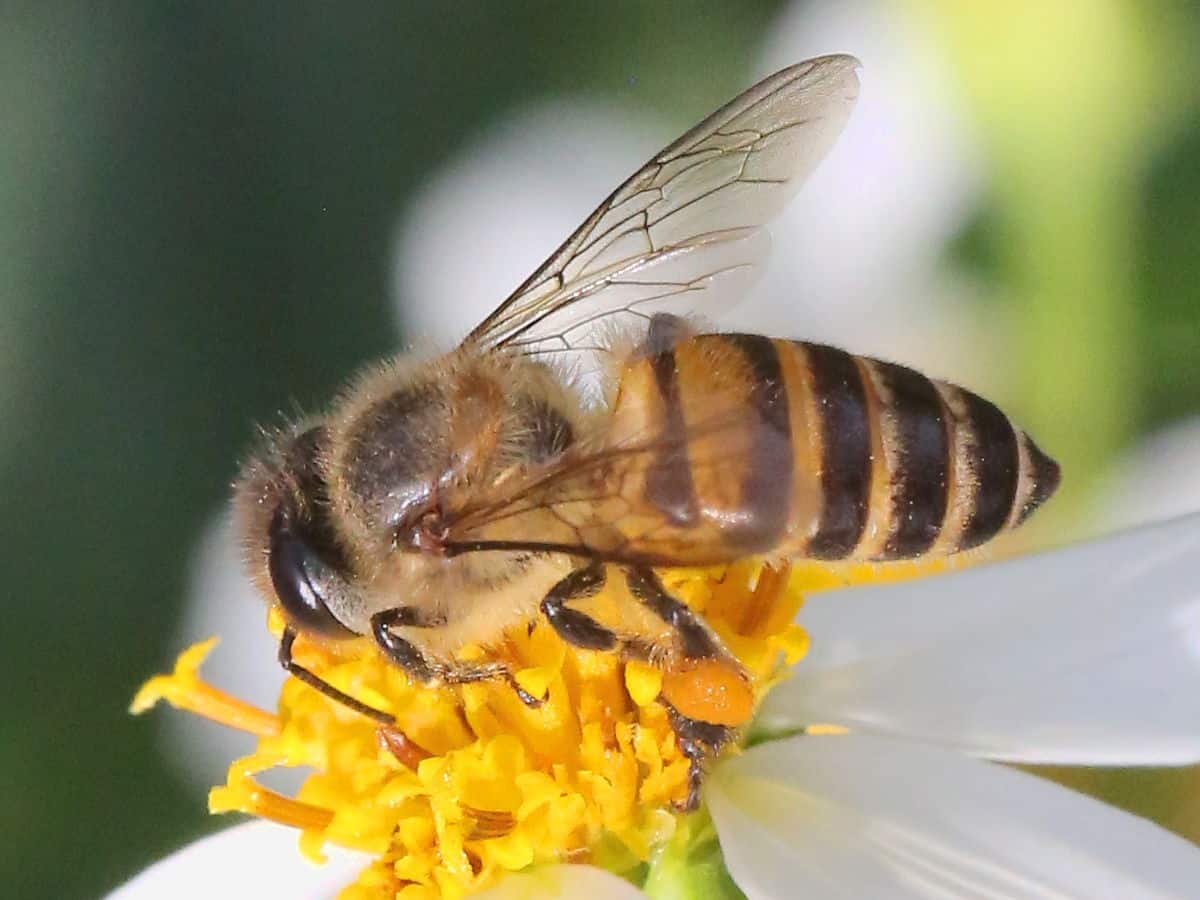
Eastern Honeybee
Apis cerana
Fabricius, 1793 • Apidae • Apini
Apis cerana Fabricius, 1793, the eastern honeybee, is the principal domesticated honeybee of Asia and the sister species of Apis mellifera. Native to a range spanning Afghanistan to Japan and from the Himalayas south to Indonesia, it has been kept for honey production and pollination across Asia for thousands of years. Smaller than its western counterpart, forming more modest colonies of 6,000 to 10,000 workers, and markedly more prone to swarming and absconding, A. cerana is nevertheless a critical ecological and agricultural pollinator across the continent. It is also the original host of the Varroa mite. Unlike A. mellifera, it has evolved effective behavioural defences against it. Explore other honeybee species in the World Bee Atlas.
Quick Facts
Taxonomy and Classification
Johann Christian Fabricius described Apis cerana in 1793 in Entomologia Systematica, page 327, under its current name. The species was previously placed in synonymy with Apis mellifera by some authors, but molecular and morphometric studies have firmly established it as a distinct species. Mating experiments confirm the two are reproductively isolated: crosses between A. cerana and A. mellifera do not produce viable offspring.[1]
| Kingdom | Animalia |
| Phylum | Arthropoda |
| Class | Insecta |
| Order | Hymenoptera |
| Family | Apidae |
| Subfamily | Apinae |
| Tribe | Apini Latreille, 1802 |
| Genus | Apis Linnaeus, 1758 |
| Subgenus | Apis (Apis) Linnaeus, 1758 |
| Species | Apis cerana Fabricius, 1793 |
The subspecies taxonomy of A. cerana has been extensively debated. Engel (1999) recognised eight subspecies: A. c. cerana (Chinese honeybee), A. c. indica (Indian honeybee), A. c. japonica (Japanese honeybee), A. c. javana (Javan honeybee), A. c. himalaya, A. c. abaensis, A. c. nuluensis, and A. c. phillipina.[2] However, a 2010 multivariate morphometric revision by Radloff et al. in Apidologie found that morphoclusters did not align cleanly with these traditional subspecies boundaries and proposed six geographically defined groupings instead: Northern cerana, Himalayan cerana, Indian plains cerana, Indochinese cerana, Philippine cerana, and Indo-Malayan cerana.[3] The taxonomic question remains open; published sources continue to cite figures ranging from 6 to 8 subspecies.
A. cerana is the sister species of Apis koschevnikovi and sits within the subgenus Apis alongside A. mellifera. The two cavity-nesting, multi-comb domesticated Apis species (A. cerana and A. mellifera) are the only honeybees managed at scale for honey production globally.
Physical Description
Workers of Apis cerana are visually similar to A. mellifera workers but distinctly smaller, measuring 9 to 12 mm in body length with a forewing length of 7 to 9 mm.[4] The body is predominantly black with alternating pale yellow to amber abdominal bands, and the legs have a characteristic rusty coloration. Coloration is highly variable across subspecies: A. c. cerana workers are brownish-yellow with a narrow black band on the second abdominal segment; A. c. indica workers tend to be darker. Queens measure 13 to 16 mm and may be either dark brown with pronounced yellow abdominal rings, or nearly entirely black, with both colour forms occurring within the same subspecies. Drones are 11 to 14 mm, generally dark with broader yellow banding than workers.
The comb cell size of A. cerana is smaller than that of A. mellifera, a structural difference that has consequences for Varroa mite reproduction (see Conservation and Disease section). The nest architecture (multiple parallel vertical combs built inside a cavity) is functionally identical to A. mellifera, which is why both species can be managed in similar hive types.
Distribution and Habitat
Apis cerana has the widest natural range of all Asian honeybee species, extending from Afghanistan and Pakistan in the west to Japan and the Korean Peninsula in the northeast, and south through mainland Southeast Asia to Indonesia and the Philippines.[5] It occupies a remarkable breadth of climate zones: tropical rainforest, tropical savannah, monsoon forest, deciduous woodland, mid-latitude grassland, moist continental forest, and taiga. In the Himalayas, populations exist at elevations up to 3,500 metres.
Unlike A. mellifera, which has been introduced globally through human commerce, A. cerana has been introduced to only a limited number of areas outside its native range. It was introduced to Papua New Guinea, the Solomon Islands, and most notably Australia, where it arrived in Townsville in 2007 and became the subject of a major eradication programme by the Australian government, concerned about its potential impact on native bee communities and commercial honeybee operations.
Behaviour and Life Cycle
Colony structure and annual cycle
Apis cerana colonies are eusocial, perennial in warm regions, and annual in temperate zones. Colony size is substantially smaller than A. mellifera: typical managed colonies contain 6,000 to 10,000 workers, compared to 20,000 to 80,000 in a productive A. mellifera colony. In cold temperate regions such as northern China, Japan, and the Himalayas, colonies form a winter cluster and maintain brood temperatures of 33 to 35.5°C through metabolic heat generation, even when ambient temperature drops to 12°C.[1]
Swarming and absconding
A. cerana is substantially more prone to both swarming and absconding than A. mellifera. Swarming (reproductive division of the colony) occurs several times per year in tropical populations. Absconding is the complete abandonment of the nest, with the entire colony departing to found a new nest elsewhere; it is triggered by resource scarcity, disease pressure, or persistent disturbance. Absconding is an energetically costly strategy but functions as a key disease-management behaviour: when a colony absconds, it leaves behind pathogens and parasites accumulated in the old combs. This behaviour is one of several mechanisms that allow A. cerana to coexist with Varroa mites without catastrophic colony losses.[6]
The absconding tendency is a significant practical challenge for beekeepers. A. cerana colonies kept in managed hives will readily depart if conditions become unfavourable, and traditional beekeeping in Asia has developed techniques over centuries to minimise this behaviour. The greater management demands of A. cerana are the primary reason commercial beekeeping operations across Asia have increasingly switched to A. mellifera, with documented negative consequences for wild A. cerana populations through competitive displacement and disease exchange.
The hot defensive bee ball
One of the most scientifically remarkable behaviours in the entire Apis genus is the hot defensive bee ball, documented principally in A. c. japonica (the Japanese honeybee) but present in other A. cerana populations. When a scout hornet (typically Vespa mandarinia, the Asian giant hornet) enters or approaches the colony, workers rapidly envelop the intruder in a tightly packed sphere of several hundred bees. The bees then vibrate their indirect flight muscles in coordinated fashion, generating heat within the ball. Core temperature reaches 46 to 47°C, held for 20 to 30 minutes: lethal to the hornet, which dies at 44 to 46°C, while the bees themselves can tolerate 50°C briefly.[7] Carbon dioxide concentration inside the ball also rises, contributing to hornet mortality. Apis mellifera lacks this defence and is defenceless against mass hornet attack, a significant problem in areas where it has been introduced alongside Asian hornet species.
Varroa Resistance: Why Apis cerana Survives the Mite That Destroys Apis mellifera
Varroa destructor and Varroa jacobsoni are ectoparasitic mites that reproduce inside honeybee brood cells. They are the single greatest cause of managed honeybee colony losses globally, but their devastation falls almost exclusively on Apis mellifera. Apis cerana, the mites' original host, coexists with them in relative equilibrium. Understanding why is one of the most practically important questions in apicultural research.
Three interlocking defence mechanisms
A. cerana has evolved three behavioural strategies that together limit Varroa population growth within the colony:
Grooming behaviour. Workers actively groom themselves and each other, using their mandibles and legs to locate, grip, and physically damage or remove mites from the body surface. A 1996 study by Fries et al. found that over a 6-hour period, 29.6% of introduced mites were damaged by A. cerana compared to 12.3% by A. mellifera.[8] A 2024 gene expression study using RNA sequencing confirmed that A. cerana exhibits significantly higher auto-grooming frequency than A. mellifera when infested, and identified differentially expressed genes in grooming-behaviour neural pathways.[9]
Hygienic behaviour. Workers detect, uncap, and remove mite-infested brood cells before the mites complete their reproductive cycle. A. cerana performs this behaviour more effectively and more rapidly than A. mellifera. The smaller cell size of A. cerana comb is thought to assist detection by reducing the space available for mites to hide.[6]
Drone brood entombing. When Varroa mites preferentially infest drone brood cells (which they do, because the longer capping period allows more mite reproduction), A. cerana workers entomb the infested drone brood by sealing the cells with wax plugs, preventing adult mites from dispersing into the colony. This targeted response is largely absent in A. mellifera.
Why A. mellifera cannot do the same
A. mellifera evolved in a different ecological context, without Varroa as a co-evolutionary pressure. When Varroa destructor jumped from A. cerana to A. mellifera in the mid-20th century via importation of Asian bees into Europe, it found a host with no evolved defences. Unaided A. mellifera colonies in Europe typically collapse within 1 to 3 years of infestation. Breeding programmes are now under way to select for Varroa-resistant A. mellifera strains incorporating grooming and hygienic traits originally identified in A. cerana.
Is grooming the primary resistance mechanism in A. cerana?
The widely cited Peng et al. (1987) study reported that A. cerana removed 99.6% of introduced Varroa jacobsoni mites compared to 0.3% by A. mellifera, a result that led to widespread acceptance of grooming as the dominant resistance mechanism. However, a 2023 review in Apidologie by Remnant et al. raised methodological concerns about this and subsequent studies, noting that most used small observation hives that may not reflect behaviour in full-size colonies, and that mite removal rates in replicated, full-colony experiments are considerably lower.[10] The review concludes that grooming is a contributing factor but that the relative importance of grooming, hygienic behaviour, and mite infertility in A. cerana resistance is not yet definitively established. The Varroa-resistance literature should be read with awareness of the methodological variation between studies.
Honey Production and Beekeeping
Apis cerana has been kept for honey production across Asia for at least 2,000 years, with evidence of managed hives in China, India, and the Middle East predating formal historical records. It is estimated that several million A. cerana colonies are managed across Asia today, though precise figures are unavailable because many are kept in traditional log or clay hives by subsistence beekeepers not captured in agricultural statistics.
Honey yields from A. cerana are substantially lower than A. mellifera: typical yields range from 5 to 12 kg per colony per year under natural conditions and 15 to 25 kg under intensive farm management, compared to 20 to 60 kg for A. mellifera in good conditions.[11] The lower yield reflects the smaller colony size, greater swarming frequency, and the species' tendency to consume honey stores during periods of dearth rather than hoarding large surpluses as A. mellifera does.
A. cerana honey commands a significant premium in many Asian markets. In China, wild-harvested or traditionally managed A. c. cerana honey sells at multiples of commercial A. mellifera honey prices. In Nepal and Bhutan, high-altitude A. cerana cerana honey from rhododendron-rich valleys is increasingly sought by speciality buyers. The honey is typically darker, more intensely flavoured, and has a different enzymatic and pollen profile from A. mellifera honey from the same region.
Despite this cultural and economic importance, A. cerana faces increasing pressure from the commercial expansion of A. mellifera beekeeping across Asia. The introduction of A. mellifera has been linked to local declines and in some areas local extinction of A. cerana through competitive displacement and disease exchange, including the introduction of Varroa destructor to A. mellifera populations and the reverse transmission of pathogens such as sacbrood virus from A. cerana to A. mellifera.[6]
Apis cerana vs Apis mellifera: Key Differences
Although closely related and superficially similar, the two domesticated honeybee species differ substantially across almost every biologically significant parameter. The table below summarises the key comparisons.
| Characteristic | Apis cerana | Apis mellifera |
|---|---|---|
| Worker size | 9–12 mm | 10–15 mm |
| Native range | South, Southeast and East Asia | Europe, Africa, Middle East |
| Colony size | 6,000–10,000 workers | 20,000–80,000 workers |
| Honey yield | 5–25 kg/year | 20–60 kg/year |
| Swarming frequency | High (several times/year in tropics) | Lower (typically once/year) |
| Absconding | Common under stress | Rare |
| Varroa resistance | Yes: evolved co-host | No: susceptible |
| Hornet defence | Hot defensive bee ball (A. c. japonica) | No equivalent behaviour |
| Overwintering | Cluster in cold climates; perennial in tropics | Perennial cluster across temperate range |
| Commercial use | Traditional and small-scale in Asia | Dominant global commercial species |
Conservation Status and Population Trends
Apis cerana has not been assessed by the IUCN Red List at the global species level. Regional and anecdotal data, however, consistently indicate population declines across its native range. A 2022 study in Nepal documented a 44% decline in occupied beehives and 50% decline in honey production per hive from 2012 to 2022, driven by climate change, flower loss, and the spread of A. mellifera beekeeping.[12] Across South and Southeast Asia, beekeepers and researchers have reported substantial declines driven by habitat loss, pesticide use, and competitive displacement by commercial A. mellifera operations.
The species is also threatened by disease exchange with A. mellifera. Sacbrood virus, a pathogen to which A. cerana is particularly vulnerable, has caused significant colony losses in India, China, and Southeast Asia. Unlike in A. mellifera, sacbrood virus infections in A. cerana can be colony-lethal rather than merely symptomatic.
Apis cerana and HoneyBee & Co.
All HoneyBee & Co. honey is produced by Apis mellifera colonies. Apis cerana is not managed commercially in Romania or the United Kingdom, and no A. cerana honey appears in our range. The eastern honeybee is included in this species programme because understanding the full genus Apis (the biology, the differences, the conservation challenges) is part of what informs how we think about the honeybees that produce our honey, the landscapes those bees depend on, and the threats to bee populations globally.
What A. cerana illustrates most powerfully for anyone interested in honey is that Varroa resistance is possible: it exists, fully evolved, in a honeybee. The challenge is not biological but historical: A. mellifera never encountered the mite before the 20th century and had no time to adapt. The research into A. cerana's grooming and hygienic behaviour mechanisms is now feeding directly into selective breeding programmes for A. mellifera colonies that can resist Varroa without chemical treatment. Understanding A. cerana is, in a real sense, part of the future of the A. mellifera colonies that produce our honey.
For a broader look at what bee species exist across the globe and how their distribution relates to the landscapes that produce different honeys, visit our World Bee Atlas. To understand what disappearing bee populations would mean for the food on your plate, explore Your Plate Without Bees. For the A. mellifera colonies that produce all our honey, see the Western Honeybee species profile.
Frequently Asked Questions
What is the difference between Apis cerana and Apis mellifera?
Apis cerana (eastern honeybee) is native to Asia; Apis mellifera (western honeybee) is native to Europe, Africa, and the Middle East. A. cerana is smaller, forms smaller colonies (6,000 to 10,000 workers versus 20,000 to 80,000), produces less honey, and is substantially more prone to swarming and absconding. Crucially, A. cerana is the original host of the Varroa mite and has evolved behavioural defences against it; A. mellifera has not. The two species cannot interbreed.
Why is Apis cerana resistant to Varroa mites?
A. cerana and Varroa mites have co-evolved as host and parasite over a very long period. A. cerana has developed three interlocking behavioural defences: grooming (physically removing mites from the body surface), hygienic behaviour (detecting and removing mite-infested brood), and drone brood entombing (sealing infested drone cells to prevent mite dispersal). Together these mechanisms prevent Varroa populations from reaching levels that would threaten colony survival. A. mellifera only encountered Varroa destructor in the 20th century and has not had evolutionary time to develop equivalent resistance.
Does Apis cerana produce honey?
Yes. Apis cerana is one of only two domesticated honeybee species and has been kept for honey production across Asia for thousands of years. Yields are lower than A. mellifera: typically 5 to 25 kg per colony per year, reflecting smaller colony size and more frequent swarming. A. cerana honey is often prized in Asian markets for its flavour and the traditional methods of production. It is not available commercially in the UK or European markets at scale.
What is the hot defensive bee ball of Apis cerana japonica?
When an Asian giant hornet (Vespa mandarinia) enters or approaches the colony, Japanese honeybees (A. c. japonica) rapidly envelop the intruder in a tightly packed sphere of several hundred workers. The bees vibrate their flight muscles to generate heat, raising the ball's core temperature to 46 to 47°C. Hornets die at 44 to 46°C, while the bees can tolerate slightly higher temperatures, killing the hornet within 20 to 30 minutes. Apis mellifera lacks this adaptation entirely and is largely defenceless against mass hornet attacks.
Is Apis cerana found in the UK?
No. Apis cerana is not native to the UK and is not established here. Its natural range is confined to Asia. It has been introduced to a small number of areas outside Asia, including Australia, where an incursion in 2007 prompted a government eradication programme, but not to Europe. The only Apis species present in the UK wild is A. mellifera, specifically the subspecies A. m. mellifera (dark European honeybee). See our UK Native Bee Species Map for a full picture of which bee species are found across Britain.
Why is Apis cerana declining across Asia?
Multiple interacting factors are driving declines in A. cerana populations across South and Southeast Asia. The most significant is the rapid expansion of commercial Apis mellifera beekeeping, which has introduced new pathogens (particularly sacbrood virus variants and Varroa mites in areas where they were absent), created resource competition, and in some areas displaced A. cerana entirely from traditional beekeeping. Secondary drivers include habitat loss through deforestation and agricultural intensification, pesticide and insecticide exposure, and the climate-driven disruption of flowering phenology that reduces forage availability.
How many subspecies does Apis cerana have?
The number depends on which taxonomic revision is consulted. Engel (1999) recognised eight subspecies. A 2010 morphometric analysis by Radloff et al. proposed six geographically defined groupings that do not align exactly with the traditional subspecies boundaries. Most current sources cite six to eight subspecies. The taxonomy is complicated by the species' enormous geographic range and the high degree of morphological variation between tropical and temperate populations.
What does Apis cerana honey taste like?
A. cerana honey tends to be darker, more intensely aromatic, and more rapidly crystallising than A. mellifera honey from the same floral source, reflecting differences in enzyme profile and the typically smaller-scale, less-processed nature of traditional A. cerana beekeeping. High-altitude A. c. cerana honey from Nepal, Bhutan, and Yunnan, foraged from rhododendron, buckwheat, and diverse highland wildflowers, is considered among the world's most distinctive honeys by speciality buyers. It commands significant premiums in East Asian and specialist Western markets.
Sources and References
- Wikipedia contributors. Apis cerana. Wikipedia, The Free Encyclopedia. Updated March 2026. en.wikipedia.org [Secondary; primary sources include Koetz 2013 (Insects 4: 558–592) and colony biology data from multiple primary studies cited therein]
- Engel, M. S. (1999). The taxonomy of recent and fossil honey bees (Hymenoptera: Apidae; Apis). Journal of Hymenoptera Research, 8(2), 165–196.
- Radloff, S. E., Hepburn, C., Hepburn, H. R., Fuchs, S., et al. (2010). Population structure and classification of Apis cerana. Apidologie, 41, 601–625. doi.org/10.1051/apido/2010008
- USDA Exotic Bee ID. Apis cerana species account: morphology. idtools.org
- Heinrich Böll Foundation Southeast Asia. Native Honey Bees of Southeast Asia and Conservation Challenges. th.boell.org
- Plant Health Australia. The Asian honey bee (Apis cerana) and its strains: Literature Review, 2024. planthealthaustralia.com.au
- Ono, M., Igarashi, T., Ohno, E., and Sasaki, M. (1995). Unusual thermal defence by a honeybee against mass attack by hornets. Nature, 377, 334–336. Also: Sugahara, M. and Sakamoto, F. (2009). Heat and carbon dioxide generated by honeybees jointly act to kill hornets. Naturwissenschaften. doi.org/10.1007/s00114-009-0575-0
- Fries, I., Camazine, S., and Sneyd, J. (1994). Population dynamics of Varroa jacobsoni. Bee World. [Cited in Remnant et al. 2023 Apidologie review; see ref 10]
- Cai, Z., et al. (2024). Comparison of Brain Gene Expression Profiles Associated with Auto-Grooming Behavior between Apis cerana and Apis mellifera Infested by Varroa destructor. Genes, 15(6), 763. doi.org/10.3390/genes15060763
- Remnant, E. J., et al. (2023). Varroa resistance in Apis cerana: a review. Apidologie. doi.org/10.1007/s13592-022-00977-8
- Heinrich Böll Foundation Southeast Asia. The Benefits of Sustainable Honey Production in Southeast Asia, January 2022. th.boell.org
- Paudel, S., et al. (2024). Decline in Honeybees and Its Consequences for Beekeepers and Crop Pollination in Western Nepal. PMC. pmc.ncbi.nlm.nih.gov