

 English (UK)
  Italiano
  Français
  简体中文
简体中文  한국어
한국어 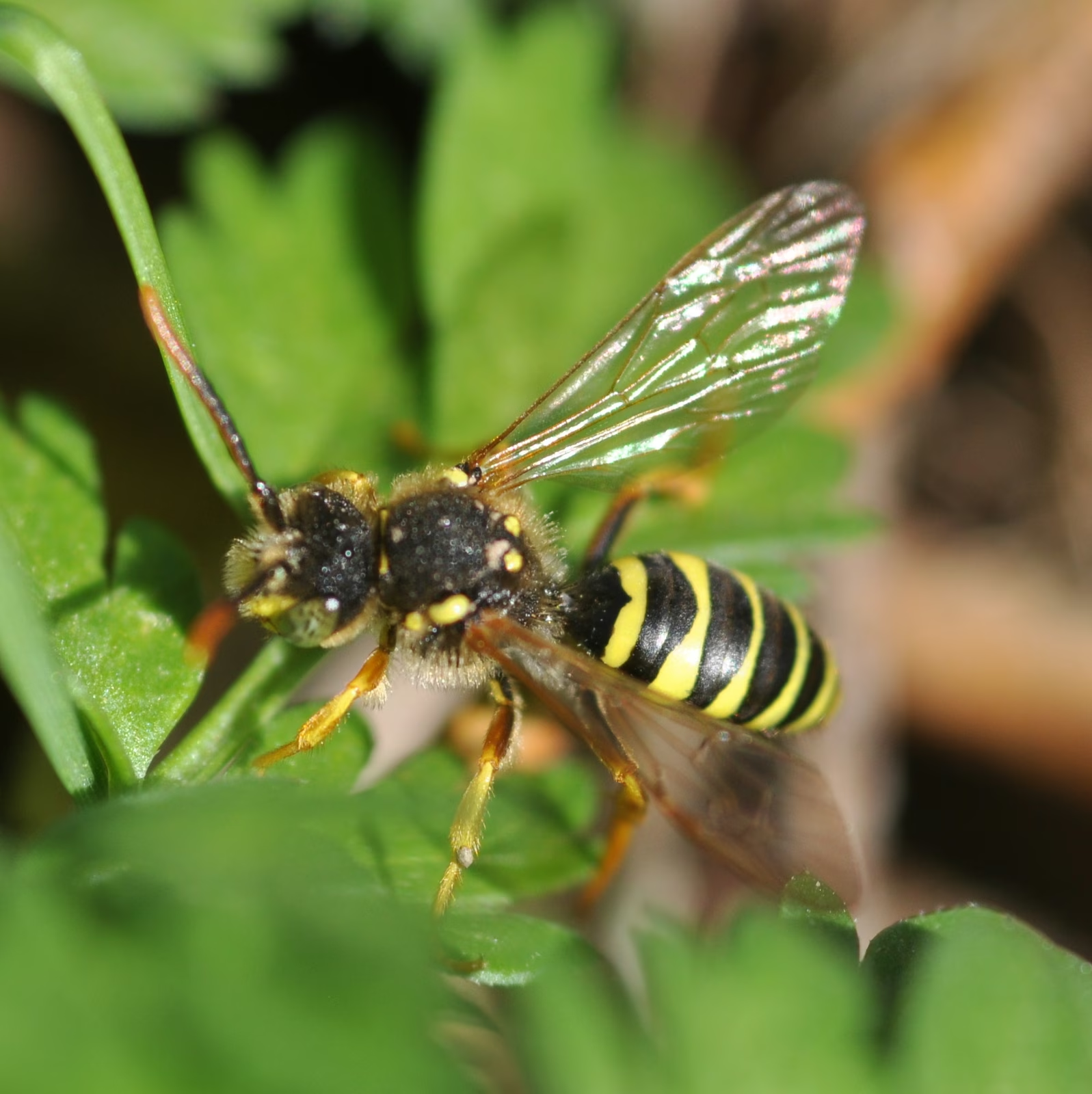
UK Bee Species
Gooden's Nomad Bee (Nomada goodeniana)
Nomada goodeniana (Kirby, 1802) · subfamily Nomadinae · family Apidae
Gooden's nomad bee is one of the largest and brightest of Britain's cuckoo bees, a slim, almost hairless insect banded in black and yellow that is far more often taken for a small wasp than a bee. It builds no nest of its own. Instead it slips into the burrows of large mining bees and leaves its young to live on their stores. It is common across most of Britain, and finding one is usually a sign that a mining bee colony is close by. See where it sits among Britain's bees on the UK Native Bee Species Map, or among the world's bees in the World Bee Atlas.
Quick Facts
| Kingdom | Animalia |
| Phylum | Arthropoda |
| Class | Insecta |
| Order | Hymenoptera |
| Family | Apidae |
| Subfamily | Nomadinae |
| Genus | Nomada |
| Species | Nomada goodeniana |
A cuckoo bee that looks like a wasp
Gooden's nomad bee is a bright black-and-yellow insect and one of the largest of the roughly 30 Nomada species in Britain, with females reaching 10 to 14 mm.[2] Like all nomad bees it is slim and almost hairless, with bold yellow bands and spots across a black body and orange or reddish legs and antennae, an appearance that fools most people into seeing a small wasp.[5] Because it does not gather pollen for young of its own, it lacks the dense pollen brushes that pollen-collecting bees carry, which adds to the lean, wasp-like look.[4]
The genus name Nomada comes from a Greek word for roaming or wandering, a fair description of a bee that spends its days drifting low over the ground in search of other bees' nests.[5] The species was described by William Kirby in 1802 and named in honour of the naturalist and clergyman Samuel Goodenough, one of his contemporaries.[3]
Telling it from other nomad bees
Gooden's nomad bee is most easily confused with Marsham's nomad bee (Nomada marshamella). The surest difference is on the second abdominal segment: Gooden's carries a complete yellow band across it, where Marsham's shows two separated yellow spots. Gooden's also has yellow, rather than brownish, plates at the wing bases.[2] On the Channel Islands it flies alongside the very similar Nomada succincta, which has yellower legs with a dark patch on the inner face of the hind shin and larger yellow markings on the female's face.[2] Males of Gooden's resemble the females but have partly darkened antennae and a patch of dense golden hairs beneath the base of the hind thighs.[2]
A cuckoo of the mining bees
Gooden's nomad bee is a cleptoparasite, a cuckoo bee that lives at the expense of mining bees in the genus Andrena.[1] Its main hosts are large spring mining bees of the nigroaenea group, above all the buffish mining bee and the grey-patched mining bee, with the cliff mining bee (Andrena thoracica) and, to a lesser extent, the chocolate mining bee (Andrena scotica) also used.[1][5] The female patrols low over the host's nesting ground and, while the owner is away foraging, enters an open burrow and lays an egg in a provisioned cell.[6] When the cuckoo grub hatches it destroys the host's egg with large sickle-shaped jaws and eats the pollen and nectar that were meant for the host larva.[6]
Gooden's nomad bee never digs a nest. Every one of its young is raised in a burrow built and stocked by a mining bee.[1]
Where and when you will see it
This is a widespread and frequently seen bee over most of the British Isles, scarcer only in Scotland, and it occurs widely across Europe.[1] National recording schemes do not regard it as scarce or threatened in Britain, although in Ireland, where it is rarely recorded, it is treated as a species of conservation concern.[1] Look for it flying slowly over short turf and bare, sunny ground in spring, from April to June, with a smaller second showing in July and August where its host has a late generation.[1] Adults take nectar from flowers such as dandelions, willow catkins and brassicas, but they carry no pollen home because there is no nest to provision.[5]
Gooden's nomad bee flies mainly from April to June, timed to the emergence of its mining-bee hosts, with a smaller brood in late summer.[1]
Why the nomad bee matters
A cuckoo bee can only exist where its host thrives, so a healthy population of Gooden's nomad bee is a good sign that the mining bees beneath the surface are doing well.[1] Cuckoo bees of this kind are a natural part of a working bee community, not a threat to it, and they add a layer of richness to the spring fauna of banks, verges and sunny lawns. Protecting the open, sparsely vegetated ground that mining bees need keeps their cuckoos in the picture too. You can meet another British cuckoo bee in our guide to the painted nomad bee.
While cuckoo bees take a shortcut, honeybees turn nectar into something we can share. Explore our single-origin raw honeys in the HoneyBee & Co. shop.

Raw Acacia Honey
Our flagship raw Acacia honey: pale, delicate and slow to crystallise. Drawn from the Nistor family's Transylvanian apiaries, with six generations of beekeeping heritage in every 280g jar. £10.99.
Shop Acacia Honey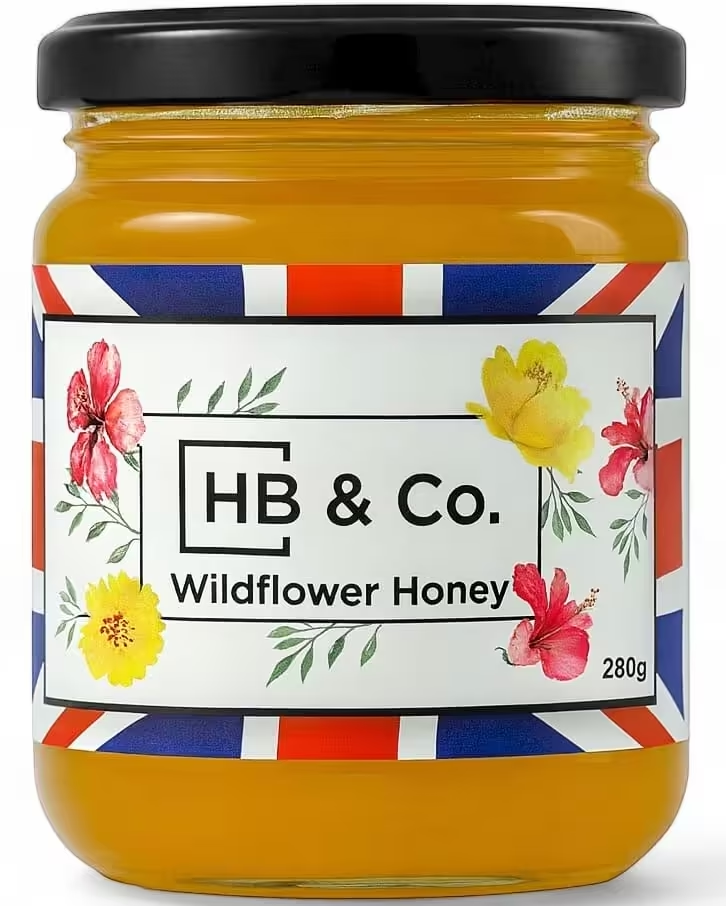
British Wildflower Honey
Raw honey from Midlands meadows and hedgerows, the dandelion and spring blossom that nomad and mining bees share. Our British honey supplier holds SALSA Certification. 280g. £10.99.
Shop Wildflower
Subscribe & Save 20%
Choose any single honey and save 20% on every delivery, with free UK delivery on every subscription order.
Start a SubscriptionFrequently asked questions
What is Gooden's nomad bee?
Why is it called Gooden's nomad bee?
Is Gooden's nomad bee a wasp or a bee?
What does Gooden's nomad bee parasitise?
Do Gooden's nomad bees sting?
When are Gooden's nomad bees active?
Do nomad bees collect pollen or make honey?
Is Gooden's nomad bee rare?
Related species
Painted Nomad Bee
Nomada fucataRead more → Main hostBuffish Mining Bee
Andrena nigroaeneaRead more → HostGrey-patched Mining Bee
Andrena nitidaRead more →Sources & references
- BWARS (Bees, Wasps & Ants Recording Society). Species account: Nomada goodeniana (hosts in the nigroaenea group, flight April to June with a small late brood, British distribution and status). bwars.com.
- Falk, S. Field Guide to the Bees of Great Britain and Ireland, Bloomsbury, and the Steven Falk Flickr collection: Nomada goodeniana (size, complete yellow band on tergite 2, separation from N. marshamella and N. succincta, hosts).
- Else, G.R. & Edwards, M. (2018). Handbook of the Bees of the British Isles. Ray Society (taxonomy, nomenclature and cuckoo-bee biology).
- BWARS. Britain's Bees, genus Nomada account: cleptoparasites of ground-nesting bees, lacking pollen-carrying structures. bwars.com.
- Natural History Society of Northumbria. Introducing the Nomad Bees: markings, hosts (Andrena nigroaenea, A. scotica) and the meaning of Nomada. nhsn.org.uk.
- Habitas / National Museums Northern Ireland. Nomada goodeniana: cleptoparasite life cycle, egg-laying in host cells and larval habits. habitas.org.uk.
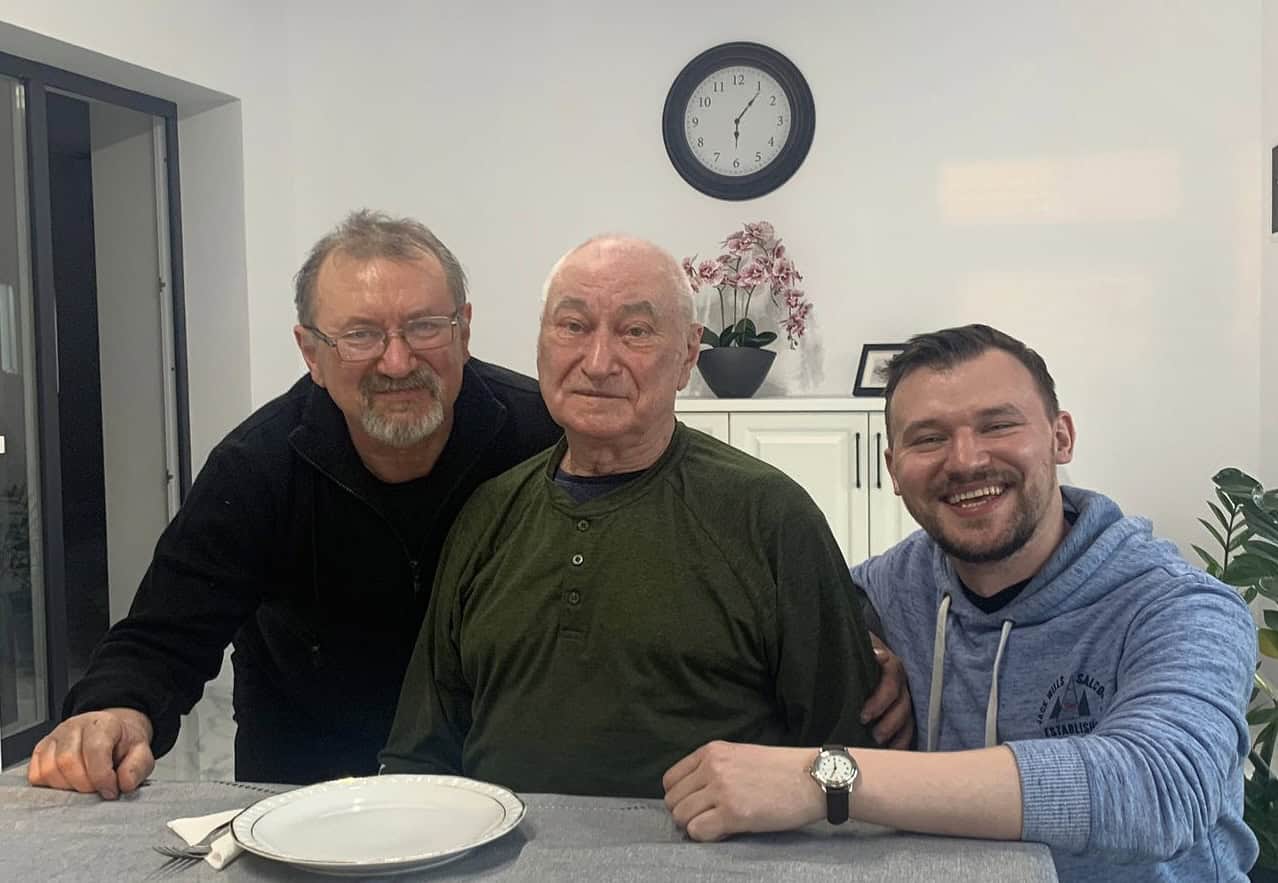
Dragos Nistor
Founder, HoneyBee & Co. · Guest Lecturer, University of Greenwich
HoneyBee & Co. draws on six generations of family beekeeping heritage, with honey from the Nistor family apiaries and from carefully chosen British producers. Our British honey supplier holds SALSA Certification, and we offer a 15% NHS Discount. Every jar is raw, unfiltered and traceable to the hive.