

 English (UK)
  Italiano
  Français
  简体中文
简体中文  한국어
한국어 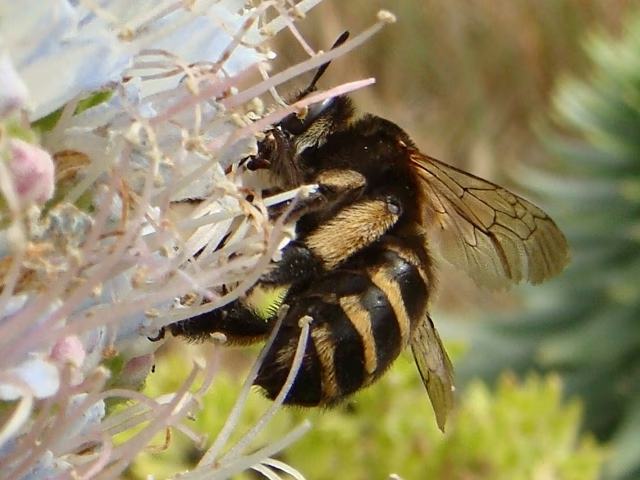
UK Bee Species
Green-eyed Flower Bee (Anthophora bimaculata)
Anthophora bimaculata (Panzer, 1798) · family Apidae
The green-eyed flower bee is a small, fast, summer bee with a personality far bigger than its size. It zips and hovers over hot sandy heaths and dunes on a shrill, high-pitched hum that often makes people stop and look, and when it pauses on a flower its great olive-green eyes are unmistakable. It is the smallest of Britain's flower bees, and a true creature of warm, sandy, southern ground. See where it sits among Britain's bees on the UK Native Bee Species Map, or among the world's bees in the World Bee Atlas.
Quick Facts
| Kingdom | Animalia |
| Phylum | Arthropoda |
| Class | Insecta |
| Order | Hymenoptera |
| Family | Apidae |
| Genus | Anthophora |
| Species | Anthophora bimaculata |
Green eyes and a high-pitched hum
The green-eyed flower bee is the smallest of Britain's five Anthophora flower bees, a compact, furry, brownish-grey insect only about 8 to 9 mm long, banded with pale hair.[2][3][4] Its two most striking features are easy to notice in the field: large, bright olive-green eyes in both sexes, and a fast, frenetic, hovering flight on a distinctly shrill, high-pitched buzz that often draws the eye before the bee itself is seen.[2] Males have a yellow face, while females carry two bold black spots at the base of the yellow clypeus, the marks that give the bee its scientific name, bimaculata, meaning two-spotted.[2]
Telling it from the hairy-footed flower bee
Most people meet a flower bee for the first time in spring, in the shape of the larger and much commoner hairy-footed flower bee. The green-eyed flower bee is a different proposition: smaller, a summer rather than a spring insect, tied to sandy ground, and instantly marked out by those green eyes, which the hairy-footed flower bee lacks.[1][2] It is the only British member of a group of very similar continental flower bees, so in this country a small, green-eyed, sand-loving flower bee can be named with confidence.[1]
A bee of hot, sandy places
This is a southern bee of very sandy habitats: lowland heaths and commons, coastal dunes, soft-rock cliffs and landslips, sandpits and sandy brownfield, mostly south of a line from the Severn to the Wash.[1] It nests in the ground, digging burrows in fine, bare sand on flat ground and, especially, on sunny slopes and cliff faces, with a main tunnel a few centimetres deep.[5] Many females nest together, and the aggregations can be large and conspicuous, audible from some way off as a warm-day haze of bees fills the air with their high hum.[1]
A nesting colony of green-eyed flower bees on a hot day is as much heard as seen: a shrill, high-pitched humming over warm, open sand.[1]
Summer forager
The green-eyed flower bee flies in a single generation from late June to mid-September, the heart of the summer.[1] It is a generalist, or polylectic, working a wide range of flowers, with a notable liking for viper's-bugloss, brambles, knapweeds, thistles, dead-nettles, ragworts, sea bindweed and many more.[1] Where the bee thrives, so does its cuckoo: the sharp-tailed bee Coelioxys rufescens, which lays in the flower bee's cells, can often be found around the nesting aggregations.[1]
A high-summer bee, on the wing from late June to mid-September, when the sandy heaths and dunes of the south are at their hottest.[1]
Where and when you will see it
The best places to look are warm, sunny, sandy sites in the south of England on a hot day from July onwards, where the bees hover and hum around their nest burrows and visit nearby flowers.[1] It can be locally abundant where it occurs, and although it is restricted to sandy habitats, and so counts as a local species, it is not regarded as scarce or threatened.[1][6] Like other flower bees it is harmless to people, far more interested in flowers and sand than in anyone watching it.
A flower-carrier, two-spotted
The genus name Anthophora is Greek for "flower-carrier", a fitting label for these fast, furry flower bees, while bimaculata is Latin for "two-spotted", after the pair of black marks on the female's otherwise yellow face.[7] The species was described by the German naturalist Georg Wolfgang Franz Panzer in 1798.[7]
How to tell it apart
This is the smallest of Britain's five Anthophora flower bees, only eight or nine millimetres long, and the only member of its group here.[8] Two features give it away in the field: the olive-green eyes shared by both sexes, and the unusually high, shrill hum it makes in flight.[8] It is a southern, sand-loving bee, far less widespread than its larger spring cousin the hairy-footed flower bee, and is most often met around its nesting colonies on warm, sunny days.[8]
Why the green-eyed flower bee matters
The green-eyed flower bee is a fine indicator of warm, open, sandy habitats, the heaths, dunes and brownfield mosaics that support a whole suite of specialist insects.[1] Like so many of these specialists it needs two things together: bare, sunny sand to nest in and a good spread of summer flowers to feed on. Those open, early-succession habitats are easily lost to scrub, development and the tidying-away of rough ground, so keeping patches of bare sand and flower-rich margins is the surest way to keep this bright-eyed little bee humming on our southern heaths.
Summer flowers feed this bee; the same wildflower-rich ground gives our honeybees their nectar. Explore the range in the HoneyBee & Co. shop.
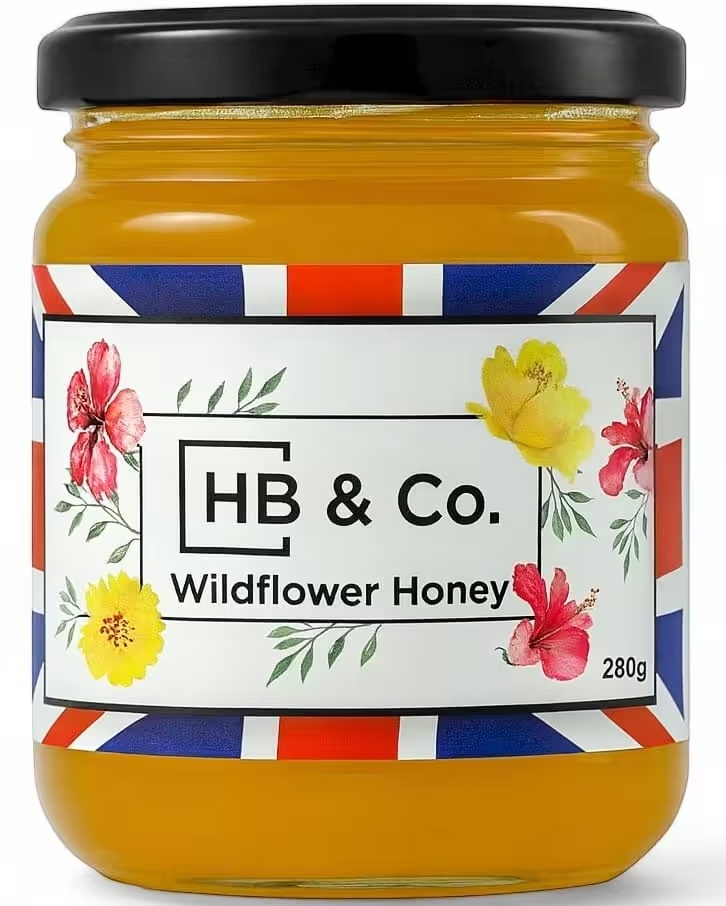
Raw British Wildflower Honey
Honey from Midlands meadows and hedgerows, the high-summer flowers that solitary bees like this one work for pollen and nectar. Raw, unfiltered and full of character. Our British honey supplier holds SALSA Certification. 280g. £10.99.
Shop Wildflower Honey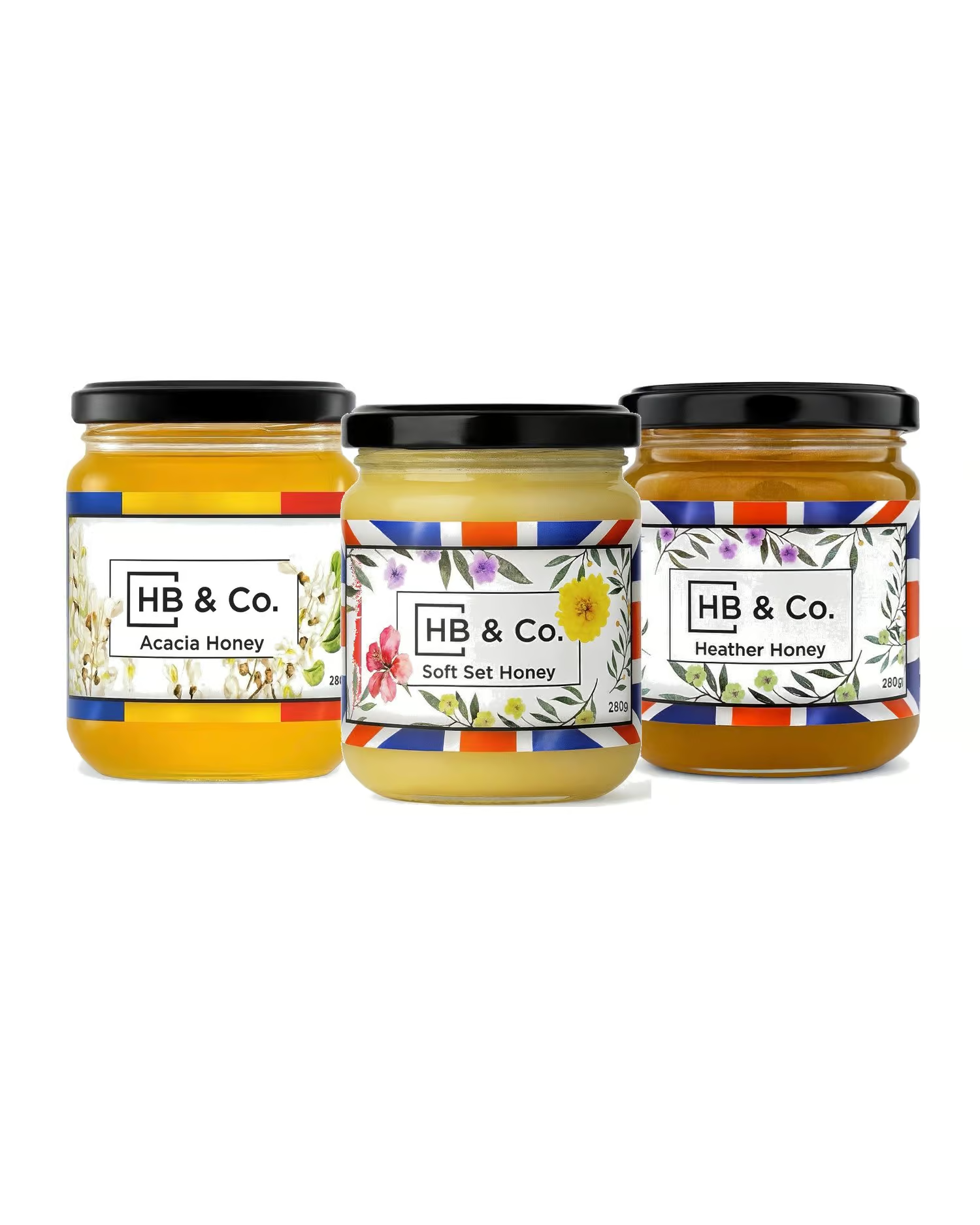
Discovery Trio
New to raw honey? Three of our single-origin honeys in one set, the easy way to taste the range and find your favourite. £33.22.
Shop the Trio
Subscribe & Save 20%
Choose any single honey and save 20% on every delivery, with free UK delivery on every subscription order.
Start a SubscriptionFrequently asked questions
What is the green-eyed flower bee?
Why is it called the green-eyed flower bee, and what does bimaculata mean?
How do I tell it from the hairy-footed flower bee?
What is the loud, high-pitched bee humming over the heath?
When is the green-eyed flower bee active?
Where does the green-eyed flower bee live?
Do green-eyed flower bees sting?
Does the green-eyed flower bee make honey?
Related species
Hairy-footed Flower Bee
Anthophora plumipesRead more → Sandy aggregatorIvy Bee
Colletes hederaeRead more → Ground nesterAshy Mining Bee
Andrena cinerariaRead more →Sources & references
- BWARS (Bees, Wasps & Ants Recording Society). Species account: Anthophora bimaculata (only British member of its group, light sandy habitats, univoltine late June to mid-September, dense nesting aggregations, broad forage, cuckoo Coelioxys rufescens, not scarce or threatened). bwars.com.
- Falk, S. Field Guide to the Bees of Great Britain and Ireland, Bloomsbury, and the Steven Falk Flickr collection: Anthophora bimaculata (smallest British Anthophora, green eyes, shrill hovering flight, male yellow face and female facial spots).
- NBN Atlas. Anthophora bimaculata (Panzer, 1798): authority and British distribution records. nbnatlas.org.
- Else, G.R. & Edwards, M. (2018). Handbook of the Bees of the British Isles. Ray Society (taxonomy and the Anthophora flower bees within the Apidae).
- infofauna. Swiss Fauna Atlas, Anthophora bimaculata: nesting in fine sand, burrow depth and aggregation behaviour. infofauna.ch.
- Nieto, A. et al. (2014). European Red List of Bees. IUCN / Publications Office of the European Union (conservation status context).
- Panzer, G.W.F. (1798), original description. Etymology: Greek Anthophora, "flower-carrier"; Latin bimaculata, "two-spotted", for the female's paired black clypeal marks (NBN Atlas).
- BWARS species account and Falk, S. (2015): the smallest British Anthophora, olive-green eyes, high-pitched flight hum, sandy southern habitats, nesting aggregations and the cuckoo Coelioxys rufescens. bwars.com.
Dragos Nistor
Founder, HoneyBee & Co. · Guest Lecturer, University of Greenwich
HoneyBee & Co. draws on six generations of family beekeeping heritage, with honey from the Nistor family apiaries and from carefully chosen British producers. Our British honey supplier holds SALSA Certification, and we offer a 15% NHS Discount. Every jar is raw, unfiltered and traceable to the hive.