

 English (UK)
  Italiano
  Français
  简体中文
简体中文  한국어
한국어 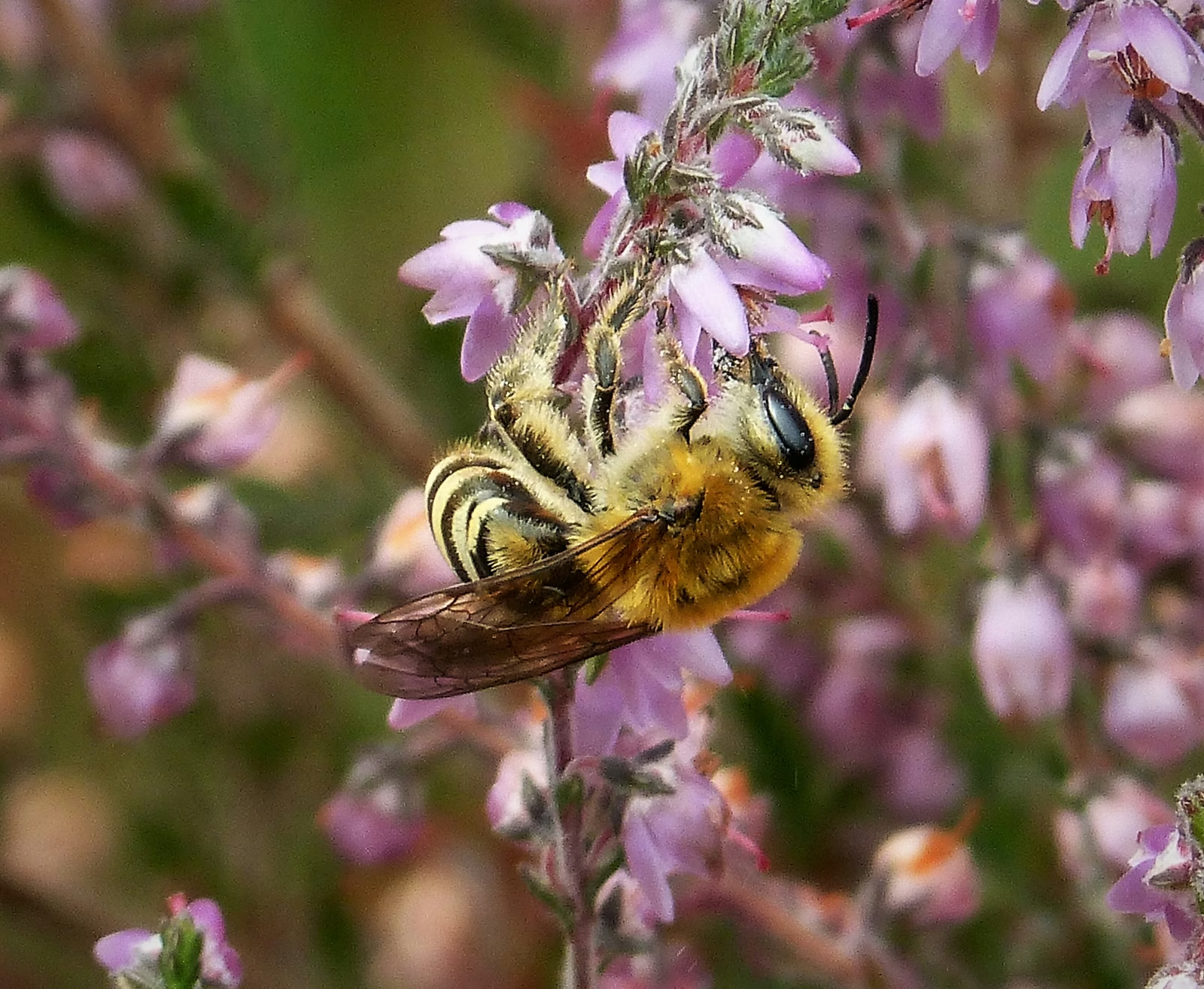
UK Bee Species
Heather Colletes (Colletes succinctus)
Colletes succinctus (Linnaeus, 1758) · family Colletidae
The heather colletes is the bee of the late-summer moor. As the ling turns whole hillsides pink and purple in August, this banded, honeybee-sized solitary bee works the flowers in their thousands, curling almost into the bells to reach the pollen. It is a plasterer bee, one of the cellophane bees, and it lines its underground nest with a waterproof, see-through skin all of its own making. See where it sits among Britain's bees on the UK Native Bee Species Map, or among the world's bees in the World Bee Atlas.
Quick Facts
| Kingdom | Animalia |
| Phylum | Arthropoda |
| Class | Insecta |
| Order | Hymenoptera |
| Family | Colletidae |
| Genus | Colletes |
| Species | Colletes succinctus |
A plasterer bee of the heather
The heather colletes is a medium-sized solitary bee, a little smaller than a honeybee, with a brownish thorax and a dark abdomen crossed by narrow, pale buff bands.[2] In the field it tends to look small and dark, which, with its strong link to heather, is a good first clue. It belongs to the genus Colletes, the plasterer or cellophane bees of the family Colletidae, named for an extraordinary nesting habit: the female lines each cell with a thin, transparent, waterproof secretion that sets like cellophane.[3][5]
Heather colletes, ivy bee or sea-aster bee?
The heather colletes is the smallest and darkest of three very similar, late-flying Colletes that make up the succinctus group, and the surest way to tell them apart in the field is by plant and season.[2] The heather colletes flies on heather from July to September; the ivy bee (Colletes hederae) flies a little later, on ivy, into October; and the sea-aster bee (Colletes halophilus) is a saltmarsh insect on sea aster. The heather colletes has the narrowest, palest abdominal bands of the three, giving it a darker overall look.[2]
Tied to the ling
This is a heather specialist. Its pollen comes overwhelmingly from heathers, above all ling (Calluna vulgaris), and females have been recorded flying up to a kilometre and a half from the nest to reach good stands of it.[1][4] When ling pollen runs short late in the season they will turn to bell heathers, ragwort and other daisies, and they take nectar from ivy, yarrow and thistles, but ling is the heart of the diet.[1][3] The whole life of the bee is timed to it: adults fly from July to September and peak in August, exactly when the moors come into bloom.[1]
The heather colletes lives and breeds by the ling bloom. Where heather is lost from a heath or moor, this specialist bee goes with it.[1]
Cellophane nurseries in the sand
The female nests in the ground, in bare or sparsely vegetated sandy soil, often on sunny slopes and banks, and many females nest together so that some aggregations, especially on northern moors, can be very large.[1] Each female works alone, with no queen or workers, digging her burrow and lining the brood cells with the cellophane-like secretion that gives the plasterer bees their name, a waterproof skin that protects the pollen store and growing grub from damp and mould.[3][5] That defence is not perfect: the cuckoo bee Epeolus cruciger is a well-known parasite at good heather colletes sites, the female slicing through the lining to lay her own egg inside.[1]
Where and when you will see it
The heather colletes is found across Britain wherever heather is plentiful, mainly on lowland heath but also on upland heath and moorland, and it relies heavily on dune heath in the far north of Scotland.[1][3] The time to look is August, on warm days when the ling is in full flower and the bees are working the bells in numbers, sometimes alongside the heather mining bee on the same ground.[1] It is a local species overall, tied to its habitat, but can be abundant where heather covers wide areas, and across its broad European range it is not regarded as threatened.[6]
One generation a year, flying July to September and peaking in August with the ling, so the heather colletes is very much a bee of the late-summer moor.[1]
A girdled bee, named by Linnaeus
The heather colletes was named by Carl Linnaeus himself in 1758, in the founding work of zoological naming.[8] Its species name, succinctus, is Latin for "girded" or "belted", a nod to the neat pale bands that belt the abdomen, and the source of its other common name, the girdled colletes.[8] It belongs to the genus Colletes, the plasterer or cellophane bees of the family Colletidae, a group of short-tongued, ground-nesting bees found almost worldwide.[5]
One of three near-identical sisters
The heather colletes is the smallest and darkest of three remarkably similar, late-flying bees that make up the succinctus group: itself, the ivy bee (Colletes hederae) and the sea aster bee (Colletes halophilus).[2] The other two were recognised as separate species only in the twentieth century, and the three are so alike in body, and even in DNA, that they are most reliably told apart not by anatomy but by ecology: which flower they feed on, when they fly, and where they live.[7] The heather colletes is the one on heather, in late summer, across heath and moor; certain separation from its sisters often needs a microscope.[2]
Why the heather colletes matters
The heather colletes is one of the busiest pollinators of ling, the plant that defines British heath and moorland and supports a whole community of specialist wildlife.[1] Because it needs two things together, large stands of flowering heather and open sandy ground to nest in, its presence is a sign of a healthy, working heath. Heathland is one of Britain's most reduced habitats, so conserving and restoring it, and resisting its loss to development, scrub and afforestation, is the single most important thing for this bee and the many other heath specialists that share its ground.
This bee and the honeybee work the very same late-summer ling. Taste the honeybee's version, and explore the full range, in the HoneyBee & Co. shop.
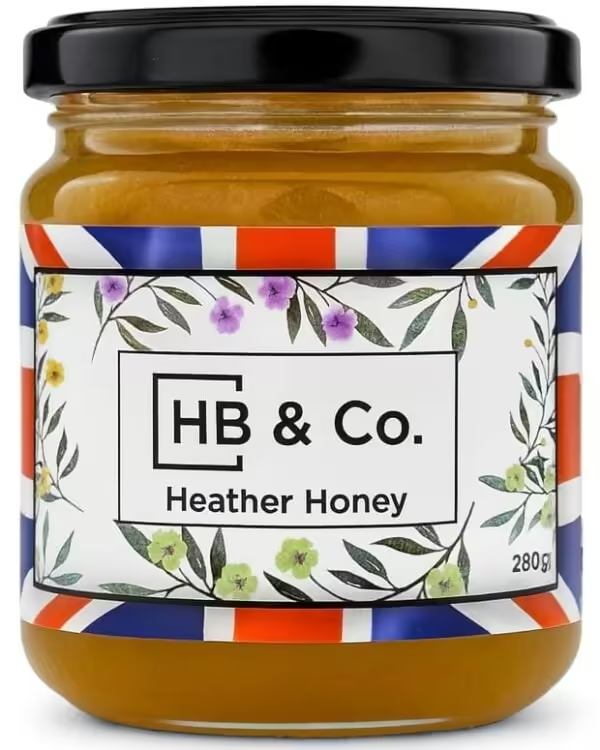
Raw British Heather Honey
The honeybee's take on the very same late-summer ling this bee depends on: rich, amber and aromatic, from a single annual heather harvest. Our British honey supplier holds SALSA Certification. 280g. £12.99.
Shop Heather Honey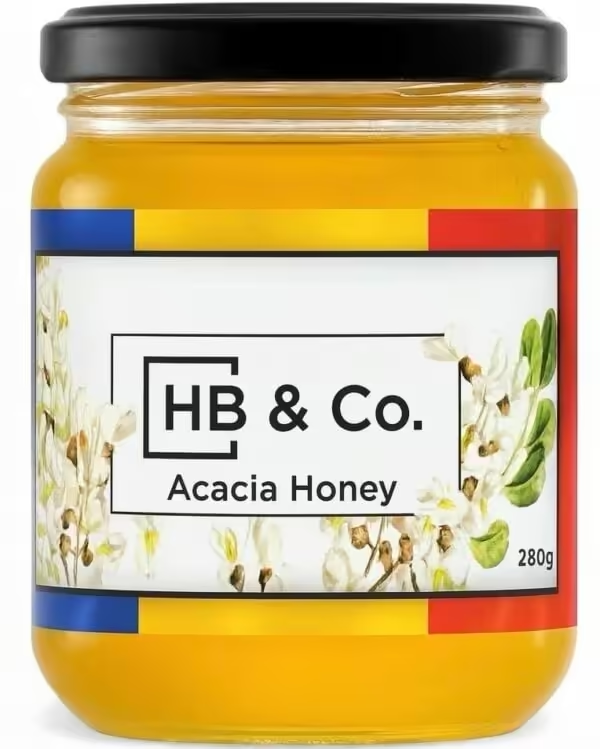
Raw Acacia Honey
Our flagship raw Acacia honey: pale, delicate and slow to crystallise. Drawn from the Nistor family's Transylvanian apiaries. 280g. £10.99.
Shop Acacia
Subscribe & Save 20%
Choose any single honey and save 20% on every delivery, with free UK delivery on every subscription order.
Start a SubscriptionFrequently asked questions
What is the heather colletes?
Why is it called a plasterer or cellophane bee?
How do I tell the heather colletes from the ivy bee?
When is the heather colletes active?
Where does the heather colletes live?
Do heather colletes bees sting?
What is the cellophane nest lining for?
Does the heather colletes make honey?
Related species
Ivy Bee
Colletes hederaeRead more → Heather specialistHeather Mining Bee
Andrena fuscipesRead more → Heathland beeHeath Bumblebee
Bombus jonellusRead more →Sources & references
- BWARS (Bees, Wasps & Ants Recording Society). Species account: Colletes succinctus (heather and ling specialism, flight July to September peaking in August, sandy nesting aggregations, cuckoo Epeolus cruciger, distribution). bwars.com.
- Falk, S. Field Guide to the Bees of Great Britain and Ireland, Bloomsbury, and the Steven Falk Flickr collection: Colletes succinctus (appearance, narrow pale bands, separation from C. hederae and C. halophilus in the succinctus group).
- Natural History Society of Northumbria. Meet the late-summer heather bees: the plasterer or cellophane nest lining, heathland habitat and ragwort as an alternative pollen source. nhsn.org.uk.
- BWARS. Information sheet: Colletes succinctus (heathland ecology and ling specialism). bwars.com.
- Else, G.R. & Edwards, M. (2018). Handbook of the Bees of the British Isles. Ray Society (taxonomy, the Colletidae and the cellophane-lined nest cells).
- Nieto, A. et al. (2014). European Red List of Bees. IUCN / Publications Office of the European Union (conservation status context).
- Kuhlmann, M., Else, G.R., Dawson, A. & Quicke, D.L.J. (2007). Molecular, biogeographical and phenological evidence for three western European sibling species in the Colletes succinctus group. Organisms Diversity & Evolution 7: 155-165.
- Linnaeus, C. (1758). Systema Naturae, 10th edition (original description of Colletes succinctus; Latin succinctus, "girded" or "belted").

Dragos Nistor
Founder, HoneyBee & Co. · Guest Lecturer, University of Greenwich
HoneyBee & Co. draws on six generations of family beekeeping heritage, with honey from the Nistor family apiaries and from carefully chosen British producers. Our British honey supplier holds SALSA Certification, and we offer a 15% NHS Discount. Every jar is raw, unfiltered and traceable to the hive.