

 English (UK)
  Italiano
  Français
  简体中文
简体中文  한국어
한국어 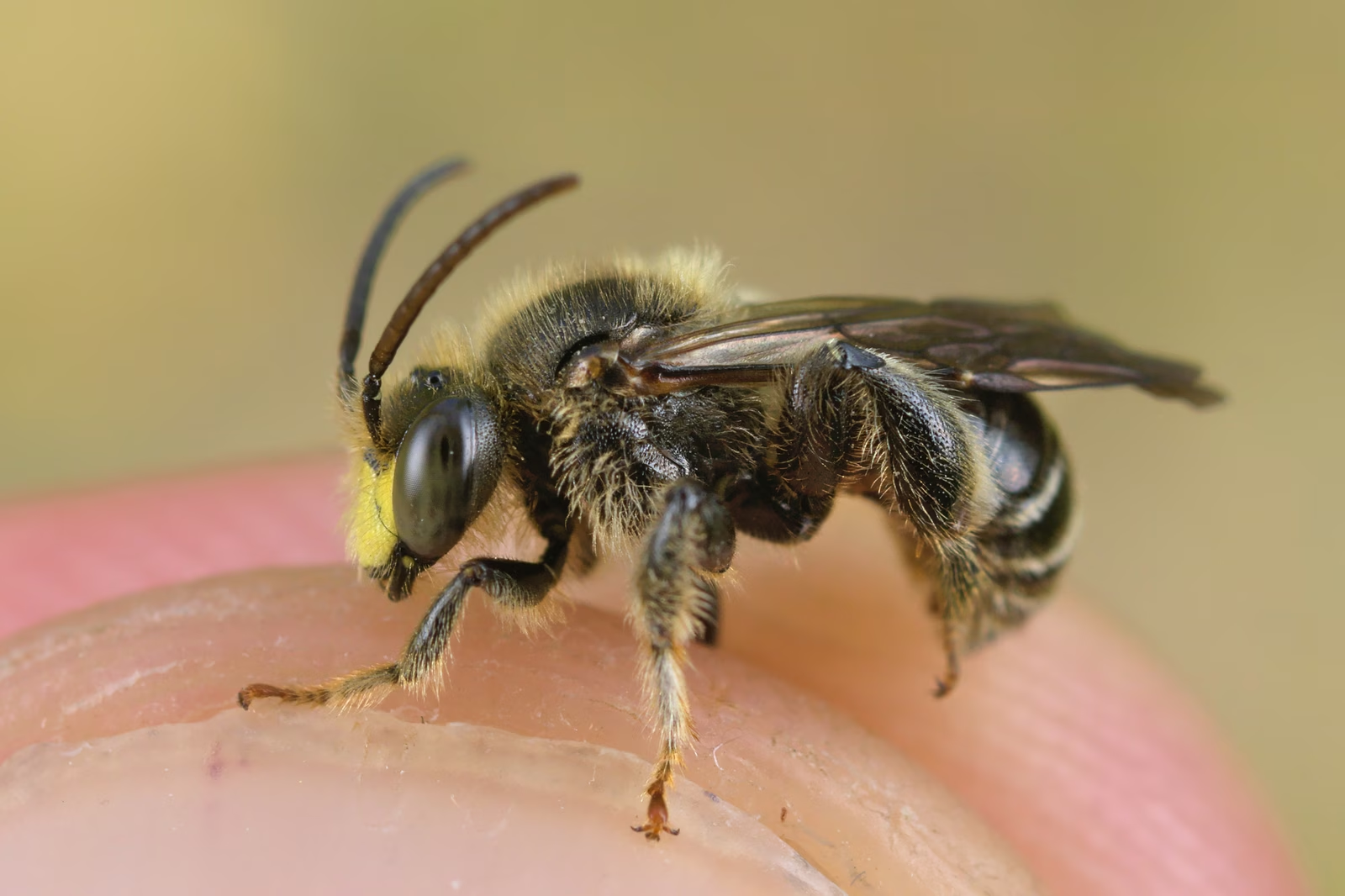
UK Bee Species
Yellow Loosestrife Bee (Macropis europaea)
Macropis europaea Warncke, 1973 · family Melittidae
The yellow loosestrife bee does something no other British bee does: it collects oil. Where almost all our bees gather only pollen and nectar, this small wetland specialist also harvests fatty floral oils from a single plant, yellow loosestrife, and uses them both to feed its young and to waterproof its nest. It is one of the most remarkable, and most overlooked, insects of our fens and ditches. See where it sits among Britain's bees on the UK Native Bee Species Map, or among the world's bees in the World Bee Atlas.
Quick Facts
| Kingdom | Animalia |
| Phylum | Arthropoda |
| Class | Insecta |
| Order | Hymenoptera |
| Family | Melittidae |
| Genus | Macropis |
| Species | Macropis europaea |
Britain's oil bee
The yellow loosestrife bee is a small to medium bee, around 8 to 9 mm long, dark, with pale bands of hair across the abdomen and, in the males, a yellow face.[2] What makes it extraordinary is invisible at a glance. It is the only bee in Britain whose females provision their nests with fatty floral oils as well as pollen, gathering both on dense pale brushes on the hind legs.[1] Bees like this are known worldwide as oil bees, and the yellow loosestrife bee is our only one.[4][5]
Almost every other British bee collects pollen and nectar. This one also collects oil, the only oil bee in the country.[1]
Tied to yellow loosestrife
Everything about this bee revolves around one plant: yellow loosestrife, Lysimachia vulgaris.[1] The flowers offer no nectar at all, only pollen and oil, and the female is specialised to harvest both, finding the plant largely by its scent.[3] Because the loosestrife gives no nectar, the bee tops up its energy from other wetland flowers nearby, such as figworts, willowherbs, brambles, mints and thistles, but for the pollen and oil that feed its young it depends on loosestrife alone.[1] Its short flight season, from mid-July to early September, is closely synchronised with the plant's flowering.[1]
A high-summer bee, flying mid-July to early September in step with the flowering of yellow loosestrife, the plant on which its whole life depends.[1]
Waterproof nests by the water
The female nests in the ground, digging her burrow in banks and along paths close to water, the very places that may flood as the season turns.[1] This is where the oil earns its keep a second time: she lines the brood cells with a yellowish, wax-like, waterproof coating derived from the loosestrife oil, sealing the pollen-and-oil store and the growing grub against the damp.[1] The larva feeds on the rich pollen-and-oil mixture, develops quickly and spends the winter as a pupa, ready to emerge the following summer.[3]
Where and when you will see it
The yellow loosestrife bee is a wetland insect, found in fens, bogs, reedbeds, ditches and the margins of rivers and canals wherever yellow loosestrife grows, and occasionally in gardens that have the plant.[1][2] In Britain it is confined largely to the south-east, from Devon and Dorset to Kent and north to Somerset, Norfolk and Oxfordshire, very local overall but often common where the loosestrife is plentiful.[1] It is a rare and notable species, and a good disperser that can turn up at new sites.[1][6] Its specialist cuckoo, Epeoloides coecutiens, which sniffs out the oily nest provisions, occurs on the Continent but has not been found in Britain.[1]
A late-named European
For all that oil bees were known to early naturalists, this one carried the wrong name for a long time: European specimens were lumped with the North American Macropis labiata until the German entomologist Karl Warncke separated them in 1973 and named this one Macropis europaea, "the European Macropis".[7] The genus itself was established by Panzer in 1809, and the yellow loosestrife bee remains its only British member, one of a mere handful of our bees in the ancient family Melittidae.[1]
How to tell it apart
This is a small, dark bee, only seven or eight millimetres long. The female is blackish with white tufts on the face and, most tellingly, dense pale brushes on the hind legs for gathering pollen and oil; the male is paler and blond-haired, with a yellow face.[2] In practice the surest clue is the company it keeps: a small dark bee working the yellow flowers of loosestrife in a damp summer fen is almost certainly this species, the only oil bee in the country.[1]
Why the yellow loosestrife bee matters
Few bees show the tight bond between an insect and a single plant as clearly as this one, and few are such good ambassadors for wetlands.[5] The yellow loosestrife bee cannot exist without stands of yellow loosestrife in damp, undisturbed ground, so its presence is a sign of a healthy fen, ditch or riverside.[1] Wetlands are among the habitats most easily drained and lost, so protecting them, keeping ditches and water margins rich in loosestrife, and even letting the plant grow in a damp corner of a garden, all help this singular little oil bee.
Wetland flowers feed wild bees; honeybees turn meadow and blossom into raw honey. Explore the range in the HoneyBee & Co. shop.
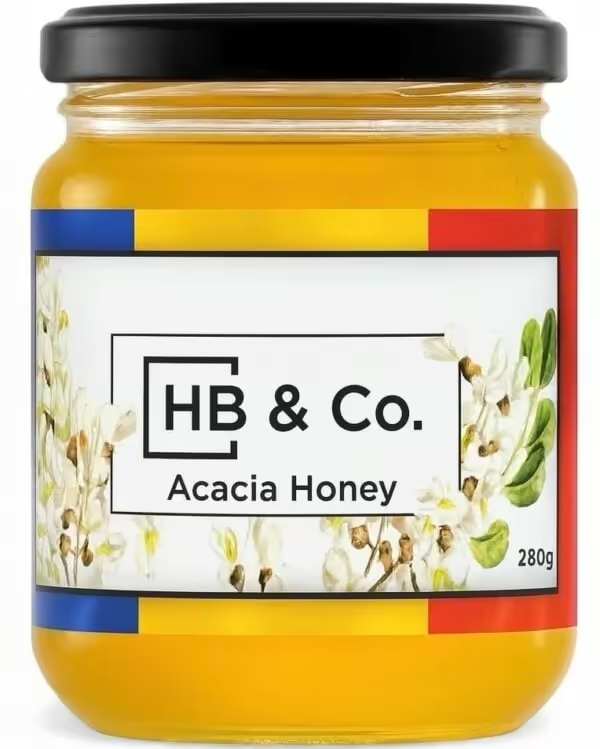
Raw Acacia Honey
Our flagship raw Acacia honey: pale, delicate and slow to crystallise. Drawn from the Nistor family's Transylvanian apiaries, with six generations of beekeeping heritage in every 280g jar. £10.99.
Shop Acacia Honey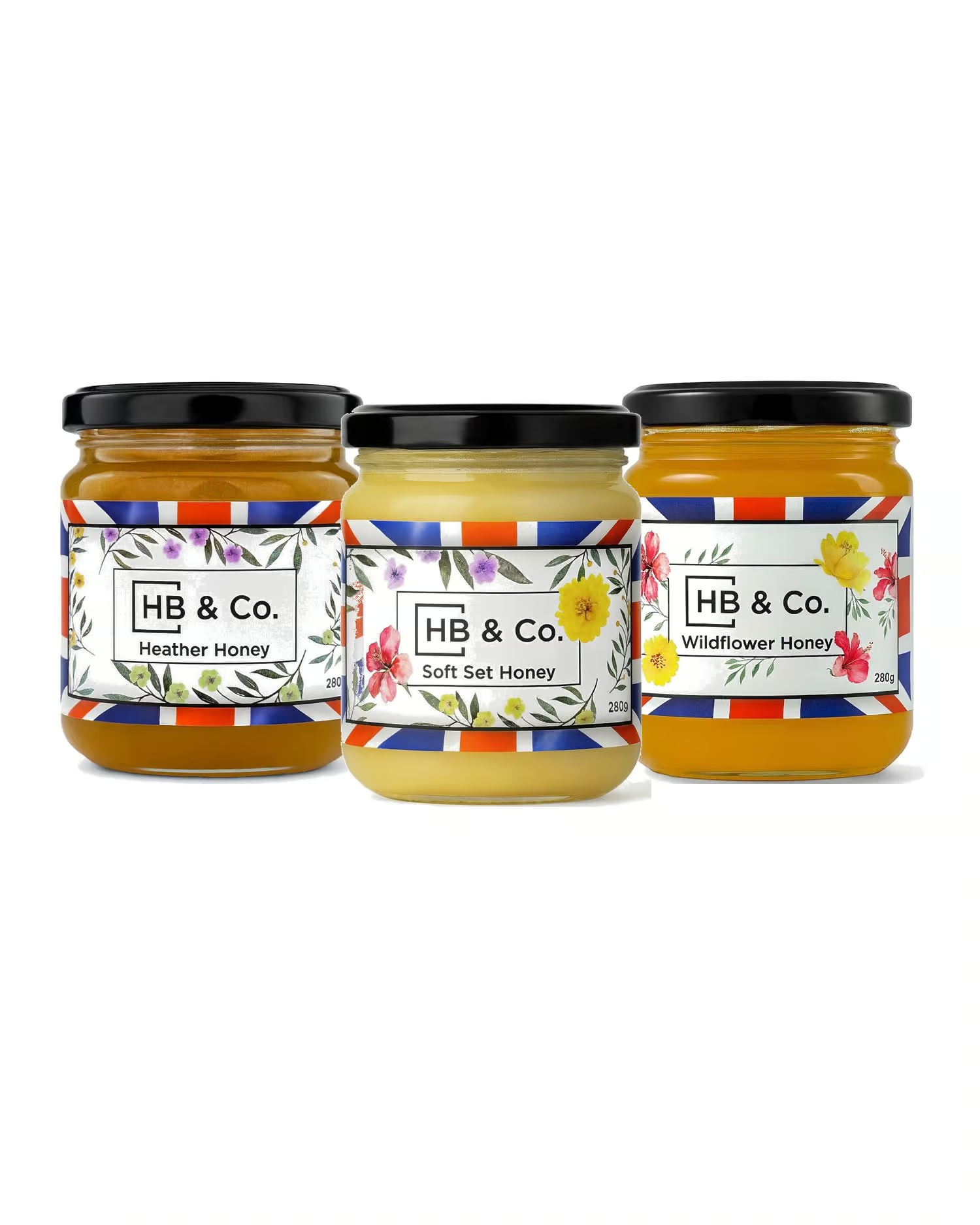
British Honey Bundle
Our British single-origin raw honeys together in one gift set. Our British honey supplier holds SALSA Certification. £33.22.
Shop the Bundle
Subscribe & Save 20%
Choose any single honey and save 20% on every delivery, with free UK delivery on every subscription order.
Start a SubscriptionFrequently asked questions
What is the yellow loosestrife bee?
What is an oil bee, and why does it collect oil?
What does the yellow loosestrife bee feed on?
Where does the yellow loosestrife bee live?
When is the yellow loosestrife bee active?
Do yellow loosestrife bees sting?
Why does it waterproof its nest?
Does the yellow loosestrife bee make honey?
Related species
Ivy Bee
Colletes hederaeRead more → Plant specialistHeather Mining Bee
Andrena fuscipesRead more → Ground nesterAshy Mining Bee
Andrena cinerariaRead more →Sources & references
- BWARS (Bees, Wasps & Ants Recording Society). Species account: Macropis europaea (Britain's only oil-provisioning bee, oligolectic on yellow loosestrife for pollen and oil, wetland habitat, flight mid-July to early September, oil-derived waterproof cell lining, continental cuckoo Epeoloides coecutiens not found in Britain). bwars.com.
- Falk, S. Field Guide to the Bees of Great Britain and Ireland, Bloomsbury, and the Steven Falk Flickr collection: Macropis europaea (small dark bee, male yellow face, wetland fen and ditch habitat, pollen and oil from loosestrife, south-east England distribution).
- Schäffler, I. & Dötterl, S. (2011) and related oil-bee studies: Macropis collects floral oil and pollen from Lysimachia as the sole larval provision and locates its host plant largely by scent.
- Else, G.R. & Edwards, M. (2018). Handbook of the Bees of the British Isles. Ray Society (taxonomy, the Melittidae and the oil-collecting Macropis).
- Xerces Society and COSEWIC. Profiles of the Macropis oil bees and their dependence on Lysimachia for pollen and floral oil, and the specialist cuckoo genus Epeoloides. xerces.org.
- Nieto, A. et al. (2014). European Red List of Bees. IUCN / Publications Office of the European Union (conservation status and context).
- Warncke, K. (1973), revision of the West Palearctic Melittidae, describing Macropis europaea as distinct from the Nearctic M. labiata; genus Macropis Panzer, 1809 (GBIF; Michez & Patiny, 2005).

Dragos Nistor
Founder, HoneyBee & Co. · Guest Lecturer, University of Greenwich
HoneyBee & Co. draws on six generations of family beekeeping heritage, with honey from the Nistor family apiaries and from carefully chosen British producers. Our British honey supplier holds SALSA Certification, and we offer a 15% NHS Discount. Every jar is raw, unfiltered and traceable to the hive.