

HoneyBee & Co. - Ricetta
Macarons al tè verde e ganache al cioccolato bianco
Recipe adapted from Baroque Bistro Patisserie by Honey and Soy
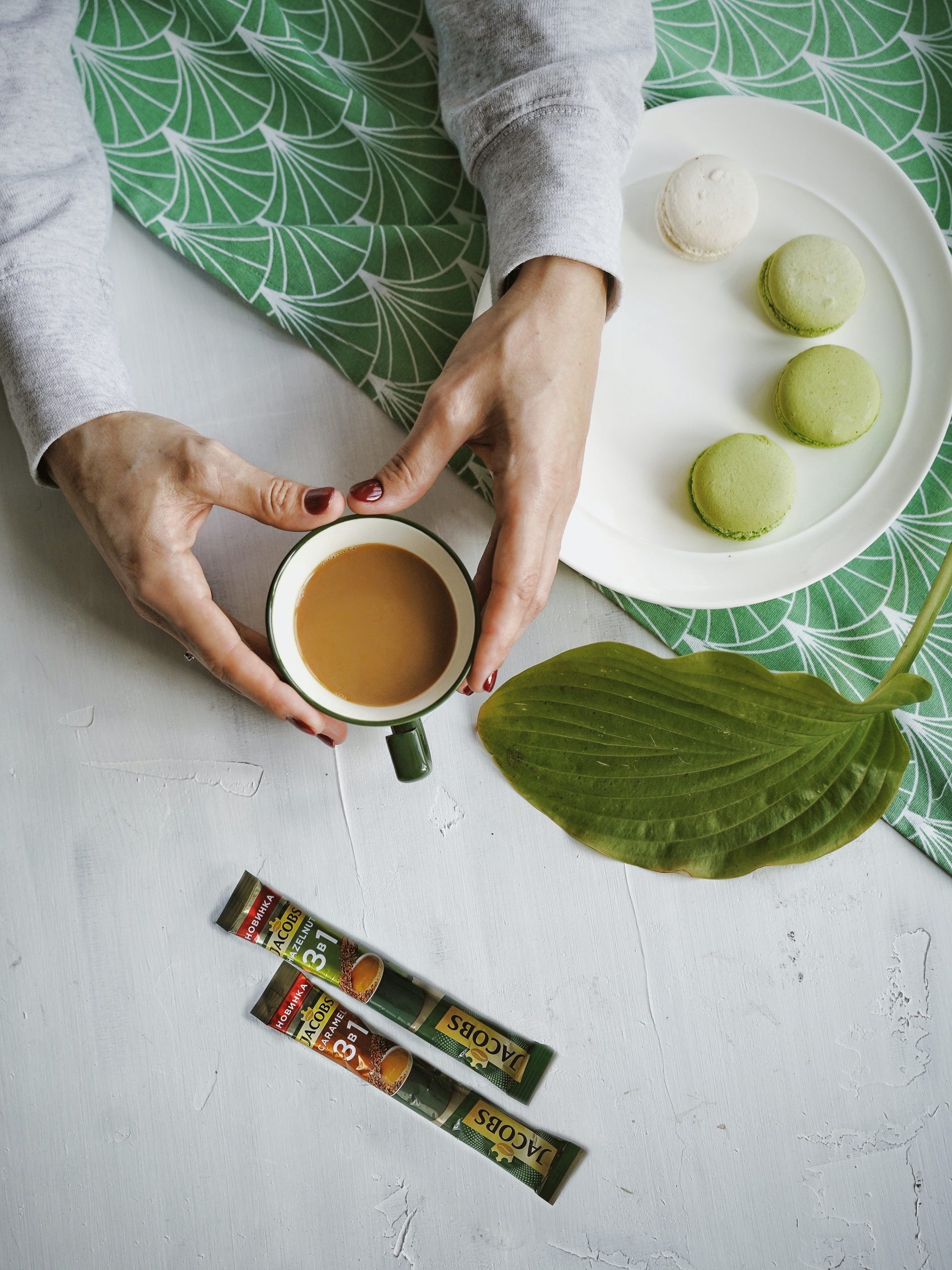
Matcha is bitter, white chocolate is sweet, and the macaron shell sits between the two like a referee. This is a precision bake. There is no honey in the macaron itself, but a small spoon of raw Acacia honey stirred into a matcha latte alongside is the cleanest way to enjoy what comes out of the oven.
L'origine del Matcha
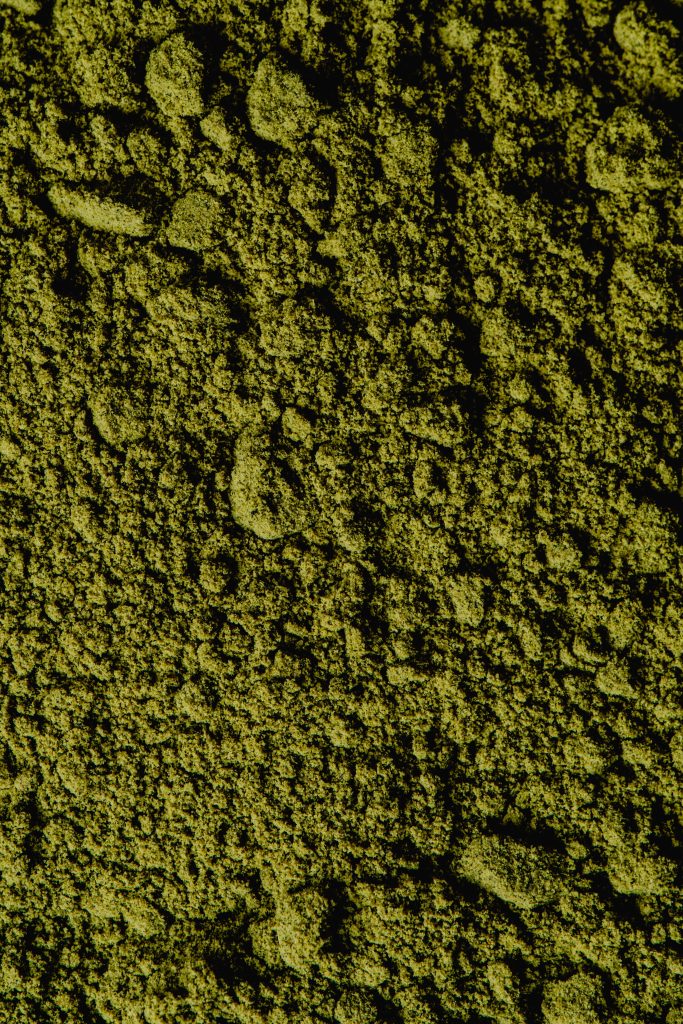
Matcha originated in China during the Tang Dynasty (618 to 907 AD), where tea leaves were steamed and formed into bricks for storage and trade. The tea was prepared by roasting and pulverising the leaves, then decocting the resulting powder in hot water with salt. In the Song Dynasty (960 to 1279), the method of making powdered tea from steam-prepared dried leaves, and preparing the beverage by whipping the tea powder and hot water together in a bowl, became popular.
Matcha and Japan
In the 12th century, the method of making matcha was brought to Japan by the Buddhist monk Eisai. He introduced tea to the samurai class, and it quickly became a staple of Japanese culture. The tea ceremony, known as Chanoyu, values harmony, respect, purity, and tranquillity, and matcha sits at its centre. The deliberate, almost meditative preparation that defines a tea ceremony is the same instinct that good macaron-making requires: a slow process that does not reward shortcuts.
Proprietà del tè verde Matcha
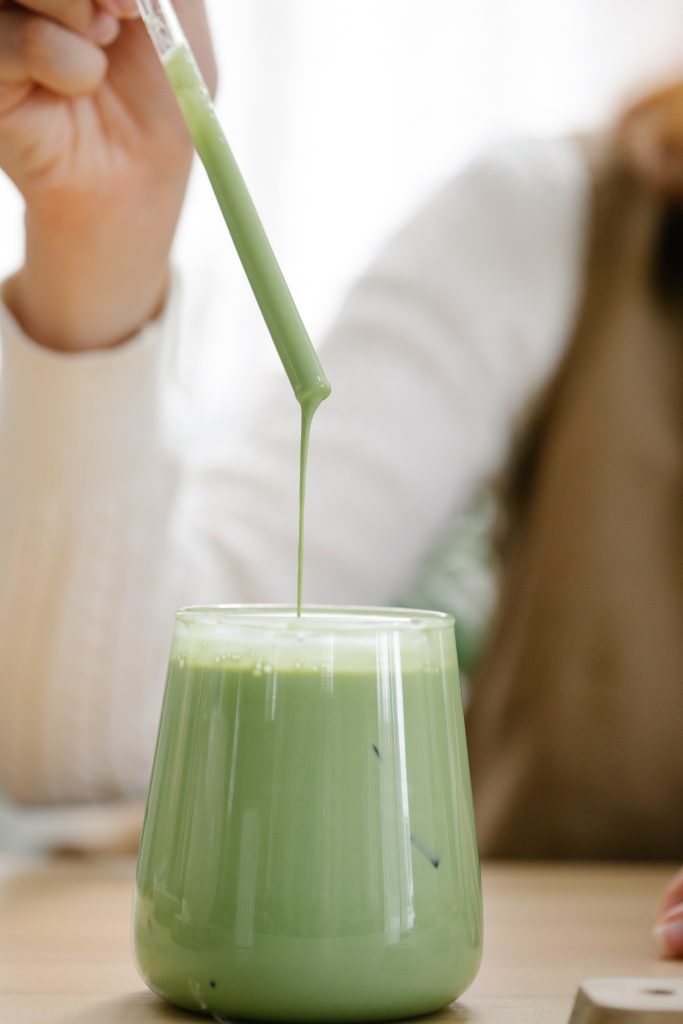
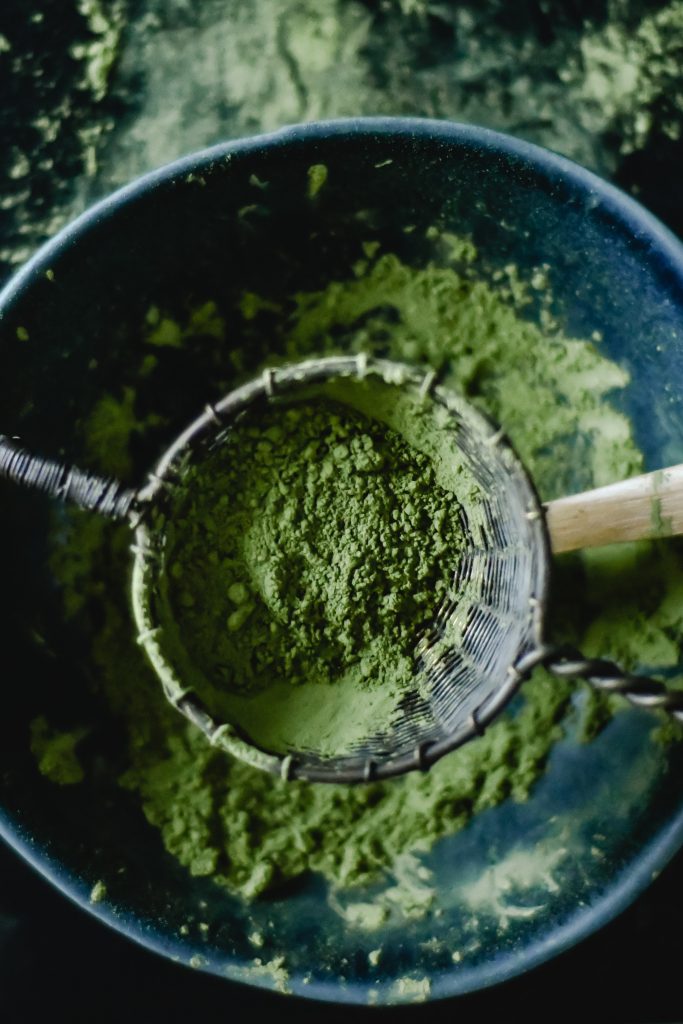
Matcha is one of the most concentrated sources of antioxidants of any tea. The leaves are shade-grown for the final three weeks before harvest, which boosts chlorophyll and L-theanine content. When the entire leaf is consumed in powder form rather than steeped and discarded, the catechins, caffeine, and amino acids that are normally left behind in the spent leaves end up in the cup. The result is a tea that delivers caffeine without the spike: the L-theanine moderates the absorption rate, producing what tea drinkers describe as alert calm rather than nervous energy. The flavour profile is bitter, vegetal, slightly umami, and entirely unlike any other tea. That bitterness is what makes matcha such a gift to a pastry chef.
Matcha and Honey: A Modern Pairing
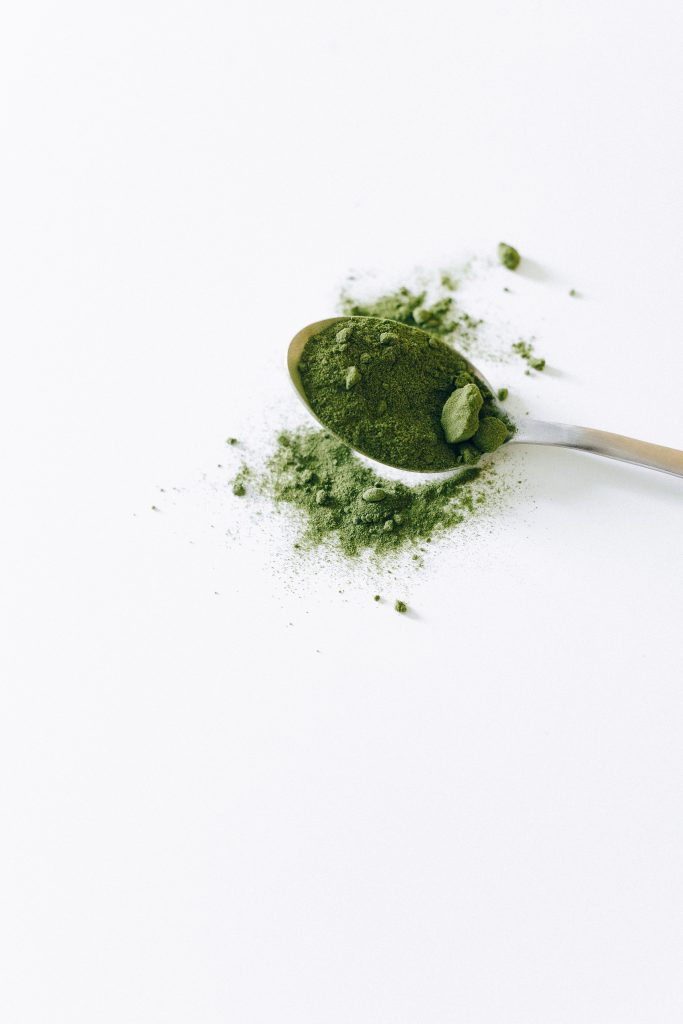
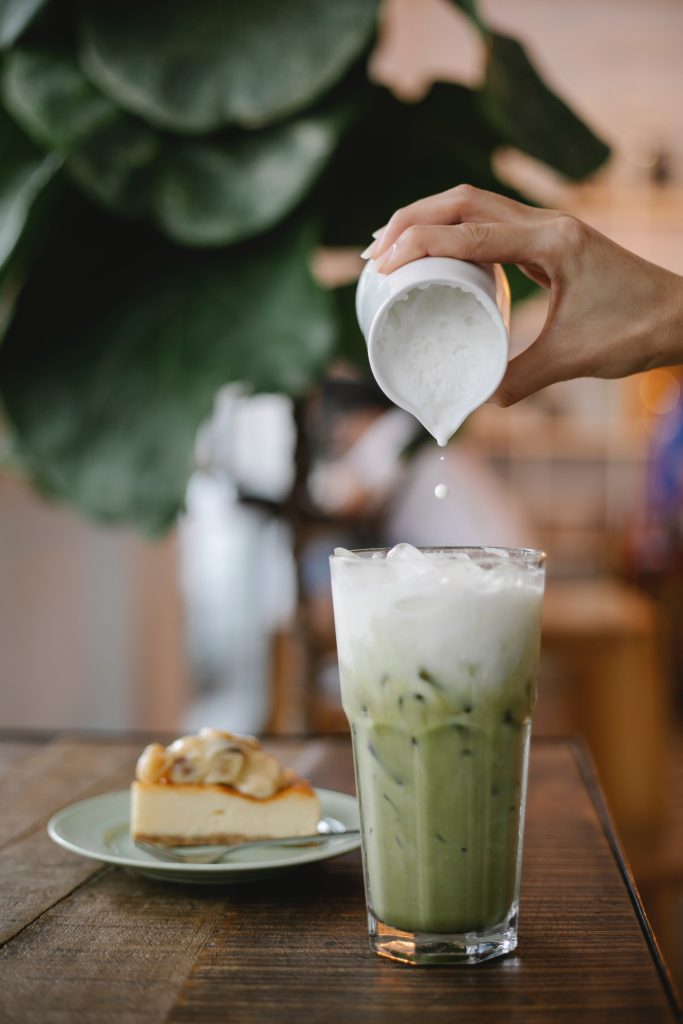
Matcha and honey is one of the simplest and most successful flavour pairings in modern wellness cooking. Raw honey moderates matcha's bitterness without flattening its character, the way refined sugar does. The floral complexity of raw honey is something the vegetal notes of matcha actually amplify. The matcha honey latte (hot water whisked with matcha, warm milk added, and a teaspoon of raw Acacia honey stirred in once the drink has cooled to around 60C) has become a fixture in cafes from Tokyo to London. Acacia is the right choice because its mild floral profile does not compete with matcha's intensity. Heather honey, by contrast, would dominate the cup. The lesson translates to baking: keep the honey light when matcha is doing the heavy lifting on flavour.
The Macaron: An Italian Beginning
Contrary to popular belief, the first macarons were not born in France, but in Italy. The name itself, derived from the Italian maccherone, meaning fine paste, hints at its origin. Introduced to France in the 16th century by Catherine de Medici's Italian pastry chefs when she married King Henry II, the original macaron was a simple combination of ground almonds, sugar, and egg whites. The modern French macaron, with its delicate two-cookie sandwich structure and luscious filling, evolved much later in the 20th century. Pierre Desfontaines of Ladurée is credited with this innovation. Today, Ladurée and Pierre Hermé are two French houses renowned for their exquisite macarons, making them an essential stop for anyone visiting Paris.
L'arte di fare i macarons
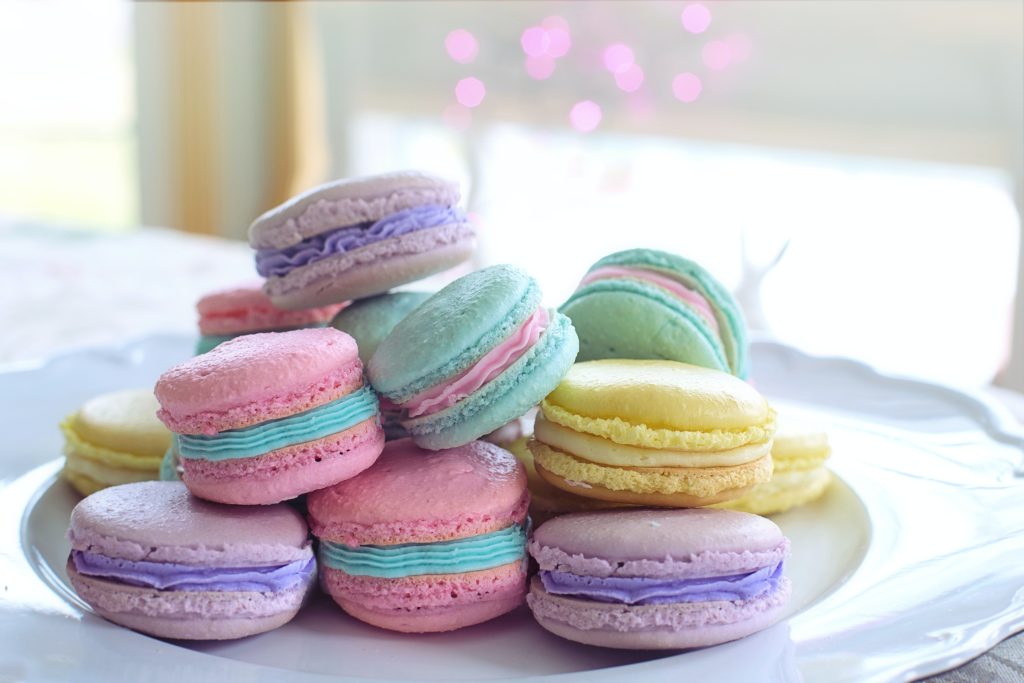
Creating macarons is a delicate process that requires patience, precision, and a dash of artistry. The cookies are made from a mixture of powdered sugar, almond flour, and egg whites. After beating the egg whites to a meringue, the dry ingredients are folded in carefully, in a movement called the macaronage. The mixture is then piped onto a baking sheet into small circular dollops, which are left to rest before being baked. This resting period is what allows the macarons to develop their signature feet: the frilly edges on the bottom of each cookie that mark a successful bake. The filling, often a ganache, buttercream or jam, is sandwiched between two cookies. A delicate balance must be struck between the subtly sweet, crisp shell and the rich, creamy filling. Flavours range from the traditional (vanilla, chocolate, raspberry) to the adventurous (foie gras, matcha green tea, even sweetcorn).
Matcha Macarons in the Kitchen
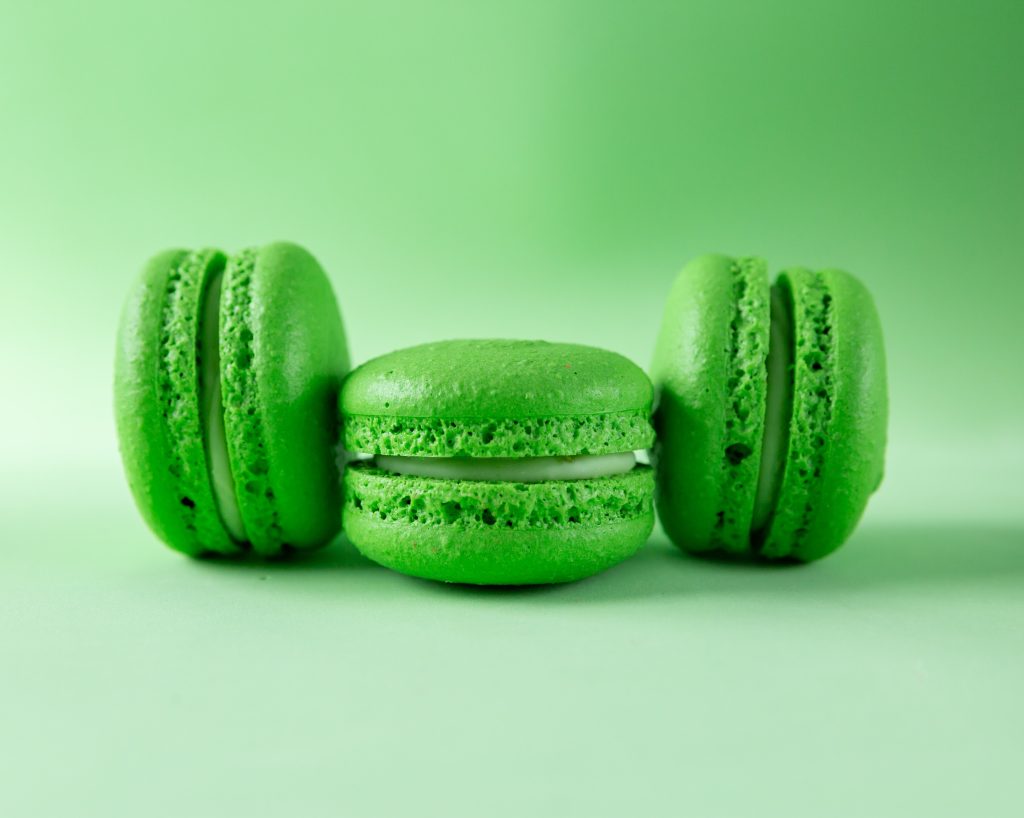
Matcha macarons have become a fixture of the modern pastry world. The vibrant green colour and distinctive flavour give them a visual identity that few other macaron variations can match. They offer a twist on the traditional French macaron, introducing a flavour profile that is both exotic and comforting. Matcha is a testament to the versatility of the powdered tea: a centuries-old Japanese ingredient finding new life in 21st-century French patisserie. The bitterness of matcha balances the sweetness of the white chocolate ganache so cleanly that it is difficult to imagine the pairing as anything but inevitable. It is one of those rare combinations where the whole genuinely exceeds the sum of its parts.
La popolarità globale dei macarons
Macarons have journeyed far beyond the borders of France and been embraced by dessert lovers worldwide. They are popular not only for their taste but also for their aesthetic appeal. Their vibrant colours and delicate structure make them photogenic, which has contributed to their widespread popularity on social media. In America, macaron boutiques have sprung up in major cities, and Macaron Day on the 20th of March sees bakeries give out free macarons and donate the day's sales to local charities. Asian countries have embraced this French dessert with their own unique twists. Japan has matcha green tea ganache. South Korea has sweet-and-sour tangerine. London has, since around 2018, started doing them properly.
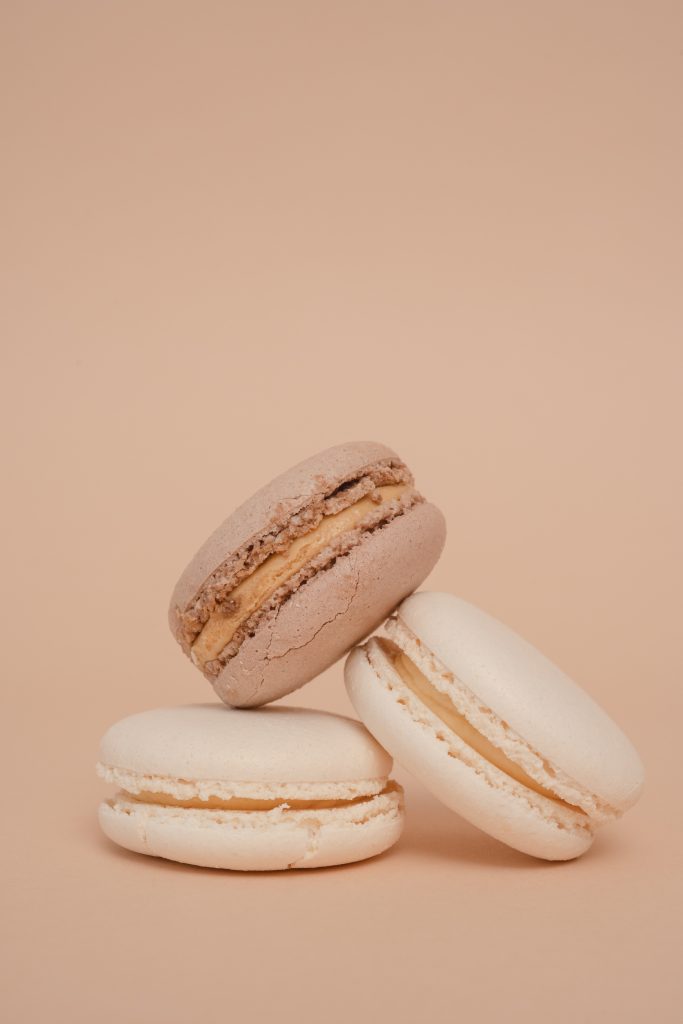
Macarons al tè verde e ganache al cioccolato bianco
Ingredienti
- Ganache filling: 400g fresh cream
- Ganache filling: 400g white couverture chocolate
- Ganache filling: 150g butter
- Ganache filling: 20g matcha powder
- Macaron shell: 600g sifted TPT (300g almond meal with 300g icing sugar)
- Macaron shell: 10g matcha powder
- Macaron shell: 120g egg whites (first portion)
- Macaron shell: 300g caster sugar
- Macaron shell: 75g water
- Macaron shell: 120g aged egg whites (second portion)
Metodo
- Preparare la ganache. Tritare finemente il cioccolato e tagliare il burro a cubetti. Portare la panna a ebollizione. Versare tre quarti della panna bollita sul cioccolato tritato e lasciare riposare per qualche minuto per far sciogliere il cioccolato.
- Mescolare delicatamente con una spatola con un movimento circolare, facendo attenzione a non incorporare aria. Una volta che il composto è lucido e uniforme, versare la panna rimanente e ripetere il processo di mescolamento. Assicurarsi che la temperatura del cioccolato non superi i 55°C.
- Aggiungere il burro e mescolare fino ad incorporarlo completamente. Coprire la ganache con pellicola trasparente premuta sulla superficie e conservare in frigorifero fino a quando non si sarà solidificata.
- Preparare la meringa. Setacciare la polvere di matcha con il TPT. Unire il TPT alla prima porzione di albumi, mescolando energicamente fino a formare una pasta liscia.
- In una ciotola a parte, unire lo zucchero semolato, l'acqua e l'eventuale colorante e iniziare a scaldare. Mettere gli albumi invecchiati in un mixer con l'accessorio per le fruste.
- Iniziare a montare gli albumi a neve quando la miscela di zucchero raggiunge i 115C. Quando la miscela di zucchero raggiunge i 118°C, togliere dal fuoco e versare lentamente sugli albumi ancora da mescolare.
- Aumentare la velocità del mixer al massimo per circa 1 minuto, quindi ridurre a media per altri 2 minuti. Lasciare raffreddare la meringa a circa 50°C mentre si mescola lentamente.
- Incorporare gradualmente la meringa alla pastella di TPT e albume d'uovo usando una spatola. Mescolare dai lati verso il centro fino a ottenere una pastella uniforme e lucida.
- Infornare e cuocere. Utilizzando un sacchetto di plastica con una punta no. 11, versare la pastella su una teglia da forno seguendo una sagoma. Interrompere l'operazione prima che la pastella raggiunga il bordo della sagoma.
- Battere delicatamente la teglia sul lato del bancone fino a quando la pastella per macaron raggiunge le dimensioni della sagoma. Rimuovere la sagoma da sotto la teglia.
- Lasciare riposare i macarons a temperatura ambiente per 15 minuti, finché non formano una pelle e sono asciutti al tatto.
- Cuocere i macarons secondo la guida di cottura del tipo di forno specifico, in genere da 14 a 16 minuti a 150C.
- Una volta cotti, togliete la carta dalla teglia e lasciate raffreddare i gusci, preferibilmente su una griglia.
- Assemblaggio. Togliere delicatamente le conchiglie dalla carta e capovolgerle. Accoppiare le conchiglie per dimensione e disporle sul piano di lavoro.
- Trasferire la ganache al tè verde in una sacca da pasticcere. Versare la ganache su una metà di ogni coppia di macaron, riempiendo generosamente ma lasciando uno spazio di circa 3 mm dal bordo.
- Tenere il guscio riempito di ganache in una mano e il guscio vuoto nell'altra. Chiudere il macaron ruotando delicatamente i due gusci da sinistra a destra, in modo che il ripieno si distribuisca uniformemente.
- Conservazione. Disporre i macarons finiti su un vassoio e conservare in frigorifero per almeno 24 ore. Prima di servirli, lasciarli tornare a temperatura ambiente.
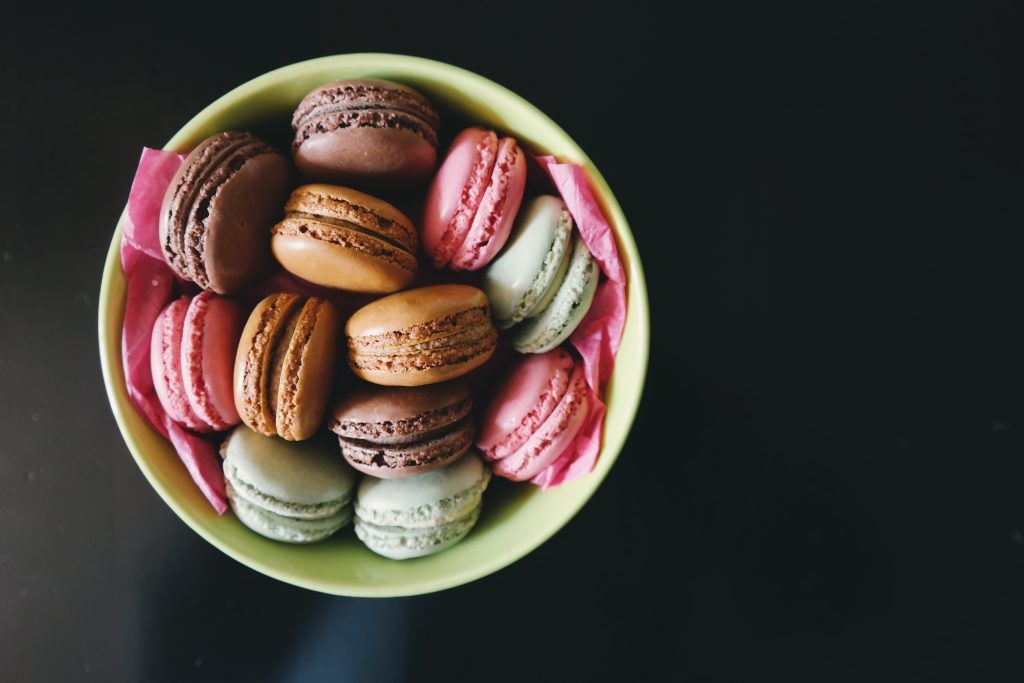
Una ganache al cioccolato bianco più semplice
If the Italian-meringue method above is the destination, this is the safer route. A simpler two-ingredient ganache that requires no caster-sugar work and produces a reliable matcha filling even in difficult kitchens. Adapted from the white chocolate macaron ganache method published by Chelsweets at chelsweets.com.
Ingredienti
- 200g good quality white chocolate (Ghirardelli, Guittard, or proper couverture)
- 100g heavy cream (or full-fat coconut cream, for dairy-free)
- 1 to 2 teaspoons matcha powder, sifted (start with 1 teaspoon and adjust)
- Pizzico di sale marino fino
Metodo
- Rompere il cioccolato bianco in piccoli pezzi uniformi e metterlo in una ciotola resistente al calore.
- Scaldare la panna in un pentolino a fuoco medio fino a quando non inizia a vaporizzare (circa 80C). Non lasciarla bollire.
- Versare la panna calda sul cioccolato, assicurandosi che tutto il cioccolato sia sommerso. Lasciare indisturbati per 2 o 3 minuti per far sciogliere il cioccolato.
- Mescolare delicatamente con una spatola o una frusta fino a ottenere un composto completamente liscio. Se si notano pezzetti non fusi, scaldare delicatamente la ciotola su una pentola d'acqua bollente per 30 secondi e mescolare di nuovo.
- Setacciare la polvere di matcha e il sale. Frullare fino a quando il matcha è completamente incorporato e il colore è uniforme.
- Premere la pellicola trasparente direttamente sulla superficie della ganache (in questo modo si evita la formazione di una pelle) e mettere in frigo per almeno 2 ore, meglio se per tutta la notte.
- Quando è pronto per l'uso, trasferirlo in una sacca da pasticcere e versarlo sui gusci dei macaron come nella ricetta principale. La consistenza deve essere abbastanza densa da mantenere la forma, ma abbastanza morbida da potersi spalmare quando si infilano i panini.
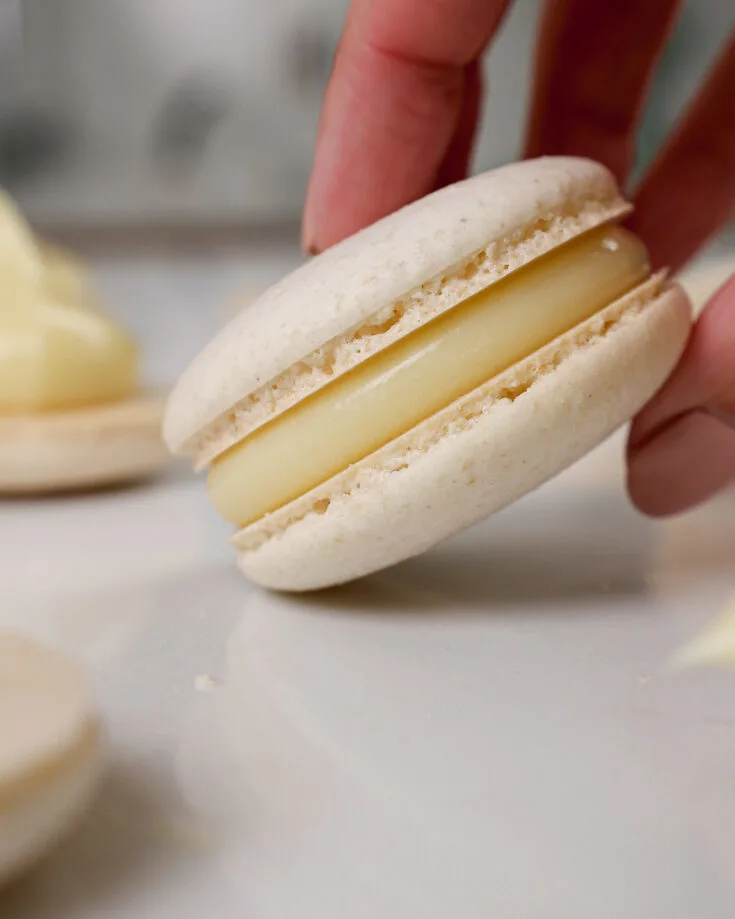
Le cose vale la pena di conoscere
Why aged egg whites
Separated egg whites that have been held in the fridge uncovered for 24 to 48 hours lose moisture and whip into a more stable meringue. This is the single biggest difference between professional macarons and amateur ones. If your kitchen is humid, this matters even more.
Watch the sugar temperature
Italian meringue depends on hitting 118C. Use a digital thermometer. Below 115C the meringue is too soft. Above 121C the meringue cooks the egg whites and seizes. The 3C window is real.
Why the rest before baking
Macarons need to form a skin before they enter the oven. This skin forces them to rise upwards rather than spread, which creates the characteristic foot at the base. 15 minutes minimum, more if your kitchen is humid.
On macaronage technique
The folding step (macaronage) is what separates good macarons from great ones. The batter should flow off the spatula in a slow ribbon and the ribbon should disappear back into the batter within 10 seconds. Under-mixed batter rises too fast and leaves a hollow. Over-mixed batter spreads and never forms feet.
Choosing your matcha
Use ceremonial-grade matcha for the cleanest, most vibrant green. Culinary-grade is acceptable if budget is a concern but the colour will be duller. Avoid anything labelled simply green tea powder: it is not the same product.
Why 24 hours of rest
Filled macarons need to mature in the fridge for 24 hours before they reach their proper texture. The ganache slowly hydrates the inside of the shells, softening them while the outside stays crisp. Eat them too fresh and they will be crunchy and dry.
Domande frequenti
Che cos'è il matcha e come si differenzia dal tè verde?
Il matcha è una polvere di tè verde finemente macinata, ottenuta da foglie coltivate all'ombra. Mentre il tè verde viene messo in infusione e le foglie vengono scartate, il matcha viene consumato intero nella tazza, il che gli conferisce una concentrazione molto più elevata di antiossidanti, caffeina e dell'aminoacido L-teanina. Il sapore è più vegetale, più amaro e decisamente più intenso.
Posso sostituire il tè verde in polvere con il matcha?
No. Matcha is specifically the powdered form of shade-grown tencha leaves. Regular green tea, when ground, lacks the colour, the flavour intensity, and the silky texture that makes matcha work in baking. Use ceremonial-grade matcha for the cleanest flavour, or culinary-grade if budget is a concern.
Perché il guscio del mio macaron è vuoto?
Almost always under-mixing the macaronage (folding the meringue into the TPT). The batter should flow off the spatula in a slow ribbon and the ribbon should disappear back into the batter within 10 seconds. Under-mixed batter rises too fast and leaves a hollow. Over-mixed batter spreads and never forms feet.
Si possono preparare i macarons senza latticini?
Yes. Replace the heavy cream in the ganache with full-fat coconut cream. The flavour shifts slightly toward coconut, which works well with matcha. The shells contain no dairy.
Perché i macarons devono riposare 24 ore dopo l'assemblaggio?
The ganache slowly hydrates the inside of the shells, softening them from the inside out. Fresh-assembled macarons are crunchy and dry. After 24 hours in the fridge, they have the signature texture: crisp shell, chewy interior, soft filling. Eat them too soon and they will not be right.
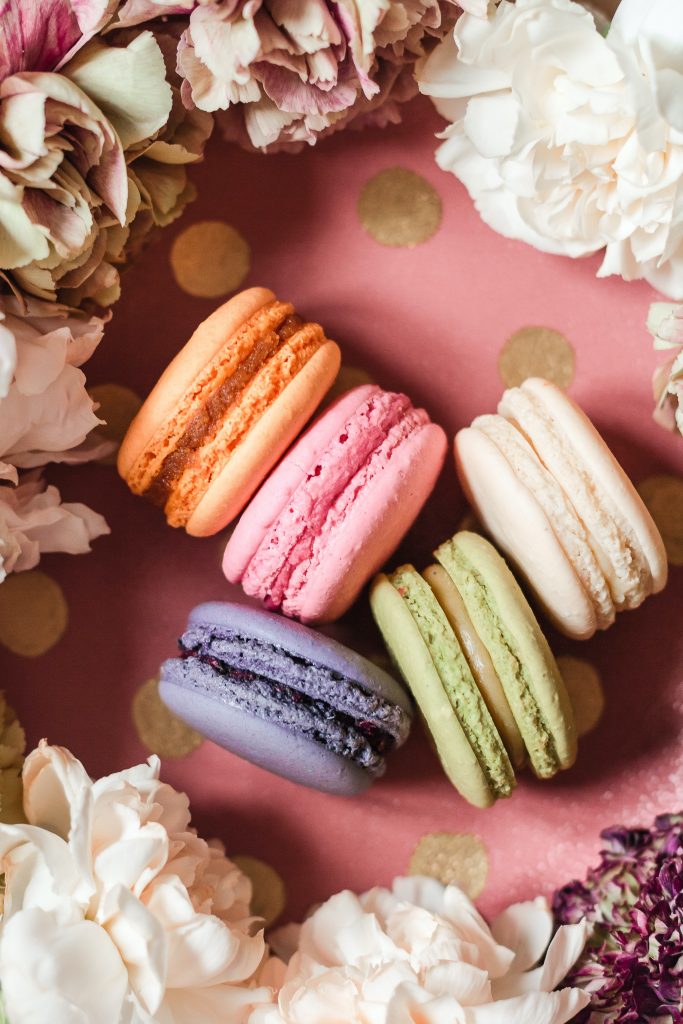
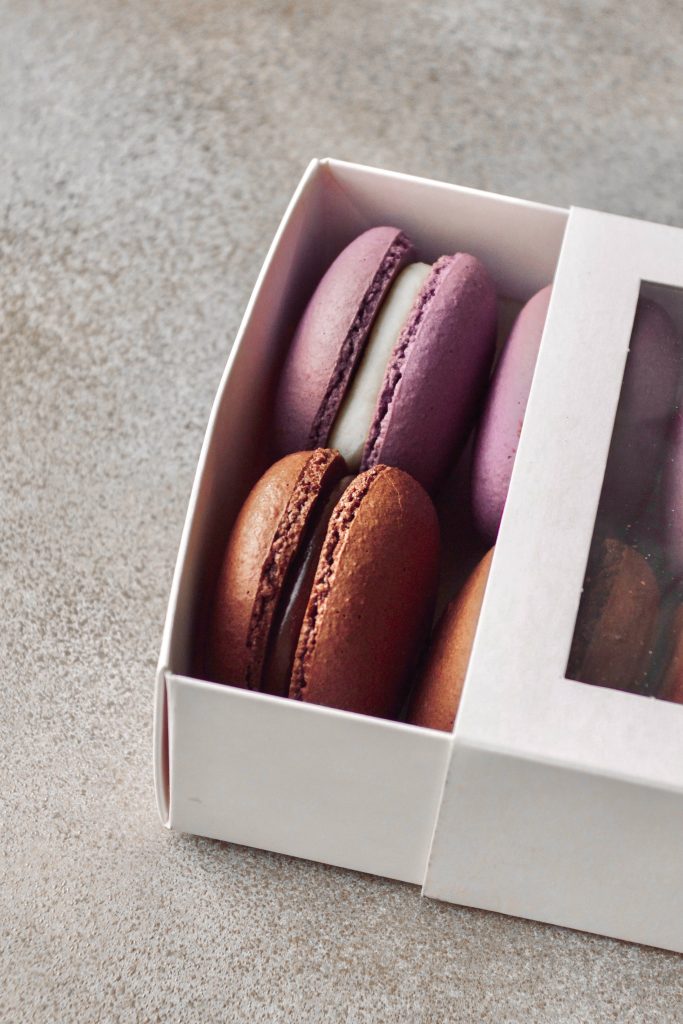
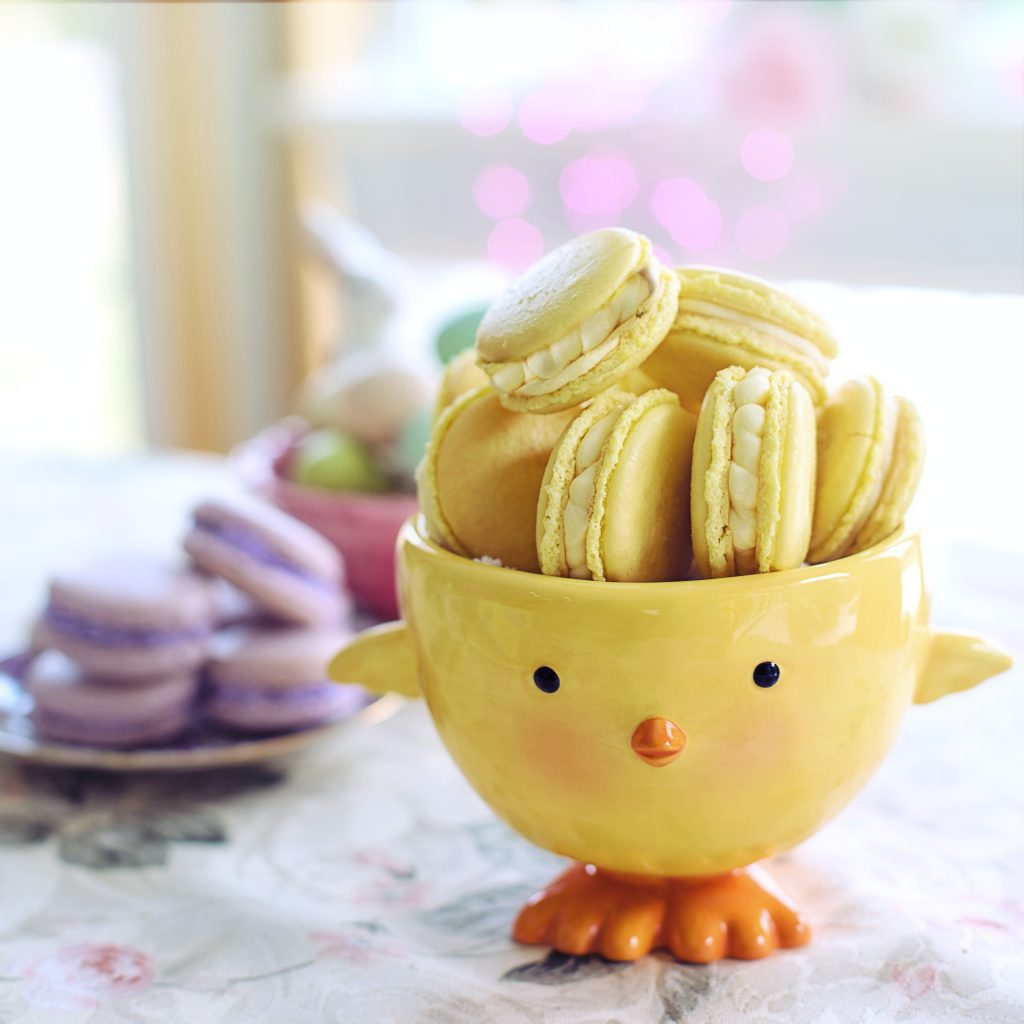
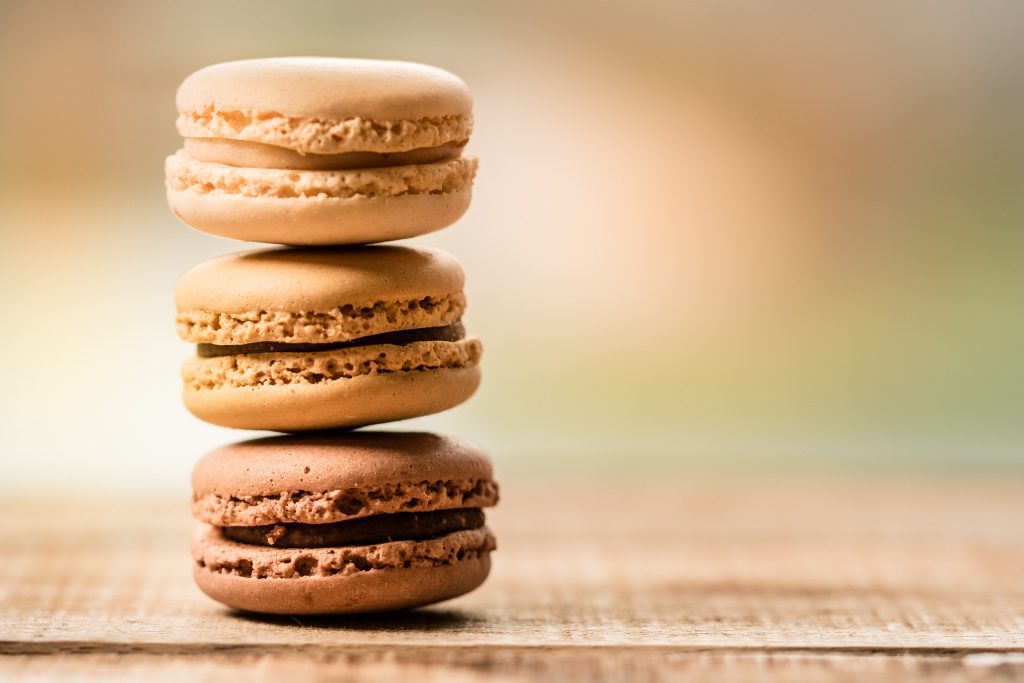
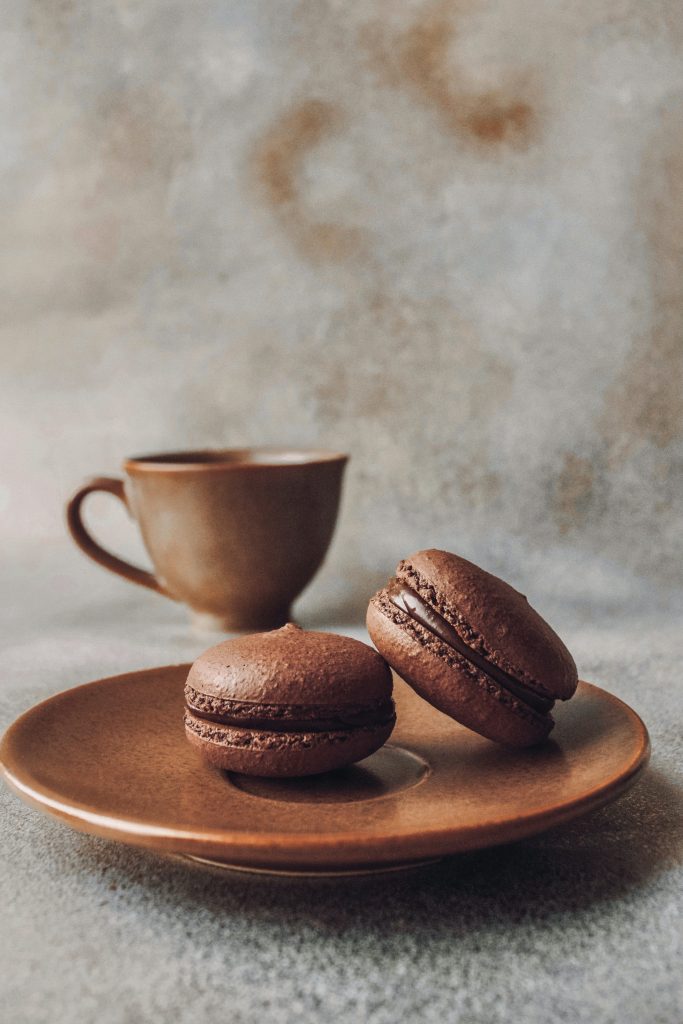
The Finished Macarons
Macarons are a finished product before anyone tastes them. The colour is the headline, the foot is the test, and the gloss tells you whether the meringue was right. A small gallery of how the pairing presents in different settings.
Provato?
Registratevi e raccontateci com'è andata.