
 English (UK)
  Italiano
  Français
  简体中文
简体中文  한국어
한국어 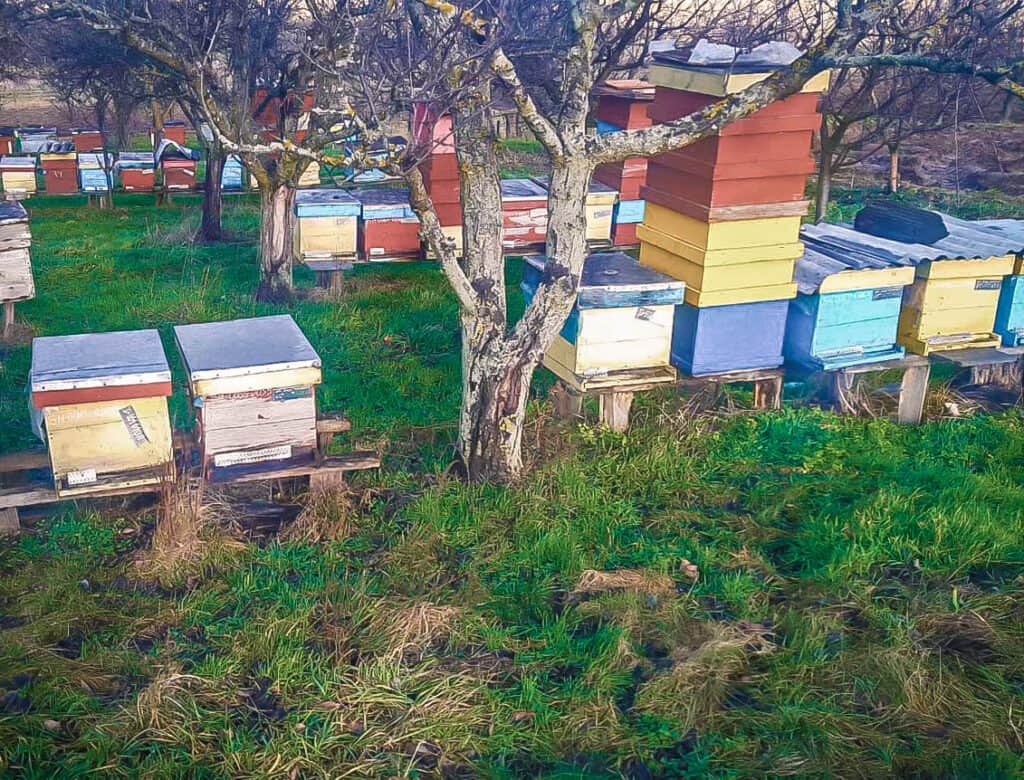
Beekeeping is one of the few agricultural activities that simultaneously supports biodiversity, rural income and global food security. Behind every jar of raw honey is a complex network of smallholder producers, international trade flows, price pressures and ecological dependencies that most consumers never see. This article draws on FAO data and peer-reviewed research to explain how that system works, where it is under strain, and why the price of a jar of honey reflects far more than the cost of production.
At HoneyBee & Co., we view honey not merely as a product but as the outcome of ecological stewardship and generational expertise. Economics must therefore align with ethics.
- Global honey production reached approximately 2 million tonnes in 2024, with the market valued at around USD 9.5 billion (IMARC Group, 2024).
- The top honey exporters by volume in 2024 were China, India, Ukraine, Argentina and Vietnam, in that order.
- Approximately 75 per cent of the world's leading food crops depend on animal pollinators, primarily bees. The annual value of these pollination services is estimated at hundreds of billions of euros, far exceeding the direct value of honey sales.
- Honey adulteration (diluting genuine honey with cheaper syrups) depresses global prices and disproportionately harms small-scale producers who cannot compete on cost alone.
- The UK is a net honey importer. Domestic production covers only a fraction of consumption, making traceability and origin transparency directly relevant to British buyers.
- Sustainable beekeeping depends on ecological diversity. Bees foraging across varied wildflower landscapes produce higher-quality honey and maintain healthier colonies than those placed in monoculture environments.
The Global Honey Market: Scale and Trade Flows
FAOSTAT data confirms that global honey production reached approximately 2 million tonnes in 2024, up from around 1.83 million tonnes in 2022 and representing a 40 per cent increase since 2000. Asia produces the largest share, accounting for over 46 per cent of global output, followed by Europe at approximately 22 per cent and the Americas at around 17 per cent.
The global honey market was valued at approximately USD 9.5 billion in 2024, according to IMARC Group, with multiple research firms projecting continued growth of around 5 per cent annually through 2033 driven by rising demand for natural sweeteners and organic products.
The five largest honey exporters by volume in 2024, according to the Ukrainian Agribusiness Club and World Bank trade data, were: China (169,600 tonnes), India (94,800 tonnes), Ukraine (85,800 tonnes), Argentina (78,100 tonnes) and Vietnam (48,200 tonnes). New Zealand, despite ranking 16th by volume, places second by export value due to premium Manuka pricing. The UK is a net importer: domestic production covers only a fraction of consumption, making import quality and traceability directly relevant to British buyers.
International trade introduces persistent challenges: price competition from bulk-volume exporters, inconsistent quality control across jurisdictions, adulteration using cheaper sugar syrups, and traceability gaps that make it difficult for consumers to verify origin and processing standards. These structural problems disproportionately harm small-scale producers who cannot compete on price alone.
Beekeeping as a Rural Livelihood Strategy
The FAO recognises beekeeping as a valuable rural development tool due to its low capital requirements and environmental compatibility. Unlike most livestock operations, beekeeping requires no land ownership, no large infrastructure investment and generates positive externalities through pollination of surrounding crops. For this reason, it is particularly valuable in communities where land access is limited or where income diversification is essential to household resilience.
In sub-Saharan Africa, parts of Asia and Latin America, beekeeping contributes significantly to household income, particularly for women and small landholders. Ethiopia, for instance, is the largest honey producer in Africa and one of the top ten globally, with most production coming from traditional hive systems in forest landscapes. The FAO notes that strengthening cooperative structures for these producers improves bargaining power, access to certification and ultimately income security.
Unlike most livestock enterprises, beekeeping demands no land ownership, no large infrastructure and generates positive knock-on effects for every crop and wildflower in the surrounding landscape. It scales down to a single hive without loss of viability, which is why it remains one of the most accessible agricultural activities for smallholders, part-time farmers and rural households without capital. The FAO notes that strengthening cooperative structures for these producers materially improves bargaining power, access to quality certification and ultimately income security.
The economics look different in different contexts. In sub-Saharan Africa, traditional hive beekeeping in forest landscapes provides essential income for millions of households, with Ethiopia alone among the world's top ten producers. In Eastern Europe, family-scale apiaries producing single-origin varietal honeys command premium prices in Western markets. Our Linden honey is a direct example: produced in Transylvania by the Nistor family from linden tree blossom that flowers for only a few weeks each summer, it cannot be industrialised or replicated at volume, and its price reflects that reality rather than the commodity market.
At HoneyBee & Co., this principle shapes how we source. Our British wildflower and heather honeys come from independent UK beekeepers who sell through us rather than into commodity channels. Our Transylvanian varieties come from the same family apiaries where Dragos Nistor's family has kept bees for six generations. In both cases, the value chain is short and the producer retains a meaningful share of the retail price. Read more about our sourcing approach on our about page.

Pollination: The Hidden Economic Multiplier
The true economic value of beekeeping extends well beyond honey. Managed honeybee colonies are essential pollinators for a significant portion of the global food supply, and it is this service, largely invisible in retail pricing, that makes beekeeping economics remarkable in scale. To understand how bees actually produce honey and why healthy colonies matter so much to this process, our article on how bees make honey covers the biology in detail.
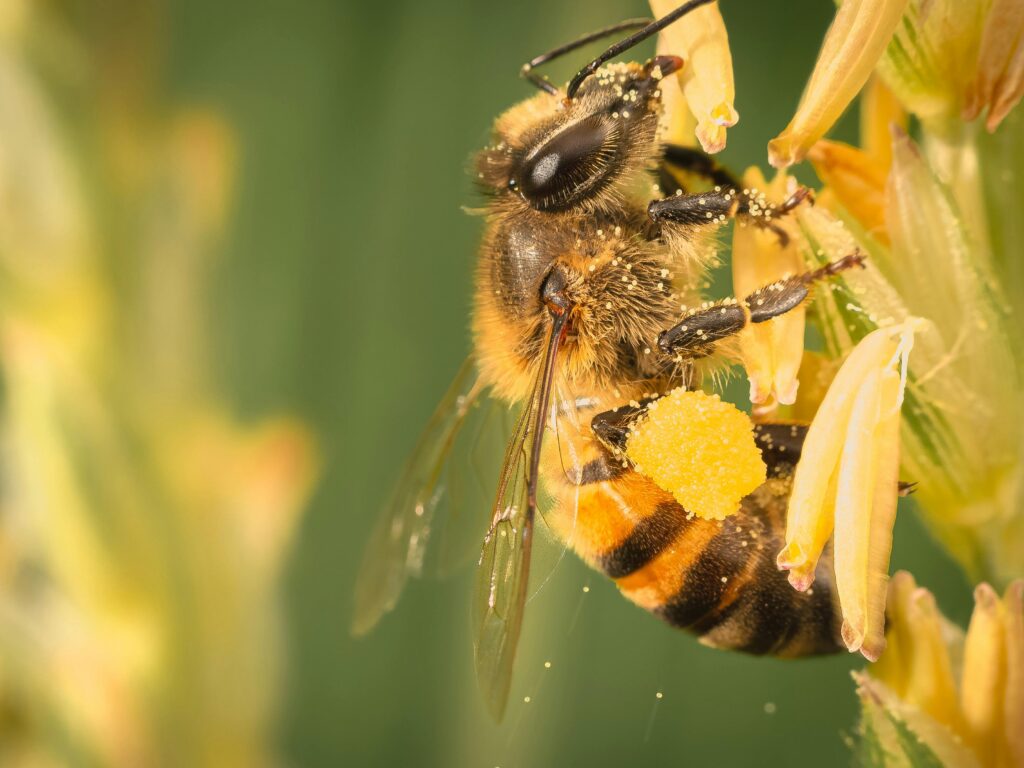
Research published in the Proceedings of the Royal Society B found that approximately 75 per cent of the 115 leading global food crops depend to some degree on animal pollinators, principally bees. A subsequent economic analysis in Ecological Economics estimated the annual value of pollination services globally at approximately 153 billion euros at 2005 prices, a figure that exceeds the direct value of all honey production by orders of magnitude. More recent estimates place the figure considerably higher as crop values have increased.
"The economic value of pollination services globally exceeds the direct value of honey sales by orders of magnitude. Honey production cannot be analysed in isolation from agricultural economics."
This means that a decline in managed bee colonies is not an ecological problem alone: it is a direct threat to agricultural yields and global food pricing. The FAO estimates that food production dependent on pollinators is worth hundreds of billions annually. An often-overlooked dimension of this is pollen: the same foraging behaviour that drives pollination economics is why locally sourced raw wildflower honey contains trace pollen from the surrounding landscape, something explored in our article on wildflower honey and hayfever. Our article on why bee populations are declining covers the ecological pressures threatening these services in detail, and our bees infographic puts the key numbers in one place.
Price Volatility and Market Pressures
Despite growing consumer demand for natural products, honey prices remain highly volatile. The global market is structurally divided between two very different product categories: bulk commodity honey priced on volume, and premium single-origin honey priced on provenance and quality. The pricing pressures that affect the former have little bearing on the latter, but they create significant confusion for consumers who do not understand the distinction.
Contributing factors to price volatility in the commodity segment include:
- International oversupply from large-volume exporters
- Low-cost bulk exports competing with artisanal production
- Adulteration using cheaper sugar syrups (corn syrup, rice syrup, invert sugar)
- Inconsistent regulatory enforcement across importing countries
- Climate-driven harvest failures creating supply shocks
Adulteration is a particularly serious structural problem. Research published in the Journal of Agricultural and Food Chemistry demonstrated that isotope ratio mass spectrometry can detect adulteration with C4 plant sugars, but more sophisticated methods using C3 plant syrups are harder to identify without advanced testing. The Codex Alimentarius Commission Standard for Honey (CXS 12-1981) sets minimum quality criteria, but enforcement is uneven across markets.
Honey adulteration is the practice of diluting genuine honey with cheaper substances, most commonly high-fructose corn syrup, rice syrup or invert sugar solution, to increase volume at lower cost. Adulterated honey may look and taste similar to genuine product, but lacks the pollen, enzymes and bioactive compounds present in raw unprocessed honey. It is a widespread problem in global commodity honey trade and cannot always be detected without laboratory testing. Purchasing honey with a named origin and a producer you can verify is the most reliable consumer-level protection against it.
Adulteration depresses global prices because it floods the market with artificially cheap product. Genuine small-scale beekeepers who cannot match those prices are squeezed out of commodity channels. The response, which is increasingly well-established in the UK market, is transparency: traceable single-origin honey from named producers, priced to reflect genuine production cost. Our guide to honey pricing and what it reflects covers this in detail.
Barriers Faced by Small-Scale Beekeepers
Smallholder producers often face structural barriers that prevent them from capturing fair value for their work. The most common are: limited access to export markets and their certification requirements; inadequate cold storage infrastructure that forces producers to sell quickly at lower prices; price dependency on intermediaries who absorb the majority of the retail margin; and lack of the laboratory testing capacity needed to certify quality for premium buyers.
In the UK specifically, domestic honey production is far below domestic demand. The British Beekeepers Association estimates approximately 6,000 to 10,000 tonnes of honey produced in the UK annually against consumption several times that figure. Most of the shortfall is covered by imports, often from large-volume producers whose cost structures are incompatible with the labour-intensive, small-batch methods that define artisanal quality. UK beekeepers who want to compete on quality rather than price need direct access to consumers willing to pay for traceability, which is precisely what direct-to-consumer models provide. If you want to understand the full practice of beekeeping and what it involves at the producer level, our comprehensive beekeeping guide covers it from hive to jar.
FAO research emphasises that cooperative structures can materially improve outcomes for smallholders by pooling resources for testing, certification and market access. The EU's apicultural support programmes, which allocated 240 million euros for 2020 to 2022 alone, include specific funding for technical assistance and quality analysis. The UK has equivalent mechanisms through the British Beekeepers Association and Defra grant programmes, though uptake remains uneven.
The commercial model that HoneyBee & Co. operates is in part a direct response to this structural problem. By giving our British partner beekeepers a route to premium retail customers, we allow them to price their honey as the artisanal product it is rather than competing in commodity channels. Explore our British Wildflower Honey and Heather Honey to see this in practice.
Sustainability and Long-Term Economic Resilience
The economic sustainability of beekeeping is inseparable from its ecological sustainability. Climate change, pesticide exposure and habitat loss do not merely threaten bee welfare: they directly threaten hive productivity, harvest yields and therefore producer income. Research published in Revue Scientifique et Technique identified several mechanisms by which warming temperatures affect honey bee populations and disease dynamics. A landmark paper in Science found that bee declines are driven by the combined stress of multiple factors rather than any single cause, making mitigation strategies that address only one factor insufficient.
Economic models that prioritise monoculture efficiency over biodiversity create a structural vulnerability in beekeeping productivity. Bees foraging across diverse wildflower landscapes are generally healthier, more productive and less susceptible to pathogen stress than those placed in monoculture environments. This is not an abstract principle: it is why our Transylvanian apiaries, surrounded by uncultivated forests and wildflower meadows, consistently yield honeys that monoculture-adjacent beekeeping cannot replicate. The same logic applies to our British wildflower supplier in the Midlands, whose bees forage across pesticide-free meadows and hedgerows rather than a single crop.
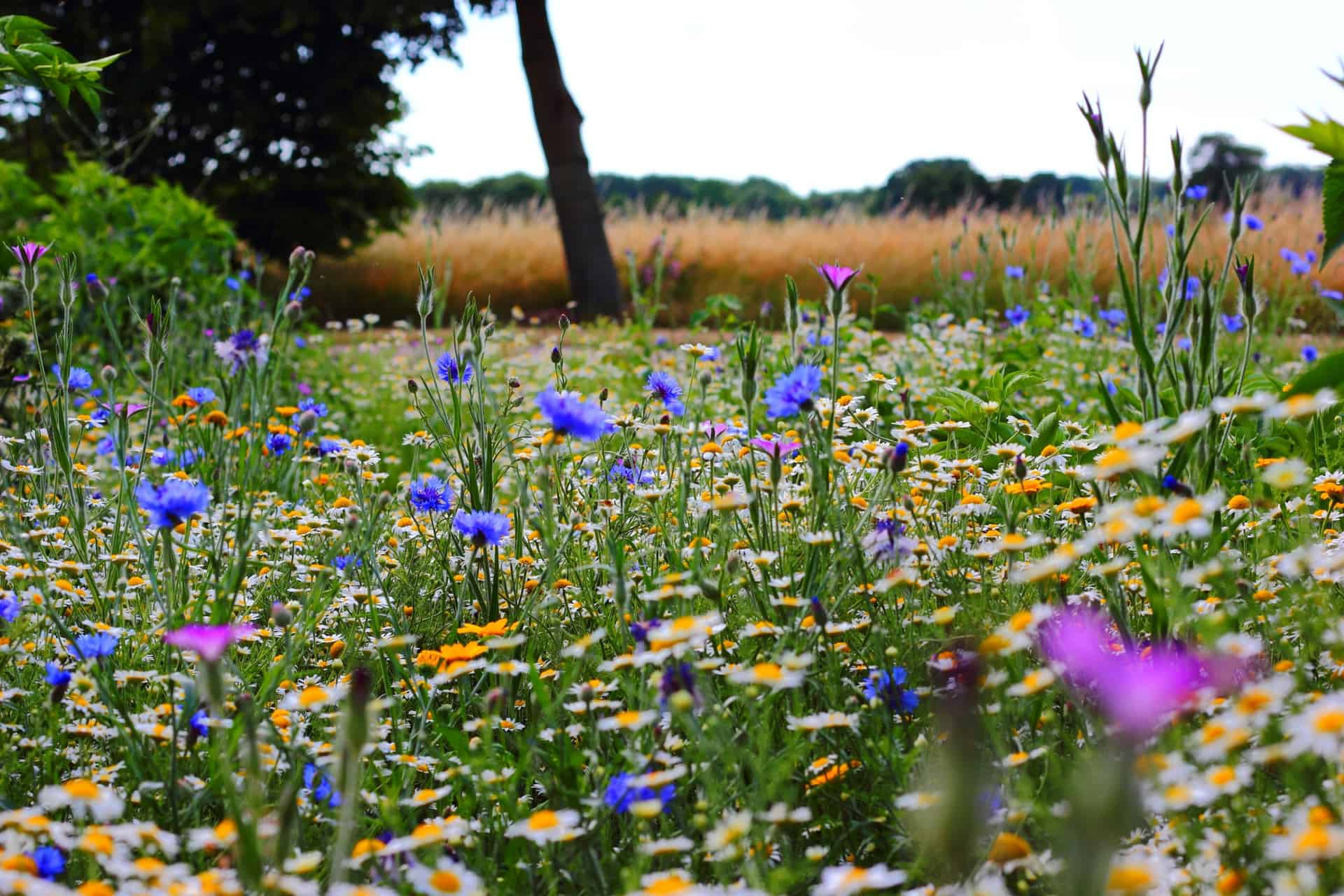
Sustainable beekeeping requires floral diversity in the surrounding landscape, reduced pesticide dependency, climate-adaptive hive management and pricing mechanisms that reward quality over volume. The complete guide to honey types and production on our blog covers how these factors shape the character of each variety we produce.
Global honey production: approximately 2 million tonnes annually (FAO 2024)
Global market value: approximately USD 9.5 billion (2024, IMARC Group)
Global pollination services value: estimated at hundreds of billions annually (Gallai et al., 2009)
Top five exporters by volume in 2024: China, India, Ukraine, Argentina, Vietnam
UK honey market: projected at approximately USD 320 million by 2026
Honey bee colonies worldwide: approximately 101.7 million in 2024, up 47 per cent since 1990 (FAO)
What This Means for Consumers
Consumers influence the economics of beekeeping through purchasing decisions. Choosing transparently sourced, raw and minimally processed honey from producers with short, traceable supply chains supports a different economic model than buying the cheapest available option from an unverified bulk source.
Questions worth asking before purchasing:
- Is the country and region of origin clearly stated on the label?
- Is the honey raw and unpasteurised, with pollen and enzymes intact?
- Does the price reflect genuine production cost, or is it suspiciously low for a supposedly premium product?
- Is there transparency about the beekeeper, the hive practices and the harvest method?
Choosing responsibly sourced honey supports biodiversity protection, rural livelihoods, and market structures that reward genuine quality over volume. Our honey versus sugar guide and our full honey range reflect these principles in practice. Every jar we sell is single-origin, traceable, and priced to reflect the actual work involved.
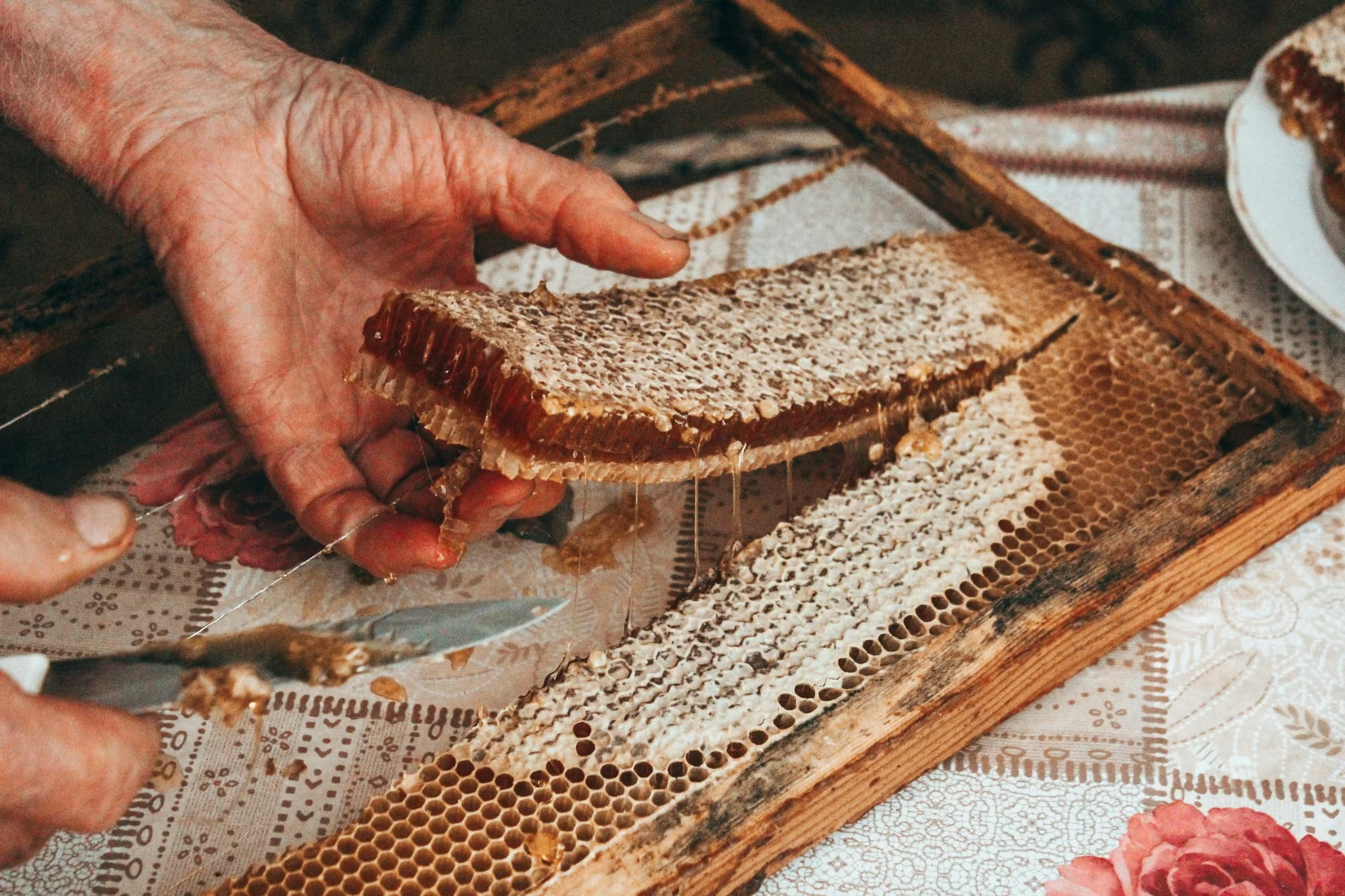
Raw Honey That Reflects These Principles
Traceable, single-origin, never pasteurised. From independent UK beekeepers and six generations of Transylvanian family apiaries.
-
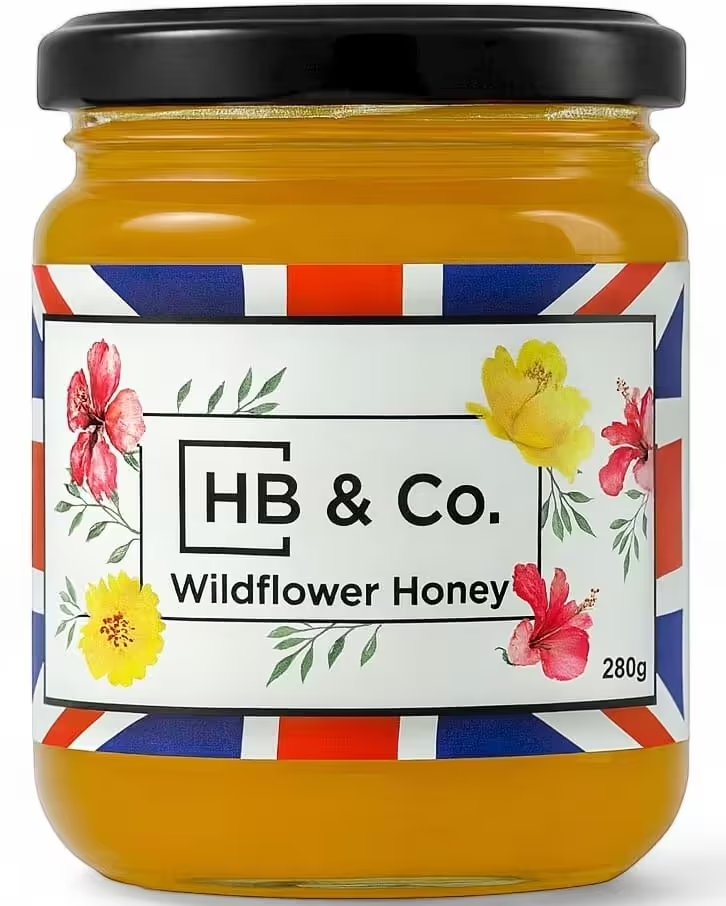 British Wildflower Honey — £10.99 Midlands, England. From an independent SALSA-certified beekeeper. Polyfloral, seasonal, traceable. 280g.Shop →
 -
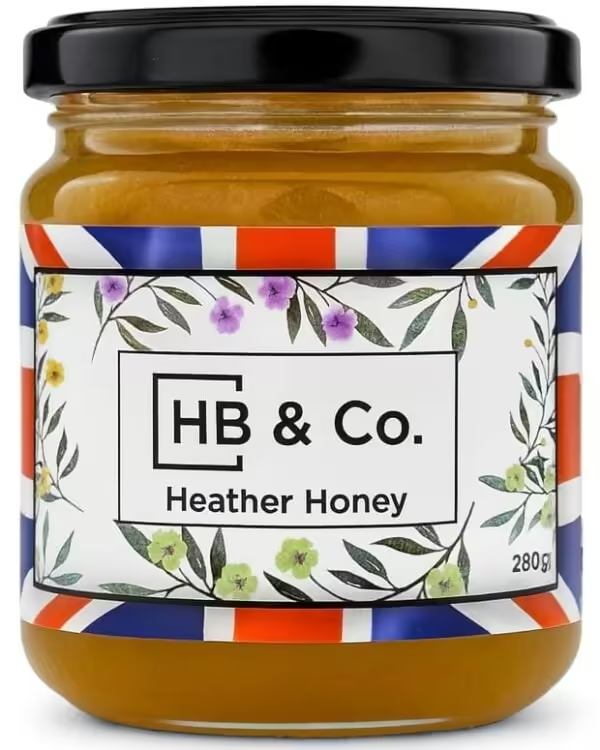 Heather Honey — £12.99 Yorkshire Moors, England. One harvest per year. British artisanal production at its most distinctive. 280g.Shop →
 -
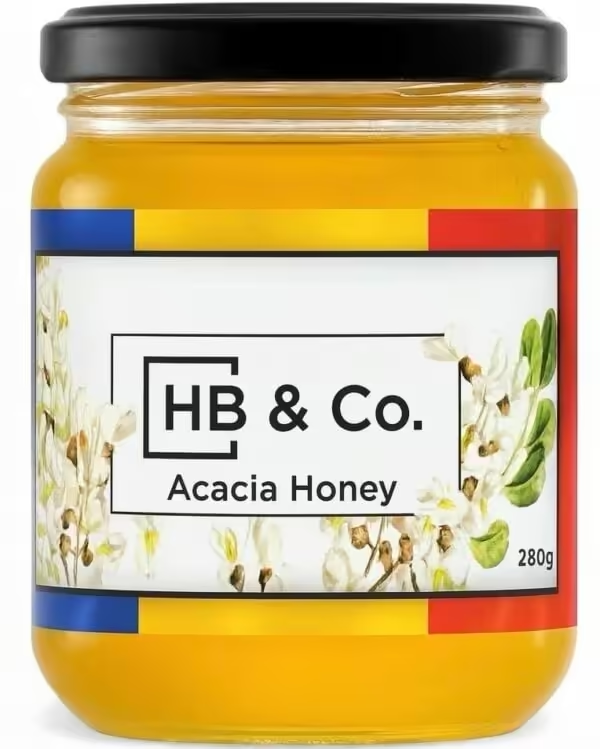 Raw Acacia Honey — £10.99 Transylvania, Romania. Family apiaries, six generations. The world's most traded monofloral variety. 280g.Shop →
Beekeeping Economics: Common Questions
Is beekeeping economically sustainable?
Yes, particularly for smallholder producers in regions with diverse wildflower landscapes and access to fair market channels. Beekeeping also generates indirect economic value through pollination services that benefit surrounding crops, making its contribution to agricultural economics significantly larger than honey revenue alone. The FAO consistently identifies beekeeping as one of the most capital-efficient rural livelihood strategies available at small scale.
Which countries produce and export the most honey?
China is the world's largest producer, accounting for approximately 25 per cent of global output (around 460,000 tonnes annually). The top five producers by volume are China, Turkey, Iran, India and Argentina. The top five exporters by volume in 2024 were China, India, Ukraine, Argentina and Vietnam. New Zealand ranks second by export value due to premium Manuka honey pricing, despite far lower volume. The UK is a net importer, producing approximately 6,000 to 10,000 tonnes annually against much higher domestic consumption.
Why are honey prices so variable?
International trade, oversupply from bulk-volume exporters and adulteration create significant downward pressure on commodity honey prices. Lower-priced supermarket honey often reflects industrial-scale production, blending across multiple origin countries or, in some cases, dilution with cheaper syrups. Premium single-origin raw honey commands higher prices because the production cost, quality and traceability are materially different. The two products are not economically comparable.
What is the economic value of pollination services?
Gallai et al. (2009) estimated the annual economic value of global pollination services at approximately 153 billion euros at 2005 prices, covering the crop categories that depend on animal pollinators. More recent estimates, accounting for increased crop values, place the figure considerably higher. This far exceeds the direct economic value of honey sales globally, which is approximately USD 9.5 billion annually. It means honey is, in economic terms, almost a by-product of the real value that bees provide to agriculture.
What is honey adulteration and why does it matter economically?
Adulteration is the practice of diluting honey with cheaper syrups, most commonly high-fructose corn syrup, rice syrup or invert sugar solution, to increase volume at lower cost. It is a widespread problem in global commodity honey trade. Economically, it matters because adulterated honey can be sold at prices genuine producers cannot match, depressing the entire market and squeezing out ethical producers. Advanced testing including isotope ratio mass spectrometry and nuclear magnetic resonance can detect adulteration, but testing is not universal across supply chains.
How can consumers support sustainable beekeeping?
By purchasing traceable, minimally processed honey from transparent producers whose supply chains are short and verifiable. Specific indicators to look for: named country and region of origin on the label, raw or unpasteurised status confirmed, a price that reflects genuine production cost (not suspiciously low for a premium claim), and transparency about the beekeeper. Subscription purchasing from ethical producers also provides producers with more predictable revenue, which supports investment in sustainable practices.
How does climate change affect beekeeping economics?
Climate change affects beekeeping economics through several direct mechanisms. Shifting flowering seasons disrupt bees' foraging synchronisation with their primary nectar sources, reducing yields. More frequent drought years reduce nectar availability significantly. Warmer winters allow parasites like Varroa mite to remain active for longer, increasing hive losses and management costs. Extreme weather events can destroy entire harvests in specific regions. All of these translate into higher production costs and more variable yields for beekeepers, contributing to price volatility at the retail level.
Why does raw honey cost more than supermarket honey?
Raw honey costs more because it is a fundamentally different product. It requires cold extraction rather than heat treatment, smaller batch processing, more careful handling to preserve pollen and enzymes, and typically comes from a single named source rather than a blend. The production cost per jar is verifiably higher. Supermarket honey is typically pasteurised, ultra-filtered, blended from multiple countries and processed for uniform appearance and extended shelf life. These processes reduce cost but also strip out the biological properties that give raw honey its value.
Sources and References
- FAO. FAOSTAT Crops and Livestock Products: Natural Honey. fao.org/faostat
- FAO. Honey and Beeswax: Non-Wood Forest Products Statistics. fao.org/forestry/nwfp
- FAO. Beekeeping and Sustainable Livelihoods (2003). FAO Diversification Booklet 1. fao.org/3/y5110e
- Bradbear, N. (2009). Bees and their role in forest livelihoods. FAO Forestry Paper 147. fao.org/3/i0842e
- Klein, A. M., et al. (2007). Importance of pollinators in changing landscapes for world crops. Proceedings of the Royal Society B, 274(1608), 303-313. royalsocietypublishing.org
- Gallai, N., et al. (2009). Economic valuation of the vulnerability of world agriculture confronted with pollinator decline. Ecological Economics, 68(3), 810-821. sciencedirect.com
- Cabañero, A. I., et al. (2006). Liquid chromatography coupled to isotope ratio mass spectrometry: a new tool for honey quality control. Journal of Agricultural and Food Chemistry, 54(26), 9719-9727. pubs.acs.org
- Le Conte, Y. and Navajas, M. (2008). Climate change: impact on honey bee populations and diseases. Revue Scientifique et Technique, 27(2), 499-510. pubmed.ncbi.nlm.nih.gov
- Goulson, D., et al. (2015). Bee declines driven by combined stress from parasites, pesticides, and lack of flowers. Science, 347(6229). science.org
- IMARC Group (2024). Honey Market Report 2025-2033. imarcgroup.com
- Ukrainian Agribusiness Club (2025). Ukraine ranked third in world honey exports in 2024. open4business.com.ua
- Codex Alimentarius Commission. Codex Standard for Honey (CXS 12-1981, revised 2001). fao.org/codexalimentarius