

 English (UK)
  Italiano
  Français
  简体中文
简体中文  한국어
한국어 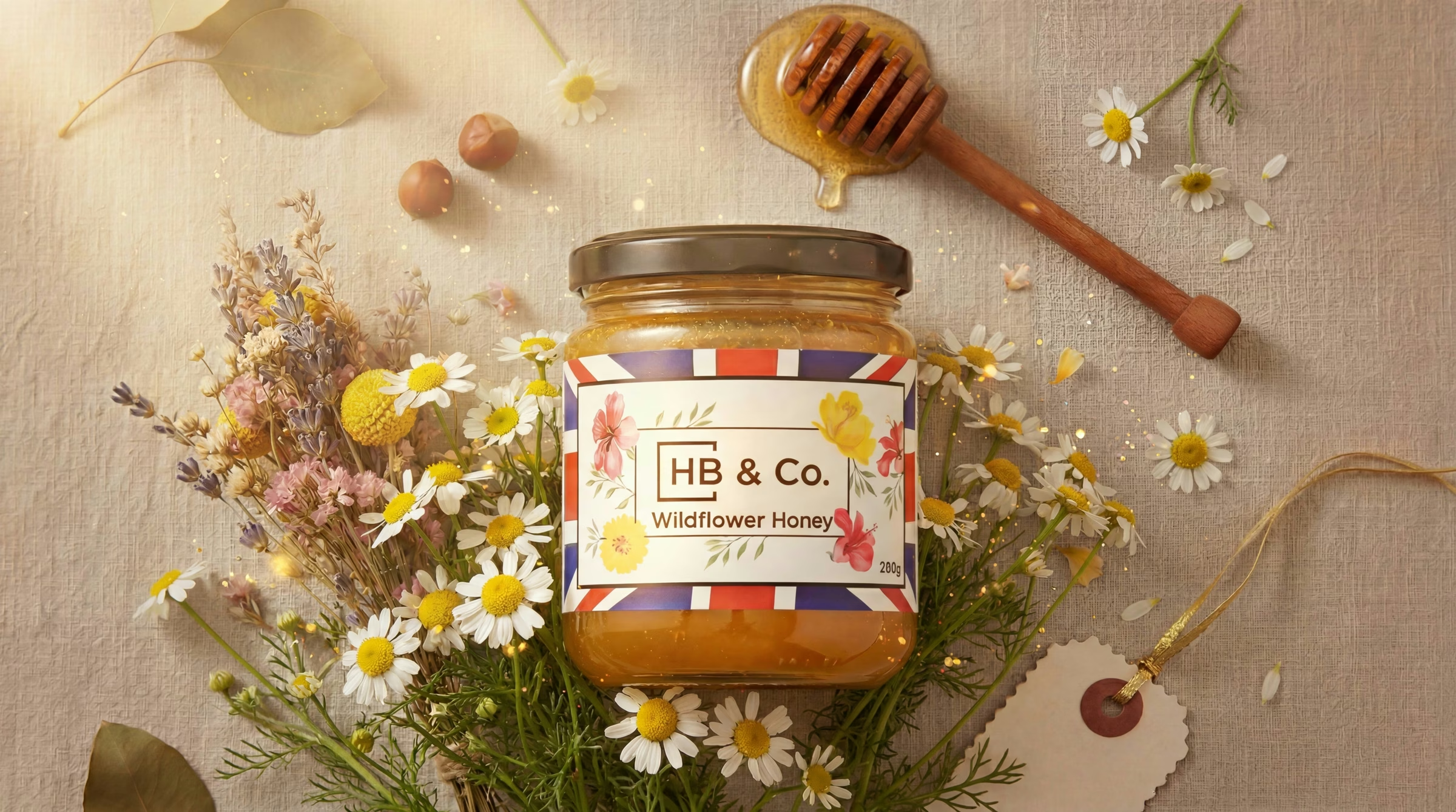
Chamomile in tea is one of the oldest evening rituals in Europe: a cup of dried chamomile flowers steeped in hot water, caffeine free, gently floral, and almost universally soothing. Paired with a spoonful of raw honey, it becomes something more. This guide covers what chamomile tea actually is, how to brew it properly, which raw honeys pair best with it, and what the research actually says about its effects on sleep and digestion.
- Chamomile tea is caffeine free. It is made from dried chamomile flower heads, not tea leaves, making it safe to drink in the evening without affecting sleep onset.
- Add honey after the water cools to below 40 degrees Celsius. Higher temperatures degrade the enzymes and aromatic compounds that distinguish raw honey from supermarket honey.
- Acacia honey is the lightest pairing: clean, mild, and vanilla-floral. Linden honey is the traditional Central European match: herbal, minty, and more complex. Heather honey is for richer evening cups.
- Chamomile contains apigenin, a flavonoid that may support relaxation by binding to GABA receptors in the brain. Effects are mild and gradual, not equivalent to pharmaceutical sleep aids.
- Those with ragweed, daisy, or chrysanthemum allergies face higher sensitivity risk from chamomile. It is not recommended during pregnancy without medical guidance.
- Raw honey must never be given to children under 12 months of age due to the risk of infant botulism.
What Is Chamomile in Tea?
Chamomile in tea refers to an herbal infusion, or tisane, made from the dried flower heads of the chamomile plant. Two varieties are used commercially: German chamomile (Matricaria chamomilla) and Roman chamomile (Chamaemelum nobile), both belonging to the Asteraceae family alongside daisies and ragweed.
Unlike black or green tea from the Camellia sinensis plant, chamomile tea contains no caffeine. This is why it has been the default evening drink across Europe and Western Asia for thousands of years. Ancient Egyptians used it in skin preparations. Greek and Roman physicians prescribed it for digestive complaints. In Central and Eastern Europe, it has been a kitchen staple since at least the medieval period.
At HoneyBee & Co., chamomile holds a particular place. In our family kitchen in Transylvania, linden honey stirred into a cup of chamomile is the bedtime ritual our family returns to most. Our founder Dragos grew up watching his grandmother prepare this combination before sleep, long before he understood why it worked. The tradition runs through generations, not through wellness marketing.
The Greek name chamaimēlon translates to "ground apple," which accurately describes the mild, fruity-floral aroma of the fresh or dried flower. Good chamomile should smell faintly of a ripe apple, not of dust or hay.

What Does Chamomile Tea Taste Like?
Chamomile tea has a mild, floral sweetness with notes reminiscent of apple and pear. The liquor brews to a bright, sunshiny yellow with a clean honey-like aroma when made properly. Whole, intact dried flowers produce a markedly cleaner cup than the heavily milled contents of a standard supermarket tea bag.
Different honeys change what you notice in the cup:
- Raw Acacia honey: Keeps the cup light and vanilla-floral. The chamomile's apple note stays front and centre.
- Raw Linden honey: Adds a minty-citrus brightness that deepens the herbal character. This is the traditional pairing in Central European folk medicine.
- Raw Heather honey: Brings malt, smoke, and depth. Better for cooler evenings when you want something more robust than a simple floral cup.
The rule of thumb from our kitchen: match the intensity of your honey to the moment, not just the tea. Light chamomile with mild Acacia before bed. Richer chamomile with Linden when you want something with more herbal character.
How to Brew Chamomile Tea
Careful brewing matters. Over-steeping chamomile turns it bitter and harsh. Under-brewing leaves the cup thin and underwhelming.
Hot Brew Method
- Measure 1 tablespoon of loose dried chamomile flowers (or 1 good-quality tea bag). Loose flowers release more aroma than milled bag content.
- Heat water to around 80 to 90 degrees Celsius. Do not use a full rolling boil: let boiling water cool for 1 to 2 minutes, or use a temperature-controlled kettle.
- Pour and steep for 4 to 5 minutes. Cover the cup with a saucer during steeping to trap the volatile aromatic compounds.
- Remove the flowers promptly. Leaving chamomile in hot water beyond 5 minutes introduces noticeable bitterness.
- Allow to cool slightly to below 40 degrees Celsius, then stir in 1 to 2 teaspoons of raw honey. Adding honey to water hotter than this degrades its natural enzymes and changes its aromatic profile.
Iced Chamomile Method
Brew a double-strength hot infusion using 2 tablespoons of flowers. Allow it to cool to room temperature, then pour over ice with a spoon of raw Acacia honey and a slice of lemon. Alternatively, cold brew in the fridge overnight (8 to 12 hours) for an exceptionally clean, smooth cup with no bitterness at all. Cold-brewed chamomile with Acacia honey is particularly good in summer.
"Add honey after the water cools. Above 40 degrees Celsius, the natural enzymes that give raw honey its character begin to degrade. The same heat that dulls a good wine dulls a good honey."
Which Honey Goes Best with Chamomile?
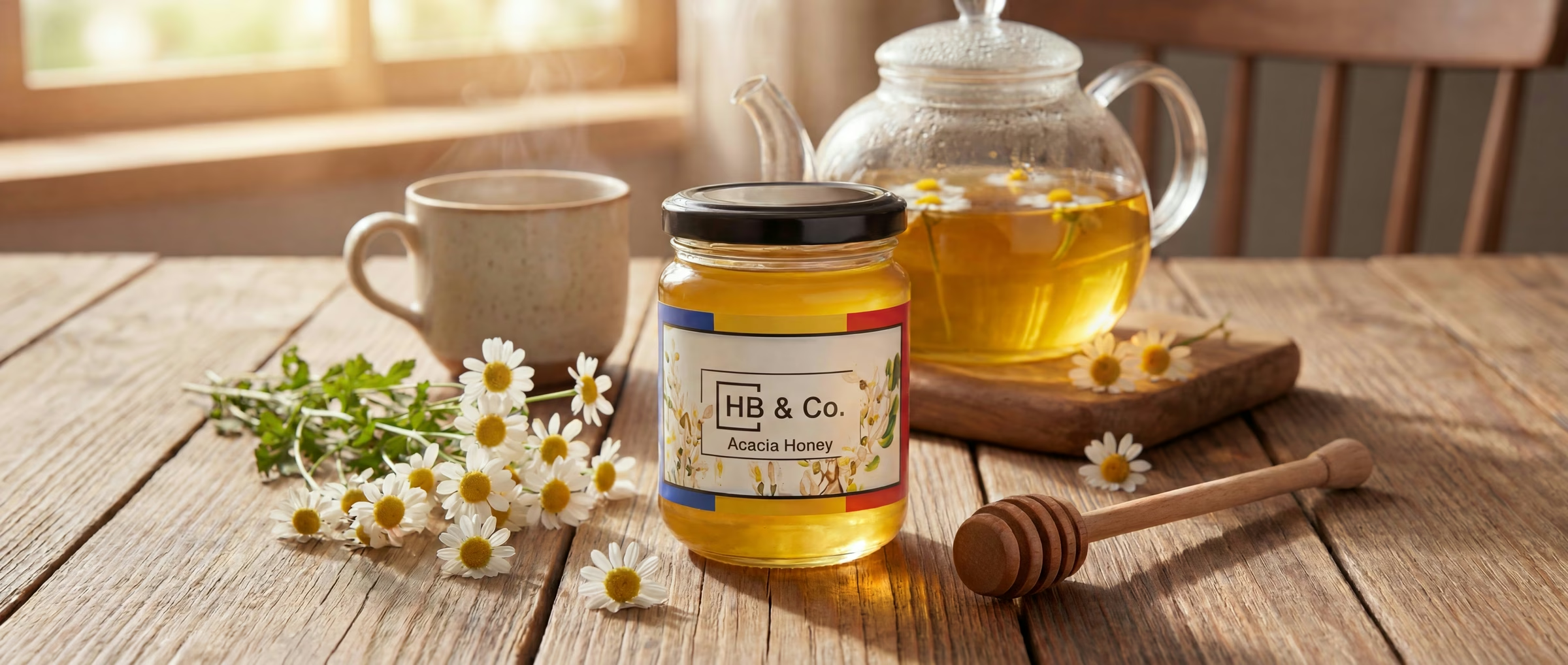
Not all honeys suit chamomile equally. Chamomile is a delicate tea, and the honey you choose either honours that or overwhelms it. Here is how the three most relevant honeys from our range perform in the cup, and why.

Raw Acacia Honey
The mildest honey in our range. High fructose content means it stays liquid and pours cleanly. Its clean, vanilla-floral sweetness preserves everything chamomile brings without adding competing aromatics. The classic pairing for green and white chamomile tea.
Shop Acacia →
Raw Linden Honey
Herbal, minty, lime-blossom aromatics that naturally amplify chamomile's floral character. This is the combination our family has used for generations in Transylvania. It is not subtle: it makes chamomile more complex, not just sweeter. Outstanding for bedtime cups.
Shop Linden →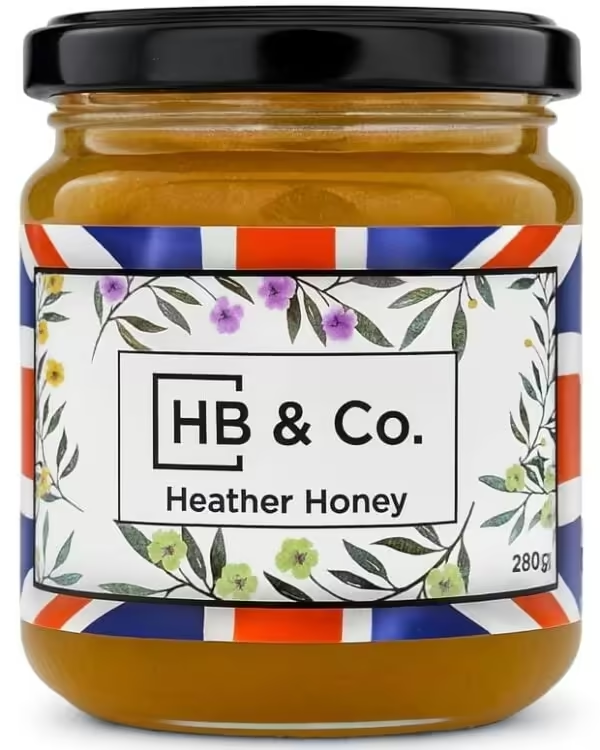
Raw Heather Honey
Dark, malty, and smoky-floral. A stronger choice that transforms chamomile into a more robust autumn or winter drink. Use this when you want depth over delicacy: it stands up to stronger chamomile infusions, especially those that include dried herbs like lavender or lemon balm.
Shop Heather →If you want to try all three without committing to individual jars, the Tea Lovers Honey Selection brings Acacia, Linden, and Heather together in one box, with free UK delivery and five per cent off.
Does Chamomile Tea Have Caffeine?
No. Pure chamomile tea is completely caffeine free because it comes from flowers, not from tea leaves (Camellia sinensis). This makes it suitable for drinking in the evening, and for people who are caffeine sensitive, pregnant (with medical guidance), or managing sleep.
Many "sleep blend" teas in UK supermarkets combine chamomile with herbs like lemon balm, valerian, or lavender. These remain caffeine free unless the blend also contains black or green tea. Always check the label. Some "chamomile flavoured" products contain tea leaf as a base and are not caffeine free.
Sweetening with raw honey rather than refined sugar adds no caffeine and avoids the blood sugar spike and crash that refined sugars can cause before sleep. A teaspoon of raw honey has a lower glycaemic index than an equivalent quantity of refined sugar, making it a more considered choice as part of an evening ritual.
Health Benefits of Chamomile in Tea
The evidence for chamomile's effects ranges from centuries of traditional use to a modest body of modern research. Most studies use concentrated chamomile extract or capsules rather than ordinary brewed tea, which delivers milder doses. Think of chamomile as gentle complementary support, not a cure or a medicine. All claims below are appropriately hedged accordingly.
Sleep and Relaxation
Chamomile contains apigenin, a flavonoid that binds to GABA receptors in the brain, reducing neuronal excitability in a way that may support a calmer transition to sleep.[1,2] A 2019 systematic review and meta-analysis noted improvements in generalised anxiety symptoms after chamomile supplementation.[3] The effects are typically mild and gradual. Chamomile works best as part of a consistent wind-down routine, not as a stand-alone sleep aid for serious insomnia. Those on sedative medications should discuss potential additive effects with their GP before relying on chamomile regularly.
Digestion and Gut Comfort
Chamomile has been used in European herbalism for centuries as an antispasmodic: it may relax smooth muscle in the digestive tract, helping with mild cramping, bloating, and "nervous stomach." Some experimental research suggests chamomile preparations may offer protection against certain types of gastric ulcers, though more human trials are needed before firm conclusions can be drawn.[4] A cup after a heavy meal remains a sensible folk tradition, particularly when combined with a spoonful of raw honey, which may coat the upper digestive tract and add its own mild prebiotic effect.
Inflammation and Immune Support
Chamomile contains quercetin, a flavonoid associated with anti-inflammatory activity in laboratory research. Its antimicrobial properties are modest compared to raw honey, but the two together in a warm cup provide a soothing combination during cold season. A warm cup of chamomile with a spoonful of raw Acacia honey can help ease sore throat discomfort and encourage hydration when you are under the weather.
Blood Sugar
Some studies suggest chamomile may improve glycaemic and lipid profiles in people with diabetes, though most trials used standardised extracts at higher concentrations than ordinary tea.[5] Chamomile cannot replace prescribed diabetes medications. Anyone with diabetes should factor in the natural sugar content of honey and discuss with their care team. Our guide to honey's health benefits covers the glycaemic index of different raw honey varieties in more detail.

Raw, unpasteurised honey brings its own set of plant compounds to the cup: flavonoids, natural enzymes, trace antioxidants, and in the case of Linden honey, farnesol, an aromatic compound from linden blossom that has been studied for its own mild antimicrobial properties.[6] The two together in chamomile tea may offer a broader range of plant compounds than either provides alone. Neither is a therapy. Both are good ingredients when used with intention.
Safety, Side Effects, and Who Should Avoid Chamomile
Chamomile is considered safe for most healthy adults at moderate consumption of 1 to 3 cups daily. Individual sensitivities matter, however.
Pollen allergies: Those with allergies to plants in the Asteraceae family (daisies, ragweed, chrysanthemums, marigolds) face higher sensitivity risk and should approach chamomile cautiously, or discuss with an allergist first.
Pregnancy: The safety evidence for chamomile during pregnancy is limited and sometimes conflicting. Ask your midwife or GP before drinking it regularly. This is not a situation to self-manage.
Medications: Chamomile may interact with blood thinners and sedatives. If you take either, consult your GP before adding regular chamomile consumption to your routine.
Children under 12 months: Raw honey should never be given to children under 12 months of age due to the risk of infant botulism. Weak chamomile tea without honey may be appropriate for older children under GP guidance, but safety data remains limited. Always consult a health visitor or GP first.
Chamomile Tea, Raw Honey, and Your Evening Ritual
Think of chamomile tea with raw honey not as a health intervention but as a deliberate, pleasurable ritual. The habit of slowing down, heating water, choosing a honey, and sitting with a warm cup does as much for the nervous system as the apigenin content. These rituals matter. They have mattered in our family for six generations.
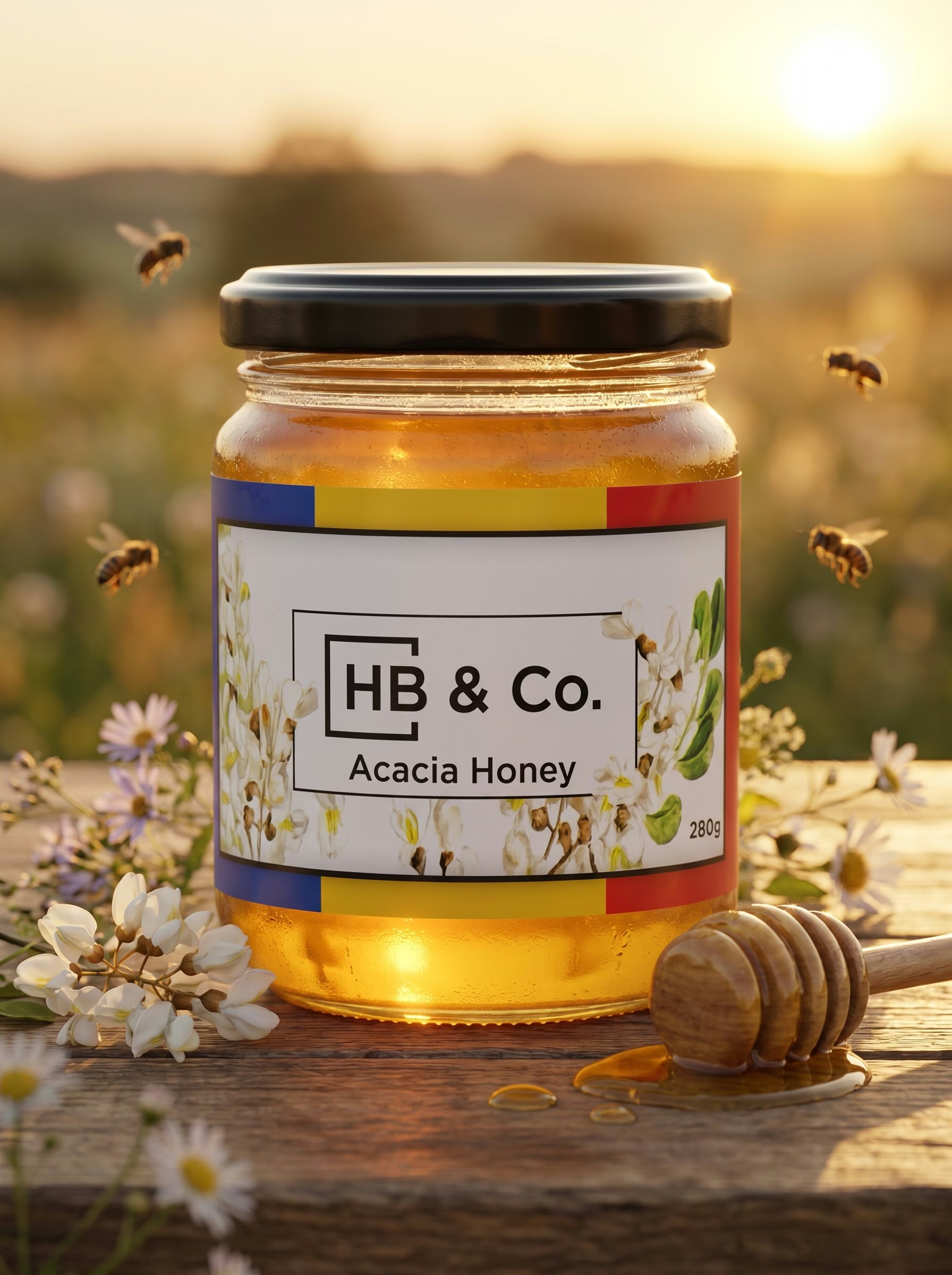
A classic bedtime cup is simple: one tablespoon of loose chamomile, water at around 85 degrees, four minutes of steeping, and a teaspoon of Linden honey stirred in after the water cools. Forty-five minutes before sleep. The ritual our family has returned to for generations. For autumn and winter, try a double-strength brew in a thermos with a spoon of Heather honey: the malt and smoke of Yorkshire Heather keep the cup interesting as it cools. In summer, cold-brew chamomile overnight and pour it over ice with a slice of lemon and Acacia honey. It is cleaner, less bitter, and entirely caffeine free.
Choosing raw, single-varietal honeys from HoneyBee & Co. means every cup carries a named origin: Acacia from the same family forests in Transylvania our founder grew up in, Linden from linden trees that bloom for just two to three weeks each summer, Heather hand-harvested from the Yorkshire Moors each August. The honey in your cup is traceable to a specific landscape and a specific season. That specificity is part of the ritual too. You can explore the full range on our honey shop, or try our Tea Lovers Honey Selection to taste all three of the key tea pairings together.
Three Honeys for Your Cup
Each changes the character of chamomile differently. All three are raw, single-origin, and cold-extracted.
-
Acacia Honey — £10.99 Transylvania, Romania. The mildest in the range. Preserves chamomile's delicate sweetness without competing.Shop →
-
Linden Honey — £10.99 Transylvania, Romania. Herbal, minty, lime blossom. The traditional chamomile pairing in Central European households.Shop →
-
Heather Honey — £12.99 Yorkshire Moors, England. Bold, malty, smoky. For chamomile blends that include dried herbs or a richer evening cup.Shop →
All three honeys above in one box. Acacia, Linden, and Heather. 3 x 280g jars. Five per cent off. Free UK delivery.
Chamomile Tea and Honey: Common Questions
Can I drink chamomile tea with honey every night?
For most healthy adults, 1 to 2 cups of chamomile tea with a small amount of raw honey in the evening is considered safe and can form a relaxing nightly ritual. Those with diabetes or blood sugar concerns should factor in honey's natural sugars and consult their healthcare provider. Start with about one teaspoon and adjust based on how your sleep and digestion respond over a couple of weeks.
Why should I add honey after the tea cools, not before?
Raw honey contains natural enzymes, antioxidant compounds, and aromatic molecules that begin to degrade above around 40 degrees Celsius. If you stir honey into water straight off the boil, you are essentially pasteurising it in the cup, which removes the properties that distinguish raw honey from supermarket honey in the first place. Wait until the cup is comfortably warm to the touch before adding your honey. This applies to all varieties but is especially important with more aromatic honeys like Linden, where the herbal notes are most volatile.
What is the difference between Acacia and Linden honey in chamomile tea?
Acacia honey is the lightest option: clean, mild, vanilla-floral, and barely changes the character of chamomile. It is the right choice when you want the chamomile to lead and the honey to simply sweeten. Linden honey is herbal, minty, and more complex: it adds its own character to the cup and deepens the herbal dimension of the chamomile. Linden is the traditional Central European pairing and the one our family uses most. If you are choosing for the first time, try Acacia on a standard chamomile bag, and Linden with a loose-leaf German chamomile infusion. The difference is significant.
Is chamomile tea safe for children?
Small amounts of weak chamomile tea are used traditionally for older children, but safety data remains limited. Always consult a GP or health visitor first. Raw honey must never be given to children under 12 months of age due to the risk of infant botulism. For children over 12 months, chamomile tea with a small amount of honey is widely used across Europe but remains a conversation to have with your health visitor, particularly if your child has pollen allergies.
Does chamomile tea interact with any medications?
Chamomile contains compounds that may have mild sedative and anticoagulant effects. People on prescribed sedatives or blood thinners should speak to their GP before drinking chamomile regularly. The interaction risk from a single occasional cup is low, but a daily evening ritual represents consistent intake. Those on sedatives should be aware of potential additive effects on drowsiness.
How long does dried chamomile keep?
Properly stored dried chamomile keeps its best flavour for 12 to 18 months from packing. Store in an airtight container away from light, heat, and strong odours. Signs it is time to replace: faded colour, a stale or dusty aroma, or a flat-tasting brew. Good chamomile should smell of apple and fresh flowers when you open the container, not of old hay.
Can I drink chamomile tea if I am allergic to pollen?
General seasonal hay fever does not automatically mean chamomile will cause a reaction. However, chamomile belongs to the Asteraceae family alongside ragweed, daisies, marigolds, and chrysanthemums. Those with strong sensitivities to these plants face a higher risk. Start with a very small amount and watch for signs of oral allergy syndrome: itchy mouth or lips, hives, or breathing changes. If you have a severe pollen allergy, speak to an allergist before introducing chamomile regularly.
Is chamomile tea okay during pregnancy?
Research on chamomile use during pregnancy is limited and sometimes conflicting. Ask your midwife, GP, or obstetrician before drinking it regularly. Some practitioners consider occasional, weak chamomile acceptable under guidance. Others advise avoiding it entirely during pregnancy. Do not self-prescribe chamomile for pregnancy-related insomnia or nausea without professional advice.
Sources and References
- Avallone R, et al. (2000). Pharmacological profile of apigenin, a flavonoid isolated from Matricaria chamomilla. Biochemical Pharmacology, 59(11):1387-94. pubmed.ncbi.nlm.nih.gov/10751551
- Srivastava JK, et al. (2010). Chamomile: A herbal medicine of the past with bright future. Molecular Medicine Reports, 3(6):895-901. pubmed.ncbi.nlm.nih.gov/21132119
- Hieu TH, et al. (2019). Therapeutic efficacy and safety of chamomile for state anxiety, generalised anxiety disorder, insomnia, and sleep quality: a systematic review and meta-analysis. Phytotherapy Research, 33(6):1604-1615. pubmed.ncbi.nlm.nih.gov/31006899
- Srivastava JK, et al. (2010). Chamomile: A herbal medicine of the past with bright future. Molecular Medicine Reports, 3(6):895-901. (Same as [2] -- gastric protection evidence reviewed in same paper.)
- Zemestani M, et al. (2016). Chamomile supplementation improves glucose and lipid metabolism and protects against diabetes mellitus type 2. Journal of Clinical Biochemistry and Nutrition, 58(1):67-73. pubmed.ncbi.nlm.nih.gov/26858508
- Jabra-Rizk MA, et al. (2006). Effect of farnesol on Staphylococcus aureus biofilm formation and antimicrobial susceptibility. Antimicrobial Agents and Chemotherapy, 50(4):1463-9. pubmed.ncbi.nlm.nih.gov/16569857