

 Français
 English (UK)
 Italiano
 简体中文
 한국어

Home brewing with honey
What Is Mead, and Which Honey Makes the Best One?
Mead is wine made from honey: honey diluted with water and fermented by yeast, usually to somewhere between 8% and 18% alcohol. Because honey is almost the only ingredient, the honey you choose is the flavour you drink. For a first traditional mead we recommend a dark, characterful honey such as British heather; for a light, delicate or fruit mead, a pale honey such as acacia or linden. Below: how to choose, how much to use, and what UK law says about making it at home.
“Mead is a traditional alcoholic drink derived from the fermentation of diluted honey in the presence of appropriate yeast.”
Iglesias et al., Molecules, 2014
If you want the story of mead, from Norse halls to the current craft revival, we have told it in Mead Renaissance: the revival of an ancient brew and in honey and the Vikings. This guide is the practical companion: the honey, the quantities, the process and the rules.
- What the honey decides
- A brewer’s honey shortlist
- How much honey per demijohn
- A first heather mead, in outline
- Raw honey: heat it or not?
- Home brewing and the law
- Questions
What the honey decides
In beer, the malt, hops and yeast share the work. In a traditional mead, the honey does nearly all of it. Three things about your honey shape the result.
1. Flavour and aroma
The floral source carries through fermentation. The 2014 review of mead science by Iglesias and colleagues in Molécules notes that meads “have different flavors depending on the floral source of the honey”. A neutral honey gives a clean, wine-like mead. A strong honey gives a mead that tastes unmistakably of its flowers, which is either the point or a problem, depending on what you want.
2. Nutrients, and how easily it ferments
Honey is a hard place for yeast to live. The same review says “honey presents low levels of nitrogen and mineral substances, interfering in the fermentation process”, and that a shortage of nitrogen leads to “poor growth of the yeast, prolonged fermentation.” It also reports that in studies the best results came from dark honey rather than light, because dark honey is richer in minerals and has a higher pH. That is a quiet argument for heather. Whatever honey you use, plan on adding yeast nutrient.
3. Water content
Honey is not pure sugar. UK law allows up to 20% water in most honey and up to 23% in heather honey (Règlement de 2015 sur le miel (Angleterre)). A jar of heather honey therefore carries slightly less sugar than the same weight of a drier honey, so a heather mead may need a touch more honey to reach the same strength. A hydrometer settles it. Our guide to teneur en humidité du miel explains the numbers.
A brewer’s honey shortlist
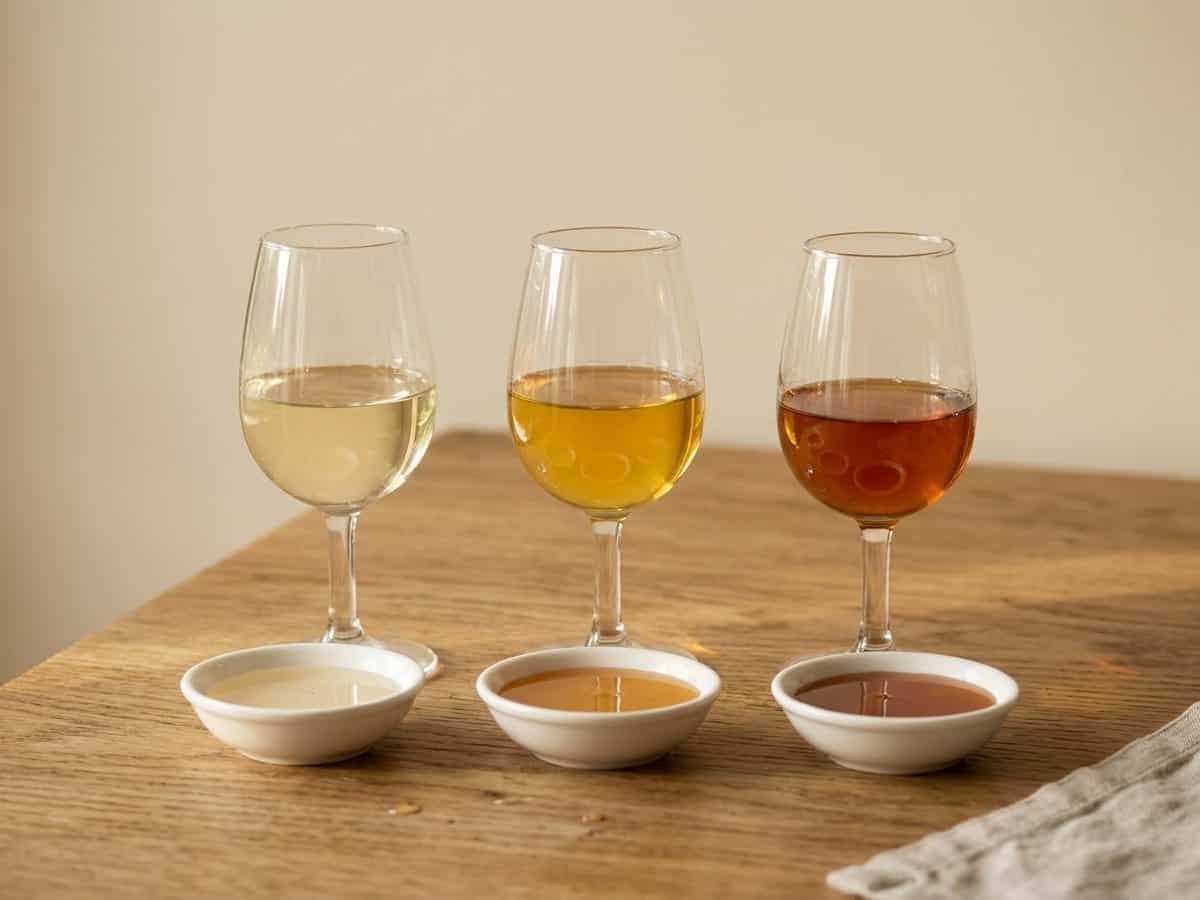
Here is how the honeys we sell behave in a mead, from boldest to lightest.
| Miel | In the glass | Best style | Brewer’s note |
|---|---|---|---|
| Bruyère britannique | Amber, floral, toffee and a bitter-sweet edge | Traditional still mead, medium or sweet | Jelly-like in the jar; loosen in warm water before mixing. Needs the longest ageing, and repays it |
| Fleurs sauvages britanniques | Rounded, honeyed, changes by batch | Traditional, dry or medium | The all-rounder; buy enough from one batch for the whole demijohn |
| Tilleul | Pale, fresh, faintly minty | Dry or sparkling | Aromatic enough to stand alone; keep fermentation cool to protect it |
| Tournesol | Golden, warm, buttery | Melomel (fruit mead) with apple or stone fruit | Sets fast; dissolve thoroughly or it sinks |
| Acacia | Very pale, clean, light vanilla | Session mead, or a base where fruit or spice leads | Slow to crystallise and easy to pour, but light in minerals: do not skip nutrient |
Our view: for your first batch, choose a honey you would happily eat off a spoon, and make a traditional mead from it with nothing else added. You learn what the honey does, and every batch after that is better for it. Fruit and spice can come second.
Why we lean towards heather for that first batch, despite it being the most awkward to handle: its strength survives fermentation, its darker, mineral-rich profile helps the yeast, and it produces a mead that tastes of somewhere. If heather is new to you, start with wildflower vs heather ou acacia vs heather to taste the difference before you brew it.
How much honey per demijohn
The UK home-brew standard is the 4.5-litre (one-gallon) glass demijohn. Sweetness and strength both come from how much honey you dissolve. As the review puts it, “the proportion to which honey is diluted determines the type of mead obtained.” These are our starting points with 280g jars; your hydrometer has the final say.
| Style | Honey for 4.5 litres | In 280g jars | What to expect |
|---|---|---|---|
| Session (hydromel) | About 0.7 to 0.85 kg | 3 jars | Light, often sparkling, ready sooner |
| Dry | About 1.1 kg | 4 jars | Wine-strength, crisp, honey on the nose more than the palate |
| Moyen | About 1.4 kg | 5 jars | Our recommendation for heather; a little residual sweetness |
| Sweet (dessert) | About 1.7 kg | 6 jars | Rich and strong; the yeast may stop before the sugar runs out |
Making more than one demijohn? Our 3x Heather Honey stock-up covers most of a batch, and for larger quantities our guide to buying honey in bulk explains the options.
A first heather mead, in outline
This is the shape of the process, not a full brewing manual. If you are new to fermenting, a local home-brew shop or club will set you up with a demijohn, airlock, hydrometer, sanitiser, wine yeast and yeast nutrient for not much money.
Sanitise everything that will touch the must. Stand 5 jars of heather honey in warm water to loosen them. Dissolve the honey in about 2 litres of water at roughly 40°C, pour into the demijohn, and top up with cool water to the shoulder. Take a hydrometer reading and write it down. Add rehydrated wine yeast and the first dose of nutrient. Fit the airlock.
Keep it somewhere steady, around 18 to 20°C. Add the rest of the nutrient in stages over the first few days, as the packet directs, and swirl gently to release gas. Expect lively bubbling.
Bubbling slows. When the hydrometer reading stays the same over a few days, primary fermentation is done. Siphon the mead off the sediment into a clean demijohn.
Leave it to clear and mature, racking again if more sediment forms. The review is honest about the timescale: mead “is a time-consuming process taking from weeks to several months to complete.” Heather meads in particular taste sharp young and soften with age. Bottle when clear and stable.
The two habits that save most first batches: rigorous sanitising, and not giving up on a slow fermentation before checking it has enough nutrient and warmth.
Raw honey: heat it or not?
Older recipes boil the honey and skim off the scum. Many modern meadmakers do not, because heat drives off the aroma that makes a varietal mead worth making. Raw honey can carry wild yeasts, usually in small numbers, and a healthy dose of a chosen wine yeast in a sanitised demijohn will outcompete them. Warm the water enough to dissolve the honey, around 40°C, and no further. The reasoning is the same as in our guide to raw vs regular honey: heat changes honey, and the changes are mostly losses.
Already got a crystallised jar?
Perfect for mead. Set honey dissolves in warm water just as well; it simply needs more stirring. Our method for ramollir du miel cristallisé works for loosening heather too.
Home brewing and the law in the UK
The short version: making mead at home for yourself needs no licence and pays no duty. Selling it is a different matter entirely.
Making it for your own use
Under section 72 of the Finance (No. 2) Act 2023, alcohol duty “is not charged on alcoholic products” produced in the UK by a person who produces them “only for the person’s own domestic use”, provided they are not spirits (legislation.gov.uk, s.72). Mead is fermented, not distilled, so a home demijohn is covered. Producing alcohol normally needs HMRC approval, but s.82 carves out exemptions in sections 84 and 85, which cover production for your own consumption. Distilling it into spirit is not covered.
Selling it, even at a fête
Producing alcohol for sale means applying to HMRC for approval as an alcoholic products producer and accounting for duty (HMRC guidance for alcohol producers, gov.uk). Selling it also needs licensing: in England and Wales, gov.uk says “anyone who plans to sell or supply alcohol or authorise the sale or supply of alcohol must apply for a personal licence”, alongside a premises licence or a temporary event notice from the local council (gov.uk, Alcohol licensing).
Scotland and Northern Ireland run their own licensing systems; check with your council. This is a plain-English summary for home brewers, not legal advice. If you are thinking of turning a hobby into a business, speak to HMRC and your licensing authority first.
“The fermentation of honey solutions is known to be difficult due to their high sugar concentration.”Iglesias, Pascoal, Choupina, Carvalho, Feás and Estevinho, Developments in the Fermentation Process and Quality Improvement Strategies for Mead Production, Molecules, 2014
That difficulty is the reason good honey matters more in mead than almost anywhere else. A tired, heavily processed blend gives the yeast little to work with and the drinker little to taste. A single-origin honey gives both.
Once you have a bottle you are proud of, honey has more to give at the table: try our Cocktail de piqûres d'abeilles, or browse every jar on the Page d'accueil de HoneyBee & Co..
Brew with British heather honey
Our British Heather Honey is dark, floral and jelly-like, the late-summer crop from the moors. Five 280g jars make a medium mead in a 4.5-litre demijohn. Free UK delivery on 3 or more jars on any order type, and our British honey supplier holds SALSA Certification.
Questions
What is mead, exactly?
An alcoholic drink made by fermenting honey diluted with water, using yeast. It is often called honey wine, and typically ends up between 8% and 18% alcohol. Fruit, spices or hops can be added, but a traditional mead is just honey, water and yeast.
What is the best honey for mead?
The one whose flavour you want in the glass. For a bold traditional mead, a dark honey such as heather, which also tends to ferment better thanks to its minerals. For a light or fruit-led mead, a pale honey such as acacia or linden, with plenty of yeast nutrient.
How much honey do I need for a gallon of mead?
For a 4.5-litre demijohn, around 1.1 kg for a dry mead, 1.4 kg for medium and 1.7 kg for sweet. In 280g jars that is roughly 4, 5 or 6 jars.
Do I need a licence to make mead at home in the UK?
No, not for your own domestic use: duty is not charged on non-spirit alcoholic products made at home for your own use. You do need HMRC approval and a licence from your local council to sell it.
Can I use raw honey for mead?
Yes, and many brewers prefer it. Dissolve it in warm water at around 40°C rather than boiling it, sanitise your equipment, and pitch a healthy wine yeast so it outcompetes any wild yeast in the honey.
How long does mead take?
Primary fermentation usually takes three to six weeks; clearing and maturing take several months more. Heather meads benefit from a year.