
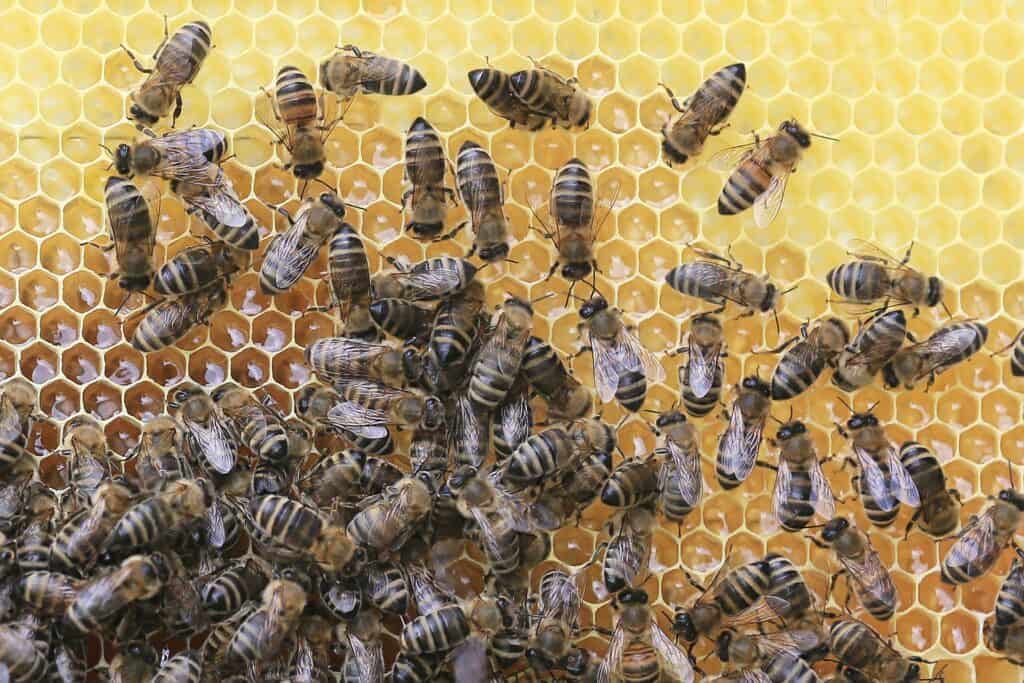
There is something almost magical about honey. A golden, perfectly preserved food created entirely by insects smaller than your thumb. But the process behind it is less magic and more precision engineering, involving exact chemistry, teamwork on a massive scale, and thousands of flower visits per jar. This guide walks through every step, from the foraging bee to the sealed jar, so you understand exactly what you are buying every time.
- Honey is a survival food, not a gift. Bees produce it to bridge the gap between the flowering season and winter.
- Only honeybees (Apis mellifera) among the 20,000+ bee species worldwide produce enough surplus honey for human consumption.
- The process follows four clear steps: foraging, enzyme processing, evaporation, and sealed storage in wax comb.
- A single worker bee produces approximately 1/12 of a teaspoon of honey in her entire lifetime. A 280g jar represents roughly 480 bee-lifetimes of work.
- The floral source of nectar determines everything: flavour, colour, texture, and how quickly the honey crystallises.
- Raw, unpasteurised honey retains the enzymes, polyphenols, and aromatic compounds that processing destroys.
Where Does Honey Come From?
Honey comes from flower nectar, transformed by bees into a stable, long-lasting food store. But the full answer is more specific than that. It comes from a particular species of bee (the western honeybee, Apis mellifera), from a particular organ inside that bee (the honey stomach), through a chain of biochemical processes, and into sealed hexagonal cells in the comb. What ends up in your jar is the result of millions of years of evolved precision.
Honey is not a by-product of pollination. It is a food reserve. Bees in the UK have access to nectar from roughly April through September. From October to February, almost nothing blooms. Without a preserved food source, colonies would starve. The process of making honey is essentially a colony-wide response to this seasonal problem: convert the summer’s nectar surplus into something stable enough to last through winter.
Our own beekeepers in Transylvania time the Acacia harvest to the first week of June, when the blossoms are at their peak. Miss that window by even a fortnight and the nectar concentration changes, the flavour lightens further, and the yield drops. The same seasonal precision applies to our Yorkshire Moors Heather, harvested in August when the bloom is at its fullest. Honey is not made on demand. It is made when nature allows it.
Which Bees Actually Make Honey?
With over 20,000 bee species worldwide and more than 250 in the UK alone, you might expect many of them to produce honey. In practice, only honeybees (Apis mellifera) create the large, stable stores that humans can harvest. Bumblebees and solitary species make small amounts of a honey-like substance for short-term use, but it ferments quickly and is not suitable for collection.
The reason honeybees can produce at scale is their social colony structure. A hive is not a collection of individuals doing the same job. It is a highly organised division of labour operating in parallel.
| Caste | Number in hive | Rôle |
|---|---|---|
| Queen | 1 | Lays up to 2,000 eggs per day during peak season |
| Drones | 200 to 500 | Male bees present seasonally for mating purposes only |
| Worker bees | 20,000 to 80,000 | All foraging, honey production, comb building, brood care, and defence |
Female worker bees handle every stage of honey production. A summer worker lives only five to six weeks and produces approximately 1/12 of a teaspoon of honey across her entire life. To put that into context: a single 280g jar of HoneyBee and Co. honey represents approximately 480 bee-lifetimes of work. That figure, combined with the millions of flower visits involved, is why we do not treat any jar as ordinary.
How Do Bees Make Honey? The Four Steps
The process bees use to transform raw nectar into shelf-stable honey has four distinct stages. Each one serves a precise function, and none can be skipped. Here is what happens from the moment a bee leaves the hive to the moment a cell is sealed.
Foraging: From Flower to Honey Stomach
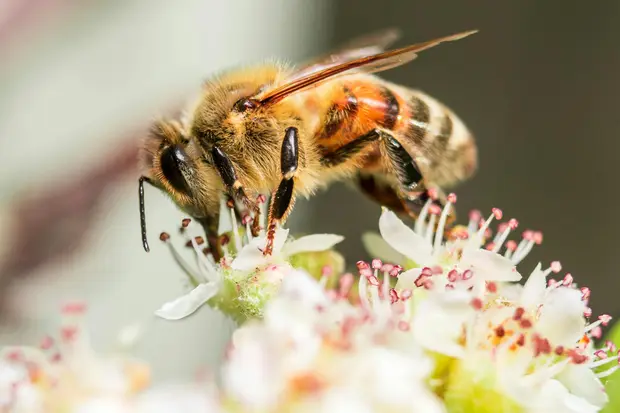
A forager bee collecting nectar. The long proboscis acts like a straw, drawing nectar directly into the honey stomach without entering the digestive system.
When temperatures climb above 10 to 15 degrees Celsius, forager bees leave the hive and begin searching for nectar within a typical radius of 3 to 5 kilometres. Using a long proboscis as a straw, each bee draws nectar from flowers and stores it in a specialised second stomach called the honey crop or honey stomach. Critically, this is separate from the digestive stomach. The nectar never enters the digestive system.
A single forager might visit 50 to 100 flowers per trip, carrying up to 70mg of nectar, roughly half her body weight. She makes multiple trips per day during peak nectar flows. Bees display remarkable flower constancy, locking onto one plant species per trip through learned colour patterns and scent. When a forager finds an exceptional nectar source, she returns to the hive and performs the waggle dance: a figure-8 movement that communicates direction, distance, and quality to other foragers.
Enzymes: Turning Nectar Into Honey Chemistry
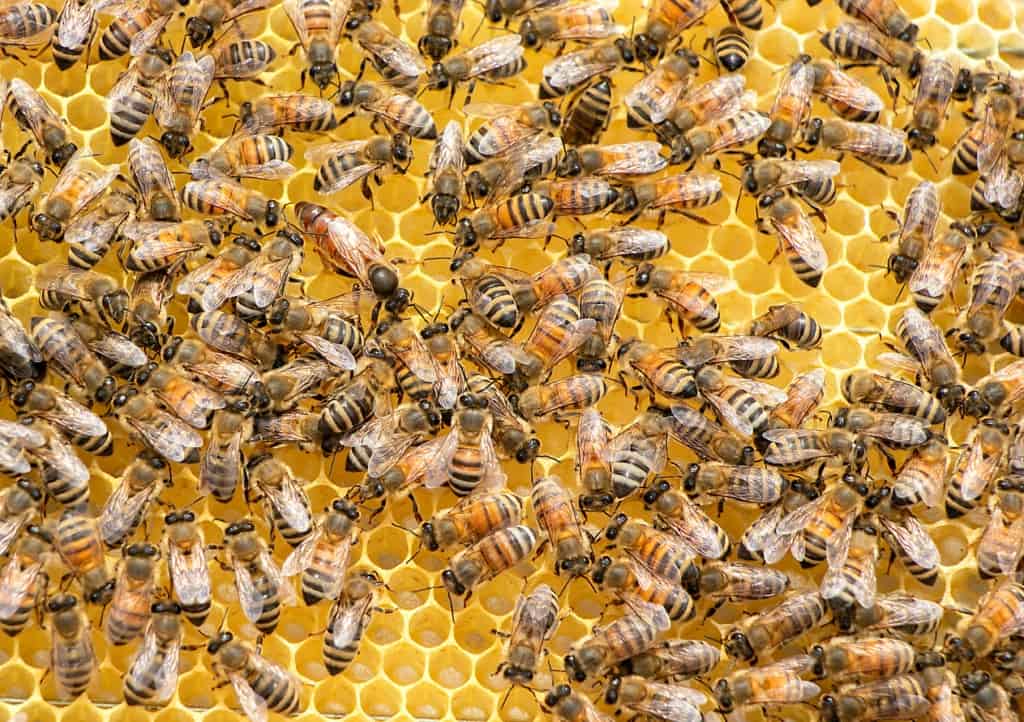
Inside the hive, incoming nectar passes between bees in a process called trophallaxis. Each transfer adds more enzymes and removes more moisture.
Once a forager returns to the hive, she passes her nectar load mouth-to-mouth to a house bee in a process called trophallaxis. This is not a simple handoff. The house bee adds more enzymes, then passes it along again. Research shows nectar passes through three to ten bees in chains lasting ten to thirty minutes each.
Three enzymes do the core work. Invertase converts 85 to 95 percent of the sucrose into simpler glucose and fructose molecules, which are more stable for long-term storage. Glucose oxidase then does something remarkable: it produces gluconic acid and small amounts of hydrogen peroxide when honey is diluted. This drops the pH to around 3.5 to 4.0 and creates the natural antimicrobial environment that allows honey to last indefinitely. Diastase breaks down any starch present.
This enzyme chain is why raw honey is chemically different from processed honey. Once the nectar has been through trophallaxis, it is no longer nectar. It is honey in progress.
Source : Molan PC. L'activité antibactérienne du miel. Monde des abeilles, 1992.
Evaporation: Removing Moisture Until Honey Is Stable
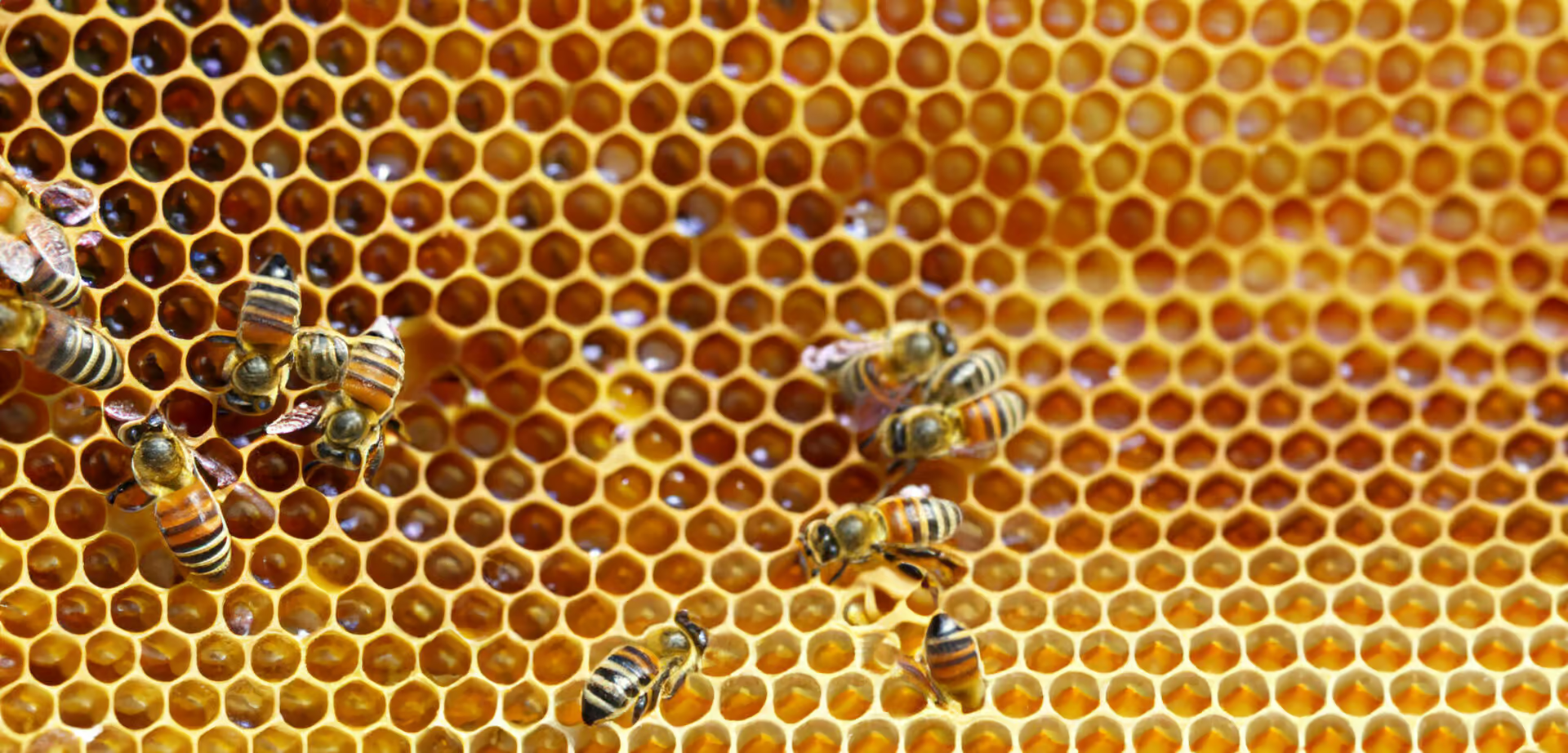
Open comb cells during the evaporation stage. Bees fan continuously to pull humid air away from the nectar, reducing moisture content from around 75 percent down to 17 to 18 percent.
Fresh nectar contains around 70 to 80 percent water. At that concentration, osmotolerant yeasts could ferment the sugars, turning the liquid alcoholic and unusable. Bees must reduce this to around 17 to 18 percent moisture to create stable, finished honey.
They do this through two simultaneous methods. First, house bees spread enzyme-treated nectar across their extended mouthparts and inside partially filled comb cells, dramatically increasing the surface area available for evaporation. Second, a dedicated group of fanning bees beats their wings at up to 250 times per second to generate airflow through the hive, pulling humid air away from the nectar and bringing in drier air from outside. Roughly 10 to 20 percent of the colony operates as fanning bees during peak production periods.
The hive maintains a constant temperature of around 35 degrees Celsius, which is optimal for evaporation without degrading the enzymes. This process continues for two to five days per frame until the water content reaches the right level and the honey is considered ripe.
Storage: Sealing Honey in the Comb
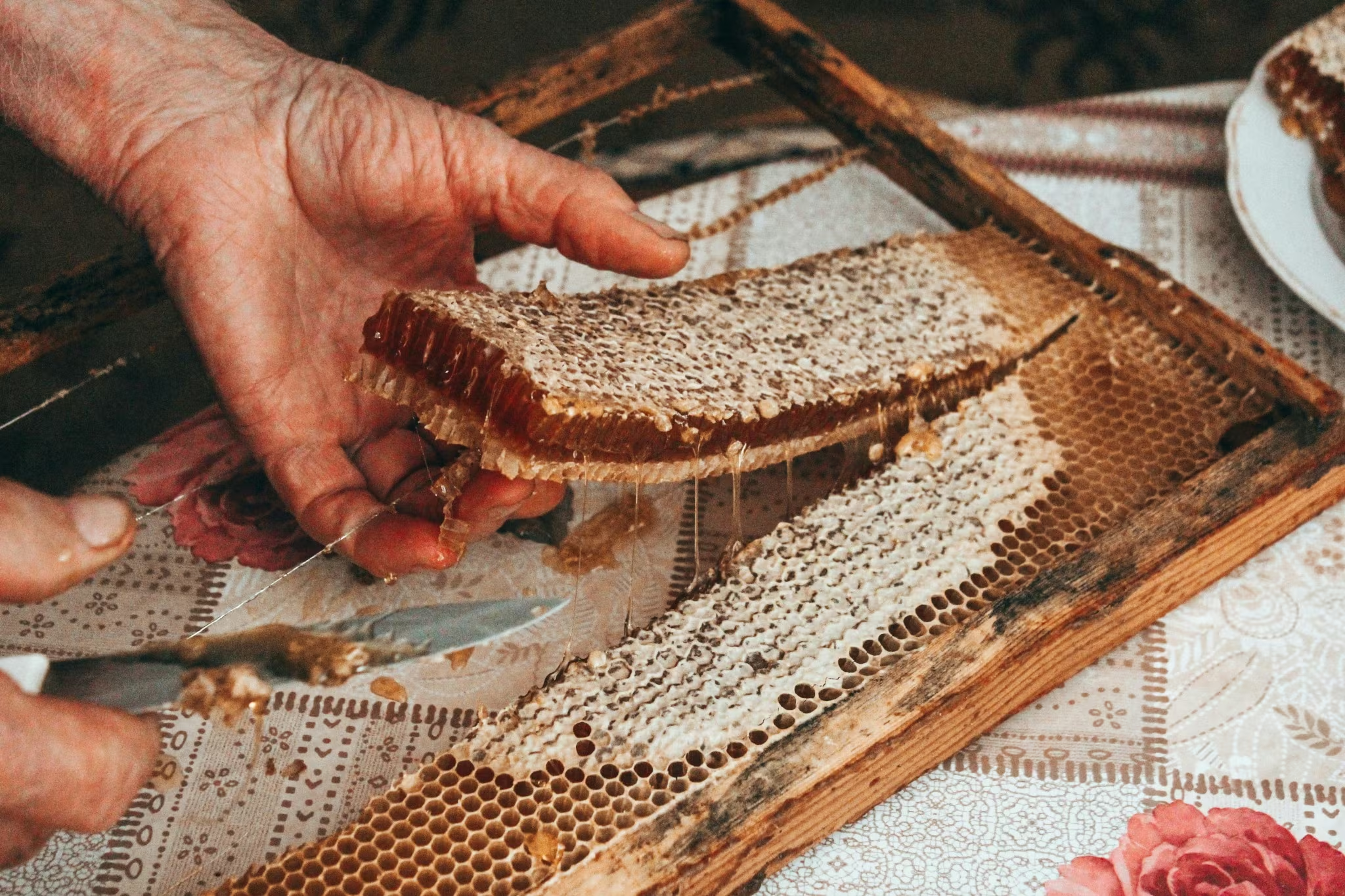
Capped honeycomb: the white wax covering signals that honey inside has reached the right moisture content and is fully stable. This is what beekeepers look for before harvesting.
Once moisture content reaches the target, bees seal each cell with a thin layer of fresh white beeswax approximately 0.1 to 0.3mm thick. These cappings signal that the honey is ripe and ready for long-term storage. They also signal to the beekeeper that the frame is ready to harvest.
The hexagonal cell shape is not incidental. It is the most efficient structure for packing maximum storage into minimum space, using the least amount of wax. Each cell tilts slightly upward at 9 to 13 degrees so viscous honey cannot drip out before sealing. Young worker bees produce wax scales from eight abdominal glands, and it takes approximately 1kg of wax to construct comb that holds 3.5kg of honey. Workers also metabolise around 6 to 7kg of honey to produce 1kg of wax, which means building the comb itself has a significant energy cost.
From Hive to Jar: How Ethical Beekeepers Harvest Honey
Responsible honey harvesting follows the rhythm of the nectar season. In the UK this means late summer after heather blooms on the Yorkshire Moors. In Romania it means July following the acacia and linden season. Both require precise timing: too early and the honey is not fully ripened; too late and the opportunity is gone until next year.
The ethical harvest process begins with inspection, not extraction. Our partner beekeepers check every frame to confirm the honey is fully capped and to verify that the colony retains adequate stores before any frames are removed. Only surplus from the honey supers (the upper boxes that provide extra space beyond the brood nest) is taken. The brood nest stores are never touched.
Why Different Flowers Make Different Honeys
The floral source of nectar determines everything about the finished honey: its colour, texture, flavour, crystallisation behaviour, and even its glycaemic index. This is because each plant species produces nectar with a distinct ratio of sucrose to fructose to glucose, as well as its own aromatic compounds and polyphenol profile.
The reason our Heather Honey behaves so differently in the jar from our Acacia comes down entirely to this. Heather nectar produces a honey with a high glucose-to-fructose ratio and specific proteins from the Calluna vulgaris plant that make it thixotropic: it gels firm in the jar but becomes liquid when stirred. Acacia nectar produces a honey with the opposite ratio, high in fructose, which is why it stays liquid for months without any heating.
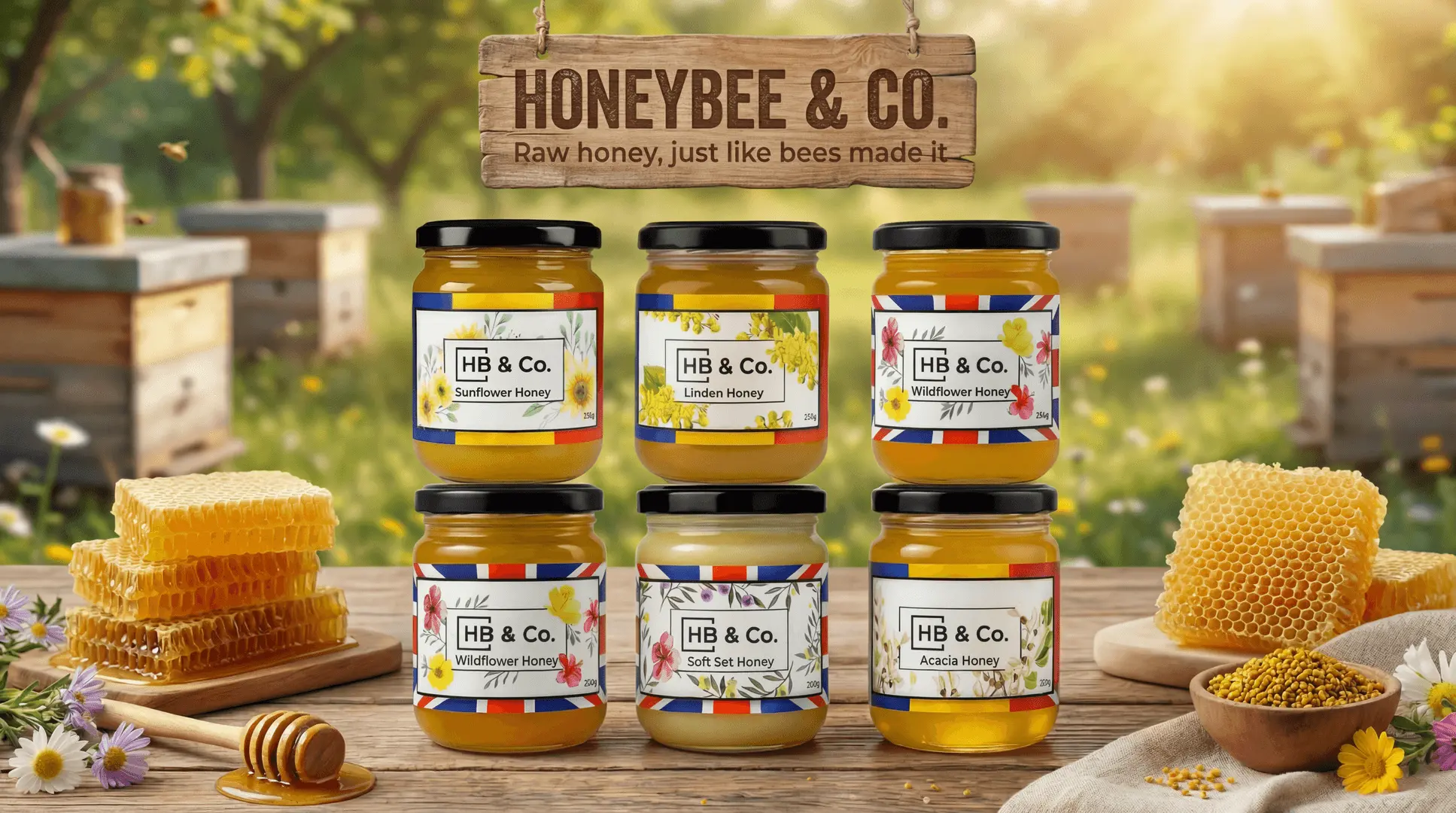
Our full range. Each variety is a direct expression of where the bees foraged and when the harvest took place.
Heating honey above 40 degrees Celsius destroys the volatile aromatic compounds responsible for these differences. Studies show up to 50 percent loss of aroma compounds at 60 degrees. This is why mass-market honeys from different floral sources often taste similar: the processing that makes them look clean and uniform also removes the characteristics that distinguish one variety from another.
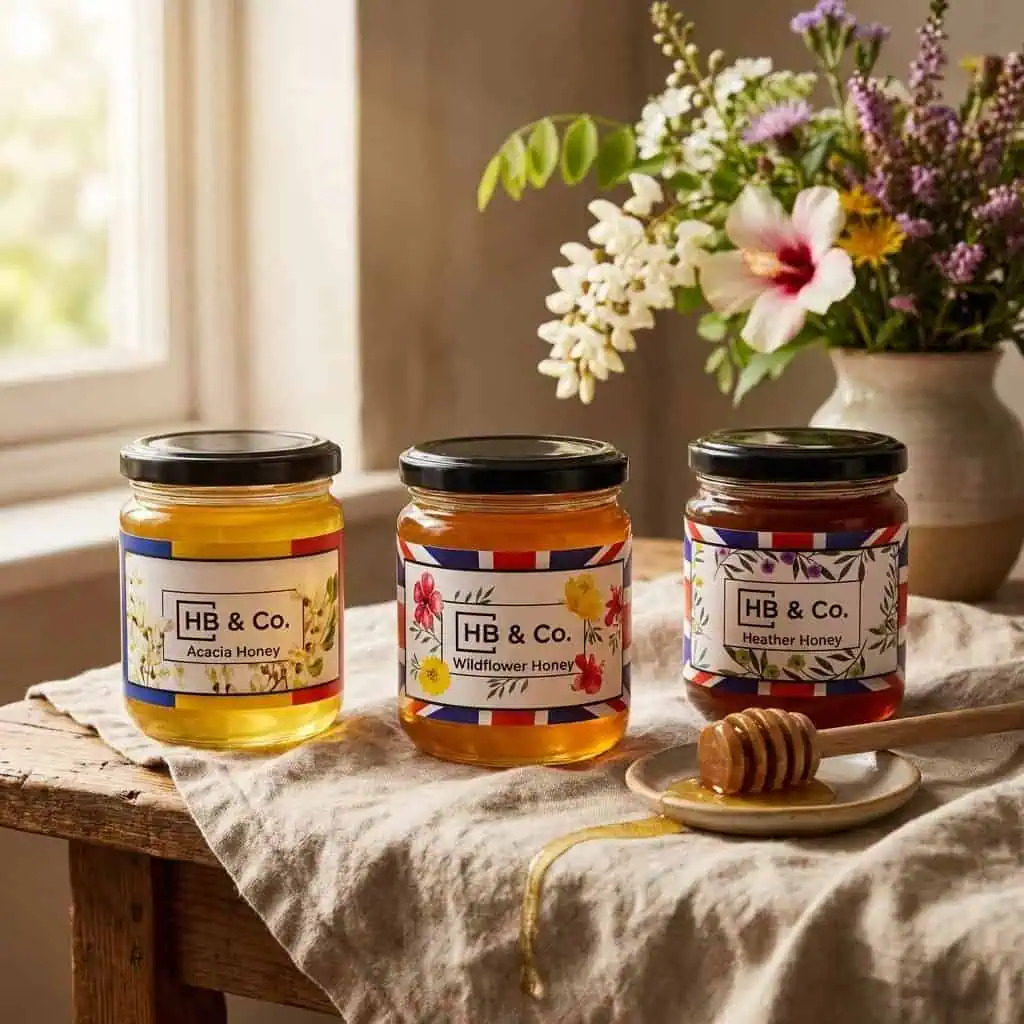
Le Discovery Trio
Three single-origin honeys in one set. Acacia, Wildflower, and Heather. The most direct way to experience how different the same food can taste depending on where and when the bees foraged.
Acheter le trioThe Bigger Picture: Pollination, Biodiversity and Us
Honey production is only one part of what makes honeybees valuable. The same foraging bees collecting nectar for honey are simultaneously transferring pollen between plants. When a bee visits a flower, pollen grains stick to the fine hairs covering her body. As she moves to other flowers, some of that pollen fertilises plants and enables them to produce seeds and fruit.
Pollinators contribute to the reproduction of approximately 75 percent of the world’s leading food crop species. Without them, much of our fruit, many nuts, and numerous vegetables would fail to reproduce. For the UK, the estimated economic value of pollination services runs into the billions of pounds annually.
Honeybee populations face documented pressure from several directions: habitat loss as UK wildflower meadows have declined by an estimated 50 percent since 1930, neonicotinoid pesticides that affect foraging ability and navigation, and the Varroa destructor mite which causes significant winter losses in untreated or poorly managed colonies. Supporting ethical beekeeping is one concrete way to contribute to maintaining healthy pollinator populations. When beekeepers manage hives carefully, protect local forage, and avoid over-harvesting, the bees benefit alongside the surrounding ecosystem.
Read more about why bee populations are declining and what can be done about it.
Raw Honey and What It Actually Contains
Walk into any supermarket and you will find honey that pours easily, stays clear, and tastes fairly uniform year-round. This is the result of heating and ultra-filtration, not of the bees making a more consistent product. The bees always make the same thing. What differs is what happens to it afterwards.
Raw honey retains over 180 identified compounds including active enzymes (invertase and glucose oxidase), trace pollens at up to millions of grains per millilitre, organic acids contributing to flavour complexity, and the volatile aromatic compounds that distinguish one variety from another. Honey is approximately 82 percent carbohydrates by composition, with glucose and fructose as the primary sugars. One tablespoon contains approximately 64 calories. Its glycaemic index varies between 31 and 78 depending on the floral variety, with high-fructose types like Acacia sitting at the lower end of that range.
Raw honey should not be given to infants under 12 months due to a small risk of infant botulism. For everyone else, it is one of the most chemically complete foods available. The difference between raw and processed is not subtle. It is the difference between a living food and a refined sweetener that happens to taste similar.
How long does it take bees to make a jar of honey?
During peak summer nectar flows a strong colony of 30,000 to 50,000 bees can produce enough honey to fill a 280g jar in a matter of days. But this is only possible at the height of the season when nectar is abundant, temperatures are right, and the colony is at full strength. Outside peak flow, production slows dramatically. When you factor in unpredictable weather, the energy spent raising brood, and the priority the colony gives to building its own winter stores before any surplus accumulates, it typically takes several weeks of the foraging season to build the reserves that end up in a single retail jar.
Do all bees make honey?
No. Of the 20,000 plus bee species worldwide, only honeybees (Apis mellifera and a few related Apis species) produce honey in quantities large enough for human harvest. Bumblebees make a small amount of a honey-like substance for short-term use, but it ferments quickly and is not suitable for collection. Solitary bee species, which make up the majority of the 250 plus bee species in the UK, do not store honey at all. The large-scale surplus production that honeybees achieve is only possible because of their social colony structure, which allows tens of thousands of individuals to divide the labour simultaneously.
Does taking honey from hives harm the bees?
When done responsibly, harvesting excess honey causes no harm to the colony. Ethical beekeepers only remove surplus from the honey supers, the extra boxes above the brood nest, and always verify the hive retains adequate winter stores before extraction. Honeybees naturally overproduce by two to three times what they need for winter survival. Taking this surplus is comparable to harvesting fruit from a tree: when done properly it does not damage the source. The problem arises with commercial operations that take too much and replace honey with sugar syrup, which does not provide the same nutritional value or antimicrobial properties for the colony.
Why does some honey crystallise and is crystallised honey still good?
Crystallisation is completely natural and is actually a reliable sign that honey is raw and unprocessed. It happens when glucose, which is less soluble than fructose, gradually comes out of solution and forms crystals. Honeys with a higher glucose ratio, such as Tournesol, crystallise within weeks. High-fructose varieties like Acacia can stay liquid for years. Crystallised honey is perfectly safe and retains all its nutritional properties. To return it to liquid, place the sealed jar in warm water below 40 degrees Celsius for 20 to 30 minutes. Do not use boiling water as heat above 40 degrees begins to degrade the enzymes.
What is the difference between raw honey and regular honey?
Raw honey is extracted from the comb, strained through mesh to remove wax, and bottled without heating. It retains the full range of naturally occurring enzymes (including invertase and glucose oxidase), trace pollens, organic acids, and volatile aromatic compounds. Regular commercial honey is typically heated to 65 degrees Celsius or higher to prevent crystallisation and achieve a uniform appearance. This heating degrades or destroys much of the enzyme activity and removes the delicate aromatic compounds that distinguish one variety from another. Ultra-filtration, common in mass-market honey, removes pollen entirely, which also makes it impossible to verify the floral origin or geographic source of the honey.
Can I help bees even if I do not keep a hive?
Yes, in several practical ways. Planting bee-friendly flowers that bloom across the season makes a direct difference: borage, lavender, phacelia, foxglove, and native wildflowers are all excellent choices. Avoiding pesticide use in your garden, particularly during flowering periods, protects foraging bees. Leaving patches of undisturbed ground provides nesting habitat for the 250 plus solitary bee species in the UK. Buying raw honey from traceable, ethical producers supports the beekeepers who manage healthy colonies and protect local forage landscapes. Every purchase is a small part of the wider system that keeps pollinator populations viable.